
Bicep exercises with a kettlebell: curls and rows that grow your arms
Published October 19, 2026
The best kettlebell bicep exercises are the two-hand kettlebell curl, the single-arm curl, the goblet curl and the concentration curl, with kettlebell rows for extra pulling work. Because the bell hangs below the handle, the load sits further from your hand than a dumbbell's, so a kettlebell feels heavier at the top of a curl and works your grip harder. Do 2 or 3 curls per session, 3 sets each, finishing 0 to 2 reps short of failure, and switch to one-arm work when a single bell gets light.
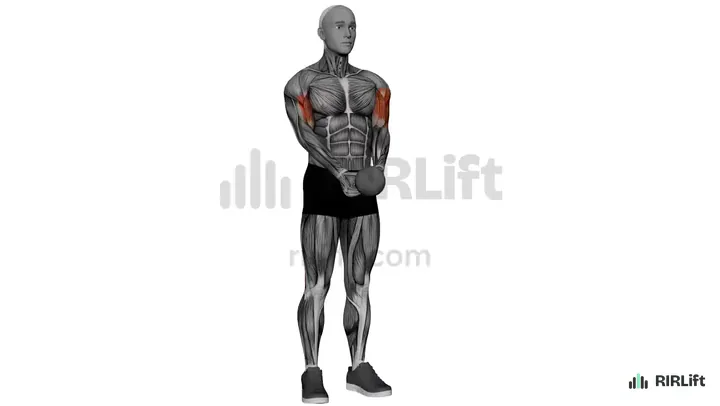
- Kettlebell Curl Biceps
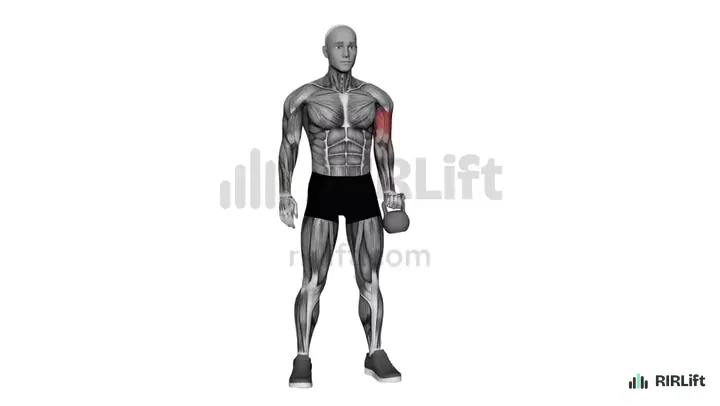
- Kettlebell Single-Arm Curl Biceps
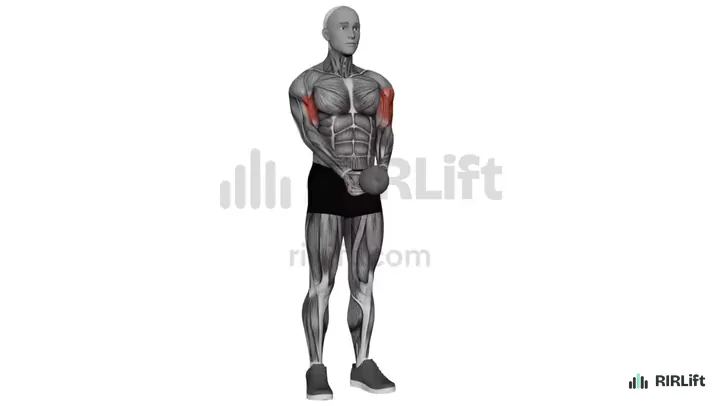
- Kettlebell Goblet Curl Biceps
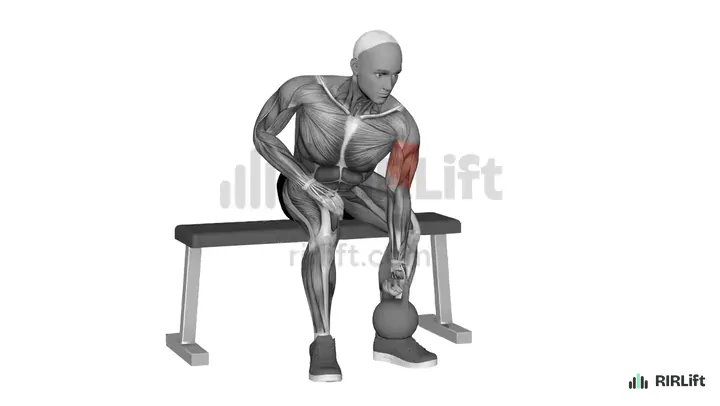
- Kettlebell Concentration Curl Biceps
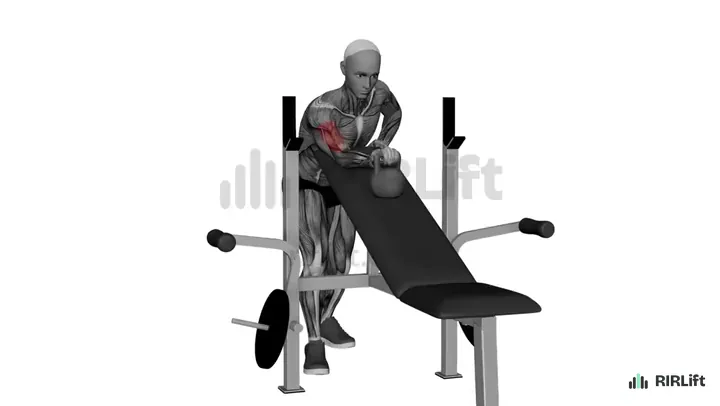
- Kettlebell Preacher Curl Biceps
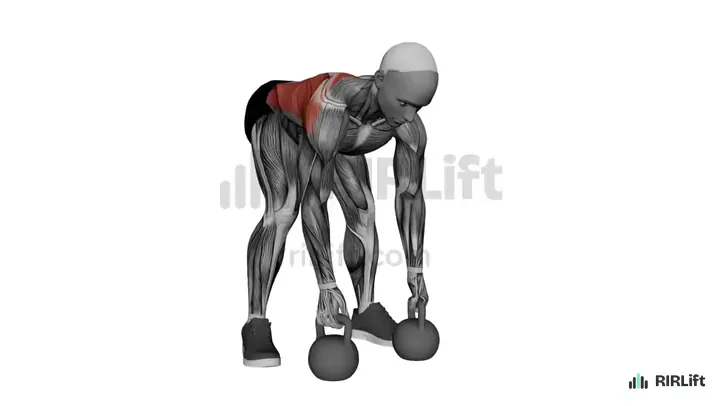
- Kettlebell Gorilla Row Lats, Upper Back
Put them together: example sessions
Each session below picks from the exercises above for one situation, with the sets, reps, rest and RIR filled in. Open one in the session builder to change a pick, price it from a recent set, and add it to RIRLift.
-
Session 1
One kettlebell, biceps-only session
You own a single kettlebell and want an arm session you can run at home with it.
2× a week · 18 sets a week · ~20 min
-
Session 2
Two kettlebells, back and biceps together
You train with a pair of kettlebells and want one session that covers back and biceps at once.
2× a week · 20 sets a week · ~30 min
-
Session 3
A rack of kettlebells and a bench or preacher pad
You train in a gym or home gym with several kettlebell sizes and a bench, and want the strictest kettlebell arm work.
2× a week · 17 sets a week · ~20 min
Session 1
One kettlebell, biceps-only session
- Workouts2× a week
- Working sets18 a week
- Per workout~20 min
- EquipmentKettlebells
You own a single kettlebell and want an arm session you can run at home with it.
The two-hand curl uses the full bell for heavy biceps work, the single-arm curl doubles the load per arm, and the concentration curl strips the swing out for a strict finish. With one bell you cannot add weight, so reps climb high and sets go to 0 to 1 RIR. Nine sets per session, twice a week, gives each biceps a solid weekly dose.
| Exercise | Sets × reps | RIR | Rest |
|---|---|---|---|
| Kettlebell CurlBoth hands on the handle. | 3 × 8–15 | 1 | 75 s |
| Kettlebell Single-Arm CurlPer arm. | 3 × 8–15 | 1 | 1 min |
| Kettlebell Concentration CurlPer arm. Hold the top. | 3 × 10–20 | 0 | 1 min |
- How to run it
- Run it twice a week, two or more days apart, after other training or on its own. It takes about 20 minutes.
- How to progress
- Add reps until every set reaches the top of the range. Then lower each rep over three seconds. When that also tops out, get the next bell up.
Session 2
Two kettlebells, back and biceps together
- Workouts2× a week
- Working sets20 a week
- Per workout~30 min
- EquipmentKettlebells
You train with a pair of kettlebells and want one session that covers back and biceps at once.
The gorilla row is the heavy lift: two bells, no bench, and real loading for the biceps as an elbow flexor. Then the goblet curl, which you can push hard because grip never fails, and the single-arm curl for one-side work. Rows stop at 2 RIR so your back stays fresh across sets; curls go to 1. Counting rows at half, that is about 8 biceps sets per session.
| Exercise | Sets × reps | RIR | Rest |
|---|---|---|---|
| Kettlebell Gorilla Row1 warm-up set firstPer side. Stay hinged. | 4 × 6–12 | 2 | 2 min |
| Kettlebell Goblet CurlBell to chin. | 3 × 8–15 | 1 | 75 s |
| Kettlebell Single-Arm CurlPer arm. | 3 × 10–15 | 1 | 1 min |
- How to run it
- Do it once or twice a week as your pull day, with at least two days between sessions.
- How to progress
- Add reps to the row up to 12 per side at 2 RIR, then use heavier bells. Add curl reps first, then move up a bell size.
Session 3
A rack of kettlebells and a bench or preacher pad
- Workouts2× a week
- Working sets17 a week
- Per workout~20 min
- EquipmentKettlebells, Preacher Bench
You train in a gym or home gym with several kettlebell sizes and a bench, and want the strictest kettlebell arm work.
A bench lets you add the one-arm row and the preacher curl, the curl that loads the biceps near its stretch. With a range of bells you can progress by weight, so reps sit at 8 to 12 and sets end at 1 RIR, with the goblet curl at the end taken to 0. Two routines give about 18 biceps sets a week, counting rows at half.
| Exercise | Sets × reps | RIR | Rest |
|---|---|---|---|
| Kettlebell RowPer arm. Hand on the bench. | 3 × 8–12 | 1 | 90 s |
| Kettlebell Preacher CurlPer arm. Slow lowering. | 3 × 8–12 | 1 | 75 s |
| Kettlebell Goblet Curl | 3 × 12–20 | 0 | 1 min |
Open Biceps A in the session builder
| Exercise | Sets × reps | RIR | Rest |
|---|---|---|---|
| Kettlebell Preacher CurlPer arm. | 3 × 10–15 | 1 | 75 s |
| Kettlebell Concentration CurlPer arm. | 3 × 8–12 | 1 | 1 min |
| Kettlebell CurlHeaviest bell, both hands. | 2 × 12–20 | 0 | 1 min |
Open Biceps B in the session builder
- How to run it
- Do Biceps A and Biceps B on two separate days. Each fits after a back or upper-body workout.
- How to progress
- Double progression: once every set reaches the top of the range at the target RIR, move up one kettlebell size and start at the bottom of the range.
Make it fit you
-
Only one light kettlebell
Do every curl one arm at a time, slow the lowering to three or four seconds, and take each set to 0 RIR. A light bell still builds the biceps if the set ends close to failure.
-
Bell bangs your forearm
On single-arm curls, grip the handle toward the side nearest your thumb so the bell hangs beside your wrist instead of swinging into it, and slow down at the top.
-
Grip fails before the biceps
Use the goblet curl, where your hands cup the bell, and move single-arm curls earlier in the session while your grip is fresh.
-
No bench for preacher curls
Use the concentration curl on a chair or a low step instead. It gives the same braced, no-swing curl.
-
Already doing swings and cleans
Those train hips and shoulders more than biceps, so keep the curls. If you also do heavy rows, cut each plan to two curls.
-
Log the RIR, not just the bell
Kettlebells jump in big steps, so reps and RIR are what show progress. In RIRLift you log the RIR next to each set and it suggests the next load from it, which tells you when you are ready for the next bell.
Questions
Can you build biceps with kettlebells?
Yes. Kettlebell curls and rows train the biceps like dumbbells do. The main limit is the big jumps between bell sizes, which you get around with one-arm curls, slower lowering and higher reps.
What is the best kettlebell bicep exercise?
The single-arm kettlebell curl, because it puts the most load on each biceps and works with any bell. If you have only a heavy one, start with the two-hand curl.
Are 3 exercises for biceps enough?
Yes. Three curls, or two curls and a row, done for 3 sets each close to failure, twice a week, gives most people enough volume to grow.
Is 20 minutes of kettlebells enough?
For biceps, yes. The one-bell plan above fits in about 20 minutes, twice a week. For your whole body you need more sessions or a full-body routine.
What are the big 6 kettlebell exercises?
The term usually refers to the swing, the get-up, the clean, the press, the snatch and the goblet squat. None of them is a biceps exercise, so add curls if arm size is a goal.
Kettlebell or dumbbell curls: which is better?
Neither grows the biceps more. A kettlebell feels harder at the top of the curl and challenges grip more; dumbbells come in smaller steps, so they are easier to progress.
Related templates
-
Arm exercises with a kettlebell: biceps, triceps and forearms
Add kettlebell triceps work for a full arm session.
-
Back exercises with a kettlebell: rows, pullovers, shrugs and swings
More kettlebell rows that train your biceps on back day.
-
Dumbbell bicep exercises: curls for the stretch, the squeeze and arm thickness
Incline and spider curls when you also have dumbbells.
-
Concentration curl: how to do it and where it fits in your arm day
The braced curl in depth, with setup and variations.