
Back exercises with a kettlebell: rows, pullovers, shrugs and swings
Published October 19, 2026
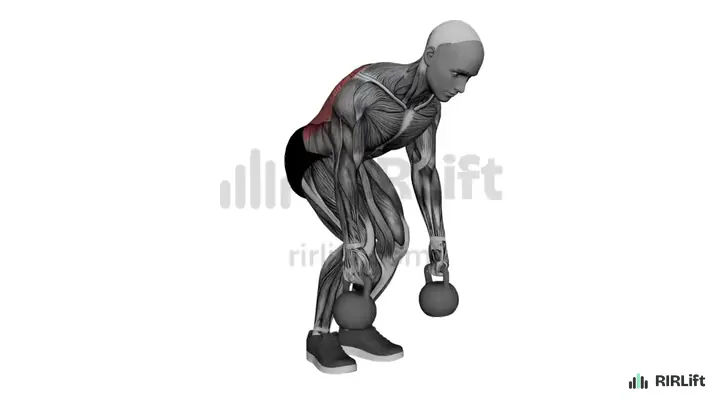
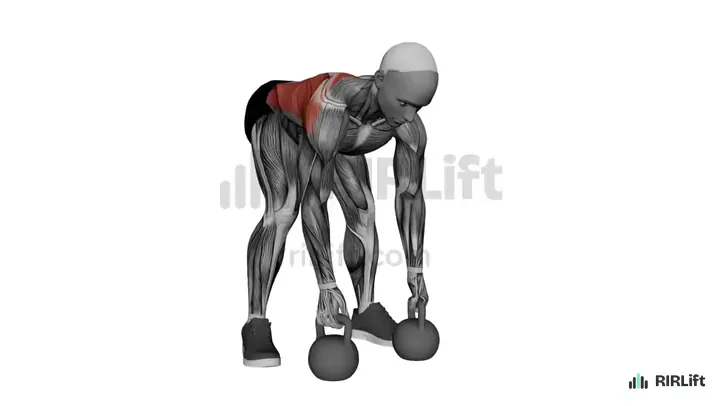
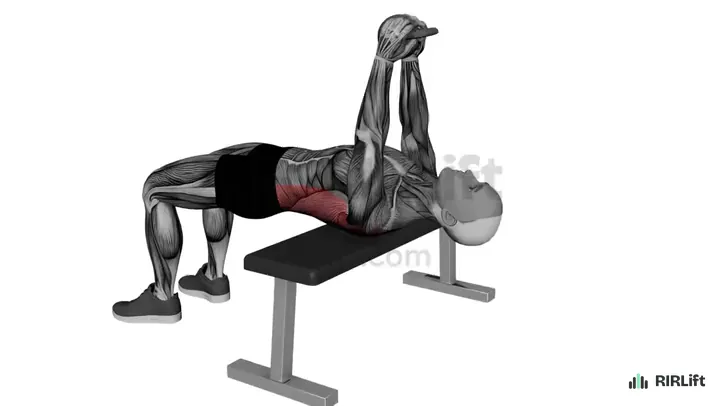
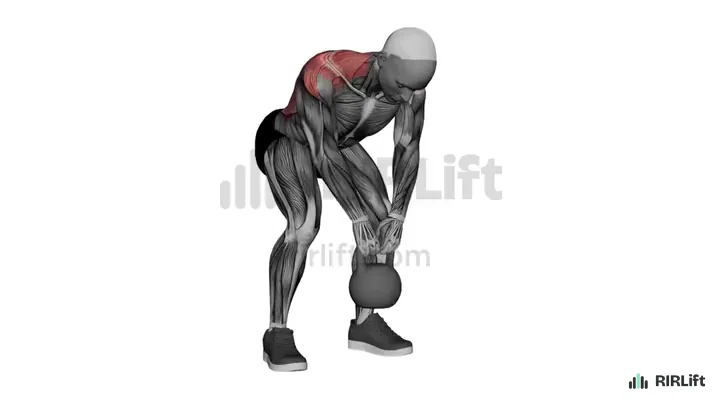
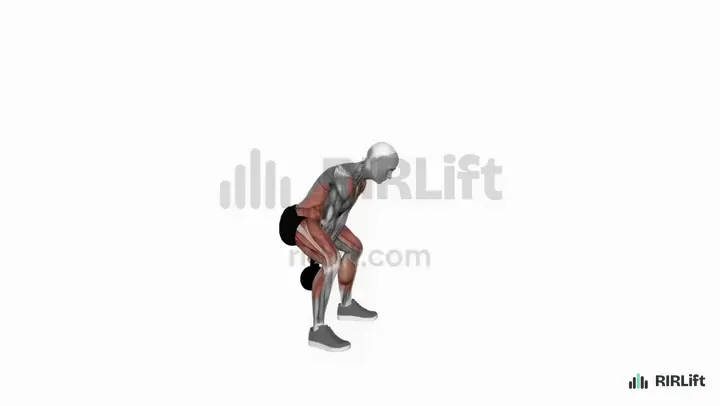
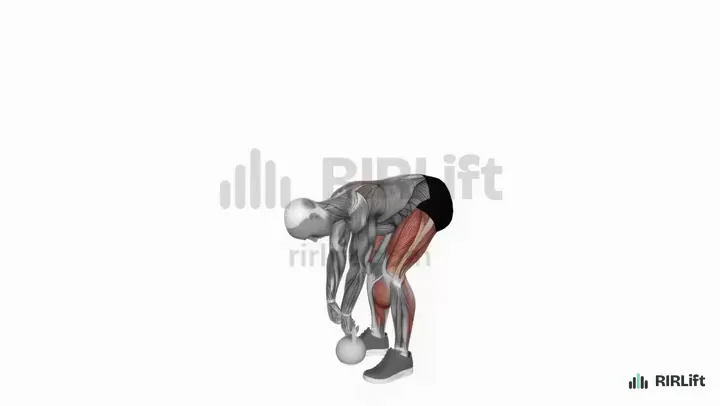
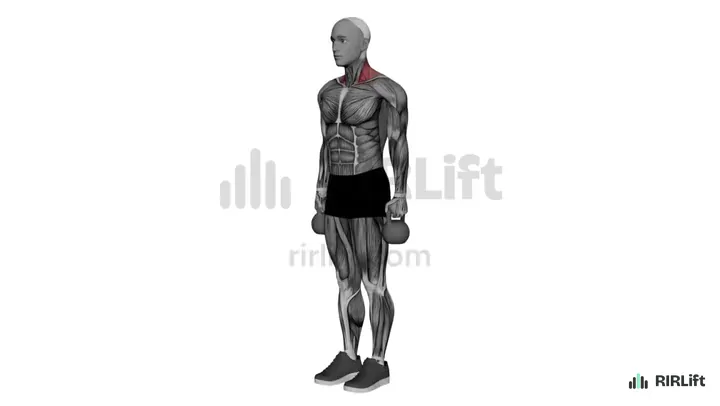
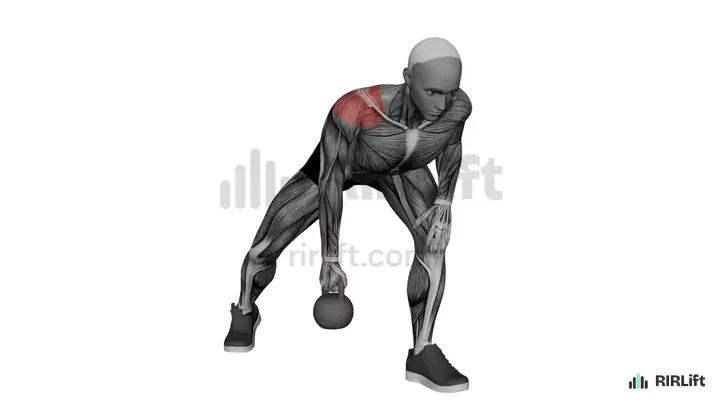
The best back exercises with a kettlebell are the single-arm row and the gorilla row for your lats, the pullover for the stretched end of the lats, the rear delt row and rear delt fly for your upper back, the shrug for your traps, and the deadlift, good morning and swing for your lower back. One bell covers all of it: row with one arm while the other hand braces, then hinge with both hands on the handle.
- Kettlebell Row Lats, Upper Back
- Kettlebell Gorilla Row Lats, Upper Back
- Kettlebell Pullover Lats
- Kettlebell Rear Delt Row Shoulders, Upper Back
- Kettlebell Swing Glutes, Hamstrings
- Kettlebell Deadlift Glutes, Hamstrings, Lower Back
- Kettlebell Shrug Traps
- Kettlebell Rear Delt Fly Shoulders
Put them together: example sessions
Each session below picks from the exercises above for one situation, with the sets, reps, rest and RIR filled in. Open one in the session builder to change a pick, price it from a recent set, and add it to RIRLift.
-
Session 1
One kettlebell at home
You have a single moderate bell, around 12 to 20 kg (25 to 45 lb), and a floor to train on.
2× a week · 24 sets a week · ~25 min
-
Session 2
Two matching bells, building size
You own a pair of bells of the same weight, or train at a gym with a kettlebell rack, and want to grow your back.
2× a week · 25 sets a week · ~30 min
-
Session 3
20 minutes, back and conditioning
You want a short, sweaty back session and are already comfortable swinging a bell.
2× a week · 24 sets a week · ~20 min
Session 1
One kettlebell at home
- Workouts2× a week
- Working sets24 a week
- Per workout~25 min
- EquipmentKettlebells
You have a single moderate bell, around 12 to 20 kg (25 to 45 lb), and a floor to train on.
With one bell, the rows work one side at a time so the weight feels twice as heavy to each lat, and the pullover uses both hands on the same bell for the stretched position. The deadlift and swing cover the lower back. A moderate bell becomes light quickly on the hinges, so those carry higher reps and stop 2 short of failure, while the rows and rear delt work go to 0 to 1 in reserve. Each session has 12 working sets.
| Exercise | Sets × reps | RIR | Rest |
|---|---|---|---|
| Kettlebell RowPer arm. Free hand on a chair. | 3 × 8–15 | 1 | 1 min |
| Kettlebell PulloverOn the floor. Ribs down. | 3 × 10–15 | 1 | 1 min |
| Kettlebell Rear Delt FlyPer arm. Slow down. | 3 × 12–20 | 0 | 45 s |
| Kettlebell DeadliftHips back. 1 s at the top. | 3 × 12–20 | 2 | 90 s |
Open Back A in the session builder
| Exercise | Sets × reps | RIR | Rest |
|---|---|---|---|
| Kettlebell Rear Delt RowPer arm. Elbow out wide. | 3 × 10–15 | 1 | 1 min |
| Kettlebell RowPer arm. Pause at the hip. | 3 × 8–15 | 0 | 1 min |
| Kettlebell ShrugBoth hands on the handle. | 3 × 12–20 | 1 | 45 s |
| Kettlebell SwingTwo hands. Snap the hips. | 3 × 15–20 | 2 | 75 s |
Open Back B in the session builder
- How to run it
- Do Back A and Back B once each per week with a day or more between them. Brace your free hand on a chair or couch arm for the rows.
- How to progress
- Add reps until every set reaches the top of its range at the target reps in reserve. When the rows reach 15 per arm, add a 3-second lowering, and when the swing gets easy at 20, move to a heavier bell for the swing first.
Session 2
Two matching bells, building size
- Workouts2× a week
- Working sets25 a week
- Per workout~30 min
- EquipmentKettlebells
You own a pair of bells of the same weight, or train at a gym with a kettlebell rack, and want to grow your back.
A pair turns on the gorilla row, so you can row heavy with both arms in turn and no bench, and lets you shrug and deadlift two bells at once for loads a single bell can't match. The good morning closes the session because it needs only one bell held at the chest. Rows stop at 1 rep in reserve, shrugs at 0, and the two hinges at 2 to keep your lower back fresh for the next session. 14 working sets.
| Exercise | Sets × reps | RIR | Rest |
|---|---|---|---|
| Kettlebell Gorilla RowReps per arm. Stay low. | 4 × 6–10 | 1 | 90 s |
| Kettlebell Rear Delt RowPer arm. | 3 × 10–15 | 1 | 1 min |
| Kettlebell ShrugOne bell in each hand. | 3 × 10–15 | 0 | 1 min |
| Kettlebell Good MorningOne bell at the chest. | 3 × 10–15 | 2 | 90 s |
Open Back A in the session builder
| Exercise | Sets × reps | RIR | Rest |
|---|---|---|---|
| Kettlebell Deadlift1 warm-up set firstOne bell in each hand. | 4 × 8–12 | 2 | 2 min |
| Kettlebell Gorilla RowReps per arm. 1 s pause. | 3 × 8–12 | 1 | 90 s |
| Kettlebell PulloverHeaviest bell you control. | 3 × 10–15 | 1 | 1 min |
| Kettlebell Rear Delt FlyPer arm. | 2 × 12–20 | 0 | 45 s |
Open Back B in the session builder
- How to run it
- Run Back A and Back B on alternating back days, once each per week.
- How to progress
- Move up a bell size on a lift once every set hits the top of its range at the target reps in reserve. Bells jump in 4 kg steps, so expect to spend a few weeks adding reps before each jump.
Session 3
20 minutes, back and conditioning
- Workouts2× a week
- Working sets24 a week
- Per workout~20 min
- EquipmentKettlebells
You want a short, sweaty back session and are already comfortable swinging a bell.
Pairing a hinge with a row in supersets keeps the session at 20 minutes and your heart rate up, while each muscle still rests during the other exercise. The swing and snatch carry the conditioning, the row and upright row add the pulling, and the reps in reserve stay at 2 because fatigue piles up fast in supersets and form on the snatch has to hold. 12 working sets in about 20 minutes.
| Exercise | Sets × reps | RIR | Rest |
|---|---|---|---|
| A1 Kettlebell SwingStraight into the row. | 3 × 15–20 | 2 | 0 s |
| A2 Kettlebell RowPer arm. | 3 × 10–12 | 2 | 75 s |
| B1 Kettlebell SnatchPer arm. Straight into the upright row. | 3 × 6–10 | 2 | 0 s |
| B2 Kettlebell Upright RowStop at chest height. | 3 × 10–15 | 2 | 75 s |
- How to run it
- Do this twice a week, or once alongside one of the other plans. Go straight from the first exercise in a pair to the second, then rest.
- How to progress
- When you finish every set at the top end of the range with 2 reps left, add one round to the first superset before you go to a heavier bell.
Make it fit you
-
Only one light bell, 8 to 12 kg
Make every rep slower instead of the bell heavier: three seconds down on rows and pullovers, and a two-second hold at the top of every rear delt fly. Use the one-arm swing in place of the two-hand swing to double the load on each side of your back.
-
Can't do pull-ups yet
The single-arm row and the pullover together cover what a pull-up trains, from both ends of the lat's range. Do them twice a week and add a dead hang from any bar you can find to build grip.
-
Lower back is sore after swings
Swap the swing for the deadlift until you can hold a flat back for every rep of a slow set of 15. When you return to swings, cap sets at 10 reps and stop when your hips slow down.
-
Upper back is what you want
Lead with the rear delt row and rear delt fly while you are fresh, and pause one second at the top of each rep. A light bell is enough for these, so put your heavier bell on the rows.
-
Training in a small apartment
Every exercise here fits on a yoga mat except the swing and snatch. Swap them for the good morning and an extra set of deadlifts so nothing leaves the floor.
-
Log RIR even with one bell
With only one weight, the reps you had left is the only sign you are getting stronger. If you log in RIRLift, a set of 12 rows at 1 in reserve this week next to a set of 15 at 1 next month shows the progress the bell never will.
Questions
Do kettlebells work the back?
Yes. Rows and pullovers train your lats and upper back directly, shrugs train your traps, and every hinge, from the deadlift to the swing, makes your lower back work to hold your spine still. A single bell covers the whole back if you row with one arm at a time.
What are the best kettlebell back exercises?
The single-arm row, the gorilla row and the pullover for your lats, the rear delt row for your upper back, the shrug for your traps, and the deadlift and swing for your lower back. If you can only do three, pick the single-arm row, the rear delt row and the swing.
What kettlebell exercises can replace pull-ups?
The single-arm row and the pullover. The row trains the lats pulling toward your hip, and the pullover trains them from overhead, the position a pull-up starts in. Together they cover most of what a pull-up builds, though they don't train your grip in a hang.
Are kettlebell swings good for your lower back?
Swings train your lower back to stay still under a fast, heavy pull, which builds endurance in the erector muscles. They work well once you can hinge with a flat back; if your back rounds or you feel the swing in your lower back instead of your hips, return to slow deadlifts until the hinge is solid.
What are the top 3 back exercises with one kettlebell?
The single-arm row, the rear delt row and the deadlift. That covers your lats, your upper back and your lower back in three exercises, and each needs only one bell.
What weight kettlebell should I use for back exercises?
Use a heavier bell for the rows and deadlift than for the rear delt work. Pick a row bell you can pull for about 10 clean reps per arm and stop with 1 or 2 left; the rear delt fly usually needs half that weight.
What are the 4 essential kettlebell exercises?
There is no fixed list, but the swing, deadlift, row and press cover the hinge, the pull and the push with one bell. For back training specifically, the row, the swing, the deadlift and the shrug are the four to start with.
Related templates
-
Kettlebell exercises, grouped by what they train, with sessions for the bells you own
The full kettlebell library, for pairing these back sessions with legs and pressing.
-
Back exercises with dumbbells: lats, upper back, traps and lower back
The same back muscles with dumbbells and a bench, for when you have both.
-
Kettlebell swing: how to do it, what it works, and what to swap it for
Step-by-step coaching for the swing before you add it to a back day.
-
Kettlebell shoulder exercises for strength, size and stability
Presses and raises to round out an upper body day with one bell.
-
The best workout for back: width, thickness and traps
Full back programs for when you have more than kettlebells.