
Bodyweight lower body exercises: squats, single-leg work, hamstrings, hips and calves
Published October 19, 2026
The best bodyweight lower body exercises are the squat and reverse lunge to start, the skater squat, pistol squat and sissy squat once two-legged squats get easy, the Nordic hamstring curl for the back of your thighs, the Cossack squat and Copenhagen plank for your inner thighs, and the single-leg calf raise. Without weights, the way to keep legs growing is to move from two legs to one: a single-leg squat puts nearly double the load on the working leg. Pick one squat pattern, one hamstring move and one calf or hip move per session and take each set to within 1 to 3 reps of failure.
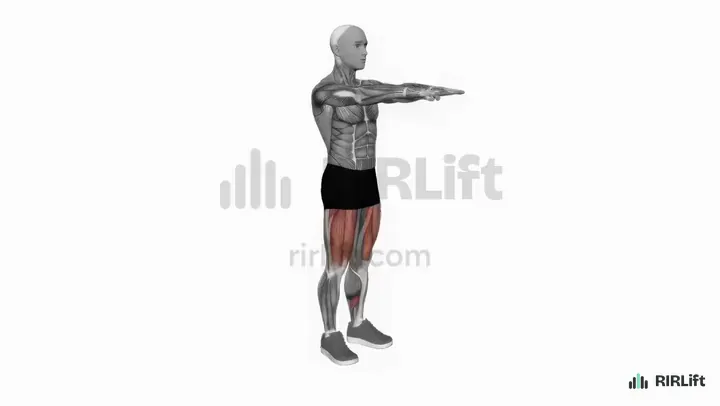
- Bodyweight Squat Quads
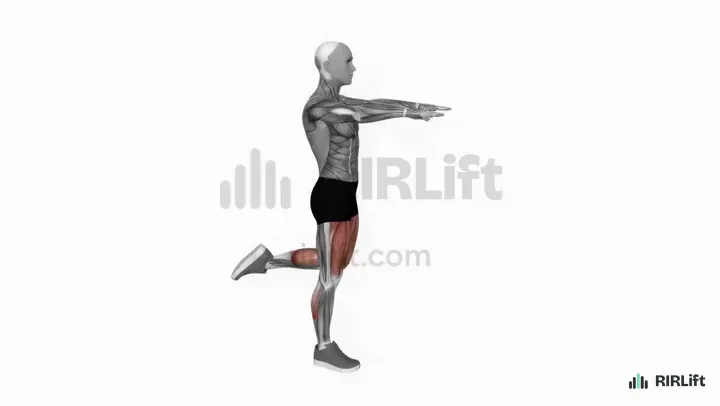
- Reverse Lunge Quads, Glutes
- Skater Squat Quads, Glutes
- Pistol Squat Quads, Glutes
- Nordic Hamstring Curl Hamstrings
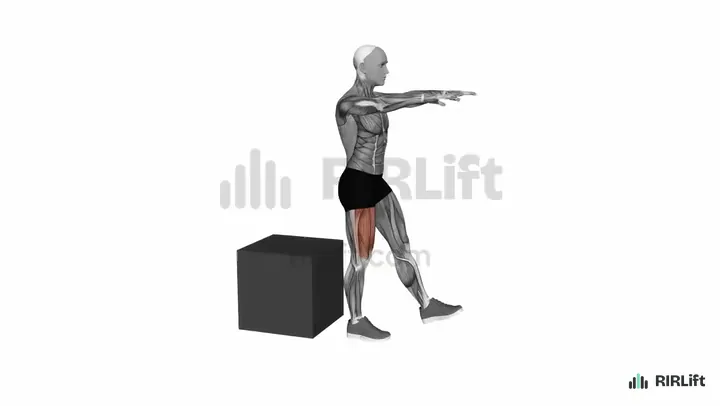
- Cossack Squat Quads, Adductors
- Single-Leg Calf Raise Calves
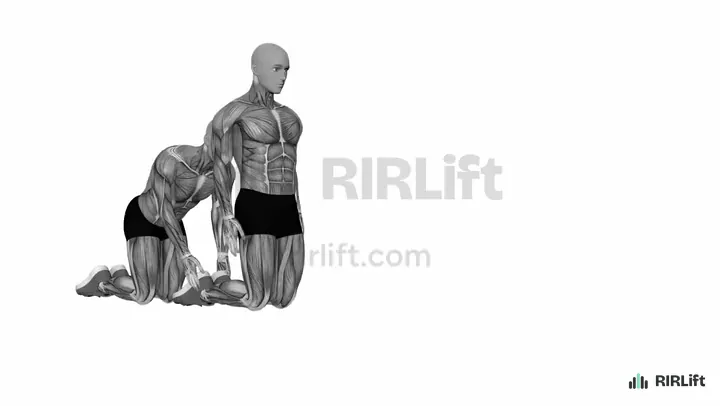
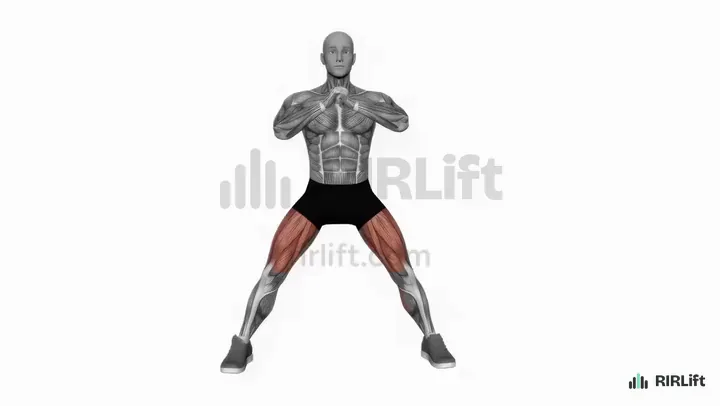
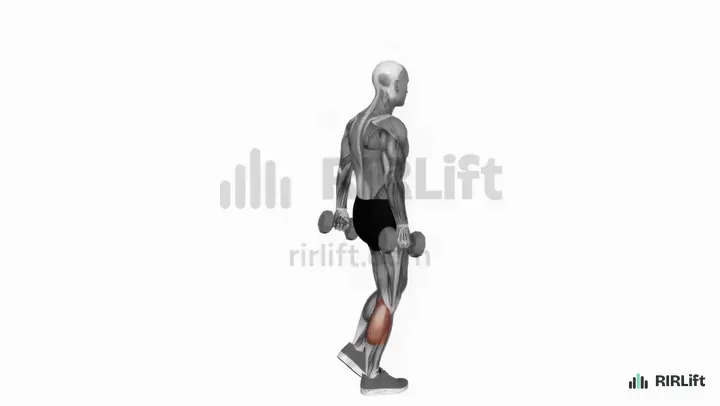
Put them together: example sessions
Each session below picks from the exercises above for one situation, with the sets, reps, rest and RIR filled in. Open one in the session builder to change a pick, price it from a recent set, and add it to RIRLift.
-
Session 1
Starting out: squats feel hard after 15 reps
You are new to leg training or coming back after a long break, you train at home with no equipment, and a set of 20 squats leaves you breathing hard.
2× a week · 30 sets a week · ~35 min
-
Session 2
Two-leg squats are too easy, small space
You can already do 25 or more bodyweight squats, you train in an apartment or a bedroom with no weights, and you want your legs to keep growing.
2× a week · 25 sets a week · ~35 min
-
Session 3
Twice a week alongside running or a sport
You run, play a field or court sport, or hike, and you want two short leg sessions that make your legs more robust without leaving them too sore for your main training.
2× a week · 22 sets a week · ~30 min
Session 1
Starting out: squats feel hard after 15 reps
- Workouts2× a week
- Working sets30 a week
- Per workout~35 min
- EquipmentBodyweight
You are new to leg training or coming back after a long break, you train at home with no equipment, and a set of 20 squats leaves you breathing hard.
At this stage two-leg squats and lunges are enough load to build your legs, so the session is built from them, with a wall sit to add work without more reps and the two all-fours glute moves to cover the hips. Every set stops 2 to 3 reps short of failure, because your form on squats and lunges is still settling and you will recover faster between sessions. It is 15 working sets, done twice a week.
| Exercise | Sets × reps | RIR | Rest |
|---|---|---|---|
| Bodyweight SquatThighs past parallel if your heels stay down. | 3 × 12–25 | 3 | 90 s |
| Reverse LungePer leg. Hands on hips. | 3 × 8–15 | 2 | 90 s |
| Wall SitSeconds, not reps. | 2 × 30–50 | 2 | 90 s |
| Donkey KickPer side. Squeeze 1 s at the top. | 2 × 12–20 | 2 | 45 s |
| Fire HydrantPer side. | 2 × 12–20 | 2 | 45 s |
| Single-Leg Calf RaisePer leg, off a step. Pause at the bottom. | 3 × 10–20 | 2 | 1 min |
- How to run it
- Do the session twice a week with at least two days between, for example Monday and Thursday. Do the squat and lunge first while you are fresh.
- How to progress
- Add reps until you reach the top of each range at the target reps in reserve. When you can do 25 squats and 15 lunges per leg with two to spare, move to the single-leg plan.
Session 2
Two-leg squats are too easy, small space
- Workouts2× a week
- Working sets25 a week
- Per workout~35 min
- EquipmentBodyweight
You can already do 25 or more bodyweight squats, you train in an apartment or a bedroom with no weights, and you want your legs to keep growing.
Once two-leg squats are easy, high-rep sets of them mostly build endurance, so this plan drops them and loads one leg at a time with the skater and pistol squat, adds the sissy squat for the quads and the Nordic curl for the hamstrings, and gives the inner thighs their own work. These moves are hard at low reps, so most sets sit at 1 to 2 reps in reserve; the Nordic curl stays at 2 because a failed rep lands you on your hands. Day A has 13 working sets and day B has 12.
| Exercise | Sets × reps | RIR | Rest |
|---|---|---|---|
| Pistol SquatPer leg. To a box or chair you can touch with control. | 4 × 4–8 | 1 | 2 min |
| Nordic Hamstring Curl3 to 5 s lowering. Heels under the couch. | 3 × 3–6 | 2 | 2:30 min |
| Copenhagen PlankSeconds per side. Knee on the couch edge to start. | 3 × 15–30 | 1 | 1 min |
| Single-Leg Calf RaisePer leg. 1 s pause at the bottom and top. | 3 × 12–20 | 0 | 1 min |
Open Legs A in the session builder
| Exercise | Sets × reps | RIR | Rest |
|---|---|---|---|
| Skater SquatPer leg. Back knee touches a towel. | 4 × 6–12 | 1 | 2 min |
| Sissy SquatKneeling. Hips forward the whole set. | 3 × 8–15 | 1 | 90 s |
| Cossack SquatPer side. Bent-side heel flat. | 3 × 6–12 | 2 | 90 s |
| Fire HydrantPer side. Pause at the top. | 2 × 15–25 | 1 | 45 s |
Open Legs B in the session builder
- How to run it
- Alternate Legs A and Legs B, twice each per week if you can recover, or once each. Leave a day between them. Anchor your heels under a couch for the Nordic curl.
- How to progress
- Lower the pistol box one step whenever you hit 8 reps per leg at the target. For the skater squat, add reps until 12, then hold the bottom for two seconds. For the Nordic curl, add a second of lowering each week before adding reps.
Session 3
Twice a week alongside running or a sport
- Workouts2× a week
- Working sets22 a week
- Per workout~30 min
- EquipmentBodyweight
You run, play a field or court sport, or hike, and you want two short leg sessions that make your legs more robust without leaving them too sore for your main training.
Sport loads your legs going forward, so this plan spends its sets on what running and cutting stress but do not train: single-leg control with the reverse lunge and skater squat, sideways strength in the Cossack squat and Copenhagen plank, a low dose of Nordic curls for the hamstrings, and calves. Sets stop 2 to 3 reps short of failure and the volume is low, 11 sets per session, so you stay fresh for practice or your long run.
| Exercise | Sets × reps | RIR | Rest |
|---|---|---|---|
| Reverse LungePer leg. Slow on the way down. | 2 × 8–12 | 2 | 75 s |
| Skater SquatPer leg. | 2 × 5–10 | 2 | 90 s |
| Cossack SquatPer side. | 2 × 6–10 | 3 | 1 min |
| Nordic Hamstring CurlControl the first half, then catch yourself. | 2 × 3–5 | 3 | 2 min |
| Copenhagen PlankSeconds per side. | 1 × 15–25 | 2 | 1 min |
| Single-Leg Calf RaisePer leg. | 2 × 12–20 | 2 | 1 min |
- How to run it
- Do the session twice a week, at least two days before a race or game, and never the day before a hard run. It takes about 25 minutes.
- How to progress
- Add reps within each range while keeping the reps in reserve. Add one Nordic rep every two weeks at most, and keep the plank holds under 30 seconds and the effort steady rather than all-out.
Make it fit you
-
No step for calf raises
Do them flat on the floor, but slow the lowering to three seconds and hold the top for two. You lose the stretch at the bottom, so take every set to 0 reps in reserve to make up for it.
-
Nothing to hook your heels under
Skip the Nordic curl and do a second set of reverse lunges with a long step and a forward lean, which shifts more of the work to the hamstrings and glutes. A partner kneeling on your calves also works.
-
Knees ache on deep squats
Trade the sissy squat and pistol squat for the reverse lunge and the wall sit, and squat to a chair until you know which depth feels fine. Lunges stepping back usually sit better on the knees than squats where the knee travels far forward.
-
Pistol squat stalls at a high box
Stay on the skater squat for longer and add a two-second pause at the bottom of every rep. Work on ankle mobility by sitting in a deep two-leg squat for a minute between sets.
-
Want more glutes
Lean your torso forward on the reverse lunge and skater squat, and add a third set of donkey kicks with a two-second squeeze at the top. Finish with fire hydrants until the outside of the hip burns.
-
Track reps in reserve, not just reps
Write down how many reps you could still have done after each set, because bodyweight progress shows up there first. If you log in RIRLift, set your targets in reps in reserve and you can see when a move has gotten easy enough to swap for the next harder one on this page.
Questions
What are the best bodyweight exercises for the lower body?
The squat and reverse lunge if you are starting out, then the skater squat and pistol squat once those are easy, the Nordic curl for hamstrings, the Cossack squat for the inner thighs and the single-leg calf raise. Together they train every muscle from your hips to your ankles with no equipment except a step and something to anchor your heels.
Can you build leg muscle with only bodyweight?
Yes, as long as each set is hard. Two-leg squats stop being hard quickly, so the key is moving to single-leg squats, slower reps and pauses that keep a set in the 5 to 20 rep range and end within a few reps of failure. Hamstrings are the slowest to respond without weights, which is why the Nordic curl is in every plan here.
Are 4 exercises enough for leg day?
Four is enough if they cover a squat or lunge, a hamstring move, a hip or inner-thigh move and calves, with 3 to 4 hard sets each. The single-leg plan on this page uses four exercises per day. What drives growth is the number of hard sets per muscle each week, not the number of exercises.
How do you tone legs without weights?
Toned legs are muscle you can see, so the goal is to build some muscle in the quads, hamstrings, glutes and calves. Use the exercises on this page two or three times a week, take sets close to failure and add reps or harder variations over time. How visible that muscle is depends on body fat, which comes down to food more than to the choice of exercise.
What are the big 3 leg exercises without weights?
A single-leg squat (the skater or pistol squat), the reverse lunge and the Nordic hamstring curl. The squat and lunge cover the quads and glutes from two different stances, and the Nordic curl covers the hamstrings, which the other two barely reach.
How many times a week should I do bodyweight leg exercises?
Two or three times a week works for most people. Two sessions with 10 to 15 hard sets each is a good starting point; add a third only if your legs are not sore by the next session. The Nordic curl causes the most soreness, so start it with one or two sets.
Related templates
-
Leg exercises at home: squats, lunges, hinges, glutes and calves without a gym
The same goal with dumbbells, for when bodyweight stops being enough.
-
Quad exercises at home: squats, split squats and no-equipment moves
More squat variations if your quads are the priority.
-
Pistol squat: how to do a single-leg squat and build up to your first rep
A full guide to the hardest squat on this page and how to build up to it.
-
Nordic hamstring curl: how to do it, scale it, and program it
Set-up options and progressions for the bodyweight hamstring move.
-
The best workout for legs, built for your situation
Full leg programs with barbells and machines for when you join a gym.
-
How to use reps in reserve (RIR)
How to judge reps in reserve on bodyweight sets, where the load never changes.