
Machine chest exercises: presses, dips and the pec deck
Published October 19, 2026
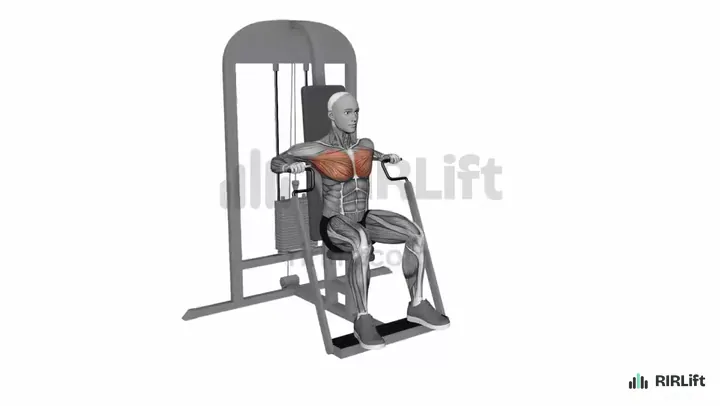
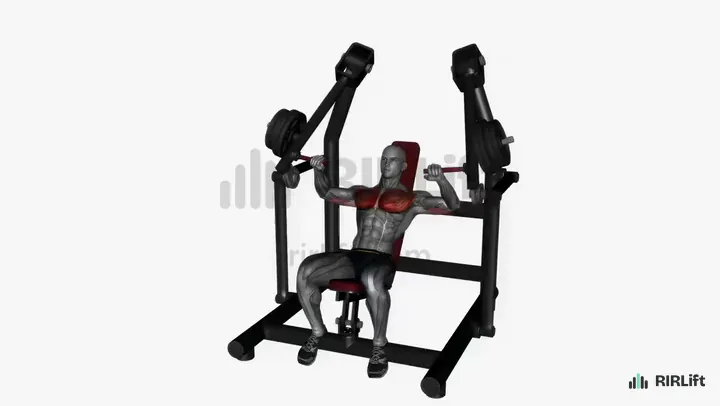
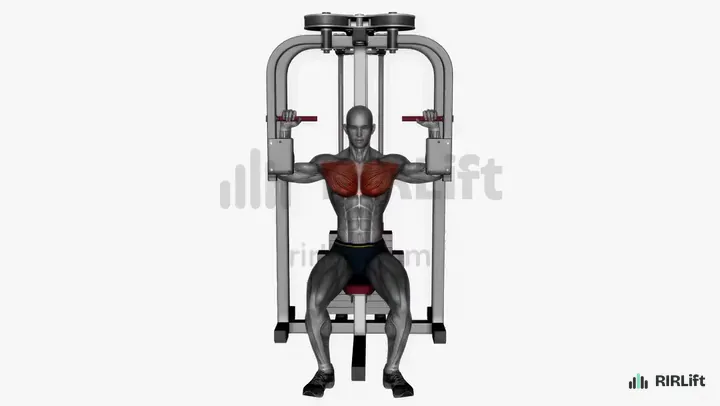
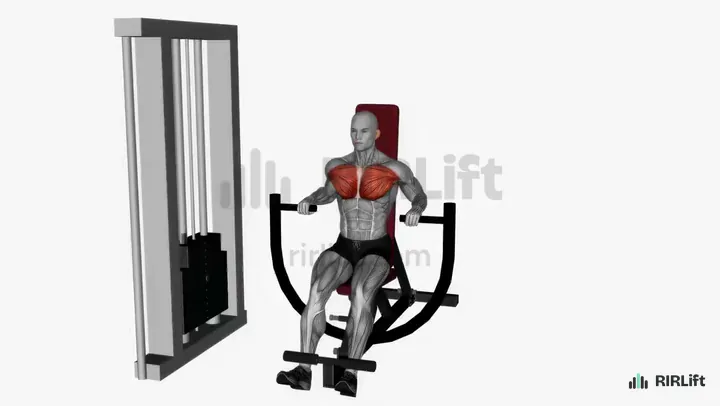
The best machine chest exercises are the seated chest press for the whole chest, the incline press machine for the upper chest, the decline press and the seated dip machine for the lower chest, and the pec deck for a fly that needs no balance. A complete machine chest day is one press, a second press from another angle, and the pec deck. Set the seat so the handles start at the right height for your chest before you load anything; that one adjustment decides whether the machine trains your chest or your shoulders.
- Machine Chest Press Chest
- Machine Incline Press Chest
- Pec Deck Fly Chest
- Machine Decline Press Chest
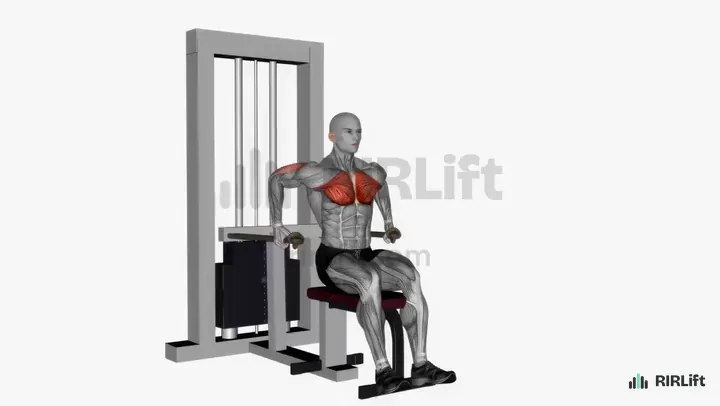
- Machine Chest Dip Chest, Triceps
Put them together: example sessions
Each session below picks from the exercises above for one situation, with the sets, reps, rest and RIR filled in. Open one in the session builder to change a pick, price it from a recent set, and add it to RIRLift.
-
Session 1
New to the gym, machines only
You have trained for less than a few months, you do full-body sessions, and you want chest work you can learn in one visit.
2× a week · 8 sets a week · ~10 min
-
Session 2
Full machine chest day, twice a week
You train on a push or upper body split, use machines by choice, and want to cover upper, middle and lower chest.
2× a week · 20 sets a week · ~30 min
-
Session 3
Machines after a barbell bench press
You bench press with a barbell first and use machines to add volume without another heavy free-weight lift.
2× a week · 16 sets a week · ~20 min
Session 1
New to the gym, machines only
- Workouts2× a week
- Working sets8 a week
- Per workout~10 min
- EquipmentChest Press, Fly Machine
You have trained for less than a few months, you do full-body sessions, and you want chest work you can learn in one visit.
Two machines are enough to start: the chest press teaches you to press hard on a fixed path, and the pec deck adds the fly. Four sets twice a week is plenty while you are new, because almost any hard set makes you grow. The sets stop 2 to 3 reps short of failure so you learn the seat setup and the feel of a hard rep before you chase it.
| Exercise | Sets × reps | RIR | Rest |
|---|---|---|---|
| Machine Chest Press1 warm-up set firstHandles at mid-chest. Note the seat height. | 2 × 8–12 | 2 | 2 min |
| Pec Deck FlyStop the stretch at shoulder line. | 2 × 10–15 | 2 | 75 s |
- How to run it
- Add both machines to two full-body days a week, after your leg exercise and before your back work. Write down the seat height for each machine the first time.
- How to progress
- Each session, try to add one rep to every set. Once all sets reach 12 reps at 2 reps in reserve, move the pin down one plate and start again near 8.
Session 2
Full machine chest day, twice a week
- Workouts2× a week
- Working sets20 a week
- Per workout~30 min
- EquipmentIncline Chest Press, Chest Press, Fly Machine, Decline Chest Press +1
You train on a push or upper body split, use machines by choice, and want to cover upper, middle and lower chest.
Day A starts with the incline press for the upper chest, then the flat press, then the pec deck. Day B swaps the presses for the decline press and the seated dip, the two lower-chest machines, and ends on the pec deck again because it recovers fast. The first press of each day warms up with two lighter sets and stops at 2 reps in reserve to protect the weight you add next week; the second press goes to 1 and the pec deck to 0. That is 9 to 10 hard sets per day and about 19 a week.
| Exercise | Sets × reps | RIR | Rest |
|---|---|---|---|
| Machine Incline Press2 warm-up sets firstHeaviest set first. | 4 × 6–10 | 2 | 2:30 min |
| Machine Chest Press | 3 × 8–12 | 1 | 2 min |
| Pec Deck Fly1 s squeeze each rep. | 3 × 12–15 | 0 | 75 s |
Open Machine Chest A in the session builder
| Exercise | Sets × reps | RIR | Rest |
|---|---|---|---|
| Machine Decline Press2 warm-up sets first | 4 × 6–10 | 2 | 2:30 min |
| Machine Chest DipLean forward over the handles. | 3 × 8–12 | 1 | 2 min |
| Pec Deck FlyLast set: 3 s on the way back. | 3 × 12–20 | 0 | 75 s |
Open Machine Chest B in the session builder
- How to run it
- Do A and B on separate days with at least 48 hours between them, as the chest part of your push or upper days.
- How to progress
- Double progression: when every set of an exercise reaches the top of its range at the target RIR, add one plate. If the jump is too big, add reps first, then a plate.
Session 3
Machines after a barbell bench press
- Workouts2× a week
- Working sets16 a week
- Per workout~20 min
- EquipmentIncline Chest Press, Dip Machine, Fly Machine
You bench press with a barbell first and use machines to add volume without another heavy free-weight lift.
Your barbell press already trained the middle of the chest heavy, so the machines cover the angles it skipped: the incline press for the upper chest and the seated dip for the lower chest, then the pec deck to finish. The barbell has already tired you out, so the machines take moderate reps at 1 rep in reserve with no extra warm-up, and the pec deck goes to failure. It adds 8 sets to the bench sets you already do.
| Exercise | Sets × reps | RIR | Rest |
|---|---|---|---|
| Machine Incline Press | 3 × 8–12 | 1 | 2 min |
| Machine Chest DipLean forward. | 2 × 10–15 | 1 | 90 s |
| Pec Deck Fly | 3 × 12–20 | 0 | 1 min |
- How to run it
- Run it right after your bench press, once or twice a week depending on how often you bench.
- How to progress
- Keep the machine weight until every set reaches the top of its range, then add a plate. If your bench press numbers start falling, cut the dip machine first.
Make it fit you
-
Your gym only has one press machine
Use the chest press for every session, but change the seat height between days: a little lower on one day so the handles start near your upper chest, a little higher on the other. Keep the pec deck in both.
-
Shoulders bother you on pressing
Make the decline press and the seated dip your main presses and drop the incline press for a few weeks. Stop each rep where your hands reach your chest instead of letting the handles travel further back.
-
Upper chest lags
Start every chest day with the incline machine and give it four sets, even on day B. Use the pec deck with the seat set one notch lower so your arms move slightly upward as they come together.
-
The pec deck is always taken
Swap it for a cable fly at the crossover, or do one extra set on the chest press with a three-second return. The pec deck is the only machine fly here, so the cable station is the closest replacement.
-
Weight stack jumps are too big
When the next plate is more than you can handle for the bottom of the rep range, stay put and add a pause at the stretched position, or slow the return to three seconds, until the reps climb past the top of the range.
-
Log the RIR, not just the weight
Machines in different gyms carry different weights for the same pin, so a number on its own tells you little. If you log in RIRLift, record the reps you had left on each set and the seat setting in the notes; the reps in reserve tell you when the next plate is due.
Questions
Which machine is for chest?
The seated chest press is the main one, and most gyms also have an incline and a decline version of it. The pec deck, also called the chest fly machine, trains the fly movement, and the seated dip machine works the lower chest and triceps. The cable crossover is used for chest too, with its own set of flies.
Can you build a big chest with machines only?
Yes. Your chest grows from hard sets, not from the tool, and machines let you take sets close to failure safely and repeatably. Pick a press and the pec deck, add weight as the reps go up, and you have everything a barbell would give you except practice on the barbell itself.
What is the best machine for upper chest?
The incline press machine. It angles the press upward, which puts more of the work on the upper chest. Do it first in your session, while you are fresh, if upper chest is your priority.
What machine works the lower chest?
The decline chest press and the seated dip machine. Both move your arms forward and down, which matches the direction the lower chest fibers run. Lean forward on the dip machine so the chest works instead of only the triceps.
Are chest machines good for beginners?
They are the easiest way to start. The fixed path means you can learn to push hard without balancing a bar, and you can stop a set anywhere without a spotter. Two machines, a press and the pec deck, are enough for your first months.
What chest exercises can you do with a single cable machine?
One-arm cable flies, with the pulley set high, at chest height or low depending on which part of the chest you want to train. The cable pec exercises page shows each angle; on a single pulley, do all of them one arm at a time.
How many sets of machine chest exercises should you do?
Most people grow well on 10 to 20 hard chest sets a week, split over two sessions. That is three machines for three sets each, twice a week, with each set ending 0 to 2 reps short of failure.
Related templates
-
Cable pec exercises: every fly angle for upper, middle and lower chest
Every cable fly angle, for when the crossover is free or your gym has one pulley.
-
Machine chest press: how to set it up and use it
The seated chest press in detail: seat setup, programming and variations.
-
Chest exercises at the gym: barbells, machines, cables and dips
Machines alongside barbells, dumbbells and cables for a full gym chest day.
-
Machines vs free weights
Whether a machine-only chest program builds as much muscle as a barbell one.
-
The best workout for chest, matched to your setup
Full chest programs if you want to mix machines with free weights.