Calf raise alternatives for every gym and home setup

The best standing calf raise alternative is the Smith machine calf raise, because it keeps your legs straight and lets you load your calves just as heavily. If the Smith is busy, a leg press calf raise does the same job with nothing on your shoulders. At home, raise on a step with dumbbells, or one leg at a time with no equipment, and add a seated raise with weight on your knees to train the soleus too.

What a standing calf raise alternative has to replace

The standing calf raise trains both calf muscles with your knees straight, which lets the gastrocnemius, the muscle you see from behind, do most of the work. It loads them hardest at the bottom, with your heels dropped below the step into a full stretch.

Any swap needs two things to match it: straight knees and a step or edge so your heels can drop. Raising on flat ground cuts off the half of the rep that does the most.

How to do the standing calf raise

Other machines in the gym

When the standing calf machine is taken, most leg machines can be used as one. Set your forefeet on an edge so your heels drop, and keep your knees straight.

Closest swap: bar on your back

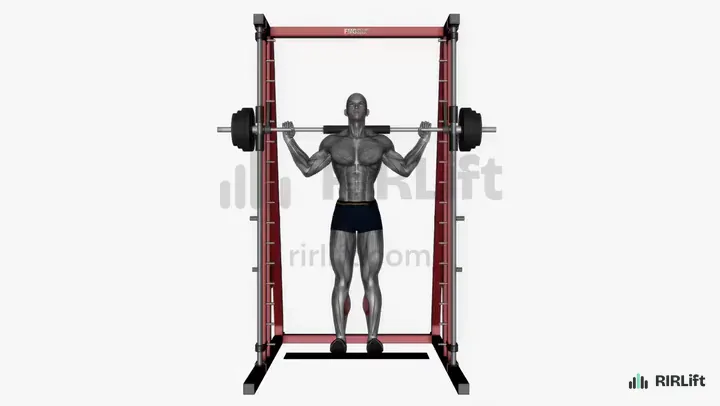
Smith Machine Calf Raise

Calves

The same straight-leg raise, with the Smith bar instead of shoulder pads. Put a step or plates under your forefeet and you can load it as heavily as the calf machine.

How to do it

  1. Set the bar at shoulder height and, if you have one, a step or a pair of plates under it.
  2. Get under it with the bar across your upper back, feet hip-width, and unrack it by turning the hooks.
  3. Rise onto the balls of your feet as high as you can with your legs straight, and hold the top briefly.
  4. Lower your heels slowly, all the way below the step if you are on one, and repeat.

Cues

  • Heels below the step
  • Tall and straight
  • Slow on the way down

Common mistakes

  • Short reps at the top only: lower your heels all the way every rep; a plate under your forefeet adds range.
  • Leaning on the bar with your arms: your hands only steady it.

Heavy swap with nothing on your spine

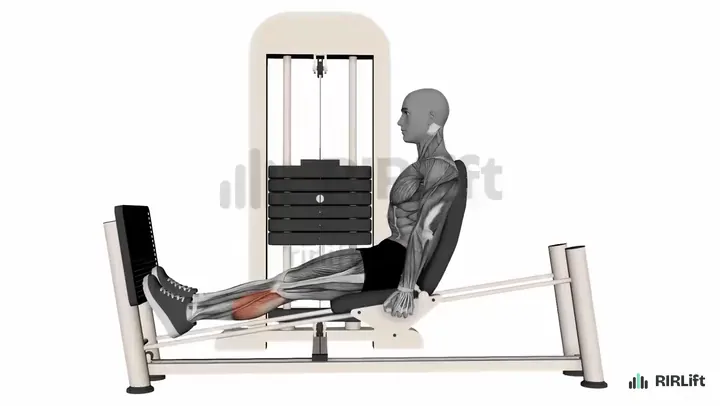
Leg Press Calf Raise

Calves

Pressing the plate with your toes keeps your legs nearly straight, so it trains the same calf muscles as the standing raise. Nothing rests on your shoulders, which makes it the pick when your back or shoulders don't like the pads.

How to do it

  1. Sit in the machine and place the balls of your feet on the bottom edge of the footplate, heels off.
  2. Straighten your legs to press the plate out, with a slight bend at the knee.
  3. Let the plate push your toes back toward you until the calves stretch.
  4. Press the plate away with your toes as far as the ankles go, then let it return slowly.

Cues

  • Only the ankles move
  • Balls of the feet on the edge
  • Long, slow return

Common mistakes

  • Feet slipping up the plate: if they creep, stop the set and reset.
  • Pushing with the knees: the legs should stay the same length all set.

Same swap on the 45-degree press

45-Degree Leg Press Calf Raise

Calves

If your gym's leg press is the angled sled, use it the same way. It loads very heavy, so start lighter than your leg press weight and use the full ankle range.

How to do it

  1. Sit in the 45-degree press and set the balls of your feet on the edge of the platform, heels hanging off.
  2. Press the sled up and turn the safeties off, keeping a slight bend in your knees.
  3. Let the sled push your toes back toward you to a full stretch.
  4. Point your toes to drive the sled up as far as it goes, pause, and lower slowly.

Cues

  • Safeties close
  • Toes push the sled
  • Stretch, pause, push

Common mistakes

  • Setting your whole foot on the plate: only the balls of your feet go on it, so your heels have room to move.
  • Letting the knees bend and straighten: that is a leg press, not a calf raise.

Straight-leg raise on the hack squat

Hack Squat Calf Raise

Calves

The hack squat's shoulder pads and platform work like a standing calf machine. Use it when the calf machine is busy and the hack squat is not.

How to do it

  1. Step into the sled, pads resting on your shoulders, feet hip-width at the bottom edge of the platform, heels hanging off.
  2. Straighten your legs and flip the safety handles off, keeping a soft bend in the knees.
  3. Drop your heels past the platform edge until the calves stretch.
  4. Press up onto the balls of your feet as high as you can, then lower slowly.

Cues

  • Feet at the bottom edge
  • Legs stay straight
  • Full stretch each rep

Common mistakes

  • Forgetting to re-engage the safeties before stepping off: lock them while your legs are still straight.
  • Feet too high on the platform: you lose the drop below the edge.

Deep stretch, no load on your shoulders

Donkey Calf Raise

Calves

Hinging forward with straight legs gives your calves a deeper stretch than standing upright, with no load on your shoulders. Use the donkey machine if your gym has one, or a step with a bench to lean on.

How to do it

  1. Stand on a step or the donkey machine block with your forefeet on the edge.
  2. Hinge forward and rest your forearms on a bench or the machine pads, back flat, legs straight.
  3. Drop your heels to a deep stretch.
  4. Push up onto your toes, hold for a beat, and lower slowly.

Cues

  • Hips back, back flat
  • Deep stretch at the bottom
  • Toes stay on the edge

Common mistakes

  • Rounding the lower back to reach the support: raise the bench instead.
  • Short reps at the top only: the stretched bottom is the reason to do this version.

Cable swap in a crowded gym

Cable Calf Raise

Calves

A bar from the low pulley and a plate under your forefeet turn any cable station into a calf machine, with load in small steps.

How to do it

  1. Attach a straight bar to the low pulley and hold it at arm's length against your thighs, feet hip-width.
  2. Stand tall with straight knees; set a plate under your forefeet if you want a deeper stretch.
  3. Rise as high as you can onto the balls of your feet and hold the top for a second.
  4. Lower your heels slowly all the way down and repeat.

Cues

  • Stretch at the bottom, squeeze at the top
  • Legs straight
  • Push through the big toe

Common mistakes

  • Bouncing between reps: pause a beat with your heels down before the next rise.
  • Leaning back against the cable: stay tall so your calves lift the weight.

Barbell, dumbbells and kettlebells

At home or in a free-weight area, a plate or step under your forefeet turns any weight into a calf raise.

Home gym swap with a rack

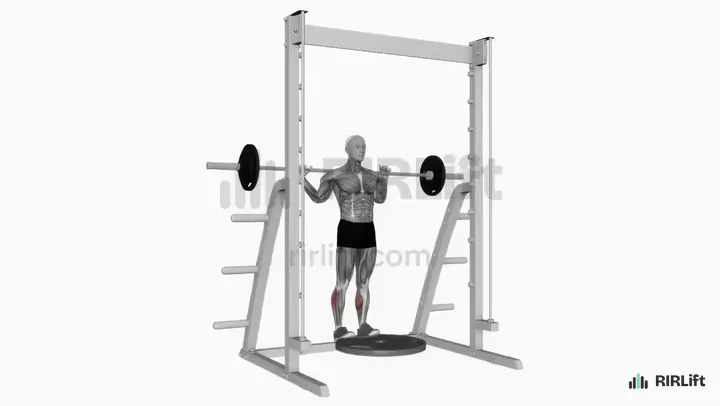
Barbell Standing Calf Raise

Calves

With a bar on your back and a plate under your forefeet, you get the standing calf raise with no machine. Keep the plate low so you can balance.

How to do it

  1. Set the bar on your upper back from a rack and stand with the balls of your feet on a plate or low step, heels off the edge.
  2. Lower your heels slowly until your calves are fully stretched, and hold for a second.
  3. Rise onto your toes as high as you can.
  4. Pause at the top, then lower slowly and repeat.

Cues

  • Pause in the stretch
  • Straight legs
  • Full rise

Common mistakes

  • Bouncing out of the bottom: hold the stretch, then rise.
  • Using a step so high you lose balance: a single plate is enough height.

Dumbbells at home

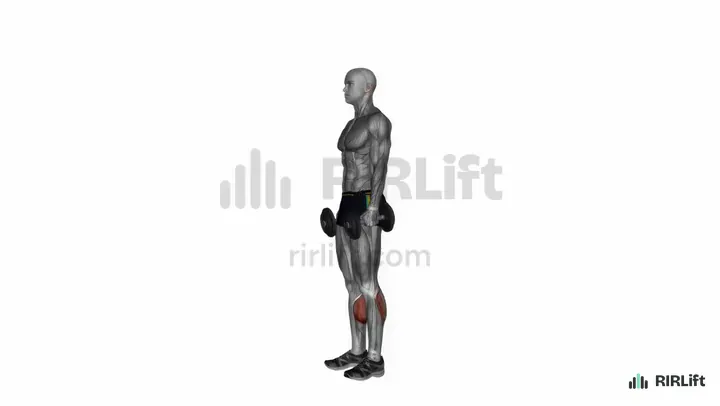
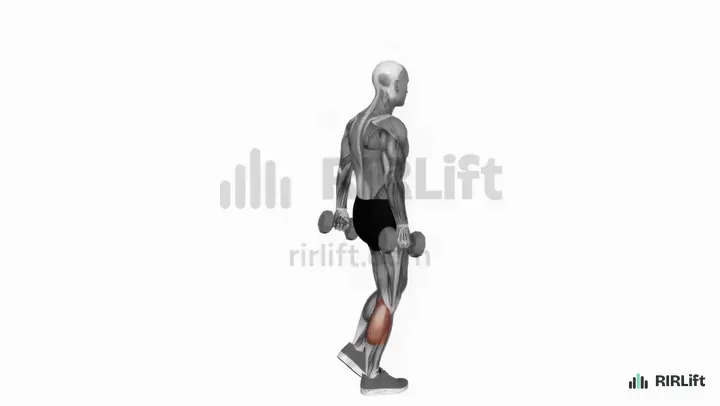
Dumbbell Standing Calf Raise

Calves

A dumbbell in each hand and a step under your forefeet. Your grip may give out before your calves; if so, switch to one leg at a time with one dumbbell.

How to do it

  1. With a dumbbell hanging from each hand, stand hip-width apart on the floor, or with the balls of your feet on a step for more range.
  2. Let your heels sink as low as they go, below the step if you use one, and pause in the stretch.
  3. Press up onto your toes as high as you can with straight knees, and hold the top briefly.
  4. Lower slowly back into the stretch and repeat.

Cues

  • Tall body, straight knees
  • Slow down, quick up
  • Weight over the big toes

Common mistakes

  • Cutting the bottom short because the step feels unstable: use a wider step or touch the wall with a fingertip.
  • Bending the knees to help at the end of a set: that turns it into a little jump and stops loading the calf.

One kettlebell at home

Kettlebell Calf Raise

Calves

Hold one kettlebell at your side and raise on a step. When both legs get easy, do it one leg at a time with the bell on the same side.

How to do it

  1. Hold the kettlebell by its handle with your arm hanging, and stand with the balls of your feet on a step.
  2. Drop your heels below the step into a full stretch and hold for a beat.
  3. Push up onto your toes with straight knees until your heels are as high as they go.
  4. Lower under control and repeat. When 20 reps get easy, do it on one leg with the kettlebell on the same side.

Cues

  • Arm long, shoulder down
  • Stretch, pause, rise
  • Ankles straight, not rolling out

Common mistakes

  • Letting the kettlebell swing and pull you forward off the step: keep it pinned close to your thigh.
  • Rushing reps once the calves burn: the burn is the point, keep the tempo the same.

No equipment

Your bodyweight is enough for calves if you use one leg at a time, raise from a step, and take every set close to failure.

Best swap with no equipment

Single-Leg Calf Raise

Calves

One calf lifting your whole body is heavier than most people expect, so it replaces the machine when you have nothing to load. Take every set close to failure, and hold a dumbbell once 20 reps is easy.

How to do it

  1. Stand on one foot, the other lifted behind you, with the ball of the standing foot on the edge of a step if you have one.
  2. Hold a dumbbell at your side if you have one, and touch a wall or rail with your free hand for balance only.
  3. Lower your heel as far as it goes and pause in the stretch.
  4. Push up onto the ball of your foot as high as you can, hold a second, and lower over two seconds. Sets are per leg.

Cues

  • Heel below the step
  • Pause at the top
  • Two seconds down

Common mistakes

  • Bouncing out of the bottom: pause for a beat in the stretch before each rep.
  • Pulling yourself up with the hand on the wall: it is there for balance only.

Seated swaps for the soleus

Bent knees train the soleus, the calf muscle a standing raise works least. Use one of these alongside a straight-leg swap, or alone when your back or shoulders need a break.

The other calf muscle

Seated Calf Raise

Calves

Bent knees shift the work from the outer calf to the soleus underneath. It does not replace the standing raise, but pairing the two covers your whole calf.

How to do it

  1. Sit at the machine with the balls of your feet on the platform and the pad snug on your lower thighs.
  2. Lift the pad slightly and release the safety lever.
  3. Lower your heels as far as they go and pause in the stretch.
  4. Push up onto the balls of your feet as high as possible, squeeze, and lower slowly.

Cues

  • Pad on the thighs, not the knees
  • Pause at the bottom
  • Big toe pressure

Common mistakes

  • Rocking the torso to move the weight: the upper body stays quiet.
  • Cutting the range once it burns: shorten the set, not the rep.

Bent-knee swap with a barbell

Barbell Seated Calf Raise

Calves

Sitting with the bar across your thighs keeps your knees bent, which shifts the work to the soleus, the calf muscle a straight-leg raise trains least. Pair it with a straight-leg raise to cover both calf muscles.

How to do it

  1. Sit on the end of a bench with your feet hip-width apart, the balls of your feet on a plate if you have one.
  2. Rest a barbell across your lower thighs just above the knees, with a pad or folded towel under it, and hold it in place.
  3. Let your heels drop as low as they go until your calves stretch.
  4. Drive your heels up to lift the bar as high as you can, hold a second, and lower under control.

Cues

  • Bar just above the knees
  • Heels drop below the step
  • Hold the top for a second

Common mistakes

  • Bar resting on your kneecaps: slide it an inch toward your hips and pad it.
  • Short reps with your heels barely leaving the floor: use a plate under the balls of your feet so the heels can drop lower.

Bent-knee swap with dumbbells

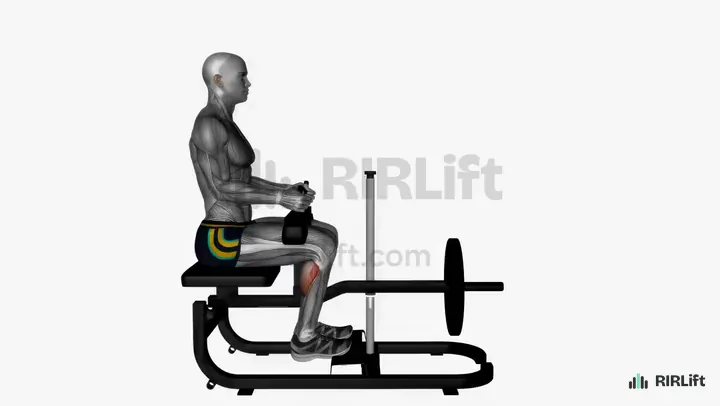
Dumbbell Seated Calf Raise

Calves

Dumbbells resting on your thighs and the balls of your feet on a plate train the bent-knee soleus. You can rest more weight on your knees than you can comfortably hold at your sides, so it pairs well with the standing dumbbell raise.

How to do it

  1. Sit on a chair or bench with your knees bent to about 90 degrees and the balls of your feet on a book or weight plate, heels free.
  2. Set a dumbbell upright on each thigh just above the knee and hold them steady with your hands.
  3. Lower your heels until they nearly touch the floor and your calves stretch, then push up through the balls of your feet as high as you can.
  4. Hold the top for a second, lower slowly, and repeat.

Cues

  • Weight sits on the knees, not the hands
  • Full drop, full lift
  • Squeeze and hold at the top

Common mistakes

  • Pushing the dumbbells up with your arms: rest your hands on top only to stop them sliding.
  • Using a block too thin to drop the heels: if your heels touch the floor before the calf stretches, stack another book.

Example sessions without the standing calf raise

Session 1

Gym, standing calf machine taken

Open in the session builder
  • Workouts2× a week
  • Working sets20 a week
  • Per workout~20 min
  • EquipmentSmith Machine, Leg Press, Seated Calf Raise

You train in a gym where the standing calf machine is busy or missing.

The Smith machine calf raise takes the standing raise's place as the heavy lift, the leg press calf raise adds more straight-leg work without a bar, and the seated machine covers the soleus. 10 working sets.

Calves
ExerciseSets × repsRIRRest
Smith Machine Calf Raise1 warm-up set firstPause 1 s in the stretch. 4 × 8–12 1 90 s
Leg Press Calf Raise 3 × 10–15 1 75 s
Seated Calf Raise 3 × 12–15 1 1 min
How to run it
Run it at the end of a leg day, twice a week.
How to progress
When every set reaches the top of its range at the RIR shown, add the smallest weight jump next session and start again at the bottom.

Session 2

Home with dumbbells and a bench

Open in the session builder
  • Workouts3× a week
  • Working sets30 a week
  • Per workout~20 min
  • EquipmentDumbbells

You train at home with a pair of dumbbells, a bench or chair, and a step.

Dumbbells are lighter than a calf machine, so reps run higher. The standing dumbbell raise leads, the seated dumbbell raise covers the soleus, and single-leg raises with one dumbbell finish to failure. 10 working sets.

Calves
ExerciseSets × repsRIRRest
Dumbbell Standing Calf Raise1 warm-up set first 4 × 12–15 1 1 min
Dumbbell Seated Calf Raise 3 × 15–20 1 1 min
Single-Leg Calf RaiseSets are per leg. 3 × 12–20 0 45 s
How to run it
Two or three times a week, after legs or on its own.
How to progress
Add reps until every set hits the top of its range, then move up a dumbbell. On the single-leg raise, slow the lowering to three seconds once 20 reps is easy.

Session 3

Home gym with a barbell

Open in the session builder
  • Workouts2× a week
  • Working sets20 a week
  • Per workout~20 min
  • EquipmentBarbells

You have a rack, a barbell and a bench at home, and no calf machine.

The barbell standing calf raise loads heavier than dumbbells, so it runs at lower reps with longer rest. The barbell seated raise covers the soleus, and single-leg raises finish to failure. 10 working sets.

Calves
ExerciseSets × repsRIRRest
Barbell Standing Calf Raise1 warm-up set first 4 × 8–12 2 90 s
Barbell Seated Calf Raise 3 × 12–15 1 1 min
Single-Leg Calf RaiseSets are per leg. 3 × 10–15 0 45 s
How to run it
Twice a week, after squats or on an upper-body day.
How to progress
Add 5 lb to the standing raise once all sets reach 12 reps. Add reps on the seated and single-leg raises, then weight.

Make it fit you

Questions

What can I use as a substitute for a standing calf raise?

The Smith machine calf raise is the closest, then the leg press calf raise and the donkey calf raise. At home, use a step with dumbbells or do single-leg calf raises with your bodyweight.

What is the difference between leg press calf raises and standing calf raises?

Both train your calves with straight legs. On the leg press nothing rests on your shoulders and balance is not a factor, so many people can load it heavier.

Can you do calf raises without a step?

You can, but you lose the bottom of the range, where your calves are stretched and work hardest. A plate, a thick book or a stair gives you that range back.

What is a good calf raise alternative at home?

Single-leg calf raises on a stair work with no equipment. With dumbbells, add the standing dumbbell calf raise and a seated raise with a dumbbell on each knee.

Are seated calf raises a substitute for standing calf raises?

Only partly. Bent knees shift the work to the soleus, so pair a seated raise with a straight-leg swap to train the whole calf.

What builds calf muscles fast?

A full stretch at the bottom, a one-second pause, and sets taken close to failure two to four times a week. Short, bouncy reps are the most common reason calves don't grow.