
Calf raises: how to do them, what they work and what to swap in
Published October 17, 2026
A calf raise is lifting your heels by pointing your feet, with the balls of your feet on a raised edge so your heels can drop below them. Done standing with straight knees it trains your whole calf; done seated with bent knees it shifts the work to the soleus underneath. What makes it work is range: sink into a full stretch at the bottom of every rep, pause there, then rise as high as you can.
- WorksCalves
- EquipmentStanding Calf Raise
- Start with3 × 10–15, 2 in reserve, 90 s rest
How to do the standing calf raise
Straight knees let both calf muscles work, and all it needs is a step and something to hold for balance. Once bodyweight reps get easy, hold a dumbbell or move to a calf machine and keep the same full stretch at the bottom.
Steps
- Stand with the balls of your feet on the edge of a step or block and rest a hand on a rack or wall for balance.
- Stand tall with your legs straight, knees just short of locked.
- Let your heels sink as far below the step as they go and hold the bottom for a full second.
- Push up through your big toe until you are as high on your toes as you can get, and squeeze for a moment.
- Lower back down to the same deep stretch before the next rep, at the same pace every time.
Cues
- Pause in the stretch
- Knees stay where they started
- Weight over the big toe
Common mistakes
- Short, bouncy reps in the middle of the range: lighten the load until you can reach the bottom stretch and the top squeeze on every rep.
- Bending and straightening your knees to drive the weight up: lock your knee angle in at the start and let only your ankles move.
- Rolling out onto your little toes at the top: keep pressure on your big toe so your heel rises straight up.
Swap for: Smith Machine Calf Raise, Leg Press Calf Raise, Dumbbell Standing Calf Raise
Muscles the standing calf raise works
Calf raises work the gastrocnemius, the two-headed muscle you see from behind, and the soleus underneath it. With straight knees both share the load; bend your knees and the gastrocnemius goes slack, so seated raises fall mostly to the soleus. Both are hardest to control at the bottom stretch, which is the part of each rep most worth owning.
Sets, reps and reps in reserve for the standing calf raise
| Goal | Sets × reps | RIR | Rest |
|---|---|---|---|
| Build muscle | 3 × 10–15 | 2 | 90 s |
| This matches what the session builder below prescribes for the standing calf raise. | |||
| Closer to failure | 3–4 × 12–20 | 0–1 | 90 s |
| Once your reps are full and paused, take the last set to the point where you cannot reach the top, then log it. | |||
| Straight and bent knee in one week | 2–3 each × 10–20 | 1–2 | 90 s |
| Split your calf sets between a standing raise and a seated raise so both muscles get hard sets. | |||
| Beginners | 2–3 × 12–15 | 2–3 | 90 s |
| Learn the paused bottom first, then add weight each week you reach 15 reps on every set. | |||
Standing calf raise variations
-
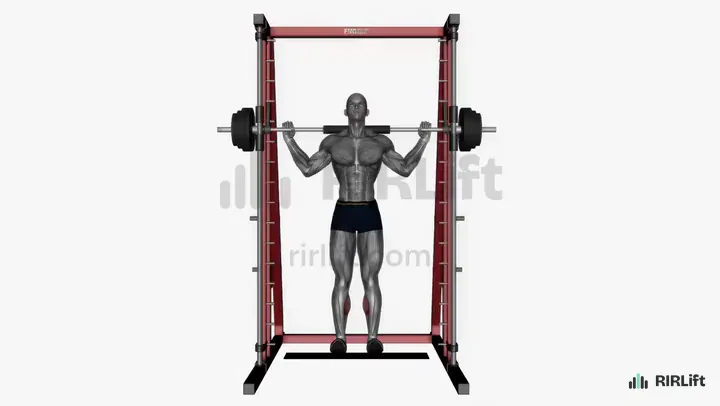
Smith Machine Calf Raise
Pick it when your gym has no calf machine: a plate or step under the bar gives you the same heavy, straight-knee raise.
Build a session with it -
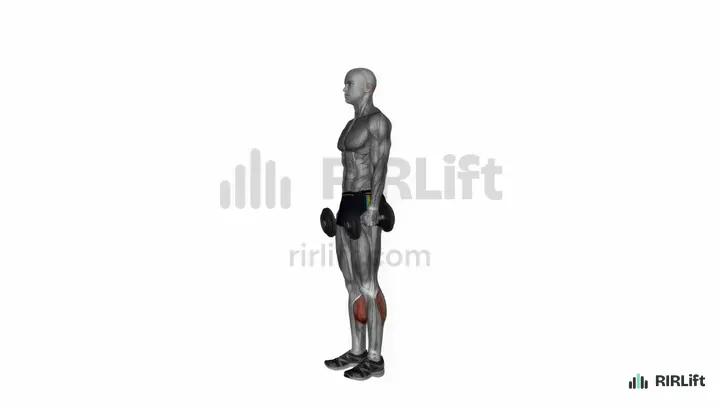
Dumbbell Standing Calf Raise
Use it at home or when the machines are full; stand on a stair with a dumbbell in each hand and pause in the stretch so a light pair is enough.
Build a session with it -
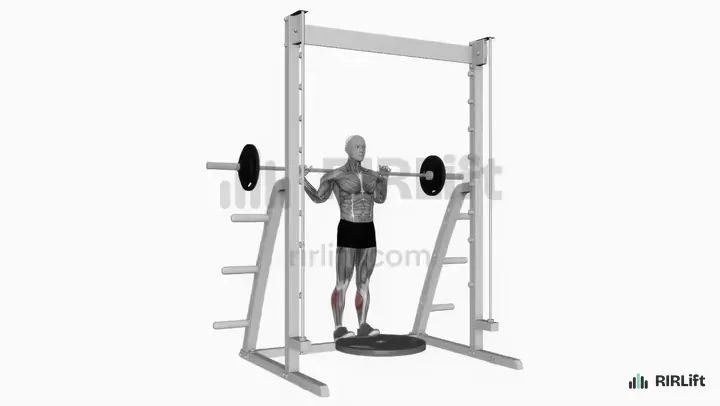
Barbell Standing Calf Raise
Choose it when you have a rack but no machine and your calves have outgrown the dumbbells you own.
Build a session with it -
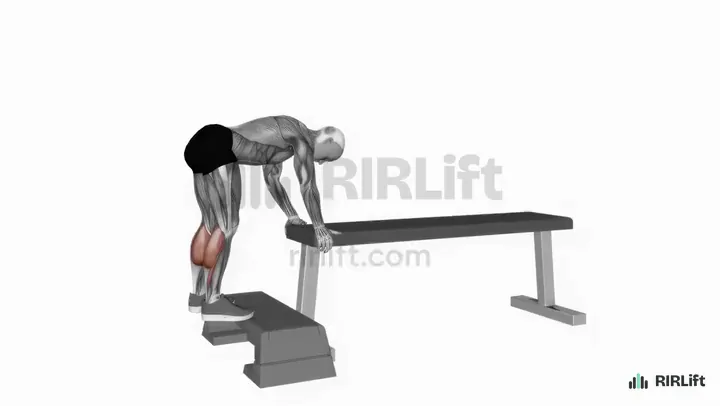
Donkey Calf Raise
Try it with just a step and a bench: lean on the bench with your hips bent and your knees straight, and raise up from a full stretch.
Build a session with it
Standing calf raise alternatives
Bent knee, for the soleus
-
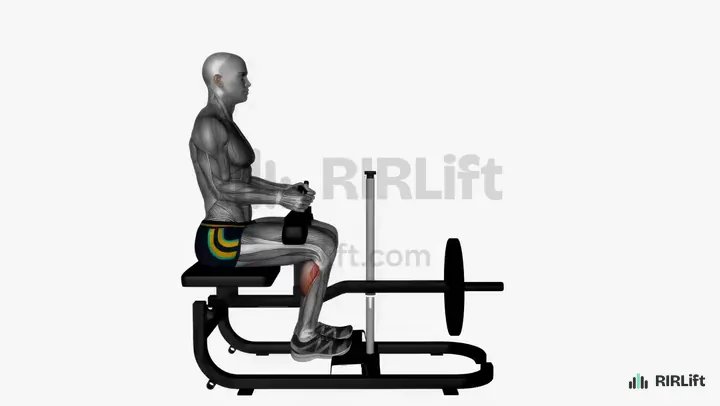
Seated Calf Raise
The machine version: your knees sit under a pad at 90 degrees, so the soleus does most of the work.
Build a session with it -
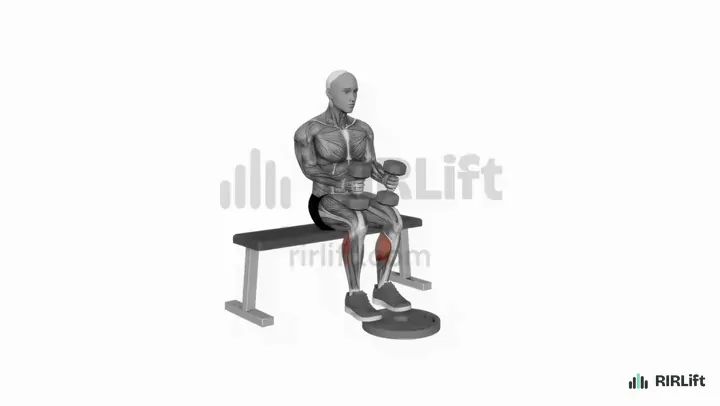
Dumbbell Seated Calf Raise
Sit on a bench with dumbbells on your knees and your toes on a plate when there is no seated machine.
Build a session with it -
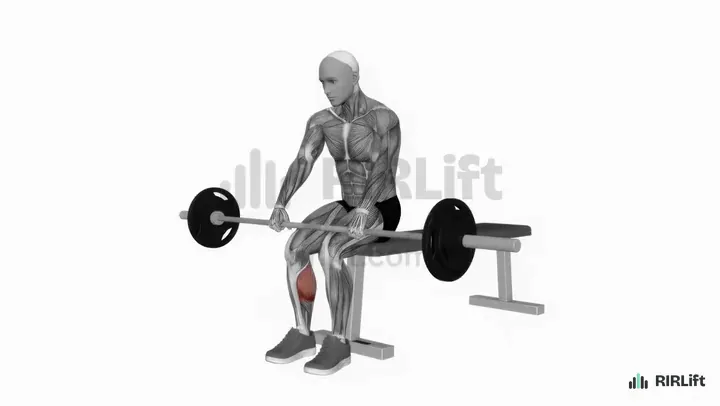
Barbell Seated Calf Raise
Use a padded barbell across your thighs once dumbbells on your knees stop being heavy enough.
Build a session with it
Other machines
-
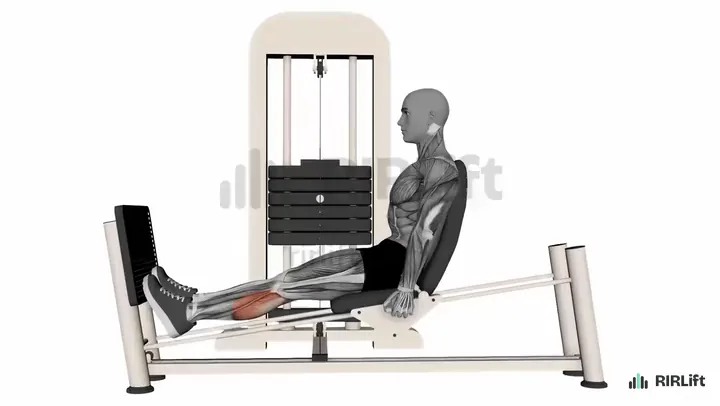
Leg Press Calf Raise
The swap most gyms have: balls of your feet on the bottom edge of the platform, knees just short of locked.
Build a session with it -
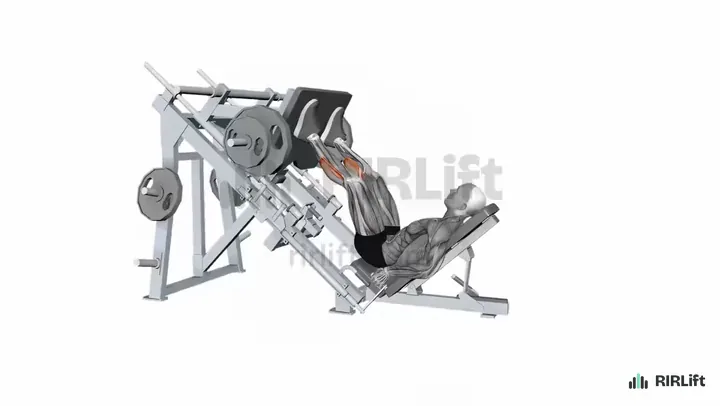
45-Degree Leg Press Calf Raise
Use the 45-degree sled when the horizontal leg press is taken, with the balls of your feet on the bottom edge of the platform.
Build a session with it -
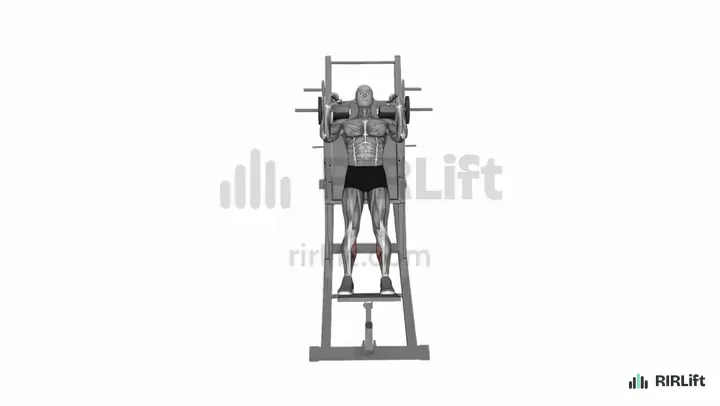
Hack Squat Calf Raise
Put the balls of your feet on the bottom edge of the hack squat platform when the calf machine and leg press are both taken.
Build a session with it -
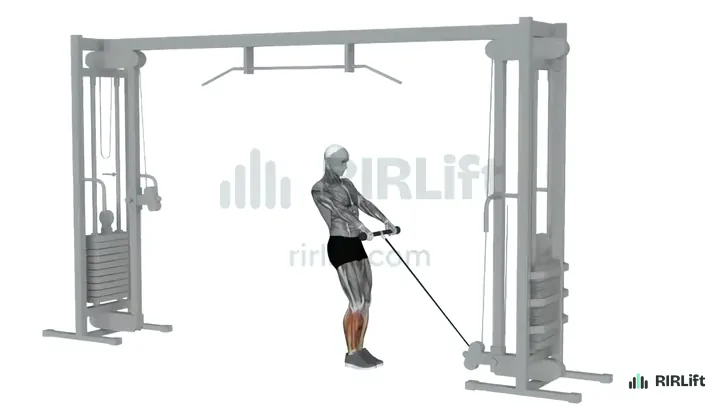
Cable Calf Raise
Stand on a plate at a low cable when you want steady tension from bottom to top with no plates to change.
Build a session with it
At home
-
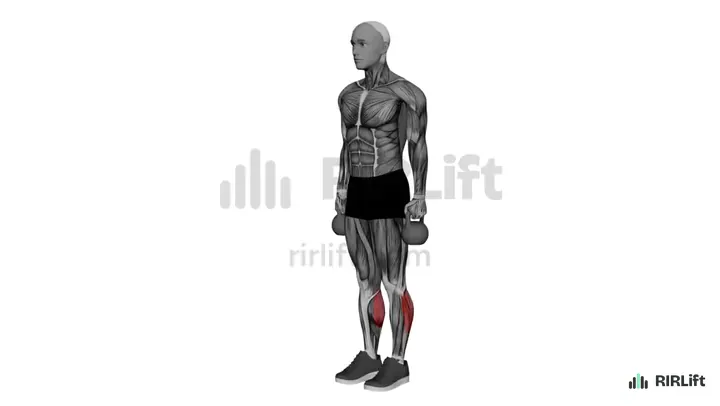
Kettlebell Calf Raise
Hold one kettlebell on the edge of a stair; switch to one leg at a time when two-legged reps get easy.
Build a session with it -
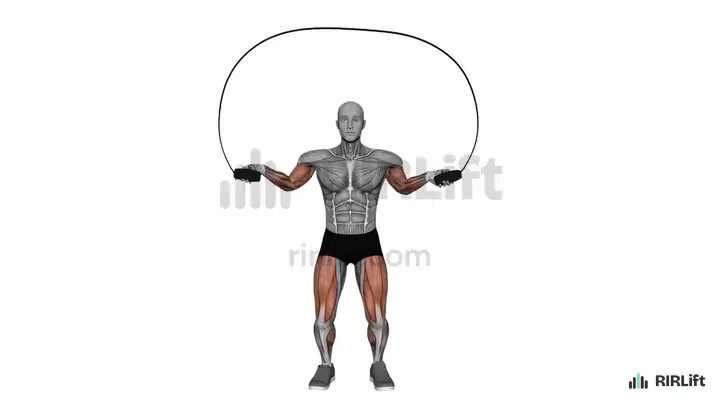
Jump Rope
Use it as conditioning that keeps your calves busy, alongside raises rather than instead of them, since it never reaches the deep stretch.
Build a session with it
Standing vs seated calf raises
With straight knees, the standing raise trains both calf muscles. Sitting with your knees bent slackens the gastrocnemius, so the seated raise mostly trains the soleus underneath.
If you only have time for one, do the standing raise, since it covers both. If you want fuller calves, give each its own sets in the week: a standing raise on one leg day and a seated raise on the other, or both in the same session.
Bodyweight calf raises at home
Two-legged bodyweight raises get easy fast, so stand on one leg on the edge of a stair and hold the rail with one hand. Lowering into a full stretch with your whole body on one calf is enough to reach 1 to 2 reps short of failure for most people.
When you can do 20 slow single-leg reps, hold a dumbbell or kettlebell in your free hand. For more no-gear leg work, see bodyweight exercises.
Why the bottom stretch matters most
Calves are short, so the easy way to cheat is bouncing through a few centimetres of range with a heavy stack. The weight goes up and the calves do not.
Set a rule you can check every rep: heels all the way down, a full second there, then all the way up. Use the lightest load that makes 10 to 15 of those hard, and only add weight when every rep still meets the rule. For why the stretched position counts, see lengthened partials.
Questions
What muscles do calf raises work?
Your gastrocnemius and soleus, the two muscles of your calf. Standing raises with straight knees train both, while seated raises with bent knees put most of the work on the soleus.
Do calf raises build your calves?
Yes, when the sets are hard and the reps are full. Stretch at the bottom, rise all the way up, and stop each set 0 to 2 reps short of failure. Calves need the same 10 to 20 hard sets a week as any other muscle to grow well.
How many calf raises should I do?
Start with 3 sets of 10 to 15 reps, stopping about 2 reps short of failure, on two leg days a week. Add sets until you are doing 10 or more hard calf sets a week if your calves are a priority.
Which type of calf raise is best?
A standing raise with straight knees, because it trains both calf muscles. Pair it with a seated raise if you want more soleus work. The best one is the one you can load heavily through a full range and progress for months.
How can I do calf raises without a machine?
Hold a dumbbell in each hand with the balls of your feet on a stair, or do them one leg at a time holding the rail. In a gym, the Smith machine, leg press and hack squat all work as calf machines with your toes on an edge.
What is the best calf raise alternative?
The leg press calf raise is the closest match in most gyms. With a Smith machine, put a plate under your toes and do standing raises with the bar on your back. At home, a single-leg raise on a stair with a dumbbell does the job.
Should you do calf raises every day?
You do not need to. Two or three sessions a week with hard sets builds calves at least as well as daily light sets, and it gives you sessions where you can add weight.
Related templates
-
Leg exercises with dumbbells: quads, hamstrings, glutes and calves
Standing and seated calf raises with dumbbells, plus the rest of a home leg session.
-
Machine exercises for every muscle, with sessions for where you are
Every gym machine worth using, including the calf machines on this page.
-
Hack squat: how to do it, what it works and what to swap in
The full how-to for the machine you can also use for calf raises.
-
The best workout for legs, built for your situation
Full leg sessions that place calf raises after squats and hinges.