
Core exercises at home for the front, sides and back
Published October 19, 2026
The best core exercises at home train all four sides of the trunk: the dead bug, bear crawl and ball body saw for the front, the side plank, Copenhagen plank and suitcase carry for the sides, the superman, ball back extension and kettlebell swing for the lower back, and the plank shoulder tap, renegade row and Turkish get-up for resisting rotation. The core's main job is to keep your spine steady while your arms and legs move, so most of these are holds and slow, controlled reps. Pick one move per group, 2 to 3 sets each, two or three times a week, ending each set 1 to 2 reps or a few seconds short of failure.
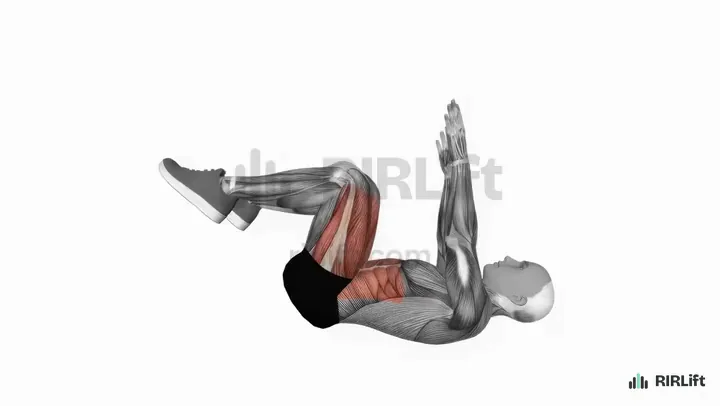
- Dead Bug Abs
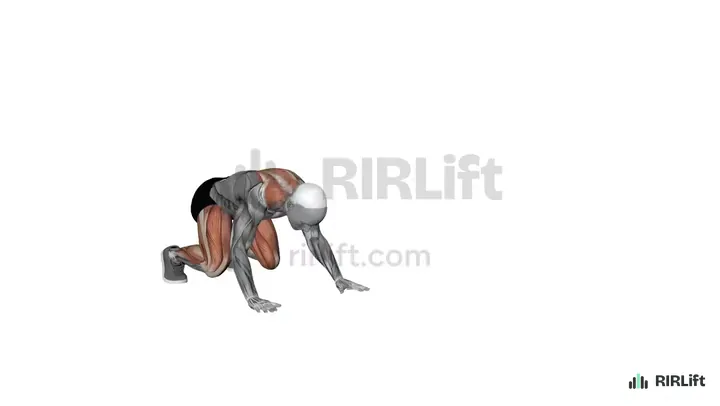
- Bear Crawl Abs, Shoulders
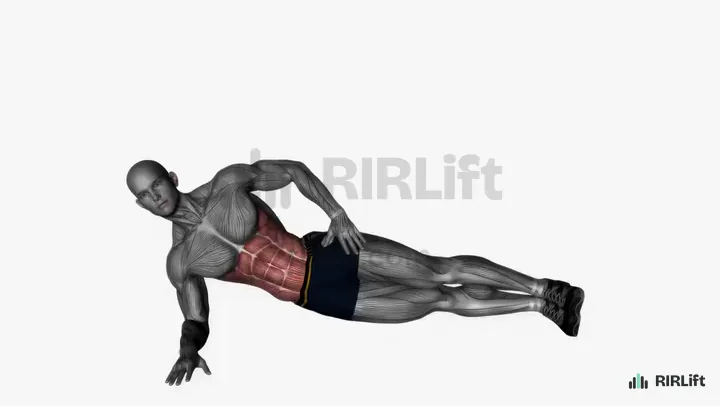
- Side Plank Abs
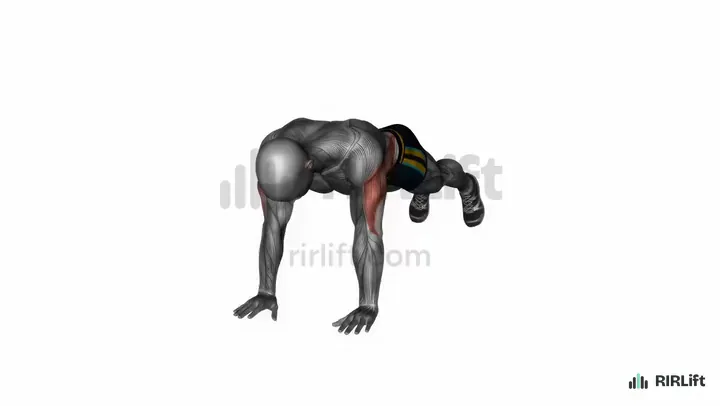
- Plank Shoulder Tap Abs
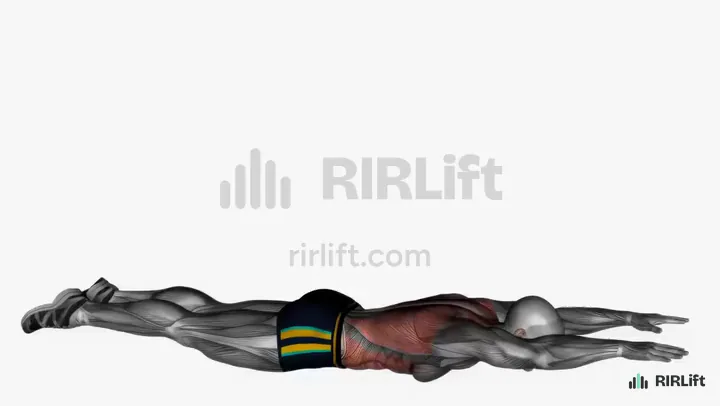
- Superman Lower Back
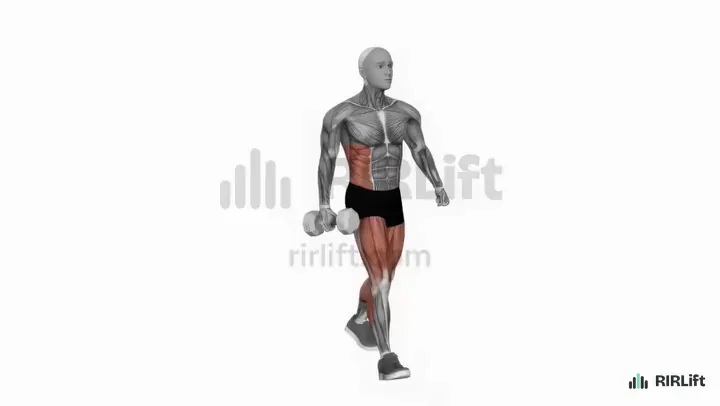
- Dumbbell Suitcase Carry Abs, Quads
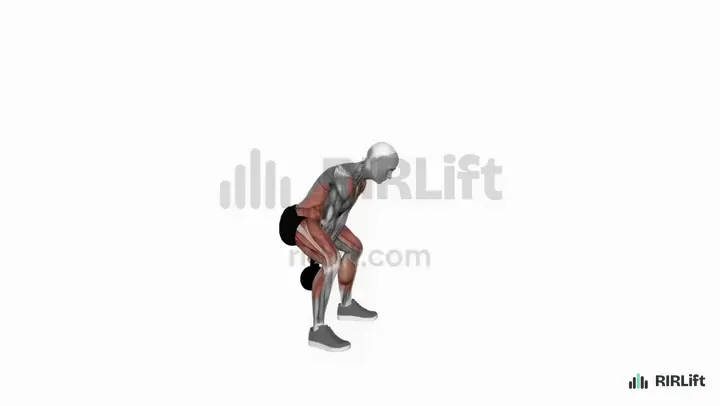
- Kettlebell Swing Glutes, Hamstrings
Put them together: example sessions
Each session below picks from the exercises above for one situation, with the sets, reps, rest and RIR filled in. Open one in the session builder to change a pick, price it from a recent set, and add it to RIRLift.
-
Session 1
New to core training, floor only
You have not trained your core before and want a routine for the floor of a small room.
3× a week · 30 sets a week · ~20 min
-
Session 2
One kettlebell, 20 minutes
You have one kettlebell and want core training that also builds strength and conditioning.
2× a week · 22 sets a week · ~20 min
-
Session 3
An exercise ball and a pair of dumbbells
You have a ball and dumbbells at home and want a harder core session that includes the lower back.
2× a week · 14 sets a week · ~15 min
Session 1
New to core training, floor only
- Workouts3× a week
- Working sets30 a week
- Per workout~20 min
- EquipmentBodyweight
You have not trained your core before and want a routine for the floor of a small room.
These four moves need only a floor and cover all four sides: the dead bug for the front, the plank shoulder tap for rotation, the bear crawl on all fours and the superman for the back. None loads the spine heavily, so it suits beginners, and 10 sets keeps it to 15 minutes. All sets stop at 2 RIR because control matters more than fatigue at first.
| Exercise | Sets × reps | RIR | Rest |
|---|---|---|---|
| Dead BugPer side. | 3 × 6–10 | 2 | 45 s |
| Plank Shoulder TapTaps per side. | 2 × 8–16 | 2 | 45 s |
| Bear CrawlSteps forward and back. | 2 × 10–20 | 2 | 1 min |
| Superman2 s hold. | 3 × 8–12 | 2 | 45 s |
- How to run it
- Do it three times a week. Move slowly; a set ends when the form slips, not when the clock says so.
- How to progress
- Add reps or steps each week. After four weeks at the top of every range, add the side plank or move to the kettlebell plan.
Session 2
One kettlebell, 20 minutes
- Workouts2× a week
- Working sets22 a week
- Per workout~20 min
- EquipmentKettlebells
You have one kettlebell and want core training that also builds strength and conditioning.
One bell is enough for the two moves that train the most core per minute: the swing for the back and hips and the get-up for every direction. The dead bug stays in as the front-core move that slots between swing sets. Swings go 10 to 15 at 1 RIR, get-ups stay at 2 RIR and low reps because a sloppy rep with a bell overhead is the one to avoid.
| Exercise | Sets × reps | RIR | Rest |
|---|---|---|---|
| A1 Kettlebell Swing | 4 × 10–15 | 1 | 30 s |
| A2 Dead BugPer side. | 4 × 6–10 | 1 | 1 min |
| Kettlebell Turkish Get-UpPer side. | 3 × 2–3 | 2 | 90 s |
- How to run it
- Do it twice a week. Alternate one set of swings with one set of dead bugs, then finish with the get-ups.
- How to progress
- Add swing reps up to 15, then move to a heavier bell. Add a get-up rep per side before adding weight there.
Session 3
An exercise ball and a pair of dumbbells
- Workouts2× a week
- Working sets14 a week
- Per workout~15 min
- EquipmentExercise Ball, Dumbbells
You have a ball and dumbbells at home and want a harder core session that includes the lower back.
The ball gives the body saw for the front of the core and the back extension for the spine muscles, with more range than the floor. Dumbbells add the renegade row for rotation and the suitcase carry for the sides. Fourteen sets across two routines covers each side of the trunk twice a week. Body saw and renegade row stay at 2 RIR because form breaks there first; back extensions and carries go to 1.
| Exercise | Sets × reps | RIR | Rest |
|---|---|---|---|
| Stability Ball Body Saw | 3 × 6–12 | 2 | 1 min |
| Exercise Ball Back Extension | 3 × 10–15 | 1 | 1 min |
| Side PlankSeconds per side. | 2 × 20–45 | 1 | 45 s |
Open Core A in the session builder
| Exercise | Sets × reps | RIR | Rest |
|---|---|---|---|
| Renegade RowPer side. | 3 × 6–10 | 2 | 75 s |
| Dumbbell Suitcase CarrySteps per hand. | 3 × 20–40 | 1 | 1 min |
Open Core B in the session builder
- How to run it
- Alternate Core A and Core B, four sessions over two weeks or two a week.
- How to progress
- Lengthen the body saw range, then add reps; carry farther before going heavier; add a light dumbbell to the back extension once 15 is easy.
Make it fit you
-
Lower back feels stiff
Start with the dead bug, side plank and bear crawl, which hold the spine still. Add the superman and back extension in short ranges once those feel easy.
-
Want a flatter stomach
Core work strengthens the muscles, but a flatter stomach comes from losing body fat over time. Keep the sets hard and let your diet do the rest; extra crunches do not burn belly fat.
-
Wrists hurt on all fours
Do the bear crawl and shoulder taps on your fists or on a pair of dumbbell handles, or swap them for the dead bug and side plank.
-
You run or play sports
Use the Copenhagen plank and the suitcase carry every week. They train the side and inner-thigh muscles that hold your hips steady on one leg.
-
Only ten minutes
Pick one move from each section, do one hard set of each, and repeat once. Four moves twice through covers the whole trunk.
-
Log the RIR, not just the time
Note how many reps or seconds you had left on each set. RIRLift records RIR with every set and uses it to tell you when a move is ready for more reps, a weight or the next version.
Questions
What are the best core exercises at home?
The dead bug, the side plank, the plank shoulder tap and the superman. They train the front, sides, rotation and back of the trunk with no equipment. Add the kettlebell swing or suitcase carry if you have a weight.
Does walking strengthen your core?
Walking uses the core lightly, enough to keep it working but not enough to make it stronger. Carrying a weight while you walk, as in the suitcase carry, turns it into real core training.
What core exercises can I do on all fours?
The bear crawl, the plank shoulder tap and the renegade row all start from hands and knees or a high plank. Each one makes your trunk stay flat while a limb moves.
How can I tighten my stomach fast?
Core training firms up the muscles in a few weeks, but the look of a flatter stomach depends on body fat, which comes off gradually through diet. There is no quick fix for that part.
How often should I do core exercises at home?
Two or three times a week, 8 to 12 hard sets each time. The core recovers quickly, but it still needs rest days to get stronger.
What is the difference between core and ab exercises?
Ab exercises mostly target the front muscles and often curl the spine. Core exercises cover the whole trunk, including the sides and lower back, and mostly train it to stay still while your arms and legs move.
Related templates
-
Ab exercises at home, with or without equipment
Crunches, raises and rollouts for the front of the abs.
-
Core exercises for beginners: easy floor moves and simple machines
A slower start with fewer moves and easier versions.
-
Bodyweight core exercises: front, sides, back and bar work
Core moves for when you have no gear at all.
-
Dead bug: how to do it, how many to do, and how to make it harder
The starting core exercise in detail, with sets and reps.
-
Lower back exercises at home, with or without weights
More work for the muscles along the spine.