
Decline push-up: how to do it, what it works, and how to scale it
Published October 19, 2026
A decline push-up is a push-up with your toes propped on a bench, box or step while your palms stay planted on the ground. Tilting your body head-down puts more of your bodyweight on your hands and moves the press toward your upper chest and the front of your shoulders. It is harder than a floor push-up, so it is the next step once you can do clean sets of 15 or more on flat ground.
- WorksChest
- AlsoShoulders, Triceps
- EquipmentBodyweight
- Start with3 × 8–15, 2 in reserve, 90 s rest
How to do the decline push-up
Raising your feet makes a push-up heavier without any weights, and the steeper angle lands more of the work on the upper chest and front delts. All you need is something stable to put your feet on, so it fits home workouts, hotel rooms and the end of a gym chest day.
Steps
- Kneel with your back to a bench or a sturdy step, plant your palms a little wider than your shoulders, then set your toes up on it one foot at a time.
- Push up until your arms are straight and squeeze your glutes so your heels, hips and shoulders line up like a plank.
- Sink your chest toward the gap between your hands, with your elbows angled back about halfway between your ribs and straight out.
- Go down until your chest is a fist's height from the floor or your nose would touch first, keeping your hips in line.
- Press the floor away until your arms are straight again, and spread your shoulder blades at the top before the next rep.
Cues
- Glutes tight, body one plank
- Chest, not chin, leads the way down
- Push the floor away
Common mistakes
- Letting your hips sag toward the floor: squeeze your glutes and brace your stomach before every set, and lower the box if the plank keeps breaking.
- Piking your hips up to make the rep easier: keep your heels, hips and shoulders level; if you can't, your feet are set too high for now.
- Cutting the rep short a few inches down: lower until your chest is close to the floor, and if your face hits first, put your hands on push-up handles or a pair of dumbbells.
Swap for: Push-Up, Weighted Push-Up, Pike Push-Up
Muscles the decline push-up works
The decline push-up works your chest, triceps and front deltoids, like any push-up. With your feet above your hands, more of the push runs toward the upper, collarbone part of the chest and the front of the shoulders. Your abs, glutes and the muscles around your shoulder blades keep you rigid from heels to head the whole time.
Sets, reps and reps in reserve for the decline push-up
| Goal | Sets × reps | RIR | Rest |
|---|---|---|---|
| Build muscle | 3 × 8–15 | 1–2 | 90 s |
| Start here once you can do 15 flat push-ups. When every set reaches 15, raise your feet higher or add a weight vest. | |||
| Bodyweight strength | 4 × 5–8 | 1–2 | 2 min |
| Set your feet on a high box or bench so you reach failure around 8–10 reps fresh, then keep each set a rep or two short of that. | |||
| Chest-day finisher | 2 × to 2 reps short of failure | 0–1 | 60–90 s |
| After your presses, take each set close to failure, since nothing heavy comes after it. | |||
Decline push-up variations
-
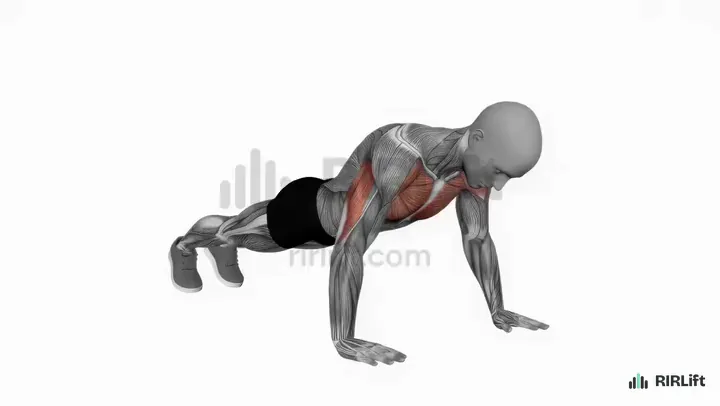
Push-Up
Drop your feet to the floor when you can't yet do 8 clean decline reps; the flat version builds the base for this one.
Build a session with it -
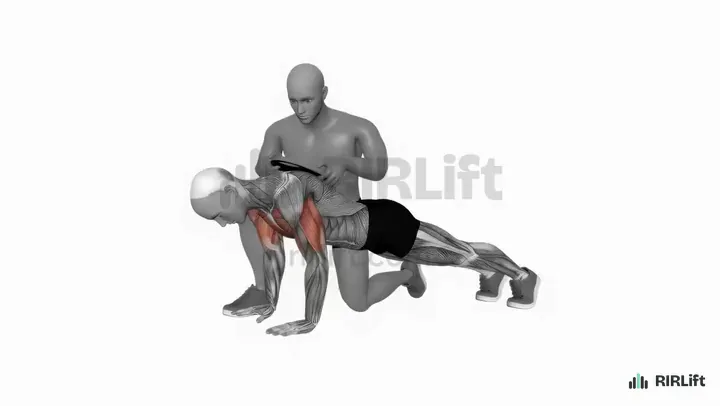
Weighted Push-Up
Add a weight vest or have a partner rest a plate across your shoulder blades when you can do 20 decline reps and want the angle to stay the same while the load goes up.
Build a session with it -
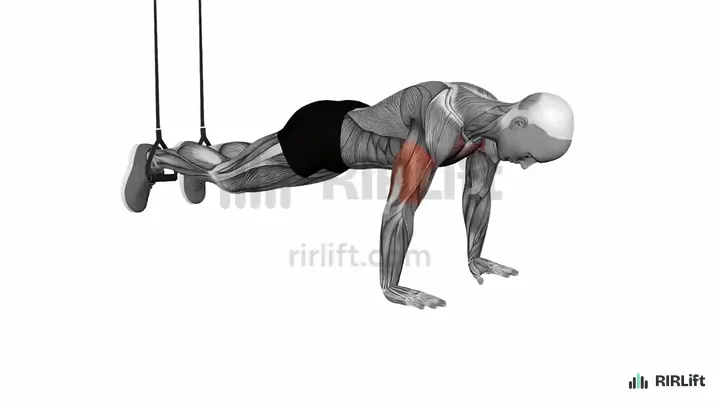
TRX Decline Push-Up
Hook your feet into suspension straps when you want the same press with an unstable lower body that makes your core work harder.
Build a session with it -
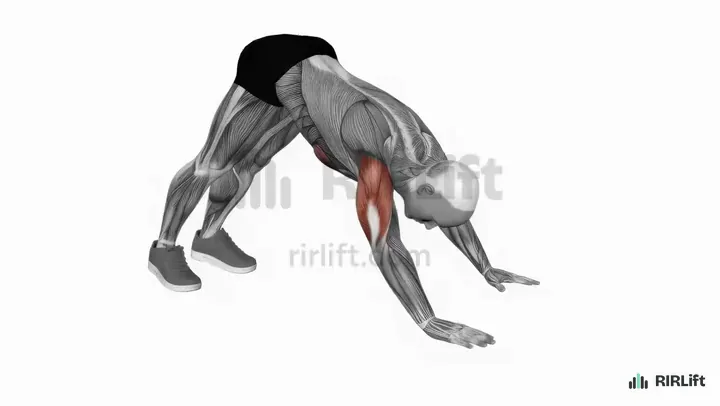
Pike Push-Up
Raise your hips into an upside-down V when you want the press to move almost fully onto your shoulders.
Build a session with it
Decline push-up alternatives
Upper chest with weights
-
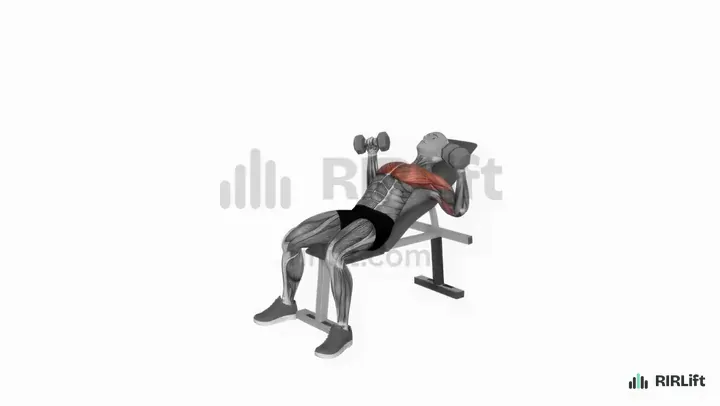
Incline Dumbbell Press
Use an incline bench and dumbbells when you want to load the upper chest with more weight than your bodyweight gives.
Build a session with it -
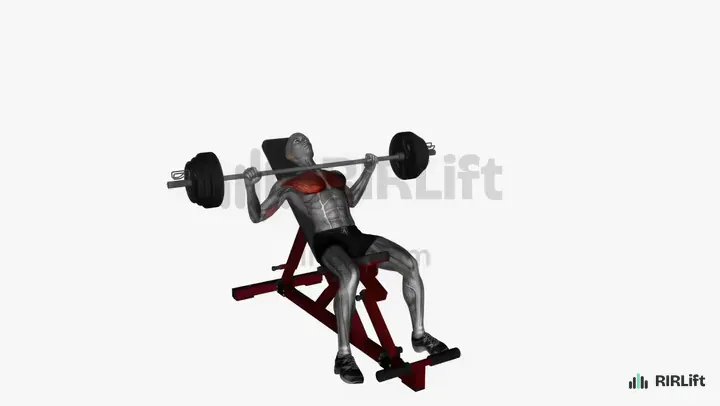
Incline Barbell Bench Press
Use a barbell on an incline bench when you want a heavy upper-chest press you can add small plates to each week.
Build a session with it
Harder without equipment
-
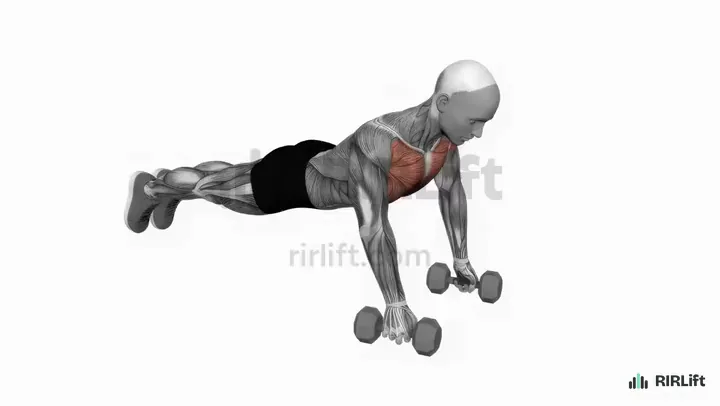
Deep Push-Up
Put your hands on handles or books when you want a deeper stretch at the bottom than the floor allows.
Build a session with it -
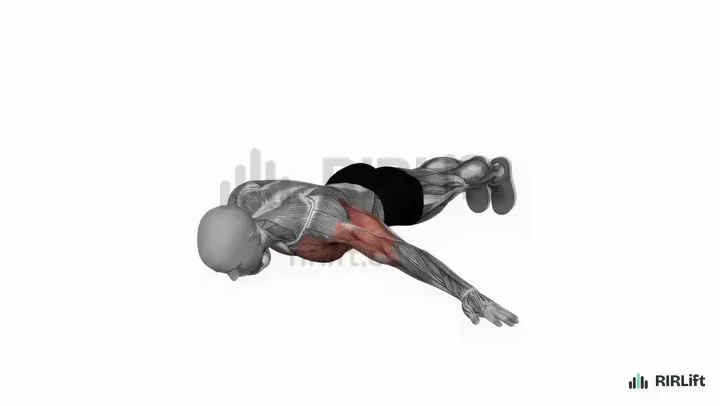
Archer Push-Up
Shift your weight onto one arm when decline reps are too easy and you have nothing to add weight with.
Build a session with it
Easier while you build up
-
Incline Push-Up
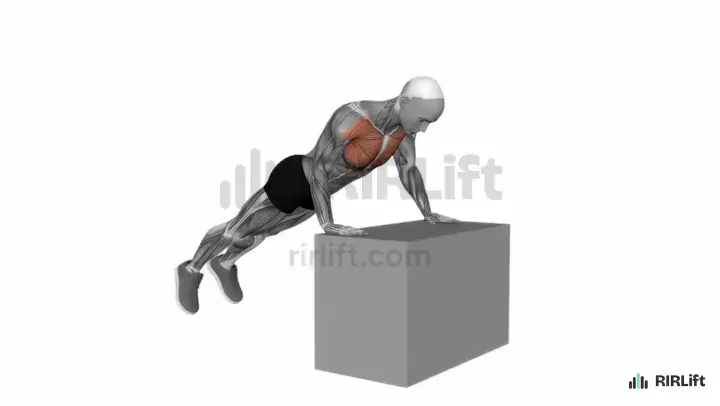
Put your hands on a bench instead of your feet when a full floor push-up is still too hard.
Build a session with it
Decline vs incline push-up
The names refer to where your body points. A decline push-up puts your feet high and your head low, which makes the press heavier and steers it toward your upper chest and shoulders. An incline push-up puts your hands on a bench, which takes weight off your arms and is the easier version.
That makes them steps on the same ladder: incline, then flat, then decline. Move up a step once you can do around 15 clean reps on the one you are on.
How high should your feet be?
Start with your feet about knee height, such as a step or a low box, which already makes each rep noticeably heavier than the floor. A standard flat bench sits a bit higher and is where most people end up. Go higher only when you can do 15 good reps; past roughly hip height your shoulders take more of the work than your chest, and the move turns into a pike push-up.
Questions
What muscles do decline push-ups work?
They work your chest, with extra emphasis on the upper part, plus your front shoulders and triceps. Your abs and glutes keep your body straight throughout the set.
Are decline push-ups harder than regular push-ups?
Yes. With your feet raised, more of your bodyweight presses through your hands, so most people get fewer reps than on the floor. The higher your feet, the harder each rep.
How many decline push-ups should I do?
Do 3 sets of 8–15 reps and stop each set with one or two reps left. Once you hit 15 on every set, raise your feet or add weight instead of doing ever-longer sets.
Do decline push-ups work the upper chest?
Yes. Pressing from a head-down angle lines your arms up with the upper fibers of your chest, much like an incline bench press does with weights.
Is 40 push-ups in a minute good?
Forty full-range push-ups in a minute is a strong result for most adults. For building muscle, a few controlled sets that end near failure do more than racing the clock.
What is the hardest push-up?
The one-arm push-up and the planche push-up sit near the top for most people. The decline push-up is a middle step: harder than the floor version and a good bridge to archer and one-arm work.
Related templates
-
Push-ups: how to do them, what they work, and how to make them harder
Every push-up variation, from incline to one-arm, in one place.
-
Upper chest exercises at home, with or without a bench
Where the decline push-up fits among other home upper-chest moves.
-
Pike push-up: how to do it, what it works, and how to progress it
The next angle up when you want the press on your shoulders.
-
The best workout for chest, matched to your setup
A full chest session to put decline push-ups into.
-
How to use RIR
How to judge the reps you leave in reserve on every set.