
Upper chest exercises at home, with or without a bench
Published October 19, 2026
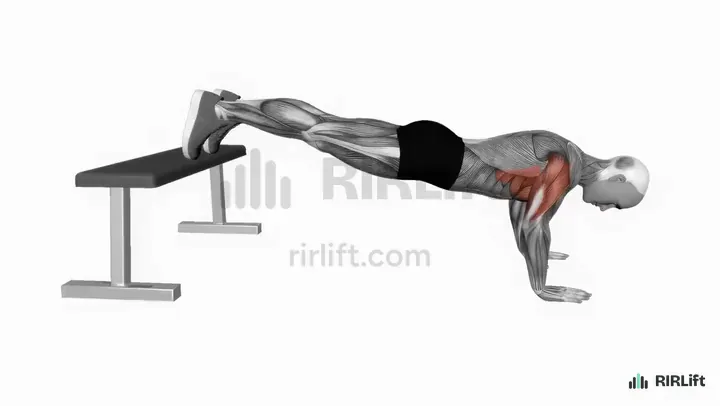
The best upper chest exercise at home without equipment is the decline push-up: with your feet on a chair or couch, you press up and away at the same angle as an incline bench. With dumbbells and an adjustable bench, the incline dumbbell press is the main lift, backed by the incline fly and the palms-back incline press. No bench? An exercise ball works as an incline for flies. Train your upper chest twice a week and end most sets 0 to 2 reps short of failure.
- Decline Push-Up Chest
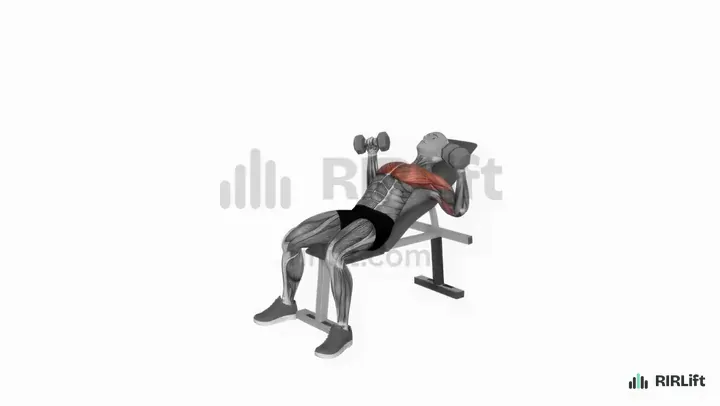
- Incline Dumbbell Press Chest
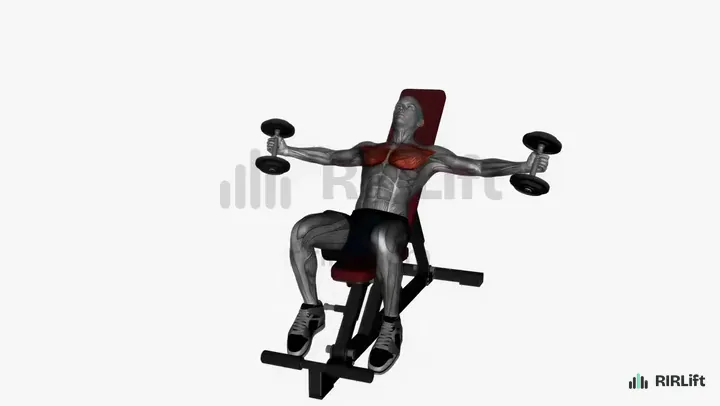
- Incline Dumbbell Fly Chest
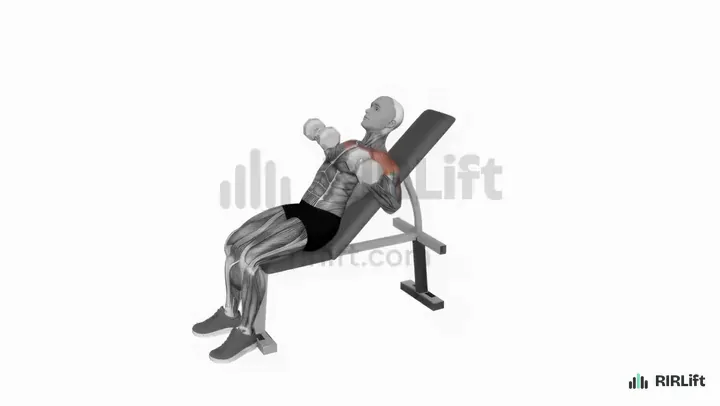
- Reverse-Grip Incline Dumbbell Press Chest
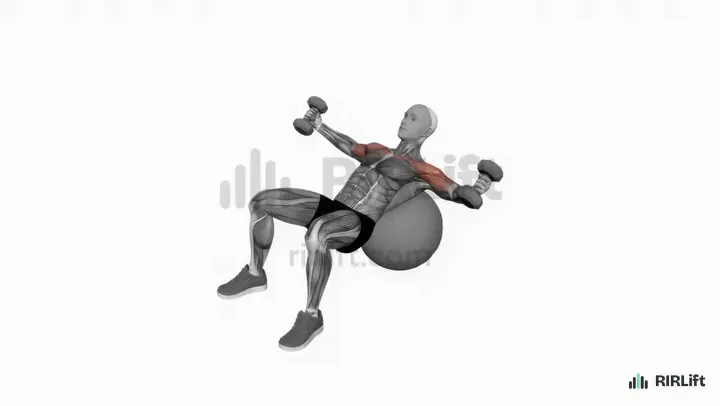
- Stability Ball Incline Dumbbell Fly Chest
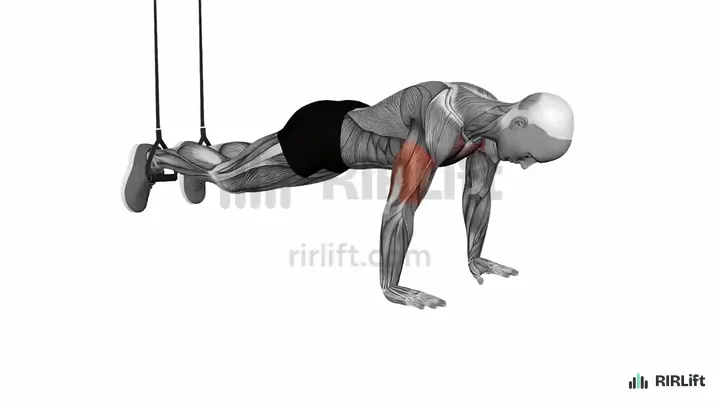
- TRX Decline Push-Up Chest
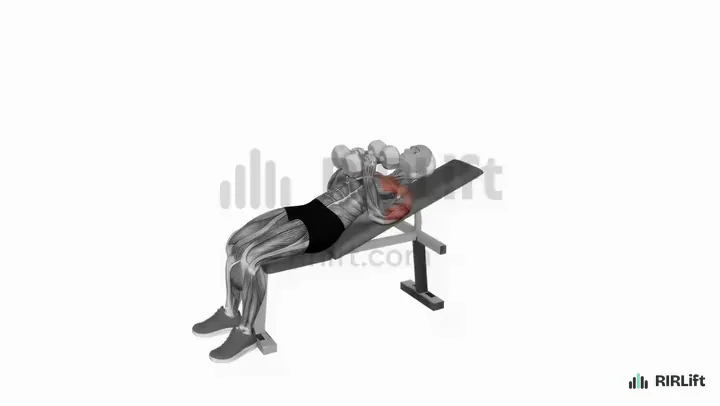
- Incline Dumbbell Squeeze Press Chest
Put them together: example sessions
Each session below picks from the exercises above for one situation, with the sets, reps, rest and RIR filled in. Open one in the session builder to change a pick, price it from a recent set, and add it to RIRLift.
-
Session 1
No weights: a chair and a suspension trainer
You have no dumbbells or bench, but you have a sturdy chair or couch and a door-mounted suspension trainer.
3× a week · 23 sets a week · ~15 min
-
Session 2
Dumbbells and an exercise ball, no bench
You have dumbbells and an exercise ball, but no bench.
2× a week · 14 sets a week · ~15 min
-
Session 3
Dumbbells and an adjustable bench
You have adjustable dumbbells and a bench that inclines, the most complete upper chest setup at home.
2× a week · 19 sets a week · ~25 min
Session 1
No weights: a chair and a suspension trainer
- Workouts3× a week
- Working sets23 a week
- Per workout~15 min
- EquipmentSuspension Trainer
You have no dumbbells or bench, but you have a sturdy chair or couch and a door-mounted suspension trainer.
Without weights, every set has to end close to failure to be hard enough. Decline push-ups are the main exercise because they put your body at the incline angle, and the strap version makes them harder once regular reps get easy. All sets stop at 0 to 1 reps in reserve, for 8 sets per session.
| Exercise | Sets × reps | RIR | Rest |
|---|---|---|---|
| Decline Push-UpFeet on a chair. | 4 × 8–20 | 1 | 90 s |
| TRX Decline Push-UpStraps at knee height. | 4 × 6–15 | 1 | 90 s |
Open Session A in the session builder
| Exercise | Sets × reps | RIR | Rest |
|---|---|---|---|
| TRX Decline Push-Up | 3 × 8–15 | 0 | 90 s |
| Decline Push-Up3 s down. | 4 × 10–25 | 0 | 1 min |
Open Session B in the session builder
- How to run it
- Do the two sessions three times a week in total, on non-consecutive days. If you have no suspension trainer, do decline push-ups in both sessions with higher feet in Session B.
- How to progress
- Raise your feet higher once you can do 20 decline push-ups at 1 rep in reserve. On the strap version, slow each rep to three seconds down.
Session 2
Dumbbells and an exercise ball, no bench
- Workouts2× a week
- Working sets14 a week
- Per workout~15 min
- EquipmentDumbbells, Exercise Ball
You have dumbbells and an exercise ball, but no bench.
The ball gives you an incline for flies, and the decline push-up covers pressing at the same angle. One fly and one press per session keeps it short. Flies end at 1 rep in reserve because balance limits how close you can go safely, push-ups at 0 to 1. Each session has 7 sets.
| Exercise | Sets × reps | RIR | Rest |
|---|---|---|---|
| Decline Push-Up | 4 × 8–20 | 1 | 90 s |
| Stability Ball Incline Dumbbell FlyHips low. | 3 × 10–15 | 1 | 1 min |
Open Session A in the session builder
| Exercise | Sets × reps | RIR | Rest |
|---|---|---|---|
| Stability Ball Incline Dumbbell Fly | 4 × 10–15 | 1 | 1 min |
| Decline Push-UpHigher feet. | 3 × 10–25 | 0 | 1 min |
Open Session B in the session builder
- How to run it
- Do Session A and Session B once each per week with two days between them. Use a ball sized so your hips drop just below your shoulders when you lean back.
- How to progress
- Add reps to the fly until all sets reach 15, then move to the next dumbbell size. Raise your feet on the push-up as it gets easier.
Session 3
Dumbbells and an adjustable bench
- Workouts2× a week
- Working sets19 a week
- Per workout~25 min
- EquipmentDumbbells, Incline Bench
You have adjustable dumbbells and a bench that inclines, the most complete upper chest setup at home.
With an incline bench, every exercise points at the upper chest. Each session opens with a heavy press at 2 reps in reserve, adds a variation at 1, and finishes with a fly at 0 to 1, so you train the upper chest from different angles without repeating sessions. Session A has 10 sets and Session B has 9.
| Exercise | Sets × reps | RIR | Rest |
|---|---|---|---|
| Incline Dumbbell Press1 warm-up set firstBench at 30 degrees. | 4 × 6–10 | 2 | 2:30 min |
| Reverse-Grip Incline Dumbbell Press | 3 × 10–15 | 1 | 90 s |
| Incline Dumbbell Fly | 3 × 12–15 | 1 | 1 min |
Open Session A in the session builder
| Exercise | Sets × reps | RIR | Rest |
|---|---|---|---|
| Alternating Incline Dumbbell PressPer arm. | 3 × 8–12 | 2 | 2 min |
| Incline Dumbbell Squeeze Press | 3 × 10–15 | 1 | 90 s |
| Incline Dumbbell Fly | 3 × 12–20 | 0 | 1 min |
Open Session B in the session builder
- How to run it
- Do the two sessions once each per week. Set the bench at about 30 degrees for presses and 30 to 45 degrees for flies.
- How to progress
- When all sets of an exercise reach the top of the range at the target reps in reserve, move up a dumbbell size and drop back to the bottom of the range.
Make it fit you
-
Only one dumbbell
Swap the two-arm presses for the one-arm incline press and do every set for both sides. A squeeze press also works with a single dumbbell held in both hands.
-
No bench and no ball
Use the bodyweight plan. Decline push-ups with your feet on a couch give you the incline angle, and you can make them harder with a loaded backpack.
-
Shoulders feel it more than your chest
Lower the bench angle to about 15 to 30 degrees, use the palms-back incline press, and keep your shoulder blades pinned to the bench. On push-ups, keep your elbows at 45 degrees, not flared.
-
Light dumbbells only
Use the squeeze press and flies, which work with lighter weights, and slow the lowering to three seconds. Pause for a second at the bottom of each press.
-
Training at home with a partner or kids around
Keep the bodyweight plan as your fallback. Decline push-ups need two minutes of setup and no floor space beyond a mat, so a missed bench session can still happen in the living room.
-
Want the whole chest
Pair this page with lower chest work: add incline push-ups or pullovers to one of the sessions. Flat presses cover the middle fibers already.
-
Log the RIR, not just the weight
Write down how many reps you had left on every set. If you log in RIRLift, it uses that number to set your next weight or reps, so the sessions keep pace with how strong you are getting.
Questions
How do I work the top of my chest at home?
Press at an upward angle. Without equipment, do decline push-ups with your feet on a chair. With dumbbells and an adjustable bench, do incline presses and flies. Take each set to 0 to 2 reps short of failure.
Which exercise is best for the upper chest?
The incline dumbbell press if you have a bench, and the decline push-up if you do not. Both press up and toward your face, the direction your upper chest pulls.
How do I work out my upper chest without a bench?
Use decline push-ups with your feet raised on a chair or couch, push-ups with your feet in a suspension trainer, or flies with your back on an exercise ball. The no-bench plans above use all three.
Is the upper chest hard to develop?
It is a smaller part of the chest and gets less work from flat pressing, so it often lags. Give it its own incline exercises twice a week, and it grows like any other muscle.
Are decline push-ups good for the upper chest?
Yes. With your feet above your hands, you press at the same angle as an incline bench, which puts more work on the upper chest than a floor push-up.
Can push-ups alone build the upper chest?
Yes, for a while. Decline push-ups load the upper chest well until you can do more than 20 or 25 good reps. After that, raise your feet higher, use the suspension trainer, wear a loaded backpack, or add incline dumbbell work so each set still ends close to failure.
How many upper chest sets do I need per week?
Six to ten hard sets a week aimed at the upper chest is a good start, on top of any flat pressing. The plans above give 14 to 24, because they are built for people who want the upper chest to catch up.
Related templates
-
Chest exercises at home, with or without equipment
Home chest picks for every part of the chest.
-
Lower chest exercises at home, from bodyweight to dumbbells
The lower half of the chest with incline push-ups and pullovers.
-
Dumbbell upper chest exercises: incline presses and flies
More dumbbell options for the upper chest, with a gym bench.
-
Incline dumbbell press: how to do it, which angle to use, and how to program it
Full form guide for the main upper chest press.
-
Decline push-up: how to do it, what it works, and how to scale it
Setup, progressions and set targets for the decline push-up.