
Exercises for a bigger back: width, thickness and upper back density
Published October 29, 2026
A bigger back takes three kinds of exercise. For width, pull-ups and lat pulldowns train the lats that spread out under your arms. For thickness, barbell, T-bar, chest-supported and cable rows build the middle back between your shoulder blades. For density at the top, rack pulls and shrugs load the traps and spinal muscles. Train your back twice a week with 12 to 20 hard sets: one vertical pull and one row each session, then a lighter lat isolation or shrug, stopping 1 to 2 reps short of failure on the heavy lifts.
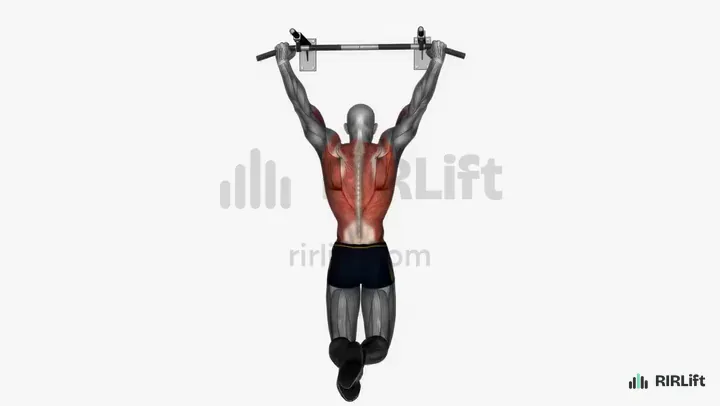
- Pull-Up Lats
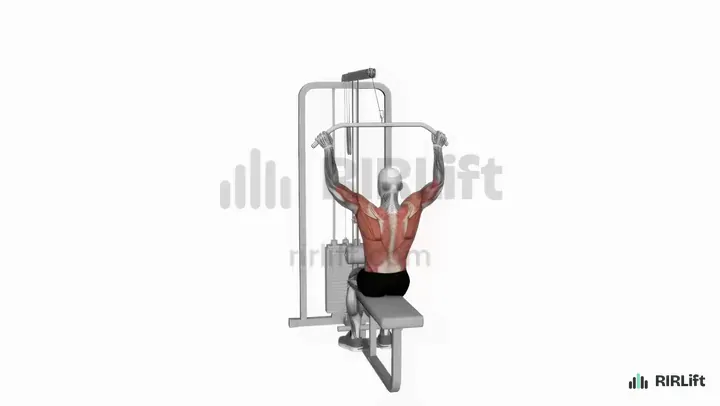
- Lat Pulldown Lats
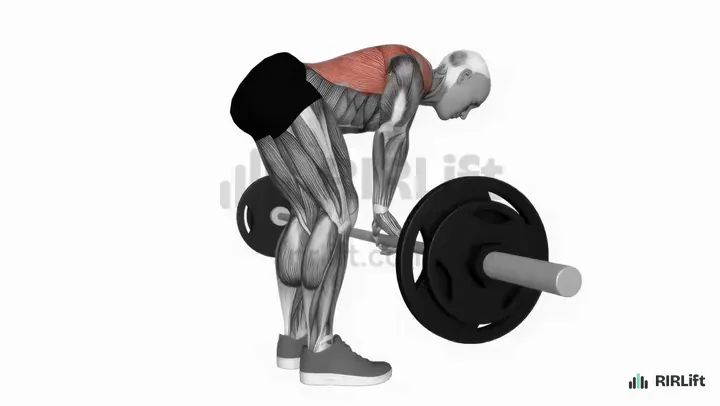
- Barbell Row Upper Back, Lats
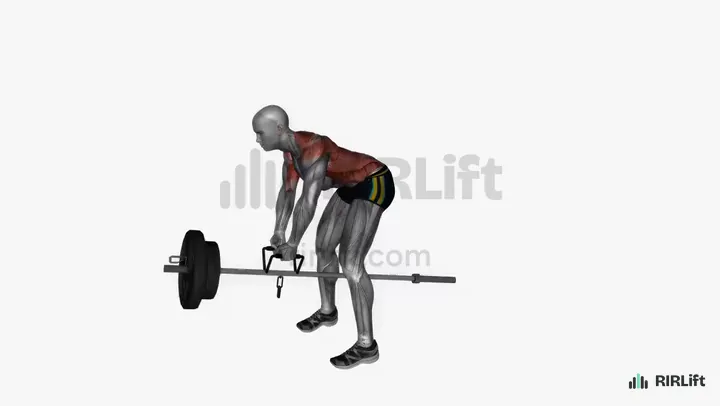
- T-Bar Row Upper Back, Lats
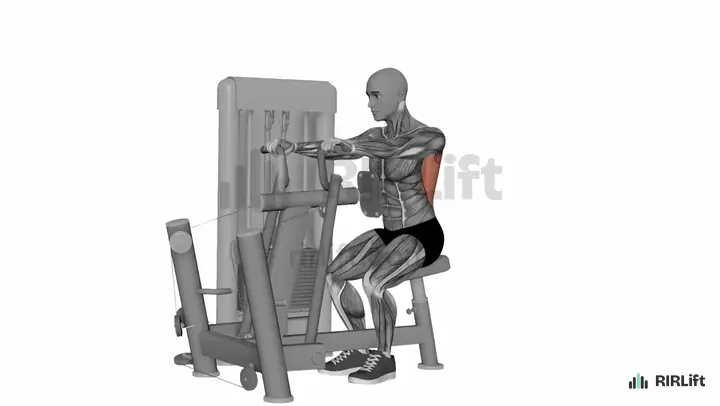
- Chest-Supported Row Upper Back, Lats
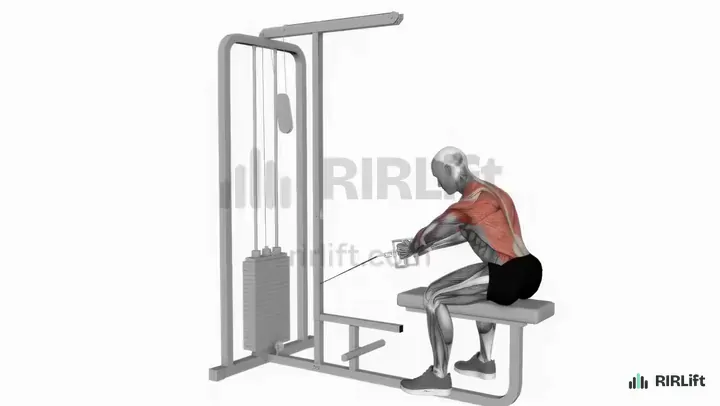
- Seated Cable Row Upper Back, Lats
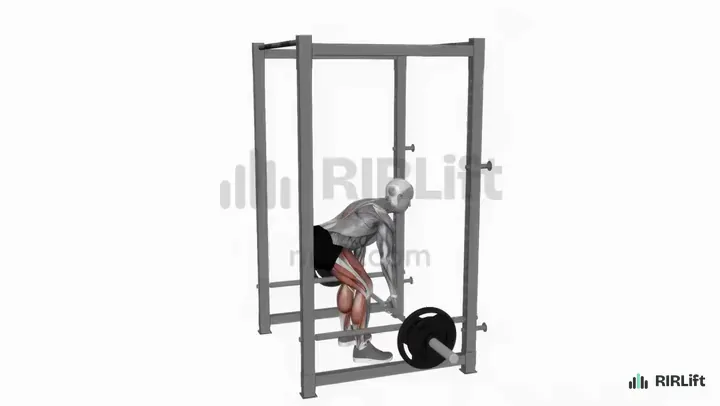
- Rack Pull Glutes, Lower Back, Traps
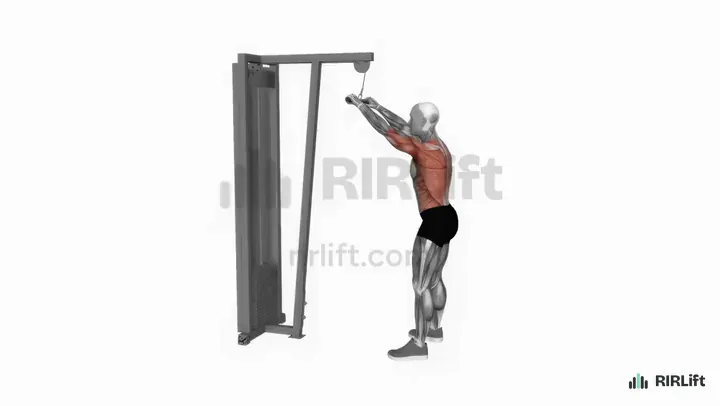
- Straight-Arm Pulldown Lats
Put them together: example sessions
Each session below picks from the exercises above for one situation, with the sets, reps, rest and RIR filled in.
-
Session 1
Gym, two back sessions a week
You train in a full gym on a split of four or five days and want a wider and thicker back.
2× a week · 27 sets a week · ~40 min
-
Session 2
Pull-up bar and dumbbells at home
You train at home with a doorway or wall-mounted pull-up bar, a set of dumbbells and a bench.
2× a week · 26 sets a week · ~30 min
-
Session 3
Lower back that tires on bent-over rows
You train in a gym, but bent-over rows and heavy pulls from the floor leave your lower back tired or achy for days, and you still want a bigger back.
2× a week · 25 sets a week · ~30 min
Session 1
Gym, two back sessions a week
- Workouts2× a week
- Working sets27 a week
- Per workout~40 min
- EquipmentBarbells, Pull-Up Bar, Cable Row, Lat Pulldown +3
You train in a full gym on a split of four or five days and want a wider and thicker back.
Each session opens with one heavy free-weight lift, then one vertical pull, one supported row and a finisher, so width and thickness both get trained twice a week. Pull A is 14 sets and Pull B is 13, 20 sets of pulls and rows for the week, plus the rack pulls, shrugs and extensions.
| Exercise | Sets × reps | RIR | Rest |
|---|---|---|---|
| Rack Pull2 warm-up sets first | 3 × 5–8 | 2 | 3 min |
| Pull-Up | 3 × 6–10 | 1 | 2:30 min |
| Seated Cable Row | 3 × 10–12 | 1 | 90 s |
| Straight-Arm Pulldown | 3 × 12–15 | 0 | 1 min |
| Dumbbell Shrug | 2 × 10–15 | 1 | 90 s |
| Exercise | Sets × reps | RIR | Rest |
|---|---|---|---|
| Barbell Row2 warm-up sets first | 3 × 6–10 | 2 | 2:30 min |
| Neutral-Grip Lat Pulldown | 3 × 8–12 | 1 | 2 min |
| Chest-Supported Row | 3 × 10–12 | 0 | 90 s |
| One-Arm Dumbbell RowPer arm. | 2 × 10–12 | 1 | 1 min |
| Weighted Back Extension | 2 × 10–15 | 2 | 90 s |
- How to run it
- Run Pull A and Pull B as your two pull days, at least two days apart, with a leg day or rest day between them since rack pulls and rows both tire the lower back.
- How to progress
- Rack pulls and barbell rows earn a weight increase when every set lands at the top of the range with 2 reps still in reserve. Pull-ups move up by reps until you hit 10 for all sets, then by a small plate on a belt. The cable and machine work steps up one plate at a time.
Session 2
Pull-up bar and dumbbells at home
- Workouts2× a week
- Working sets26 a week
- Per workout~30 min
- EquipmentPull-Up Bar, Dumbbells, Incline Bench
You train at home with a doorway or wall-mounted pull-up bar, a set of dumbbells and a bench.
The pull-up bar covers width and the dumbbells cover rows, so each day has a vertical pull, one or two rows and a pullover. Dumbbells top out lighter than a barbell, so rows run higher reps and closer to failure to make the load count. Day 1 is 13 sets and Day 2 is 13.
| Exercise | Sets × reps | RIR | Rest |
|---|---|---|---|
| Pull-Up | 4 × 5–10 | 1 | 2:30 min |
| One-Arm Dumbbell RowPer arm. | 3 × 8–12 | 1 | 90 s |
| Dumbbell Lat Pullover | 3 × 10–15 | 1 | 90 s |
| Dumbbell Shrug | 3 × 12–15 | 1 | 1 min |
| Exercise | Sets × reps | RIR | Rest |
|---|---|---|---|
| Incline Dumbbell Row | 4 × 10–15 | 1 | 90 s |
| Pull-Up | 3 × 6–12 | 2 | 2 min |
| One-Arm Dumbbell RowPer arm. | 3 × 12–15 | 1 | 1 min |
| Dumbbell Lat Pullover | 3 × 12–15 | 1 | 1 min |
- How to run it
- Do Day 1 early in the week and Day 2 three or four days later. On a day off, two easy sets of dead hangs or pull-ups keep the movement fresh without tiring you for the next session.
- How to progress
- Start pull-ups at whatever rep count you can manage with 1 to 2 in reserve, even if that is 3, and add a rep per set each week. For rows, go to the next dumbbell once every set reaches the top of its range per arm at the target reps in reserve.
Session 3
Lower back that tires on bent-over rows
- Workouts2× a week
- Working sets25 a week
- Per workout~30 min
- EquipmentLat Pulldown, Seated Row Machine, Dumbbells, Cable Row +1
You train in a gym, but bent-over rows and heavy pulls from the floor leave your lower back tired or achy for days, and you still want a bigger back.
Every exercise here has your chest on a pad or your body seated, so the back muscles can be pushed to 0 or 1 rep in reserve while your lower back stays out of it. Day 1 is 14 sets and Day 2 is 11, enough for about 22 back sets a week with no hinge.
| Exercise | Sets × reps | RIR | Rest |
|---|---|---|---|
| Lat Pulldown | 4 × 8–12 | 1 | 2 min |
| Chest-Supported Row | 4 × 8–12 | 1 | 2 min |
| Straight-Arm Pulldown | 3 × 12–15 | 0 | 1 min |
| Dumbbell Shrug | 3 × 12–15 | 1 | 1 min |
| Exercise | Sets × reps | RIR | Rest |
|---|---|---|---|
| Neutral-Grip Lat Pulldown | 4 × 10–12 | 1 | 90 s |
| Seated Cable Row | 4 × 10–12 | 1 | 90 s |
| Incline Dumbbell Row | 3 × 12–15 | 0 | 1 min |
- How to run it
- Do the two days anywhere in the week with a day between them. They also work as the back half of upper body days.
- How to progress
- Supported lifts are easy to load steadily: add a plate when all sets reach the top of their range at the target reps in reserve. Keep the reps strict; a supported row that needs body English to finish has gone up too fast.
Make it fit you
-
Grip gives out before your back
Use lifting straps on rack pulls, barbell rows and heavy pulldowns. Your forearms get plenty of work elsewhere, and the straps let the back finish the set.
-
You feel rows in your arms, not your back
Think of pulling with your elbows and let your hands act as hooks. Pause each rep for a second with the handle against your body, and drop the weight until you can.
-
Back is wide but looks flat from the side
Move one vertical pull a week to a row, and give the barbell or T-bar row a fourth set. Thickness comes from rows more than from pulldowns.
-
Back is thick but the lats look narrow
Add a third set of pull-ups or pulldowns to each day and a set of straight-arm pulldowns, and use a full dead hang at the bottom of every rep.
Questions
How do I get a V-shaped back?
Build the lats with pull-ups and pulldowns, which widen the top of your back, and build your side delts with lateral raises so the shoulders sit wider too. A lower body fat level makes the taper visible at the waist.
How many sets a week do I need for a bigger back?
Most lifters grow well on 12 to 20 hard sets a week split over two sessions. Start near 12 and add two sets every few weeks while your lifts keep going up.
Do I need deadlifts for a bigger back?
No. Deadlifts build the back, but rows, pull-ups and rack pulls build it with less fatigue per set. If you already deadlift for strength, keep them and drop the rack pull from Pull A.
Why is my back hard to grow?
You cannot see it while you train, so most people pull with their arms and lose the target muscle. Slow down, pause at the top of every row, and use straps so grip is not the limit.
Should I train back for width or thickness first?
Train both every week. One vertical pull and one row per session gives you both, and you can shift a few sets toward whichever looks behind.
Related templates
-
Back exercises for men: pull-ups, rows, deadlifts and upper back work
More back options and plans built around men's training splits.
-
Exercises for a V taper: wide lats, capped shoulders, tight waist
Combines lat width with shoulder width for the V shape.
-
Compound back exercises: deadlifts, rows and pull-ups
The heavy pulls and rows for back strength.
-
The best workout for back: width, thickness and traps
A single back session laid out set by set.
-
How to use reps in reserve (RIR)
How to judge 1 to 2 reps in reserve on heavy rows.