Exercises for a V taper: wide lats, capped shoulders, tight waist

A V taper comes from the ratio between your shoulders and your waist, so the exercises that build it widen the top: wide-grip pull-ups, lat pulldowns, single-arm pulldowns and straight-arm pulldowns for the lats, and cable and dumbbell lateral raises for the side delts. Add an incline press for the upper chest and rear delt flyes to fill out the shoulder. Keep the waist trained with hanging knee raises and dead bugs rather than heavy weighted side bends. Aim for about 12 to 16 hard sets a week for the lats and at least 6 to 8 for the side delts, over two or three upper body days.

  1. Wide-Grip Pull-Up Lats
  2. Lat Pulldown Lats
  3. Single-Arm Lat Pulldown Lats
  4. Cable Lateral Raise Shoulders
  5. Dumbbell Lateral Raise Shoulders
  6. Incline Dumbbell Press Chest
  7. Hanging Knee Raise Abs

Lats: the lower half of the V

Lats wrap from your upper arm to your lower back, and their width under your armpits is what flares your torso out from the waist. Vertical pulls with a wide or single-arm grip train them through the longest range.

Lats, wide vertical pull

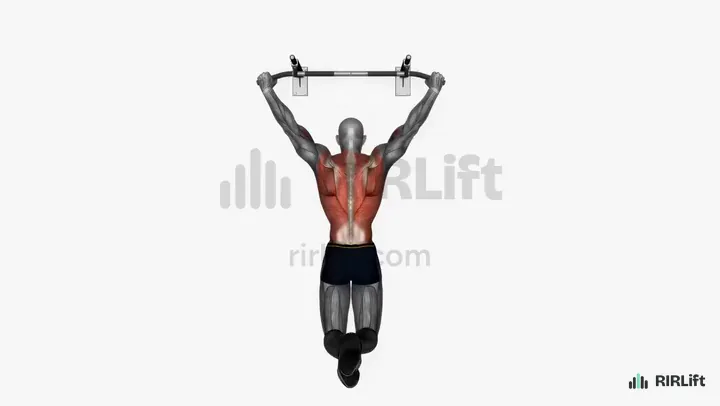
Wide-Grip Pull-Up

Lats

A grip about one and a half times shoulder width keeps your elbows out to the sides, so the lats do the work across their widest part. It is the pull-up variation most tied to back width, and it shows progress plainly: more reps or a belt with weight.

How to do it

  1. Take an overhand grip well wider than your shoulders and hang with your arms straight.
  2. Draw your shoulder blades down to start the pull.
  3. Pull your upper chest toward the bar until your chin clears it, elbows driving down and out.
  4. Lower to straight arms.

Cues

  • Elbows down and out
  • Chest toward the bar
  • Stay still underneath

Common mistakes

  • Going so wide your range shrinks to a few inches: hands just outside where they would be for a regular pull-up is wide enough.
  • Shrugging at the top: keep your shoulders away from your ears.

Swap for: Pull-Up, Archer Pull-Up, Neutral-Grip Pull-Up

Lats, cable vertical pull

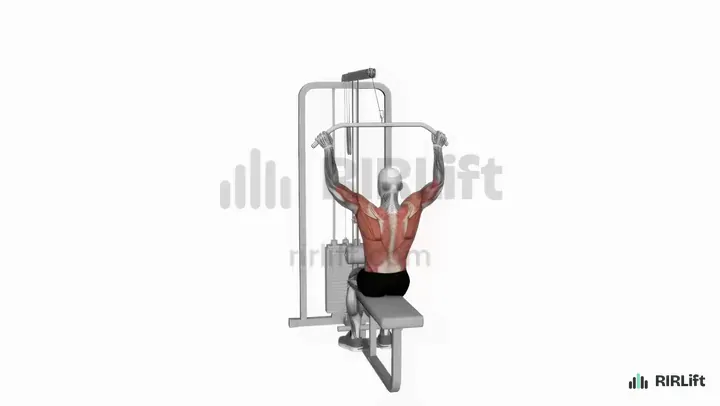
Lat Pulldown

Lats

The pulldown gives the same width work as the pull-up with whatever load you need, so you can train lats in 8 to 12 reps close to failure before you can do sets of pull-ups.

How to do it

  1. Set the thigh pad so your legs are locked under it, then stand up and take the bar a little wider than your shoulders, palms forward.
  2. Sit down with your arms fully stretched overhead and lean back only slightly.
  3. Pull the bar to your upper chest by driving your elbows down toward your hips.
  4. Let the bar rise until your arms are straight and your shoulders lift toward your ears, then pull again.

Cues

  • Elbows to your back pockets
  • Bar to the top of the chest
  • Let the stack lift you at the top

Common mistakes

  • Leaning far back and rowing the bar to your stomach: stay nearly upright so it remains a vertical pull.
  • Stopping with the arms still bent at the top: the stretch overhead is half of what makes the pulldown work.

Swap for: Pull-Up, Neutral-Grip Lat Pulldown, Single-Arm Lat Pulldown

Lats, one-arm pulldown

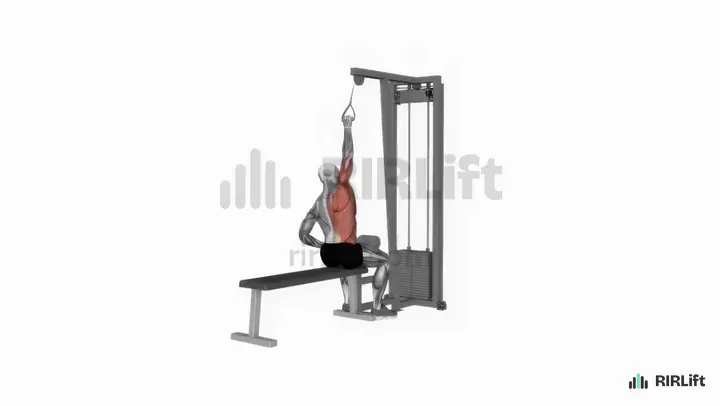
Single-Arm Lat Pulldown

Lats

Pulling one handle at a time lets your arm reach higher at the top and your elbow drive further down at the bottom, a longer range than with a bar. It also evens out a lat that looks smaller on one side.

How to do it

  1. Attach a single handle to the high pulley, sit with your thighs locked under the pads, and hold the handle overhead with one hand.
  2. Let the cable pull your arm up and slightly in front of you until your lat is fully stretched.
  3. Drive your elbow down toward your hip, finishing with the handle beside your shoulder.
  4. Let the handle rise back to the stretch slowly, finish your reps, and switch sides.

Cues

  • Reach long at the top
  • Elbow to the hip
  • Torso stays square

Common mistakes

  • Rotating your torso to finish the rep: keep your chest facing the stack.
  • Rushing the lowering: the stretched top is where this exercise earns its place.

Swap for: Lat Pulldown, One-Arm Dumbbell Row

Lats, straight-arm isolation

Straight-Arm Pulldown

Lats

Locked elbows keep the biceps out of the lift, so the lats take every rep from overhead down to your thighs. Use it at the end of a pull session to add lat sets without more arm fatigue.

How to do it

  1. Attach a straight bar to a high pulley, take it palms down about shoulder width, and step back a couple of feet.
  2. Hinge forward slightly and hold the bar at about shoulder height with your arms long, a small fixed bend in your elbows, and brace your abs.
  3. Sweep the bar down in an arc until it reaches your thighs, squeezing your lats at the bottom.
  4. Let it rise back up under control until your arms are at shoulder height again, then repeat.

Cues

  • Arms long, elbows fixed
  • Bar to the thighs
  • Torso angle never changes

Common mistakes

  • Bending the elbows and turning it into a triceps pushdown: lighten the stack and keep the arms long.
  • Bobbing the torso up and down to move the weight: lock your hinge and move only the arms.

Swap for: Single-Arm Lat Pulldown, Dumbbell Lat Pullover, Lat Pulldown

Lats, dumbbell pullover

Dumbbell Lat Pullover

Lats

It is the home version of the straight-arm pulldown: lying across a bench, you lower one dumbbell behind your head and pull it back over your chest with the lats.

How to do it

  1. Lie on a flat bench with your head near one end and your feet flat on the floor.
  2. Hold one dumbbell with both hands under the top plate, arms straight above your chest.
  3. Keep your elbows softly bent and fixed, and let the dumbbell travel back behind your head in an arc. Stop once your upper arms reach the line of your body.
  4. Pull it back over your chest along the same arc, feeling the pull come from your armpits, and repeat.

Cues

  • Ribs down, no arching
  • Pull with your armpits
  • Stop when upper arms line up with your torso

Common mistakes

  • Bending the elbows more as the dumbbell goes back, which turns it into a triceps extension: fix the elbow angle and lighten the load.
  • Letting your ribcage flare to go deeper: brace your abs and stop at the point where your back wants to arch.

Swap for: Straight-Arm Pulldown, Kettlebell Pullover

Upper back and lats, bodyweight row

Inverted Row

Upper Back, Lats

Pulling your chest to a bar set at hip height trains the back with part of your body weight, so it builds the pulling strength for your first pull-ups. Lower the bar or raise your feet as it gets easier.

How to do it

  1. Set a bar at about hip height, lie under it, and grip it with your hands a little wider than your shoulders.
  2. Straighten your body from heels to head, or bend your knees with feet flat for an easier version.
  3. Pull your chest up to the bar, leading with your elbows, and keep your hips in line.
  4. Lower until your arms are straight, then pull again.

Cues

  • Body stays a straight plank
  • Chest touches the bar
  • Bend your knees to make it easier

Common mistakes

  • Letting your hips sag so only your chest rises: squeeze your glutes and move as one piece.
  • Pulling the bar to your neck: aim for the bottom of your chest.

Swap for: TRX Row, Lat Pulldown, Assisted Pull-Up

Side delts: the top corners of the V

The side delts set how wide your frame looks from the front. They grow from light, controlled raises in sets of 12 to 20, trained two or three times a week.

Side delts, cable raise

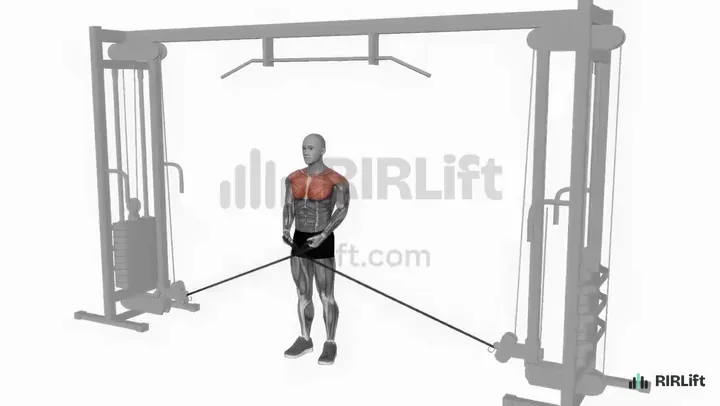
Cable Lateral Raise

Shoulders

For a V taper, this is the shoulder exercise that matters most. The cable keeps the side delt loaded at the bottom of the raise where a dumbbell goes slack, and one arm at a time lets you focus on each shoulder.

How to do it

  1. Set both pulleys of a crossover at the bottom and stand between them, feet about shoulder width.
  2. Cross your arms low in front of your thighs: your right hand holds the left handle, your left hand the right one.
  3. Stand tall and raise both arms out to the sides, elbows slightly bent, until your hands reach shoulder height.
  4. Lower slowly until the handles cross again in front of your thighs. On a single pulley, do the same one arm at a time.

Cues

  • Lead with the elbow
  • Push the handle out, not up
  • Shoulder height and stop

Common mistakes

  • Heaving the weight up with a lean and a shrug: if your torso moves, drop the pin a step.
  • Raising past shoulder height: the traps take over above that point.

Swap for: Leaning Cable Lateral Raise, Dumbbell Lateral Raise, Cable Y Raise

Side delts, dumbbell raise

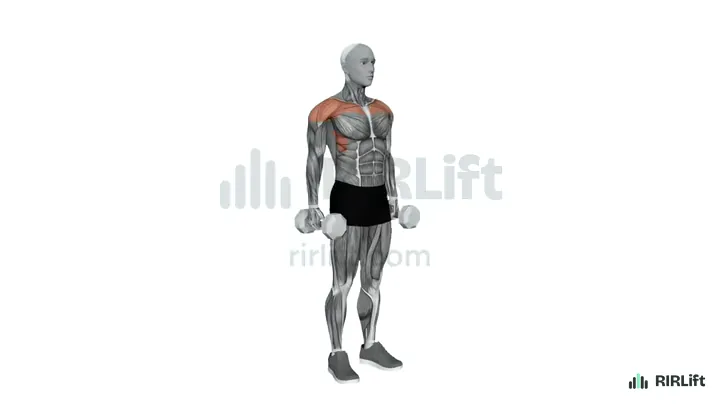
Dumbbell Lateral Raise

Shoulders

A light pair of dumbbells is all it takes to train the side delts anywhere. Keep the weight low enough for 12 to 20 reps with no swing; it is the main shoulder width exercise in the home plan.

How to do it

  1. Pick light dumbbells you can raise for 12 clean reps, and stand with your feet hip width apart, the weights hanging by your thighs.
  2. Lean your chest forward a few degrees, pull your shoulders down away from your ears and soften your elbows.
  3. Sweep the weights out and slightly forward, leading with your elbows, until your upper arms are level with your shoulders.
  4. Hold that top position for a beat, then take two to three seconds to lower until the dumbbells are a hand's width from your thighs.
  5. Start the next rep from there without resting at the bottom or bouncing out of it.

Cues

  • Elbows lead, hands follow
  • Shoulders down, neck long
  • Push the weights out, not up

Common mistakes

  • Shrugging the weight up: if your shoulders rise toward your ears, drop to lighter dumbbells and stop each rep where your upper arm is level.
  • Swinging the torso to start each rep: brace, stand still and keep the first inch of the lift as slow as the rest.
  • Bending the elbows more and more as the set goes on: set the bend on rep one and keep it, or the lever shortens and the set gets easier without you noticing.

Swap for: Cable Lateral Raise, Band Lateral Raise, Machine Lateral Raise

Rear delts, machine fly

Reverse Pec Deck

Shoulders

The rear delts round out the back of the shoulder so it looks full from the side and behind, not just from the front. Two or three sets a week is enough.

How to do it

  1. Set the handles to the rear position, sit facing the pad, and adjust the seat so the handles are at shoulder height.
  2. Hold the handles with arms straight in front of you, palms down or facing in.
  3. Sweep your arms out and back in a wide arc until they are in line with your body.
  4. Return slowly, stopping just before the weight touches the stack, and repeat.

Cues

  • Wide arc, not a row
  • Arms almost straight
  • Keep the stack off the rest

Common mistakes

  • Pulling the elbows back like a row: the arms move out to the side.
  • Too much weight with jerky reps: these grow on 12 to 20 controlled reps.

Swap for: Face Pull, Rear Delt Cable Fly, Dumbbell Rear Delt Fly

Upper chest and pressing

A fuller upper chest and front delts square off the top of the torso. One press per session covers them; the V comes mostly from the pulls and raises.

Upper chest, 30 degree dumbbell press

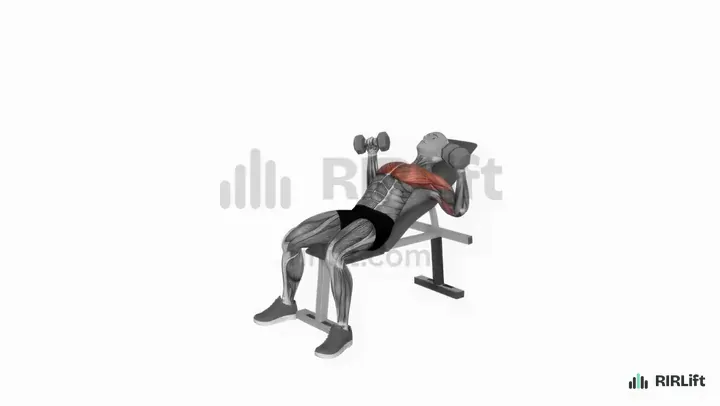
Incline Dumbbell Press

Chest

An incline of about 30 degrees aims the press at the upper chest, which fills the space under your collarbones and makes the top of the V look broad. Dumbbells let each side work alone.

How to do it

  1. Set the backrest to about 30 to 45 degrees and sit with the dumbbells on your thighs.
  2. Lean back and bring the weights to the outside of your shoulders as your back meets the pad.
  3. Squeeze your shoulder blades back and keep your hips on the seat.
  4. Press up and slightly in until your arms are straight over your upper chest.
  5. Lower under control until your elbows are just below the bench line.

Cues

  • Low incline, not a shoulder press
  • Wrists stacked over elbows
  • Touch the stretch, then press

Common mistakes

  • Setting the bench steeper than about 45 degrees: the front delts take over. Drop it a notch if you mostly feel your shoulders.
  • Lifting your hips off the seat to finish a rep: that turns it back into a flat press.

Swap for: Single-Arm Incline Dumbbell Press, Incline Dumbbell Squeeze Press, Incline Barbell Bench Press

Shoulders and triceps, bodyweight press

Pike Push-Up

Shoulders

With your hips high, a push-up becomes an overhead press. It is the shoulder press for training with only a pull-up bar and the floor.

How to do it

  1. Start in a push-up position with your hands a bit wider than your shoulders and fingers spread.
  2. Walk your feet toward your hands and raise your hips until your body forms an upside-down V, with your weight leaning over your hands.
  3. Bend your elbows and lower the top of your head toward a point a few inches in front of your hands, so your head and hands form a triangle.
  4. Bend your elbows out to the sides and stop when your head lightly touches the floor or just above it.
  5. Press the floor away and straighten your arms, pushing your hips back up to the V.

Cues

  • Hips stay high
  • Head forward of hands
  • Push the floor away

Common mistakes

  • Letting the hips drop as you lower: that turns it back into a regular push-up; keep the hips stacked over your shoulders as much as you can.
  • Lowering your head straight between your hands: aim slightly forward so your forearms stay close to vertical.
  • Cutting the range short: lower until your head is near the floor, using a yoga block or book as a target if you need one.

Swap for: Handstand Push-Up, Dumbbell Shoulder Press

Core work that keeps the waist tight

Your waist size comes mostly from body fat and frame. These two train the abs to hold your trunk still without adding bulk to the obliques, the way heavy weighted side bends and twists can.

Lower abs, hanging raise

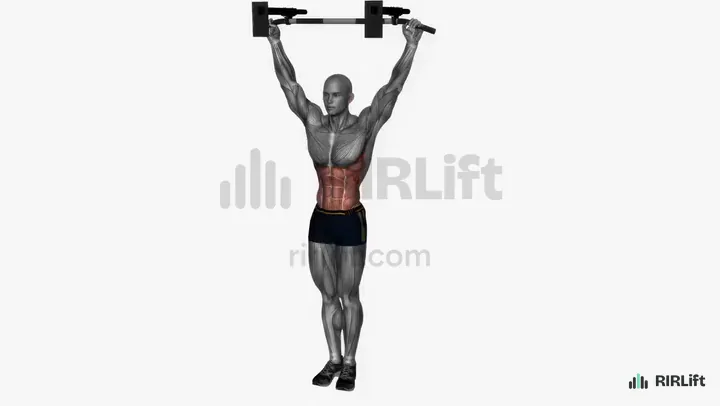
Hanging Knee Raise

Abs

Hanging from the bar while you curl your knees up trains the abs and stretches the lats in the same set. It works the front of your abs hard and leaves the sides of your waist unloaded.

How to do it

  1. Hang from the bar with straight arms and your legs together.
  2. Draw your knees up toward your chest and curl your pelvis up at the top.
  3. Lower your legs slowly until they hang straight and still.

Cues

  • Curl the pelvis
  • Stop the swing
  • Slow down

Common mistakes

  • Swinging into each rep: pause at the bottom until you are still.
  • Lifting the knees only to hip height, which works the hip flexors more than the abs.

Swap for: Captain's Chair Knee Raise, Reverse Crunch

Deep abs, anti-extension

Dead Bug

Abs

Holding your lower back down while your arms and legs move trains the deep abs that keep your stomach drawn in. It is a low-fatigue core exercise that fits at the end of any upper day.

How to do it

  1. Lie face up, arms pointing up and knees bent at right angles over your hips.
  2. Press your lower back into the floor.
  3. Reach one arm overhead and the opposite leg out long, both hovering above the floor.
  4. Bring them back and repeat with the other pair.

Cues

  • Back glued down
  • Breathe out as you reach
  • Opposite arm and leg

Common mistakes

  • Letting the back arch when the leg goes long: reach less far.
  • Going fast: each rep should take about three seconds.

Swap for: Plank, Alternating Leg Raise

Put them together: example sessions

Each session below picks from the exercises above for one situation, with the sets, reps, rest and RIR filled in.

Session 1

Gym, two upper body days with a V taper focus

  • Workouts2× a week
  • Working sets33 a week
  • Per workout~40 min
  • EquipmentPull-Up Bar, Adjustable Cable, Dumbbells, Incline Bench +2

You lift in a gym with cables, can do at least eight pull-ups, and train upper body twice a week.

Lats get 13 sets and side delts 8 sets per week here, on top of the incline press and core work. Pulls and raises go first in each session, where they get your best effort, and the press stays at 2 reps in reserve so it does not cut into them. Upper A has 17 sets and Upper B has 16.

Upper A: Wide pull-ups and cable raises
ExerciseSets × repsRIRRest
Wide-Grip Pull-Up 4 × 6–10 1 2:30 min
Cable Lateral RaisePer arm. 4 × 12–15 1 1 min
Incline Dumbbell Press1 warm-up set first 3 × 8–10 2 2:30 min
Straight-Arm Pulldown 3 × 12–15 0 1 min
Hanging Knee Raise 3 × 10–15 1 1 min
Upper B: Pulldowns and dumbbell raises
ExerciseSets × repsRIRRest
Lat Pulldown 3 × 8–12 1 2 min
Single-Arm Lat PulldownPer arm. 3 × 10–12 1 1 min
Dumbbell Lateral Raise 4 × 15–20 0 1 min
Reverse Pec Deck 3 × 12–15 1 1 min
Dead BugPer side. 3 × 8–12 2 1 min
How to run it
Do Upper A and Upper B on non-consecutive days, with your leg training between them. If you have a third upper day, repeat Upper A without the incline press.
How to progress
Wide-grip pull-ups progress by reps to 10 per set, then by added weight. On cable raises and pulldowns, keep the set at the target reps in reserve and add one plate when the top of the range comes easily on every set.

Session 2

Pull-up bar and dumbbells at home

  • Workouts2× a week
  • Working sets30 a week
  • Per workout~35 min
  • EquipmentPull-Up Bar, Dumbbells, Incline Bench

You train at home with a pull-up bar, a few pairs of dumbbells and a bench, and want the V shape without a gym.

The bar covers the lats and the dumbbells cover side delts, pullovers and the incline press. Light dumbbells only work when the set ends near failure, so raises run up to 25 reps at 0 to 1 reps in reserve. Day 1 is 14 sets and Day 2 is 16, with 6 or 7 lat sets and 4 side delt sets each day.

Day 1: Pull-ups and incline press
ExerciseSets × repsRIRRest
Wide-Grip Pull-Up 4 × 5–10 1 2:30 min
Incline Dumbbell Press1 warm-up set first 3 × 8–12 2 2 min
Dumbbell Lateral Raise 4 × 12–20 1 1 min
Dumbbell Lat Pullover 3 × 10–15 1 90 s
Day 2: Pullovers and pike push-ups
ExerciseSets × repsRIRRest
Wide-Grip Pull-Up 3 × 6–12 2 2 min
Dumbbell Lat Pullover 3 × 12–15 1 90 s
Pike Push-Up 3 × 6–12 2 2 min
Dumbbell Lateral Raise 4 × 15–25 0 1 min
Hanging Knee Raise 3 × 10–15 1 1 min
How to run it
Leave two or three days between Day 1 and Day 2. If you want a third session, repeat the lateral raises and pullovers on their own on a third day.
How to progress
Track pull-up reps per set and aim to add one somewhere each week. For raises and pullovers, the signal to move to heavier dumbbells is the top of the range on every set at the planned reps in reserve.

Session 3

Beginner who cannot do a pull-up yet

  • Workouts3× a week
  • Working sets24 a week
  • Per workout~20 min
  • EquipmentLat Pulldown, Dumbbells, Barbells, Adjustable Cable +2

You are new to lifting, train in a gym, cannot do a full pull-up, and want to start building the V from day one.

Three short sessions of 8 sets let you practice the pulls often while each one stays easy to recover from. Everything sits at 2 reps in reserve while you learn the movements. Lats get 11 sets a week counting the inverted rows, and side delts 6.

Session 1: Pulldown and raises
ExerciseSets × repsRIRRest
Lat Pulldown 3 × 8–12 2 2 min
Dumbbell Lateral Raise 3 × 12–15 2 1 min
Dead BugPer side. 2 × 6–10 3 1 min
Session 2: Rows and cable raises
ExerciseSets × repsRIRRest
Inverted Row 3 × 6–12 2 2 min
Cable Lateral RaisePer arm. 3 × 12–15 2 1 min
Straight-Arm Pulldown 2 × 12–15 2 1 min
Session 3: Pulldown and press
ExerciseSets × repsRIRRest
Lat Pulldown 3 × 10–12 2 2 min
Incline Dumbbell Press1 warm-up set first 3 × 8–12 2 2 min
Reverse Pec Deck 2 × 12–15 2 1 min
How to run it
Train Monday, Wednesday and Friday or any three days with a rest day between. Each session takes about 30 minutes and fits before or after your leg training.
How to progress
Add weight on the pulldown whenever you reach 12 reps on all sets with 2 left in reserve. On inverted rows, walk your feet further forward each week. When you can do 12 inverted rows with your body straight, try a pull-up at the start of each session.

Make it fit you

Questions

How do you get a V taper?

Widen the top and narrow the bottom. Build your lats with wide pull-ups and pulldowns and your side delts with lateral raises, and keep body fat low enough that the waist stays tight. Expect it to take months of steady progress rather than weeks.

Can you get a V taper at home?

Yes, if you have a pull-up bar. Pull-ups and pullovers build the lats, and dumbbell or band lateral raises build the shoulders. Without a bar, the lats are hard to train well at home.

Do ab exercises make your waist wider?

Heavy weighted oblique work like loaded side bends can thicken the sides of the waist a little. Hanging knee raises, dead bugs and planks train the abs without that, which is why the plans use them.

Is a V taper genetic?

Your clavicle width and hip structure are, so the ratio you can reach varies. But nearly everyone can add enough lat and side delt size to change their shape a lot, and that part is training.

What are the best exercises for a V taper for beginners?

Lat pulldowns, inverted rows and dumbbell lateral raises. They are easy to learn, easy to load in small steps, and they build the strength for pull-ups.