Exercises for bigger arms: triceps, biceps and the brachialis

The best exercises for bigger arms start with the triceps, the larger of the two muscles in your upper arm: the close-grip bench press, overhead cable triceps extension and skull crusher. For biceps, use the EZ-bar curl, incline dumbbell curl and preacher curl, and add hammer and reverse curls for the brachialis, the muscle under the biceps that pushes it up and widens the arm from the side. Train arms twice a week with 8 to 12 hard sets each for biceps and triceps, 6 to 15 reps, ending sets 0 to 2 reps short of failure.

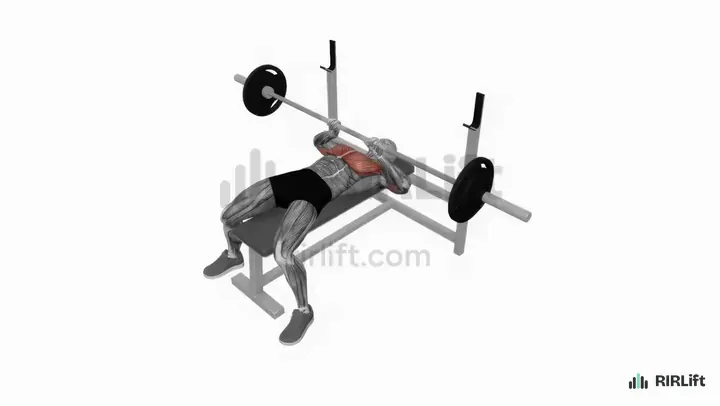
  1. Close-Grip Bench Press Triceps, Chest
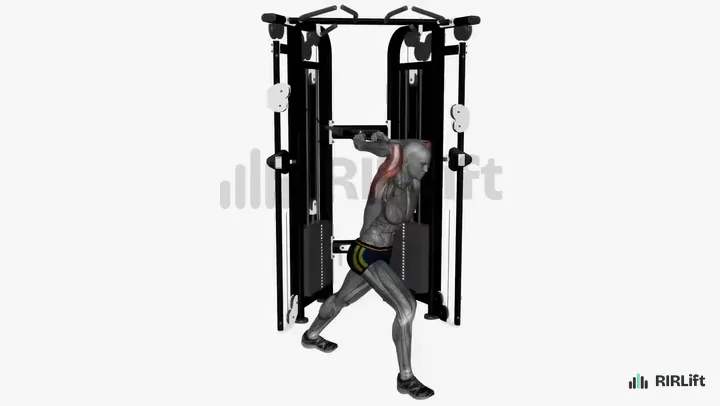
  2. Overhead Cable Triceps Extension Triceps
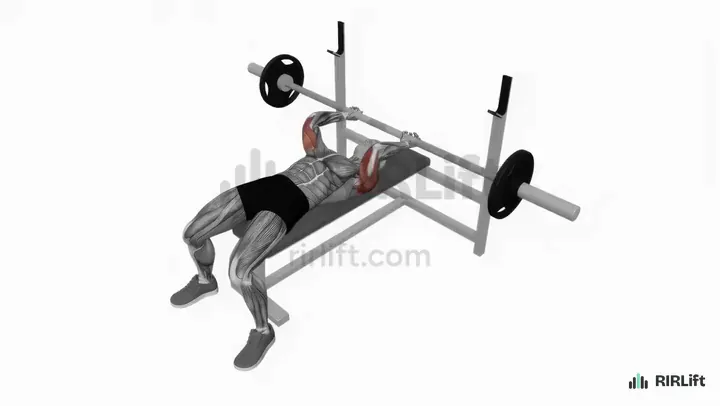
  3. EZ-Bar Skullcrusher Triceps
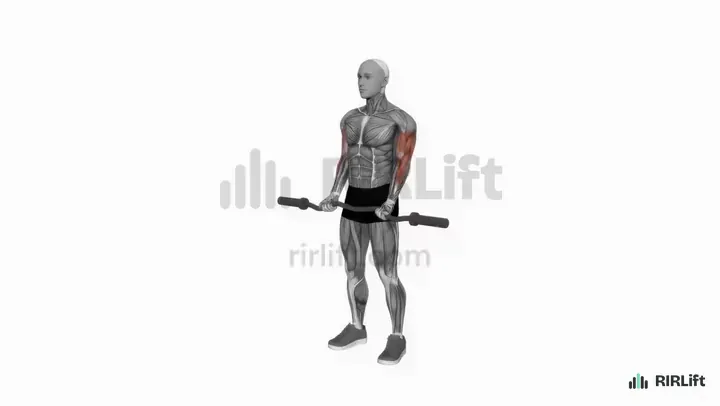
  4. EZ-Bar Curl Biceps
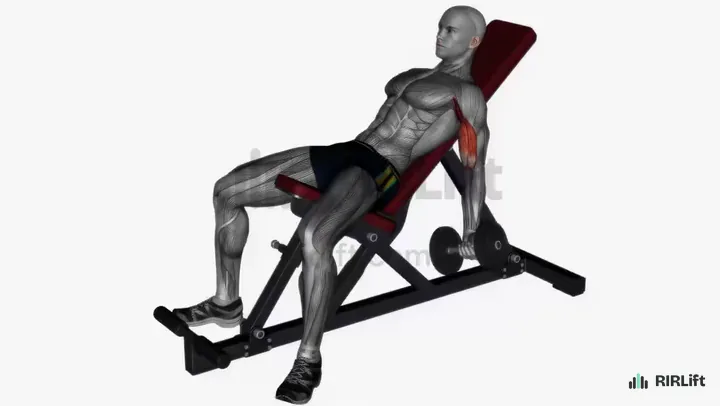
  5. Incline Dumbbell Curl Biceps
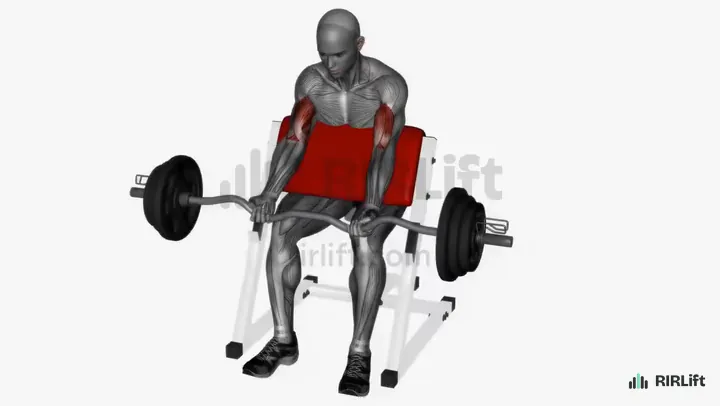
  6. Preacher Curl Biceps
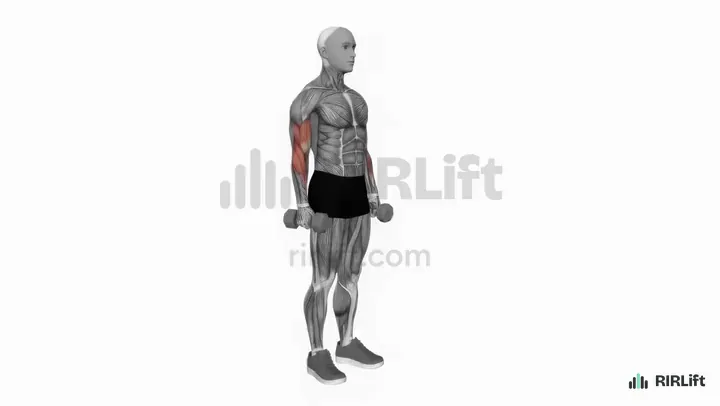
  7. Hammer Curl Biceps, Forearms

Triceps: where most of the arm size is

The triceps has three heads, and the biggest one, the long head, crosses the shoulder. It works hardest when your arm is over your head, which is why every plan here has an overhead extension next to a press or pushdown. Pick one heavy press or skull crusher and one overhead move each session.

Triceps and chest, heavy press

Close-Grip Bench Press

Triceps, Chest

It lets your triceps move more weight than any extension, so a few heavy sets go a long way. Hands just inside shoulder width keeps the triceps doing the work without twisting your wrists.

How to do it

  1. Lie on a bench and grip the bar about shoulder width.
  2. Lower it to your lower chest with the elbows close to your sides.
  3. Press back up to straight arms.

Cues

  • Shoulder-width grip
  • Elbows tucked

Common mistakes

  • Gripping so narrow the wrists bend: shoulder width is enough.

Swap for: Close-Grip Push-Up, EZ-Bar Skullcrusher, Cable Triceps Pressdown

Triceps long head, overhead stretch

Overhead Cable Triceps Extension

Triceps

With the rope behind your head, the long head is stretched at the bottom of each rep. Training the long head at that full stretch suits it well, so this is the extension to keep if you only have time for one.

How to do it

  1. Attach a rope to a high pulley, take an end in each hand and turn away from the machine.
  2. Step forward into a split stance with your hands behind your head and elbows pointing forward.
  3. Extend your elbows until your arms are straight out in front of your head.
  4. Let your hands return behind your head for a full stretch.

Cues

  • Upper arms stay high
  • Long stretch every rep
  • Brace your trunk

Common mistakes

  • Bringing your elbows down to push: keep them up and still.
  • Shortening the stretch as the set gets hard: reduce the weight instead.

Swap for: Seated Dumbbell Overhead Triceps Extension, EZ-Bar Skullcrusher, Kettlebell Overhead Triceps Extension

Triceps, lying extension

EZ-Bar Skullcrusher

Triceps

Lowering the bar behind your forehead trains all three heads with a heavy load and a deep stretch. Use it as the second heavy triceps lift of the week, after or instead of the close-grip bench.

How to do it

  1. Lie back on a flat bench holding an EZ bar or straight bar overhand, hands about shoulder width, arms straight over your shoulders.
  2. Let your upper arms tip back a little toward your head and hold them there.
  3. Bend your elbows to lower the bar just behind the top of your head.
  4. Extend your elbows to return to the start.

Cues

  • Upper arms angled back
  • Elbows point at the ceiling
  • Smooth, slow lowering

Common mistakes

  • Pulling the bar over your face with your shoulders: only the elbows bend.
  • Going heavy for low reps: this lift is kinder to the elbows at 8 to 15.

Swap for: Dumbbell Skullcrusher, JM Press, Overhead Cable Triceps Extension

Triceps long head, dumbbell overhead

Seated Dumbbell Overhead Triceps Extension

Triceps

Holding one dumbbell with both hands behind your head gives you the overhead stretch with no cable. It is the long head exercise for the home plan.

How to do it

  1. Sit tall on a chair and lift one dumbbell overhead, both hands under the top plate.
  2. Bend your elbows to bring the weight down behind your neck, upper arms close to your head.
  3. Feel the stretch, then press it back up to straight arms.
  4. Keep your back from arching as you press.

Cues

  • Elbows forward
  • Weight behind your neck
  • Ribs stay down

Common mistakes

  • Elbows drifting out to the sides: keep them pointed ahead.
  • Short lowering: take it as deep as your shoulders allow.

Swap for: Kettlebell Overhead Triceps Extension, Overhead Cable Triceps Extension

Triceps, dumbbell lying extension

Dumbbell Skullcrusher

Triceps

Dumbbells let your wrists turn to a comfortable neutral angle, which suits elbows that complain under a bar. It works on the floor or a flat bench, so it travels to home training.

How to do it

  1. Lie back on a flat bench and press two dumbbells up over your chest, palms turned in.
  2. Tilt your upper arms slightly back toward your head and lock them there.
  3. Bend only at the elbows, lowering the dumbbells beside your ears.
  4. Straighten your elbows to bring the weights back up.
  5. Stop just short of lockout to keep the triceps working.

Cues

  • Upper arms still
  • Lower beside your ears
  • Straighten, do not press

Common mistakes

  • Letting the elbows drift and pressing the weight up: that is a close-grip press. Keep the upper arms fixed.
  • Elbows flaring wide: keep them about shoulder width.

Swap for: EZ-Bar Skullcrusher, Close-Grip Bench Press, Kettlebell Decline Skullcrusher

Triceps lateral head, pushdown

Cable Triceps Pressdown

Triceps

The pushdown loads the outer heads of the triceps that show from the side, and the cable stack lets you take sets to failure with no bar to get stuck under. Use it after the heavy lifts in sets of 10 to 15.

How to do it

  1. Attach a bar or rope to a high pulley and grip it with your elbows at your sides.
  2. Push down until your elbows are straight.
  3. Let the handle rise until your forearms are just past parallel, then push again.

Cues

  • Elbows stay pinned
  • Lock out at the bottom

Common mistakes

  • Letting the elbows rise and flare: keep them glued to your sides.

Swap for: Cable Cross Pushdown, Overhead Cable Triceps Extension, Close-Grip Push-Up

Triceps, bodyweight dip

Bench Dip

Triceps

Dipping between a bench and the floor gives you triceps work for higher reps with only your body. Keep the depth to where your upper arms reach parallel and put a plate on your lap once you pass 20 reps.

How to do it

  1. Sit on the front of a stable chair, hands gripping the edge next to your hips.
  2. Move your hips off the seat and set your heels out in front.
  3. Lower your body by bending your elbows until your upper arms are level with the floor.
  4. Straighten your arms to come back up.

Cues

  • Hips close to the chair
  • Elbows point back
  • Stop at level

Common mistakes

  • Going so deep that your shoulders pinch: shorten the range.
  • Pushing with your legs: keep them relaxed and let your arms lift you.

Swap for: Floor Triceps Dip, Close-Grip Push-Up

Biceps curls for the peak

Curls differ mainly in where they are hardest. The incline curl loads the biceps with your arm behind you, at full stretch; the preacher curl loads it with the arm in front; a straight-bar or EZ-bar curl lets you lift the most. Use one heavy curl and one stretch or preacher curl each session.

Biceps, heavy curl

EZ-Bar Curl

Biceps

The angled grip is easier on the wrists than a straight bar while still letting you load both arms heavy. It is the curl to push for weight, in sets of 6 to 10.

How to do it

  1. Grip the angled parts of the bar with palms slightly turned in.
  2. Curl the bar toward your chest while the upper arms stay still.
  3. Lower until your arms are straight.

Cues

  • Upper arms still
  • Finish with straight arms

Common mistakes

  • Cutting the bottom short: every rep starts with straight elbows.

Swap for: Barbell Curl, Preacher Curl, Cable Curl

Biceps long head, stretched curl

Incline Dumbbell Curl

Biceps

Lying back on an incline bench lets your arms hang behind your body, so the biceps start every rep fully stretched. That trains the biceps through their longest range and loads the outer long head that shapes the peak.

How to do it

  1. Tilt an adjustable bench back to about 45 to 60 degrees and sit back holding a pair of dumbbells.
  2. Let your arms hang straight down behind your torso with your palms forward.
  3. Curl both dumbbells up without letting your elbows travel forward.
  4. Lower all the way until your arms hang fully stretched again.

Cues

  • Head and shoulders on the pad
  • Elbows point at the floor
  • Full stretch at the bottom

Common mistakes

  • Bringing the elbows forward to make the curl easier: that removes the stretch that makes this exercise worth doing.
  • Choosing your usual curl weight: this angle is harder, so start a little lighter.

Swap for: Spider Curl, Cable Curl, Dumbbell Curl

Biceps short head, supported curl

Preacher Curl

Biceps

Your upper arms rest on the pad, so there is no swing and the hardest part of the rep falls at the bottom. Pair it with the incline curl across the week to cover the biceps in both arm positions.

How to do it

  1. Sit down at the preacher station, armpits snug against the top of the pad.
  2. Hold an EZ bar on its angled grips, palms up, with your arms almost straight down the pad.
  3. Curl the bar up until your forearms are close to vertical.
  4. Lower slowly until your elbows are almost straight, then curl again.

Cues

  • Armpits on the pad
  • Three-second lowering
  • Stop just short of locking out

Common mistakes

  • Letting the bar drop fast at the bottom: that is where elbows get hurt. Control every inch.
  • Lifting your elbows off the pad at the top: keep the upper arms down and stop the curl earlier.

Swap for: Machine Preacher Curl, Spider Curl, Kettlebell Preacher Curl

Biceps, alternating curl

Dumbbell Curl

Biceps

Curling one arm at a time with your palm turning up through the lift trains the biceps' job of rotating your forearm as well as bending the elbow. It is the simplest curl to do anywhere you have dumbbells.

How to do it

  1. Stand tall with one or two dumbbells, palms facing forward.
  2. Curl the weight toward your shoulder, keeping your upper arm still.
  3. Squeeze the biceps hard when your forearm is upright.
  4. Lower until your elbow is straight.

Cues

  • Upper arm still
  • Squeeze at the top
  • Straight elbow at the bottom

Common mistakes

  • Rocking your body: brace against a wall.
  • Stopping short at the bottom: lower all the way.

Swap for: Kettlebell Curl, EZ-Bar Curl

Biceps and lats, underhand pull

Chin-Up

Lats

The underhand grip makes the biceps lift your whole body weight, more load than any curl allows. Two or three sets early in the week give your biceps heavy work that also builds your back.

How to do it

  1. Hang from the bar with your palms toward you and hands shoulder-width.
  2. Pull your elbows down and back until your chin is over the bar.
  3. Lower to a full hang with straight arms.
  4. Keep your legs quiet and your body still between reps.

Cues

  • Palms toward you
  • Chin over the bar
  • Dead hang at the bottom

Common mistakes

  • Kipping or kicking to finish: stop the set when you cannot pull cleanly.
  • Half reps at the top: straighten your arms fully every time.

Swap for: Close-Grip Chin-Up, Assisted Pull-Up

Hammer and reverse curls for arm thickness

The brachialis sits under the biceps and the brachioradialis runs from the elbow into the forearm. Both work hardest with your palms facing in or down, so neutral and overhand curls make the arm look thicker from the front and the side.

Brachialis and forearms, neutral curl

Hammer Curl

Biceps, Forearms

Palms facing each other moves the work from the biceps to the brachialis underneath it. A bigger brachialis pushes the biceps up and out, so the arm looks thicker even when you are not flexing.

How to do it

  1. Hold the dumbbells at your sides with your palms facing your thighs.
  2. Bend one elbow to bring that dumbbell up, thumb leading.
  3. Keep the dumbbell vertical the whole way, then lower it slowly to the start.
  4. Curl the other arm, and keep alternating until the set is done.

Cues

  • Thumbs lead
  • Dumbbells vertical
  • Elbows by your sides

Common mistakes

  • Swinging heavier weight with your back: keep your torso still.
  • Curling across your body: keep each dumbbell in line with its shoulder.

Swap for: Band Hammer Curl, Alternating Hammer Curl

Brachioradialis, overhand curl

Reverse Curl

Biceps, Forearms

An overhand grip puts the biceps at a weak angle and makes the brachioradialis on top of the forearm do the lifting. It fills the space between your elbow and wrist, which completes the look of a big arm.

How to do it

  1. Take the barbell palms down at shoulder-width, bar hanging against your thighs.
  2. Tuck your elbows in and hold your wrists straight.
  3. Curl the bar up toward your shoulders with your knuckles leading.
  4. Lower it under control to straight arms.

Cues

  • Knuckles up all the way
  • Wrists flat
  • Light bar, strict reps

Common mistakes

  • Letting your wrists bend back under the load: lower the weight until they stay straight.
  • Swinging the bar up: overhand curls are easy to cheat, so keep the tempo slow.

Swap for: Zottman Curl, Hammer Curl, EZ-Bar Curl

Put them together: example sessions

Each session below picks from the exercises above for one situation, with the sets, reps, rest and RIR filled in.

Session 1

Gym, two arm sessions a week

  • Workouts2× a week
  • Working sets28 a week
  • Per workout~35 min
  • EquipmentBarbells, Flat Bench, EZ Bar, Adjustable Cable +3

You train in a gym with barbells and cables, run a split of four or five days, and your arms are the part you most want to grow.

Each session gives biceps and triceps 6 hard sets plus 2 sets of hammer or reverse curls, so each muscle gets 12 direct sets a week on top of what presses and rows already do. Heavy lifts open each day and pushdowns finish it to failure. Both sessions are 14 sets, about 50 minutes.

Arms A: Heavy press and stretch
ExerciseSets × repsRIRRest
Close-Grip Bench Press2 warm-up sets first 3 × 6–8 2 2:30 min
EZ-Bar Curl 3 × 6–10 1 2 min
Overhead Cable Triceps Extension 3 × 10–15 1 90 s
Incline Dumbbell Curl 3 × 10–12 1 90 s
Hammer Curl 2 × 10–12 1 1 min
Arms B: Skull crushers and preacher curls
ExerciseSets × repsRIRRest
EZ-Bar Skullcrusher1 warm-up set first 3 × 8–12 1 2 min
Preacher Curl 3 × 8–12 1 90 s
Cable Triceps Pressdown 3 × 12–15 0 1 min
Dumbbell Curl 3 × 10–15 0 1 min
Reverse Curl 2 × 12–15 1 1 min
How to run it
Run Arms A after a chest or push day and Arms B after a back or pull day, or as their own sessions, with at least two days between them.
How to progress
On the close-grip bench, skull crusher and EZ-bar curl, keep the reps in reserve on target and add weight once all three sets hit the top of the range. On curls and extensions where the next plate is a big jump, add one rep per set per week instead, then load.

Session 2

Dumbbells and an adjustable bench at home

  • Workouts2× a week
  • Working sets25 a week
  • Per workout~25 min
  • EquipmentDumbbells, Flat Bench, Incline Bench

You train at home with adjustable dumbbells and a bench that inclines, and no cables or barbell.

Without a heavy press, the triceps get two extension variations each day, one lying and one overhead, plus dips for high reps. Curls rotate between alternating, incline and hammer so the biceps are trained stretched and in the middle range. Day 1 is 12 sets and Day 2 is 13, with 6 to 7 sets for each muscle per day.

Day 1: Lying extensions and curls
ExerciseSets × repsRIRRest
Dumbbell Skullcrusher 3 × 8–12 1 90 s
Dumbbell Curl 3 × 8–12 1 90 s
Seated Dumbbell Overhead Triceps Extension 3 × 12–15 1 90 s
Hammer Curl 3 × 10–12 1 1 min
Day 2: Overhead extensions and incline curls
ExerciseSets × repsRIRRest
Seated Dumbbell Overhead Triceps Extension 3 × 8–12 1 90 s
Incline Dumbbell Curl 3 × 10–12 1 90 s
Bench Dip 3 × 10–20 1 1 min
Hammer Curl 2 × 12–15 0 1 min
Dumbbell Curl 2 × 15–20 0 1 min
How to run it
Do Day 1 and Day 2 once each per week, two to three days apart. Both fit in 40 minutes, so they work on their own or after a short upper-body session.
How to progress
Dumbbells jump in bigger steps than cables, so build reps first: once a set reaches the top of its range at the target reps in reserve, take the next dumbbell and expect to drop to the bottom of the range. On bench dips, add a plate on your lap at 20 reps.

Session 3

One extra arm day in a busy week

  • Workouts1× a week
  • Working sets16 a week
  • Per workout~35 min
  • EquipmentBarbells, Flat Bench, Pull-Up Bar, EZ Bar +2

You already train full body two or three times a week and have room for one more session of about 45 minutes.

Your full-body days already give your arms some indirect work, so one session of 16 sets is enough to push them: two heavy compound lifts first, then supersets that pair a curl with an extension to save time. Counting the chin-ups and close-grip bench, biceps and triceps each get 8 sets a week.

Arm day
ExerciseSets × repsRIRRest
Close-Grip Bench Press2 warm-up sets first 3 × 6–10 2 2:30 min
Chin-Up 3 × 6–10 2 2 min
A1 EZ-Bar Curl 3 × 8–12 1 1 min
A2 Overhead Cable Triceps Extension 3 × 10–15 1 90 s
B1 Hammer Curl 2 × 12–15 1 1 min
B2 Cable Triceps Pressdown 2 × 12–15 0 90 s
How to run it
Put it on its own day, at least 48 hours after your last upper-body session and not the day before one. Do the two supersets back to back and rest after each pair.
How to progress
Log every set: once the close-grip bench and chin-ups hit the top of their range for all sets at the target reps in reserve, add weight (a belt or dumbbell between your feet for chin-ups). For the supersets, raise both exercises together so the pairing stays balanced.

Make it fit you

Questions

How can I get bigger arms fast?

Train biceps and triceps twice a week instead of once, take most sets within 0 to 2 reps of failure, and add weight or reps every week or two. Eat enough to gain a little body weight; arms rarely grow while your weight is flat or falling.

Should I train triceps or biceps more for bigger arms?

Give them equal sets, but put triceps first in the session if your arms look small from the side. The triceps are the larger muscle, so the same effort adds more size there.

Can you get bigger arms in 2 weeks?

Not in muscle. Two weeks of harder training mostly changes how full your arms look from stored water and glycogen. Real size takes two to three months of steady progress before a tape measure shows it.

How do I get 20 inch arms?

Twenty inches flexed takes a big frame, a lot of body weight and years of steady training; many lifters never get there and still build arms that look big. The plans here are the same ones that get you there; the timeline is the difference.

Can I build bigger arms at home?

Yes, with adjustable dumbbells and a bench. Skull crushers, overhead extensions, incline curls and hammer curls cover everything the gym version does; you progress with reps first because the weight steps are bigger.