Exercises for bigger legs: quads, hamstrings, glutes and calves

The best exercises for bigger legs are a deep squat for the quads (barbell back squat, hack squat or leg press), the Romanian deadlift and a leg curl for the hamstrings, the Bulgarian split squat for each leg on its own, the hip thrust for the glutes, and the leg extension plus standing and seated calf raises to finish. Train legs twice a week with one squat, one hinge and one curl each session, 12 to 16 hard sets per day, taking compound lifts to 1 or 2 reps in reserve and machines to 0 or 1.

  1. Barbell Back Squat Quads, Glutes, Adductors
  2. Hack Squat Quads, Glutes
  3. Leg Press Quads, Glutes
  4. Romanian Deadlift Hamstrings, Glutes
  5. Bulgarian Split Squat Quads, Glutes
  6. Seated Leg Curl Hamstrings
  7. Leg Extension Quads
  8. Standing Calf Raise Calves

Squats and presses for the quads

The quads are the biggest muscle group in your legs, and they grow best from deep knee bends under heavy load. Pick one free-weight squat and one machine across the week; the machine lets you push closer to failure once the barbell work is done.

Quads and glutes, heavy squat

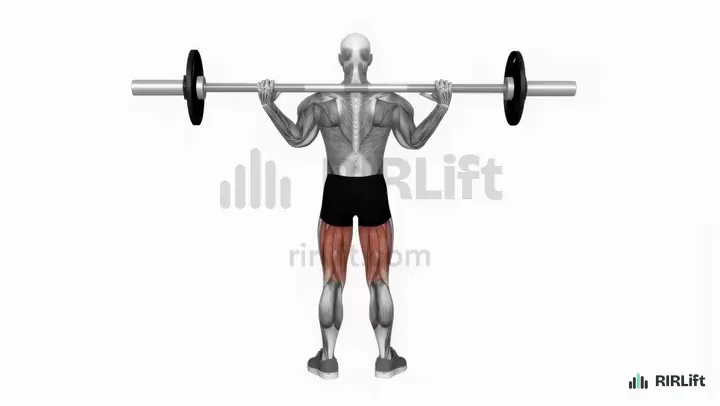
Barbell Back Squat

Quads, Glutes, Adductors

It lets you load the whole leg heavier than anything but the leg press, and going to at least parallel trains the quads and glutes in their stretched position. Open your first leg day of the week with it while you are fresh.

How to do it

  1. Set the bar across your upper back below the neck, hands just outside your shoulders, and unrack it.
  2. Stand with your feet about shoulder-width apart, toes turned out a little.
  3. Breathe in, tighten your stomach as if bracing for a punch, and sit down between your heels.
  4. Stand back up keeping your chest and hips rising together.

Cues

  • Breathe and brace
  • Chest and hips rise together
  • Whole-foot pressure

Common mistakes

  • Hips shooting up first out of the bottom: lighten the bar and keep your chest rising with them.
  • Letting the stomach go soft between reps: re-brace at the top of each one.

Swap for: Front Squat, Box Squat

Quads, machine squat

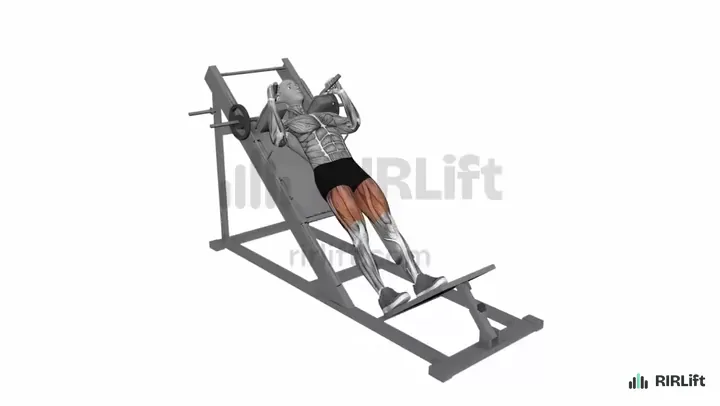
Hack Squat

Quads, Glutes

The sled guides the path and the pad holds your back, so you can sink deep with your feet low and take sets close to failure. It is the quad builder for lifters whose backs limit the barbell squat.

How to do it

  1. Stand on the platform with your back against the pad and shoulders under the pads, feet shoulder-width.
  2. Unlock the safeties and sink down as deep as your knees and hips allow.
  3. Push through your whole foot to stand back up, stopping just short of locking your knees.

Cues

  • Knees travel forward over toes
  • Deep and slow

Common mistakes

  • Cutting depth as the set gets hard: keep the same depth on every rep, and reduce the weight if needed.

Swap for: Leg Press, Smith Squat, Barbell Back Squat

Quads and glutes, machine press

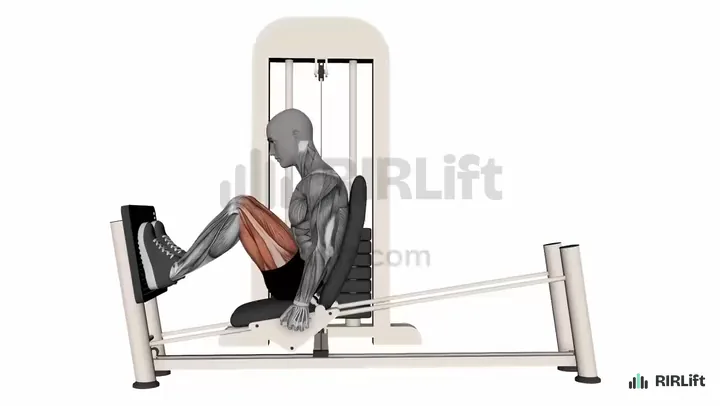
Leg Press

Quads, Glutes

You can push a lot of weight with no balance or back demand, which makes it the place to add volume after squats or to replace them. Feet low and narrow aims it at the quads; high and wide brings in more glutes.

How to do it

  1. Sit in the machine with your whole back against the pad and your feet hip-width on the platform.
  2. Release the safety handles and bend your knees, bringing the platform toward you under control.
  3. Lower until your knees are bent to about 90 degrees or a little deeper, without your lower back curling off the pad.
  4. Press the platform away until your legs are nearly straight, and repeat.

Cues

  • Lower back stays on the pad
  • Whole foot pushes
  • Stop just short of locking out

Common mistakes

  • Going so deep that your hips roll up off the seat: stop where your back stays flat.
  • Snapping the knees straight at the top: keep a soft bend.

Swap for: 45-Degree Leg Press, Hack Squat, Barbell Back Squat

Quads, front-loaded squat

Goblet Squat

Quads, Glutes

Holding a dumbbell at your chest keeps you upright and lets you sit deep, so it builds the quads at home with one weight. When the heaviest dumbbell gets easy, slow the lowering and pause at the bottom.

How to do it

  1. Hold a dumbbell or kettlebell vertically against your chest.
  2. Sit down between your knees, elbows inside them at the bottom.
  3. Stand up tall.

Cues

  • Elbows nudge the knees out at the bottom.
  • Chest stays up behind the weight.

Common mistakes

  • Letting the weight pull you forward.

Swap for: Bodyweight Squat, Barbell Back Squat

Quads, isolation

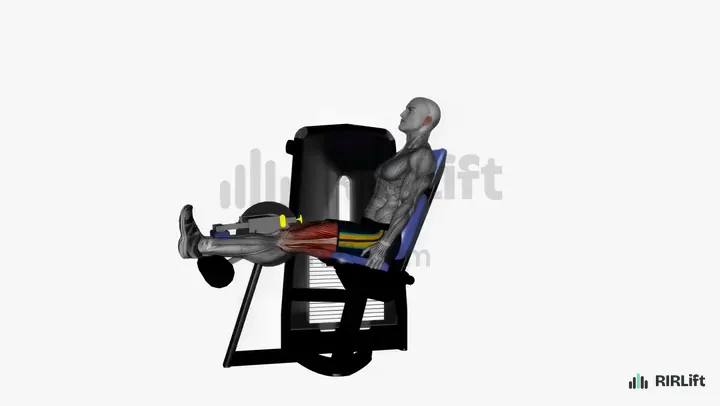
Leg Extension

Quads

It trains the quads with no help from the glutes, including the rectus femoris, the quad that crosses the hip and gets only light work from squats. Two or three sets to failure after squats add quad size with little extra fatigue.

How to do it

  1. Sit with your knees at the pivot and the pad on your lower shins.
  2. Straighten both knees until your legs are level.
  3. Lower slowly. Build up the weight over 2 lighter sets.

Cues

  • Squeeze at the top
  • Control the drop

Common mistakes

  • Letting the stack slam between reps: keep tension on.

Swap for: Single-Leg Leg Extension, Sissy Squat

Hinges and curls for the hamstrings

Squats barely grow the hamstrings, because the muscle shortens at the knee as it lengthens at the hip. They need their own work: a hinge to train them at the hip and a curl to train them at the knee.

Hamstrings and glutes, barbell hinge

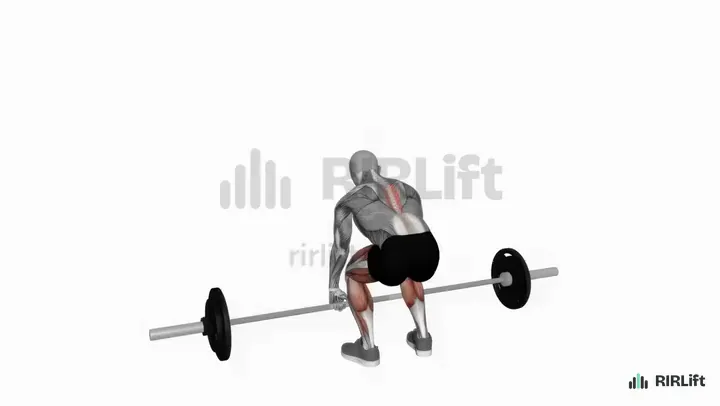
Romanian Deadlift

Hamstrings, Glutes

Pushing your hips back with a barbell stretches the hamstrings under heavy load, which is what grows them. Lower until you feel a strong stretch, usually just below the knee, and stand back up without letting your back round.

How to do it

  1. Stand with a barbell at your thighs, hands just outside your legs, feet under your hips.
  2. Soften your knees and push your hips back, sliding the bar down your thighs.
  3. Stop when your hamstrings are fully stretched, usually just below the knee, with your back flat.
  4. Push your hips forward to stand up, glutes tight at the top.

Cues

  • Hips back
  • Bar stays on your legs
  • Back flat

Common mistakes

  • Bending the knees into a squat: keep them soft and still.
  • Reaching for the floor: stop where your back would round.

Swap for: Weighted Back Extension

Hamstrings and glutes, dumbbell hinge

Dumbbell Romanian Deadlift

Hamstrings, Glutes

Dumbbells let you keep the weights close to your legs and start lighter, which suits home training and the second hinge of the week. Use higher reps than you would with the barbell.

How to do it

  1. Stand hip-width apart with a dumbbell in each hand resting against the front of your thighs, palms facing you.
  2. Push your hips straight back and let your torso fold forward, knees softly bent, the dumbbells brushing your legs.
  3. Lower until the dumbbells pass your knees and you feel a strong stretch in your hamstrings, with your back still flat.
  4. Drive your hips forward to stand back up, squeezing your glutes at the top, and repeat.

Cues

  • Hips back, not down
  • Dumbbells slide down your legs
  • Flat back, chin tucked

Common mistakes

  • Bending the knees into a squat so the dumbbells go lower: the depth comes from the hips, and most people stop just past the knees.
  • Rounding the lower back at the bottom: end the rep where your back stays flat, and lighten the load if that is high.

Swap for: Single-Leg RDL, Dumbbell Good Morning, Kettlebell Deadlift

Hamstrings, seated knee curl

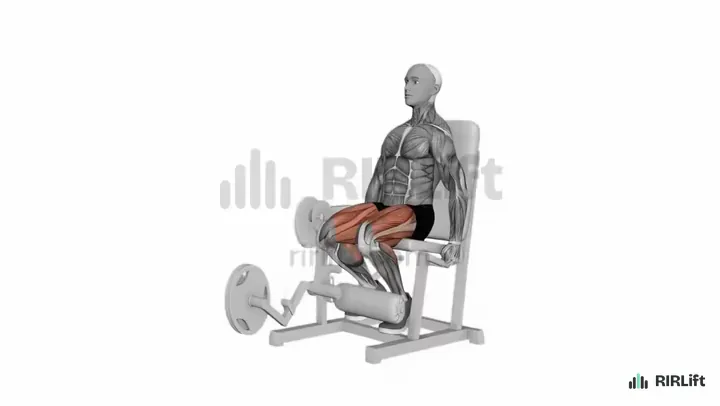
Seated Leg Curl

Hamstrings

Sitting puts your hips in flexion, so the hamstrings are already stretched when they curl. That makes it the better curl for growth when your gym has both.

How to do it

  1. Set the backrest so your knees line up with the machine's pivot, and lock the thigh pad down firmly.
  2. Rest the lower pad just above your heels with legs straight.
  3. Curl your heels down and back under the seat as far as they go.
  4. Let the pad rise slowly until your legs are straight again, and repeat.

Cues

  • Thigh pad snug
  • Pull heels under the seat
  • Two seconds on the way up

Common mistakes

  • Lifting your hips off the seat to finish the rep: tighten the thigh pad and lighten the stack.
  • Letting the stack crash between reps: control it all the way to straight legs.

Swap for: Lying Leg Curl, Romanian Deadlift, Nordic Hamstring Curl

Hamstrings, lying knee curl

Lying Leg Curl

Hamstrings

Lying face down trains the hamstrings at the knee with your hips straight, a different length from the seated curl. Use it on the second leg day so the two curls cover the muscle at both lengths.

How to do it

  1. Set the machine so your knees line up with the pivot point when you lie face down, and move the ankle pad to sit on your lower calves, just above your heels.
  2. Lie flat with your kneecaps hanging just past the end of the bench, hold the handles and press your hips into the pad.
  3. Bend your knees and pull the pad up in a smooth arc until your heels are as close to your glutes as the machine allows.
  4. Pause for a moment at the top without letting your hips lift off the bench.
  5. Lower the pad over about two seconds until your legs are almost straight, and start the next rep before the stack touches down.

Cues

  • Hips glued to the pad
  • Heels to glutes
  • Slow on the way down

Common mistakes

  • Lifting your hips as the weight gets heavy: your lower back takes over and the hamstrings do less. Drop the load until your hips stay down on every rep.
  • Stopping short at the bottom: that cuts out the part of the rep where your hamstrings are longest. Let your legs come back to almost straight before you curl again.
  • Swinging the pad up: a kick from the bottom hands the hardest part of the rep to momentum. Count two seconds down and start each rep from a dead stop.

Swap for: Seated Leg Curl, Nordic Hamstring Curl, Stability Ball Leg Curl

Split squats and hip thrusts

A split squat loads one leg with most of your body weight plus the dumbbells, so a modest weight gives heavy work to the quads and glutes. The hip thrust loads the glutes at full hip extension, the point squats never reach.

Quads and glutes, single leg

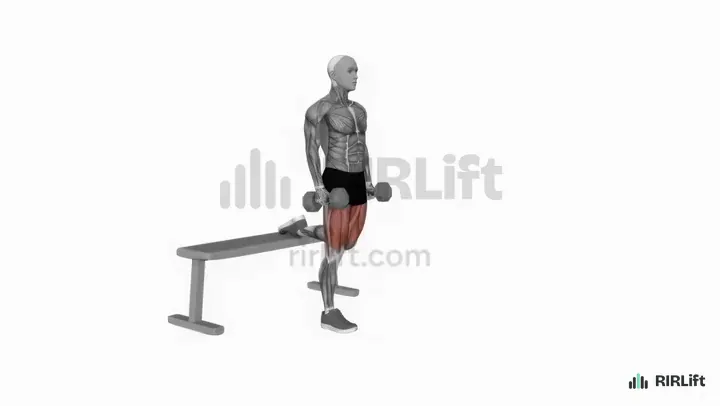
Bulgarian Split Squat

Quads, Glutes

With your back foot on a bench, the front leg carries almost all the load, so even 50 pound dumbbells feel heavy. It builds the quads and glutes deep in their range and evens out a stronger side.

How to do it

  1. Set the top of your back foot on a bench and place your front foot a long stride ahead.
  2. Hold a dumbbell in each hand at your sides, and keep your front foot flat.
  3. Drop your back knee straight toward the floor until the front thigh is close to level.
  4. Press through the front foot to rise, then finish all reps before switching legs.

Cues

  • Go deep for the inner thigh
  • Front foot flat
  • Rear foot is just a kickstand

Common mistakes

  • Pushing up with the back leg: let it relax and make the front leg do the work.
  • Front knee collapsing inward: keep it pointed the same way as your toes.

Swap for: Dumbbell Split Squat, Step-Up, Reverse Lunge

Glutes, loaded hip extension

Hip Thrust

Glutes

Big glutes are a large part of what makes legs look big from behind and the side. The hip thrust loads them hardest at the top, where squats go light.

How to do it

  1. Sit with your shoulder blades against the long side of a flat bench and roll a padded bar over your hips.
  2. Plant your feet flat about hip width apart, close enough that your shins are vertical at the top.
  3. Drive through your heels and lift your hips until your torso and thighs form a straight line.
  4. Hold the top for a second with your chin tucked, then lower your hips most of the way down and repeat.

Cues

  • Chin tucked, ribs down
  • Shins vertical at the top
  • One-second squeeze

Common mistakes

  • Arching your lower back to get higher: stop when your hips are level with your knees and squeeze your glutes there.
  • Feet too far out, which turns it into a hamstring exercise: bring them in until your shins are vertical at lockout.

Swap for: Smith Machine Hip Thrust, Dumbbell Hip Thrust, Glute Bridge

Calf raises with a full stretch

Calves fill the lower leg and rarely grow from squats alone. Train them straight-legged for the outer gastrocnemius and bent-kneed for the soleus underneath, with a pause at the bottom of every rep.

Calves, straight-knee raise

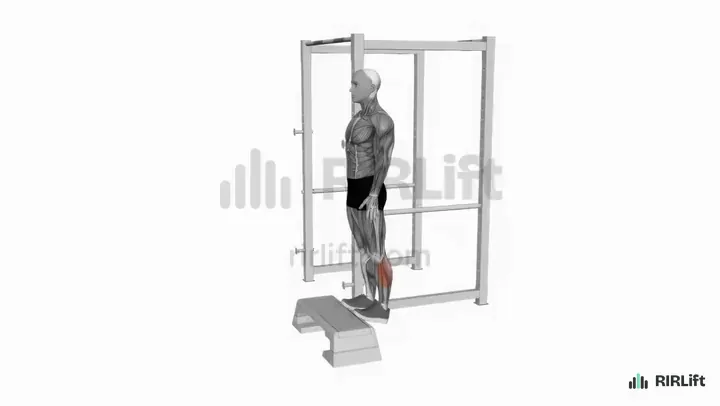
Standing Calf Raise

Calves

Straight knees put the gastrocnemius, the visible diamond of the calf, in charge. A deep stretch with a pause at the bottom of every rep is what makes it grow, more than the load.

How to do it

  1. Set the shoulder pads so you have to bend your knees slightly to get under them, then step the balls of your feet onto the edge of the block.
  2. Stand up tall to lift the weight off the stack, legs straight but not locked.
  3. Let your heels sink below the block until your calves are fully stretched, and hold that bottom for a second.
  4. Drive up onto your big toes as high as the ankle allows, pause, then lower slowly.

Cues

  • Pause in the stretch
  • Push through the big toe
  • Knees stay still

Common mistakes

  • Bouncing out of the bottom: the Achilles tendon springs you up and the calf does less. A one-second pause removes the bounce.
  • Bending the knees to finish the rep: that turns it into a partial squat. Lighten the stack until the legs stay straight.

Swap for: Smith Machine Calf Raise, Donkey Calf Raise, Barbell Standing Calf Raise

Soleus, bent-knee raise

Seated Calf Raise

Calves

Bending the knee takes the gastrocnemius out of the lift and trains the soleus underneath, which pushes the calf out from the side. Use it on the second leg day.

How to do it

  1. Sit at the machine with the balls of your feet on the platform and the pad snug on your lower thighs.
  2. Lift the pad slightly and release the safety lever.
  3. Lower your heels as far as they go and pause in the stretch.
  4. Push up onto the balls of your feet as high as possible, squeeze, and lower slowly.

Cues

  • Pad on the thighs, not the knees
  • Pause at the bottom
  • Big toe pressure

Common mistakes

  • Rocking the torso to move the weight: the upper body stays quiet.
  • Cutting the range once it burns: shorten the set, not the rep.

Swap for: Barbell Seated Calf Raise, Dumbbell Seated Calf Raise, Leg Press Calf Raise

Calves, dumbbell raise

Dumbbell Standing Calf Raise

Calves

Holding dumbbells on a step gives you the standing raise without a machine. When two dumbbells get light, do them one leg at a time.

How to do it

  1. With a dumbbell hanging from each hand, put the balls of both feet on a step or two stacked books, hip-width apart.
  2. Let your heels sink below the step until the calves are fully stretched, and pause.
  3. Press up onto your toes as high as you can with straight knees, and hold the top briefly.
  4. Lower slowly back into the stretch and repeat.

Cues

  • Tall body, straight knees
  • Slow down, quick up
  • Weight over the big toes

Common mistakes

  • Cutting the bottom short because the step feels unstable: use a wider step or touch the wall with a fingertip.
  • Bending the knees to help at the end of a set: that turns it into a little jump and stops loading the calf.

Swap for: Single-Leg Calf Raise, Kettlebell Calf Raise

Put them together: example sessions

Each session below picks from the exercises above for one situation, with the sets, reps, rest and RIR filled in.

Session 1

Full gym, legs twice a week

  • Workouts2× a week
  • Working sets31 a week
  • Per workout~45 min
  • EquipmentBarbells, Leg Extension, Seated Leg Curl, Standing Calf Raise +5

You train in a gym with a squat rack and leg machines, run an upper and lower or push, pull and legs split, and want your legs to grow.

Each leg day has one squat pattern, one hamstring exercise at the hip and one at the knee, a quad or glute finisher and calves, so every muscle gets two sessions a week. The quads get about 13 sets a week, the hamstrings 9, and the calves 6. Legs A is 16 sets and Legs B is 15.

Legs A: Squat and Romanian deadlift
ExerciseSets × repsRIRRest
Barbell Back Squat3 warm-up sets first 4 × 6–8 2 3 min
Romanian Deadlift 3 × 8–10 2 2:30 min
Leg Extension 3 × 12–15 0 90 s
Seated Leg Curl 3 × 10–12 0 90 s
Standing Calf Raise 3 × 10–15 1 1 min
Legs B: Hack squat and split squats
ExerciseSets × repsRIRRest
Hack Squat 3 × 8–12 1 2:30 min
Bulgarian Split SquatPer leg. 3 × 8–12 2 90 s
Lying Leg Curl 3 × 10–12 1 90 s
Hip Thrust 3 × 8–12 1 2 min
Seated Calf Raise 3 × 12–20 1 1 min
How to run it
Do Legs A early in the week and Legs B three or four days later. Put upper body days between them, and leave a day before Legs A if your squat is the lift you care about most.
How to progress
The back squat and Romanian deadlift go up 5 pounds once every set reaches the top of the range at 2 reps in reserve. On the hack squat, split squats and machines, add reps first and weight second. Calves get a rep added each week until 20, then more load.

Session 2

Dumbbells at home

  • Workouts2× a week
  • Working sets27 a week
  • Per workout~35 min
  • EquipmentDumbbells

You train legs at home with a pair of dumbbells, a bench or sturdy chair and a step, and the heaviest pair is lighter than you would squat in a gym.

A pair of dumbbells is too light for two-leg squats to stay hard for long, so the Bulgarian split squat carries the heavy work and the goblet squat moves to higher reps at 1 rep in reserve. Romanian deadlifts cover the hamstrings both days. Day 1 is 14 sets and Day 2 is 13.

Day 1: Goblet squat and split squats
ExerciseSets × repsRIRRest
Goblet Squat1 warm-up set first 4 × 10–15 1 2 min
Dumbbell Romanian Deadlift 3 × 10–12 2 2 min
Bulgarian Split SquatPer leg. 3 × 8–12 1 90 s
Dumbbell Standing Calf Raise 4 × 12–20 1 1 min
Day 2: Split squats first
ExerciseSets × repsRIRRest
Bulgarian Split SquatPer leg. 3 × 10–15 1 90 s
Dumbbell Romanian Deadlift 4 × 8–12 1 2 min
Goblet SquatPause 2 s at the bottom. 3 × 15–20 1 90 s
Dumbbell Standing Calf RaisePer leg once two-leg sets pass 20 reps. 3 × 15–20 0 1 min
How to run it
Train Day 1 and Day 2 once each per week with two or three days between them. Use a bench or chair at knee height for the split squats and a stair for the calf raises.
How to progress
Each week, try to beat last week's reps on the same dumbbells at the same reps in reserve. When the goblet squat passes 20 reps, add a three second lowering and a two second pause at the bottom instead of more reps.

Session 3

Bigger legs without barbell squats

  • Workouts2× a week
  • Working sets28 a week
  • Per workout~35 min
  • EquipmentLeg Press, Seated Leg Curl, Leg Extension, Barbells +6

You train in a gym, but barbell squats bother your lower back or you simply do not like them, and you want leg size anyway.

Machines and a split squat give the quads all the load they need while the pads support your back, so the squat pattern stays without a bar on your shoulders. Machine sets go to 0 or 1 reps in reserve because there is nothing to balance. Day A is 16 sets and Day B is 12.

Day A: Leg press and curls
ExerciseSets × repsRIRRest
Leg Press 4 × 8–12 1 2:30 min
Seated Leg Curl 3 × 10–12 0 90 s
Leg Extension 3 × 12–15 0 90 s
Hip Thrust 3 × 8–12 1 2 min
Seated Calf Raise 3 × 12–20 1 1 min
Day B: Hack squat and split squats
ExerciseSets × repsRIRRest
Hack Squat 3 × 8–12 1 2:30 min
Bulgarian Split SquatPer leg. 3 × 8–12 2 90 s
Lying Leg Curl 3 × 10–15 0 90 s
Standing Calf Raise 3 × 10–15 1 1 min
How to run it
Run Day A and Day B once each per week with at least two days between. On the leg press and hack squat, go as deep as you can while your lower back stays flat on the pad.
How to progress
Machines make small jumps easy: add a plate whenever all sets reach the top of their range at the target reps in reserve. For split squats, go up a dumbbell size once you get 12 per leg on every set.

Make it fit you

Questions

Can I increase my leg size?

Yes. Leg muscles respond to hard training like any other, and they are big, so they can add more size than most other muscles. Two leg sessions a week, with the heavy lifts going up steadily, show results within two to three months.

How long should leg day last?

About 60 to 75 minutes with warm-ups. Heavy squats and hinges need 2 to 3 minutes of rest, which is most of the time; the machine and calf work goes faster.

What is the best single exercise for bigger legs?

A deep squat you can load heavy and progress for months, whether that is the barbell back squat, hack squat or leg press. It still needs a hamstring hinge or curl next to it, because squats do little for the back of the thigh.

How often should I train legs for size?

Twice a week suits most people, with 12 to 16 hard sets per session. Once a week can work if you are short on time, but each session then needs to be longer.

Can I build bigger legs at home?

Yes, with dumbbells and a bench. Bulgarian split squats, goblet squats and Romanian deadlifts at higher reps and close to failure build size well, even with lighter weights than you would use in a gym.