
Exercises for bigger calves: straight-knee, bent-knee and single-leg raises
Published October 29, 2026
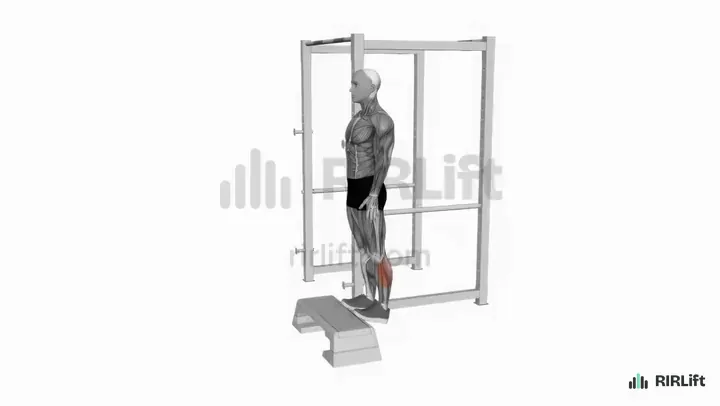
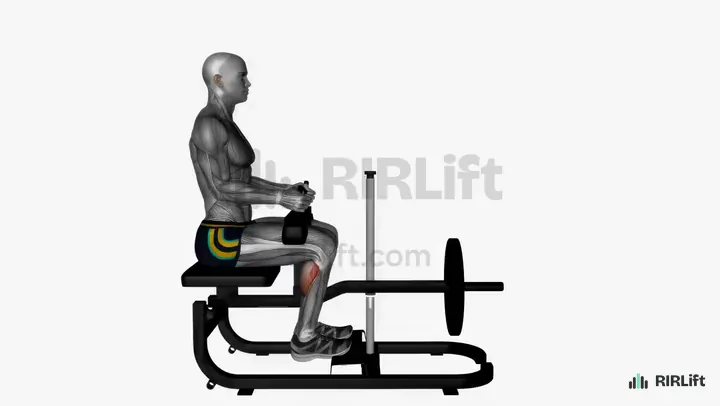
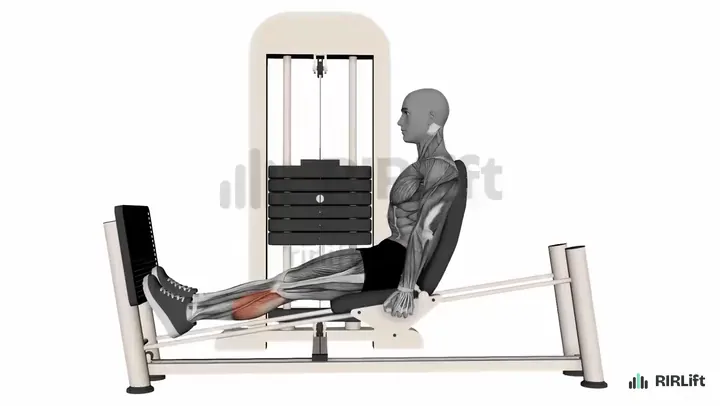
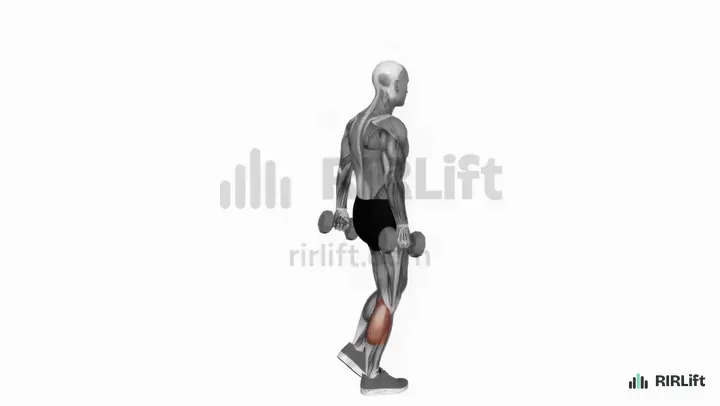
The best exercises for bigger calves are standing calf raises (machine, Smith machine, leg press or donkey) for the gastrocnemius, the visible diamond-shaped muscle, and seated calf raises for the soleus underneath, which makes the lower leg look thicker from the side. Single-leg raises on a step work well at home. What grows calves is a full stretch at the bottom of every rep with a one or two second pause, 10 to 20 reps per set taken within a rep of failure, and 12 to 20 sets a week spread over two to four sessions.
- Standing Calf Raise Calves
- Seated Calf Raise Calves
- Leg Press Calf Raise Calves
- Single-Leg Calf Raise Calves
- Donkey Calf Raise Calves
- Smith Machine Calf Raise Calves
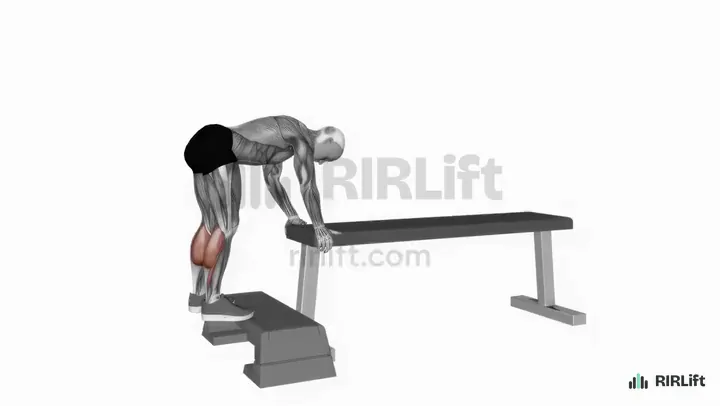
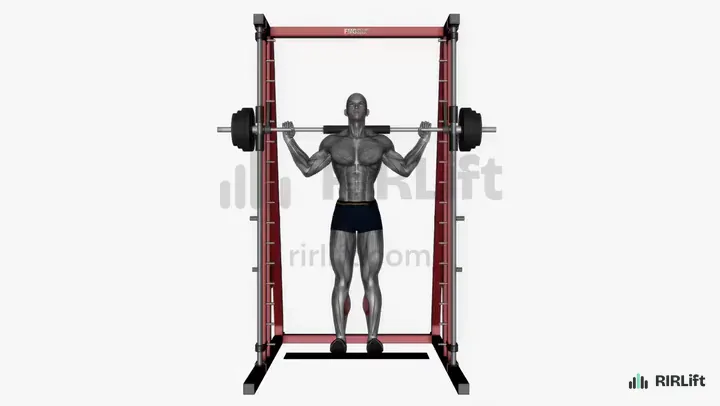
Put them together: example sessions
Each session below picks from the exercises above for one situation, with the sets, reps, rest and RIR filled in.
-
Session 1
Calves lag behind the rest of your legs
You train in a gym, your thighs have grown but your calves have not, and you are ready to give them their own focus.
3× a week · 19 sets a week · ~15 min
-
Session 2
At home with a step and dumbbells
You train at home with a stair or sturdy step, a bench or chair, and a pair of dumbbells.
3× a week · 20 sets a week · ~15 min
-
Session 3
New to calf training, two leg days a week
You have never trained calves directly, lift legs twice a week in a gym, and want to ease into it.
2× a week · 10 sets a week · ~10 min
Session 1
Calves lag behind the rest of your legs
- Workouts3× a week
- Working sets19 a week
- Per workout~15 min
- EquipmentStanding Calf Raise, Seated Calf Raise, Leg Press
You train in a gym, your thighs have grown but your calves have not, and you are ready to give them their own focus.
Calves recover quickly, so three short sessions a week work better than one long one. Each session pairs a straight-knee raise with a bent-knee or single-leg raise, 19 sets a week in all, more than most lifters ever give them.
| Exercise | Sets × reps | RIR | Rest |
|---|---|---|---|
| Standing Calf RaisePause 2 s at the bottom. | 4 × 8–12 | 1 | 90 s |
| Seated Calf Raise | 3 × 12–20 | 0 | 1 min |
| Exercise | Sets × reps | RIR | Rest |
|---|---|---|---|
| Leg Press Calf Raise | 4 × 10–15 | 0 | 90 s |
| Single-Leg Calf RaisePer leg. | 2 × 10–15 | 1 | 1 min |
| Exercise | Sets × reps | RIR | Rest |
|---|---|---|---|
| Donkey Calf Raise | 3 × 10–15 | 1 | 90 s |
| Seated Calf Raise | 3 × 15–20 | 0 | 1 min |
- How to run it
- Do Session 1 at the start of a leg day, while you are fresh, and Sessions 2 and 3 at the end of two other training days. Keep at least one day between them.
- How to progress
- Every rep must reach a full stretch with a 1 to 2 second pause at the bottom. Add reps until each set hits the top of its range at the target reps in reserve, then add weight. If the weight goes up and the pause disappears, the weight was too heavy.
Session 2
At home with a step and dumbbells
- Workouts3× a week
- Working sets20 a week
- Per workout~15 min
- EquipmentDumbbells
You train at home with a stair or sturdy step, a bench or chair, and a pair of dumbbells.
Dumbbells are light for calves, so single-leg raises carry the heavy work and the seated raises run to 25 reps. Three sessions a week of 6 or 7 sets each give you about 20 sets, the frequency light loads need.
| Exercise | Sets × reps | RIR | Rest |
|---|---|---|---|
| Single-Leg Calf RaisePer leg. | 4 × 8–15 | 1 | 1 min |
| Dumbbell Seated Calf Raise | 3 × 15–25 | 0 | 1 min |
| Exercise | Sets × reps | RIR | Rest |
|---|---|---|---|
| Dumbbell Standing Calf Raise | 3 × 15–20 | 1 | 1 min |
| Single-Leg Calf RaisePer leg. | 3 × 10–15 | 0 | 1 min |
- How to run it
- Alternate Day A and Day B on three days a week, for example A, B, A then B, A, B the next week. Five minutes before or after another workout is enough.
- How to progress
- On single-leg raises, add reps to 15, then hold a dumbbell in the hand on the working side. On seated raises, once 25 reps leaves less than one rep in reserve, add a three second lowering before going heavier.
Session 3
New to calf training, two leg days a week
- Workouts2× a week
- Working sets10 a week
- Per workout~10 min
- EquipmentSmith Machine, Barbells, Leg Press, Seated Calf Raise
You have never trained calves directly, lift legs twice a week in a gym, and want to ease into it.
Calves that have never been trained get very sore from the first sessions, so this starts at 5 sets per leg day and 2 reps in reserve. That is 10 sets a week, enough to grow at first; after a month, move to the priority plan or add a set to each exercise.
| Exercise | Sets × reps | RIR | Rest |
|---|---|---|---|
| Smith Machine Calf Raise | 3 × 10–15 | 2 | 90 s |
| Barbell Seated Calf Raise | 2 × 15–20 | 2 | 1 min |
| Exercise | Sets × reps | RIR | Rest |
|---|---|---|---|
| Leg Press Calf Raise | 3 × 12–15 | 2 | 90 s |
| Seated Calf Raise | 2 × 15–20 | 2 | 1 min |
- How to run it
- Add Day 1 to your first leg day and Day 2 to your second. Do the calves before squats or right after your main lift, not at the very end when you are tired of the gym.
- How to progress
- For the first four weeks, add reps only and keep 2 in reserve. From week five, go to 1 rep in reserve, and add weight on the Smith machine and leg press whenever every set reaches 15 reps.
Make it fit you
-
Bouncing out of the bottom
The Achilles tendon stores energy like a spring, so bounced reps let it do the work instead of the muscle. Pause for a full second with your heels at their lowest point and come up slowly.
-
Feet turned in or out
Turning your toes in or out shifts a little work between the inner and outer calf, but you are strongest with your feet pointed straight ahead. Use that for most sets and spend the effort on range and load.
-
Achilles or ankle discomfort
Drop the stretch at the bottom by a couple of inches and use seated raises, which are usually more comfortable. Build the depth back over a few weeks.
-
Runners and walkers
Walking and running train the calves for endurance, not size. Keep them, and add the starter plan; the heavy, stretched reps are what they do not already get.
Questions
How often should you train your calves?
Two to four times a week. Calves recover quickly from short sessions, so spreading 12 to 20 weekly sets over more days usually works better than one hard session.
What are the benefits of seated calf raises?
They train the soleus, the deeper calf muscle that standing raises barely reach because the bent knee takes the gastrocnemius out. A bigger soleus pushes the calf out to the sides.
Can walking build calf muscles?
Walking keeps the calves working, but the load is too light to grow them much. Heavier calf raises with a full stretch are what add size.
Are calves genetic?
Partly. Where the muscle attaches to the Achilles tendon decides how long the muscle belly can be, and that is set. But calves that have never had hard, full-range training almost always grow once they get it.
Can I grow my calves at home without equipment?
Yes, with single-leg raises on a step taken close to failure, then holding a weight or a backpack as they get easy. Do them three times a week.
Related templates
-
Calf exercises at the gym: standing, seated and leg press raises
Every machine and free-weight calf raise in more detail.
-
Calf exercises at home: standing and seated raises with a step and a weight
Step and bodyweight calf work for training without a machine.
-
Calf raises: how to do them, what they work and what to swap in
The standing calf raise taken apart rep by rep.
-
Exercises for bigger legs: quads, hamstrings, glutes and calves
Quads, hamstrings and glutes plans to go with your calf work.
-
How to use reps in reserve (RIR)
How to judge the last reps of a calf set, where effort is hard to read.