Exercises for boxers: strength, rotational power, neck and conditioning

The best exercises for boxers are the trap bar deadlift and Bulgarian split squat for leg strength, jump squats for leg power, the medicine ball rotational throw, landmine rotational press and cable woodchop for rotation, the landmine press and explosive push-up for punching muscles, neutral-grip pull-ups and one-arm rows to balance them, light neck curls and extensions, and jump rope and shadow boxing for conditioning. Two gym days a week next to boxing is enough, with sets stopping 2 to 3 reps short of failure.

  1. Trap Bar Deadlift Quads, Glutes
  2. Bulgarian Split Squat Quads, Glutes
  3. Jump Squat Quads, Glutes
  4. Med Ball Rotational Throw Abs
  5. Landmine Press Shoulders
  6. Neutral-Grip Pull-Up Lats
  7. Jump Rope Calves, Quads
  8. Lying Neck Extension Neck

Leg exercises for boxers

Your punches start from the floor. A heavy hinge builds strength, split squats build it on one leg, and jumps teach you to use it fast.

Hips and legs, heavy hinge

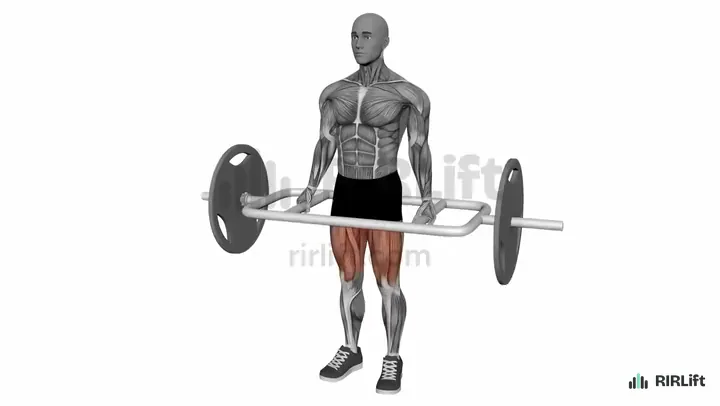
Trap Bar Deadlift

Quads, Glutes

Punching power starts with your legs pushing into the floor. The trap bar deadlift is the simplest way to load that heavily, with less strain on your back and shoulders than a straight bar.

How to do it

  1. Stand inside the trap bar, feet under your hips, and grip the handles.
  2. Sit down until your back is flat and your hips are just above your knees.
  3. Push the floor away and stand up tall.
  4. Lower the bar under control, hips and knees bending together.

Cues

  • Push the floor away
  • Flat back
  • Tall finish

Common mistakes

  • Jerking the bar off the floor: build tension, then lift.
  • Grinding out slow reps: stop the set while the bar still moves fast.

Swap for: Barbell Deadlift, Kettlebell Deadlift, Romanian Deadlift

Single-leg strength

Bulgarian Split Squat

Quads, Glutes

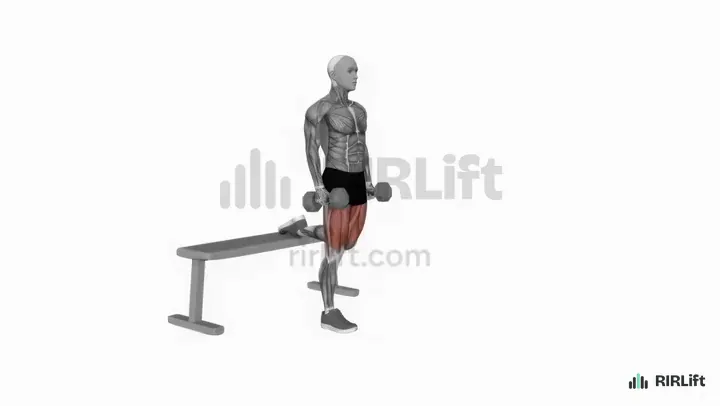
Boxing happens in a staggered stance, mostly on one leg at a time. Rear-foot-raised split squats build that leg strength and show you if one side lags.

How to do it

  1. Stand a long step ahead of a bench and rest your back foot on it, laces down.
  2. Hold dumbbells at your sides and lower your back knee toward the floor.
  3. Keep your weight on the front foot.
  4. Stand up by driving the front foot down, finish the set, then switch legs.

Cues

  • Front leg works
  • Straight down
  • Pause low

Common mistakes

  • Front foot too close: step out until the front shin stays upright.
  • Bouncing out of the bottom: control the turn.

Swap for: Dumbbell Split Squat, Reverse Lunge, Step-Up

Leg power, jump

Jump Squat

Quads, Glutes

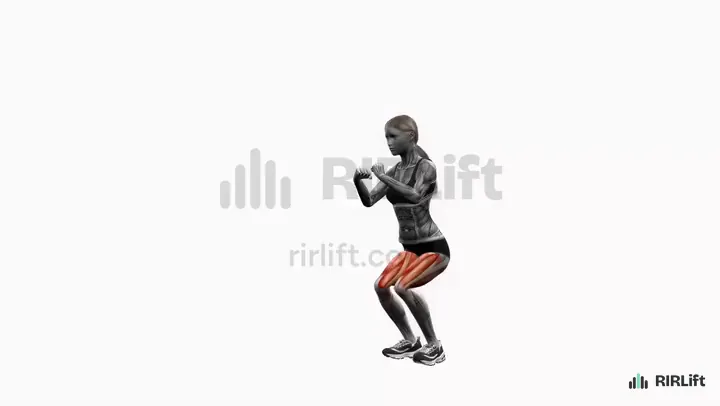
Jumps teach your legs to produce force fast, which is what a hard punch or a quick step needs. Few reps, full rest, maximum height.

How to do it

  1. Stand with your feet just outside your hips.
  2. Dip into a quarter to half squat and swing your arms back.
  3. Jump as high as you can, arms swinging up.
  4. Land softly with bent knees, reset, and jump again.

Cues

  • Dip and explode
  • Land quiet
  • Reset each rep

Common mistakes

  • Doing them as cardio: they are for power, so stop before the height drops.
  • Landing stiff-legged: bend to absorb.

Swap for: Box Jump, Frog Jump, Skater Hop

Rotational power exercises

Hooks and crosses come from turning your hips and trunk hard. Throw medicine balls for speed, press the landmine across your body to join the turn to the arm, and use the woodchop for strength.

Rotational power

Med Ball Rotational Throw

Abs

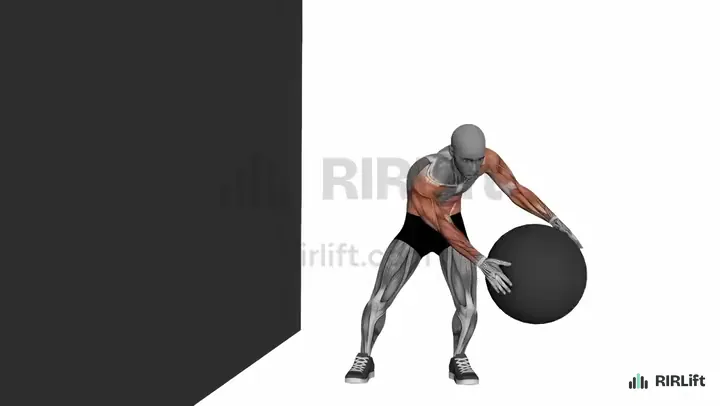
Throwing a medicine ball sideways into a wall trains your hips and trunk to turn hard and fast, the same chain that drives hooks and crosses.

How to do it

  1. Stand side-on to a wall, about an arm's length away, ball at your back hip.
  2. Load by turning your hips and shoulders away from the wall.
  3. Drive your back hip around and throw the ball hard into the wall.
  4. Catch it, reset, and repeat before switching sides.

Cues

  • Hips start the throw
  • Back foot pivots
  • Throw through the wall

Common mistakes

  • Throwing with the arms only: turn your hips first.
  • Rushing reps: each throw should be your hardest.

Swap for: Landmine Rotational Press, Medicine Ball Slam, Cable Woodchop

Rotation into a press

Landmine Rotational Press

Shoulders, Abs

Lifting the end of a landmine from your hip and pressing it across your body links leg drive, hip turn and arm extension, much like a straight right.

How to do it

  1. Hold the end of a landmine bar at your back hip with one hand, side-on to the bar.
  2. Turn your hips and pivot your back foot as you lift the bar across your body.
  3. Press the bar up and out as your hips finish turning.
  4. Lower it back to your hip and repeat before switching sides.

Cues

  • Pivot the back foot
  • Hips turn, then arm presses
  • Smooth, then fast

Common mistakes

  • Pressing before the hips turn: let the legs and hips lead.
  • Twisting the lower back instead of the hips: pivot on the foot.

Swap for: Landmine Press, Med Ball Rotational Throw, Cable Woodchop

Trunk, loaded rotation

Cable Woodchop

Abs

The woodchop loads rotation with a steady cable, so you can build strength in the trunk muscles that you then use fast in the throw and in punching.

How to do it

  1. Set a cable high and stand side-on to it, both hands wrapped around the handle.
  2. Draw the handle on a diagonal toward the far hip.
  3. Turn through your hips and shoulders together, with arms long.
  4. Return slowly to the top and finish the set before switching sides.

Cues

  • Hips and shoulders turn together
  • Arms long
  • Slow on the return

Common mistakes

  • Bending the arms to pull the weight: the trunk does the work.
  • Going too heavy: you should be able to stop at any point.

Swap for: Pallof Press, Dumbbell Woodchop, Med Ball Woodchop

Upper-body exercises for boxers

Boxers need shoulders that last for rounds and a back that matches all the punching. Press at a punching angle, push fast, and pull at least as much as you push.

Shoulders, angled press

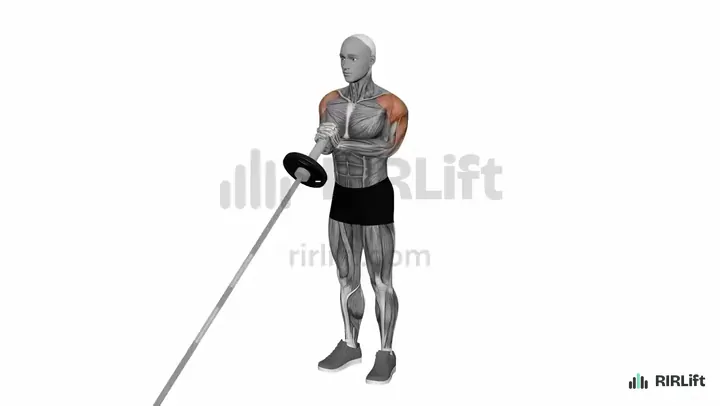
Landmine Press

Shoulders

Pressing a landmine up and forward builds the shoulders and triceps at an angle close to a punch, and it tends to be easier on shoulders than overhead pressing.

How to do it

  1. Wedge one end of a barbell in a landmine or corner and stand square to the free end, feet about shoulder width.
  2. Hold the end of the bar at your upper chest with both hands, elbows under it.
  3. Brace and press the bar up and forward until your arms are straight, letting your shoulder blades reach forward at the end.
  4. Lower it back to your chest and repeat.

Cues

  • Press up and forward
  • Reach at the end
  • Stand square

Common mistakes

  • Leaning back to push it up: stay tall.
  • Shrugging at the top: keep the shoulders down as they reach.

Swap for: Dumbbell Shoulder Press, Push-Up, Landmine Rotational Press

Upper-body power

Explosive Push-Up

Chest

Pushing up so hard your hands leave the floor trains fast upper-body force with nothing but bodyweight.

How to do it

  1. Get into a high plank with hands just wider than your shoulders.
  2. Lower your chest close to the floor.
  3. Push the floor away as hard as you can so your hands come off it.
  4. Land with soft elbows and lower straight into the next rep.

Cues

  • Push the floor away hard
  • Soft landing
  • Body rigid

Common mistakes

  • Doing them slowly when tired: stop when you cannot leave the floor.
  • Landing on locked elbows: bend to absorb.

Swap for: Clap Push-Up, Push-Up, Med Ball Chest Throw

Back and arms, vertical pull

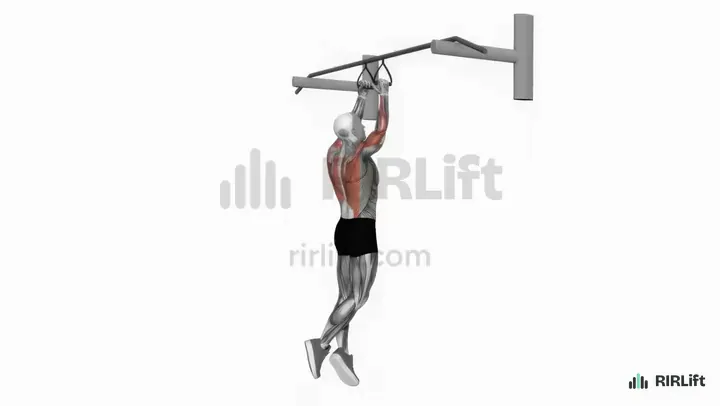
Neutral-Grip Pull-Up

Lats

Pulling strength balances all the punching and helps you hold position in the clinch. A neutral grip is easier on the elbows and shoulders.

How to do it

  1. Hang from parallel handles with your palms facing each other.
  2. Draw your shoulders down, then pull your chest toward the handles.
  3. Get your chin above your hands.
  4. Lower to a full hang.

Cues

  • Shoulders down first
  • Chest to the handles
  • Full hang

Common mistakes

  • Kicking up the last reps: stop when the strict rep goes.
  • Half reps: straighten your arms every time.

Swap for: Pull-Up, Lat Pulldown, Chin-Up

Upper back, one-arm pull

One-Arm Dumbbell Row

Lats, Upper Back

Every punch is followed by pulling your hand back to guard. One-arm rows build that back strength one side at a time.

How to do it

  1. Brace one hand and knee on a bench, a dumbbell in the other hand.
  2. Let it hang with your arm straight.
  3. Row it to your hip, elbow close to your side.
  4. Lower to a straight arm and switch sides after the set.

Cues

  • Elbow to the hip
  • Shoulders level
  • Straight arm at the bottom

Common mistakes

  • Twisting to lift more: keep both shoulders square.
  • Cutting the bottom short: let the arm hang straight.

Swap for: Single-Arm Cable Row, Kettlebell Row, Inverted Row

Neck exercises for boxers

Light neck work, front and back, is a standard part of a boxer's strength program. Two sets of slow, high reps once or twice a week is plenty.

Back of the neck

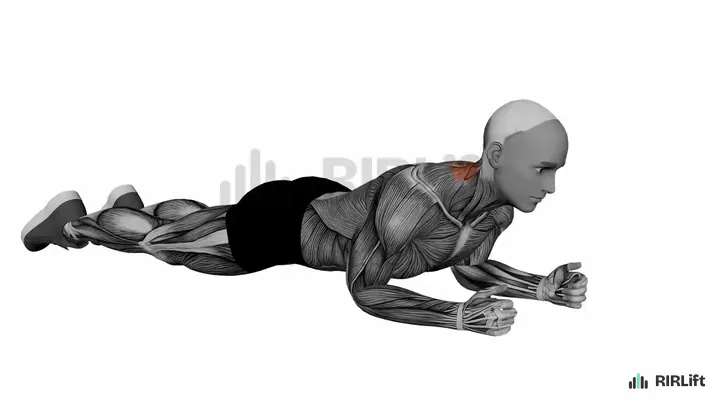
Lying Neck Extension

Neck

A stronger neck is part of preparing to take punches in sparring. Lying face down on your forearms and lifting your head trains the muscles at the back of the neck with nothing but the weight of your head.

How to do it

  1. Lie on your front on the floor, propped up on your forearms with your legs straight.
  2. Let your chin drop slowly toward your chest.
  3. Lift your head until your face looks forward and your neck lines up with your back.
  4. Pause, then lower slowly again.

Cues

  • Slow both ways
  • Forearms stay planted
  • Stop at neutral

Common mistakes

  • Throwing your head back past neutral: stop when it lines up with your back.
  • Rushing the reps: neck work is slow, high reps.

Swap for: Lying Neck Curl, Dumbbell Shrug, Face Pull

Front of the neck

Lying Neck Curl

Neck

The front of the neck gets little direct work. Curling your head up while lying on your back trains it with nothing but your head's weight and slow control.

How to do it

  1. Lie on your back on a bench with your head and neck off the end.
  2. Lower your head back slowly until it is just below the bench.
  3. Curl your chin toward your chest.
  4. Lower again under control.

Cues

  • Chin to chest
  • Slow and smooth
  • Body weight first

Common mistakes

  • Jerking the head up: move slowly.
  • Adding a plate too soon: get comfortable with high reps of your head's weight first.

Swap for: Lying Neck Extension, Plate Hollow Hold, Dead Bug

Boxing conditioning

Rope and shadow boxing work in rounds, like the sport. Use them to warm up and to build stamina without extra pounding on your joints.

Footwork and conditioning

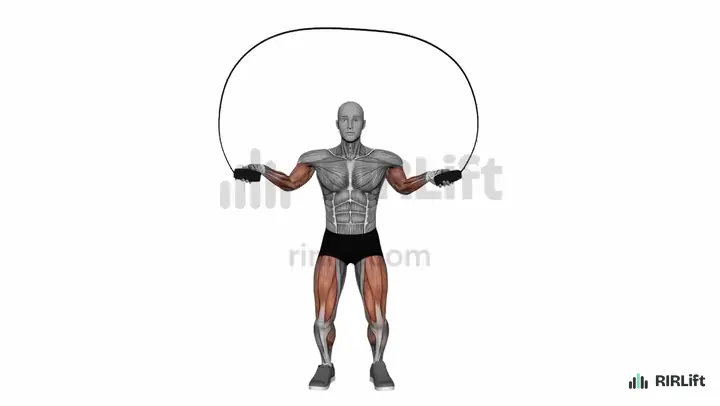
Jump Rope

Calves, Quads

Skipping rope builds calf endurance, rhythm and light feet, and it is the boxer's classic warm-up and conditioning tool.

How to do it

  1. Hold the handles at hip height with your elbows close to your sides.
  2. Turn the rope with your wrists, not your arms.
  3. Jump just high enough to clear the rope, landing on the balls of your feet.
  4. Keep a steady rhythm for the round.

Cues

  • Wrists turn the rope
  • Small jumps
  • Stay on the balls of your feet

Common mistakes

  • Jumping too high: clear the rope by an inch or two.
  • Swinging the arms wide: elbows stay in.

Swap for: Jump Rope Alternating Foot, Skipping in Place, Fast Feet

Build a session with Jump Rope

Technique and conditioning

Shadow Boxing

Shoulders, Biceps, Triceps

Shadow boxing is technique practice and conditioning in one, with no equipment. Rounds of steady punching and movement build the stamina to keep your hands up.

How to do it

  1. Stand tall with your feet planted and your hands up by your chin.
  2. Throw straight punches, alternating hands, at an imaginary target in front of you.
  3. Snap each hand back to your guard as the other one goes out.
  4. Keep a steady pace for the whole round.

Cues

  • Hands back to guard
  • Steady rhythm
  • Breathe out on each punch

Common mistakes

  • Dropping your hands as you tire: slow the pace and keep the guard.
  • Locking your elbows hard: snap each punch back before full lockout.

Swap for: Boxing Jab, Boxing Cross, Jump Rope

Put them together: example sessions

Each session below picks from the exercises above for one situation, with the sets, reps, rest and RIR filled in. Open one in the session builder to change a pick, price it from a recent set, and add it to RIRLift.

Session 1

Between fights, two gym days

Open in the session builder
  • Workouts2× a week
  • Working sets29 a week
  • Per workout~40 min
  • EquipmentTrap Bar, Landmine, Pull-Up Bar, Barbells +2

You box four or five times a week and have no fight coming up, so this is the time to get stronger.

Between camps you can afford heavier lifting, at 2 reps in reserve, on two days that sit away from your hardest sparring. Power work goes first while you are fresh. Each session is about 16 sets.

Strength A
ExerciseSets × repsRIRRest
Jump SquatMax height. 3 × 3–5 4 90 s
Trap Bar Deadlift2 warm-up sets first 4 × 3–6 2 3 min
Landmine Press 3 × 6–10 2 90 s
Neutral-Grip Pull-Up 3 × 5–10 2 2 min
Lying Neck Extension 2 × 12–20 2 1 min

Open Strength A in the session builder

Strength B
ExerciseSets × repsRIRRest
Med Ball Rotational ThrowPer side. Hard throws. 3 × 5–6 4 1 min
Bulgarian Split SquatPer leg. 3 × 6–10 2 2 min
Explosive Push-Up 3 × 5–8 3 90 s
One-Arm Dumbbell RowPer arm. 3 × 8–12 2 90 s
Lying Neck Curl 2 × 12–20 2 1 min

Open Strength B in the session builder

How to run it
Do Strength A and Strength B twice a week, on lighter boxing days or at least 6 hours after technical sessions.
How to progress
Add weight when every set hits the top of its range at 2 reps in reserve. Keep power work the same; it should feel fast every rep.

Session 2

Fight camp, one or two short sessions

Open in the session builder
  • Workouts2× a week
  • Working sets19 a week
  • Per workout~25 min
  • EquipmentTrap Bar, Landmine, Pull-Up Bar, Medicine Ball +2

You have a fight in four to eight weeks and boxing, sparring and running take up most of your energy.

In camp, the job is to keep your strength and power without adding fatigue, so sessions are short, about 10 sets, and every set stops 3 reps short of failure. Power moves stay because they keep you fast at little cost.

Camp A
ExerciseSets × repsRIRRest
Jump Squat 3 × 3 4 90 s
Trap Bar Deadlift2 warm-up sets first 3 × 3 3 3 min
Landmine Rotational PressPer side. 2 × 5–6 3 90 s
Neutral-Grip Pull-Up 2 × 5–8 3 2 min

Open Camp A in the session builder

Camp B
ExerciseSets × repsRIRRest
Med Ball Rotational ThrowPer side. 3 × 4–5 4 1 min
Bulgarian Split SquatPer leg. 2 × 6–8 3 2 min
Explosive Push-Up 2 × 4–6 4 90 s
Lying Neck Extension 2 × 15–20 3 1 min

Open Camp B in the session builder

How to run it
Do Camp A every week, and Camp B in weeks without hard sparring. Stop all lifting in the final week before the fight.
How to progress
Keep the weights from your off-camp training and do not try to add weight. If you feel flat, drop a set from each exercise.

Session 3

New to the gym, boxing for fitness

Open in the session builder
  • Workouts2× a week
  • Working sets26 a week
  • Per workout~30 min
  • EquipmentTrap Bar, Landmine, Dumbbells, Adjustable Cable +2

You box for fitness or are new to the sport, and you have never lifted weights.

New lifters get stronger fastest with moderate weights and simple moves, so both sessions are full body at 2 to 3 reps in reserve. Each ends with a few rope or shadow boxing rounds, which builds the conditioning you need on the bag.

Session A
ExerciseSets × repsRIRRest
Trap Bar Deadlift 3 × 8–10 3 2 min
Landmine Press 3 × 8–12 2 90 s
One-Arm Dumbbell RowPer arm. 3 × 10–12 2 90 s
Cable WoodchopPer side. 2 × 10–12 2 1 min
Jump Rope1 rep = a 2-minute round. 3 × 1 3 1 min

Open Session A in the session builder

Session B
ExerciseSets × repsRIRRest
Bulgarian Split SquatPer leg. 3 × 8–10 2 90 s
Explosive Push-UpOr regular push-ups. 3 × 5–8 3 90 s
Neutral-Grip Pull-UpBand-assisted if needed. 3 × 3–8 2 2 min
Shadow Boxing1 rep = a 3-minute round. 3 × 1 3 1 min

Open Session B in the session builder

How to run it
Do Session A and Session B twice a week, on days you do not box or after a light class.
How to progress
Add a rep each week until every set hits the top of its range, then add a little weight. Add one round of conditioning every two weeks.

Make it fit you

Questions

What exercise is best for boxing?

There is no single best one, but the trap bar deadlift is the best value for strength, and the medicine ball rotational throw is the best for turning that strength into punching speed. Pair them with jump rope for conditioning.

What muscles do boxers work out?

Legs and hips for drive, the trunk and obliques for rotation, shoulders and triceps for punching, the upper back to balance all that pushing, and the neck. Calves and shoulders also need endurance for long rounds.

How many days a week should boxers lift?

Two days next to four or five boxing sessions is plenty between fights, dropping to one or two short sessions during camp. More than that eats into recovery for the sport.

Will lifting make me slower?

Not if you keep it to sensible volume and include fast moves. Heavy sets stopped short of failure, plus jumps and throws, build strength without making you slow.

Can boxing get you shredded?

Boxing burns a lot of energy and builds muscle in the shoulders and trunk, but getting lean comes down to diet. Strength training helps keep the muscle you have while you lose fat.

Is it okay to box every day?

Light technical sessions can be daily, but hard sparring and heavy lifting need recovery days. Put your gym sessions on lighter boxing days.