MMA workout: strength, power and neck training for fighters

An MMA workout in the gym should start with one heavy lift, such as a trap bar deadlift or front squat, then pair a pull-up or row with a shoulder-friendly press, add a jump or medicine ball throw for power, and finish with neck and trunk work. The best exercises for MMA fighters are the trap bar deadlift, Bulgarian split squat, pull-up, barbell row, landmine press, box jump, rotational medicine ball throw and lying neck curls and extensions. Two or three sessions a week next to practice, with most sets 2 to 3 reps short of failure, builds strength without hurting your sparring.

  1. Trap Bar Deadlift Quads, Glutes
  2. Bulgarian Split Squat Quads, Glutes
  3. Pull-Up Lats
  4. Barbell Row Upper Back, Lats
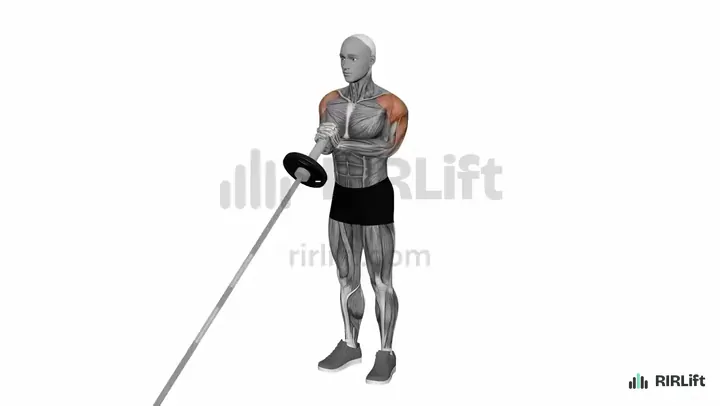
  5. Landmine Press Shoulders
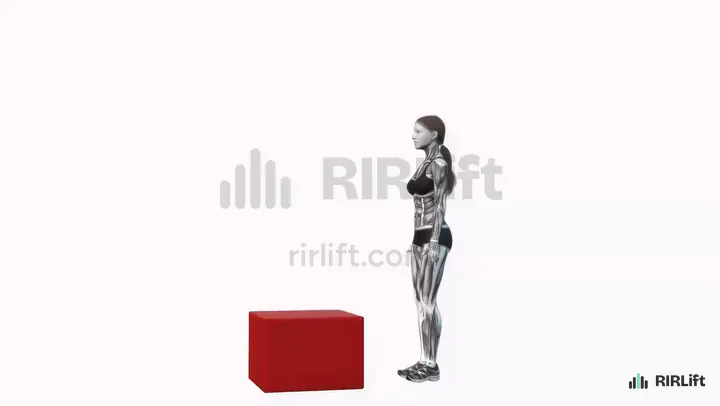
  6. Box Jump Quads, Glutes, Hamstrings
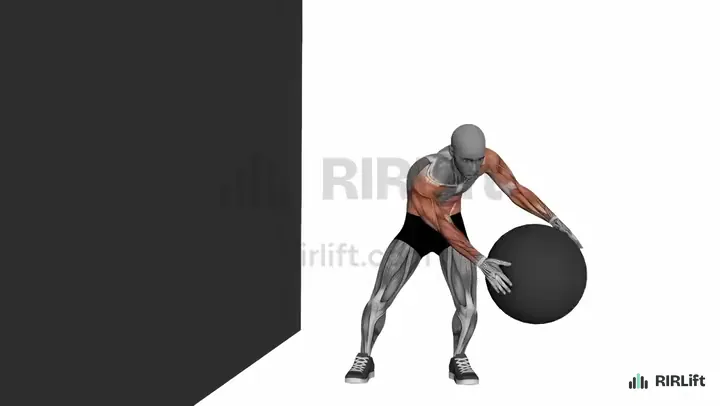
  7. Med Ball Rotational Throw Abs
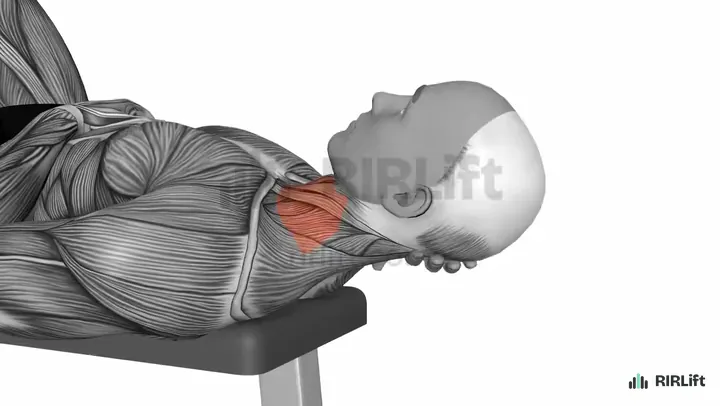
  8. Lying Neck Curl Neck

Lower-body strength for takedowns and scrambles

A hinge, a squat and a single-leg exercise cover the hips and legs that power shots, sprawls and getting back up. Do them early in the session, fresh, with plenty of rest.

Total-body strength for takedowns and scrambles

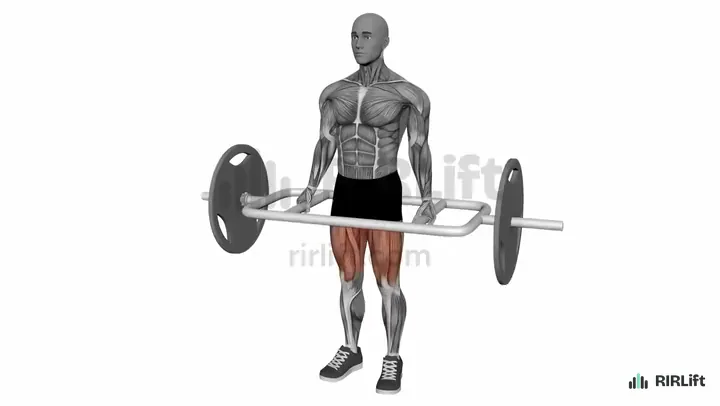
Trap Bar Deadlift

Quads, Glutes

Lifting an opponent, driving through a double leg and standing up against the cage all come from the hips and legs. The trap bar puts the load at your sides, so you can lift heavy with less stress on your lower back than a straight bar, which matters when you also wrestle several times a week.

How to do it

  1. Step inside the hex bar with your feet about hip width and the handles beside your ankles.
  2. Sit your hips down and back, grab the handles and pull your chest up.
  3. Push the floor away with your legs until you stand tall with hips locked out.
  4. Hinge and bend your knees to set the bar down under control.

Cues

  • Push the floor away
  • Chest up before you pull
  • Stand tall, don't lean back

Common mistakes

  • Jerking the bar off the floor: take the slack out of your arms first.
  • Leaning back at the top: finish by squeezing your glutes with your ribs down.

Swap for: Barbell Deadlift, Kettlebell Deadlift, Romanian Deadlift

Leg strength in an upright posture

Front Squat

Quads, Glutes, Adductors

The front squat keeps your torso upright with the load in front, much like the posture you hold when you drive into a clinch or carry an opponent. It builds the quads that power level changes and getting back to your feet.

How to do it

  1. Rest the bar on the front of your shoulders with your elbows pointing forward.
  2. Stand with feet shoulder width and brace your trunk.
  3. Squat down between your knees, keeping your elbows high and torso upright.
  4. Drive up through your whole foot until you stand tall.

Cues

  • Elbows high
  • Sit between your knees
  • Brace before every rep

Common mistakes

  • Elbows dropping so the bar rolls forward: lift them as you come up.
  • Cutting depth as the weight gets heavier: keep every rep to the same depth.

Swap for: Goblet Squat, Dumbbell Front Squat, Barbell Back Squat

Single-leg strength and stance stability

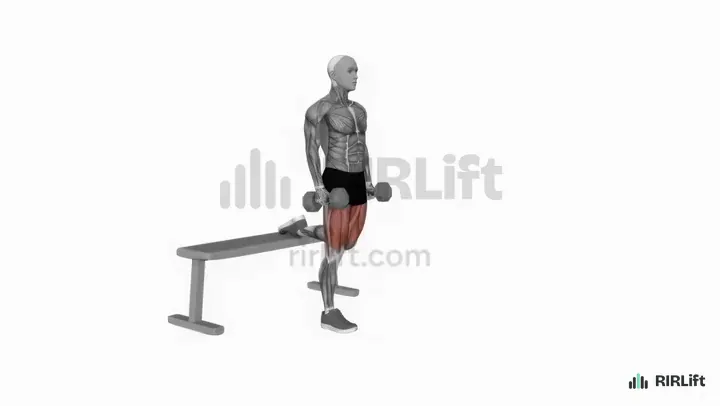
Bulgarian Split Squat

Quads, Glutes

Fighting happens in a staggered stance, and shots, sprawls and kicks put most of your weight on one leg. The Bulgarian split squat builds each leg on its own and shows you quickly if one side is weaker.

How to do it

  1. Stand a long stride away from a bench and rest the top of your back foot on it.
  2. Hold two dumbbells by your sides and stand tall on the front leg.
  3. Lower until your back knee nearly touches the floor, front shin close to vertical.
  4. Drive up through your front foot. Finish the side, then switch legs.

Cues

  • Front leg does the work
  • Drop straight down
  • Torso slightly forward

Common mistakes

  • Standing so close to the bench that the front knee jams forward: lengthen the stance.
  • Pushing off the back foot: it only balances you.

Swap for: Dumbbell Split Squat, Dumbbell Reverse Lunge, Step-Up

Upper-body pull and press for the clinch and grappling

Fighters need more pulling than pressing: grappling is mostly pulling, and striking already trains the press. Two pulls and one shoulder-friendly press keep the balance right.

Pulling strength for grappling

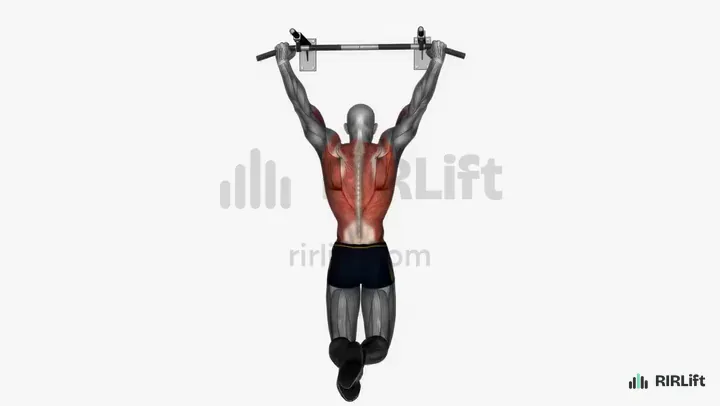
Pull-Up

Lats

Pulling an opponent in, controlling a wrist or climbing to the back all start with grip and lats. Pull-ups train both with your own body weight, and adding weight later keeps them hard.

How to do it

  1. Hang from the bar with an overhand grip a little wider than your shoulders.
  2. Set your shoulders down away from your ears.
  3. Pull until your chin passes the bar, elbows driving down.
  4. Lower slowly to straight arms.

Cues

  • Shoulders down first
  • Elbows to your ribs
  • Control the descent

Common mistakes

  • Kipping to finish the set: strict reps build the strength you need on the mat.
  • Partial reps from a bent arm: start every rep from a full hang.

Swap for: Neutral-Grip Pull-Up, Lat Pulldown, Band-Assisted Pull-Up

Build a session with Pull-Up

Upper-back strength and posture

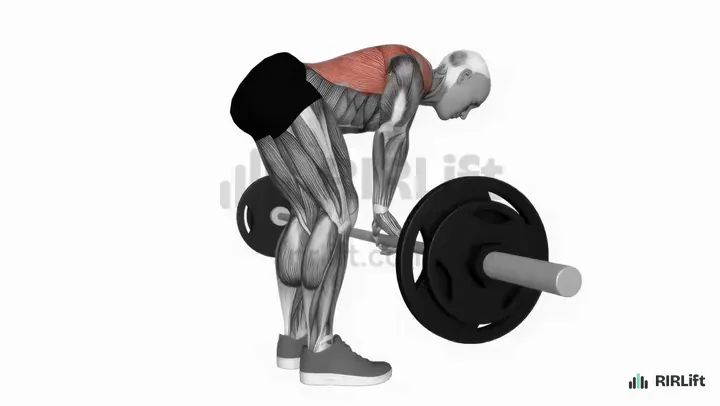
Barbell Row

Upper Back, Lats

A strong upper back keeps your posture in the clinch and in top position, and it balances the forward-hunched stance fighters spend hours in. The bent-over row also trains your hips to hold a hinge under load.

How to do it

  1. Hold the bar with an overhand grip at shoulder width and hinge until your torso is close to parallel to the floor.
  2. Hold that flat-backed angle and let the bar hang at arm's length.
  3. Row the bar to your lower ribs, pinching the blades toward each other.
  4. Lower until your arms are straight without standing up.

Cues

  • Flat back, fixed angle
  • Bar to your belly button
  • Squeeze at the top

Common mistakes

  • Standing up more with every rep: lighten the bar until your torso stays still.
  • Yanking with the arms: lead with the elbows.

Swap for: Kettlebell Row, Seated Cable Row, Pendlay Row

Pressing strength that is easy on shoulders

Landmine Press

Shoulders

Striking and framing off an opponent need pressing strength, but a fighter's shoulders take a beating. The landmine press moves on an arc that most banged-up shoulders tolerate better than a straight overhead press.

How to do it

  1. Wedge one end of a barbell into a corner or landmine and cup the loaded end with both hands at chest height.
  2. Stand square with feet about hip width and your trunk braced.
  3. Press the bar up and forward until both arms are straight.
  4. Lower it back to your chest under control.

Cues

  • Press up and forward
  • Ribs down
  • Reach at the top

Common mistakes

  • Leaning back to get the bar up: brace and stay stacked.
  • Letting the elbows flare way out: keep them slightly in front of your body.

Swap for: Dumbbell Shoulder Press, Landmine Rotational Press, Push-Up

Power for shots and strikes

Power is strength done fast. Jumps and throws train it with low fatigue if you keep reps low and rest long enough that every rep is fast.

Lower-body explosiveness

Box Jump

Quads, Glutes, Hamstrings

Shooting a takedown or exploding off the cage is a short burst of power. Box jumps train that burst with a soft landing, so you get faster without the pounding of jumping onto the floor.

How to do it

  1. Stand a short step back from a sturdy box.
  2. Swing your arms back and dip into a quarter squat.
  3. Jump, swinging your arms forward, and land softly on the box on both feet.
  4. Rise to full height, then step back down.

Cues

  • Quick dip, fast jump
  • Land soft and quiet
  • Step down, don't jump down

Common mistakes

  • Picking a box so high you land in a deep squat: use a height you land on standing nearly tall.
  • Doing them tired as conditioning: jumps are for power, so rest between sets.

Swap for: Jump Squat, Lateral Box Jump, Single-Leg Box Jump

Build a session with Box Jump

Rotational power for punching and kicking

Med Ball Rotational Throw

Abs

Hooks, crosses and kicks get their power from the hips turning before the shoulders. Throwing a medicine ball into a wall trains that sequence at speed in a way slow core exercises do not.

How to do it

  1. Stand side-on to a solid wall with a medicine ball held at your hip.
  2. Load your back leg and turn your shoulders away.
  3. Turn your hips hard and release the ball into the wall.
  4. Catch it, reset and repeat. Do both sides.

Cues

  • Hips lead the throw
  • Back foot pivots
  • Throw as hard as you can

Common mistakes

  • Using a ball too heavy to throw fast: power needs speed.
  • Throwing with your arms only: let the rotation start from the floor.

Swap for: Med Ball Woodchop, Cable Woodchop, Landmine Twist

Full-body power and conditioning

Medicine Ball Slam

Lats, Abs

A slam is a fast, full-body effort with no catching, which makes it a good finisher for fighters: hard enough to train power, simple enough to do when tired.

How to do it

  1. Stand with feet about shoulder width and hold a slam ball at your chest.
  2. Reach it overhead and rise up onto the balls of your feet.
  3. Slam it into the floor in front of you, following through with your hips.
  4. Pick it up with a flat back and go again.

Cues

  • Reach tall first
  • Slam through the floor
  • Pick it up with your legs

Common mistakes

  • Rounding over to pick up the ball: squat down to it.
  • Slamming with just the arms: pull your whole body down behind it.

Swap for: Battle Rope Slam, Kettlebell Swing, Medicine Ball Overhead Throw

Neck and trunk

Neck strength helps you keep posture under pressure, and a strong trunk helps in guard and when you take body shots. A few sets twice a week are enough.

Front-of-neck strength

Lying Neck Curl

Neck

A strong neck helps you hold your posture when an opponent pulls your head down and helps you brace against strikes. The lying neck curl trains the front of the neck with nothing but your head's weight.

How to do it

  1. Lie on your back on a bench with your head and neck off the end.
  2. Let your head lower gently back until it is level with the bench.
  3. Tuck your chin and curl your head up toward your chest.
  4. Lower slowly and repeat.

Cues

  • Tuck the chin
  • Slow both ways
  • Small, smooth range

Common mistakes

  • Jerking your head up fast: neck work is slow and controlled.
  • Going heavy before you are used to it: start with body weight only.

Swap for: Lying Neck Extension, Plank, Dead Bug

Back-of-neck strength

Lying Neck Extension

Neck

The back of the neck holds your head up against collar ties and guillotine attempts. Pair it with the neck curl so both sides get stronger together.

How to do it

  1. Lie on your front on the floor, propped on your forearms with your legs straight.
  2. Let your chin drop toward your chest.
  3. Lift your head back up until it is in line with your spine.
  4. Pause briefly, then lower slowly.

Cues

  • Lift to neutral, not past
  • Slow lowering
  • Shoulders relaxed

Common mistakes

  • Cranking the head way back: stop when it lines up with your back.
  • Shrugging your shoulders up toward your ears: keep them down and the forearms planted.

Swap for: Lying Neck Curl, Superman, Face Pull

Trunk strength for guard and absorbing strikes

Hanging Knee Raise

Abs

Pulling your knees up while hanging trains the lower abs and hip flexors that work in guard and when you curl up to protect your body. It also gives your grip extra work.

How to do it

  1. Grab an overhead bar and hang at full arm length.
  2. Brace and curl your knees up toward your chest.
  3. Tilt your pelvis up at the top so your lower back rounds slightly.
  4. Lower your legs slowly without swinging.

Cues

  • Knees to chest
  • Curl the pelvis up
  • No swinging

Common mistakes

  • Swinging your legs up with momentum: pause at the bottom of every rep.
  • Lifting the knees only to hip height: curl them higher to work the abs.

Swap for: Captain's Chair Knee Raise, Hanging Leg Raise, Reverse Crunch

Conditioning without extra pounding

Most of your conditioning comes from sparring and drilling. When you add more, use low-impact tools so your legs and joints recover for practice.

Low-impact conditioning

Air Bike

Quads, Hamstrings, Glutes

An air bike lets you hit hard intervals with your arms and legs without the impact of running, which saves your legs for sparring and drilling. It gets harder the faster you go, so it scales to any level.

How to do it

  1. Adjust the seat so your knee is slightly bent at the bottom of each pedal stroke.
  2. Grip the handles and start pedaling at an easy pace.
  3. For each interval, drive the arms hard while driving the pedals.
  4. Ease off to a slow spin for the rest period.

Cues

  • Drive the handles
  • Sit tall
  • Go hard on the work, easy on the rest

Common mistakes

  • Starting the first interval flat out and dying: hold an even effort across all rounds.
  • Using only your legs: the arms are half the work.

Swap for: Rowing Machine, Ski Erg, Stationary Bike

Build a session with Air Bike

Driving power and leg endurance

Sled Push

Quads, Glutes

Pushing a sled is like driving an opponent across the cage: low body, hard legs, no let-up. It builds leg endurance with almost no soreness because there is no lowering phase.

How to do it

  1. Load the sled and grip the low handles with your arms extended.
  2. Lean in until your body is at a steep forward angle.
  3. Drive with short, powerful steps, pushing through the balls of your feet.
  4. Keep driving to the end of the turf, then rest.

Cues

  • Low body angle
  • Short, fast steps
  • Arms stay long

Common mistakes

  • Standing too upright so the sled stalls: drop your hips and lean in.
  • Taking long strides: short steps keep the push constant.

Swap for: Sled Pull, Farmer's Walk, Air Bike

Build a session with Sled Push

Put them together: example sessions

Each session below picks from the exercises above for one situation, with the sets, reps, rest and RIR filled in. Open one in the session builder to change a pick, price it from a recent set, and add it to RIRLift.

Session 1

Between fights: three strength days

Open in the session builder
  • Workouts3× a week
  • Working sets38 a week
  • Per workout~35 min
  • EquipmentTrap Bar, Dumbbells, Pull-Up Bar, Barbells +4

You train MMA four or five times a week, you have no fight scheduled for a few months, and this is the time to get stronger.

Without a camp, you can afford heavier lifting. Each of the three sessions leads with one big lift for 3 to 6 reps at 2 reps in reserve, then adds power and accessory work. The heavy sets stay short of failure because you still have practice the next day, and the three days are split so no muscle group is hit hard twice in a row.

Lower
ExerciseSets × repsRIRRest
Trap Bar Deadlift 4 × 3–5 2 3 min
Bulgarian Split SquatPer leg. 3 × 6–8 2 90 s
Hanging Knee Raise 3 × 8–12 1 1 min
Lying Neck CurlBody weight to start. 2 × 12–20 2 1 min

Open Lower in the session builder

Upper
ExerciseSets × repsRIRRest
Pull-UpAdd weight once 6 is easy. 4 × 4–6 2 2:30 min
Landmine Press 3 × 6–8 2 90 s
Barbell Row 3 × 6–8 2 2 min
Lying Neck Extension 2 × 12–20 2 1 min

Open Upper in the session builder

Power
ExerciseSets × repsRIRRest
Box JumpEvery rep fast. 4 × 3–5 4 90 s
Front Squat 3 × 4–6 2 3 min
Med Ball Rotational ThrowPer side. 3 × 5–6 4 1 min
Sled PushOne 20 m push per set. 4 × 1 2 2 min

Open Power in the session builder

How to run it
Do Lower, Upper and Power on three non-consecutive days, ideally after lighter practices or on days without sparring. Keep about 48 hours between Lower and any hard sparring.
How to progress
Add weight to the main lift each week you hit the top of the range at 2 reps in reserve. Every fourth week, cut every exercise to two sets and keep the weights.

Session 2

Fight camp: two short sessions

Open in the session builder
  • Workouts2× a week
  • Working sets21 a week
  • Per workout~25 min
  • EquipmentPlyo Box, Trap Bar, Pull-Up Bar, Barbells +2

You have a fight in six to ten weeks and practice twice a day on some days.

During camp, sparring and hard drilling come first, so lifting drops to two sessions of about 30 minutes that keep strength and power without new soreness. Sets stay at 3 reps in reserve, and the jumps and throws stay in every session because power fades faster than strength. Stop lifting in the last week before the fight.

Camp A
ExerciseSets × repsRIRRest
Box Jump 3 × 3 4 90 s
Trap Bar DeadliftWeight from before camp. 3 × 3 3 2:30 min
Pull-Up 3 × 4–6 3 2 min
Lying Neck Curl 2 × 12–15 3 1 min

Open Camp A in the session builder

Camp B
ExerciseSets × repsRIRRest
Med Ball Rotational ThrowPer side. 3 × 4–5 4 1 min
Front Squat 3 × 3–4 3 2:30 min
Landmine Press 2 × 6–8 3 90 s
Lying Neck Extension 2 × 12–15 3 1 min

Open Camp B in the session builder

How to run it
Do Camp A and Camp B early in the week and mid-week, on the day of a lighter practice. Skip a session rather than doing it the day before hard sparring.
How to progress
Do not chase new weights in camp. Keep the loads you used before camp and stop when the target reps in reserve are reached.

Session 3

Training MMA, new to the weight room

Open in the session builder
  • Workouts2× a week
  • Working sets26 a week
  • Per workout~30 min
  • EquipmentTrap Bar, Pull-Up Bar, Air Bike, Dumbbells +3

You train MMA as a hobby, three or four classes a week, and have never followed a lifting program.

A beginner gets stronger from almost any sensible lifting, so the job here is to learn the main lifts and avoid being sore for class. Two full-body sessions use simple, easy-to-load versions, moderate reps and 2 to 3 reps in reserve. Air bike intervals finish one session so you build conditioning without extra impact.

Session A
ExerciseSets × repsRIRRest
Trap Bar Deadlift 3 × 6–8 3 2 min
Pull-UpBand-assisted if needed. 3 × 3–8 2 2 min
Hanging Knee Raise 2 × 8–12 2 1 min
Air BikeSeconds. 6 × 20 2 1 min

Open Session A in the session builder

Session B
ExerciseSets × repsRIRRest
Bulgarian Split SquatPer leg. Body weight first week. 3 × 8–10 3 90 s
Barbell Row 3 × 8–10 2 90 s
Landmine Press 3 × 8–10 2 1 min
Medicine Ball Slam 3 × 8 3 1 min

Open Session B in the session builder

How to run it
Do Session A and Session B on two days with at least one day between, on lighter class days or rest days. Each takes about 45 minutes.
How to progress
Add a rep to each set until you reach the top of the range, then add a small amount of weight and start again at the bottom. Once the trap bar deadlift moves well for 8 reps, move to the off-camp plan.

Make it fit you

Questions

What are the best exercises for MMA?

The trap bar deadlift, front squat and Bulgarian split squat for the legs, pull-ups and barbell rows for grappling strength, a landmine press for pressing, box jumps and rotational medicine ball throws for power, and neck curls and extensions. Those cover strength, power and the neck in two or three sessions.

How many days a week should an MMA fighter lift?

Two or three. Three between fights, when you have room to get stronger, and two short sessions during a fight camp, when sparring takes priority. A beginner gets plenty from two.

Is it too late to start MMA at 27?

No. Plenty of people start training in their late twenties and beyond. Lifting twice a week alongside classes helps a late starter most, since it builds the strength and durability that years of training would otherwise provide.

Should fighters lift heavy?

Yes, heavy with low reps and a few reps in reserve. Sets of 3 to 6 build strength without much muscle size or soreness, which suits a fighter who has to make weight and practice the next day.

Should I lift before or after MMA practice?

On the same day, lift after practice or several hours apart, so your technique work is done fresh. Better still, lift on lighter class days and keep the day before hard sparring free of heavy legs.

Do MMA fighters train their neck?

Many do, because the neck takes clinch pressure and collar ties all the time. Lying neck curls and extensions with body weight, then a light plate, are a simple way to start.