
Trap bar deadlift: how to do it, which handles to use, and how it compares
Published October 19, 2026
A trap bar deadlift is a deadlift done standing inside a hexagonal bar, holding two side handles with your palms facing in. Because the weight sits beside you instead of in front of your shins, you can keep your chest higher and bend your knees more, so it loads your quads more than a barbell deadlift and is easier to learn. Stand in the middle, brace, push the floor away, and stand tall.
- WorksQuads, Glutes
- AlsoHamstrings, Lower Back, Traps, Forearms
- EquipmentTrap Bar
- Start with3 × 8–12, 2 in reserve, 3 min rest
How to do the trap bar deadlift
With the load centered on your body, the lift sits between a squat and a deadlift: more knee bend, a more upright back, and less strain on the lower back for the same weight. Most people can lift a little more than on a straight bar, learn it in one session, and push it hard without their form falling apart.
Steps
- Load the bar, step into the middle of the frame and line the handles up with the middle of your feet, feet about hip-width.
- Sit your hips back and bend your knees until you can grab the center of each handle, so the bar stays level when it lifts.
- Pull your shoulders down, take a big breath into your belly and brace before the bar leaves the floor.
- Drive your feet into the floor so your hips and knees straighten together, keeping your arms long and your chest up.
- Finish standing tall with your glutes tight, then reverse the path: hips back first, knees bend, and set the bar down under control.
Cues
- Push the floor away
- Hold the handles in the middle
- Chest and hips rise together
Common mistakes
- Gripping the handles off-center: the bar tips forward or back and drags you with it; hold the middle of each handle.
- Turning it into a squat with the hips dropped too low: set your hips just high enough that your arms hang straight and your shins stay fairly vertical.
- Leaning back at lockout: stop when you are standing straight with your glutes squeezed; there is nothing to gain past that.
Swap for: Barbell Deadlift, Romanian Deadlift, Leg Press
Muscles the trap bar deadlift works
The trap bar deadlift trains your quads, glutes and hamstrings, with your adductors, lower back, traps and grip working to hold the position. Because you bend your knees more than in a barbell deadlift, the quads do more of the work and the lower back a bit less.
Sets, reps and reps in reserve for the trap bar deadlift
| Goal | Sets × reps | RIR | Rest |
|---|---|---|---|
| Build strength | 3–5 × 3–5 | 2 | 3 min |
| Use the low handles once you can hold a flat back from the floor. | |||
| Build muscle | 3–4 × 6–10 | 1–2 | 2–3 min |
| Lower each rep under control rather than dropping it. | |||
| Power and speed | 4–6 × 2–3 | 3–4 | 2 min |
| Use a moderate weight and stand up as fast as you can on every rep. | |||
Trap bar deadlift variations
-
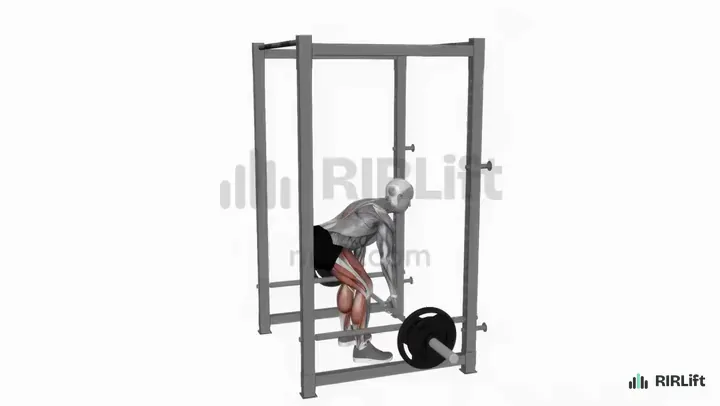
Rack Pull
Pull a barbell from pins at knee height when you want heavy lockout work with an even shorter range than high handles.
Build a session with it -
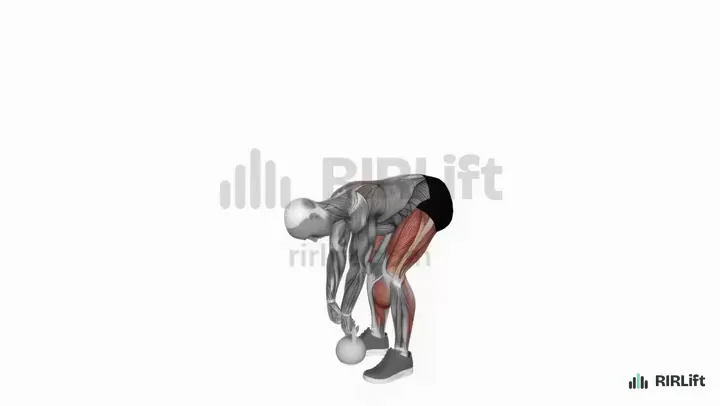
Kettlebell Deadlift
Stand over one kettlebell when you want the same centered load at home with lighter weight.
Build a session with it -
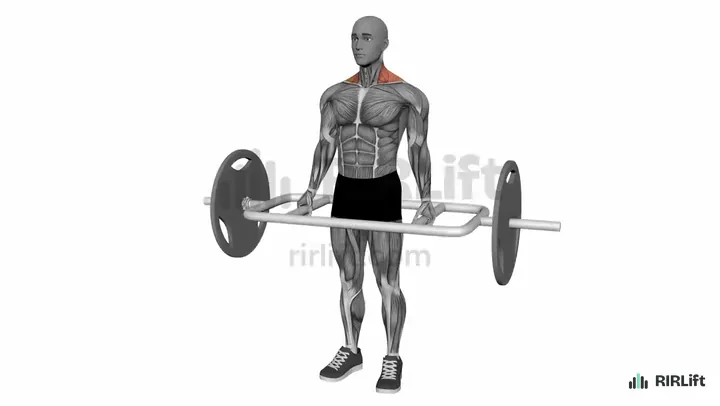
Trap Bar Shrug
Keep the hex bar and shrug it when you want the same grip and setup for your traps.
Build a session with it
Trap bar deadlift alternatives
Other deadlifts
-
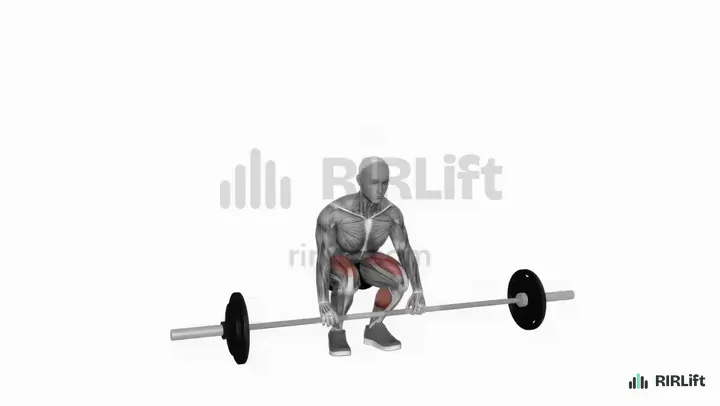
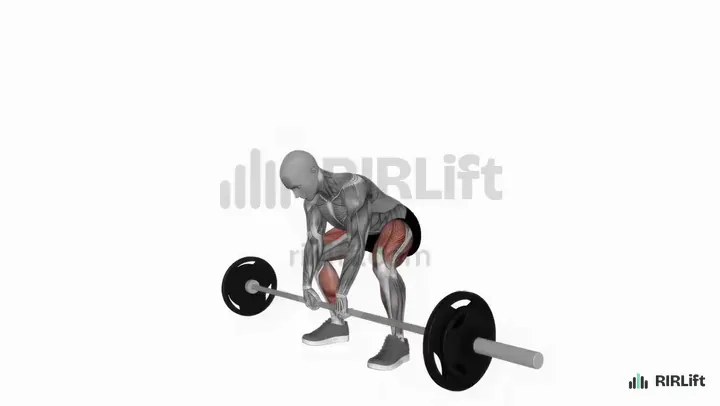
Barbell Deadlift
Use a straight bar when you want the classic pull with more hamstring and back work, or you compete in powerlifting.
Build a session with it -
Sumo Deadlift
Take a wide stance with a barbell when you want a more upright pull with no trap bar in the gym.
Build a session with it -
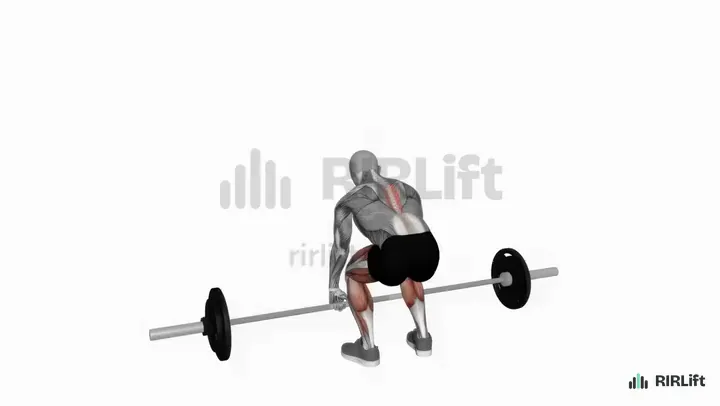
Romanian Deadlift
Start from the top and hinge with soft knees when you want the hamstrings and glutes to do most of the work.
Build a session with it
Squats and machines
-
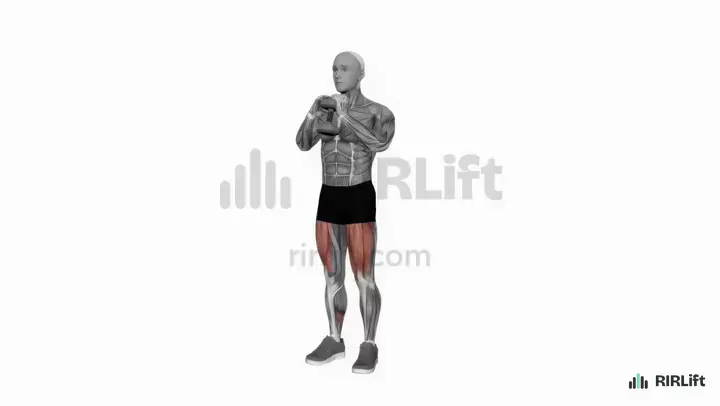
Goblet Squat
Hold one dumbbell at your chest when you have no trap bar and want a quad-heavy lift that is easy to learn.
Build a session with it -
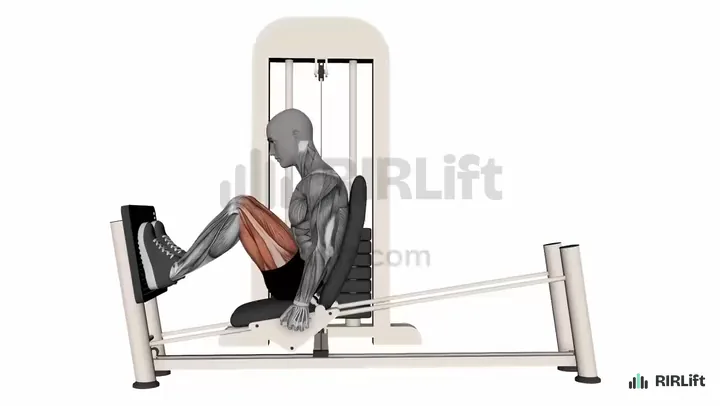
Leg Press
Use the leg press when your back is tired and you still want to load your legs heavy.
Build a session with it
Trap bar deadlift vs barbell deadlift
On a straight bar the weight sits in front of you, so your hips start higher, your torso leans further forward, and your hamstrings and lower back take a bigger share. On a trap bar the weight is beside you: you bend your knees more, stay more upright, and your quads take a bigger share.
Most people lift a little more on the trap bar and find it easier on the lower back. Neither is better; pick the trap bar when you want a heavy full-body pull that is simple to coach, and the barbell when you want hamstring and back strength or plan to compete.
High handles or low handles?
Most trap bars have two sets of handles. The raised handles start the bar a few inches higher, which shortens the pull: use them while you learn, if you are tall, or if you cannot reach the low handles with a flat back. The low handles sit level with the frame and give a range close to a barbell deadlift. Pick one and keep it for a training block so your numbers stay comparable.
Is a trap bar deadlift a squat or a deadlift?
It is a deadlift, because the weight starts on the floor and you stand up with it in your hands. It just uses more knee bend than other deadlifts, so it sits closer to a squat in what it trains. It is not the same as a Romanian deadlift, which starts standing and bends mostly at the hips with the knees nearly still.
Questions
Is a trap bar good for deadlifts?
Yes. It lets you pull heavy with a more upright back, it is quicker to learn than a barbell deadlift, and it builds the quads, glutes and hamstrings together.
Is a trap bar deadlift harder than a barbell deadlift?
Usually it is easier: most people lift the same weight or more on the trap bar, because the load sits in line with the body and the quads can help more.
Is a trap bar deadlift the same as an RDL?
No. A trap bar deadlift starts from the floor with bent knees and works the quads, glutes and hamstrings. An RDL starts standing and hinges at the hips, so it is mostly hamstrings and glutes.
What muscles does the trap bar deadlift work?
Mainly the quads, glutes and hamstrings, plus the adductors, lower back, upper back and grip.
How much does a trap bar weigh?
It depends on the model. Many weigh around 45 to 60 pounds, so check the label on yours before you log the weight.
Should I use the high or low handles?
Start on the high handles if you are new, tall or stiff. Move to the low handles once you can start every rep with a flat back.
Related templates
-
Deadlift: how to set up, pull and program the barbell deadlift
The barbell version, for when you want more hamstring and back work.
-
Romanian deadlift: how to do it, and what to swap it for
A hip hinge to pair with the trap bar for more hamstring work.
-
Squat: how to do the barbell back squat, what it works and what to swap in
The other big quad lift, and how it differs from a trap bar pull.
-
Barbell leg exercises: squats, hinges, thrusts and split squats
More heavy lifts to build a leg day around.
-
The best workout for legs, built for your situation
A full leg session built on one heavy lower-body lift.
-
How to use RIR
How to judge reps in reserve on heavy pulls.