
Exercises for hiking: stronger climbs, steadier descents
Published October 24, 2026
The best exercises for hiking are the step-up and the Bulgarian split squat for climbing, the reverse lunge and single-leg Romanian deadlift for control on the way down, the dumbbell Romanian deadlift for the hamstrings and back that carry a pack, single-leg calf raises for steep and rocky ground, and the farmer's walk and side plank for posture under load. Two strength sessions a week, each ending a couple of reps short of failure, sit well next to your hikes, and the stair machine covers the uphill engine on days you can't reach a trail.
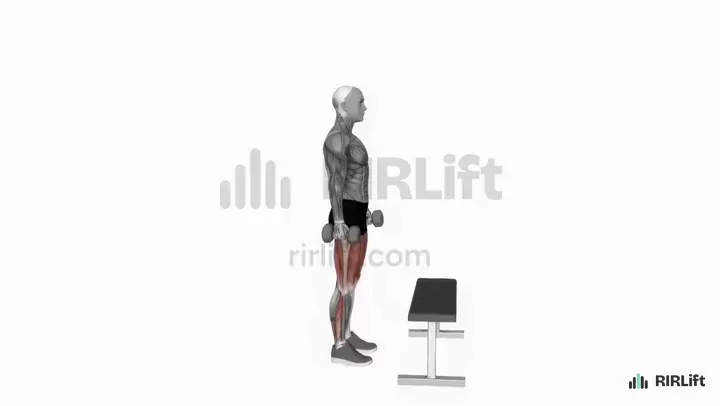
- Step-Up Quads, Glutes
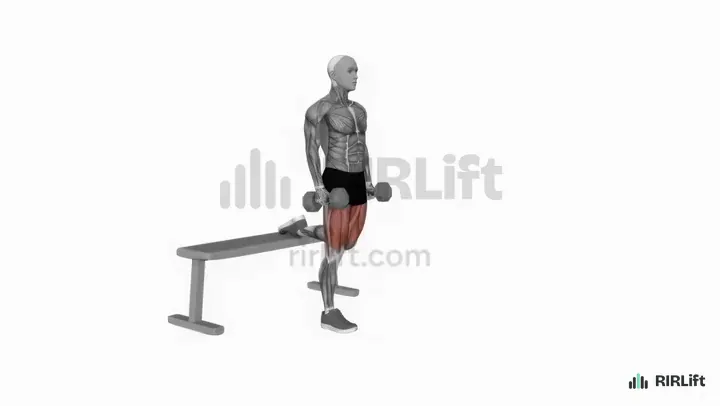
- Bulgarian Split Squat Quads, Glutes
- Dumbbell Reverse Lunge Quads, Glutes
- Single-Leg RDL Hamstrings, Glutes
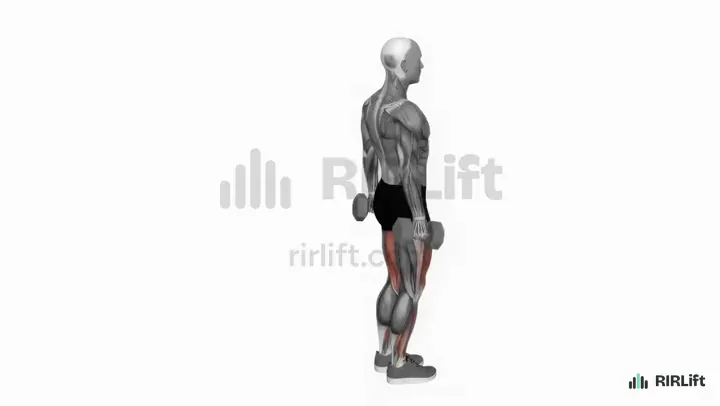
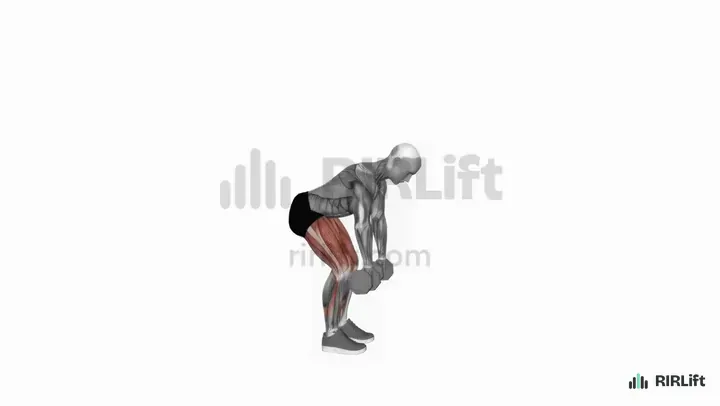
- Dumbbell Romanian Deadlift Hamstrings, Glutes
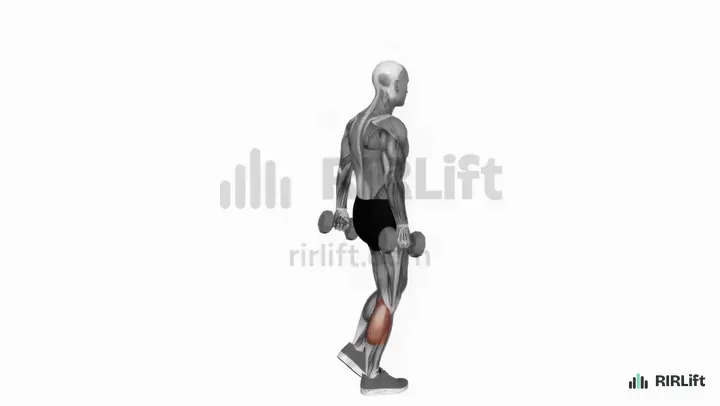
- Single-Leg Calf Raise Calves
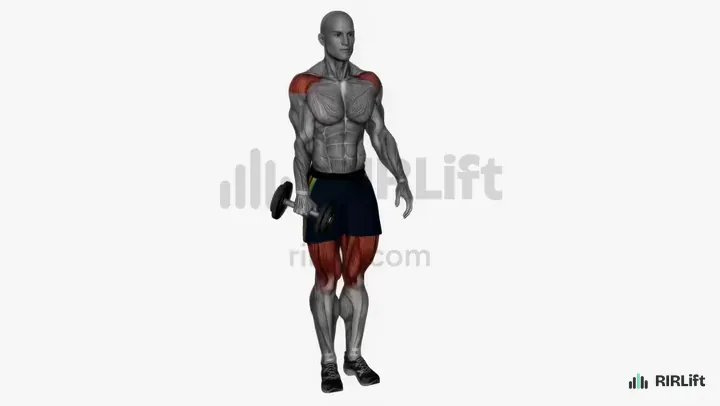
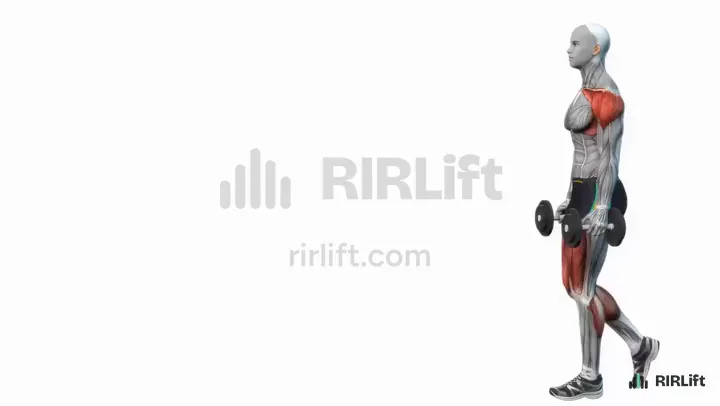
- Farmer's Walk Forearms, Traps, Shoulders
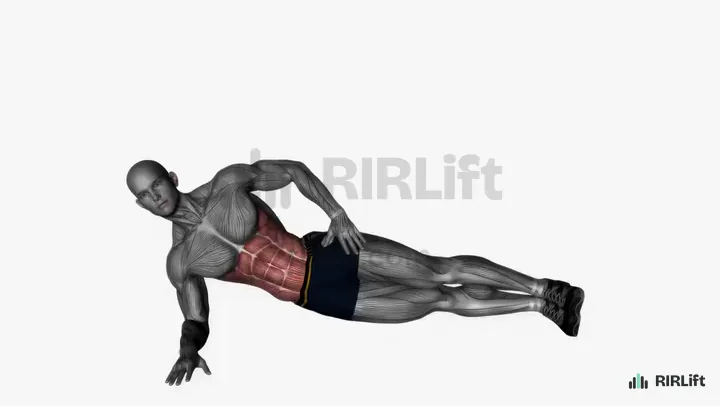
- Side Plank Abs
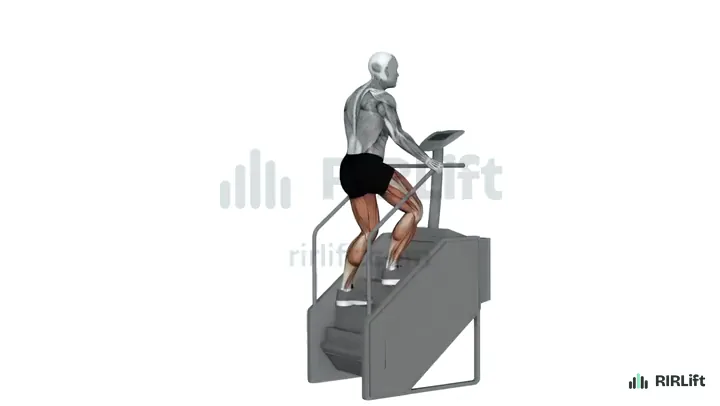
- Stair Climber Quads, Glutes, Calves
Put them together: example sessions
Each session below picks from the exercises above for one situation, with the sets, reps, rest and RIR filled in. Open one in the session builder to change a pick, price it from a recent set, and add it to RIRLift.
-
Session 1
Eight to twelve weeks before a big hike
You have a goal hike or backpacking trip on the calendar and two gym days a week on top of your walks.
2× a week · 25 sets a week · ~25 min
-
Session 2
New to the gym and hiking more often
You hike for fun, have never followed a lifting program, and want legs that don't burn out on the first big hill.
2× a week · 20 sets a week · ~25 min
-
Session 3
Stronger legs for the descent
You can climb fine, but your thighs and knees take a beating on long downhills and your legs feel wobbly on rocky ground.
2× a week · 24 sets a week · ~25 min
Session 1
Eight to twelve weeks before a big hike
- Workouts2× a week
- Working sets25 a week
- Per workout~25 min
- EquipmentDumbbells, Flat Bench, Stair Climber, Resistance Bands
You have a goal hike or backpacking trip on the calendar and two gym days a week on top of your walks.
Two full-body sessions build climbing and descending strength without leaving your legs too sore for weekend hikes. Sets end 2 reps short of failure, so you recover in a day or two and the training hikes stay good. Each session is 12 to 13 working sets and finishes with stairs for the engine.
| Exercise | Sets × reps | RIR | Rest |
|---|---|---|---|
| Step-Up | 3 × 8–12 | 2 | 90 s |
| Dumbbell Romanian Deadlift | 3 × 8–12 | 2 | 2 min |
| Single-Leg Calf Raise | 3 × 10–15 | 2 | 1 min |
| Farmer's WalkWalk 40 meters per set. | 3 × 1 | 2 | 90 s |
| Stair Climber15 minutes at a pace where you can still talk in short sentences. | 1 × 1 | 3 | 1 min |
Open Climb Day in the session builder
| Exercise | Sets × reps | RIR | Rest |
|---|---|---|---|
| Bulgarian Split Squat | 3 × 8–12 | 2 | 90 s |
| Single-Leg RDL | 3 × 8–10 | 2 | 90 s |
| Lateral Band Walk | 2 × 12–15 | 2 | 45 s |
| Dumbbell Standing Calf Raise | 2 × 12–20 | 1 | 1 min |
| Side PlankSeconds per side. | 2 × 30–45 | 2 | 45 s |
Open Descent Day in the session builder
- How to run it
- Train Monday and Thursday, and keep your longest hike on the weekend. Leave at least two days between the second session and a long hike.
- How to progress
- Add reps until every set hits the top of the range at the target reps in reserve, then add weight. In the last two weeks before the trip drop one set from every exercise and keep the weights.
Session 2
New to the gym and hiking more often
- Workouts2× a week
- Working sets20 a week
- Per workout~25 min
- EquipmentDumbbells, Flat Bench
You hike for fun, have never followed a lifting program, and want legs that don't burn out on the first big hill.
A beginner gets stronger from almost any steady program, so this one uses fewer, simpler exercises with two-leg versions before single-leg ones, higher reps and 3 reps in reserve to learn the movements. Ten working sets keeps each session under 45 minutes.
| Exercise | Sets × reps | RIR | Rest |
|---|---|---|---|
| Goblet Squat1 warm-up set first | 3 × 10–15 | 3 | 90 s |
| Step-Up | 2 × 8–12 | 3 | 90 s |
| Dumbbell Romanian Deadlift | 2 × 10–15 | 3 | 90 s |
| Dumbbell Standing Calf Raise | 2 × 12–20 | 2 | 1 min |
| Side PlankSeconds per side. | 1 × 20–30 | 3 | 45 s |
- How to run it
- Do this session twice a week with at least two days between. Keep walking or hiking on other days.
- How to progress
- When all sets reach the top of the range, add the smallest weight jump available. After six to eight weeks swap the goblet squat for the reverse lunge and keep going.
Session 3
Stronger legs for the descent
- Workouts2× a week
- Working sets24 a week
- Per workout~25 min
- EquipmentResistance Bands, Dumbbells, Flat Bench
You can climb fine, but your thighs and knees take a beating on long downhills and your legs feel wobbly on rocky ground.
Descents are mostly about lowering under control on one leg, so every leg exercise here uses a slow three-second lowering and a single-leg stance, and the side-hip work comes first while you are fresh. Volume is kept to 12 sets because slow lowering makes you sore; stop 2 reps short so you can still hike two days later.
| Exercise | Sets × reps | RIR | Rest |
|---|---|---|---|
| Lateral Band Walk | 2 × 12–15 | 2 | 45 s |
| Step-UpLower over three seconds. | 3 × 6–10 | 2 | 90 s |
| Dumbbell Reverse LungeLower over three seconds. | 3 × 8–10 | 2 | 90 s |
| Single-Leg RDL | 2 × 8–10 | 2 | 90 s |
| Dumbbell Suitcase CarryWalk 30 meters per hand. | 2 × 1 | 2 | 1 min |
- How to run it
- Do this once or twice a week. If you only do it once, pair it with two stair or hill sessions.
- How to progress
- Keep the three-second lowering on every rep. Add reps first, then weight, and try a taller step for the step-up once 12 reps feel easy.
Make it fit you
-
Log the reps you had left
Write down how many reps were left in the tank after each set when you log it in RIRLift, and the next session's weight is picked from that. It keeps the climbing days heavy enough without leaving you sore for the weekend hike.
-
Training with your pack
Once the step-up feels easy with dumbbells, wear your loaded pack instead for the last set. It gets you used to the load sitting on your back rather than in your hands.
-
No bench or box
Use a sturdy stair at home for step-ups and calf raises, and a couch for the Bulgarian split squat. Every plan here works with one pair of dumbbells.
-
Week of the trip
Skip the gym in the four days before a big hike. Strength takes weeks to build and won't fade in that time, but heavy legs will slow you down.
-
Hiking over 50
Start with the beginner plan and stay at 3 reps in reserve for the first month. Keep the single-leg calf raise and single-leg Romanian deadlift in every week; balance work pays off more each year.
Questions
What is the best exercise for hiking?
The step-up. It is the climbing motion itself, you can load it with dumbbells, and the slow lowering trains the descent too. If you only have time for one more, add a single-leg Romanian deadlift for balance and the back of the hip.
How do you build strength to go hiking?
Train your legs two times a week with single-leg exercises such as step-ups and split squats, add a hinge like the Romanian deadlift, and finish with calf raises and a carry. Add reps or weight every week while stopping a couple of reps short of failure, and keep hiking on other days.
How do I get fit for hiking?
Combine two strength sessions with two or three cardio sessions a week, and make one weekend outing your long hike. Build the hike's length or the pack weight gradually, and change only one of them at a time.
How do I build up cardio for hiking?
Do steady sessions on a stair machine, an incline treadmill or real hills at a pace where you can still talk in short sentences, starting at 20 minutes and adding a few minutes a week. Closer to the trip, add one session of harder intervals, such as three-minute pushes with easy recovery between them.
What muscles does hiking use most?
Your quads and glutes push you uphill, your quads brake you on the way down, and your calves lift you every step on steep ground. Your hamstrings, back and trunk hold you upright under a pack, which is why the plans above cover all four areas.
Can I train for hiking at home?
Yes. One pair of dumbbells, a stair and a mini band cover every exercise on this page except the stair machine, which you can replace with walking up stairs or steep streets.
Related templates
-
The best workout for legs, built for your situation
Full leg programs if you want more volume than the hiking plans.
-
Bulgarian split squat: form, foot position and alternatives
Setup, variations and common mistakes for the hardest single-leg exercise here.
-
Farmer's walk: how to do it, what it works, and what to swap it for
How to load and program carries for grip and posture.
-
How to use RIR
How to judge how many reps you have left so the plans stay at the right effort.
-
Exercises for skiing: leg strength, lateral power and ski workouts
Leg and trunk work for the other mountain sport.