Exercises for kayaking: pulling power, shoulders, rotation and stamina

The best exercises for kayaking are the pull-up, one-arm dumbbell row and seal row for the pulling power behind every stroke, the dumbbell bench press and push-up for the push of the top hand, face pulls and external rotations to balance the shoulders, the cable woodchop, Russian twist and superman for trunk rotation and posture, and the single-leg Romanian deadlift and ski erg for legs and paddling fitness. Two sessions a week fit next to regular paddling.

  1. Pull-Up Lats
  2. One-Arm Dumbbell Row Lats, Upper Back
  3. Seal Row Upper Back, Lats
  4. Flat Dumbbell Press Chest
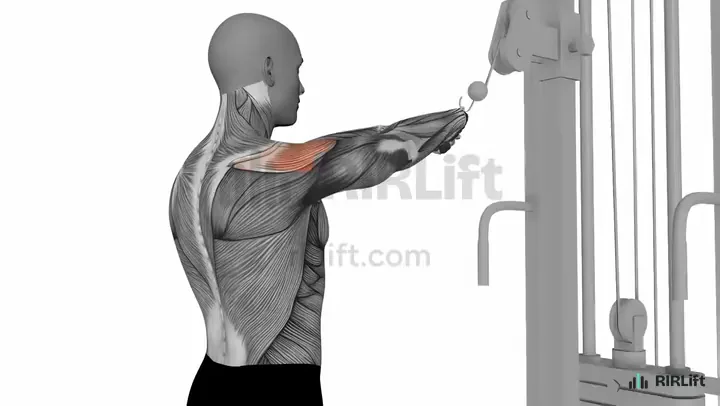
  5. Face Pull Shoulders, Upper Back
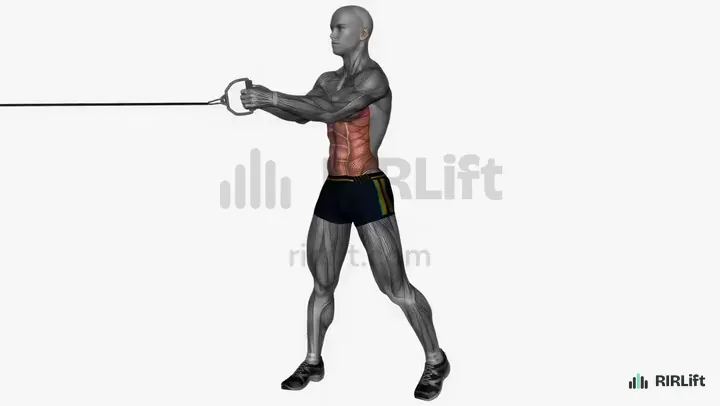
  6. Cable Woodchop Abs
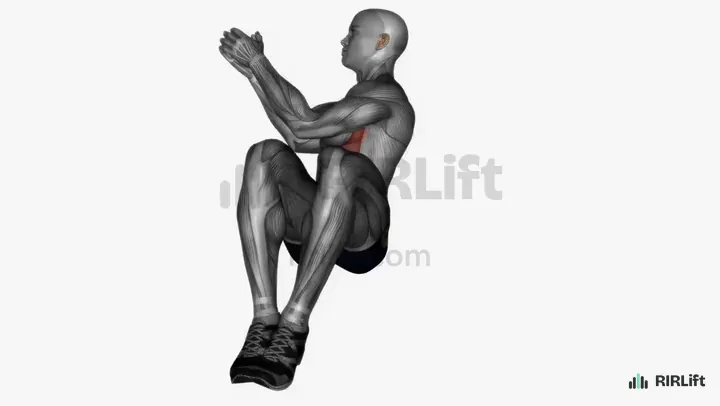
  7. Russian Twist Abs
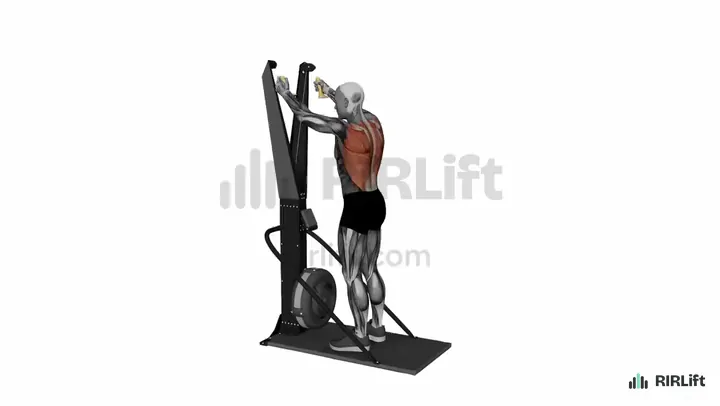
  8. Ski Erg Shoulders, Upper Back

Pulling power for the forward stroke

Every stroke is a pull, and the lats and upper back do most of it. The pull-up is the best single exercise, the one-arm row trains one side at a time with a little rotation, and the seal row lets you pull heavy with your chest supported.

Lats, the main paddling pull

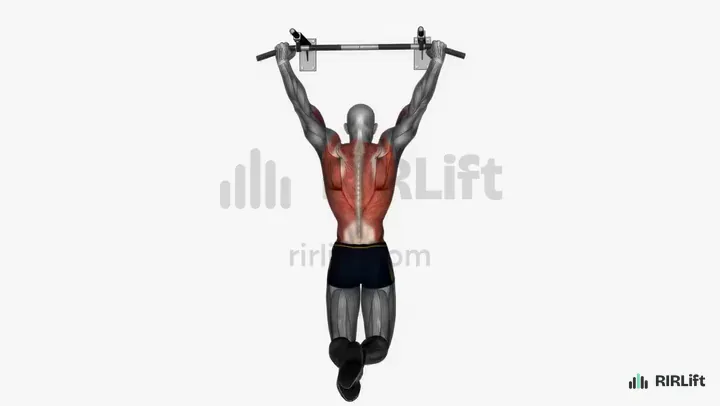
Pull-Up

Lats

The catch and pull phase of every forward stroke is driven by your lats, and the pull-up loads them with your full bodyweight. It is the single best gym exercise for paddling power, and sprint paddlers often do it weighted.

How to do it

  1. Grip the bar overhand, hands a bit wider than your shoulders, and hang with arms long.
  2. Draw your shoulder blades down before bending the elbows.
  3. Pull until your chin passes the bar, body quiet.
  4. Return to a full hang under control.

Cues

  • Shoulders down first
  • Chest toward the bar
  • Full hang every rep

Common mistakes

  • Swinging through the reps: keep the legs still and stop when form breaks.
  • Stopping short of a full hang: the stretched position matters for the reach at the catch.

Swap for: Lat Pulldown, Chin-Up, Assisted Pull-Up

Build a session with Pull-Up

Lats and upper back, one side at a time

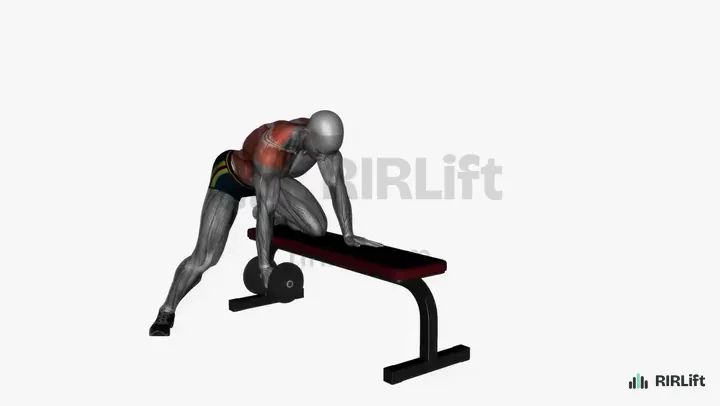
One-Arm Dumbbell Row

Lats, Upper Back

Paddling pulls one side at a time, and the one-arm row does the same, letting you add a small torso turn at the top much like the stroke. Bracing on a bench keeps your lower back out of it.

How to do it

  1. Set one knee and hand on a bench so your back is flat and close to level.
  2. Hang a dumbbell from the free hand with the arm long.
  3. Drive the elbow back past your ribs, letting the shoulder blade slide back at the top.
  4. Lower to a full stretch and repeat, then change sides.

Cues

  • Reach long at the bottom
  • Elbow drives back
  • Flat back the whole set

Common mistakes

  • Yanking the weight with a twist of the whole body: a small turn at the top is fine, a heave is not.
  • Short reps: let the arm go fully straight each time.

Swap for: Kettlebell Row, Single-Arm Cable Row, Dumbbell Bent-Over Row

Upper back, chest-supported barbell row

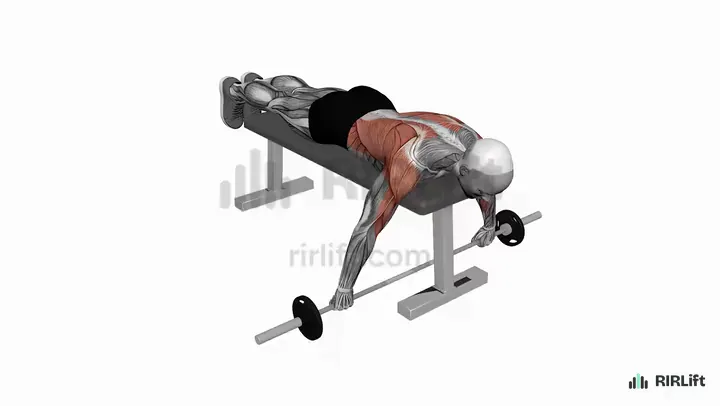
Seal Row

Upper Back, Lats

Lying face down on a bench takes the legs and lower back out completely, so the seal row isolates the upper back and lats that tire first on long paddles. It is a favorite of sprint kayakers for heavy pulling with zero cheating.

How to do it

  1. Lie chest-down on a raised flat bench with the bar on the floor or a rack beneath you.
  2. Take an overhand grip about shoulder-width and let your arms hang straight.
  3. Pull the bar up to the underside of the bench, elbows traveling back.
  4. Lower to straight arms with control.

Cues

  • Chest stays on the bench
  • Pull to the pad
  • Slow lowering

Common mistakes

  • Lifting your chest off the bench to finish: drop the weight.
  • Short range: start every rep from fully straight arms.

Swap for: Chest-Supported Row, Incline Dumbbell Row, Barbell Row

Build a session with Seal Row

Pushing and shoulder balance

The top hand pushes as the bottom hand pulls, so chest and triceps work too, and hours of paddling pull the shoulders forward. Pair presses with face pulls and rotator cuff work to keep the front and back of the shoulder strong together.

Chest and shoulders, pushing balance

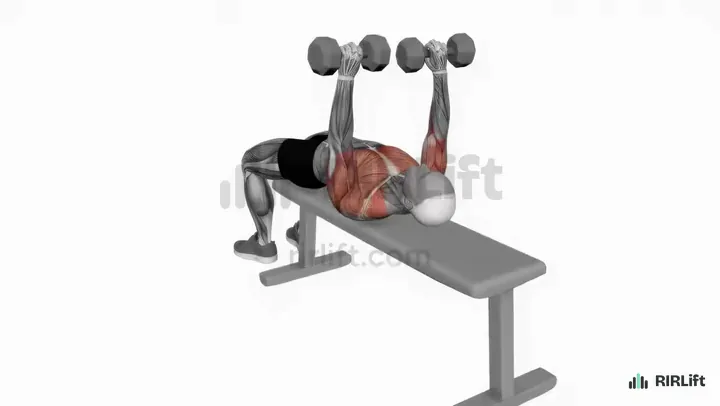
Flat Dumbbell Press

Chest

The push side of the stroke, where the top hand presses forward, uses your chest, front shoulders and triceps. Dumbbell presses build that pushing strength and let each arm work evenly.

How to do it

  1. Lie on a flat bench, dumbbells held at chest level, feet flat.
  2. Set your shoulder blades back and down into the bench.
  3. Press the dumbbells up until your arms are straight above your chest.
  4. Lower them to the sides of your chest with elbows angled slightly in.

Cues

  • Shoulder blades tucked
  • Elbows about 45 degrees
  • Press up and slightly in

Common mistakes

  • Letting the dumbbells drop too deep with shoulders rolling forward: stop at chest level.
  • Flaring the elbows wide: keep them angled.

Swap for: Barbell Bench Press, Push-Up, Dumbbell Floor Press

Chest, triceps and shoulder blade control

Push-Up

Chest

Push-ups train pushing strength while the shoulder blades move freely, which builds the shoulder control used in bracing strokes. They need no equipment, so they work for home sessions too.

How to do it

  1. Set your hands slightly wider than your shoulders and step back into a straight plank.
  2. Brace so your body stays in one line from head down to heels.
  3. Lower your chest to just above the floor, elbows angled back.
  4. Press up and push the floor away at the top so your upper back rounds slightly.

Cues

  • One straight line
  • Chest to the floor
  • Push away at the top

Common mistakes

  • Hips sagging: tighten your glutes and abs.
  • Half reps: lower until your chest nearly touches.

Swap for: Incline Push-Up, Weighted Push-Up, Push-Up Plus

Build a session with Push-Up

Rear delts and upper back, shoulder balance

Face Pull

Shoulders, Upper Back

Paddlers spend hours with the arms forward, so the muscles that pull the shoulders back need extra work. The face pull trains the rear shoulders and upper back with the arms high, the position of the top hand in the stroke.

How to do it

  1. Set a rope on a cable at about head height and hold the ends with your thumbs pointing back.
  2. Step back until the cable is tight, standing tall.
  3. Pull the rope toward your face, splitting the ends apart beside your ears with your elbows high.
  4. Hold a moment, then let the rope return under control.

Cues

  • Elbows high
  • Pull the rope apart
  • Pause at the face

Common mistakes

  • Leaning back to move more weight: use less and stay upright.
  • Dropping the elbows so it becomes a row: keep them at shoulder height.

Swap for: Dumbbell Face Pull, Band Face Pull, Dumbbell Rear Delt Fly

Build a session with Face Pull

Rotator cuff, shoulder balance

Dumbbell External Rotation

Shoulders

The rotator cuff keeps the shoulder centered while the big muscles pull through the stroke, and it gets little direct work from paddling. Light external rotations with your elbow at your side train it simply.

How to do it

  1. Stand holding a light dumbbell, upper arm against your side and elbow bent to a right angle.
  2. Start with the forearm across your stomach.
  3. Swing the forearm out to the side as far as you can without the elbow leaving your ribs.
  4. Return slowly and repeat before switching arms.

Cues

  • Elbow stays on the ribs
  • Slow out, slow in
  • Light weight

Common mistakes

  • Elbow sliding away from the body: press it in, or trap a towel there.
  • Going heavy and swinging: this needs a light dumbbell and high reps.

Swap for: Dumbbell Lying External Rotation, Face Pull, Band Pull-Apart

Trunk rotation and posture

A strong stroke turns from the trunk, and a long day in the boat asks your back to hold you upright. The woodchop builds rotational power, Russian twists train rotation in a seated position, and supermans build the back endurance for long paddles.

Obliques, rotational power

Cable Woodchop

Abs

Power in the forward stroke comes from rotating the torso, not just pulling with the arms. A high-to-low cable woodchop trains that diagonal turn with resistance, with the arms fairly straight like a paddle shaft.

How to do it

  1. Set a cable high and stand sideways to it, both hands on the handle above your near shoulder.
  2. Keep your arms long and turn your torso to sweep the handle diagonally toward the far hip.
  3. Let your hips and back foot pivot with the turn.
  4. Return slowly to the start and repeat, then switch sides.

Cues

  • Arms long like a paddle shaft
  • Rotate from the trunk
  • Slow return

Common mistakes

  • Pulling with bent arms: keep them straight and turn the torso.
  • Locking the hips: let them turn with you.

Swap for: Med Ball Woodchop, Landmine Rotational Press, Russian Twist

Obliques, seated rotation

Russian Twist

Abs

Sitting with your torso leaned back and twisting side to side is close to the seated position in a kayak, and it builds rotational endurance for long days on the water. Add a weight once bodyweight reps get easy.

How to do it

  1. Sit with knees bent and heels down, then lean your torso back until your abs engage.
  2. Clasp your hands or hold a light weight at your sternum.
  3. Turn your shoulders to one side, bringing your hands beside the hip.
  4. Turn through the middle to the other side and keep alternating.

Cues

  • Tall chest, lean back
  • Turn the shoulders, not just the arms
  • Steady rhythm

Common mistakes

  • Rounding the back as you tire: sit up a little taller.
  • Only moving the hands: turn the whole upper body.

Swap for: Cable Woodchop, Pallof Press, Dumbbell Woodchop

Lower back and glutes, posture endurance

Superman

Lower Back

Sitting upright in a boat for hours asks the muscles along your spine to work the whole time. The superman trains them without equipment by raising arms, chest and legs together.

How to do it

  1. Lie on your stomach with your arms reaching overhead and legs long.
  2. Float arms, chest and legs a few inches up together.
  3. Hold the top for one or two seconds, squeezing your glutes.
  4. Lower everything back down with control.

Cues

  • Reach long both ways
  • Squeeze the glutes
  • Neck in line, eyes down

Common mistakes

  • Cranking the head up: keep your gaze on the floor.
  • Rushing reps: hold the top every time.

Swap for: Back Extension, Exercise Ball Back Extension, Dumbbell Romanian Deadlift

Build a session with Superman

Legs, hips and conditioning

Your legs drive through the footpegs and help you balance, and paddling fitness can be built off the water. The single-leg Romanian deadlift trains hips and balance, and the ski erg gives you a stroke-like conditioning session.

Hamstrings, glutes and balance

Single-Leg RDL

Hamstrings, Glutes

Kayakers push through the footpegs on each stroke, and the hips and legs link that push to the torso. The single-leg Romanian deadlift strengthens the hips and hamstrings and builds the balance that helps in an unstable boat.

How to do it

  1. Balance on one leg with a soft knee, a dumbbell in the opposite hand.
  2. Fold forward at the hip, letting the free leg float back behind you.
  3. Lower until your torso and rear leg are close to horizontal, back flat.
  4. Drive your hips forward to stand, then repeat before switching legs.

Cues

  • Hips square
  • Long line from head to heel
  • Slow and steady

Common mistakes

  • Opening the hip as the leg rises: point the back toes down.
  • Rounding to reach lower: stop when your back stays flat.

Swap for: Dumbbell Romanian Deadlift, Dumbbell B-Stance RDL, Romanian Deadlift

Paddling-specific conditioning

Ski Erg

Shoulders, Upper Back

Pulling the ski erg handles down with the arms, lats and a forward fold is the closest machine in a gym to a paddling stroke. It builds the fitness for long paddles when you cannot get on the water.

How to do it

  1. Stand facing the machine with the handles above your head and arms straight.
  2. Pull the handles down toward your thighs, hinging your hips back and bending your knees slightly.
  3. Finish with the hands beside your thighs and your torso leaning forward.
  4. Rise back up and reach high for the next stroke, keeping a steady rhythm.

Cues

  • Reach tall at the top
  • Pull with lats, not just arms
  • Hinge into each stroke

Common mistakes

  • Pulling only with the arms: drive the handles down with your lats and a hip hinge.
  • Going too hard on the first interval: pace so the last one is as strong.

Swap for: Rowing Machine, Battle Rope Wave, Air Bike

Build a session with Ski Erg

Put them together: example sessions

Each session below picks from the exercises above for one situation, with the sets, reps, rest and RIR filled in. Open one in the session builder to change a pick, price it from a recent set, and add it to RIRLift.

Session 1

Two sessions during paddling season

Open in the session builder
  • Workouts2× a week
  • Working sets24 a week
  • Per workout~30 min
  • EquipmentPull-Up Bar, Dumbbells, Adjustable Cable, Flat Bench

You paddle two or more times a week and want to get stronger without feeling heavy-armed on the water.

Paddling already works your back and shoulders hard, so sets stop at 2 reps in reserve and each session has 12 to 13 working sets. Session A is pulling and shoulder care; session B is pushing, rotation and legs. Pulls and pushes are balanced across the week so the shoulders do not end up front-heavy.

A: Pull and shoulders
ExerciseSets × repsRIRRest
Pull-Up 3 × 5–10 2 2 min
One-Arm Dumbbell RowPer arm. 3 × 8–12 2 90 s
Face Pull 3 × 12–15 2 1 min
Dumbbell External RotationPer arm. 2 × 12–20 2 45 s
SupermanHold 2 s at the top. 2 × 10–15 2 45 s

Open A: Pull and shoulders in the session builder

B: Push, rotate, legs
ExerciseSets × repsRIRRest
Flat Dumbbell Press 3 × 8–12 2 90 s
Cable WoodchopPer side. Arms long. 3 × 8–12 2 1 min
Single-Leg RDLPer leg. 3 × 8–10 2 90 s
Russian TwistPer side. 2 × 15–20 2 45 s

Open B: Push, rotate, legs in the session builder

How to run it
Lift on days you do not paddle, or after a short easy paddle. Leave a day between session A and a long or hard paddle.
How to progress
Add a rep per set each week, then add weight once every set reaches the top of the range at 2 reps in reserve.

Session 2

Winter or off-season strength block

Open in the session builder
  • Workouts3× a week
  • Working sets38 a week
  • Per workout~30 min
  • EquipmentPull-Up Bar, Barbells, Adjustable Cable, Dumbbells +2

The water is cold or you are between seasons, you paddle little, and you want to build strength and fitness for the next season.

With little paddling, there is room for heavier pulling at 1 to 2 reps in reserve and a conditioning block on the ski erg. Three sessions of 12 to 14 working sets build strength in the lats and upper back, which carries straight to the stroke, while the ski erg keeps paddling fitness going.

Pull
ExerciseSets × repsRIRRest
Pull-UpAdd weight past 8. 4 × 4–8 1 2:30 min
Seal Row 4 × 6–10 1 2 min
Face Pull 3 × 12–15 1 1 min
Dumbbell External RotationPer arm. 2 × 12–20 2 45 s

Open Pull in the session builder

Push and rotate
ExerciseSets × repsRIRRest
Flat Dumbbell Press 4 × 6–10 1 2 min
Push-Up 3 × 10–20 1 1 min
Cable WoodchopPer side. 3 × 8–12 1 1 min
Superman 3 × 10–15 1 45 s

Open Push and rotate in the session builder

Legs and engine
ExerciseSets × repsRIRRest
Single-Leg RDLPer leg. 3 × 6–10 1 90 s
Russian TwistPer side. 3 × 15–20 1 45 s
Ski ErgSeconds hard, then easy recovery. 6 × 30–60 2 90 s

Open Legs and engine in the session builder

How to run it
Lift on three non-consecutive days. Add easy ski erg or rowing on one or two of the other days if you want more fitness.
How to progress
Add weight to pull-ups, seal rows and presses each week while you hit the reps at target reps in reserve. Add one ski erg interval every week up to eight.

Session 3

Recreational paddler training at home

Open in the session builder
  • Workouts1× a week
  • Working sets13 a week
  • Per workout~30 min
  • EquipmentPull-Up Bar, Dumbbells

You paddle on weekends or holidays, train at home with a pull-up bar plus a pair of dumbbells, and want to paddle longer without aching shoulders and back.

This plan uses only a bar, dumbbells and the floor, with 2 to 3 reps in reserve so you finish each session fresh. One full-body session of 13 sets covers pulling, pushing, rotation and back endurance; do it twice a week if you have time.

Full body
ExerciseSets × repsRIRRest
Pull-UpOr slow lowerings. 3 × 3–8 2 2 min
One-Arm Dumbbell RowPer arm. Hand on a chair. 3 × 10–15 2 1 min
Push-Up 3 × 8–15 2 1 min
Russian TwistPer side. 2 × 15–20 3 45 s
Superman 2 × 10–15 3 45 s
How to run it
Do it once or twice a week, at least two days before a long paddle.
How to progress
Add reps each week. Once a set reaches the top of its range, use the next dumbbell or slow down the lowering on bodyweight moves.

Make it fit you

Questions

What muscles are worked while kayaking?

Mainly your lats and upper back for the pull, shoulders and arms, the obliques and trunk muscles that rotate your torso, and your hips and legs pushing through the footpegs. The exercises here train each of these.

What is the best workout for kayaking?

A session that pairs a heavy pull, like pull-ups or rows, with a press, shoulder care, rotation and a hinge for the legs. Do two of those a week in paddling season and three in the off-season, with ski erg intervals for fitness.

Can kayaking build muscle?

It builds endurance in the back, shoulders and arms, but the load is light, so it does not build much size or strength by itself. Strength training adds the heavier load that grows muscle and makes each stroke more powerful.

How can I train for kayaking at home?

With a pull-up bar, a pair of dumbbells and the floor: pull-ups, one-arm rows, push-ups, Russian twists and supermans. The at-home plan on this page uses only those.

What is the best machine for kayak training?

The ski erg is the closest to a paddling stroke because you pull down with your arms and lats while folding at the hips. A rowing machine is a good second choice.