Exercises for pickleball: legs, lateral speed, rotation and arm care

The best exercises for pickleball are the goblet squat, reverse lunge and single-leg Romanian deadlift for the ready position and low reaches, the lateral lunge, skater hop and single-leg calf raise for side-to-side speed, the Pallof press and cable woodchop for trunk rotation, and the one-arm row, shoulder press, external rotation, reverse wrist curl and farmer's walk for the shoulders, forearms and grip. Two sessions a week at 2 reps in reserve fit around regular play.

  1. Goblet Squat Quads, Glutes
  2. Dumbbell Lateral Lunge Quads, Glutes, Adductors
  3. Single-Leg RDL Hamstrings, Glutes
  4. Skater Hop Glutes, Quads, Abductors
  5. Pallof Press Abs
  6. Cable Woodchop Abs
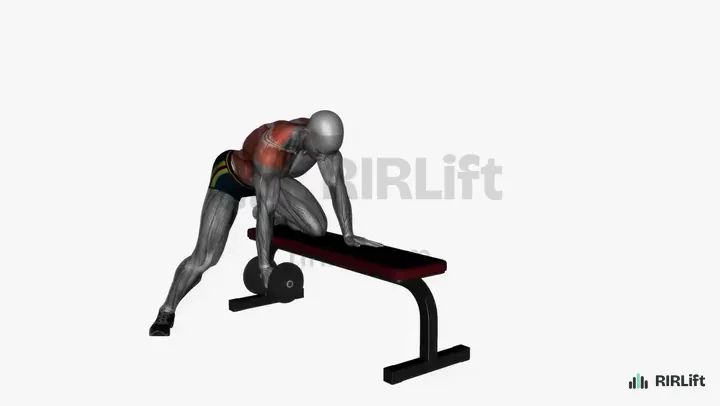
  7. One-Arm Dumbbell Row Lats, Upper Back
  8. Dumbbell External Rotation Shoulders
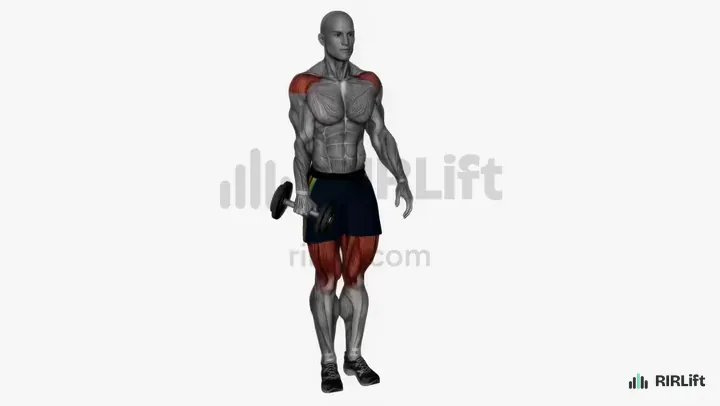
Legs for the ready position and lunges

You spend most of a game in a half squat, then lunge forward or back for the ball. A squat and a reverse lunge build that strength, and a single-leg Romanian deadlift trains the hinge and balance you need when you reach low on one foot.

Quads and glutes, squat pattern

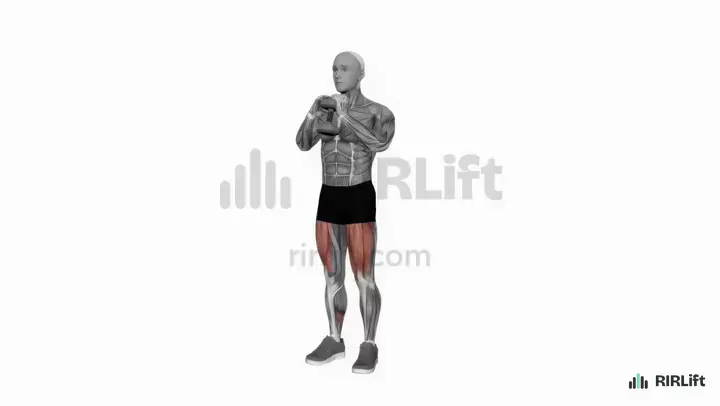
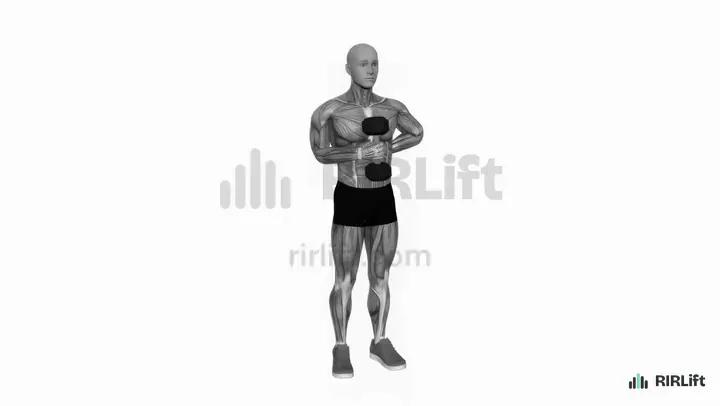
Goblet Squat

Quads, Glutes

Pickleball is played in a low ready position, and the goblet squat builds the leg strength to stay there and push off without your back taking over. Holding one weight at your chest keeps your torso upright, which makes it the easiest loaded squat to learn.

How to do it

  1. Cup the top end of one dumbbell in both palms and hold it upright at your breastbone.
  2. Stand with your feet a bit wider than your hips and your toes turned out slightly.
  3. Sit down between your heels, keeping your chest tall and your elbows inside your knees.
  4. Go as low as you can with a flat back, then drive up through the whole foot to stand.

Cues

  • Chest tall, weight at the sternum
  • Knees out over the toes
  • Whole foot on the floor

Common mistakes

  • Heels lifting at the bottom: widen your stance a little or squat only as deep as your heels stay down.
  • Letting the dumbbell drift away from your chest: keep it touching you the whole set.

Swap for: Dumbbell Squat, Heels-Elevated Goblet Squat, Leg Press

Quads and glutes, single-leg strength

Dumbbell Reverse Lunge

Quads, Glutes

Stepping back loads the front leg while keeping the knee in a comfortable position, which suits players who want leg strength without a lot of knee stress. It trains the split stance you use when you lunge for a ball.

How to do it

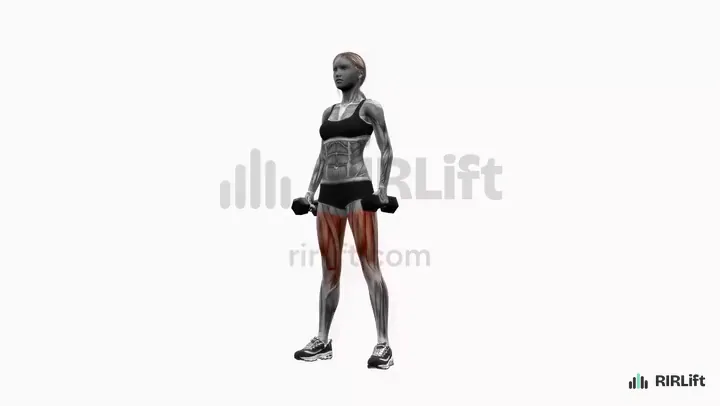
  1. Stand tall with dumbbells hanging by your sides.
  2. Step one foot back about two feet and lower until the back knee nearly reaches the floor.
  3. Keep most of your weight on the front foot and your torso upright.
  4. Push through the front heel to bring the back foot forward to standing, then switch legs or finish one side first.

Cues

  • Front foot does the lifting
  • Back knee drops straight down
  • Tall chest

Common mistakes

  • Stepping back too short so the front knee shoots forward: take a longer step.
  • Pushing off the back toes to stand: the back leg only balances.

Swap for: Reverse Lunge, Bulgarian Split Squat, Step-Up

Hamstrings and glutes, single-leg balance

Single-Leg RDL

Hamstrings, Glutes

Every lunge for a low ball ends with you balanced on one leg and bent at the hip, and the single-leg Romanian deadlift trains exactly that. It builds hamstring strength and the hip and ankle control that keep you steady on one foot.

How to do it

  1. Hold one dumbbell in the hand opposite your standing leg and stand on that leg with a soft knee.
  2. Hinge forward at the hip while your free leg reaches straight back.
  3. Lower the dumbbell toward the floor until your torso and back leg form a straight line close to level.
  4. Drive your hips forward to stand back up, keeping your hips square to the floor.

Cues

  • Hips square, no opening
  • Reach back with the heel
  • Slow and balanced

Common mistakes

  • Rotating the hips open as the leg rises: keep the toes of the back foot pointing down.
  • Rounding the back to reach lower: stop where your back stays flat.

Swap for: Dumbbell Romanian Deadlift, Dumbbell B-Stance RDL, Kettlebell Deadlift

Lateral speed, stopping and ankles

Pickleball is a sideways game. The lateral lunge loads the side step, the skater hop teaches you to push off and stop on one leg, and calf raises build the lower legs that take every split step. Keep hops to a few crisp sets so they stay fast.

Adductors, glutes and quads, side-to-side strength

Dumbbell Lateral Lunge

Quads, Glutes, Adductors

Most of the movement at the kitchen line is sideways, and the lateral lunge loads one leg as you step out and push back, just like reaching for a wide dink. It also builds the inner-thigh strength that sharp side shuffles rely on.

How to do it

  1. Hold dumbbells at your sides and stand with your feet together.
  2. Step wide to one side and sit your hips back over that foot, letting the trailing leg stay straight.
  3. Keep the planted foot flat and the knee pointing the same way as the toes as you lower.
  4. Push hard off the bent leg to return to standing, then alternate sides.

Cues

  • Sit back, not just down
  • Trailing leg long
  • Shove the floor away to come back

Common mistakes

  • Stepping out so far you cannot push back without a bounce: shorten the step until each rep returns cleanly.
  • Letting the knee cave inward: keep it pointed over the middle toes.

Swap for: Cossack Squat, Kettlebell Lateral Lunge, Landmine Lateral Lunge

Lateral power and landing control

Skater Hop

Glutes, Quads, Abductors

Skater hops teach you to push off one leg sideways and land balanced on the other, which is the quickest way to train the explosive side step and the stop that follows it. Short sets with full recovery keep each hop sharp.

How to do it

  1. Stand on your right leg knee softly bent.
  2. Push off sideways and leap to your left, landing on your left foot.
  3. Absorb the landing by bending the knee and hip and hold for a moment, right foot behind you.
  4. Push back to the right and keep alternating for the set.

Cues

  • Push sideways, not up
  • Stick each landing
  • Soft knee, hips back

Common mistakes

  • Landing stiff-legged: land with a bent knee and hold for a beat before the next hop.
  • Letting the knee cave on landing: keep it lined up over the toes.

Swap for: Lateral Box Jump, Dumbbell Lateral Lunge, Jump Squat

Calves and ankles

Single-Leg Calf Raise

Calves

Quick first steps and constant split steps load your calves and Achilles more than any other muscle in pickleball. Single-leg raises with a full range build that capacity one leg at a time.

How to do it

  1. Stand on one foot holding a dumbbell on that same side, using the other hand on a wall for balance.
  2. Lift the free foot off the floor.
  3. Rise as high as you can onto the ball of the foot and pause for a second.
  4. Lower slowly until the heel is back down, then repeat before switching legs.

Cues

  • Full height, pause at the top
  • Slow down
  • Big toe stays pressed down

Common mistakes

  • Bouncing through fast half reps: take two seconds to lower each rep.
  • Rolling onto the outside of the foot: keep pressure through the big toe.

Swap for: Dumbbell Standing Calf Raise, Standing Calf Raise, Seated Calf Raise

Trunk rotation and control

Power in drives and overheads comes from turning the hips and trunk, and control comes from being able to resist rotation too. Pair one anti-rotation exercise with one rotational exercise and you have both sides covered.

Abs and obliques, anti-rotation

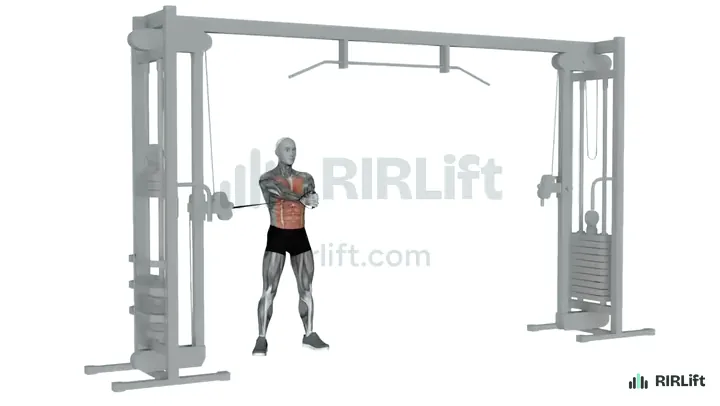
Pallof Press

Abs

Before you can rotate hard into a drive, your trunk has to resist being twisted, and the Pallof press trains exactly that. Pressing a cable straight out while it tries to pull you sideways builds a steady trunk without loading your spine.

How to do it

  1. Set a cable handle at chest height and stand side-on to the machine, feet hip-distance apart.
  2. Bring the handle to your sternum, both hands wrapped around it, and step away until the cable is taut.
  3. Press the handle straight out in front of you until your arms are locked, resisting the pull toward the machine.
  4. Hold for a breath, bring it back to the chest, and finish the reps before turning around.

Cues

  • Square hips and shoulders
  • Press straight out, no drift
  • Exhale as you press

Common mistakes

  • Letting the handle drift toward the machine: lighten the load until the arms move in a straight line.
  • Leaning away from the cable: stay tall and let your abs do the resisting.

Swap for: Cable Woodchop, Side Plank, Dead Bug

Obliques and hips, rotational power

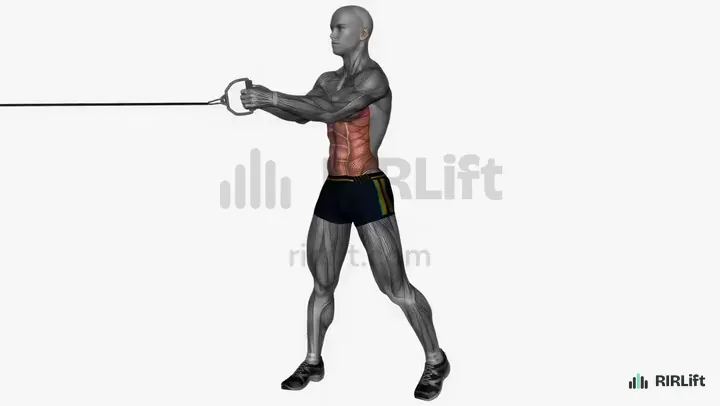
Cable Woodchop

Abs

Drives, overheads and speed-ups all start from the legs and turn through the trunk, and the cable woodchop trains that diagonal turn under load. Pivoting your back foot keeps the rotation coming from the hips instead of the lower back.

How to do it

  1. Set a cable high and stand side-on to it, both hands on the handle above your near shoulder.
  2. Sweep the handle diagonally past your torso toward the outside of your far knee.
  3. Turn through your hips and pivot your back foot as you pull, arms nearly straight.
  4. Return slowly along the same path and repeat before switching sides.

Cues

  • Turn the hips, then the shoulders
  • Pivot the back foot
  • Control the return

Common mistakes

  • Pulling with the arms only: keep the arms long and let your torso turn.
  • Twisting from the lower back with the hips locked: let the feet and hips move.

Swap for: Med Ball Woodchop, Dumbbell Woodchop, Landmine Rotational Press

Shoulders, forearms and grip

Swinging a paddle thousands of times a week loads the front of the shoulder and the back of the forearm. Rows and rotator cuff work balance the shoulder, the overhead press builds strength with the arm high, and wrist curls and carries toughen the forearm and grip.

Lats and upper back, horizontal pull

One-Arm Dumbbell Row

Lats, Upper Back

Paddle sports are heavy on the front of the shoulder, and rows balance that by strengthening the muscles that pull the shoulder blades back. Rowing one arm at a time, braced on a bench, lets you work hard with no stress on your lower back.

How to do it

  1. Place one hand and the same-side knee on a flat bench so your torso is roughly level.
  2. Let the dumbbell hang from the other hand with your arm straight.
  3. Row the dumbbell toward your hip, elbow brushing your ribs.
  4. Lower until the arm is straight again, finish the set, then switch sides.

Cues

  • Elbow to the hip
  • Shoulders level
  • Full stretch at the bottom

Common mistakes

  • Twisting the torso to heave the weight up: lighten it and keep both shoulders square.
  • Shrugging the dumbbell toward your ear: pull with the elbow, not the trap.

Swap for: Dumbbell Bent-Over Row, Kettlebell Row, Seated Cable Row

Shoulders and triceps, overhead press

Dumbbell Shoulder Press

Shoulders

Overheads and serves ask your shoulders to work with the arm high, and pressing dumbbells overhead builds strength in that position with each arm free to find its own path. Sitting removes the legs so the shoulders do all the work.

How to do it

  1. Set a bench upright, sit with your back on the pad, and hold the dumbbells at shoulder height, palms facing forward.
  2. Brace your trunk and keep your back against the pad.
  3. Press both dumbbells overhead until your arms are straight, bringing them slightly toward each other.
  4. Lower them back to shoulder height under control.

Cues

  • Ribs down, back on the pad
  • Press up and slightly in
  • Lower to the shoulders, not the ears

Common mistakes

  • Arching hard off the pad to finish reps: end the set or use lighter dumbbells.
  • Cutting the range short: bring the dumbbells to shoulder level every rep.

Swap for: Neutral-Grip Dumbbell Shoulder Press, Arnold Press, Landmine Press

Rotator cuff, shoulder external rotation

Dumbbell External Rotation

Shoulders
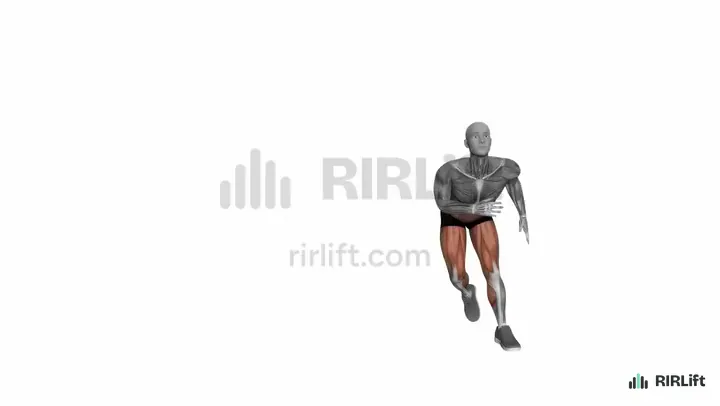
The small muscles at the back of the shoulder slow your arm down after every swing, and they rarely get trained directly. A light dumbbell rotated outward with your elbow pinned at your side is the simplest way to give them that work.

How to do it

  1. Stand holding a light dumbbell, working elbow bent to 90 degrees and tucked against your side.
  2. Start with your forearm pointing across your belly.
  3. Rotate the forearm outward like a door swinging open, keeping the elbow touching your side.
  4. Return slowly and repeat, then switch arms.

Cues

  • Elbow pinned to the ribs
  • Slow both ways
  • Light enough for clean reps

Common mistakes

  • Letting the elbow drift away from the body: tuck a small towel between elbow and ribs to keep it there.
  • Going heavy: this is a high-rep, light-weight exercise.

Swap for: Dumbbell Lying External Rotation, Face Pull, Band Pull-Apart

Forearm extensors, wrist strength

Reverse Wrist Curl

Forearms

The muscles on the back of the forearm hold your wrist steady every time the ball hits the paddle, and players who play a lot often feel them first. Reverse wrist curls train them directly with a light weight.

How to do it

  1. Sit with your forearms resting on your thighs, palms facing down, wrists just past your knees.
  2. Let light dumbbells hang from both hands so the wrists bend down.
  3. Lift the backs of your hands toward the ceiling as far as the wrist allows, keeping the forearms still.
  4. Lower slowly and repeat.

Cues

  • Forearms stay on the thighs
  • Slow lowering
  • Small weight, full range

Common mistakes

  • Lifting the forearms off the thighs to move the weight: go lighter.
  • Rushing reps: take two seconds down.

Swap for: Cable Wrist Extension, Kettlebell Wrist Extension, Reverse Curl

Grip, traps and trunk, loaded carry

Farmer's Walk

Forearms, Traps, Shoulders

Carrying heavy dumbbells for distance trains grip, shoulders and trunk all at once while you move on your feet. It is a simple way to finish a session with whole-body work that builds a firm hold on the paddle.

How to do it

  1. Keep a flat back as you lift two heavy dumbbells from the floor and stand tall.
  2. Pull your shoulders down and back and brace your trunk.
  3. Walk with short, quick steps, keeping the dumbbells from swinging.
  4. Set them down with a flat back once the time is up.

Cues

  • Tall and tight
  • Short quick steps
  • Crush the handles

Common mistakes

  • Leaning or swaying side to side: walk slower or use lighter dumbbells.
  • Letting the shoulders round forward: keep the chest proud the whole walk.

Swap for: Dumbbell Suitcase Carry, Trap Bar Deadlift, Plate Pinch Deadlift

Put them together: example sessions

Each session below picks from the exercises above for one situation, with the sets, reps, rest and RIR filled in. Open one in the session builder to change a pick, price it from a recent set, and add it to RIRLift.

Session 1

Two gym days next to regular play

Open in the session builder
  • Workouts2× a week
  • Working sets28 a week
  • Per workout~35 min
  • EquipmentDumbbells, Adjustable Cable

You play three or more times a week and want to move better and hit harder, with two 45-minute gym sessions alongside.

Playing already loads your calves, shoulders and forearms, so sets stop at 2 reps in reserve and each session has 13 to 14 working sets. Day A leans on squatting, sideways movement and pulling; Day B on hinging, lunging, rotation and pressing, so each muscle gets one harder day per week without leaving you flat on court.

A: Squat and lateral
ExerciseSets × repsRIRRest
Skater HopPer side. Stick each landing. 3 × 4–6 3 1 min
Goblet Squat 3 × 8–12 2 90 s
Dumbbell Lateral LungePer side. 3 × 6–10 2 90 s
One-Arm Dumbbell RowPer arm. 3 × 8–12 2 1 min
Pallof PressPer side. 2 s hold. 2 × 8–12 2 1 min

Open A: Squat and lateral in the session builder

B: Hinge and rotate
ExerciseSets × repsRIRRest
Single-Leg RDLPer leg. 3 × 6–10 2 90 s
Dumbbell Reverse LungePer leg. 3 × 8–12 2 90 s
Dumbbell Shoulder Press 3 × 8–12 2 90 s
Cable WoodchopPer side. Pivot the back foot. 3 × 8–12 2 1 min
Single-Leg Calf RaisePer leg. 2 × 10–15 2 1 min

Open B: Hinge and rotate in the session builder

How to run it
Do A and B on non-playing days or after a short, easy session. Keep a day between B and a tournament.
How to progress
Add a rep per set each week at 2 reps in reserve; when every set reaches the top of the range, go up to the next dumbbell.

Session 2

One full-body session a week

Open in the session builder
  • Workouts1× a week
  • Working sets15 a week
  • Per workout~35 min
  • EquipmentDumbbells, Adjustable Cable

You play for fun a couple of times a week, maybe returning to the sport later in life, and have time for one strength session.

One session needs to touch everything, so it uses six exercises at 2 to 3 reps in reserve with 15 working sets and moderate rests. Ending well short of failure means you will not be sore for your next game, and the lunge, row, carry and calf work cover the areas recreational players most often feel after a long weekend of play.

Full body
ExerciseSets × repsRIRRest
Goblet Squat 3 × 8–12 3 90 s
Dumbbell Reverse LungePer leg. 2 × 8–10 3 90 s
One-Arm Dumbbell RowPer arm. 3 × 10–12 2 1 min
Pallof PressPer side. 2 × 8–12 3 1 min
Single-Leg Calf RaisePer leg. Hand on a wall. 2 × 10–15 2 1 min
Farmer's WalkSeconds. 3 × 30–45 2 90 s
How to run it
Do it on a day you are not playing, or at least several hours before an easy game.
How to progress
Add a rep each week. When the top of the range comes easily at 3 reps in reserve, add a little weight.

Session 3

Sturdier shoulders, elbows and forearms

Open in the session builder
  • Workouts2× a week
  • Working sets23 a week
  • Per workout~25 min
  • EquipmentDumbbells

You play a lot, often several hours a day, and your paddle arm feels it more than your legs do. You want strength work that toughens the shoulder and forearm without adding more fatigue to an already busy arm.

High reps with light weights at 1 to 2 reps in reserve build tolerance in the small muscles of the shoulder and forearm without heavy loading. Two short sessions each pair the arm work with a leg exercise, so you still train the base, and total volume stays at 12 to 13 sets.

A
ExerciseSets × repsRIRRest
Dumbbell External RotationPer arm. Elbow pinned. 3 × 12–20 1 45 s
Reverse Wrist CurlSlow lower. 3 × 12–20 1 45 s
One-Arm Dumbbell RowPer arm. 3 × 10–15 2 1 min
Dumbbell Lateral LungePer side. 3 × 8–10 2 90 s

Open A in the session builder

B
ExerciseSets × repsRIRRest
Dumbbell External RotationPer arm. 2 × 12–20 1 45 s
Dumbbell Shoulder PressLight. 3 × 10–15 2 90 s
Farmer's WalkSeconds. Heavy grip. 3 × 30–45 2 90 s
Single-Leg RDLPer leg. 3 × 8–10 2 90 s

Open B in the session builder

How to run it
Do these on two non-consecutive days. The external rotation and wrist curls are light enough to do after play too.
How to progress
Add reps up to the top of each range, then add the smallest dumbbell jump you can. Keep the rotator cuff and wrist work light even as everything else gets heavier.

Make it fit you

Questions

How do you train for pickleball?

Play regularly for skill, then add two short strength sessions a week: one leg-focused with squats, lateral lunges and hops, and one with hinges, rotation and shoulder work. Keep sets 2 reps short of failure so you are not too sore to play.

What muscles does pickleball use most?

Your legs and glutes hold the ready position and drive every step, your calves take the quick starts and stops, your trunk turns for drives, and your shoulder and forearm control the paddle. The exercises here train each of those.

Is pickleball enough exercise on its own?

It is good activity, but it does not load your muscles heavily enough to build much strength. A couple of strength sessions a week add the load that play does not, which helps you move faster and hit harder.

What is the best pickleball workout for seniors?

The one-session plan on this page suits most older players: six exercises, moderate weights, and every set stopping 2 to 3 reps short of failure. Start with light dumbbells or bodyweight and add weight slowly.

Should pickleball players lift weights?

Yes. Light to moderate weights build the leg strength, rotational control and shoulder and forearm capacity that play alone does not. Keep it to one or two sessions a week so you still feel fresh on court.