Exercises for snowboarders: legs, landings, balance and core

The best exercises for snowboarders are the back squat, Bulgarian split squat and wall sit for leg strength and endurance; the Romanian deadlift, single-leg RDL and kettlebell swing for the hips and hamstrings; jump squats, box jumps and skater hops for pop and landings; the Cossack squat and calf raise for hip and ankle range; and the side plank, dead bug and Russian twist for the trunk. Start two or three sessions a week about eight weeks before your first trip and taper to one short session once you are riding.

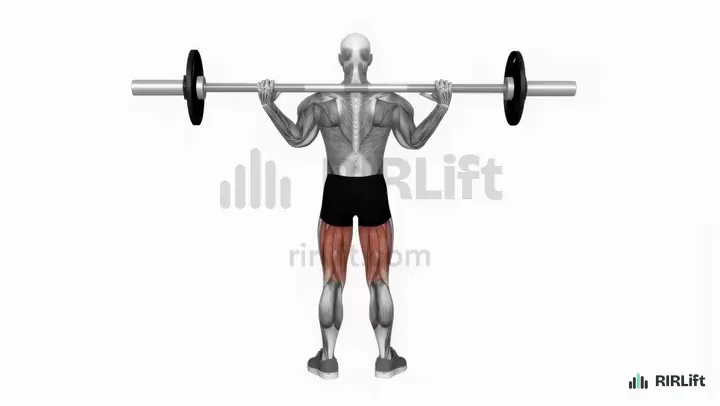
  1. Barbell Back Squat Quads, Glutes, Adductors
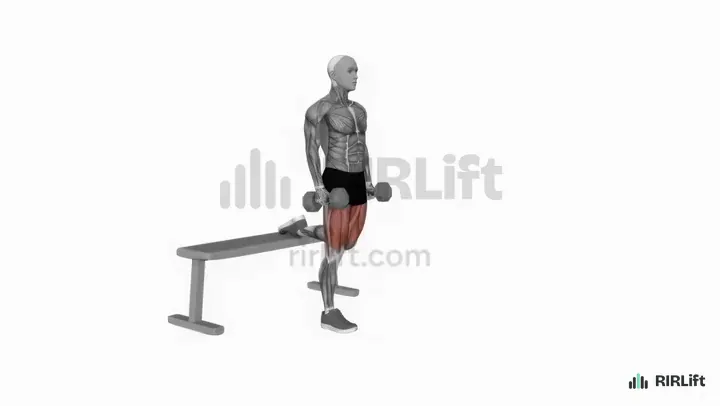
  2. Bulgarian Split Squat Quads, Glutes
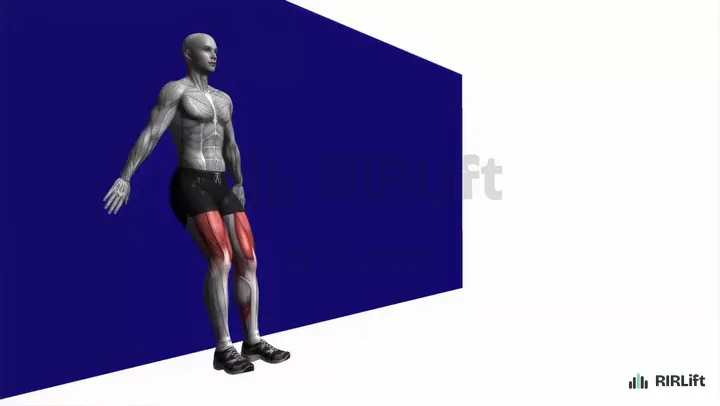
  3. Wall Sit Quads
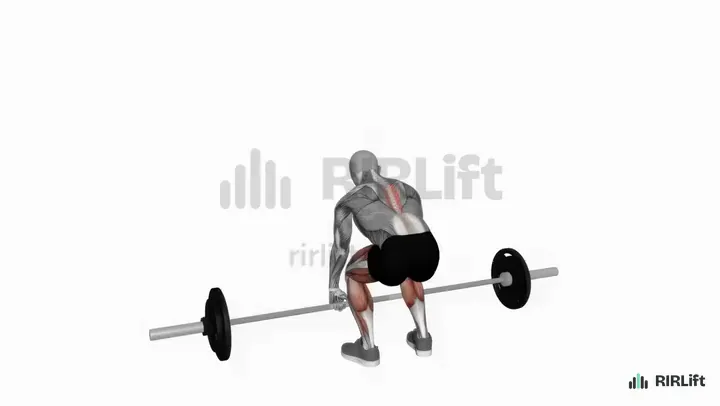
  4. Romanian Deadlift Hamstrings, Glutes
  5. Single-Leg RDL Hamstrings, Glutes
  6. Box Jump Quads, Glutes, Hamstrings
  7. Skater Hop Glutes, Quads, Abductors
  8. Side Plank Abs

Leg strength and endurance

Riding asks your quads and glutes to hold a bend for long runs and then push hard to absorb bumps. Train both: a heavy squat and split squat for strength, a wall sit for the burn at the end of a long run.

Leg strength for a low stance

Barbell Back Squat

Quads, Glutes, Adductors

Riding is hours in a half squat, and a strong squat makes that position feel easy instead of burning by mid-morning. It is the heaviest leg lift on this page and the one to build first in the months before the season.

How to do it

  1. Rest the bar on your upper back, hands just outside your shoulders, and step back with feet about shoulder-width apart.
  2. Breathe in deep and brace your trunk.
  3. Sit down until your thighs reach at least parallel, knees tracking over your toes.
  4. Drive back up with your chest and hips rising together.

Cues

  • Big breath, then sit
  • Knees out over the toes
  • Same depth every rep

Common mistakes

  • Shallow reps when the weight climbs: hold depth and pick a load that fits it.
  • Collapsing the chest out of the bottom: push your upper back up into the bar.

Swap for: Goblet Squat, Front Squat

One leg at a time

Bulgarian Split Squat

Quads, Glutes

On a board your legs work unevenly, front and back, toe edge and heel edge. Split squats load one leg hard and quickly show if your back leg is lagging.

How to do it

  1. Stand facing away from a bench and rest one foot on it behind you, laces down.
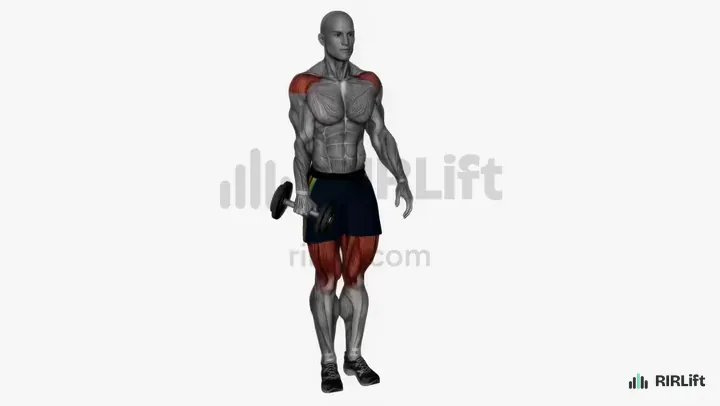
  2. Hold one dumbbell per hand, or none to start.
  3. Sink straight down until the rear knee hovers just over the floor.
  4. Drive the front foot down to rise. Finish the side, then switch.

Cues

  • Whole front foot planted
  • Drop straight down
  • Torso tall

Common mistakes

  • A front heel that lifts: step the front foot farther out.
  • Driving off the rear foot: it balances, the front leg lifts.

Swap for: Dumbbell Split Squat, Dumbbell Reverse Lunge

Burning-legs endurance

Wall Sit

Quads

Long runs ask your quads to hold a bend for minutes at a time. The wall sit trains exactly that kind of static endurance, and you can do it anywhere.

How to do it

  1. Lean your back flat on a wall and walk your feet out about two feet.
  2. Slide down until your thighs are about level and your shins are vertical.
  3. Keep your back pressed to the wall and breathe steadily.
  4. Hold for the set time, then slide back up.

Cues

  • Knees over ankles
  • Back flat on the wall
  • Breathe through the burn

Common mistakes

  • Sitting too high so it is easy: get the thighs close to parallel.
  • Pushing on your thighs with your hands: let the arms hang.

Swap for: Goblet Squat, Bodyweight Squat

Build a session with Wall Sit

Hips, hamstrings and lower back

The back of your body holds the hinged stance and steadies you on uneven snow. One two-legged hinge, one on one leg, and swings for fast hip drive cover it.

Hamstrings and lower back

Romanian Deadlift

Hamstrings, Glutes

The back of your legs and your lower back hold you in a hinged stance and absorb chatter when the snow gets rough. The Romanian deadlift loads them through a long stretch, which is where they work hardest on the board.

How to do it

  1. Stand tall holding a barbell at your thighs, hands just outside your legs.
  2. Unlock your knees and send your hips back, sliding the bar down your thighs.
  3. Lower until your hamstrings are tight, usually around the knees or a little below.
  4. Squeeze your glutes to return to standing.

Cues

  • Push the hips back
  • Bar brushes your legs
  • Spine stays long

Common mistakes

  • Rounding to get the bar lower: the hamstrings set the depth.
  • Bending the knees more as you go down: keep the same small bend.

Swap for: Dumbbell Romanian Deadlift, Good Morning

Balance and hip control

Single-Leg RDL

Hamstrings, Glutes

Edge changes and uneven snow need a stable hip on a single leg. The single-leg RDL builds that balance while it loads the hamstring and glute of the standing leg.

How to do it

  1. Stand on one leg with a dumbbell in the hand on that same side.
  2. Hinge forward and let your free leg reach straight back.
  3. Go until your torso and back leg are close to level with the floor.
  4. Come back up by driving the standing hip forward.

Cues

  • Square hips
  • Reach back with the heel
  • Slow and steady

Common mistakes

  • Rotating the hip open: point the back toes down.
  • Bending over at the waist only: hinge from the hip.

Swap for: Dumbbell B-Stance RDL, Romanian Deadlift

Hip power and endurance

Kettlebell Swing

Glutes, Hamstrings

Swings combine fast hip extension with repeated effort, the mix of popping off a lip and riding a long run. Higher-rep sets also raise your heart rate without any pounding on your knees.

How to do it

  1. Set your feet a bit wider than your hips with the bell about a foot in front.
  2. Hinge to grab the handle and hike it back between your thighs.
  3. Snap your hips through so the bell rises to chest height.
  4. Let it drop back between your legs and flow into the next rep.

Cues

  • Hinge, do not squat
  • Snap the hips
  • Arms just hang on

Common mistakes

  • Raising the bell with your shoulders: the hips do the lifting.
  • Leaning back at the top: finish standing straight.

Swap for: Dumbbell Swing, Dumbbell Romanian Deadlift

Pop, jumps and landings

Whether you ride park or just hit side hits, you need to push off quickly and land in a stable squat. Keep these early in the session, with low reps and full rest so every jump is fast.

Pop and absorbing landings

Jump Squat

Quads, Glutes

Ollies, small hits and drops all start with a fast push from bent knees and end with a landing you have to absorb. Jump squats train both halves with only body weight.

How to do it

  1. Stand with feet hip to shoulder width and arms by your sides.
  2. Drop into a quarter to half squat, swinging the arms back.
  3. Explode up as high as you can, arms swinging up.
  4. Come down quietly into that same bend and pause before the next jump.

Cues

  • Jump fast, land soft
  • Knees track over toes
  • Reset between reps

Common mistakes

  • Stiff landings: let the hips and knees bend to soak up the impact.
  • Turning it into fast bouncing: pause long enough that each jump is maximal.

Swap for: Box Jump, Bodyweight Squat

Explosive power with soft landings

Box Jump

Quads, Glutes, Hamstrings

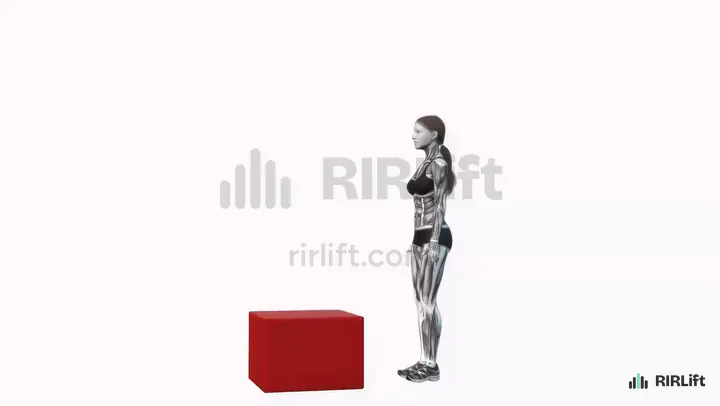
A box lets you jump with full effort but land with less impact than a drop to the floor, so you can train power without trashing your knees before the season. It also teaches you to land in an athletic squat, the position you want on a landing.

How to do it

  1. Face a stable box at a height you can land on with bent knees, not a full squat.
  2. Swing the arms back and dip quickly.
  3. Leap up and touch down on both feet at once in a quarter squat.
  4. Stand up and step down one foot at a time.

Cues

  • Land quiet and balanced
  • Same squat in and out
  • Step down, do not jump down

Common mistakes

  • Box too high: land in the same knee bend you took off from.
  • Short rest: take enough time that every jump is full speed.

Swap for: Jump Squat, Lateral Box Jump

Build a session with Box Jump

Edge-to-edge control

Skater Hop

Glutes, Quads, Abductors

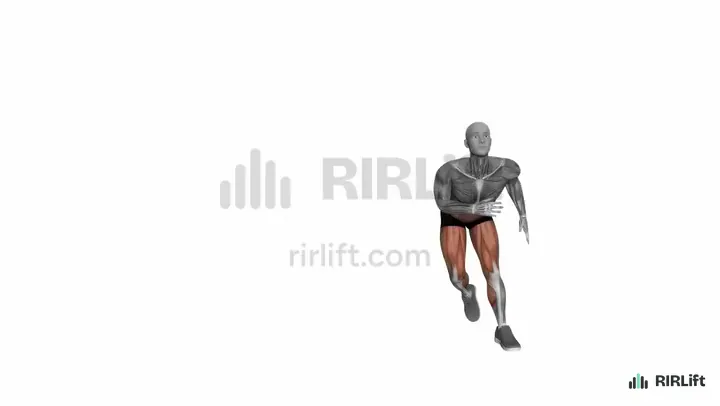
Skater hops bound you sideways from foot to foot and make you stick the landing on one leg. That side-to-side load and quick stabilization is what linking turns on a board feels like.

How to do it

  1. Balance on one foot with the knee softly bent.
  2. Push off sideways and land on the opposite foot.
  3. Absorb the landing in a slight squat and hold it still for a moment.
  4. Bound back the other way and keep alternating.

Cues

  • Sideways push
  • Freeze each landing
  • Knee lines up with toes

Common mistakes

  • Knee caving in on landing: push it out over the foot.
  • Hopping so fast you wobble: slow down until each landing is solid.

Swap for: Dumbbell Lateral Lunge, Cossack Squat

Hip and ankle range

A deep, comfortable stance needs hips that open and ankles that bend. The Cossack squat trains range under body weight, and calf raises strengthen the ankle that controls the toe edge.

Hip and ankle mobility under load

Cossack Squat

Quads, Adductors

Riding needs hips that open wide and ankles that bend deeply, especially on toe-side turns. The Cossack squat moves you side to side through a deep range and stretches the inner thigh of the straight leg.

How to do it

  1. Take a wide stance with toes turned slightly out.
  2. Shift your weight to one side and bend that knee while the other leg stays straight, toes pointing up.
  3. Sit as low as you can with your heel down, chest up.
  4. Push back up through the bent leg and shift to the other side.

Cues

  • Heel stays down
  • Straight leg stays long
  • Chest tall

Common mistakes

  • Lifting the heel of the bent leg: go only as deep as the heel allows.
  • Rounding forward: hold your hands in front as a counterweight.

Swap for: Dumbbell Lateral Lunge, Goblet Squat

Ankle and calf strength

Standing Calf Raise

Calves

Your calves and ankles control pressure on the toe edge and work hard in stiff boots. Raises off a step train them through a full range.

How to do it

  1. Stand with the balls of your feet hanging off a stair, heels free, holding something for balance.
  2. Let your heels drop below the step for a stretch.
  3. Rise as high onto your toes as you can.
  4. Pause at the top and lower slowly.

Cues

  • Full stretch at the bottom
  • High at the top
  • Slow lowering

Common mistakes

  • Quick bouncing reps: pause at both ends.
  • Rolling to the outside of the feet: press through the big toes.

Swap for: Single-Leg Calf Raise, Seated Calf Raise

Core and rotation

Your trunk links upper body to board: it steers turns and holds you together when you get bounced. Train the side, the front and rotation, one exercise each.

Side trunk strength

Side Plank

Abs

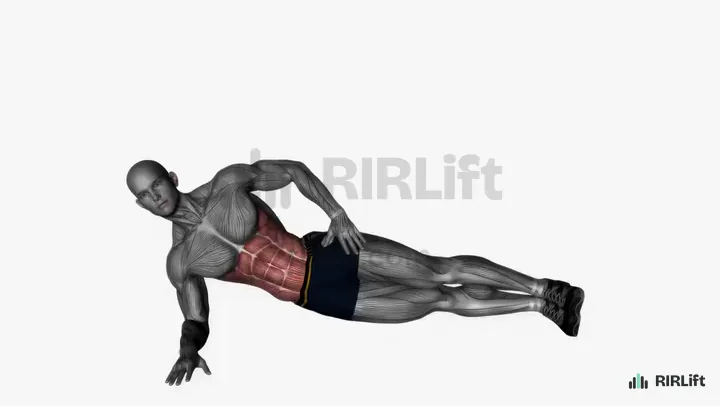
Your obliques hold your upper body steady when you drive into an edge or get bumped sideways. The side plank trains them with nothing but floor space.

How to do it

  1. Lie on your side with your forearm under your shoulder and legs stacked.
  2. Lift your hips until your body is straight from head to feet.
  3. Hold without letting your hips sag or roll.
  4. Lower after the set time and switch sides.

Cues

  • Hips high
  • Elbow under shoulder
  • Long straight line

Common mistakes

  • Hips sinking toward the floor: shorten the hold and keep the line.
  • Rolling forward: stack one hip over the other.

Swap for: Copenhagen Plank, Dumbbell Side Plank

Trunk stability

Dead Bug

Abs

The dead bug teaches the trunk to stay quiet while arms and legs move, the same control you need to keep your upper body calm while the legs work the board.

How to do it

  1. Lie on your back, arms reaching to the ceiling and knees bent over your hips.
  2. Press your lower back flat to the floor.
  3. Slowly lower one arm behind you and the opposite leg toward the floor.
  4. Bring them back and alternate sides.

Cues

  • Back flat the whole time
  • Slow reach
  • Exhale as you extend

Common mistakes

  • Back arching off the floor: reach less far.
  • Rushing the reps: take a few seconds each way.

Swap for: Plank, Pallof Press

Build a session with Dead Bug

Rotational control

Russian Twist

Abs

Snowboarding turns start with the upper body leading and the hips following, and the Russian twist trains that trunk rotation while you hold a lean.

How to do it

  1. Sit down, knees bent, and lean back to a comfortable angle.
  2. Clasp your hands at chest height.
  3. Turn your trunk to one side, moving your hands toward that hip.
  4. Turn through the middle to the other side and keep alternating.

Cues

  • Turn from the ribs
  • Hold the lean still
  • Controlled pace

Common mistakes

  • Only moving the arms: turn your shoulders with your hands.
  • Rounding forward: sit tall and lean back from the hips.

Swap for: Cable Woodchop, Pallof Press

Put them together: example sessions

Each session below picks from the exercises above for one situation, with the sets, reps, rest and RIR filled in. Open one in the session builder to change a pick, price it from a recent set, and add it to RIRLift.

Session 1

Pre-season, eight weeks out

Open in the session builder
  • Workouts3× a week
  • Working sets47 a week
  • Per workout~40 min
  • EquipmentPlyo Box, Barbells, Standing Calf Raise, Dumbbells +1

Your first trip is about two months away and you have access to a gym, and you want legs that last all day and handle landings.

Eight weeks is long enough to get noticeably stronger, so the squat and Romanian deadlift go to 1 to 2 reps in reserve with long rest, and the jumps stay far from failure. Three full-body days alternate a heavy strength day with a single-leg and power day. Day A has 16 working sets, Day B 16 and Day C 15.

Day A: Heavy legs
ExerciseSets × repsRIRRest
Box Jump 3 × 4–5 3 90 s
Barbell Back Squat2 warm-up sets first 4 × 5–8 2 3 min
Romanian Deadlift 3 × 6–10 2 2:30 min
Standing Calf Raise 3 × 10–15 1 1 min
Side PlankSeconds per side. 3 × 30–45 1 45 s

Open Day A: Heavy legs in the session builder

Day B: Single leg and power
ExerciseSets × repsRIRRest
Skater HopPer side. 3 × 5–6 3 1 min
Bulgarian Split SquatPer leg. 3 × 8–10 1 90 s
Single-Leg RDLPer leg. 3 × 8–10 2 1 min
Cossack SquatPer side. 3 × 6–8 2 1 min
Dead BugPer side. 2 × 8–10 2 45 s
Russian TwistTotal touches. 2 × 16–20 2 45 s

Open Day B: Single leg and power in the session builder

Day C: Endurance
ExerciseSets × repsRIRRest
Jump Squat 3 × 5–6 3 1 min
Kettlebell Swing 4 × 15–20 2 90 s
Barbell Back Squat 3 × 10–12 3 2 min
Wall SitSeconds. 3 × 45–60 1 1 min
Side PlankSeconds per side. 2 × 30–45 1 45 s

Open Day C: Endurance in the session builder

How to run it
Lift three days a week, for example Monday, Wednesday and Friday, and add one or two easy bike or run sessions on other days for general fitness. Rotate A, B, C in order.
How to progress
Add weight to the squat, split squat and Romanian deadlift when every set hits the top of the rep range at the target reps in reserve. Add 10 seconds to the wall sit each week. In the final week before your trip, cut every lift to two sets.

Session 2

During the season, riding most weekends

Open in the session builder
  • Workouts1× a week
  • Working sets13 a week
  • Per workout~35 min
  • EquipmentPlyo Box, Barbells, Dumbbells, Standing Calf Raise

You ride on weekends through the winter and want to keep your leg strength without arriving at the mountain tired.

Riding is your training now, so the gym only maintains: one session early in the week with two to three sets per lift at 2 to 3 reps in reserve. That is enough to hold the strength you built while your legs recover for the weekend. The session has 13 working sets and takes about 45 minutes.

Maintenance
ExerciseSets × repsRIRRest
Box Jump 2 × 3–4 3 90 s
Barbell Back Squat2 warm-up sets first 3 × 4–6 3 3 min
Single-Leg RDLPer leg. 2 × 6–8 3 1 min
Bulgarian Split SquatPer leg. 2 × 6–8 3 90 s
Standing Calf Raise 2 × 12–15 2 1 min
Side PlankSeconds per side. 2 × 30–40 2 45 s
How to run it
Lift on Monday or Tuesday after a riding weekend. Skip the session in a week you ride four or more days in a row.
How to progress
Hold the loads from the end of the pre-season block. If a set at the target reps in reserve feels easy two weeks in a row, add a little weight.

Session 3

At home with a pair of dumbbells

Open in the session builder
  • Workouts4× a week
  • Working sets64 a week
  • Per workout~35 min
  • EquipmentDumbbells, Standing Calf Raise

You do not have a gym, just a pair of dumbbells, a chair or bench and some floor space, and you want to be ready for a ski trip.

Without heavy barbells, the leg work comes from single-leg exercises and higher reps, which load one leg hard with a light weight. Sets go close to failure at 1 rep in reserve because the loads are light, and the jumps keep power in the plan. Each session has 16 working sets.

Home A
ExerciseSets × repsRIRRest
Jump Squat 3 × 6–8 3 1 min
Bulgarian Split SquatPer leg. Foot on a chair. 4 × 10–15 1 75 s
Single-Leg RDLPer leg. 3 × 10–12 1 1 min
Wall SitSeconds. 3 × 45–60 1 1 min
Side PlankSeconds per side. 3 × 30–45 1 45 s

Open Home A in the session builder

Home B
ExerciseSets × repsRIRRest
Skater HopPer side. 3 × 6–8 3 1 min
Cossack SquatPer side. 3 × 8–10 2 1 min
Bulgarian Split SquatPer leg. Hold dumbbells. 3 × 10–15 1 75 s
Dead BugPer side. 3 × 8–10 2 45 s
Russian TwistTotal touches. 2 × 20–24 2 45 s
Standing Calf RaiseOn a stair. 2 × 15–20 1 45 s

Open Home B in the session builder

How to run it
Do the two sessions twice each across a week (A, B, A, B) with a rest day between at least two of them. A sturdy chair works as the bench for the split squat.
How to progress
Add reps until you reach the top of each range at the target reps in reserve, then slow the lowering to three seconds or pause at the bottom of each split squat. Add 10 seconds to the wall sit each week.

Make it fit you

Questions

What is the best exercise for snowboarding?

The squat, because it builds the quads and glutes that hold your stance and absorb landings. If you only do one more, add the Bulgarian split squat to train each leg alone.

How do I get my legs in shape for snowboarding?

Squat and split squat for strength two or three times a week, add wall sits for endurance, and jump squats or box jumps for landings. Start about eight weeks before your first trip and add a little weight or time each week.

What muscles do snowboarders use the most?

The quads, glutes and hamstrings hold the stance and absorb terrain, the calves and ankle muscles control the edges, and the trunk muscles steer turns and keep you balanced.

When should I start training for snowboard season?

About six to eight weeks before your first trip gives you time to build real strength. Even three or four weeks of two sessions a week makes the first days on snow feel better.

Does snowboarding get you in shape?

Riding works your legs and trunk and keeps your heart rate up on longer runs, but it does not build much strength on its own. Strength training before and during the season is what makes long days feel easier.