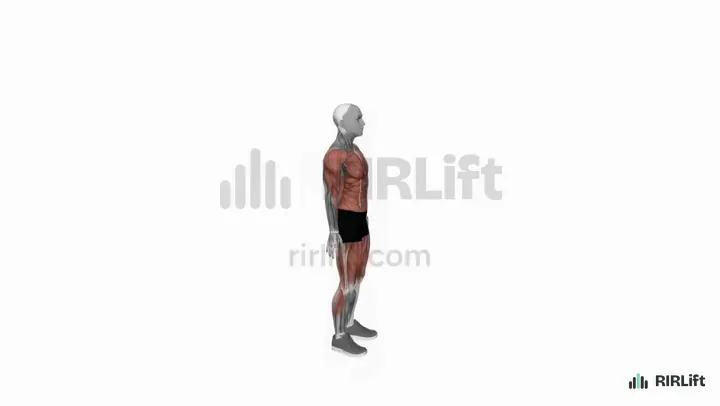
Exercises for surfing: paddling, pop-up, legs and rotation

The best exercises for surfing are pull-ups, lat pulldowns and straight-arm pulldowns for paddling; push-ups and burpees for a faster pop-up; goblet squats, Cossack squats and single-leg Romanian deadlifts for a strong, balanced stance; and medicine ball rotational throws and Pallof presses for turning. Add supermans for the paddling position and face pulls to balance the shoulders. Two or three short gym sessions a week, stopping 1 to 3 reps short of failure, is enough next to time in the water.

  1. Pull-Up Lats
  2. Straight-Arm Pulldown Lats
  3. Superman Lower Back
  4. Push-Up Chest
  5. Burpee Quads, Glutes, Chest, Shoulders
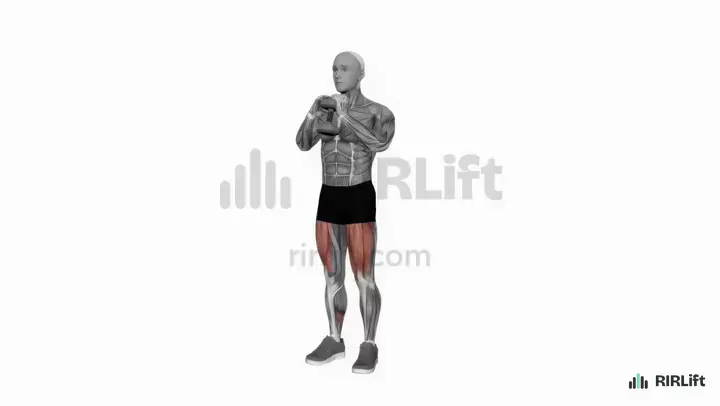
  6. Goblet Squat Quads, Glutes
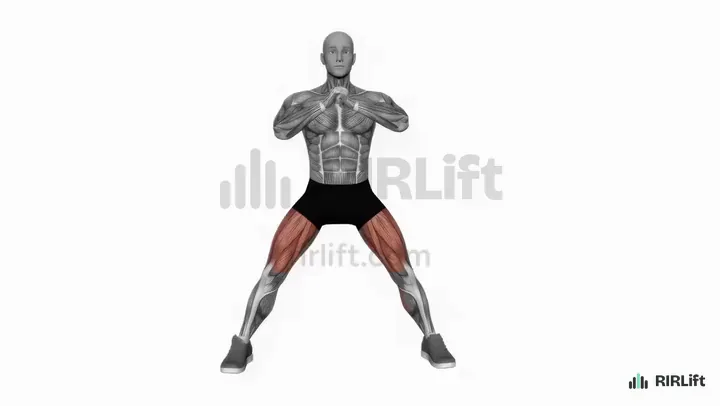
  7. Cossack Squat Quads, Adductors
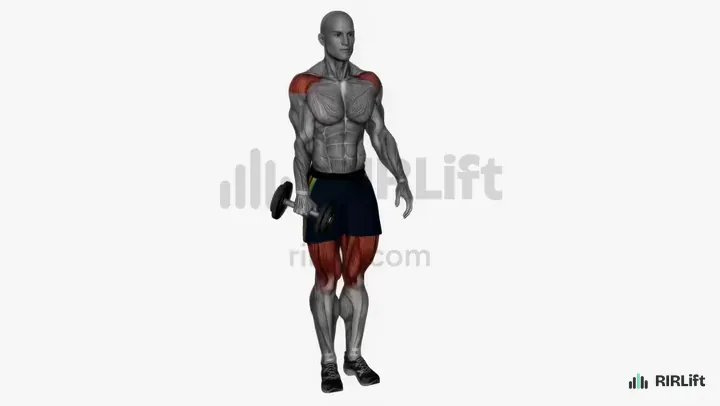
  8. Single-Leg RDL Hamstrings, Glutes
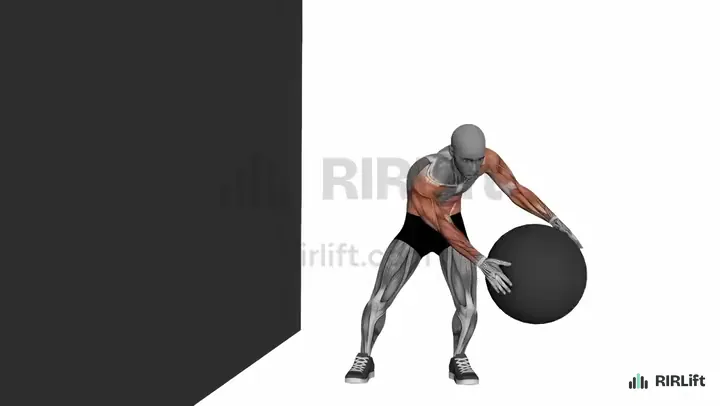
  9. Med Ball Rotational Throw Abs

Exercises for paddling strength

Most of a surf session is paddling, and it is mostly your lats. Train them with a heavy pull, a higher-rep pull and the straight-arm sweep, and add the superman so your back can hold the paddling position for an hour.

Paddling strength

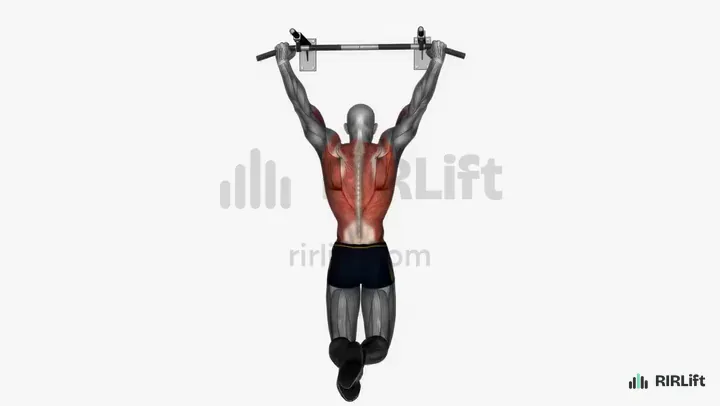
Pull-Up

Lats

Paddling is a long series of pulls with your arm starting overhead, and the lats do most of the work. Pull-ups train them through the same overhead-to-side path with your whole body weight, which is why surfers who can do a set of ten rarely run out of arms on a long paddle out.

How to do it

  1. Grab the bar a little wider than your shoulders and hang with straight arms.
  2. Draw your shoulder blades down toward your back pockets.
  3. Pull until your chin passes the bar, elbows sweeping down to your sides.
  4. Lower slowly back to a full hang.

Cues

  • Start every rep from a dead hang
  • Elbows to your back pockets
  • Slow on the way down

Common mistakes

  • Cutting the bottom of the rep short: the stretched position is where a paddle stroke begins.
  • Swinging the legs to get over the bar: end the set when the reps stop being strict.

Swap for: Lat Pulldown, Band-Assisted Pull-Up, Neutral-Grip Pull-Up

Build a session with Pull-Up

Paddling volume

Lat Pulldown

Lats

A pulldown lets you choose the load, so you can do the higher-rep sets that build paddling endurance even when pull-ups are still hard. It is also the easiest way to keep training the lats when your arms are tired from a big week in the water.

How to do it

  1. Sit at the machine with your thighs locked under the pads and grab the bar just outside shoulder width.
  2. Lean back slightly and pull the bar to the top of your chest.
  3. Squeeze your lats for a moment with your elbows by your ribs.
  4. Let the bar rise until your arms are straight and your lats are stretched.

Cues

  • Chest up to meet the bar
  • Elbows drive down
  • Full stretch at the top

Common mistakes

  • Leaning far back to row the bar down: stay nearly upright so the lats, not your body weight, move it.
  • Pulling the bar behind your neck: bring it to the front of your chest.

Swap for: Pull-Up, Neutral-Grip Lat Pulldown, Single-Arm Lat Pulldown

The finish of the paddle stroke

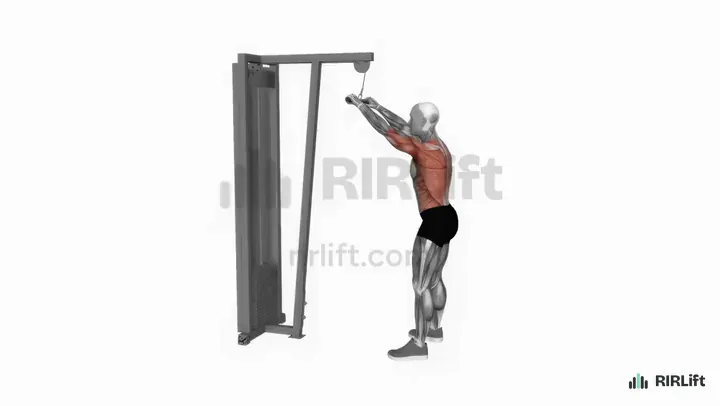
Straight-Arm Pulldown

Lats

With the elbows nearly straight, this is the closest gym copy of a paddle stroke: the arm sweeps from in front of your head down to your hip. It trains the lats and triceps through that arc without any bicep help.

How to do it

  1. Stand facing a high cable with a bar or rope attached, arms long and slightly bent.
  2. Hinge forward a little at the hips with your back flat.
  3. Sweep the handle down in an arc until it reaches your thighs.
  4. Let it travel back up until your arms are level with your head, then repeat.

Cues

  • Arms long and fixed
  • Sweep to your thighs
  • Ribs stay down

Common mistakes

  • Bending the elbows into a pushdown: lock the elbow angle and let the shoulder move.
  • Rocking the torso to swing the weight: keep your hips and chest still.

Swap for: Dumbbell Lat Pullover, Lat Pulldown, Kettlebell Pullover

Prone back endurance

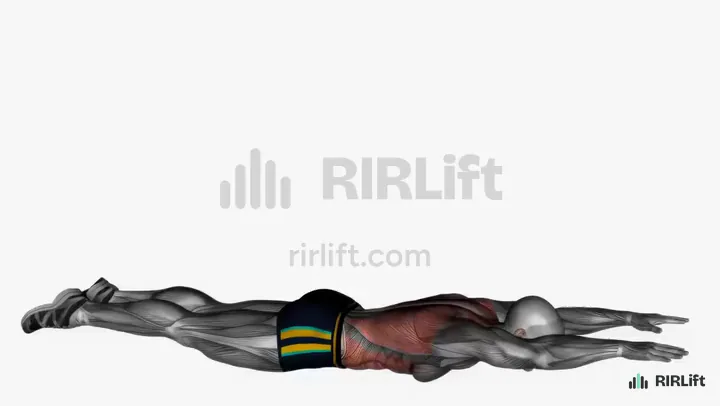
Superman

Lower Back

You paddle lying face down with your chest and legs lifted, often for an hour. The superman trains that exact position for the muscles along your spine and the back of your shoulders, so your chest stays up while you paddle and look for waves.

How to do it

  1. Lie face down with your arms reaching overhead and legs straight.
  2. Raise your hands, chest and feet a few inches off the floor at the same time.
  3. Hold the top for two or three seconds, looking at the floor just ahead.
  4. Lower slowly and repeat.

Cues

  • Long body, not a high arch
  • Eyes down
  • Squeeze your glutes

Common mistakes

  • Cranking your head back to look up: keep your neck long and in line with your spine.
  • Bouncing up and down quickly: hold every rep at the top.

Swap for: Back Extension, Exercise Ball Back Extension, Plank IYTW

Build a session with Superman

Shoulder balance for surfers

Paddling trains the front of your shoulders hard and the back of them hardly at all. One set of face pulls at the end of each session is a cheap way to keep that balance.

Shoulder balance for heavy paddlers

Face Pull

Shoulders, Upper Back

Hours of paddling pull your shoulders forward and train the front of the body far more than the back. Face pulls work the rear delts and the small muscles that rotate the arm outward, which keeps paddling-heavy shoulders balanced.

How to do it

  1. Set a rope on a cable at head height and hold an end in each hand with thumbs pointing back.
  2. Step back until your arms are straight and the stack is lifted.
  3. Pull the rope toward your face, splitting the ends apart as your hands pass your ears.
  4. Pause, then let your arms straighten slowly.

Cues

  • Hands finish beside your ears
  • Elbows high
  • Pause at the back

Common mistakes

  • Using so much weight that you lean back to finish: lighten it until you can pause every rep.
  • Pulling to your chest with low elbows: it becomes a row and misses the rear delts.

Swap for: Band Face Pull, Band Pull-Apart, Reverse Pec Deck

Build a session with Face Pull

Exercises for a faster pop-up

The pop-up is a hard push followed by a jump onto your feet. Build the push, then practice getting from your chest to your feet in one move.

Pop-up pressing strength

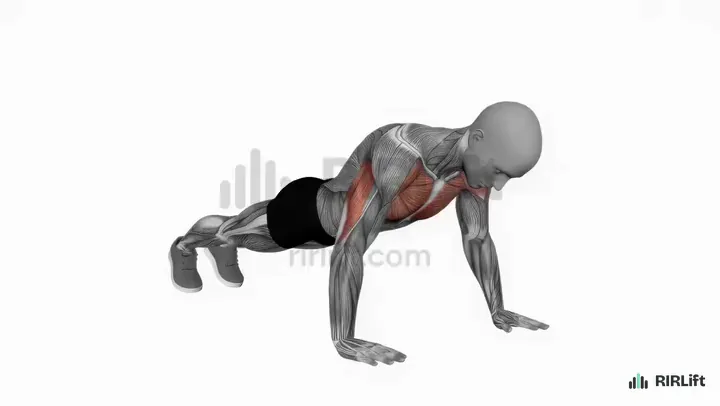
Push-Up

Chest

The pop-up starts with a fast, hard push off the board, and duck dives start the same way. Push-ups build that press while your body stays in one straight line, which is the same position you hold before you spring to your feet.

How to do it

  1. Plant your palms a little wider than your shoulders.
  2. Walk your feet back until your body is straight from head to heels.
  3. Lower until your chest nearly touches the ground, elbows angled back.
  4. Push hard to straighten your arms, keeping your hips level.

Cues

  • One straight line
  • Elbows at 45 degrees
  • Push fast

Common mistakes

  • Hips sagging toward the floor: squeeze your glutes and brace like a plank.
  • Doing tiny reps at the top: lower all the way for full strength off the board.

Swap for: Kneeling Push-Up, Explosive Push-Up, Flat Dumbbell Press

Build a session with Push-Up

Pop-up transitions and trunk control

Plank to Push-Up

Abs, Shoulders

Moving from forearms to hands and back makes your trunk hold still while your arms change position, which is what the pop-up asks from your core. It also builds pressing endurance for a session full of waves.

How to do it

  1. Start in a forearm plank with your body straight.
  2. Place your right hand under your shoulder and push up, then do the same with the left.
  3. Lower back down to your right forearm, then your left.
  4. Alternate which arm leads on each rep.

Cues

  • Hips stay level
  • Feet a little wide for balance
  • Hands under shoulders

Common mistakes

  • Rocking the hips side to side as you switch: slow down until they stay still.
  • Letting the lower back sag as you tire: end the set before your shape breaks.

Swap for: Plank, Push-Up, Plank Shoulder Tap

Pop-up speed

Burpee

Quads, Glutes, Chest, Shoulders

Of all the gym moves, the burpee is the closest to an actual pop-up: chest on the ground, then up onto your feet in one go. Doing them crisply, with the feet landing under you rather than shuffling in, trains the move you need when a wave picks you up.

How to do it

  1. From standing, crouch and set your hands down.
  2. Kick both feet out behind you into a plank and lower your chest to the floor.
  3. Push up and spring your feet forward under your hips in one jump.
  4. Rise to standing, then jump up lightly.

Cues

  • Feet land together, under you
  • One move from floor to feet
  • Quiet landing

Common mistakes

  • Walking the feet in one at a time: practice the jump in, since that is what the pop-up needs.
  • Rushing into sloppy reps: a short set of sharp reps beats a long tired one.

Swap for: Half Burpee, Jump Squat, Mountain Climber

Build a session with Burpee

Legs and balance for riding and turning

Riding is a low stance with your weight shifting between feet. Squat for strength, go wide and single-leg for balance, and practice landings on one foot.

Leg strength for a low stance

Goblet Squat

Quads, Glutes

Riding a wave means holding a low, bent-knee stance and pushing through turns. Goblet squats build the quads and glutes for that position, and holding the weight in front keeps your chest up the same way your stance does.

How to do it

  1. Grip one dumbbell by the top end with both hands, pressed to your sternum.
  2. Set your feet about shoulder width apart, toes out a little.
  3. Bend your knees and hips to sit down between your legs, chest tall.
  4. Stand back up by pushing through the middle of your feet.

Cues

  • Sit between your heels
  • Knees track over toes
  • Tall chest

Common mistakes

  • Rising onto your toes at the bottom: keep the whole foot planted.
  • Folding forward with the chest: hold the weight high and stay upright.

Swap for: Front Squat, Dumbbell Squat, Heels-Elevated Goblet Squat

Side-to-side strength and hip mobility

Cossack Squat

Quads, Adductors

Turns load one leg while the other reaches out, and stiff hips limit how low you can get on the board. The Cossack squat builds strength in that wide, shifting stance and opens up the inner thigh at the same time.

How to do it

  1. Stand with your feet wide, toes turned slightly out.
  2. Sit over to the right, bending that knee, keeping the left leg straight.
  3. Sink as low as you can while your right heel stays down.
  4. Push back to the middle and shift to the other side.

Cues

  • Heel flat on the bent side
  • Straight leg toes up
  • Chest stays tall

Common mistakes

  • Forcing extra depth with a rounded back: only go as low as you can control.
  • Letting the bent knee cave inward: push it out over your toes.

Swap for: Dumbbell Lateral Lunge, Kettlebell Lateral Lunge, Goblet Squat

Balance and landing control

Skater Hop

Glutes, Quads, Abductors

Bounding from one foot to the other and sticking the landing trains the ankles and hips to absorb force on one leg, which is what a hard turn or an unexpected chop does to your back foot.

How to do it

  1. Stand on your right leg knee softly bent.
  2. Jump sideways to the left, landing softly on your left foot.
  3. Let your right leg swing behind you and pause for balance.
  4. Jump back to the right and keep alternating.

Cues

  • Land soft and hold it
  • Knee over the toes
  • Swing the arms across

Common mistakes

  • Rushing to the next hop before you stabilize: pause for a full second on each landing.
  • Landing stiff-legged: bend the knee and hip to soak up the jump.

Swap for: Dumbbell Lateral Lunge, Lateral Box Jump, Single-Leg RDL

One-leg balance and hamstrings

Single-Leg RDL

Hamstrings, Glutes

Surfing is a balance sport on a moving surface. Hinging on one leg teaches your foot, knee and hip to stay stacked while your upper body moves, and it strengthens the hamstrings that steady your stance.

How to do it

  1. Stand on your left leg holding a dumbbell in the opposite hand.
  2. Hinge from the hip, sending your free leg back as your torso tips forward.
  3. Lower the weight until you feel the hamstring stretch, back flat.
  4. Squeeze your glute to come back up, then do the other side.

Cues

  • Square hips
  • Long line from head to back heel
  • Grip the floor with your foot

Common mistakes

  • Spinning the hip open: keep both hip bones pointing at the floor.
  • Squatting the standing leg: the knee stays soft, the hips move back.

Swap for: Romanian Deadlift, Dumbbell B-Stance RDL, Kettlebell Deadlift

Rotational power and core control

Turns are made by rotating hard, and staying on the board means not being rotated by the water. Train both: a fast throw and a press that resists twisting.

Rotational power for turns

Med Ball Rotational Throw

Abs

Snaps and cutbacks start with your hips and shoulders turning hard and fast. Throwing a medicine ball sideways into a wall trains that power and gets it from the feet through the trunk, which twisting crunches do not.

How to do it

  1. Stand side-on to a wall holding a medicine ball at your hip.
  2. Load your weight onto the back leg and turn your shoulders away from the wall.
  3. Drive your hips around and release the ball into the wall at chest height.
  4. Catch the rebound and repeat, then switch sides.

Cues

  • Hips turn first
  • Throw through the wall
  • Reset each rep

Common mistakes

  • Throwing with your arms only: let the back foot pivot and the hips lead.
  • Using a ball so heavy the throw is slow: pick a weight you can throw fast.

Swap for: Med Ball Woodchop, Cable Woodchop, Landmine Twist

Anti-rotation core

Pallof Press

Abs

On a board your trunk has to stay still while the water pushes you around. The Pallof press trains exactly that: a cable pulls you sideways and your core refuses to turn.

How to do it

  1. Stand side-on to a cable at chest height and grip the handle in both hands at your sternum.
  2. Step out until the cable is tight and stand in an athletic stance.
  3. Push the handle away until your arms are straight and hold for two seconds.
  4. Bring it back to your chest without letting your body turn.

Cues

  • Don't let it turn you
  • Press straight out
  • Breathe behind the brace

Common mistakes

  • Rotating toward the stack as you press: use less weight.
  • Arching your back to fight the pull: keep your ribs down and glutes tight.

Swap for: Side Plank, Dead Bug, Copenhagen Plank

Put them together: example sessions

Each session below picks from the exercises above for one situation, with the sets, reps, rest and RIR filled in. Open one in the session builder to change a pick, price it from a recent set, and add it to RIRLift.

Session 1

Flat spell or off-season: three gym days

Open in the session builder
  • Workouts3× a week
  • Working sets39 a week
  • Per workout~30 min
  • EquipmentPull-Up Bar, Lat Pulldown, Adjustable Cable, Dumbbells +1

The waves are flat for weeks or it is the cold season, and you want to come back paddling stronger.

With little time in the water, the gym can carry more load. Three short sessions split paddling, legs and pop-up work so each gets hard sets without long workouts. The pulling and squatting sets stop 1 to 2 reps short of failure to build strength, while the jumps and throws stay at 3 in reserve so they stay fast.

Paddle
ExerciseSets × repsRIRRest
Pull-Up 4 × 5–8 1 2 min
Straight-Arm Pulldown 3 × 10–15 1 1 min
SupermanHold 2 s at the top. 3 × 10–15 2 1 min
Face Pull 3 × 12–20 1 1 min

Open Paddle in the session builder

Legs
ExerciseSets × repsRIRRest
Goblet Squat 4 × 6–10 2 2 min
Cossack SquatPer side. 3 × 6–8 2 90 s
Single-Leg RDLPer leg. 3 × 8–10 2 1 min
Skater HopPer side. Stick each landing. 3 × 8–10 3 1 min

Open Legs in the session builder

Pop-up
ExerciseSets × repsRIRRest
Push-Up 4 × 8–15 1 90 s
BurpeeJump the feet in together. 3 × 6–8 3 90 s
Med Ball Rotational ThrowPer side. 3 × 6–8 3 1 min
Pallof PressPer side. 3 × 8–10 2 1 min

Open Pop-up in the session builder

How to run it
Do Paddle, Legs and Pop-up on three non-consecutive days. If a swell shows up, surf and skip the session that day rather than doing both.
How to progress
When you reach the top of a range at the target reps in reserve, add weight or, on pull-ups, add a rep per set. After four weeks, add a set to the pull-up and the goblet squat.

Session 2

Surfing three or more days a week

Open in the session builder
  • Workouts2× a week
  • Working sets21 a week
  • Per workout~25 min
  • EquipmentDumbbells, Lat Pulldown, Medicine Ball, Adjustable Cable

You are in the water most weeks and want to stay strong without feeling heavy-armed for the next session.

Your paddling already trains the lats and shoulders a lot, so these two short sessions do fewer pulling sets and put more of the work into legs, rotation and the back of the shoulders, which surfing trains less. Sets stop 2 to 3 reps short of failure so you are never too sore to paddle.

Session A
ExerciseSets × repsRIRRest
Goblet Squat 3 × 6–10 2 2 min
Lat Pulldown 2 × 8–12 3 90 s
Med Ball Rotational ThrowPer side. 3 × 5–6 3 1 min
Face Pull 2 × 12–20 2 1 min

Open Session A in the session builder

Session B
ExerciseSets × repsRIRRest
Single-Leg RDLPer leg. 3 × 8–10 2 1 min
Cossack SquatPer side. 2 × 6–8 2 1 min
Push-Up 3 × 8–15 2 1 min
Pallof PressPer side. 3 × 8–10 2 1 min

Open Session B in the session builder

How to run it
Do Session A and Session B on days you surf less or not at all, and keep at least one day between them. Each takes about 35 minutes.
How to progress
Add weight when every set hits the top of the range at the target reps in reserve. If your shoulders feel worked from a big week of waves, drop the pull-ups that week and keep the rest.

Session 3

Learning to surf: paddling and pop-up first

Open in the session builder
  • Workouts2× a week
  • Working sets27 a week
  • Per workout~30 min
  • EquipmentLat Pulldown, Dumbbells, Adjustable Cable

You are new to surfing, you tire out paddling to the lineup and your pop-up is slow or ends on your knees.

Beginners lose most waves to tired arms and a slow pop-up, so both sessions start with paddling strength and finish with pop-up practice. Exercises are simple and sets stop 2 reps short of failure, which is enough to get much stronger in the first months without leaving you too sore for your lessons.

Session A
ExerciseSets × repsRIRRest
Lat Pulldown 3 × 8–12 2 90 s
Superman 3 × 8–12 2 1 min
Push-UpHands on a bench if needed. 3 × 5–12 2 90 s
Plank to Push-UpPer side. 2 × 6–10 2 1 min
Goblet Squat 3 × 8–12 2 90 s

Open Session A in the session builder

Session B
ExerciseSets × repsRIRRest
Straight-Arm Pulldown 3 × 10–15 2 1 min
Face Pull 2 × 12–15 2 1 min
BurpeeSlow and crisp. 3 × 5–8 3 90 s
Single-Leg RDLPer leg. Light. 3 × 6–8 2 1 min
Pallof PressPer side. 2 × 8–10 2 1 min

Open Session B in the session builder

How to run it
Do Session A and Session B twice a week in total, two or three days apart. Practice ten slow pop-ups on the floor at the end of each session as well.
How to progress
Add a rep per set until you reach the top of the range, then add a little weight or move from the pulldown to pull-ups. Once you can do eight strict pull-ups, train them in both sessions.

Make it fit you

Questions

How can I get fit for surfing?

Surf as often as you can, and add two or three short gym sessions a week: pulls for paddling, push-ups and burpees for the pop-up, single-leg and wide squats for your stance, and a rotation exercise. Swimming freestyle is a good extra for paddling endurance when the waves are flat.

What muscles are most important for surfing?

Your lats and the back of your shoulders for paddling, your chest and triceps for the pop-up, your quads, glutes and hamstrings for the stance, and the muscles around your trunk for turning and staying balanced.

Will surfing get me in shape?

Surfing builds paddling endurance and back strength, and a long session is real cardio. It does less for leg strength and pushing strength, which is why surfers add squats, single-leg work and push-ups in the gym.

What is a good gym workout for surfers?

A 40-minute session with a pull, a squat, a single-leg exercise, a push-up or burpee, and a rotation exercise. The flat-spell plan on this page splits that into three focused days; the in-season plan fits it into two.

How do I improve my surf paddling on land?

Train your lats with pull-ups or pulldowns and the straight-arm pulldown, which follows the paddle stroke's arc, and hold the paddling position with supermans. Then paddle more: no gym exercise replaces time on the board.

Should surfers lift heavy?

Moderately heavy, yes. Sets of 5 to 10 reps on pulls and squats build strength without adding much size, and the lower-rep sets leave you less sore than long, high-rep circuits. Keep a rep or two in reserve so you can still paddle the next day.