Skateboarding exercises: strength, pop and balance for skaters

The best skateboarding exercises are the Bulgarian split squat, skater squat and box pistol for single-leg strength, box jumps and single-leg hops for pop, single-leg calf raises for the ankle snap, a staggered-stance Romanian deadlift for hamstrings, band walks and a balance board for hip and ankle control, and side planks for your trunk. Two short sessions a week next to skating are enough. Keep most sets 1 to 3 reps short of failure so you are still fresh for the board.

  1. Bulgarian Split Squat Quads, Glutes
  2. Skater Squat Quads, Glutes
  3. Pistol Squat Quads, Glutes
  4. Box Jump Quads, Glutes, Hamstrings
  5. Single-Leg Jump Quads, Glutes, Calves
  6. Single-Leg Calf Raise Calves
  7. Lateral Band Walk Abductors
  8. Side Plank Abs

Single-leg strength: landings and pushing

Skating happens one leg at a time, and the landing leg takes the most load. These four build each leg separately; pick one squat and one hinge per session and train both sides the same amount.

Single-leg strength, the main lift

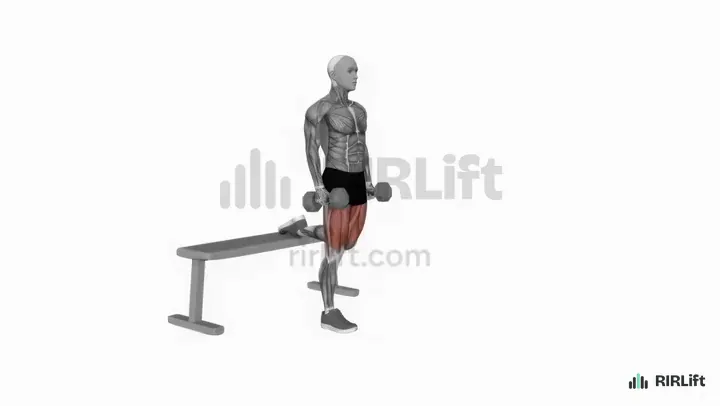
Bulgarian Split Squat

Quads, Glutes

Every push, ollie and landing loads one leg more than the other, and most skaters have a much stronger front or back foot. The Bulgarian split squat trains each leg on its own, heavier than any bodyweight move, with a bench and two dumbbells.

How to do it

  1. Pick up two dumbbells and place the top of your back foot on a bench behind you.
  2. Bend the front knee and sink until the back knee almost reaches the floor.
  3. Keep the front heel planted and the knee pointing over your toes.
  4. Rise by pressing through the front foot. Finish one leg, then the other.

Cues

  • Front heel heavy
  • Sink straight down
  • Knee over toes

Common mistakes

  • Letting the front heel lift: shift your weight back toward the heel and step the front foot further out.
  • Only training your strong stance leg harder: do the same reps on both, starting with the weaker leg.

Swap for: Dumbbell Split Squat, Reverse Lunge, Step-Up

Single-leg strength and knee control

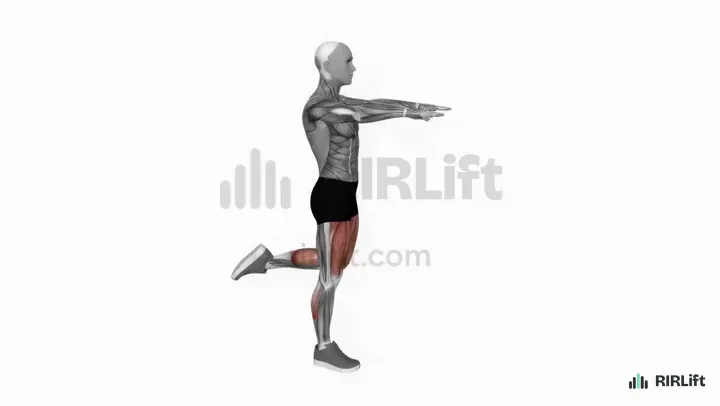
Skater Squat

Quads, Glutes

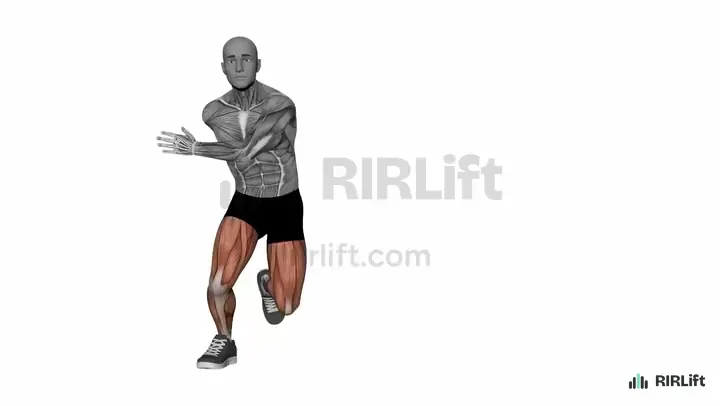
The skater squat is a one-leg squat with the free knee lowering behind you, which builds the strength to land on one foot and ride out of it. Holding your arms or a light weight out in front lets you sit back and stay balanced.

How to do it

  1. Stand on one leg with the other knee bent so the foot is behind you, arms reaching forward as a counterweight.
  2. Sit your hips back and bend the standing knee, lowering the back knee toward the floor.
  3. Go until the back knee lightly touches a pad or the floor, chest leaning forward.
  4. Push through the standing foot to rise, without touching the back foot down.

Cues

  • Arms forward to balance
  • Back knee taps the pad
  • Stand up through the heel

Common mistakes

  • Dropping fast and bouncing off the floor: lower in three seconds and just touch.
  • Standing knee caving inward: aim it over your middle toes and reduce depth until it stays.

Swap for: Pistol Squat, Bulgarian Split Squat, Step-Up

Single-leg strength, full depth

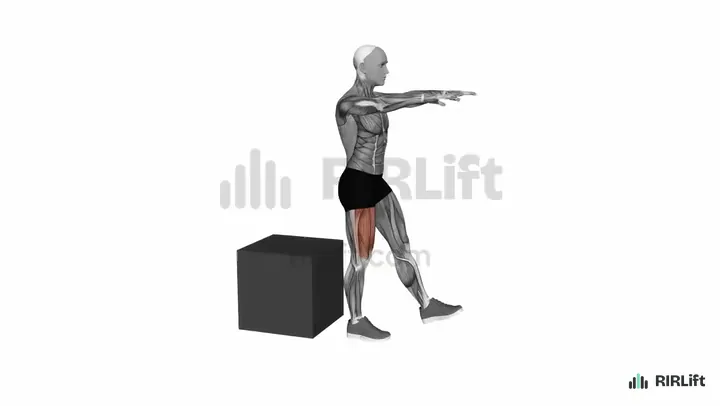
Pistol Squat

Quads, Glutes

Sitting to a box on one leg trains the deep, single-leg squat that a hard landing forces you into. Using a box sets your depth and lets you build up before trying a full pistol.

How to do it

  1. Stand on one leg with a box or bench just behind you, the other leg held out in front of you.
  2. Reach your arms forward and sit back slowly on one leg until you touch the box.
  3. Touch lightly without relaxing on it.
  4. Stand back up on the same leg, keeping the free leg off the floor.

Cues

  • Slow down, light touch
  • Arms reach forward
  • Free leg stays up

Common mistakes

  • Plopping onto the box: control the whole way down, and use a higher box until you can.
  • Rocking back to stand: lean forward and push through the whole foot.

Swap for: Skater Squat, Bulgarian Split Squat, Goblet Squat

Hamstrings and glutes, staggered stance

Dumbbell B-Stance RDL

Hamstrings, Glutes

A staggered-stance hinge loads mostly the front leg's hamstring and glute while the back foot gives you balance. Strong hamstrings help you snap the tail and absorb landings, and the staggered stance looks a lot like riding.

How to do it

  1. Hold a pair of dumbbells, put one foot slightly back with only the ball of that foot down.
  2. Keep the front knee soft and push your hips back, lowering the weights along the front shin.
  3. Stop when you feel a strong stretch behind the front thigh, back flat.
  4. Stand up by driving the front hip forward. Switch the stance after the set.

Cues

  • Most weight on the front foot
  • Hips back
  • Back foot is just a kickstand

Common mistakes

  • Sharing the weight evenly between both feet: the back foot only balances you.
  • Rounding the back to go lower: stop at the stretch.

Swap for: Single-Leg RDL, Romanian Deadlift, Dumbbell Romanian Deadlift

Pop: jumps and ankles

Pop is a jump plus a fast ankle snap. Do these early in a session, in low reps with full rest, so every jump is your best.

Pop, vertical power

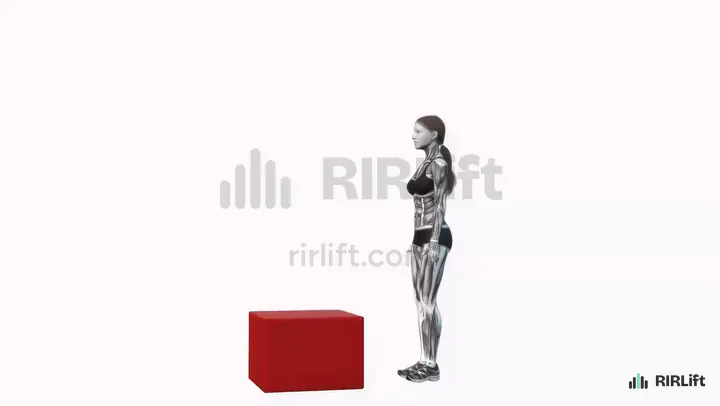
Box Jump

Quads, Glutes, Hamstrings

An ollie is a jump, and the higher you can jump the more room you have for the board to come up. Box jumps build that power with a soft landing on top of the box, saving your knees the drop.

How to do it

  1. Stand in front of a sturdy box, feet hip-width.
  2. Bend quickly into a quarter squat and swing your arms down and back.
  3. Explode up, swinging your arms, and land on top of the box in a soft squat.
  4. Stand tall, then step down.

Cues

  • Snap the hips and ankles
  • Land like you stomp a trick
  • Step down, never jump off

Common mistakes

  • Box too high so you land deep: choose a height you land on in a shallow squat.
  • High reps for conditioning: three to five quality jumps per set are enough.

Swap for: Jump Squat, Single-Leg Box Jump, Lateral Box Jump

Build a session with Box Jump

Pop and landing on one leg

Single-Leg Jump

Quads, Glutes, Calves

Pushing and bailing happen on one foot. Bounding sideways from one leg to the other builds spring in each ankle and knee, and teaches you to land on one foot without your knee caving in.

How to do it

  1. Stand on one foot with the knee bent and your arms ready.
  2. Push off sideways and bound to land on the other foot.
  3. Bend the landing knee and hip to absorb it quietly, swinging your arms across for balance.
  4. Push straight back the other way and keep alternating.

Cues

  • Land quietly
  • Knee over the middle toes
  • Push off the whole foot

Common mistakes

  • Knee drifting inward on landing: bound shorter until it stays in line.
  • Landing on a stiff leg: sink into each landing.

Swap for: Single-Leg Box Jump, Skater Hop, Box Jump

Ankle strength and pop

Single-Leg Calf Raise

Calves

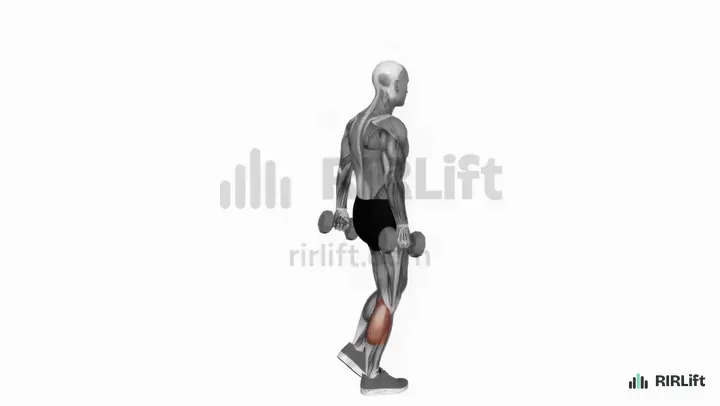
The ollie starts with a snap off the toes of your back foot, and the calves and ankle soak up every landing. Single-leg raises with a dumbbell build each side and balance at the same time.

How to do it

  1. Stand on one foot holding a dumbbell at your side, a hand on a wall for balance.
  2. Push up onto the ball of your foot as high as you can.
  3. Hold the top for a second.
  4. Lower slowly to the floor and repeat, then swap sides.

Cues

  • As high as you can go
  • One-second hold
  • Three seconds down

Common mistakes

  • Rocking onto the outer edge of your foot: press the big toe down.
  • Bending the knee to cheat: lock the leg straight.

Swap for: Standing Calf Raise, Kettlebell Calf Raise, Seated Calf Raise

Balance and hip control

The outside of your hip and your ankles make the small corrections that keep you on the board and keep your knee in line when you land. These are light, controlled moves that also work as a warm-up.

Balance and ankle control

Balance Board Lateral Squat

Quads, Glutes

Standing on a wobbling board and squatting side to side trains the same small ankle and hip corrections you make on a board, but in a controlled setting with load and reps.

How to do it

  1. Stand on a balance board with feet about shoulder-width, near the ends of the board.
  2. Find the level position and brace your trunk.
  3. Shift toward one foot and squat on that side while the board tilts under control.
  4. Return to level and shift to the other side.

Cues

  • Soft knees like riding
  • Eyes forward
  • Control the tilt

Common mistakes

  • Moving fast and letting the board slam down: make every tilt slow and quiet.
  • Locking the knees to balance: stay bent, as you do on a skateboard.

Swap for: Cossack Squat, Dumbbell Lateral Lunge, Skater Squat

Hip strength, knee alignment

Lateral Band Walk

Abductors

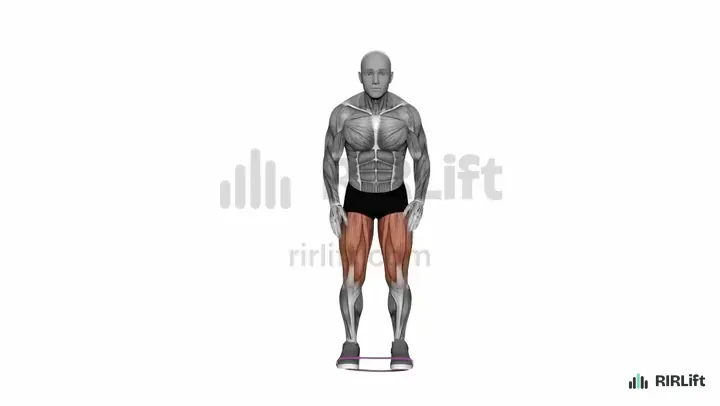
The muscles on the outside of your hip keep your knee from collapsing inward when you land. Walking sideways against a band trains them, and it doubles as a warm-up before a session.

How to do it

  1. Place a mini band around your legs just above the knees or at the ankles.
  2. Stand with feet hip-width and bend into a quarter squat.
  3. Step sideways with one foot, keeping tension on the band, then follow with the other foot.
  4. Take the set number of steps one way, then walk back.

Cues

  • Stay low
  • Toes forward
  • Never let the band go slack

Common mistakes

  • Standing up tall as you walk: keep the quarter squat the whole time.
  • Dragging the trailing foot so the band slackens: step it in under control.

Swap for: Standing Side Leg Raise, Band Standing Hip Abduction, Clamshell

Hip strength, standing balance

Standing Side Leg Raise

Abductors

Raising one leg sideways while standing on the other works the hip muscles on both legs at once: one lifts, the other holds you level. It needs nothing and fits into any warm-up.

How to do it

  1. Stand tall, a hand on a wall or rail for balance.
  2. Keep both legs straight and the toes of the moving leg pointing forward.
  3. Lift the outside leg sideways as high as you can without leaning.
  4. Lower slowly and repeat, then switch legs.

Cues

  • Torso stays upright
  • Toes forward, not up
  • Slow lowering

Common mistakes

  • Leaning your torso the other way to raise the leg higher: keep the range small and upright.
  • Turning the toes toward the ceiling: point them forward so the right muscles work.

Swap for: Lateral Band Walk, Band Standing Hip Abduction, Fire Hydrant

Trunk and rotation

A stable trunk holds you together on landings, and fast hip rotation drives spins and shove-its. One hold and one throw cover both.

Trunk stability

Side Plank

Abs

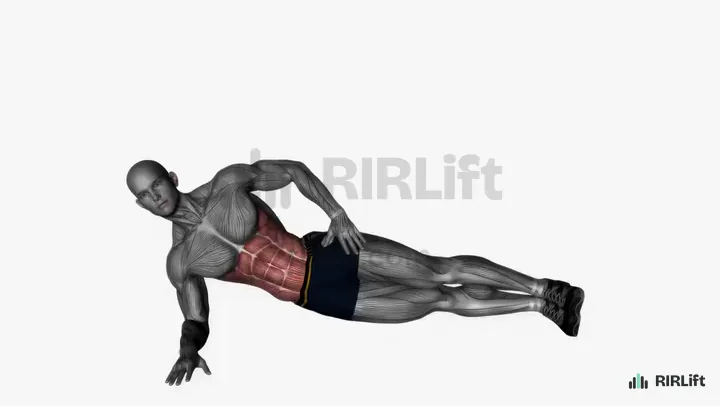
Your trunk links your legs to your shoulders for every turn and landing. The side plank strengthens the sides of your trunk and hips with no equipment.

How to do it

  1. Lie on one side, forearm on the floor under your shoulder, feet stacked.
  2. Raise your hips until your body is straight from head to feet.
  3. Hold the position, breathing steadily.
  4. Lower, rest, and switch sides.

Cues

  • Elbow under shoulder
  • Push the hips forward
  • Steady breathing

Common mistakes

  • Hips sagging toward the floor: lift and hold a shorter time.
  • Rolling forward onto your chest: stack your shoulders and hips.

Swap for: Copenhagen Plank, Dumbbell Side Plank, Pallof Press

Rotational power

Med Ball Rotational Throw

Abs

Shove-its, 180s and turning at speed all start with your hips and trunk rotating fast. Throwing a medicine ball into a wall trains that rotation as one explosive move.

How to do it

  1. Stand side-on to a solid wall, about an arm's length plus a step away, holding a medicine ball at your hip.
  2. Rotate away from the wall, loading your back hip.
  3. Turn your hips hard toward the wall and throw the ball with your arms following.
  4. Catch the rebound, reset, and repeat. Switch sides after the set.

Cues

  • Hips turn first
  • Throw hard every rep
  • Both sides equally

Common mistakes

  • Throwing with just the arms: the hips should turn before the ball leaves.
  • Using a ball so heavy it moves slowly: pick a weight you can throw fast.

Swap for: Cable Woodchop, Landmine Twist, Med Ball Woodchop

Upper body

Your arms catch you when you bail. One push exercise keeps them strong enough.

Upper-body strength for falls

Push-Up

Chest

Skaters fall, and strong arms, chest and shoulders help you catch yourself and push back up. Push-ups train them anywhere.

How to do it

  1. Set your hands slightly wider than shoulders and walk your feet back into a plank.
  2. Lower your body as one unit, elbows angling back.
  3. Stop with your chest an inch from the ground.
  4. Push the floor away until your arms are straight.

Cues

  • Rigid body
  • Elbows angled back
  • Full range

Common mistakes

  • Hips leading the way up: squeeze your glutes so the body moves as one piece.
  • Flaring the elbows straight out: tuck them to about 45 degrees.

Swap for: Incline Push-Up, Kneeling Push-Up, Explosive Push-Up

Build a session with Push-Up

Put them together: example sessions

Each session below picks from the exercises above for one situation, with the sets, reps, rest and RIR filled in. Open one in the session builder to change a pick, price it from a recent set, and add it to RIRLift.

Session 1

Gym twice a week next to skating

Open in the session builder
  • Workouts2× a week
  • Working sets30 a week
  • Per workout~40 min
  • EquipmentPlyo Box, Dumbbells, Medicine Ball, Resistance Bands

You skate four or more days a week and can get to a gym twice.

Skating already gives your legs plenty of jumps and landings, so the gym adds what the board does not: heavy single-leg strength, a loaded hinge, calves and trunk. Jumps come first while you are fresh. Strength sets stop 2 reps short of failure so you can still skate the next day. Day A is 15 hard sets and day B is 15.

Day A
ExerciseSets × repsRIRRest
Box Jump 3 × 4–5 3 90 s
Bulgarian Split Squat1 warm-up set firstReps per leg. 3 × 6–8 2 2 min
Dumbbell B-Stance RDLReps per side. 3 × 8–10 2 90 s
Single-Leg Calf RaiseReps per leg. 3 × 10–12 1 1 min
Side PlankSeconds per side. 3 × 20–40 2 45 s

Open Day A in the session builder

Day B
ExerciseSets × repsRIRRest
Med Ball Rotational ThrowReps per side. 3 × 5–6 3 1 min
Skater SquatReps per leg. 3 × 6–8 2 90 s
Single-Leg JumpReps per side. 3 × 4–5 3 90 s
Lateral Band WalkSteps each way. 3 × 10–15 2 45 s
Push-Up 3 × 8–15 2 1 min

Open Day B in the session builder

How to run it
Lift on days you skate less, or after a short session. Avoid lifting legs the day before you film or skate a contest.
How to progress
Add a rep each week until you reach the top of the range, then add 5 pounds per dumbbell. Keep jump reps the same and focus on height.

Session 2

No gym: a bodyweight session at home or the park

Open in the session builder
  • Workouts2× a week
  • Working sets32 a week
  • Per workout~35 min
  • EquipmentBodyweight

You have no gym and no weights, just a bench, a step and your body.

Without weights, single-leg squats are the strength work: the skater squat and the box pistol are hard enough to build real leg strength. Single-leg hops add pop, and side planks and push-ups cover the rest. Stopping 1 to 2 reps short of failure keeps it hard but leaves you able to skate. The session is 16 hard sets.

Bodyweight
ExerciseSets × repsRIRRest
Single-Leg JumpReps per side. 3 × 4–5 3 1 min
Skater SquatReps per leg. 3 × 6–12 2 1 min
Pistol SquatReps per leg. To a bench. 3 × 5–8 2 1 min
Standing Side Leg RaiseReps per leg. 2 × 12–15 1 30 s
Side PlankSeconds per side. 2 × 20–45 1 30 s
Push-Up 3 × 8–20 1 1 min
How to run it
Do it twice a week, before a short skate or on a day off. It takes about 35 minutes.
How to progress
Add reps each week. When the skater squat reaches 12 per leg, lower more slowly or hold a water bottle or backpack out in front.

Session 3

Skating over 30: knees and ankles that keep up

Open in the session builder
  • Workouts2× a week
  • Working sets34 a week
  • Per workout~40 min
  • EquipmentResistance Bands, Dumbbells

You are back on the board after years off, or you skate in your thirties and forties and want your legs to recover faster between sessions.

Coming back, landings and long sessions feel hardest on the knees and ankles. This plan builds strength there slowly: controlled single-leg work, a balance board, hip strength, calves and a hinge, all with slow lowering and 3 reps in reserve so it never adds to the soreness. No jumps until the rest feels easy. The session is 17 hard sets.

Durability
ExerciseSets × repsRIRRest
Lateral Band WalkSteps each way. Warm-up. 2 × 10–15 3 30 s
Balance Board Lateral SquatReps per side. 3 × 6–8 3 1 min
Bulgarian Split SquatReps per leg. Three seconds down. 3 × 8–10 3 90 s
Dumbbell B-Stance RDLReps per side. 3 × 8–10 3 90 s
Single-Leg Calf RaiseReps per leg. 3 × 12–15 2 1 min
Side PlankSeconds per side. 3 × 20–30 2 45 s
How to run it
Do it twice a week on days between skate sessions. Warm up with the band walk and side leg raise.
How to progress
Add reps first, then weight. After six weeks, add box jumps at the start of each session and move to the gym plan if you have access.

Make it fit you

Questions

What exercises help with skateboarding?

Single-leg squats such as the Bulgarian split squat and skater squat, box jumps and single-leg hops for pop, calf raises for the ankle snap, a Romanian deadlift for the hamstrings, and side planks and band walks for trunk and hip control.

How do I get more pop on my ollie?

Technique matters most, but stronger legs and springier ankles help. Box jumps, single-leg hops and calf raises done early in a session, with full rest between sets, train the jump and the snap off the tail.

Is skateboarding good cardio?

Yes, especially longer sessions with lots of pushing and runs, which keep your heart rate up. Short sessions spent working one trick are more like interval work with long rests.

Should skateboarders lift weights?

Yes, in small doses. One or two short sessions a week of single-leg strength, a hinge and calf work make landings feel more solid and add to your pop, without taking time from the board.

Can I do a skateboarding workout without a gym?

Yes. Skater squats, box pistols, single-leg hops, side leg raises, side planks and push-ups need only a bench or step. The bodyweight plan on this page puts them in one session.