Exercises for soccer players: speed, strength and durable legs

The best exercises for soccer are the back squat and Bulgarian split squat for sprint and jump strength, the Nordic hamstring curl and single-leg Romanian deadlift for the hamstrings, the Copenhagen plank for the groin, box jumps and skater hops for power and cutting, and chin-ups and the Pallof press for the upper body and trunk. Lift three times a week in the off-season and once or twice in season, stopping sets 2 to 3 reps short of failure so your legs are ready for the pitch.

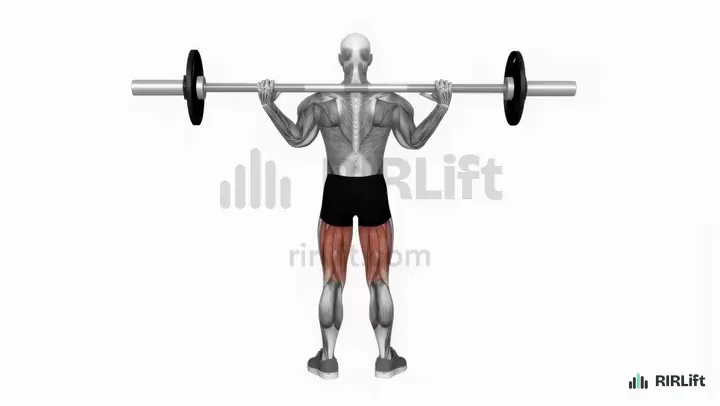
  1. Barbell Back Squat Quads, Glutes, Adductors
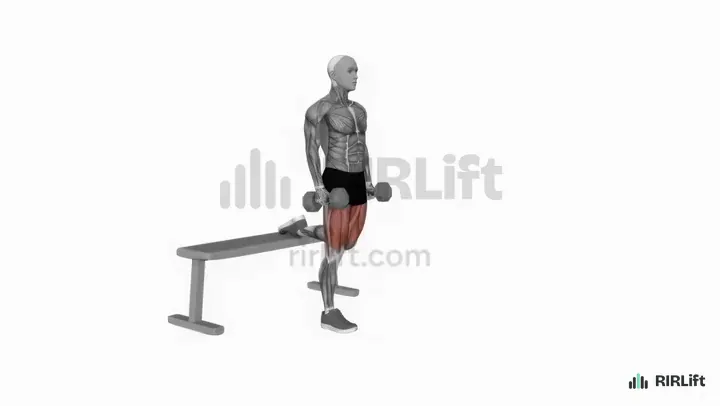
  2. Bulgarian Split Squat Quads, Glutes
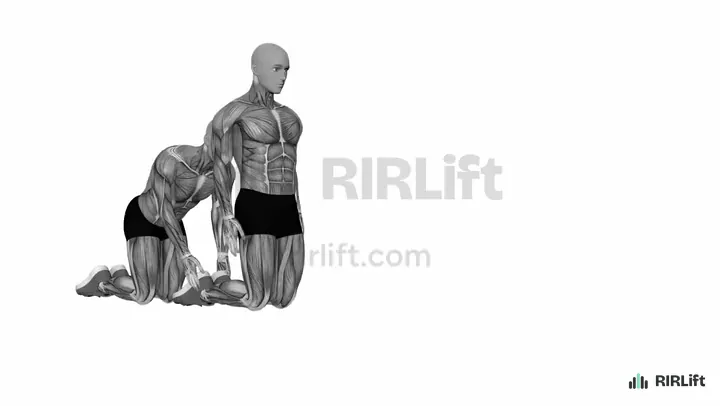
  3. Nordic Hamstring Curl Hamstrings
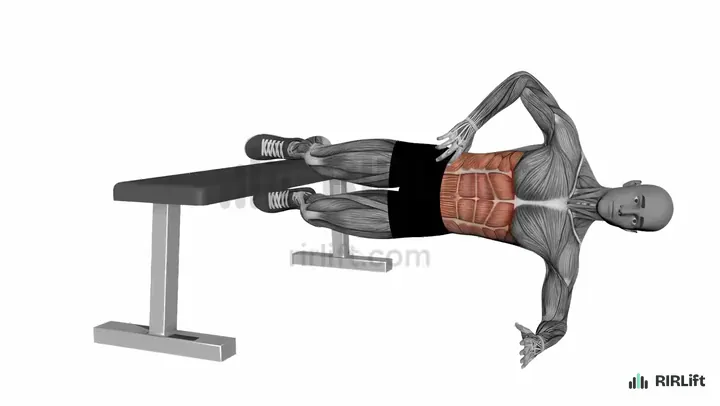
  4. Copenhagen Plank Adductors, Abs
  5. Single-Leg RDL Hamstrings, Glutes
  6. Box Jump Quads, Glutes, Hamstrings
  7. Skater Hop Glutes, Quads, Abductors
  8. Chin-Up Lats

Leg strength for sprinting and jumping

Strong legs push harder into the ground, and that is what makes you quicker over the first few yards. One heavy squat and one single-leg lift cover it.

Leg strength for acceleration

Barbell Back Squat

Quads, Glutes, Adductors

The first steps of a sprint and the jump for a header both come from strong quads and glutes. The back squat is the most direct way to build that strength, and low reps keep it from leaving your legs heavy for practice.

How to do it

  1. Set the bar across your upper back, below the bony knob of your neck, and walk it out of the rack.
  2. Stand with feet about shoulder-width, toes turned out slightly, and take a big breath into your belly.
  3. Sit down between your heels until your thighs reach at least parallel.
  4. Drive up through the midfoot, keeping your chest and hips rising at the same rate.

Cues

  • Brace before every rep
  • Knees track over the toes
  • Stand up fast

Common mistakes

  • Cutting depth as the weight climbs: keep the same depth on every set and lighten the bar if needed.
  • Letting the knees cave in on the way up: push them out over the middle toes.

Swap for: Front Squat, Goblet Squat, Trap Bar Deadlift

Single-leg strength for cutting and striking

Bulgarian Split Squat

Quads, Glutes

Almost everything in a match happens on one leg: planting to cut, pushing off to sprint, balancing to strike the ball. The split squat with the back foot raised builds each leg on its own, so a weaker side can't hide behind the stronger one.

How to do it

  1. Rest the laces of your back foot on a bench and plant the front foot a long step forward.
  2. Hold dumbbells at your sides and sink until the rear knee is just above the floor.
  3. Press through the front heel and midfoot to return to the top.
  4. Complete the set on one leg before you switch.

Cues

  • Sink straight down
  • Front knee follows the toes
  • Weight on the front foot

Common mistakes

  • Pushing off the back foot: it only balances you.
  • Going so heavy the front knee wobbles in: drop the load and own the position.

Swap for: Dumbbell Split Squat, Reverse Lunge, Step-Up

Acceleration conditioning

Sled Push

Quads, Glutes

Pushing a sled trains the forward lean and powerful leg drive of the first few strides, with almost no landing stress. Short, hard pushes build acceleration; longer ones add conditioning.

How to do it

  1. Grip the sled's posts with your arms straight or bent and lean forward.
  2. Drive one knee forward and push the ground back with the other foot.
  3. Take quick, powerful steps on the balls of your feet.
  4. Push for the set distance, then walk back and rest.

Cues

  • Low body angle
  • Short, fast steps
  • Push the ground behind you

Common mistakes

  • Standing upright and pushing with the arms: lean into the sled.
  • Loading it so heavy you can only shuffle: use a weight you can drive at speed.

Swap for: Sled Pull, Treadmill Run, Stationary Bike

Build a session with Sled Push

Hamstrings, groin and calves

These are the muscles soccer tires out most, so they get their own exercises. The Nordic curl and single-leg RDL cover the hamstrings, the Copenhagen plank the groin, and calf raises the ankles.

Eccentric hamstring strength

Nordic Hamstring Curl

Hamstrings

The Nordic curl loads the hamstrings while they lengthen under your bodyweight, the same kind of work they do when you decelerate a sprint. It is one of the most common hamstring exercises in soccer programs, and a few slow reps a week are enough.

How to do it

  1. Kneel on a pad with your ankles held down by a partner or a fixed bar.
  2. Keep a straight line from knees to shoulders with your hips extended.
  3. Lower your body toward the floor as slowly as you can, resisting with the hamstrings.
  4. Catch yourself with your hands when you can't hold any longer, then push back up and repeat.

Cues

  • Hips stay straight
  • Fight the fall the whole way
  • Catch with your hands

Common mistakes

  • Bending at the hips to shorten the lever: keep the hips locked forward.
  • Doing many reps after a hard practice: keep it to a few quality reps on a fresh day.

Swap for: Glute Ham Raise, Lying Leg Curl, Stability Ball Leg Curl

Hamstring and balance on one leg

Single-Leg RDL

Hamstrings, Glutes

Sprinting loads the hamstrings hardest just before your foot hits the ground, and long matches make them tired. The single-leg RDL strengthens the hamstring through a long range while your standing ankle and hip learn to hold steady.

How to do it

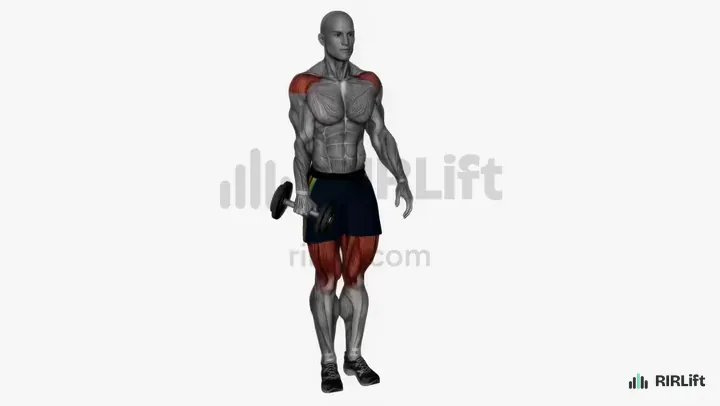
  1. Stand on one leg holding a dumbbell in the opposite hand, standing knee slightly soft.
  2. Tip your chest forward from the hip while the free leg extends behind you.
  3. Lower until you feel a strong stretch in the standing hamstring.
  4. Drive the hip forward to come back to tall, then repeat.

Cues

  • Long line from head to back heel
  • Hips level
  • Push the floor to stand

Common mistakes

  • Opening the hips toward the side: keep the back toes pointing at the floor.
  • Rounding the back to reach lower: stop where your back stays flat.

Swap for: Dumbbell Romanian Deadlift, Dumbbell B-Stance RDL, Romanian Deadlift

Adductor strength for passing and cutting

Copenhagen Plank

Adductors, Abs

Every inside-foot pass, long switch and sharp cut loads the groin muscles on the inside of the thigh. The Copenhagen plank strengthens them in a short hold you can do anywhere with a bench.

How to do it

  1. Lie on your side and place the inner edge of your top knee or ankle on a bench.
  2. Rest your bottom forearm on the floor under your shoulder.
  3. Raise your hips so your body is straight from head to top foot.
  4. Hold the position, lower with control, and repeat on the other side.

Cues

  • Squeeze the top leg down
  • Keep hips in line
  • Knee version first

Common mistakes

  • Holding the long-lever ankle version before you are ready: start at the knee.
  • Rolling the hips back: keep them stacked.

Swap for: Side Plank, Hip Adduction Machine, Dumbbell Lateral Lunge

Calf and ankle strength for running

Single-Leg Calf Raise

Calves

Your calves and Achilles absorb and return force on every stride, and a match asks for thousands of them. Single-leg raises load each calf fully without needing heavy equipment.

How to do it

  1. Stand on one foot on the edge of a step, holding a rail or wall lightly for balance.
  2. Let the heel drop below the step for a full stretch.
  3. Rise as high as you can onto the ball of the foot.
  4. Pause at the top, lower slowly, and repeat before switching feet.

Cues

  • Full stretch at the bottom
  • Pause at the top
  • Slow on the way down

Common mistakes

  • Bouncing out of the bottom: pause for a second in the stretch.
  • Rolling to the outside of the foot: keep pressure through the big toe.

Swap for: Standing Calf Raise, Dumbbell Standing Calf Raise, Leg Press Calf Raise

Power and change of direction

Jumps turn new strength into speed. Do them first in the session, when you are fresh, and keep every rep sharp.

Vertical power for headers and first steps

Box Jump

Quads, Glutes, Hamstrings

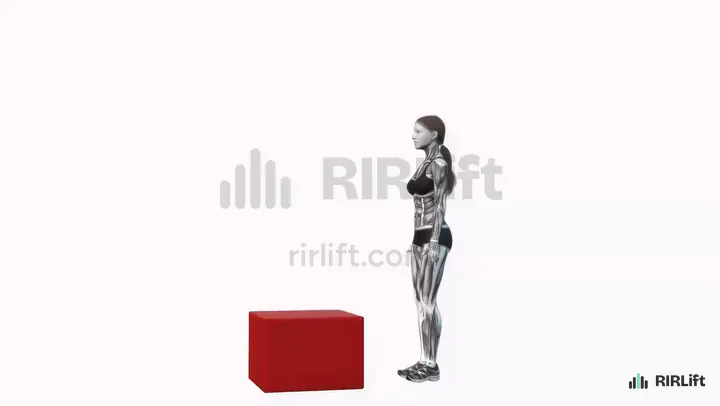
Box jumps teach you to produce force fast and land safely. The box lets you jump hard without the pounding of landing from full height, which keeps the reps fresh.

How to do it

  1. Stand a short step from a sturdy box with your feet about hip-width.
  2. Swing your arms back as you dip into a quarter squat.
  3. Throw the arms forward and jump up, landing softly on the box with both feet.
  4. Stand tall, then step down rather than jumping back down.

Cues

  • Load and explode
  • Land quiet
  • Step down every rep

Common mistakes

  • Choosing a box so tall you land in a deep squat: pick a height you land on with hips above knees.
  • Rushing reps: reset fully between jumps.

Swap for: Jump Squat, Lateral Box Jump, Single-Leg Box Jump

Build a session with Box Jump

Lateral power and landing control

Skater Hop

Glutes, Quads, Abductors

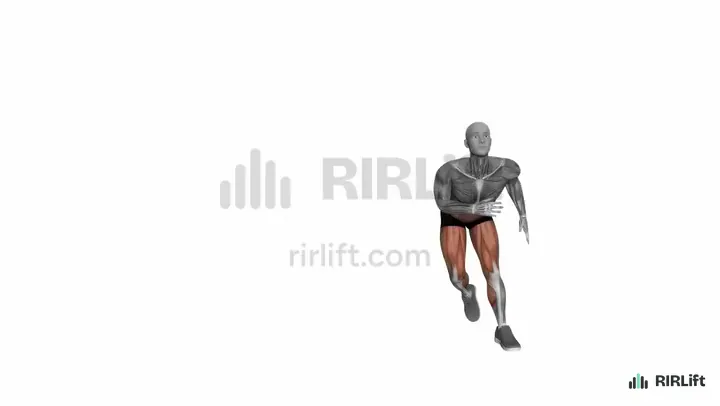
Changing direction means pushing off one foot sideways and landing on the other. Skater hops train that exact pattern and teach you to stick a single-leg landing without the knee caving in.

How to do it

  1. Stand on your right leg in a slight squat.
  2. Push off sideways to jump to your left, landing on your left foot.
  3. Stick the landing for a beat with the knee over the toes.
  4. Push back the other way and keep alternating.

Cues

  • Push sideways, not up
  • Stick each landing
  • Knee stays over the foot

Common mistakes

  • Landing stiff-legged: absorb with the hip and knee.
  • Letting the landing knee fall inward: shorten the jump until it stays in line.

Swap for: Dumbbell Lateral Lunge, Lateral Box Jump, Cossack Squat

Upper body and trunk

A little upper-body work goes a long way in soccer: one pull, one push and one anti-rotation exercise keep you strong in contact.

Upper-body pulling for shielding the ball

Chin-Up

Lats

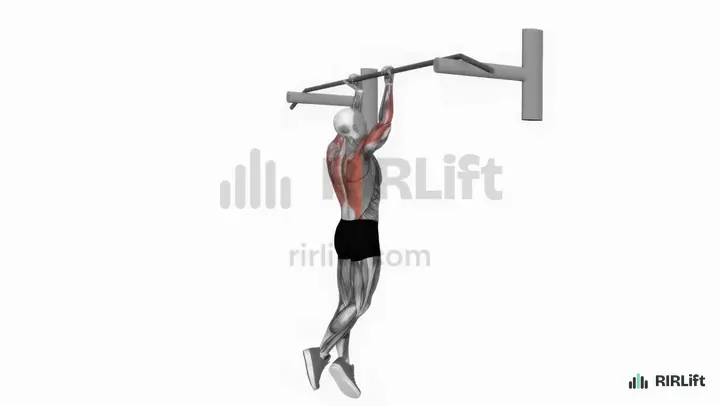
Holding off a defender and winning shoulder-to-shoulder challenges uses the upper back and arms. Chin-ups build pulling strength with nothing but a bar and your bodyweight.

How to do it

  1. Grip the bar with palms facing you, hands about shoulder-width.
  2. Start from a full hang with straight arms.
  3. Pull your chest toward the bar until your chin clears it.
  4. Lower slowly to a full hang before the next rep.

Cues

  • Chest to the bar
  • Full hang between reps
  • No kicking

Common mistakes

  • Stopping short of straight arms: lower all the way down.
  • Craning the chin over the bar: lift the body, not the neck.

Swap for: Pull-Up, Lat Pulldown, Inverted Row

Build a session with Chin-Up

Upper-body pushing strength

Flat Dumbbell Press

Chest

Upper-body strength helps you hold position and fend off contact. Dumbbells let each arm work on its own and are easy on the shoulders.

How to do it

  1. Lie back on a flat bench holding two dumbbells beside your chest.
  2. Plant your feet and set your shoulder blades back and down.
  3. Press the dumbbells up until your arms are straight above your chest.
  4. Lower under control until they reach chest height.

Cues

  • Shoulder blades pinned
  • Elbows at about 45 degrees
  • Control the lowering

Common mistakes

  • Flaring the elbows straight out to the side: tuck them slightly.
  • Bouncing the dumbbells off the chest: pause briefly at the bottom.

Swap for: Push-Up, Floor Press, Incline Dumbbell Press

Trunk control under contact

Pallof Press

Abs

When you get bumped while running or shooting, your trunk has to resist the twist. The Pallof press builds that control without any spinal bending.

How to do it

  1. Stand side-on to a cable set at chest height, handle held at your chest.
  2. Step out until the cable pulls firmly.
  3. Push the handle straight out and hold it on your midline.
  4. Bring it back to the chest and repeat, then face the other way.

Cues

  • Don't let it turn you
  • Tall posture
  • Exhale on the push

Common mistakes

  • Rotating toward the stack: reduce weight or step in.
  • Holding your breath the whole set: breathe out on each press.

Swap for: Side Plank, Dead Bug, Plank

Put them together: example sessions

Each session below picks from the exercises above for one situation, with the sets, reps, rest and RIR filled in. Open one in the session builder to change a pick, price it from a recent set, and add it to RIRLift.

Session 1

Off-season: three lifting days

Open in the session builder
  • Workouts3× a week
  • Working sets47 a week
  • Per workout~45 min
  • EquipmentPlyo Box, Barbells, Dumbbells, Pull-Up Bar +3

Your season is over or hasn't started, team practice is light, and you have six to ten weeks to build strength.

With no matches, this is when you can lift hardest. Three full-body sessions each start with jumps while you are fresh, then a heavy main lift, then single-leg and hamstring work. Sets stop 1 to 2 reps short of failure, which builds strength quickly but still leaves you able to run on the days in between.

Day 1
ExerciseSets × repsRIRRest
Box JumpStep down. 3 × 3–5 3 90 s
Barbell Back Squat2 warm-up sets first 4 × 4–6 2 3 min
Single-Leg RDLPer leg. 3 × 8–10 2 75 s
Chin-Up 3 × 5–10 2 2 min
Copenhagen PlankSeconds per side. 2 × 20–30 2 45 s

Open Day 1 in the session builder

Day 2
ExerciseSets × repsRIRRest
Skater HopPer side. Stick it. 3 × 4–6 3 1 min
Bulgarian Split SquatPer leg. 3 × 6–10 1 90 s
Nordic Hamstring Curl 3 × 3–6 1 2 min
Flat Dumbbell Press 3 × 6–10 2 90 s
Single-Leg Calf RaisePer leg. 3 × 10–15 1 45 s

Open Day 2 in the session builder

Day 3
ExerciseSets × repsRIRRest
Sled Push20 m pushes. 5 × 1 2 2 min
Barbell Back Squat2 warm-up sets first 3 × 3–5 2 3 min
Single-Leg RDLPer leg. 3 × 8–10 2 75 s
Chin-Up 3 × 5–10 2 2 min
Pallof PressPer side. 3 × 10–12 2 45 s

Open Day 3 in the session builder

How to run it
Lift Monday, Wednesday and Friday, or any three days with a day between them. Keep running and ball work on the other days.
How to progress
Add weight to the squat and split squat when every set reaches the top of its rep range. Add one Nordic rep a week until you reach the top of the range.

Session 2

In-season: one or two short sessions around matches

Open in the session builder
  • Workouts2× a week
  • Working sets19 a week
  • Per workout~25 min
  • EquipmentPlyo Box, Barbells, Pull-Up Bar, Dumbbells +1

You play a match on the weekend and train with the team two or three times a week.

In season, your legs belong to the team. This plan keeps the strength you built with two short sessions of fewer sets and lower effort: every set stops 3 reps short of failure, and there is no hard eccentric work late in the week. Session one falls two days after a match; session two, if you do it, is lighter and at least three days before the next game.

After the Match
ExerciseSets × repsRIRRest
Box Jump 2 × 3 3 90 s
Barbell Back Squat2 warm-up sets first 3 × 3–4 3 3 min
Nordic Hamstring Curl 2 × 3–4 3 2 min
Chin-Up 2 × 5–8 3 90 s
Copenhagen PlankSeconds per side. 2 × 20 3 45 s

Open After the Match in the session builder

Mid-Week Top-Up
ExerciseSets × repsRIRRest
Skater HopPer side. 2 × 4–5 3 1 min
Bulgarian Split SquatPer leg. 2 × 6–8 3 90 s
Single-Leg Calf RaisePer leg. 2 × 10–12 3 45 s
Pallof PressPer side. 2 × 10 3 45 s

Open Mid-Week Top-Up in the session builder

How to run it
Do the main session two days after a match. Add the short one mid-week only if you feel fresh, and never the day before a game.
How to progress
Keep loads steady rather than chasing new records. If the bar moves slower than usual, drop a set.

Session 3

Stronger hamstrings and groin

Open in the session builder
  • Workouts2× a week
  • Working sets23 a week
  • Per workout~30 min
  • EquipmentDumbbells, Adjustable Cable, Pull-Up Bar

You play often, your hamstrings or groin feel tight after matches, and you want them stronger.

This plan spends most of its sets on the muscles that tire first in soccer: hamstrings through long-range and lengthening work, adductors through side planks and lateral work, and calves. Heavy bilateral squats are left out so the sessions don't add leg fatigue that competes with that work. Sets stop 2 reps short of failure, and the Nordic curl stays at low reps so it never turns into a grind.

Session A
ExerciseSets × repsRIRRest
Nordic Hamstring Curl 3 × 3–6 2 2 min
Single-Leg RDLPer leg. 3 × 8–12 2 75 s
Copenhagen PlankSeconds per side. 3 × 20–30 2 45 s
Single-Leg Calf RaisePer leg. 3 × 12–15 2 45 s

Open Session A in the session builder

Session B
ExerciseSets × repsRIRRest
Bulgarian Split SquatPer leg. 3 × 8–10 2 90 s
Skater HopPer side. 3 × 5–6 3 1 min
Pallof PressPer side. 2 × 10–12 2 45 s
Chin-Up 3 × 5–10 2 90 s

Open Session B in the session builder

How to run it
Do the two sessions on non-consecutive days away from matches. They work alongside your normal team training.
How to progress
Add Nordic reps first, then slow the lowering. Move from the knee to the ankle on the Copenhagen plank once a 30-second hold feels easy.

Make it fit you

Questions

undefined

undefined

undefined

undefined

undefined

undefined