Copenhagen plank alternatives: inner-thigh and side-core swaps for any level

The best Copenhagen plank alternative depends on why you are swapping it. For the inner thighs, the hip adduction machine in a gym or a band hip adduction at home trains the same adductors with load you can control; Cossack squats and lateral lunges add them in a deep stretch. If the Copenhagen is simply too hard right now, a regular side plank builds the side core and hip strength you need, and the dumbbell side plank hip dip makes it harder as you go.

What a Copenhagen plank alternative has to replace

Inner thighs and side core, on a bench

Copenhagen Plank

Adductors, Abs

Your top foot on a bench holds you up in a side plank, so your inner thigh and obliques work together. With your knee on the bench instead of your foot, the lever is shorter and it gets much easier.

How to do it

  1. Lie on your side next to a flat bench, propped on your bottom forearm with the elbow under your shoulder.
  2. Lay your straight top leg on the bench so the inside of your foot and ankle rest on it, and bring the bottom leg up under the bench.
  3. Press the top foot down into the bench and raise your hips until your body runs in one straight line from head to feet.
  4. Hold for the set's time or lower and raise your hips for reps, then turn over and do the other side.

Cues

  • Push the seat away with your knee
  • Hips stacked, not rolled back
  • Breathe while you hold

Common mistakes

  • Starting with the foot on the bench before you can hold a side plank: rest your knee on the bench instead until 30-second holds feel solid.
  • Hips drifting backward so the plank turns into a pike: keep your hips in line with your shoulders.

The Copenhagen plank is a side plank with your top leg on a bench, so the inner thigh of that top leg (your adductors) holds your whole body up while your obliques keep your trunk straight. The load sits on the inside of the knee or ankle, and it is hardest with the ankle on the bench and the bottom leg lifted. A replacement should load your adductors directly, or train the same side core, and let you start easier.

For your inner thighs

These load the adductors directly, from a machine you can add weight to, to a band and bodyweight squats.

Closest gym swap for inner thighs

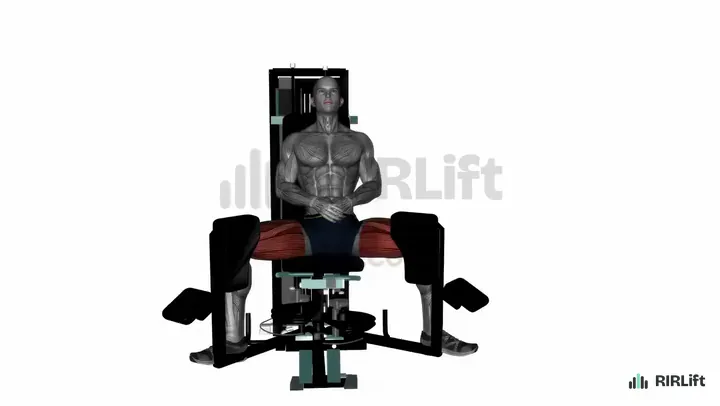
Hip Adduction Machine

Adductors

Seated, you squeeze the pads together with your knees, training the same adductors with a weight stack. It is easy to start light and add load in small steps, which the Copenhagen can't do.

How to do it

  1. Set the range lever so the pads start wide enough to give your inner thighs a stretch you can hold without strain, and pick the weight on the stack.
  2. Sit with your back and hips pressed into the back pad, put your feet on the footrests and place the inside of your knees against the pads.
  3. Hold the side handles and brace your stomach lightly so your hips stay planted.
  4. Squeeze your knees together in a smooth arc until the pads meet or nearly meet, and hold the squeeze for a moment.
  5. Let your legs open slowly back to the starting stretch, stopping just before the plates touch, then start the next rep.

Cues

  • Hips glued to the seat
  • Squeeze, pause, open slowly
  • Stop the stack from resting

Common mistakes

  • Setting the start too wide: if your hips lift or your groin pinches at the bottom, bring the range lever in a notch and add depth over a few weeks.
  • Slamming the pads together: close at a steady speed and pause, so the adductors do the work rather than momentum.
  • Letting the legs fly open: control the return for about two seconds; that stretch is where most of the work happens.

Home swap with a band

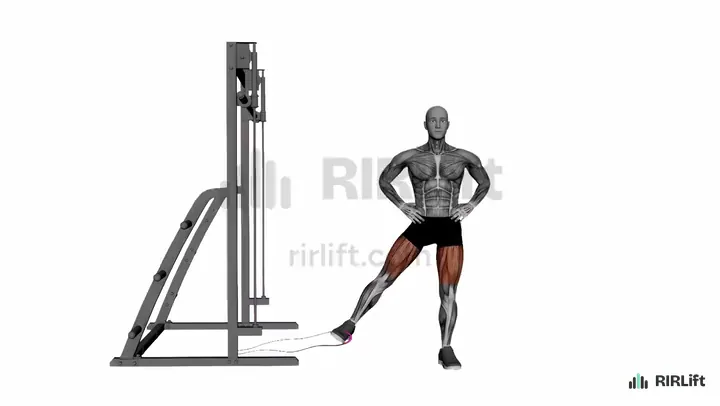
Band Hip Adduction

Adductors

With a band pulling your ankle out to the side, you sweep that leg across in front of the other. It trains the same adductors standing, with no strain on the inside of your knee.

How to do it

  1. Anchor a band low on a door or table leg and loop it around the ankle nearest the anchor.
  2. Step away until the band pulls your leg out to the side, and stand tall with your hands on your hips.
  3. Sweep the banded leg across the front of your standing leg, keeping the knee straight and toes forward.
  4. Let the band draw the leg back out slowly, stopping before the band goes slack, then repeat. Switch sides.

Cues

  • Sweep, do not swing
  • Torso stays upright
  • Slow return

Common mistakes

  • Leaning your whole body away from the band to finish the rep: only the leg moves.
  • Standing so close to the anchor that the band has no tension at the start: step out until it pulls from the first inch.

Inner thighs in a stretch, no equipment

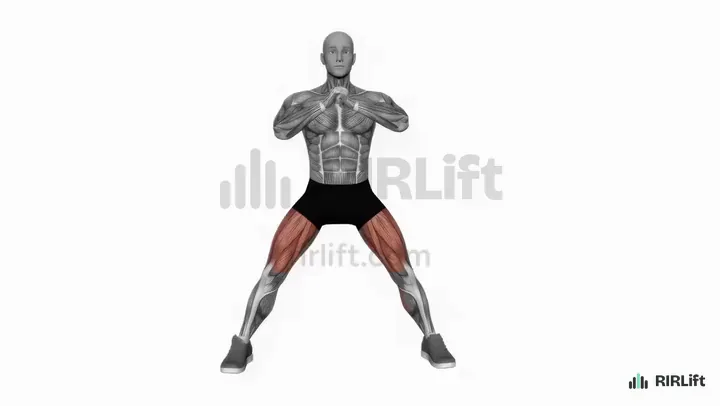
Cossack Squat

Quads, Adductors

You shift deep onto one bent leg while the other stays straight, which loads the straight leg's inner thigh while it is stretched. It builds the strength and mobility the Copenhagen needs.

How to do it

  1. Take a very wide stance, about twice the width of your shoulders, with the toes turned out a little.
  2. Bend your right knee and sit your hips down toward your right heel, letting the left leg straighten with the toes pointing up.
  3. Sink as deep as you can with the right foot flat and your chest lifted.
  4. Press the floor away with the right foot to return to the middle, then sit to the left.

Cues

  • Sit down, not forward
  • Flat foot on the bent side
  • Long leg stays straight

Common mistakes

  • Folding the chest down to the knee to get lower: hold a light weight out in front as a counterbalance instead.
  • Rushing from side to side: stop in the middle for a breath between reps.

Weighted inner-thigh swap

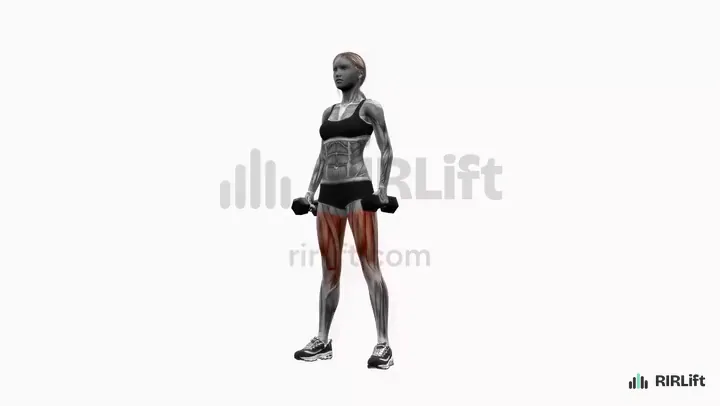
Dumbbell Lateral Lunge

Quads, Glutes, Adductors

Stepping out wide and sitting into one hip with dumbbells loads your adductors and glutes heavier than any plank. Pick it if inner-thigh size and strength is the goal.

How to do it

  1. Stand tall, feet under your hips, holding two dumbbells by your thighs.
  2. Take a big step out to one side, landing with your toes pointing forward or turned out slightly.
  3. Sit your hips back and down into that leg, bending the knee over your foot while the other leg stays straight with its foot flat.
  4. Lower until your bent thigh is near parallel to the floor, letting the dumbbells hang on either side of the working knee.
  5. Push hard through the whole foot of the bent leg to return to standing, then step out to the other side.

Cues

  • Sit back, not just down
  • Heel stays heavy
  • Straight leg stays long

Common mistakes

  • Knee caving in or shooting past the toes: push your hips back first and keep the knee tracking over your middle toes.
  • Heel lifting on the working foot: take a slightly shorter step and keep your weight toward the middle of the foot.
  • Rounding forward to reach depth: keep your torso upright and go only as low as your hips and inner thigh allow; depth improves with practice.

Wide squat for inner thighs

Sumo Squat

Quads, Glutes, Adductors

Holding a kettlebell at your chest in a wide stance, you sit straight down. It trains your inner thighs alongside your glutes and quads with one weight.

How to do it

  1. Stand with your feet wide, roughly one and a half to two times your shoulder width, toes turned out around 30–45 degrees.
  2. Hold a kettlebell by the horns at your chest; with a dumbbell, hold one end with both hands at your chest.
  3. Brace your stomach and sit straight down, pushing your knees out so they point the same way as your toes.
  4. Lower until your thighs are about level with the floor, or as deep as you can go with your chest up and heels down.
  5. Drive through your whole foot and squeeze your glutes to stand, keeping your knees pushed out on the way up.

Cues

  • Knees follow toes
  • Sit between your heels
  • Chest tall, squeeze to stand

Common mistakes

  • Knees caving in: keep them tracking over your toes; if they keep collapsing, narrow your stance a little or turn your toes out more.
  • Leaning forward to get deeper: stop where your torso stays upright; the depth comes from your hips opening, not from bending over.
  • Heels lifting: shift your weight back to your mid-foot and reduce the stance width until your whole foot stays down.

For your side core

If the Copenhagen is too hard, start here and add the bench later. If it was your core exercise, these keep that work going.

Easier swap for the side core

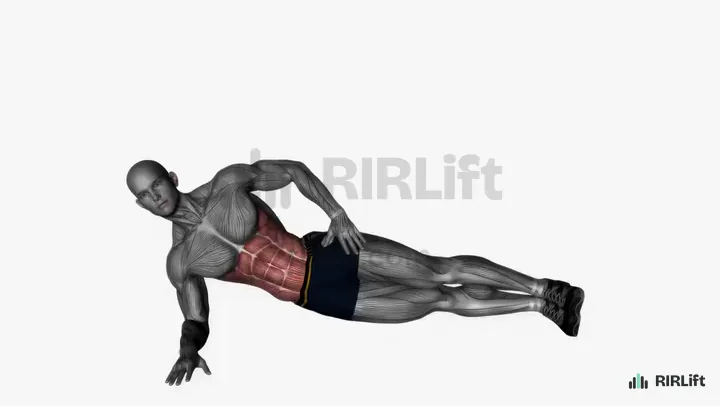
Side Plank

Abs

Both feet stay on the floor, so your obliques and hips hold you up without the adductor demand. Use it to build up to the Copenhagen, starting with knees down if you need to.

How to do it

  1. Lie on one side with your legs straight and your feet stacked, or with the top foot just in front of the bottom one.
  2. Put your forearm on the floor with the elbow right under your shoulder and your hand pointing forward.
  3. Brace your stomach and squeeze your glutes, then press through your forearm and foot to lift your hips.
  4. Keep your head, hips and feet lined up, chest facing forward, and breathe steadily.
  5. Lower your hips with control when the time is up, then switch sides.

Cues

  • Push the floor away
  • Hips high, not back
  • Head in line with spine

Common mistakes

  • Letting the hips sag toward the floor: end the set the moment you can no longer hold the line, and use the knee version until you can.
  • Rolling the chest toward the floor or the ceiling: keep your shoulders and hips stacked so you face straight ahead.
  • Shrugging into the bottom shoulder: press your forearm into the floor so your shoulder stays away from your ear.

Loaded side plank

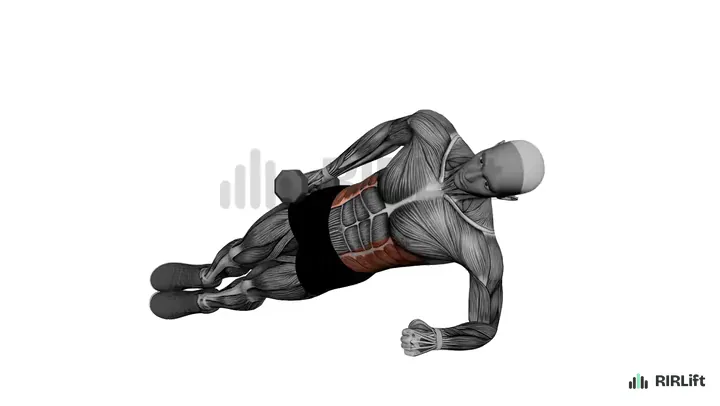
Dumbbell Side Plank

Abs

The side plank with a dumbbell resting on your top hip. It makes the hold harder without the bench, so you can keep progressing your side core.

How to do it

  1. Lie on your side propped on one elbow under your shoulder, legs straight and stacked.
  2. Rest a dumbbell on your top hip and hold it there with your top hand.
  3. Lift your hips until your body makes a straight line from head to feet.
  4. Hold that line for the target time, then lower and switch sides.

Cues

  • Elbow under shoulder
  • Hips high and stacked
  • Push the floor away

Common mistakes

  • Letting the hips sag or roll back: stop the set when either starts.
  • Using a dumbbell so heavy the hold drops to a few seconds: aim for at least 15 seconds of clean holding.

Harder side core with movement

Dumbbell Side Plank Hip Dip

Abs

In a side plank with a dumbbell on your hip, you lower your hip toward the floor and lift it past straight. Reps instead of a hold, and harder on your obliques than a plain side plank.

How to do it

  1. Set up in a side plank on your forearm, elbow under your shoulder, feet stacked.
  2. Rest a light dumbbell on your top hip, holding it in place with your top hand.
  3. Lower your hip toward the floor without touching down.
  4. Lift it back up past straight until your side is fully squeezed.
  5. Do all reps, then switch sides.

Cues

  • Elbow under shoulder
  • Hips forward, not back
  • Lift past straight

Common mistakes

  • Letting the hips drift backward: keep your body in one line from head to heels.
  • Dropping the hip all the way to the floor: stop an inch short and lift.

Outer hips to pair with them

The sessions below add one outer-hip exercise, so both sides of your hips get trained.

Outer hips, to pair with them

Band Standing Hip Abduction

Abductors

The Copenhagen trains the inside of your hips; this trains the outside. Pressing your knees out against a band in a half squat balances the inner-thigh work in the sessions below.

How to do it

  1. Place a mini loop just above your knees and stand with your feet about shoulder-width apart.
  2. Sink into a half squat with a slight forward lean and a flat back.
  3. Push your knees out against the loop as far as you can while your feet stay planted.
  4. Let the knees come back in slowly until they line up over your feet, then press out again.

Cues

  • Feet stay glued down
  • Knees push wide
  • Hold the half squat

Common mistakes

  • Standing up a little more every rep: keep the same squat depth from first to last.
  • Letting the knees snap back in: control the return so the band never pulls them past your feet.

Example sessions without the Copenhagen plank

Session 1

Gym, inner-thigh strength

Open in the session builder
  • Workouts2× a week
  • Working sets24 a week
  • Per workout~30 min
  • EquipmentDumbbells, Hip Adductor

You train in a gym and used Copenhagen planks for groin strength, and want inner-thigh work you can load.

Lateral lunges and sumo squats load your inner thighs with your glutes, the adduction machine works them directly, and a dumbbell side plank keeps the side core work. 12 working sets.

Hips and core
ExerciseSets × repsRIRRest
Dumbbell Lateral Lunge1 warm-up set firstReps are per side. 3 × 8–12 2 90 s
Sumo Squat 3 × 10–15 2 75 s
Hip Adduction MachineTwo-second return. 3 × 10–15 1 1 min
Dumbbell Side PlankSeconds per side. 3 × 20–40 1 45 s
How to run it
Once or twice a week, after your main squat or deadlift on a leg day, or as its own short session.
How to progress
When every set reaches the top of its range at the RIR shown, add the smallest weight jump next time. On the side plank, add 5 seconds per set before you use a heavier dumbbell.

Session 2

Home, building up to the Copenhagen

Open in the session builder
  • Workouts3× a week
  • Working sets36 a week
  • Per workout~25 min
  • EquipmentResistance Bands

You train at home with a band, and the Copenhagen plank is too hard or hurts the inside of your knee.

Band adductions train the inner thighs with nothing pressing on your knee, Cossack squats add them in a stretch, and side planks build the side core. Band abductions balance the outer hips. 12 working sets.

Hips and core
ExerciseSets × repsRIRRest
Band Hip AdductionSets are per leg. 3 × 15–20 1 45 s
Cossack SquatReps are per side. 3 × 6–10 2 1 min
Side PlankSeconds per side. 3 × 20–45 2 45 s
Band Standing Hip Abduction 3 × 15–20 1 45 s
How to run it
Two or three times a week. When you can hold a 45-second side plank on each side, try the knee-supported Copenhagen.
How to progress
Add reps or seconds to the top of each range, then use a thicker band and sink lower on the Cossack squat.

Session 3

Home, dumbbells

Open in the session builder
  • Workouts2× a week
  • Working sets24 a week
  • Per workout~30 min
  • EquipmentDumbbells

You have a pair of dumbbells at home and want a short hip and core session to replace the Copenhagen.

Lateral lunges and sumo squats load your inner thighs with the weight you have, Cossack squats take them deep, and side plank hip dips train the side core with reps. Rest is short because the loads are light. 12 working sets.

Hips and core
ExerciseSets × repsRIRRest
Dumbbell Lateral Lunge1 warm-up set firstReps are per side. 3 × 10–15 1 75 s
Sumo Squat 3 × 12–20 1 1 min
Cossack SquatReps are per side. 3 × 8–12 1 1 min
Dumbbell Side Plank Hip DipReps are per side. 3 × 10–15 1 45 s
How to run it
Twice a week on non-consecutive days, after a lower-body workout or on its own.
How to progress
Add reps first, then a heavier dumbbell. On the hip dips, lift past straight and pause for a second before adding weight.

Make it fit you

Questions

What can I do instead of a Copenhagen plank?

For your inner thighs, use the hip adduction machine, band hip adductions or Cossack squats. If it is too hard, do side planks until you can hold 45 seconds, then return to it with your knee on the bench.

What is the Copenhagen adductor plank?

A side plank with your top leg resting on a bench, so the inner thigh of that leg holds you up. With your knee on the bench it is easier; with your ankle on it, much harder.

Are Cossack squats good for adductors?

Yes. Sitting deep onto one leg stretches and loads the inner thigh of the straight leg, and holding a weight in front makes it harder.

What exercise is similar to a plank?

The side plank, long-lever plank and dead bug all train your trunk to stay still. For the Copenhagen's inner-thigh work, though, you need an adductor exercise as well.

Is the side plank easier than the Copenhagen plank?

Yes, much easier, because both feet stay on the floor and your inner thighs barely work. It is the best place to start if the Copenhagen is too hard.