Exercises to tone thighs: front, back, inner and outer

The best exercises to tone thighs cover all four sides: the Bulgarian split squat and leg extension for the front, the single-leg Romanian deadlift and lying leg curl for the back, the lateral lunge, Cossack squat and adduction machine for the inner thigh, and the abduction machine and lateral band walk for the outer hip. Pick one from each group, do 2 to 4 sets of 8 to 20 reps, and train legs twice a week. Toned thighs are built muscle with less fat over it, so add weight or reps every few weeks.

  1. Bulgarian Split Squat Quads, Glutes
  2. Single-Leg RDL Hamstrings, Glutes
  3. Dumbbell Lateral Lunge Quads, Glutes, Adductors
  4. Cossack Squat Quads, Adductors
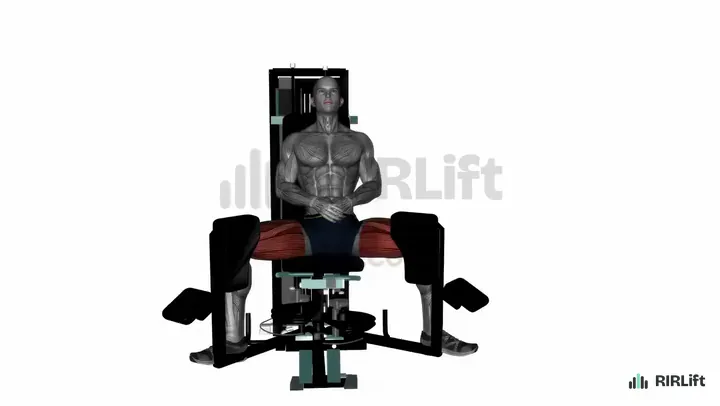
  5. Hip Adduction Machine Adductors
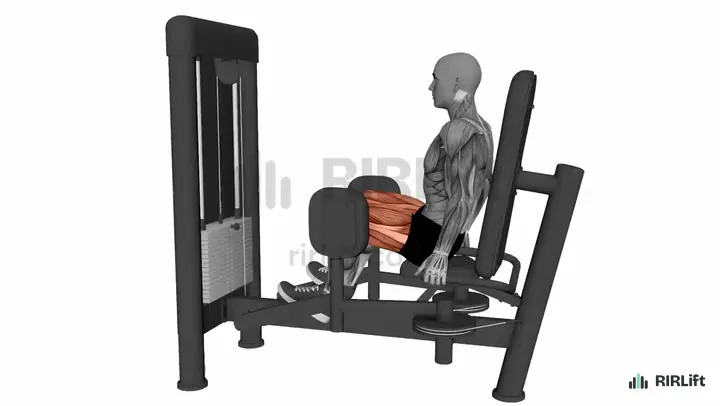
  6. Hip Abduction Machine Abductors
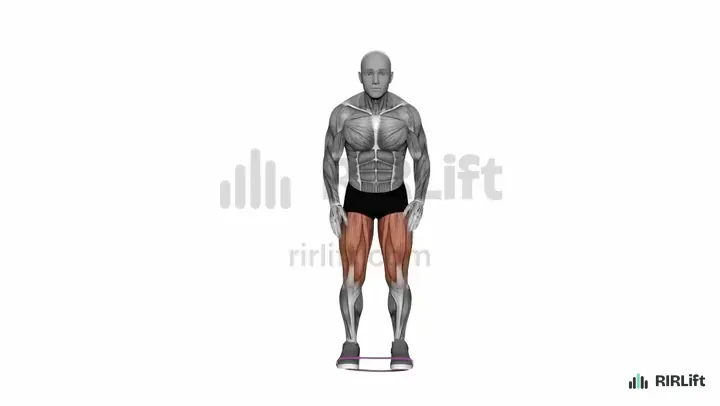
  7. Lateral Band Walk Abductors
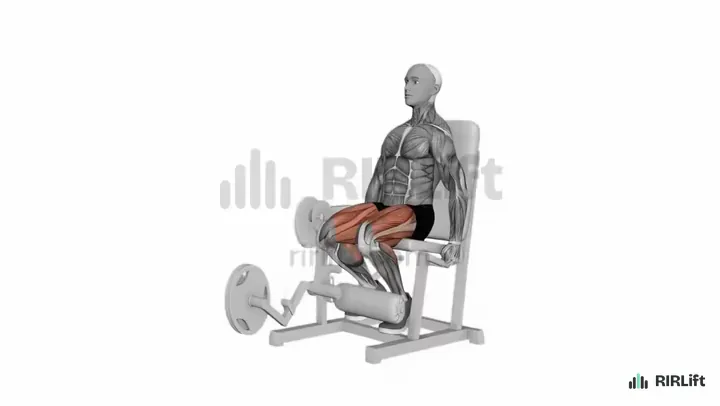
  8. Leg Extension Quads

Front of the thigh

The quads make up most of the front of your thigh, and they look firmest when trained through a deep bend. The Bulgarian split squat does that one leg at a time, the leg extension isolates the quads, and a wide-stance leg press loads them heavily with some inner thigh too.

Quads and glutes, rear-foot-elevated split squat

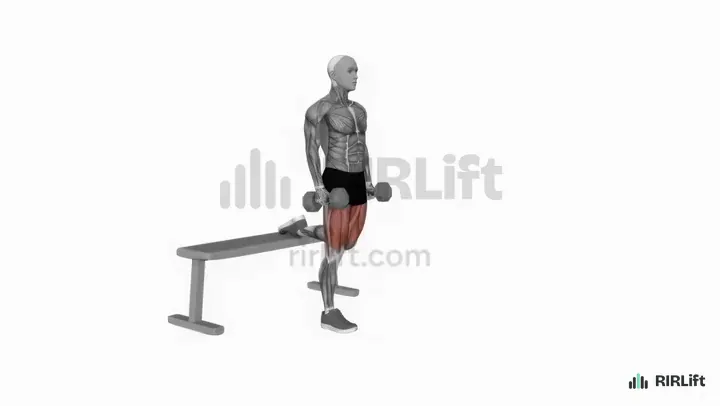
Bulgarian Split Squat

Quads, Glutes

With your back foot on a bench, the front thigh does almost all the work and bends deeply. It is the hardest single-leg move here and builds the front of the thigh with light dumbbells.

How to do it

  1. Set the top of your back foot on a bench and place your front foot a long stride ahead.
  2. Hold a dumbbell in each hand at your sides, and keep your front foot flat.
  3. Drop your back knee straight toward the floor until the front thigh is close to level.
  4. Press through the front foot to rise, then finish all reps before switching legs.

Cues

  • Go deep for the inner thigh
  • Front foot flat
  • Rear foot is just a kickstand

Common mistakes

  • Pushing up with the back leg: let it relax and make the front leg do the work.
  • Front knee collapsing inward: keep it pointed the same way as your toes.

Swap for: Dumbbell Split Squat, Step-Up, Reverse Lunge

Quads, machine extension

Leg Extension

Quads

The leg extension works the quads alone, with no help from the glutes, and keeps them loaded right up to a straight knee, the part of the range squats barely reach.

How to do it

  1. Sit with your knees at the pivot and the pad on your lower shins.
  2. Straighten both knees until your legs are level.
  3. Lower slowly. Build up the weight over 2 lighter sets.

Cues

  • Squeeze at the top
  • Control the drop

Common mistakes

  • Letting the stack slam between reps: keep tension on.

Swap for: Single-Leg Leg Extension, Sissy Squat

Quads, glutes and inner thigh, machine press

Wide-Stance Leg Press

Glutes, Quads

Placing your feet wide and high on the platform shifts the press toward the glutes and inner thigh. You can push it hard because your back is supported.

How to do it

  1. Sit in the leg press and place your feet high on the platform, wider than shoulder-width, flat and parallel.
  2. Release the safeties and lower the sled by bending your hips and knees together.
  3. Go as deep as you can while your lower back stays on the seat.
  4. Drive the platform away through your heels until your legs are straight but not locked.

Cues

  • Feet high and wide
  • Lower back stays down
  • Drive through the heels

Common mistakes

  • Letting your hips lift off the seat at the bottom: stop the rep just before that point.
  • Snapping the knees straight at the top: stop just short of locking out.

Swap for: Leg Press, Hack Squat, 45-Degree Leg Press

Back of the thigh

The hamstrings shape the back of your leg from the knee to the glute. Train them both ways: the single-leg Romanian deadlift stretches them from the hip, and the leg curl bends the knee against load.

Hamstrings and glutes, one-leg hinge

Single-Leg RDL

Hamstrings, Glutes

Hinging on one leg stretches that hamstring under load and makes the hip work to keep you level. A light dumbbell is enough, so it is a strong home choice.

How to do it

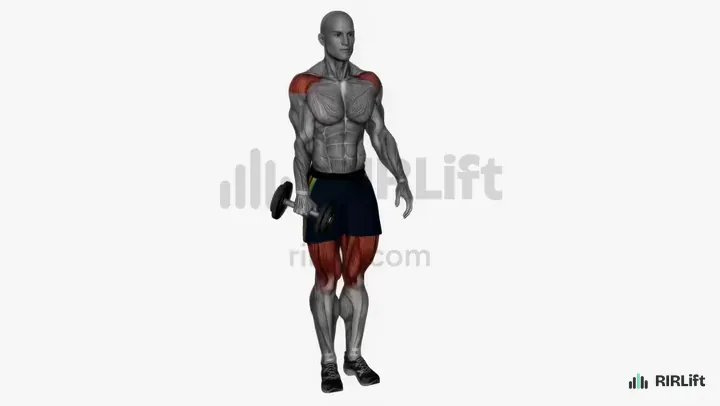
  1. Stand on your left leg with a dumbbell in your left hand and the standing knee softly bent.
  2. Hinge forward at the left hip while your right leg extends straight behind you, keeping your hips level.
  3. Lower until your torso and back leg are close to parallel to the floor or the standing hamstring stops you.
  4. Drive the left hip forward to come back up, then finish the set before switching sides.

Cues

  • Back leg and torso move as one
  • Hips level, back toes down
  • Slow on the way down

Common mistakes

  • Opening the hip so the back leg rotates out: point the back toes at the floor the whole time.
  • Touching the free foot down between reps to rebalance: slow down and hold a wall with your free hand if needed.

Swap for: Dumbbell Romanian Deadlift, Dumbbell B-Stance RDL, Kettlebell Deadlift

Hamstrings, machine curl

Lying Leg Curl

Hamstrings

Curling the pad toward your glutes isolates the hamstrings at the knee. It builds the shape at the back of the leg that hinges miss.

How to do it

  1. Set the machine so your knees line up with the pivot point when you lie face down, and move the ankle pad to sit on your lower calves, just above your heels.
  2. Lie flat with your kneecaps hanging just past the end of the bench, hold the handles and press your hips into the pad.
  3. Bend your knees and pull the pad up in a smooth arc until your heels are as close to your glutes as the machine allows.
  4. Pause for a moment at the top without letting your hips lift off the bench.
  5. Lower the pad over about two seconds until your legs are almost straight, and start the next rep before the stack touches down.

Cues

  • Hips glued to the pad
  • Heels to glutes
  • Slow on the way down

Common mistakes

  • Lifting your hips as the weight gets heavy: your lower back takes over and the hamstrings do less. Drop the load until your hips stay down on every rep.
  • Stopping short at the bottom: that cuts out the part of the rep where your hamstrings are longest. Let your legs come back to almost straight before you curl again.
  • Swinging the pad up: a kick from the bottom hands the hardest part of the rep to momentum. Count two seconds down and start each rep from a dead stop.

Swap for: Seated Leg Curl, Stability Ball Leg Curl, Nordic Hamstring Curl

Inner thigh

The adductors on the inside of your thigh are a large muscle group that most leg routines barely train. Side lunges and Cossack squats load them in a deep stretch, the machine and band isolate them, and the Copenhagen plank holds them hard with your bodyweight.

Inner thigh and quads, side lunge

Dumbbell Lateral Lunge

Quads, Glutes, Adductors

Stepping wide and sitting into one hip stretches the inner thigh of the straight leg while the bent leg works. It trains the inside and front of the thigh in one move.

How to do it

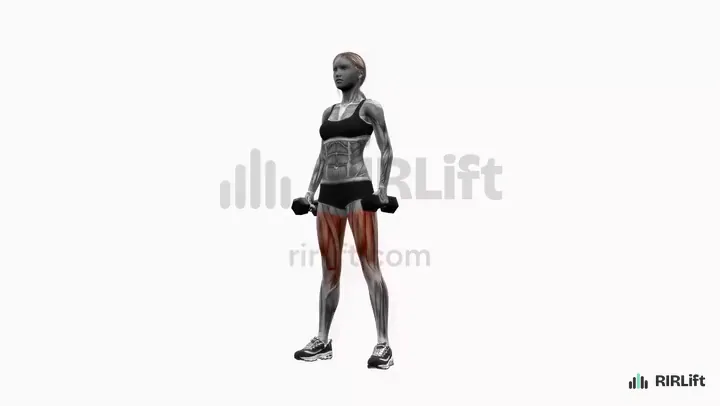
  1. Stand with your feet together and a dumbbell hanging at each side.
  2. Take a wide step to the right and sit your hips back over the right foot, left leg straight.
  3. Lower until the right thigh is near level with the floor, dumbbells on either side of the bent knee.
  4. Push hard off the right foot to step back to the start, then step out to the left.

Cues

  • Step wide, sit back
  • Trailing leg stays long
  • Both feet point forward

Common mistakes

  • Stepping too short, which turns the lunge into a squat with no stretch on the trailing leg.
  • Letting the bent knee drift inward past your big toe: keep it in line with the foot.

Swap for: Kettlebell Lateral Lunge, Cossack Squat, Goblet Squat

Inner thigh and quads, deep side squat

Cossack Squat

Quads, Adductors

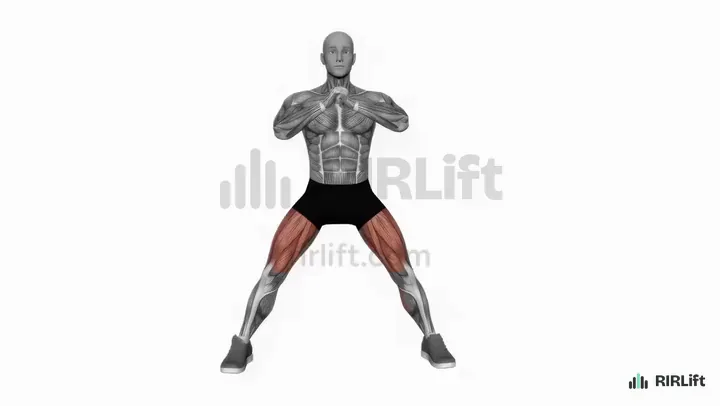
The Cossack squat sits lower than a side lunge, so the inner thigh is loaded in its longest position. Do it with bodyweight first; it is hard.

How to do it

  1. Take a very wide stance, about twice the width of your shoulders, with the toes turned out a little.
  2. Bend your right knee and sit your hips down toward your right heel, letting the left leg straighten with the toes pointing up.
  3. Sink as deep as you can with the right foot flat and your chest lifted.
  4. Press the floor away with the right foot to return to the middle, then sit to the left.

Cues

  • Sit down, not forward
  • Flat foot on the bent side
  • Long leg stays straight

Common mistakes

  • Folding the chest down to the knee to get lower: hold a light weight out in front as a counterbalance instead.
  • Rushing from side to side: stop in the middle for a breath between reps.

Swap for: Dumbbell Lateral Lunge, Kettlebell Lateral Lunge, Balance Board Lateral Squat

Inner thigh, machine adduction

Hip Adduction Machine

Adductors

Squeezing the pads together isolates the adductors and lets you add weight in small steps. It is the simplest way to train the inner thigh in a gym.

How to do it

  1. Set the range lever so the pads start wide enough to give your inner thighs a stretch you can hold without strain, and pick the weight on the stack.
  2. Sit with your back and hips pressed into the back pad, put your feet on the footrests and place the inside of your knees against the pads.
  3. Hold the side handles and brace your stomach lightly so your hips stay planted.
  4. Squeeze your knees together in a smooth arc until the pads meet or nearly meet, and hold the squeeze for a moment.
  5. Let your legs open slowly back to the starting stretch, stopping just before the plates touch, then start the next rep.

Cues

  • Hips glued to the seat
  • Squeeze, pause, open slowly
  • Stop the stack from resting

Common mistakes

  • Setting the start too wide: if your hips lift or your groin pinches at the bottom, bring the range lever in a notch and add depth over a few weeks.
  • Slamming the pads together: close at a steady speed and pause, so the adductors do the work rather than momentum.
  • Letting the legs fly open: control the return for about two seconds; that stretch is where most of the work happens.

Swap for: Multi-Hip Adduction, Band Hip Adduction, Cossack Squat

Inner thigh, band adduction

Band Hip Adduction

Adductors

Pulling one leg across your body against a band is the home version of the adduction machine. Step further from the anchor to make it harder.

How to do it

  1. Anchor a band low on a door or table leg and loop it around the ankle nearest the anchor.
  2. Step away until the band pulls your leg out to the side, and stand tall with a hand on a wall or chair.
  3. Sweep the banded leg across the front of your standing leg, keeping the knee straight and toes forward.
  4. Let the band draw the leg back out slowly, stopping before the band goes slack, then repeat. Switch sides.

Cues

  • Sweep, do not swing
  • Torso stays upright
  • Slow return

Common mistakes

  • Leaning your whole body away from the band to finish the rep: only the leg moves.
  • Standing so close to the anchor that the band has no tension at the start: step out until it pulls from the first inch.

Swap for: Copenhagen Plank, Sumo Squat, Cossack Squat

Inner thigh and core, side hold

Copenhagen Plank

Adductors, Abs

Holding a side plank with your top leg on a bench makes the inner thigh carry your weight. Short holds are very hard; bend the top knee to start.

How to do it

  1. Lie on your side next to a flat bench or sturdy chair, propped on your bottom forearm with the elbow under your shoulder.
  2. Lay your straight top leg on the seat so the inside of your foot and ankle rest on it; tuck the bottom leg under it or let it rest on the floor.
  3. Press the top foot down into the seat and raise your hips until your body runs in one line from head to feet.
  4. Hold for the set's time or lower and raise your hips for reps, then turn over and do the other side.

Cues

  • Push the seat away with your top foot
  • Hips stacked, not rolled back
  • Breathe while you hold

Common mistakes

  • Starting with the foot on the seat before you can hold a side plank: rest your knee there instead until 30-second holds feel solid.
  • Hips drifting backward so the plank turns into a pike: keep your hips in line with your shoulders.

Swap for: Band Hip Adduction, Cossack Squat, Balance Board Lateral Squat

Outer thigh and hip

What people call the outer thigh is mostly the upper glutes on the side of the hip. The abduction machine loads them in a gym, and the lateral band walk trains them anywhere with a loop band.

Upper glutes, machine abduction

Hip Abduction Machine

Abductors

Pushing the pads apart trains the side glutes that round out the upper hip and outer thigh. Lean forward slightly to shift more work to the glutes.

How to do it

  1. Sit with the outside of your knees against the pads and set the start so your legs are close together.
  2. Lean your torso forward slightly and hold the handles.
  3. Push your knees apart as far as the machine allows.
  4. Pause at the widest point, return slowly without letting the stack touch, and repeat.

Cues

  • Lean forward a little
  • Pause at the widest point
  • Do not let the plates rest

Common mistakes

  • Bouncing the pads out and letting them slam back: count two seconds on the way in.
  • Using so much weight that the range shrinks to a few inches: full range with less load works better.

Swap for: Lateral Band Walk, Band Seated Hip Abduction, Standing Side Leg Raise

Upper glutes, band side steps

Lateral Band Walk

Abductors

Side steps against a loop band train the outer hip anywhere. They are a light finisher or a warm-up before squats.

How to do it

  1. Place a mini band around your legs just above the knees or at the ankles.
  2. Sink into a quarter squat with your feet hip-distance apart.
  3. Step sideways with the lead foot, follow with the other without letting the feet touch, and keep tension in the band.

Cues

  • Stay low
  • Toes point forward

Common mistakes

  • Swaying the torso side to side: keep your shoulders level and take shorter steps.

Swap for: Clamshell, Band Standing Hip Abduction

Put them together: example sessions

Each session below picks from the exercises above for one situation, with the sets, reps, rest and RIR filled in.

Session 1

At home with dumbbells and a loop band

  • Workouts2× a week
  • Working sets24 a week
  • Per workout~30 min
  • EquipmentDumbbells, Resistance Bands

You train at home with dumbbells, a bench or sturdy chair and a loop band, and you want to tone all sides of your thighs in two sessions a week.

Each session covers the front, back, inside and outside of the thigh with 12 sets, so every area gets 5 to 10 sets across the week. Single-leg moves make light dumbbells hard enough, which is why there are no two-leg squats here.

Thighs A
ExerciseSets × repsRIRRest
Bulgarian Split Squat1 warm-up set firstPer leg. 3 × 8–15 2 90 s
Single-Leg RDLPer leg. 3 × 8–12 2 90 s
Band Hip AdductionPer leg. 3 × 12–20 1 45 s
Lateral Band WalkSteps each way. 3 × 15–25 1 45 s
Thighs B
ExerciseSets × repsRIRRest
Dumbbell Lateral Lunge1 warm-up set firstPer side. 3 × 8–12 2 90 s
Cossack SquatPer side. 2 × 6–10 2 90 s
Single-Leg RDLPer leg. 3 × 8–12 2 90 s
Copenhagen PlankSeconds per side. 2 × 15–30 2 1 min
Lateral Band WalkSteps each way. 2 × 15–25 1 45 s
How to run it
Train these twice a week with a few days between, such as Tuesday and Saturday.
How to progress
Build reps to the top of each range at the reps in reserve shown, then take heavier dumbbells or a stronger band. Start the Copenhagen plank with the knee bent and straighten the leg once 30 seconds feels steady.

Session 2

In the gym with machines

  • Workouts2× a week
  • Working sets30 a week
  • Per workout~35 min
  • EquipmentLeg Press, Lying Leg Curl, Hip Adductor, Hip Abductor +2

You train in a gym with a leg press, leg extension, leg curl and the inner and outer thigh machines, and you want two leg days that work every side of the thigh.

Machines let you push close to failure safely, so each day has 15 sets with most sets 1 rep short. Over the week the quads get 12 sets, hamstrings 6, inner thighs 6 and outer hips 6.

Legs 1
ExerciseSets × repsRIRRest
Wide-Stance Leg Press2 warm-up sets first 3 × 10–15 1 2 min
Lying Leg Curl 3 × 10–15 1 75 s
Hip Adduction Machine 3 × 12–20 1 1 min
Hip Abduction Machine 3 × 12–20 1 1 min
Leg Extension 3 × 12–15 1 1 min
Legs 2
ExerciseSets × repsRIRRest
Bulgarian Split Squat1 warm-up set firstPer leg. 3 × 8–12 2 2 min
Lying Leg Curl 3 × 10–15 1 75 s
Hip Adduction Machine 3 × 12–20 0 1 min
Hip Abduction Machine 3 × 12–20 0 1 min
Leg Extension 3 × 12–15 0 1 min
How to run it
Run Legs 1 and Legs 2 about three days apart, with upper-body work on the days between.
How to progress
Machine stacks move in small steps, so add one whenever every set reaches its rep ceiling at the planned reps in reserve; that tends to happen every week or two.

Session 3

Adding inner and outer thigh work to full-body training

  • Workouts2× a week
  • Working sets20 a week
  • Per workout~20 min
  • EquipmentHip Adductor, Hip Abductor

You already do full-body or lower-body workouts with squats and deadlifts, and you want to add focused work for the inside and outside of your thighs.

Squats and deadlifts already cover the front and back of the thigh, so this add-on spends its 10 sets on the inner thigh and outer hip, the areas those lifts miss. Twice a week that is 14 sets for the adductors and 6 for the outer hip.

Add-On
ExerciseSets × repsRIRRest
Cossack SquatPer side. 2 × 6–10 2 90 s
A1 Hip Adduction Machine 3 × 12–20 1 45 s
A2 Hip Abduction Machine 3 × 12–20 1 45 s
Copenhagen PlankSeconds per side. 2 × 15–30 2 1 min
How to run it
Tack it onto the end of two of your existing sessions. The adduction and abduction machines go back to back as a pair, then rest.
How to progress
Add weight on the machines when all sets hit the top of the range. Add 5 seconds per side on the Copenhagen plank each week, and add a dumbbell held at the chest to the Cossack squat once 10 reps are easy.

Make it fit you

Questions

What are good exercises for the upper thighs?

For the front of the upper thigh, Bulgarian split squats and leg presses. For the inner upper thigh, Cossack squats, lateral lunges and the adduction machine. For the upper outer thigh and hip, the abduction machine and lateral band walks.

How can I tighten my inner thighs in 2 weeks?

In two weeks your inner thighs get stronger and you learn the moves, but the visible change takes longer, usually 8 weeks or more. Train them twice a week with adduction and side-lunge work and keep adding reps.

Can you lose thigh fat by walking?

Walking burns energy and helps you lose fat overall, and your thighs lose fat along with the rest of you. Walking alone builds little muscle, so pair it with these exercises to make the thighs firmer.

How often should I do thigh exercises?

Twice a week for each area, with two or three days between sessions. Aim for 6 to 10 hard sets per area across the week.