
Inner thigh exercises at home, no machine needed
Published October 19, 2026
The best inner thigh exercises at home are the Copenhagen plank and band hip adduction, which squeeze the legs together directly, plus wide-stance and side moves that stretch the adductors under load: the Cossack squat, lateral lunge and sumo squat. Deep split squats and single-leg deadlifts work the large adductor at the back of the inner thigh. Pick 3 or 4, do 2 to 4 sets each two or three times a week, and stop each set 1 to 2 reps short of failure. Training builds the muscle; a slimmer look comes from losing fat overall, not from these exercises alone.
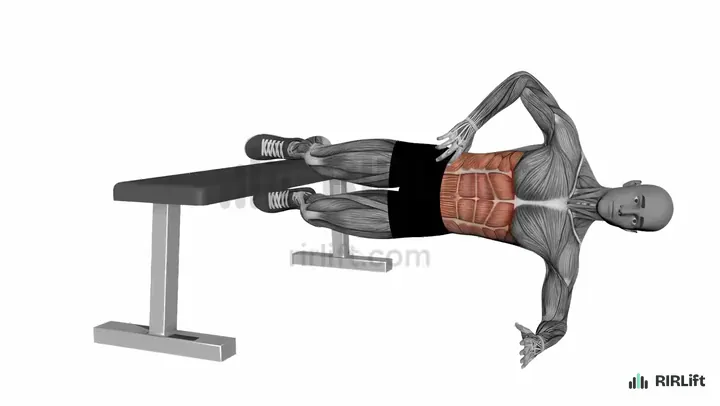
- Copenhagen Plank Adductors, Abs
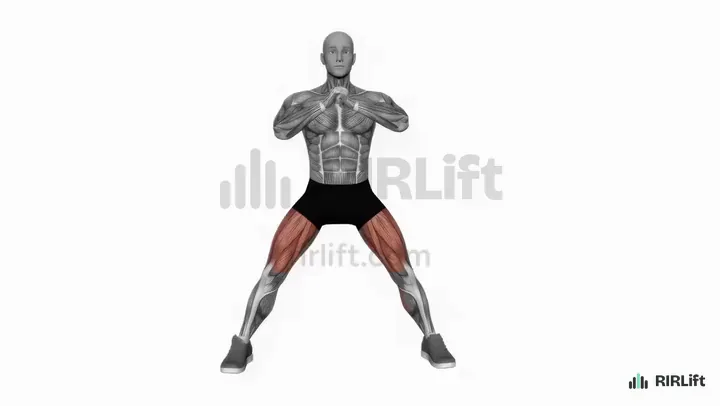
- Cossack Squat Quads, Adductors
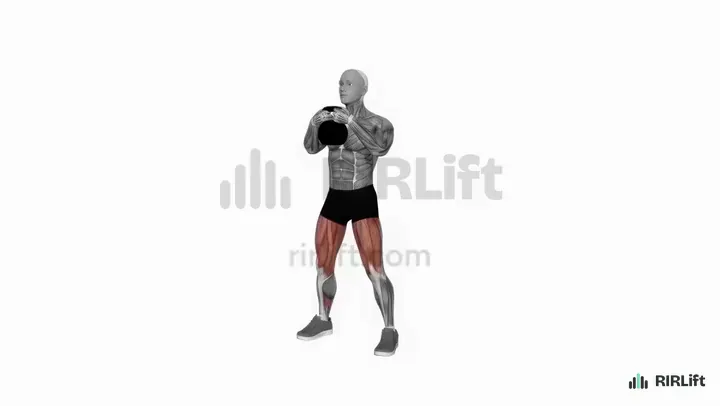
- Sumo Squat Quads, Glutes, Adductors
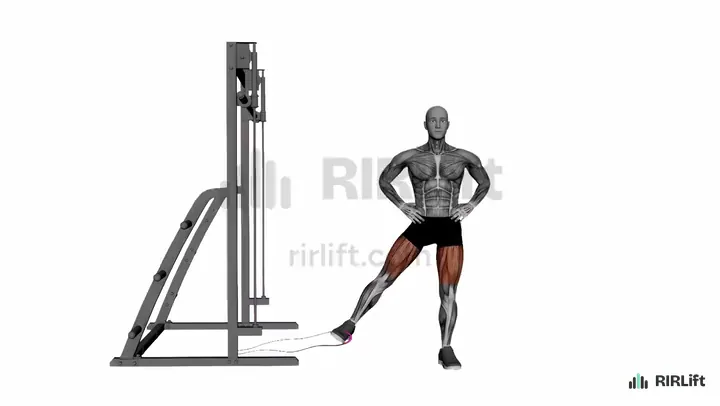
- Band Hip Adduction Adductors
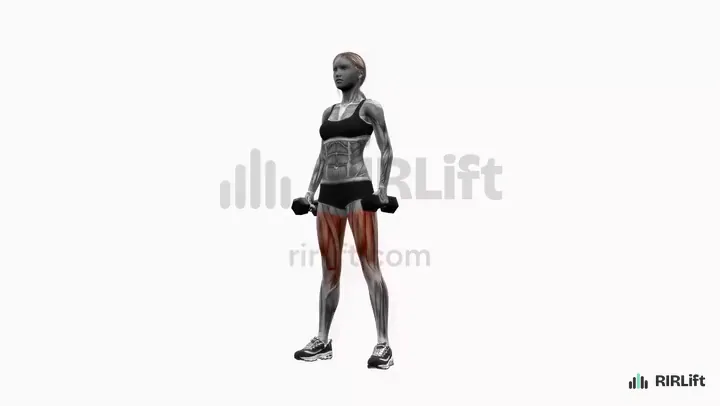
- Dumbbell Lateral Lunge Quads, Glutes, Adductors
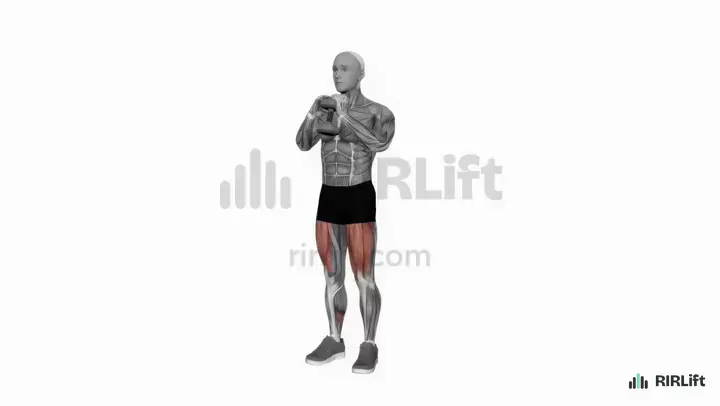
- Goblet Squat Quads, Glutes
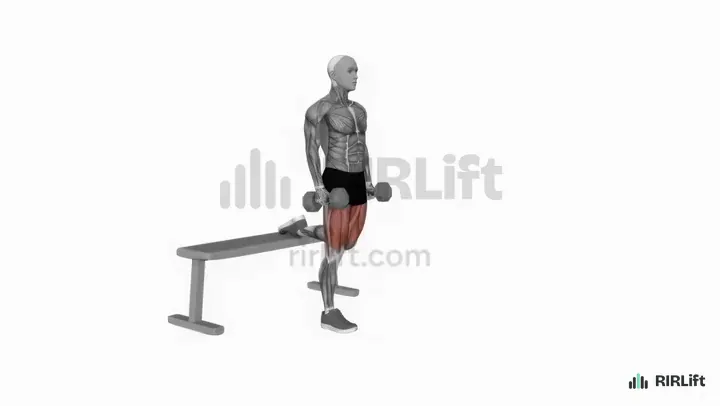
- Bulgarian Split Squat Quads, Glutes
Put them together: example sessions
Each session below picks from the exercises above for one situation, with the sets, reps, rest and RIR filled in. Open one in the session builder to change a pick, price it from a recent set, and add it to RIRLift.
-
Session 1
No weights, a couch or sturdy chair, 25 minutes
You have nothing but furniture and floor space, and want to strengthen and firm up your inner thighs.
3× a week · 33 sets a week · ~30 min
-
Session 2
One kettlebell or one dumbbell, 35 minutes
You have a single weight at home and want inner thigh work that uses it, not more floor exercises.
3× a week · 35 sets a week · ~30 min
-
Session 3
A pair of dumbbells and a loop band, added to your leg day
You already train legs at home and want the inner thighs to get more direct work without a separate session.
2× a week · 20 sets a week · ~20 min
Session 1
No weights, a couch or sturdy chair, 25 minutes
- Workouts3× a week
- Working sets33 a week
- Per workout~30 min
- EquipmentDumbbells
You have nothing but furniture and floor space, and want to strengthen and firm up your inner thighs.
Without weights, the hard inner thigh work comes from leverage: the Copenhagen plank holds your body up with one adductor, the Cossack squat drops your whole weight into a deep side squat, and the Bulgarian split squat and reverse lunge load the back of the inner thigh. Sets stop 1 to 2 reps short of failure, with the plank held in seconds. Each session has 11 sets.
| Exercise | Sets × reps | RIR | Rest |
|---|---|---|---|
| Cossack SquatPer side. Pause low. | 3 × 6–12 | 1 | 75 s |
| Bulgarian Split SquatPer leg. Foot on the couch. | 3 × 8–15 | 1 | 75 s |
| Reverse LungePer leg. | 2 × 10–15 | 2 | 1 min |
| Copenhagen PlankSeconds per side. Knee or foot on the couch. | 3 × 15–40 | 1 | 1 min |
- How to run it
- Do Inner Thighs A two or three days a week, leaving a day between sessions.
- How to progress
- Move the Copenhagen plank from knee on the couch to foot on the couch once you can hold 30 seconds. Add reps to the rest until they reach the top of the range, then slow them to four seconds down.
Session 2
One kettlebell or one dumbbell, 35 minutes
- Workouts3× a week
- Working sets35 a week
- Per workout~30 min
- EquipmentDumbbells, Kettlebells
You have a single weight at home and want inner thigh work that uses it, not more floor exercises.
One weight held at the chest suits every wide-stance and side move: sumo squats and goblet squats for the stretch at the bottom, kettlebell lateral lunges for the side, and single-leg deadlifts for the back of the inner thigh. The Copenhagen plank stays in for direct adductor work. Squats run at 1 to 2 RIR; the lunges and plank at 1. Day A has 12 sets, Day B 11.
| Exercise | Sets × reps | RIR | Rest |
|---|---|---|---|
| Sumo SquatWide stance, deep. | 4 × 8–15 | 2 | 90 s |
| Kettlebell Lateral LungePer side. | 3 × 8–12 | 1 | 75 s |
| Copenhagen PlankSeconds per side. | 3 × 15–40 | 1 | 1 min |
| Single-Leg RDLPer leg. | 2 × 8–12 | 2 | 1 min |
Open Day A in the session builder
| Exercise | Sets × reps | RIR | Rest |
|---|---|---|---|
| Goblet SquatFeet a little wider. | 4 × 8–15 | 1 | 90 s |
| Single-Leg RDLPer leg. Hips level. | 3 × 8–12 | 1 | 75 s |
| Kettlebell Lateral LungePer side, alternating. | 2 × 10–15 | 1 | 75 s |
| Copenhagen PlankSeconds per side. | 2 × 20–45 | 1 | 1 min |
Open Day B in the session builder
- How to run it
- Alternate Day A and Day B, two to four sessions a week.
- How to progress
- Add reps until every set reaches the top of the range, then slow the lowering. When even that tops out, a heavier bell is the next step.
Session 3
A pair of dumbbells and a loop band, added to your leg day
- Workouts2× a week
- Working sets20 a week
- Per workout~20 min
- EquipmentDumbbells, Resistance Bands
You already train legs at home and want the inner thighs to get more direct work without a separate session.
This block goes after your usual leg work. The dumbbell lateral lunge and Bulgarian split squat load the adductors through a deep range, and band adductions finish them with the squeezing motion lunges cannot give. Two pairs keep it short. Sets go to 0 to 1 RIR because the block is small and comes once or twice a week. It has 10 sets.
| Exercise | Sets × reps | RIR | Rest |
|---|---|---|---|
| A1 Dumbbell Lateral LungePer side. | 3 × 8–12 | 1 | 0 s |
| A2 Band Hip AdductionPer leg. | 3 × 15–25 | 0 | 75 s |
| B1 Bulgarian Split SquatPer leg. Dumbbells. | 2 × 8–12 | 1 | 0 s |
| B2 Band Hip AdductionPer leg. | 2 × 15–25 | 0 | 75 s |
- How to run it
- Add Inner Thigh Block to the end of one or two leg sessions each week. Do the two exercises in a pair back to back.
- How to progress
- Add reps first, then heavier dumbbells for the lunges; for the band, step further from the anchor.
Make it fit you
-
Want slimmer inner thighs
These exercises make the muscle stronger and firmer, but they cannot burn fat from that one spot. Pair two or three sessions a week with an eating plan that brings your overall body fat down.
-
Groin feels tight
Start the Cossack squat and lateral lunges shallow and add depth a little each week. Keep the Copenhagen plank on the knee until it feels easy.
-
Copenhagen plank too hard
Rest the knee instead of the foot on the couch, or hold the plank for 10 seconds at a time with your bottom knee on the floor to help.
-
Knees don't like lunges
Use the sumo squat and Copenhagen plank as the main work and take lateral lunges only as deep as is comfortable. Single-leg deadlifts load the inner thigh with little knee bend.
-
Also training glutes
The split squats, lunges and single-leg deadlifts here already work the glutes hard. Add a hip thrust or bridge and you have a full lower-body day.
-
Log the RIR, not just the reps
Write down how many reps or seconds you had left in each set. RIRLift logs the RIR with your sets and suggests the next weight from it, so you know when the side lunge is ready for a heavier dumbbell.
Questions
How can I tone my inner thighs at home?
Train the inner thigh muscles directly two or three times a week with exercises like the Copenhagen plank, Cossack squat and sumo squat, taking each set close to failure. A toned look comes from that muscle plus lower body fat, so steady eating habits matter as much as the exercises.
Can you get rid of inner thigh fat with exercises?
Not from that spot alone. Training a muscle does not burn the fat sitting over it. Inner thigh exercises build the muscle underneath; fat comes off across your whole body when you eat a little less than you burn over time.
Can you tone saggy inner thighs?
Strengthening the adductors adds firmness underneath, and losing fat reduces what sits on top. Loose skin after large weight loss does not change much with exercise, but muscle and fat do.
How long does it take to tighten inner thighs?
You will feel stronger in the moves within two to four weeks. Visible change in the muscle takes about two to three months of regular hard sets, and longer if fat loss is part of the goal.
Does walking strengthen your inner thighs?
Only a little. Walking uses the adductors to keep your legs under you, but the load is too low to make them much stronger. Side lunges, wide squats and the Copenhagen plank challenge them far more.
What is the best inner thigh exercise at home?
The Copenhagen plank, because it loads the adductors directly with your body weight and needs only a couch. If you have one weight, the sumo squat and lateral lunge are the next two to add.
How often should I do inner thigh exercises?
Two or three times a week, with a day between sessions. The adductors recover like any other leg muscle, and daily sets usually end up too easy to make progress.
Related templates
-
Adductor exercises at home: direct squeezes, side lunges and deep squats
The same muscles from a strength and injury-prevention angle.
-
Hip adduction machine: how to set it up, use it, and program it
The gym machine for the inner thighs, if you also have a gym.
-
Leg exercises at home: squats, lunges, hinges, glutes and calves without a gym
Full home leg training for quads, hamstrings and glutes.
-
The best workout for thighs, inner thighs included
Thigh programs that use gym equipment too.
-
Bodyweight glute exercises you can do without equipment
No-equipment glute work to pair with these moves.