Exercises with dumbbells for women, with plans for starting out, glutes or a busy week

The dumbbell exercises most women should start with are the goblet squat, dumbbell Romanian deadlift, hip thrust, reverse lunge, one-arm row and shoulder press: they train the glutes, legs, back and shoulders with one or two pairs of dumbbells. Add the Bulgarian split squat, step-up and lateral raise as you get stronger. Women build muscle the same way men do, so pick a weight that leaves 1 to 3 reps in reserve at the end of each set and add weight when the reps get easy.

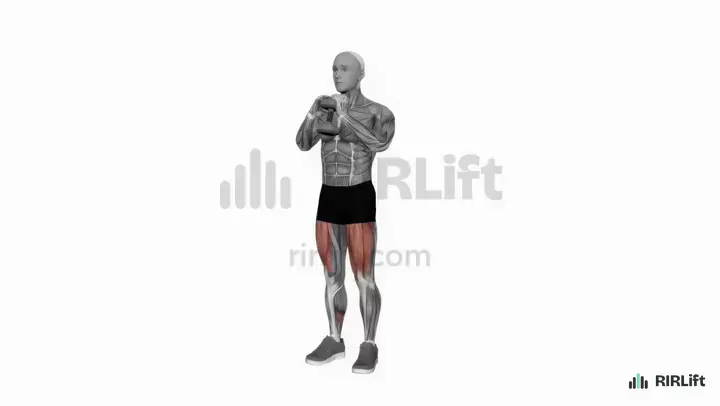
  1. Goblet Squat Quads, Glutes
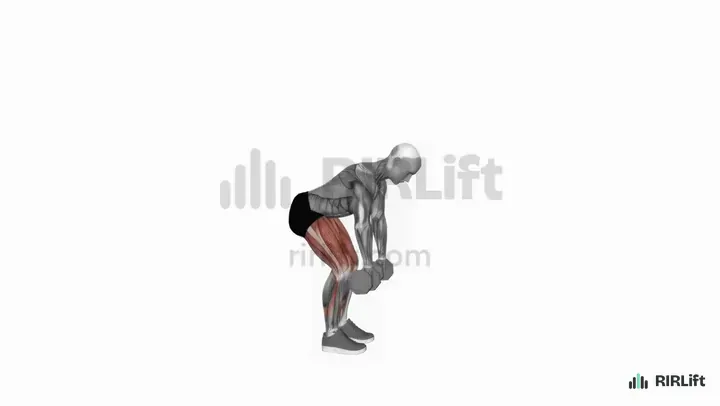
  2. Dumbbell Romanian Deadlift Hamstrings, Glutes
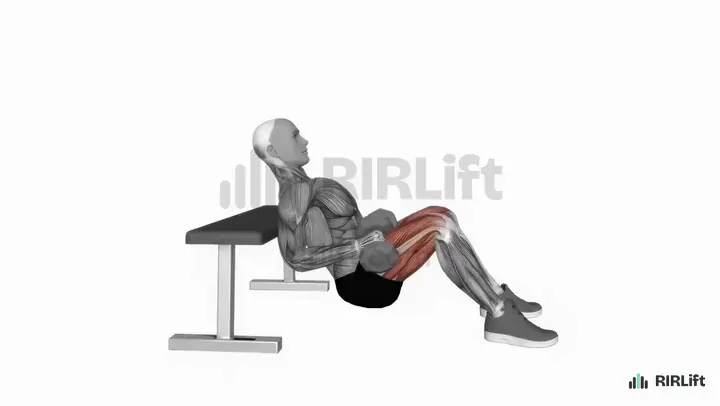
  3. Dumbbell Hip Thrust Glutes
  4. Dumbbell Reverse Lunge Quads, Glutes
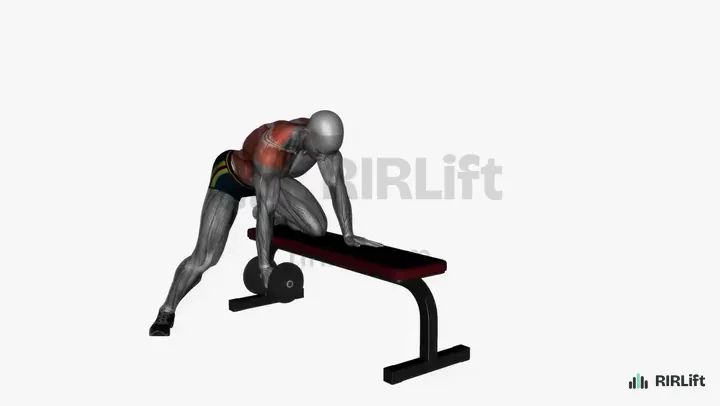
  5. One-Arm Dumbbell Row Lats, Upper Back
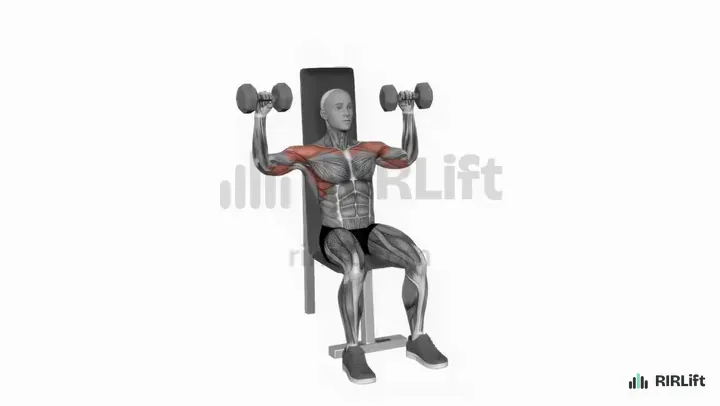
  6. Dumbbell Shoulder Press Shoulders
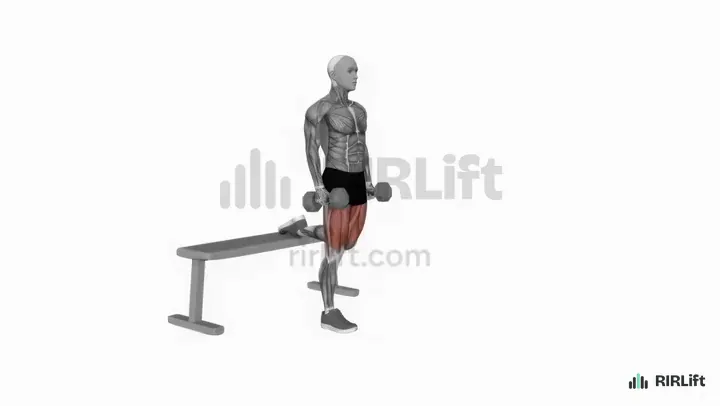
  7. Bulgarian Split Squat Quads, Glutes
  8. Dumbbell Lateral Raise Shoulders
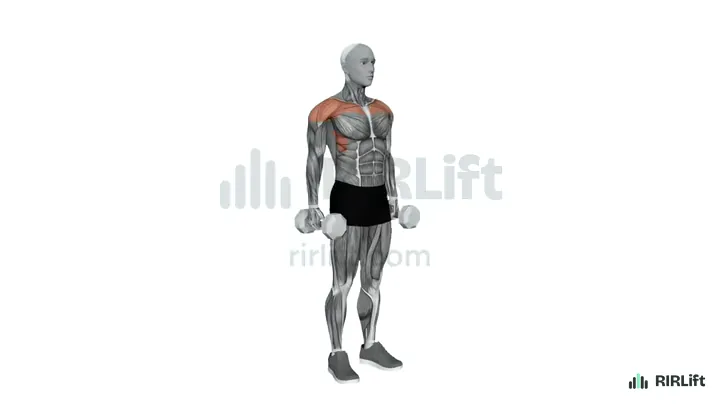
Dumbbell exercises for glutes and hamstrings

If glutes are your goal, these three do most of the work. The hip thrust loads the glutes hardest at the top, the Romanian deadlift stretches them and the hamstrings at the bottom, and the single-leg RDL does both one side at a time with a light dumbbell. Train at least two of them every week.

Glutes, peak contraction

Dumbbell Hip Thrust

Glutes

With your upper back on a bench and a dumbbell on your hips, the glutes do almost all the work at the top of each rep. It is the most direct glute exercise with dumbbells.

How to do it

  1. Rest your shoulder blades against a bench, feet planted and knees bent.
  2. Place a dumbbell across your hip crease and hold it there.
  3. Tuck your chin and drive your hips up through your heels.
  4. Stop when your hips are level with your knees and shoulders.
  5. Squeeze for a second, then lower.

Cues

  • Chin tucked
  • Ribs down at the top
  • Push through heels

Common mistakes

  • Arching your lower back to lift higher: stop at a straight line.
  • Feet too far away so hamstrings take over: bring them in until shins are vertical at the top.

Swap for: Dumbbell Romanian Deadlift, Single-Leg RDL

Hamstrings and glutes, hinge

Dumbbell Romanian Deadlift

Hamstrings, Glutes

Sliding two dumbbells down your thighs with your hips pushing back stretches the hamstrings and glutes under load, which is where they grow. It also teaches you to pick things up with a flat back.

How to do it

  1. Stand tall with two dumbbells in front of your thighs.
  2. Soften your knees and keep them there.
  3. Send your hips back to slide the dumbbells down your legs.
  4. Stop when you feel a strong stretch in your hamstrings, back still flat.
  5. Drive your hips forward to stand and squeeze your glutes.

Cues

  • Hips back
  • Dumbbells brush your legs
  • Squeeze at the top

Common mistakes

  • Bending your knees more as you lower: keep the angle fixed.
  • Reaching for the floor with a rounded back: your range ends before you round.

Swap for: Single-Leg RDL, Dumbbell Hip Thrust

Glutes and hamstrings, one side

Single-Leg RDL

Hamstrings, Glutes

Hinging on one leg with a light dumbbell makes the glute work to stretch and to keep your hip level, so a light weight is plenty.

How to do it

  1. Stand on one leg holding a dumbbell in the opposite hand.
  2. Soften the standing knee.
  3. Hinge forward as the free leg reaches back.
  4. Lower until your torso is close to level with the floor.
  5. Pull back up through the standing heel.

Cues

  • Hips square to the floor
  • Free leg long
  • Slow down

Common mistakes

  • Opening your hip toward the ceiling: point the back toes down.
  • Rushing to save balance: touch a wall with your free hand.

Swap for: Dumbbell Romanian Deadlift, Dumbbell Hip Thrust

Dumbbell leg exercises: squats, lunges and step-ups

The goblet squat is the place to start, with one dumbbell held at your chest. Lunges, split squats and step-ups load one leg at a time, which grows the glutes and quads with lighter dumbbells than a squat needs, and the lateral lunge reaches the inner thighs and the side of the hips.

Quads and glutes, first squat

Goblet Squat

Quads, Glutes

Holding one dumbbell at your chest keeps your torso upright and makes depth easier than any other squat, so it is the squat to learn first. One heavy dumbbell is all it needs.

How to do it

  1. Hold one dumbbell upright at your chest, hands cupped under the top end.
  2. Stand with feet a little wider than your hips, toes slightly out.
  3. Sit down between your heels, elbows inside your knees.
  4. Go as deep as you can with heels flat and back straight.
  5. Push through the whole foot to stand.

Cues

  • Elbows inside knees
  • Sit between your heels
  • Chest proud

Common mistakes

  • Rising on your toes: put your weight back through the middle of the foot.
  • Stopping high because the dumbbell is heavy: go lighter and reach full depth.

Swap for: Bulgarian Split Squat, Step-Up

Glutes and quads, one leg

Bulgarian Split Squat

Quads, Glutes

With your back foot on a bench, the front leg does all the lifting. Leaning forward slightly puts more on the glute; staying upright puts more on the quad.

How to do it

  1. Stand a long stride ahead of a bench, dumbbells hanging by your thighs.
  2. Rest your back foot, laces down, on the bench.
  3. Sink straight down so your front thigh ends close to level.
  4. Lean your chest forward a little for more glute.
  5. Drive through the front foot to stand.

Cues

  • Front foot does the work
  • Straight down
  • Lean for glutes

Common mistakes

  • Front foot too close to the bench: the knee shoots forward and the heel lifts.
  • Pushing off the back foot: keep it relaxed.

Swap for: Dumbbell Reverse Lunge, Step-Up

Glutes and quads, alternating

Dumbbell Reverse Lunge

Quads, Glutes

Stepping back instead of forward is easier on the knees and easier to balance, so it is the lunge to start with.

How to do it

  1. Stand tall with two dumbbells.
  2. Step one foot back.
  3. Drop until your back knee is just off the floor.
  4. Push through the front foot to step back to standing.
  5. Alternate legs or finish one side first.

Cues

  • Long step back
  • Front heel down
  • Chest tall

Common mistakes

  • Stepping too short so the front knee drives forward: lengthen the step.
  • Wobbling side to side: keep feet hip width apart, not in a line.

Swap for: Bulgarian Split Squat, Dumbbell Lateral Lunge

Glutes and quads, one leg

Step-Up

Quads, Glutes

Stepping onto a bench with dumbbells trains one leg at a time through a movement you use every day, and a higher box shifts more work to the glutes.

How to do it

  1. Face a bench or box with the dumbbells hanging by your thighs.
  2. Place your whole foot on the bench.
  3. Drive through that heel to stand on top.
  4. Step down slowly with the same leg leading.
  5. Finish all reps on one side.

Cues

  • Push through the top foot
  • Don't bounce off the floor
  • Lower slowly

Common mistakes

  • Pushing off the bottom foot: keep it light.
  • Using a box so high your hip goes far below the knee: start at knee height.

Swap for: Bulgarian Split Squat, Goblet Squat

Build a session with Step-Up

Inner thighs and glutes, side step

Dumbbell Lateral Lunge

Quads, Glutes, Adductors

Stepping sideways trains the inner thighs and the side of your hips, which straight-ahead squats and lunges barely reach.

How to do it

  1. Stand with feet together holding dumbbells at your sides, or one at your chest.
  2. Step wide to one side.
  3. Sit your hips back over the stepping leg, other leg straight.
  4. Push off that foot back to standing.
  5. Alternate sides.

Cues

  • Sit back, not down
  • Straight trailing leg
  • Feet flat

Common mistakes

  • Knee caving in: point it over the toes.
  • Taking a short step: make it long enough to feel the inner thigh.

Swap for: Dumbbell Reverse Lunge, Goblet Squat

Dumbbell exercises for back, shoulders and posture

Rows and rear delt flys train the upper back that holds your shoulders back; the shoulder press and lateral raise build the shoulders that frame your upper body. The farmer's walk adds grip and whole-body strength with no technique to learn.

Back, one side at a time

One-Arm Dumbbell Row

Lats, Upper Back

With one hand and knee on a bench, you can row a heavy dumbbell with a flat back. It builds the lats and upper back and is the main pull on this page.

How to do it

  1. Place one hand and the same knee on a bench, the other foot planted wide.
  2. Hold a dumbbell in the free hand with your arm straight.
  3. Pull the dumbbell up toward your hip.
  4. Squeeze when your elbow passes your torso.
  5. Lower until your arm is straight and your shoulder stretches down.

Cues

  • Pull to the hip
  • Flat back
  • Full stretch at the bottom

Common mistakes

  • Twisting your torso to lift the weight: keep your shoulders square to the floor.
  • Shrugging toward your ear: think elbow to back pocket.

Swap for: Dumbbell Rear Delt Fly, Farmer's Walk

Rear delts and upper back

Dumbbell Rear Delt Fly

Shoulders

Lifting light dumbbells wide while bent over trains the rear shoulder and the upper back that pulls your shoulders back, a part most programs undertrain.

How to do it

  1. Sit on the end of a bench, lean forward over your knees, dumbbells under your legs.
  2. Keep your elbows slightly bent.
  3. Sweep the dumbbells wide.
  4. Stop when your arms are level with your back.
  5. Lower slowly.

Cues

  • Lead with the elbows
  • Pinkies up a little
  • Light and slow

Common mistakes

  • Squeezing your shoulder blades hard: that shifts the work to the mid back. Let them move freely.
  • Using momentum: the dumbbells should be light enough to pause at the top.

Swap for: One-Arm Dumbbell Row, Dumbbell Lateral Raise

Shoulders and triceps
Dumbbell Shoulder Press

Shoulders

Pressing two dumbbells overhead builds the shoulders and arms, and seated, your back is supported so you can focus on the press.

How to do it

  1. Sit tall on an upright bench, dumbbells at shoulder height, palms forward.
  2. Brace your abs.
  3. Press the dumbbells up until your arms are straight.
  4. Let them come together slightly at the top.
  5. Lower to shoulder height.

Cues

  • Ribs down
  • Press straight up
  • Elbows under wrists

Common mistakes

  • Arching your back to finish the rep: lower the weight.
  • Stopping short at the bottom: bring the dumbbells to your shoulders.

Swap for: Dumbbell Lateral Raise, Incline Dumbbell Press

Side shoulders

Dumbbell Lateral Raise

Shoulders

Raising dumbbells out to your sides trains the side delts, which make the shoulders look wider. It needs light dumbbells and slow reps.

How to do it

  1. Let the dumbbells hang by your thighs, elbows slightly bent.
  2. Lean forward a little.
  3. Lift both arms wide.
  4. Stop at shoulder height.
  5. Lower slowly.

Cues

  • Lead with the elbows
  • Reach out, not up
  • Slow lowering

Common mistakes

  • Swinging with your body: pick dumbbells you can raise without moving your torso.
  • Shrugging: keep your shoulders down.

Swap for: Dumbbell Shoulder Press, Dumbbell Rear Delt Fly

Grip, traps and core

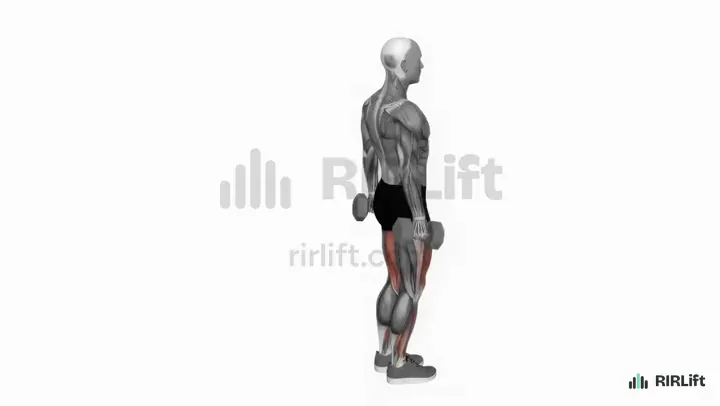
Farmer's Walk

Forearms, Traps, Shoulders

Picking up two heavy dumbbells and walking trains grip, shoulders and abs together, and there is no technique to learn.

How to do it

  1. Pick up a heavy dumbbell in each hand.
  2. Stand tall with shoulders back.
  3. Walk forward with short, even steps.
  4. Keep the dumbbells still at your sides.
  5. Set them down before your grip opens.

Cues

  • Stand tall
  • Short steps
  • Crush the handles

Common mistakes

  • Leaning forward: keep your chest up.
  • Letting the dumbbells swing: walk slower.

Swap for: One-Arm Dumbbell Row, Dumbbell Reverse Lunge

Dumbbell chest and arm exercises

One press for the chest and one exercise each for the biceps and triceps are enough alongside the rest. The incline press trains the upper chest and the front of the shoulders, and the overhead triceps extension works the back of the arm through its longest stretch.

Upper chest and shoulders

Incline Dumbbell Press

Chest

Pressing on an incline bench trains the upper chest and the front of the shoulders. It is easier on the shoulders than a flat barbell press because each arm finds its own path.

How to do it

  1. Set a bench to a low incline and sit back with a dumbbell on each thigh.
  2. Kick them up to your shoulders as you lie back.
  3. Press them up over your upper chest.
  4. Lower until your chest is stretched.
  5. Press back up.

Cues

  • Shoulder blades back
  • Elbows at 45 degrees
  • Deep stretch

Common mistakes

  • Setting the bench too steep: it turns into a shoulder press.
  • Bouncing at the bottom: pause briefly.

Swap for: Dumbbell Shoulder Press, Seated Dumbbell Overhead Triceps Extension

Biceps and forearms

Hammer Curl

Biceps, Forearms

Curling with your thumbs up trains the biceps and the forearm muscle beside them, and most people can lift a bit more than with a regular curl.

How to do it

  1. Let the dumbbells hang by your thighs, palms facing in.
  2. Pin your elbows to your ribs.
  3. Curl the dumbbells up toward your shoulders.
  4. Squeeze at the top.
  5. Lower slowly.

Cues

  • Elbows pinned
  • Thumbs up
  • Slow lowering

Common mistakes

  • Swinging your body: lighten the dumbbells.
  • Letting your elbows move forward: keep them by your ribs.

Swap for: Seated Dumbbell Overhead Triceps Extension, One-Arm Dumbbell Row

Back of the arms

Seated Dumbbell Overhead Triceps Extension

Triceps

Lowering a dumbbell behind your head stretches the triceps fully, the part of the arm that firms up the back of the upper arm.

How to do it

  1. Sit tall on an upright bench.
  2. Hold one dumbbell overhead with both hands.
  3. Lower it behind your head by bending your elbows.
  4. Stop when your triceps are fully stretched.
  5. Straighten your arms back overhead.

Cues

  • Elbows point up
  • Only the elbows bend
  • Deep stretch

Common mistakes

  • Flaring the elbows wide: keep them shoulder width.
  • Arching your back: brace your abs.

Swap for: Hammer Curl, Incline Dumbbell Press

Put them together: example sessions

Each session below picks from the exercises above for one situation, with the sets, reps, rest and RIR filled in. Open one in the session builder to change a pick, price it from a recent set, and add it to RIRLift.

Session 1

Starting out at home with two pairs of dumbbells

Open in the session builder
  • Workouts3× a week
  • Working sets48 a week
  • Per workout~35 min
  • EquipmentDumbbells

You are new to lifting, train at home with a light pair and a heavier pair of dumbbells, and have a sturdy chair or couch.

Six exercises, one routine, three days a week: the goblet squat and RDL use the heavier pair, the row and press use the lighter one, and the hip thrust works with your back against the couch. Every set stops with 2 to 3 reps in reserve so you learn the movements before you push them.

Full Body
ExerciseSets × repsRIRRest
Goblet Squat1 warm-up set firstHeavier dumbbell. 3 × 8–12 3 90 s
Dumbbell Romanian Deadlift 3 × 8–12 3 90 s
One-Arm Dumbbell RowPer side. Hand on a chair. 3 × 8–12 2 1 min
Dumbbell Shoulder PressSeated on a chair. 2 × 8–12 2 1 min
Dumbbell Hip ThrustBack against the couch. 3 × 10–15 2 1 min
Farmer's WalkSteps. 2 × 20–30 2 1 min
How to run it
Run the same full-body session three times a week with a day off in between. Warm up with a light set of the goblet squat.
How to progress
Add a rep each session until every set hits the top of the range, then move up a dumbbell. Once the heavier pair feels light, buy the next size up or move to the glute-focus plan.

Session 2

Glute focus, four days a week

Open in the session builder
  • Workouts4× a week
  • Working sets58 a week
  • Per workout~35 min
  • EquipmentDumbbells, Flat Bench, Incline Bench

You train at a gym or a home with a bench and a full dumbbell rack, have lifted for a while, and want your glutes to grow first.

Two lower days give the glutes about twelve hard sets a week across the hip thrust, RDL, split squat and step-up, each training them at a different point in the movement. Two upper days keep your back, shoulders and arms growing so the lower body is not all you train. Sets go to 1 to 2 reps in reserve.

Lower
ExerciseSets × repsRIRRest
Dumbbell Hip Thrust1 warm-up set first 4 × 8–12 2 2 min
Dumbbell Romanian Deadlift 3 × 8–12 2 2 min
Bulgarian Split SquatPer side. Lean forward. 3 × 8–12 1 90 s
Step-UpPer side. 2 × 10–12 1 90 s
Dumbbell Lateral LungePer side. 2 × 10–12 1 1 min

Open Lower in the session builder

Upper
ExerciseSets × repsRIRRest
Incline Dumbbell Press 3 × 8–12 2 90 s
One-Arm Dumbbell RowPer side. 3 × 8–12 2 90 s
Dumbbell Lateral Raise 3 × 12–15 1 1 min
Dumbbell Rear Delt Fly 2 × 12–15 1 1 min
A1 Hammer Curl 2 × 10–15 1 1 min
A2 Seated Dumbbell Overhead Triceps Extension 2 × 10–15 1 1 min

Open Upper in the session builder

How to run it
Alternate Lower and Upper, four days a week. Warm up on the first lift.
How to progress
Use double progression: when every set reaches the top of the range at the target reps in reserve, move up one dumbbell size and start again at the bottom.

Session 3

30 minutes, twice a week

Open in the session builder
  • Workouts2× a week
  • Working sets24 a week
  • Per workout~20 min
  • EquipmentDumbbells, Incline Bench

You have two half-hour sessions a week and want to stay strong everywhere, with no single body part as the priority.

Two routines with supersets: a lower exercise paired with an upper one, so you rest after each pair and finish in 30 minutes. The single-leg RDL and reverse lunge train balance as well as strength, and the sets stop at 1 to 2 reps in reserve so two sessions a week are still enough to progress.

A
ExerciseSets × repsRIRRest
A1 Goblet Squat1 warm-up set first 3 × 8–12 2 90 s
A2 One-Arm Dumbbell RowPer side. 3 × 8–12 2 90 s
B1 Single-Leg RDLPer side. 3 × 8–10 2 1 min
B2 Dumbbell Shoulder Press 3 × 8–12 2 1 min

Open A in the session builder

B
ExerciseSets × repsRIRRest
A1 Dumbbell Reverse LungePer side. 3 × 8–12 2 90 s
A2 Incline Dumbbell Press 3 × 8–12 2 90 s
B1 Dumbbell Hip Thrust 3 × 10–15 1 1 min
B2 Dumbbell Rear Delt Fly 3 × 12–15 1 1 min

Open B in the session builder

How to run it
Do A and B on two days apart, such as Monday and Thursday.
How to progress
Add reps before weight. When both exercises in a pair hit the top of the range, move up one dumbbell size on the one that did.

Make it fit you

Questions

How heavy should my dumbbells be as a woman?

Heavy enough that the last rep of each set leaves 1 to 3 reps in reserve at the rep range you are working in. That will be different for every exercise: the goblet squat and RDL usually need a much heavier dumbbell than the lateral raise. Owning a light, a medium and a heavy pair covers most of this page.

Is dumbbell exercise good for women?

Yes. Dumbbells let you train every muscle at home or in a gym, one side at a time where useful, and the same training that builds muscle and strength in men does it in women.

Can I build muscle with dumbbells only?

Yes, as long as the sets go close to failure and you add weight or reps over time. When your heaviest dumbbells get light, use one-leg exercises and slower lowering to keep the sets hard.

Will lifting dumbbells make me bulky?

Not by accident. Building muscle takes months of hard sets and enough food, and you control both. Most women who lift look leaner and firmer, not bigger.

How many days a week should a woman lift dumbbells?

Two to four. Two sessions keep you strong, three suit a beginner's full-body plan, and four let you split lower and upper body to give your glutes extra work.

What are the best dumbbell exercises for glutes?

The hip thrust, Romanian deadlift, Bulgarian split squat and step-up. Together they train the glutes when stretched and when fully contracted.