
Glute exercises for women: thrusts, hinges and side glute work
Published October 19, 2026
The best glute exercises for women are the hip thrust, the Romanian deadlift, the Bulgarian split squat and a side glute move such as the abduction machine or a band walk. The thrust builds the whole glute, the Romanian deadlift the lower glutes, the split squat each side on its own, and the side glute work the upper-outer hip. Women build glutes the same way anyone does: hard sets taken close to failure, with the weight going up over time. Two or three sessions a week with one exercise from each group is enough.
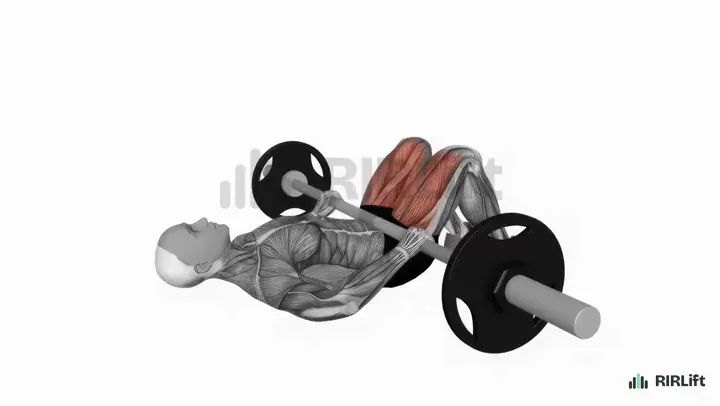
- Hip Thrust Glutes
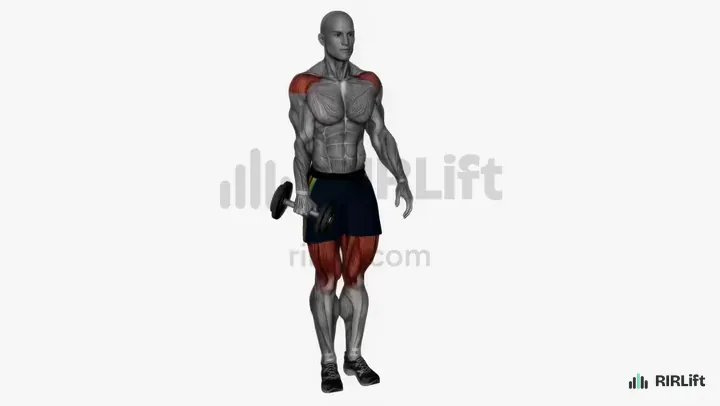
- Dumbbell Romanian Deadlift Hamstrings, Glutes
- Bulgarian Split Squat Quads, Glutes
- Hip Abduction Machine Abductors
- Glute Bridge Glutes
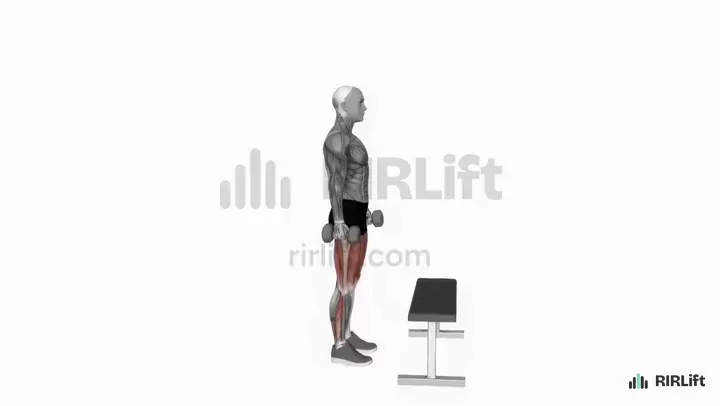
- Step-Up Quads, Glutes
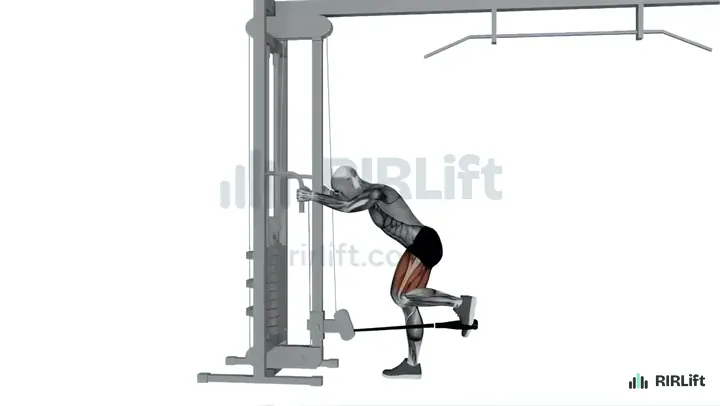
- Cable Glute Kickback Glutes
- Single-Leg RDL Hamstrings, Glutes
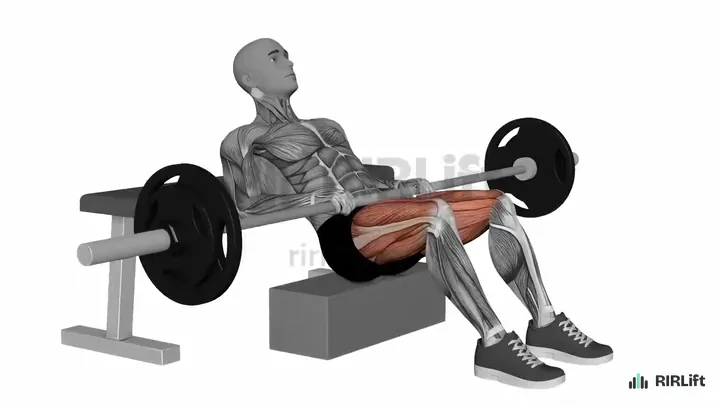
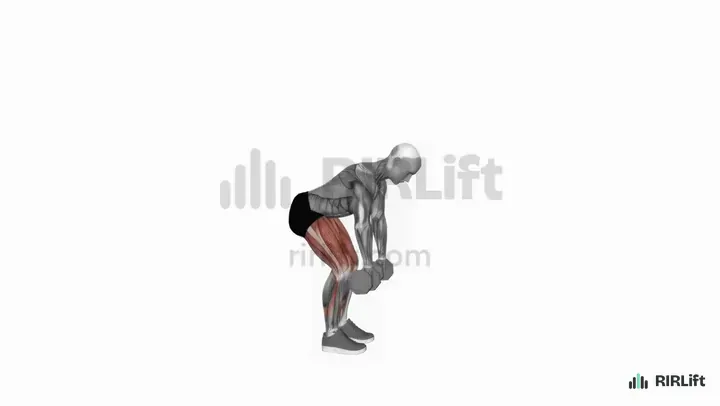
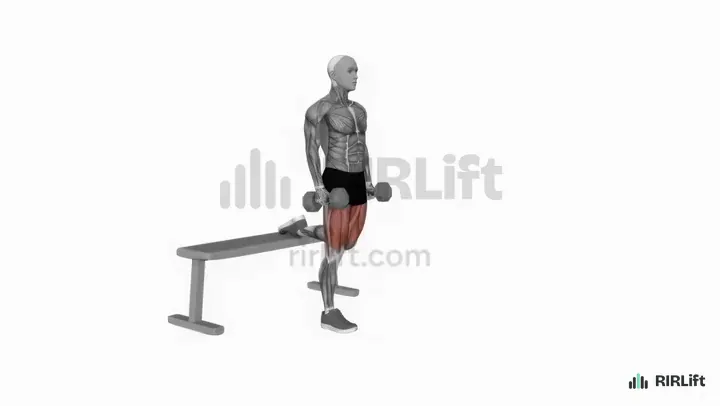
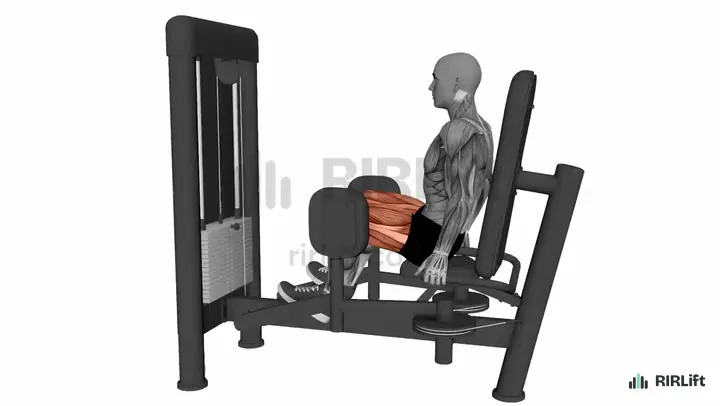
Put them together: example sessions
Each session below picks from the exercises above for one situation, with the sets, reps, rest and RIR filled in. Open one in the session builder to change a pick, price it from a recent set, and add it to RIRLift.
-
Session 1
Glutes first in three full-body days
You lift three days a week in a gym, train your whole body each time, and want your glutes to grow fastest.
3× a week · 20 sets a week · ~20 min
-
Session 2
At home with dumbbells and a mini band
You train at home with a pair of dumbbells, a mini band and a bench or sturdy couch, twice a week.
2× a week · 24 sets a week · ~30 min
-
Session 3
New to lifting, 40 minutes twice a week
You are starting out at a gym, have about 40 minutes twice a week, and want a simple glute session you can repeat.
2× a week · 26 sets a week · ~30 min
Session 1
Glutes first in three full-body days
- Workouts3× a week
- Working sets20 a week
- Per workout~20 min
- EquipmentBarbells, Flat Bench, Hip Abductor, Dumbbells +1
You lift three days a week in a gym, train your whole body each time, and want your glutes to grow fastest.
Putting a glute lift first in every session means it always gets your best effort, while upper-body work still fits after. Each day pairs one heavy lift (the thrust, the Romanian deadlift or the Bulgarian split squat) with one lighter glute move, so the glutes get 6 to 7 hard sets per day and about 20 a week. Heavy sets stop 1 to 2 reps short of failure; the kickback and abduction go to 0 to 1 because they are safe to push.
| Exercise | Sets × reps | RIR | Rest |
|---|---|---|---|
| Hip Thrust2 warm-up sets first1 s squeeze at the top. | 4 × 6–10 | 1 | 2:30 min |
| Hip Abduction MachineLean forward. | 3 × 12–20 | 0 | 1 min |
Open Day 1 in the session builder
| Exercise | Sets × reps | RIR | Rest |
|---|---|---|---|
| Dumbbell Romanian Deadlift1 warm-up set firstHips back. | 4 × 8–12 | 2 | 2 min |
| Cable Glute KickbackPer leg. | 3 × 12–15 | 0 | 1 min |
Open Day 2 in the session builder
| Exercise | Sets × reps | RIR | Rest |
|---|---|---|---|
| Bulgarian Split Squat1 warm-up set firstPer leg. Slight forward lean. | 3 × 8–12 | 1 | 2 min |
| Glute BridgeBarbell. Pause at the top. | 3 × 10–15 | 1 | 90 s |
Open Day 3 in the session builder
- How to run it
- Do Day 1, Day 2 and Day 3 on three non-consecutive days. Add two or three upper-body exercises after the glute blocks each day.
- How to progress
- Add reps on each lift until every set hits the top of its range at the target reps in reserve, then add 5 to 10 pounds on the barbell lifts or the next dumbbell. Keep the finishers at the same weight for a few weeks and add reps instead.
Session 2
At home with dumbbells and a mini band
- Workouts2× a week
- Working sets24 a week
- Per workout~30 min
- EquipmentDumbbells, Resistance Bands
You train at home with a pair of dumbbells, a mini band and a bench or sturdy couch, twice a week.
The dumbbell thrust covers the squeezed position, the single-leg Romanian deadlift covers the stretch, and the split squat and curtsy lunge add single-leg work, which is how a modest pair of dumbbells keeps challenging you. The band walk stands in for the abduction machine. Rep ranges sit at 10 to 20 because home dumbbells are usually lighter than gym ones, and sets end 1 rep short of failure so the lighter load still counts. Each session is 12 working sets.
| Exercise | Sets × reps | RIR | Rest |
|---|---|---|---|
| Dumbbell Hip Thrust1 warm-up set firstPause 1 s at the top. | 3 × 12–20 | 1 | 90 s |
| Bulgarian Split SquatPer leg. | 3 × 10–15 | 1 | 90 s |
| Single-Leg RDLPer leg. | 3 × 10–12 | 2 | 1 min |
| Lateral Band WalkSteps each way. | 3 × 12–20 | 1 | 45 s |
Open Home A in the session builder
| Exercise | Sets × reps | RIR | Rest |
|---|---|---|---|
| Single-Leg RDLPer leg. Heavier than A. | 3 × 8–12 | 2 | 90 s |
| Dumbbell Curtsy LungePer leg. | 3 × 10–15 | 1 | 1 min |
| Dumbbell Hip Thrust3 s down. | 3 × 15–20 | 1 | 1 min |
| Lateral Band WalkBand at the ankles. | 3 × 15–20 | 0 | 45 s |
Open Home B in the session builder
- How to run it
- Do Home A and Home B once each per week, two or three days apart. Use the couch edge for the thrust only if it does not slide.
- How to progress
- Add reps until you reach the top of the range, then slow the lowering to three seconds before buying heavier dumbbells. On the thrust, move to one leg once two legs stop being hard at 20.
Session 3
New to lifting, 40 minutes twice a week
- Workouts2× a week
- Working sets26 a week
- Per workout~30 min
- EquipmentBarbells, Dumbbells, Flat Bench, Hip Abductor +2
You are starting out at a gym, have about 40 minutes twice a week, and want a simple glute session you can repeat.
Two sessions with five exercises each: one bridge or thrust, one hinge, one step-up for single-leg work, and two finishers. The barbell bridge comes before the thrust because it is easier to set up and learn. All sets stop 2 reps short of failure for the first month, so you learn the positions before you push, and each session is 13 working sets.
| Exercise | Sets × reps | RIR | Rest |
|---|---|---|---|
| Glute Bridge1 warm-up set firstBarbell. Pause at the top. | 3 × 10–15 | 2 | 90 s |
| Dumbbell Romanian DeadliftLight. Learn the hinge. | 3 × 10–12 | 2 | 90 s |
| Step-UpPer leg. | 3 × 8–12 | 2 | 1 min |
| Hip Abduction Machine | 2 × 15–20 | 2 | 1 min |
| Cable Glute KickbackPer leg. | 2 × 12–15 | 2 | 1 min |
Open Session 1 in the session builder
| Exercise | Sets × reps | RIR | Rest |
|---|---|---|---|
| Hip Thrust1 warm-up set firstLight bar first. | 3 × 10–12 | 2 | 2 min |
| Single-Leg RDLPer leg. Hold a rack for balance. | 3 × 8–10 | 2 | 90 s |
| Dumbbell Curtsy LungePer leg. | 3 × 8–12 | 2 | 1 min |
| Lateral Band Walk | 2 × 12–15 | 2 | 45 s |
| Hip Abduction Machine | 2 × 15–20 | 2 | 1 min |
Open Session 2 in the session builder
- How to run it
- Do Session 1 and Session 2 on two non-consecutive days. Start with an empty bar or light dumbbells on every lift and add load once each rep looks the same.
- How to progress
- Add a rep or two each week. When a lift reaches the top of its range at 2 reps in reserve, add a little weight. After about four weeks, change the targets to 1 rep in reserve.
Make it fit you
-
Training around your cycle
Keep the plan the same all month and let reps in reserve do the adjusting. On days you feel flat, the same weight will feel harder, so you will stop a rep or two earlier at the same RIR, and that is fine.
-
You feel it in your thighs, not your glutes
On thrusts, move your feet further out. On split squats and step-ups, lean your chest forward a little and push through your heel. On the abduction machine, lean forward over the pads.
-
Your knees do not like lunges
Swap the curtsy lunge and split squat for an extra set of thrusts and the step-up on a lower box. Hinges and thrusts keep your shins almost vertical, so your knees bend very little under load.
-
You also run or do classes
Keep the heavy thrust and the Romanian deadlift and drop one single-leg exercise per session. Put your hardest run on a different day from your hinge session.
-
You want rounder upper glutes
Do side glute work twice a week instead of once, and move it to the start of one session while you are fresh. Two sets of abduction plus two of band walks is plenty.
-
Use RIR to know when to add weight
After each set, note how many more reps you could have done. RIRLift saves that RIR with each set and suggests your next weight from it, which takes the guesswork out of when to go heavier.
Questions
What is the number one glute exercise?
The hip thrust. It loads the glutes hardest in the squeezed position, the thighs and back do little, and you can keep adding weight for a long time. Pair it with a Romanian deadlift to cover the stretched end of the movement.
What are the top 10 glute exercises for women?
The hip thrust, glute bridge, Romanian deadlift, single-leg Romanian deadlift, Bulgarian split squat, step-up, curtsy lunge, cable kickback, hip abduction machine and lateral band walk. Pick three or four per session, one from each group on this page.
How can I tighten my buttocks in 2 weeks?
Two weeks is too short to change much. A firmer, rounder shape comes from building muscle, which takes months of steady training. What you can do in two weeks is learn the main lifts, set your starting weights, and begin adding reps.
Will glute exercises make my legs bulky?
Not unless you train for years with that goal. Muscle grows slowly, and the plans here aim most of the work at the glutes. Thrusts, hinges and side glute work lift and shape the hips more than they add size to the thighs.
Do women need to train glutes differently from men?
No. Glutes grow from the same thing for everyone: hard sets close to failure and more weight over time. What differs is the goal. If glutes are your priority, give them more weekly sets and put them first in your sessions, as the plans here do.
How many times a week should women train glutes?
Two or three times a week. Spreading 12 to 20 hard sets over two or three sessions tends to work better than one long glute day, and leaves you fresh enough to push each set.
Can I grow my glutes without squats?
Yes. Hip thrusts, Romanian deadlifts, step-ups and split squats grow the glutes without a single back squat. Squats are a good leg exercise, but the thighs do much of the work, so they are not essential for glutes.
Related templates
-
Glute exercises at the gym: barbells, machines and cables
Every barbell, machine and cable glute exercise a gym offers.
-
Glute exercises at home, with or without equipment
Bodyweight and band picks when you train without weights.
-
Hip thrust: how to do it, what it works, and what to swap it for
Setup, cues and programming for the top glute lift.
-
Leg exercises for women: squats, hinges, lunges and glute work
Quads, hamstrings and calves to round out lower-body days.
-
The best workout for women, for your week
A full-body program with glutes built in.