Full body exercises for women: glutes, legs, push, pull and core

The best full body exercises for women are the hip thrust, goblet squat and Romanian deadlift for your glutes and legs, the push-up and dumbbell shoulder press for your chest, shoulders and arms, the lat pulldown and one-arm row for your back, and the farmer's walk to finish. A full-body session takes one exercise from each pattern, squat, hinge, push, pull and carry, so five or six moves train everything. Lift in the 8 to 15 rep range and stop each set 1 to 2 reps short of failure.

  1. Hip Thrust Glutes
  2. Goblet Squat Quads, Glutes
  3. Dumbbell Romanian Deadlift Hamstrings, Glutes
  4. Step-Up Quads, Glutes
  5. Lat Pulldown Lats
  6. Push-Up Chest
  7. Dumbbell Shoulder Press Shoulders
  8. One-Arm Dumbbell Row Lats, Upper Back
  9. Farmer's Walk Forearms, Traps, Shoulders
Full-body exercises for glutes and legs

Most women who search for a full-body routine want the lower half to carry the plan, and the SERP's top plans agree. Pick one squat or step pattern, one hinge, and the hip thrust, and you have trained glutes, quads and hamstrings from every angle in three exercises.

Glutes, loaded hip extension

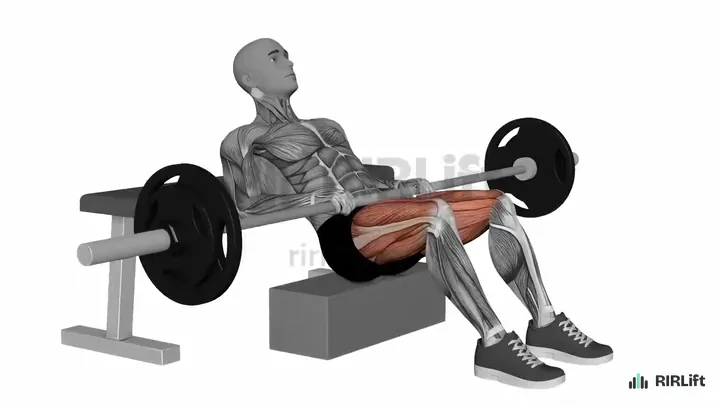
Hip Thrust

Glutes

Your glutes are the biggest muscle you own, and the hip thrust loads them hardest right where they are shortest, at full lockout. A barbell across your hips lets you keep adding weight for years, which is why it leads most full-body days built around shape and strength in the lower half.

How to do it

  1. Sit down with the bottom edge of your shoulder blades against a bench and a padded barbell over the crease of your hips.
  2. Plant your feet flat about hip-width apart, close enough that your shins will be vertical at the top.
  3. Tuck your chin, brace, and drive through your heels until your hips are level with your knees and your torso forms a flat tabletop.
  4. Squeeze your glutes for a second at the top, then lower your hips toward the floor under control and repeat.

Cues

  • Shins vertical at the top
  • Ribs down, chin tucked
  • Push the floor away with your heels

Common mistakes

  • Arching your lower back to get the bar higher: the movement ends when your hips reach knee height, not beyond.
  • Feet too far from the bench, which shifts the work to your hamstrings: walk them in until your shins stand straight at lockout.

Swap for: Dumbbell Hip Thrust, Smith Machine Hip Thrust, Glute Bridge

Quads and glutes, front-loaded squat

Goblet Squat

Quads, Glutes

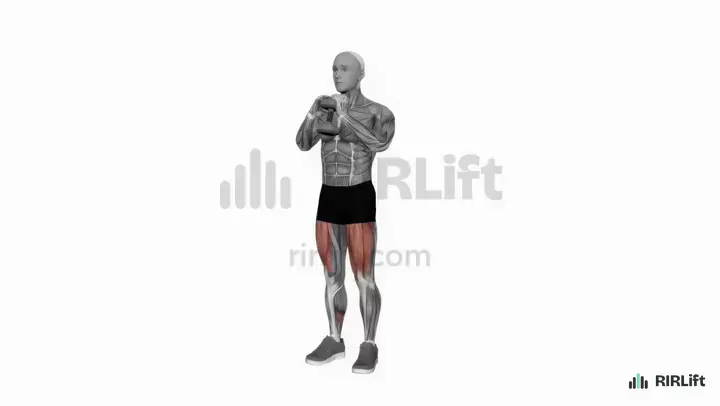
Holding one dumbbell at your chest keeps your torso upright almost by itself, so you can squat deep from your very first session. It trains your quads, glutes and inner thighs together, and it stays useful as a high-rep finisher long after you move to heavier squats.

How to do it

  1. Hold one dumbbell upright against your chest, cupping the top end with both hands.
  2. Stand with your feet a little wider than your hips and your toes turned out slightly.
  3. Sit down between your heels, keeping your chest tall and your knees tracking over your toes, until your elbows reach the inside of your knees.
  4. Drive up through your whole foot to stand tall, and repeat.

Cues

  • Elbows inside the knees at the bottom
  • Chest proud the whole way
  • Whole foot on the floor

Common mistakes

  • Letting the dumbbell drift away from your chest, which tips you forward: keep it pinned to your sternum.
  • Cutting depth as the set gets hard: hit the same bottom position on the last rep as on the first, and stop the set when you cannot.

Swap for: Dumbbell Squat, Leg Press, Heels-Elevated Goblet Squat

Glutes and quads, one leg at a time

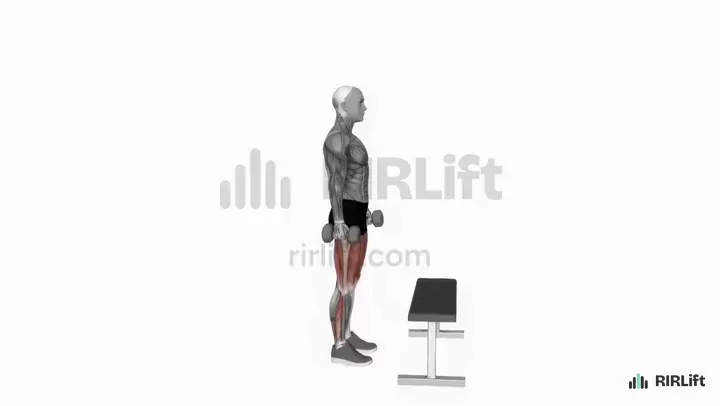
Step-Up

Quads, Glutes

Stepping onto a bench makes each leg lift your whole body on its own, which evens out a stronger side and trains the balance that two-leg lifts skip. It reads as a beginner move but gets hard fast once you hold real dumbbells.

How to do it

  1. Stand facing a bench or sturdy box about knee height, a dumbbell hanging at each side.
  2. Plant your whole right foot up on the box and lean your chest slightly forward over it.
  3. Push through the right heel to stand up on the bench, bringing the left foot up beside it without pushing off the floor.
  4. Step the left foot back down slowly, leave the right foot planted up there, and repeat all reps before switching legs.

Cues

  • Front heel does the work
  • No bounce off the back foot
  • Slow on the way down

Common mistakes

  • Jumping off the trailing foot to get up: keep that foot's toes light, as if the floor were hot.
  • Choosing a box so high your hip sinks below your knee: start at knee height or lower.

Swap for: Kettlebell Step-Up, Bulgarian Split Squat, Dumbbell Reverse Lunge

Build a session with Step-Up

Hamstrings and glutes, hip hinge

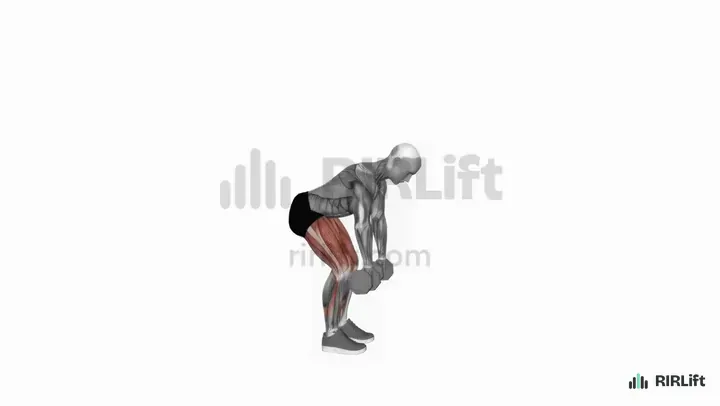
Dumbbell Romanian Deadlift

Hamstrings, Glutes

The Romanian deadlift loads your hamstrings and glutes through a long stretch, the half of the lower body that squats and step-ups leave light. With dumbbells you can learn the hinge at home or in the gym before moving to a barbell.

How to do it

  1. Stand tall, feet under your hips, dumbbells resting against the fronts of your thighs.
  2. Unlock your knees and send your hips back as if closing a car door with them, letting the dumbbells slide down your legs.
  3. Stop when your hamstrings are tight and the dumbbells sit around mid-shin or just below the knee, with your back still flat.
  4. Drive your hips forward to stand, finishing with your glutes squeezed, and repeat.

Cues

  • Hips travel back, not down
  • Dumbbells stay close to your legs
  • Long, flat spine

Common mistakes

  • Turning it into a squat by bending the knees more on the way down: knees stay softly bent and still.
  • Chasing the floor with a rounded back: depth ends where your back can no longer stay flat.

Swap for: Romanian Deadlift, Single-Leg RDL, Kettlebell Deadlift

Glutes and hamstrings, explosive hinge

Kettlebell Swing

Glutes, Hamstrings

The swing is a hip hinge done fast, so in one exercise your glutes, hamstrings, back and grip work hard while your heart rate climbs. It is the most time-efficient full-body move on the page for a short session.

How to do it

  1. Set a kettlebell a foot in front of you, feet a little wider than hip-width.
  2. Hinge down, grab the handle with both hands, and hike it back between your thighs like a football snap.
  3. Snap your hips forward hard so the bell floats up to chest height on momentum, arms loose.
  4. Let it fall back between your legs, hinging at the hips as it passes, and go straight into the next rep.

Cues

  • Hips drive it, arms only guide it
  • Stand fully tall at the top
  • Hike it high between the thighs

Common mistakes

  • Squatting the swing, with knees bending a lot and hips staying low: think hinge, with the hips going back.
  • Lifting the bell with your shoulders: if your arms are working, snap the hips harder and let the bell float.

Swap for: Dumbbell Swing, Kettlebell Deadlift, Dumbbell Romanian Deadlift

Upper-body pushing: chest, shoulders and triceps

Pushing builds the chest, shoulders and backs of the arms, the area most people mean when they say they want toned arms. One horizontal press and one overhead press per week cover it; the push-up counts as either a starting point or a high-rep finisher.

Chest, shoulders and triceps, bodyweight press

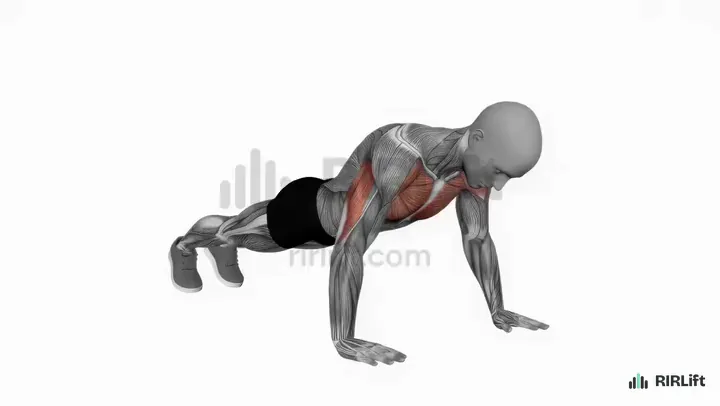
Push-Up

Chest

A push-up trains your chest, shoulders, triceps and the front of your trunk at once, anywhere. Working up from hands on a bench to the floor is one of the clearest strength goals you can set, and you can measure progress just by counting.

How to do it

  1. Set your hands just wider than your shoulders and step your feet back until your body is straight from head to heels. Put your hands on a bench or counter if the floor is too hard for now.
  2. Squeeze your glutes and brace your abs so your hips stay in line.
  3. Bend your elbows to about 45 degrees from your body and lower until your chest nearly touches the floor or the bench.
  4. Push the floor away until your arms are straight, and repeat.

Cues

  • One straight line, head to heels
  • Elbows angled back, not out wide
  • Chest touches first, not hips

Common mistakes

  • Hips sagging or piking: brace as if someone were about to poke your stomach, and raise your hands onto a bench if you cannot hold the line.
  • Half reps: every rep goes all the way down; a higher surface beats shorter reps.

Swap for: Incline Push-Up, Kneeling Push-Up, Flat Dumbbell Press

Build a session with Push-Up

Upper chest and shoulders, bench press

Incline Dumbbell Press

Chest

An incline press works the upper chest and the front of your shoulders with your back supported, so it is a comfortable first loaded press. Dumbbells let each arm find its own path, which many people find easier on the shoulders than a barbell.

How to do it

  1. Set a bench to about 30 degrees and sit back with a dumbbell on each thigh.
  2. Kick the dumbbells up one at a time as you lie back, and hold them beside your upper chest with your elbows below the handles.
  3. Press both dumbbells up and slightly in until your arms are straight over your shoulders.
  4. Lower slowly until the handles are level with your chest and you feel a stretch across it, then press again.

Cues

  • Shoulder blades pinned to the bench
  • Forearms vertical under the weight
  • Lower for two seconds

Common mistakes

  • Setting the bench too steep, which turns it into a shoulder press: 30 degrees is plenty.
  • Flaring your elbows straight out to the sides: keep them tucked about 45 degrees from your torso.

Swap for: Flat Dumbbell Press, Machine Incline Press, Push-Up

Shoulders and triceps, seated overhead press

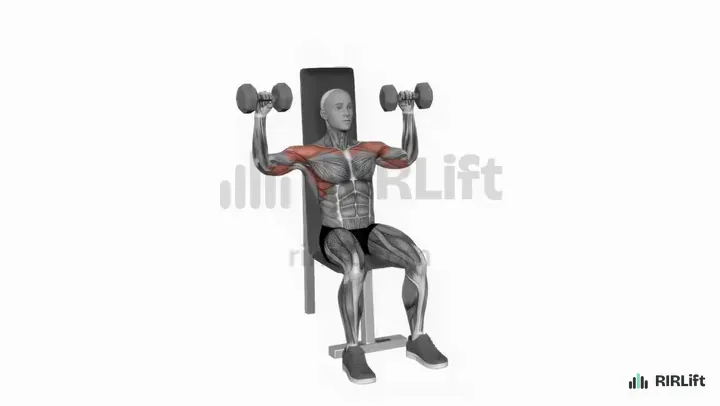
Dumbbell Shoulder Press

Shoulders

Pressing overhead builds the rounded shoulders that make the waist look narrower by contrast and that carry over to lifting things onto shelves. Sitting against an upright bench removes the leg drive, so the shoulders do all the work.

How to do it

  1. Set a bench upright and sit with your back against it, dumbbells at shoulder height, palms forward.
  2. Brace your abs so your lower back stays near the pad.
  3. Press both dumbbells up until your arms are straight and the handles are just over your head.
  4. Lower them back to ear height under control and repeat.

Cues

  • Back stays on the pad
  • Wrists stacked over elbows
  • Finish with biceps by your ears

Common mistakes

  • Leaning back into a steep arch to finish the rep: that turns the lift into an incline press. Lighten the dumbbells.
  • Stopping the lowering well above ear level: bring the handles to around ear height every rep for the full range.

Swap for: Machine Shoulder Press, Arnold Press, Alternating Dumbbell Shoulder Press

Upper-body pulling: back and biceps

Pulling is where many women feel weakest, and it pays back the most: a stronger back improves posture, balances all the pressing, and ends with your first pull-up. Pair one vertical pull with one row in every full-body week.

Lats and upper back, vertical pull

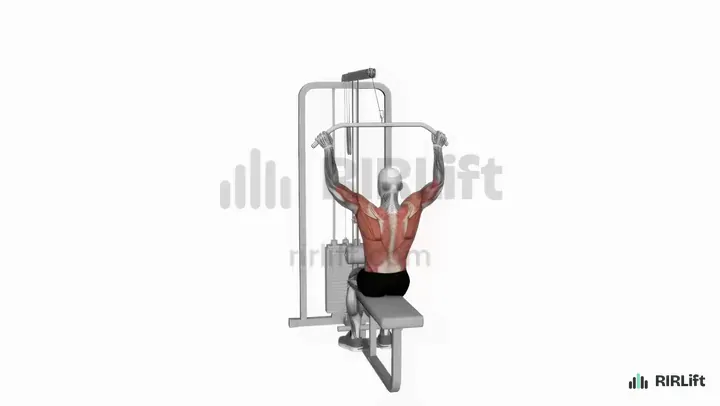
Lat Pulldown

Lats

The pulldown trains your lats, the wide muscles that give your back its V shape, and it lets you pick any load below your body weight. That makes it the standard road to a first pull-up, and a fixture of every gym-based full-body day.

How to do it

  1. Set the knee pad so your thighs are locked in, then stand up and take the bar a little wider than your shoulders.
  2. Sit down with the bar overhead, arms straight, and lean back very slightly.
  3. Pull your elbows down toward your back pockets until the bar reaches your upper chest.
  4. Let the bar rise slowly until your arms are straight and your shoulders lift, then repeat.

Cues

  • Elbows down to your back pockets
  • Chest up to meet the bar
  • Full stretch at the top

Common mistakes

  • Swinging back to yank the bar down: keep your torso angle fixed and choose a weight you can control.
  • Stopping halfway up: let your arms straighten fully each rep so the lats work through their whole length.

Swap for: Neutral-Grip Lat Pulldown, Assisted Pull-Up, Single-Arm Lat Pulldown

Lats and biceps, counterweighted pull-up

Assisted Pull-Up

Lats

The assisted machine is the pull-up itself with part of your body weight taken off, so every session moves you toward an unassisted rep. Reduce the counterweight a step whenever you hit the top of your rep range.

How to do it

  1. Set the counterweight, step up and kneel or stand on the platform, and take the handles with your palms facing away.
  2. Lower yourself until your arms are straight and your shoulders are stretched up toward your ears.
  3. Pull your chest toward the handles, driving your elbows down to your sides, until your chin clears your hands.
  4. Lower all the way back to straight arms and repeat.

Cues

  • Shoulders down before the elbows bend
  • Chin over the handles
  • Slow, full descent

Common mistakes

  • Using so much assistance that the set never gets hard: pick the setting where 8 to 12 reps leave you only 1 or 2 more.
  • Kicking or bouncing off the platform at the bottom: pause briefly with straight arms instead.

Swap for: Band-Assisted Pull-Up, Lat Pulldown, Chin-Up

Lats and upper back, braced row

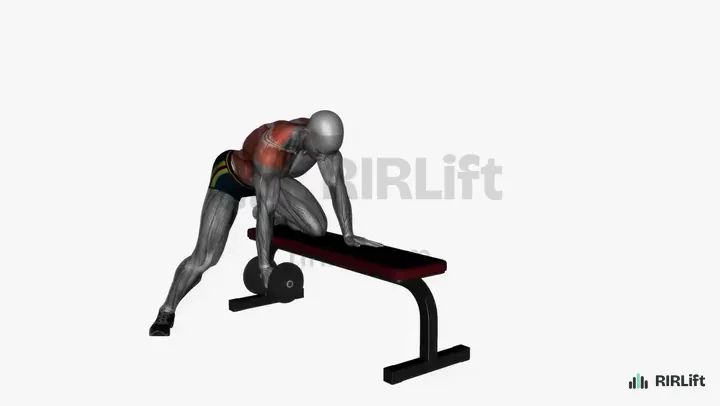
One-Arm Dumbbell Row

Lats, Upper Back

A one-arm row with a hand braced on a bench lets you pull a heavy dumbbell with your lower back fully supported. It balances all the pressing in a full-body day and works for posture as much as for shape.

How to do it

  1. Put one hand and the same-side knee on a bench, or brace one hand on the bench with both feet on the floor, back flat.
  2. Hold a dumbbell in the other hand with the arm straight beneath your shoulder.
  3. Pull the dumbbell up toward your hip, keeping your elbow close to your ribs, until it touches your side.
  4. Lower it until your arm is straight and you feel the shoulder blade stretch forward. Finish the set, then switch sides.

Cues

  • Pull toward the hip, not the chest
  • Torso stays square
  • Stretch at the bottom

Common mistakes

  • Rotating your chest open to heave the dumbbell up: lighten it until your shoulders stay level.
  • Shrugging the weight toward your ear: think of the elbow sliding back along your ribs.

Swap for: Seated Cable Row, Dumbbell Bent-Over Row, Incline Dumbbell Row

Core and carries

Every lift above already trains your trunk, so the core work here is short: one exercise that holds your spine still and one heavy carry. Put them at the end, where they cannot tire you out before the big lifts.

Grip, traps and trunk, loaded carry

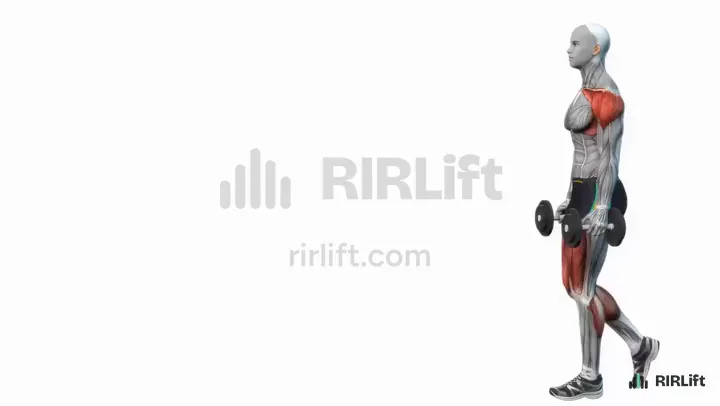
Farmer's Walk

Forearms, Traps, Shoulders
Walking with a heavy dumbbell in each hand trains your grip, your upper back and every muscle that keeps you upright, which is exactly what carrying shopping or a child asks of you. It also makes a quick, hard finisher at the end of a session.

How to do it

  1. Stand between two heavy dumbbells, hinge down with a flat back, and pick them up.
  2. Stand tall with your shoulders pulled back and down and your arms straight.
  3. Walk forward with short, quick steps, torso upright, the dumbbells still.
  4. Walk for the target distance or time, then set the dumbbells down the way you picked them up.

Cues

  • Tall posture, shoulders down
  • Short, quick steps
  • Squeeze the handles hard

Common mistakes

  • Leaning to one side or letting the shoulders round forward: if posture breaks, the walk is over.
  • Going so light the walk is easy: choose dumbbells you can only just hold for the distance.

Swap for: Dumbbell Suitcase Carry, Kettlebell Swing, Dumbbell Shrug

Deep abs, anti-extension

Dead Bug

Abs

The dead bug teaches your abs to keep your lower back still while your arms and legs move, which is the job they do in every squat, hinge and press above. It is low-stress enough to do every session.

How to do it

  1. Lie on your back, arms pointing straight up at the ceiling, hips and knees bent to 90 degrees.
  2. Press your lower back gently into the floor and keep it there.
  3. Slowly reach one arm overhead while straightening the opposite leg until both hover just above the floor.
  4. Bring them back to the start and repeat on the other side, alternating for the full set.

Cues

  • Lower back stays on the floor
  • Breathe out as you reach
  • Slow and controlled

Common mistakes

  • Letting your lower back arch as the leg goes long: shorten the reach to where your back stays down.
  • Rushing the reps: take about three seconds out and three back for each side.

Swap for: Side Plank, Pallof Press, Hanging Knee Raise

Build a session with Dead Bug

Put them together: example sessions

Each session below picks from the exercises above for one situation, with the sets, reps, rest and RIR filled in. Open one in the session builder to change a pick, price it from a recent set, and add it to RIRLift.

Session 1

Gym, three full-body days a week

Open in the session builder
  • Workouts3× a week
  • Working sets40 a week
  • Per workout~35 min
  • EquipmentBarbells, Flat Bench, Lat Pulldown, Dumbbells +2

You have a regular gym membership, three free evenings, and you want visible shape in your glutes and shoulders and a stronger back.

Three days lets each muscle get trained three times a week with only five or six exercises per session, so no workout runs long. Each day opens with a barbell or machine lift you can load heavily at 2 reps in reserve, then moves to dumbbell and cable work at 1 in reserve, where getting close to failure is safe. Day A favors glutes and pulling, day B favors quads and pressing, day C mixes both, giving roughly 10 to 12 hard sets a week for glutes and back.

Full Body A
ExerciseSets × repsRIRRest
Hip Thrust1 warm-up set firstPause 1 s at the top. 3 × 8–12 2 2 min
Lat Pulldown 3 × 8–12 1 90 s
Incline Dumbbell Press 3 × 8–12 1 90 s
Dumbbell Romanian Deadlift 3 × 10–12 2 90 s
Dead BugPer side. 2 × 8–12 2 45 s

Open Full Body A in the session builder

Full Body B
ExerciseSets × repsRIRRest
Goblet Squat1 warm-up set first 3 × 10–15 2 90 s
Dumbbell Shoulder Press 3 × 8–12 1 90 s
One-Arm Dumbbell RowPer arm. 3 × 10–12 1 1 min
Step-UpPer leg. 2 × 8–12 1 1 min
Farmer's WalkOne rep = 30 to 40 m walk. 2 × 1 1 90 s

Open Full Body B in the session builder

Full Body C
ExerciseSets × repsRIRRest
Hip Thrust 3 × 10–15 1 90 s
Assisted Pull-Up1 warm-up set first 3 × 6–10 1 2 min
Push-UpHands on a bench if needed. 3 × 6–15 1 90 s
Dumbbell Romanian Deadlift 2 × 10–15 2 90 s
Dead BugPer side. 2 × 8–12 2 45 s

Open Full Body C in the session builder

How to run it
Train on three non-consecutive days, such as Monday, Wednesday and Friday. Do the days in order and repeat. Start each first exercise with one lighter warm-up set.
How to progress
Double progression: once every set of an exercise reaches the top of its rep range at the target reps in reserve, add the smallest available step, 5 pounds on the hip thrust or the next dumbbell up, and work back up. On the assisted pull-up, remove one plate of assistance instead.

Session 2

Home, dumbbells and a kettlebell, 30 minutes

Open in the session builder
  • Workouts2× a week
  • Working sets28 a week
  • Per workout~25 min
  • EquipmentDumbbells, Kettlebells, Flat Bench

You train at home with a few pairs of dumbbells, one kettlebell and a bench or sturdy step, and you have about half an hour.

There is no barbell or machine, so the hip thrust and pulldown drop out and the session leans on dumbbell versions plus the swing for a fast, sweaty finish. Exercises are paired as supersets of a lower-body move with an upper-body move, so one muscle rests while the other works and the session fits in 30 minutes. Most sets stop at 1 rep in reserve because home dumbbells top out quickly; the swing stops at 2 so your form holds when you are breathing hard.

Home A
ExerciseSets × repsRIRRest
A1 Goblet SquatThen go straight to the row. 3 × 10–15 1 30 s
A2 One-Arm Dumbbell RowPer arm. 3 × 10–15 1 75 s
B1 Dumbbell Romanian Deadlift 3 × 10–15 1 30 s
B2 Dumbbell Shoulder PressSeated on the bench or standing. 3 × 8–15 1 75 s
Kettlebell Swing 3 × 15–20 2 1 min

Open Home A in the session builder

Home B
ExerciseSets × repsRIRRest
A1 Step-UpPer leg. 3 × 8–12 1 30 s
A2 Push-Up 3 × 6–15 1 75 s
B1 Kettlebell Swing 3 × 15–20 2 30 s
B2 One-Arm Dumbbell RowPer arm. 2 × 12–15 1 1 min
Dead BugPer side. 2 × 8–12 2 30 s

Open Home B in the session builder

How to run it
Do Home A and Home B twice each over two weeks, or alternate them on two or three days a week. Do the paired exercises back to back, then rest.
How to progress
When a pair of dumbbells feels light at the high end of its rep range, slow the lowering to three seconds before buying heavier ones. Add swings by adding a set rather than rushing reps.

Session 3

Gym, glutes plus a first pull-up

Open in the session builder
  • Workouts2× a week
  • Working sets29 a week
  • Per workout~40 min
  • EquipmentAssisted Machine, Barbells, Flat Bench, Dumbbells +2

You already lift, your lower body is strong, and the goal now is your first unassisted pull-up while keeping your glute work.

A pull-up is a skill that improves with frequent practice, so both days open with the assisted pull-up while you are fresh, with longer rests and 1 rep in reserve. Pulldowns and rows follow to add back volume without the same fatigue. The lower body keeps one heavy glute lift and one hinge per day at 2 reps in reserve, enough to hold your progress while pulling gets the priority.

Pull-Up Day A
ExerciseSets × repsRIRRest
Assisted Pull-Up1 warm-up set firstSlow 3 s lowering. 4 × 5–8 1 2:30 min
Hip Thrust1 warm-up set first 3 × 6–10 2 2:30 min
One-Arm Dumbbell RowPer arm. 3 × 8–12 1 90 s
Incline Dumbbell Press 3 × 8–12 2 90 s
Farmer's WalkOne rep = 30 to 40 m walk. 2 × 1 1 90 s

Open Pull-Up Day A in the session builder

Pull-Up Day B
ExerciseSets × repsRIRRest
Assisted Pull-Up1 warm-up set first 3 × 6–10 1 2 min
Lat PulldownClose to the chest, pause 1 s. 3 × 10–12 1 90 s
Goblet Squat 3 × 8–12 2 2 min
Dumbbell Romanian Deadlift 3 × 8–12 2 2 min
Dumbbell Shoulder Press 2 × 8–12 1 90 s

Open Pull-Up Day B in the session builder

How to run it
Two days a week, at least two days apart. Keep any other leg or glute training you do on other days light.
How to progress
Take away one step of assistance each time you reach 8 clean reps on all sets. Once you can do sets of 5 with the lightest setting, test an unassisted rep at the start of a session.

Make it fit you

Questions

What exercise works out your full body?

No single exercise trains everything, but the kettlebell swing and the farmer's walk come close: the swing works glutes, hamstrings, back and grip in one fast movement, and the carry works grip, upper back and trunk. For a complete session, combine a squat, a hinge, a push, a pull and a carry.

How many days a week should a woman do full-body workouts?

Two or three. Two full-body days already train each muscle twice a week; three lets you split the exercises so no session runs past 45 to 60 minutes. Leave a day between sessions so your legs recover for the next one.

Will lifting weights in a full-body routine make me bulky?

Building visible muscle is slow for anyone, and it takes months of hard, progressive training plus eating enough. In practice, lifting with these plans makes your shape firmer and more defined; how lean you look is mostly set by your diet.

How many sets and reps should women do for full body exercises?

Two to four sets per exercise, 8 to 15 reps, stopping 1 to 2 reps short of failure. Women train in the same rep ranges as men; the plans on this page use 6 to 12 reps for the big lifts and up to 20 for the swing.

Can I do a full-body workout every day?

Not with hard sets. Your muscles need about 48 hours to recover from a session taken close to failure. Train full body two to four days a week, and walk or do mobility on the days between.