Full body exercises at the gym: barbells, machines and cables

The best full body exercises at the gym are the barbell back squat or leg press for your quads and glutes, the trap bar deadlift and Romanian deadlift for your hips and hamstrings, the bench press and overhead press for pushing, and the lat pulldown, pull-up and seated cable row for your back. A full-body gym session takes one squat or leg press, one hinge, one press and one pull, plus a cable core move, which is five exercises. Use the rack, machines and cable stack a home gym lacks to load each one heavier and more precisely.

  1. Barbell Back Squat Quads, Glutes, Adductors
  2. Trap Bar Deadlift Quads, Glutes
  3. Barbell Bench Press Chest
  4. Lat Pulldown Lats
  5. Leg Press Quads, Glutes
  6. Seated Cable Row Upper Back, Lats
  7. Barbell Overhead Press Shoulders
  8. Romanian Deadlift Hamstrings, Glutes
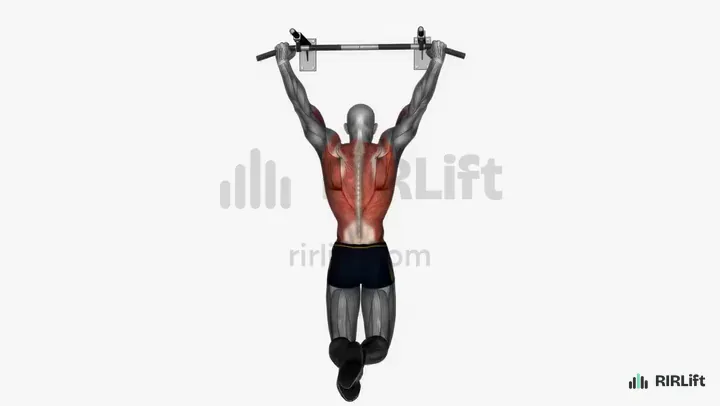
  9. Pull-Up Lats

Squat and leg press: quads and glutes

A gym gives you two things a home rarely has for the legs: a rack to squat heavy and a leg press to load the quads with your back supported. Use one of these in every session, alternating them across the week.

Quads, glutes and adductors, barbell squat

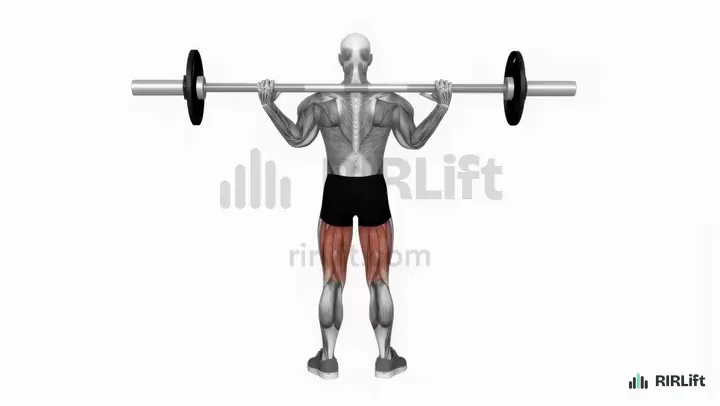
Barbell Back Squat

Quads, Glutes, Adductors

The back squat lets you put more load on your legs than any other free-weight lift, and the rack, bar and plates are exactly what a gym has and a home usually lacks. It trains quads, glutes, inner thighs and your trunk in one pattern.

How to do it

  1. Set the bar in the rack at mid-chest height, step under it, and rest it across the meaty part of your upper back.
  2. Grip it just outside your shoulders, stand up to unrack, and take two short steps back with feet about shoulder-width.
  3. Brace your abs, then sit down and slightly back, knees moving out over your toes, until your thighs are at least parallel to the floor.
  4. Drive up through your midfoot, keeping your chest and hips rising together, and finish standing tall.

Cues

  • Big breath and brace before each rep
  • Knees out over the toes
  • Chest and hips rise together

Common mistakes

  • Hips shooting up first so the squat turns into a good morning: lighten the bar and lead with your chest.
  • Squatting without safeties set: set the rack's safety arms just below your bottom position every time.

Swap for: Smith Squat, Front Squat, Hack Squat

Quads and glutes, machine squat

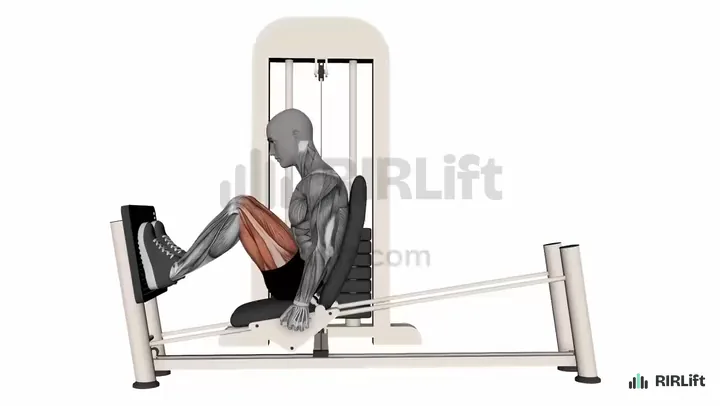
Leg Press

Quads, Glutes

The leg press loads your legs heavily with your back supported and no balance to manage, so you can push close to failure without the technical risk of a squat. It is the gym's best second leg exercise, or the main one when squats do not suit you.

How to do it

  1. Sit in the sled with your back flat against the pad and your feet hip-width on the platform.
  2. Push the platform up a little and release the safety handles.
  3. Bend your knees and let the platform come toward you until your knees are near your chest, without your lower back lifting off the pad.
  4. Press through your whole foot until your legs are nearly straight, without locking the knees, and repeat.

Cues

  • Lower back stays on the pad
  • Knees track over the toes
  • Stop just short of lockout

Common mistakes

  • Lowering so far that your hips curl off the seat: the depth ends where your back stays flat.
  • Snapping the knees straight at the top: keep a slight bend so the legs, not the joints, hold the weight.

Swap for: 45-Degree Leg Press, Hack Squat, Goblet Squat

Build a session with Leg Press

Hinges and hamstrings: deadlifts and leg curls

Hinges load the glutes, hamstrings and back; the leg curl finishes the hamstrings by bending the knee. A full-body week needs at least one heavy hinge and benefits from a few sets of curls.

Glutes, quads and back, heavy pull

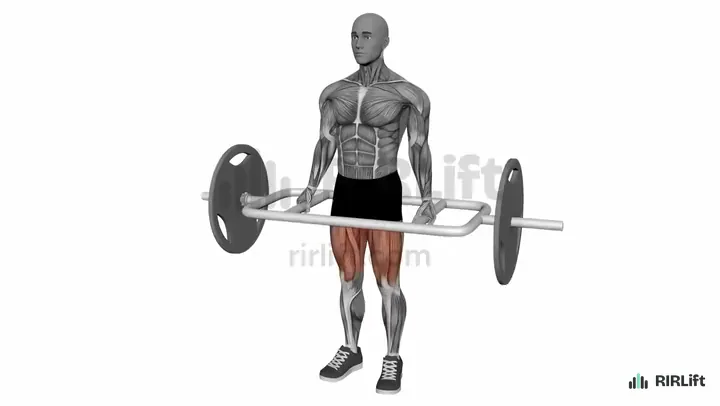
Trap Bar Deadlift

Quads, Glutes

With the handles at your sides, the trap bar deadlift sits between a squat and a deadlift and is easier to learn than either. It lets you lift the heaviest weight of any exercise here, which makes it the core strength lift of a gym full-body day.

How to do it

  1. Step into the center of the trap bar, feet hip-width apart.
  2. Hinge and bend your knees to grip the handles, arms straight, back flat and chest up.
  3. Take the slack out of the bar, brace, and push the floor away until you are standing tall with hips locked out.
  4. Lower the bar as your hips travel back and the knees bend, set it down, and reset before the next rep.

Cues

  • Push the floor away
  • Arms are hooks, not levers
  • Stand tall, then lower

Common mistakes

  • Jerking the bar off the floor: pull the slack out first so the bar is tight before it moves.
  • Leaning back at the top: stand straight with glutes squeezed, nothing more.

Swap for: Barbell Deadlift, Romanian Deadlift, Kettlebell Deadlift

Hamstrings and glutes, barbell hinge

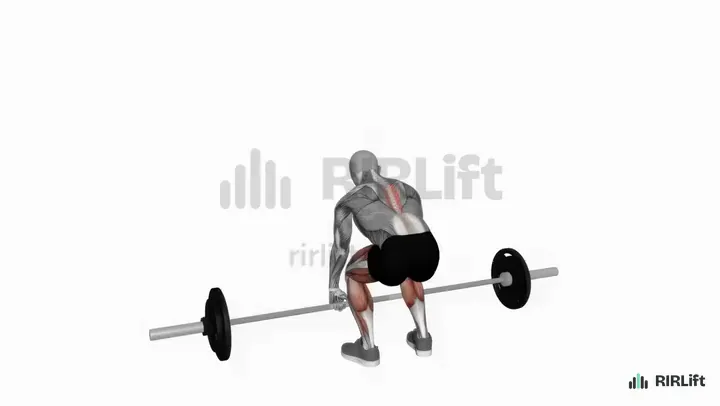
Romanian Deadlift

Hamstrings, Glutes

The barbell Romanian deadlift loads the hamstrings through a long stretch, and in a gym you can keep adding plates well past what home dumbbells allow. Squats and leg presses under-train the hamstrings, so a hinge like this belongs in every full-body week.

How to do it

  1. Hold a barbell against your thighs with an overhand grip just outside your legs, standing tall.
  2. Soften your knees and push your hips back so the bar slides down your thighs.
  3. Keep lowering until you feel a strong hamstring stretch, usually with the bar a little below the knees, back flat.
  4. Bring your hips through to stand back up and repeat.

Cues

  • Bar stays against your legs
  • Hips back, shins still
  • Neutral neck

Common mistakes

  • Lowering the bar by rounding your back instead of moving your hips: stop where your hips stop.
  • Letting the bar drift forward away from your legs: keep it brushing your thighs and shins.

Swap for: Dumbbell Romanian Deadlift, Stiff-Leg Deadlift, Seated Leg Curl

Hamstrings, knee flexion

Seated Leg Curl

Hamstrings

The leg curl trains the hamstrings' other job, bending the knee, which no hinge covers. The seated version works the muscle in a stretched position and is easy to take near failure safely, so it rounds out the lower body in a few sets.

How to do it

  1. Set the backrest so your knees line up with the machine's pivot, and lock the thigh pad down firmly.
  2. Rest the lower pad just above your heels with legs straight.
  3. Curl your heels down and back under the seat as far as they go.
  4. Let the pad rise slowly until your legs are straight again, and repeat.

Cues

  • Thigh pad snug
  • Pull heels under the seat
  • Two seconds on the way up

Common mistakes

  • Lifting your hips off the seat to finish the rep: tighten the thigh pad and lighten the stack.
  • Letting the stack crash between reps: control it all the way to straight legs.

Swap for: Lying Leg Curl, Romanian Deadlift, Nordic Hamstring Curl

Pushing: bench, machine and overhead press

Pick one horizontal press per day and add the overhead press once or twice a week. The bench press is the main barbell lift; the machine press is the safer way to go close to failure without a spotter.

Chest, shoulders and triceps, barbell press

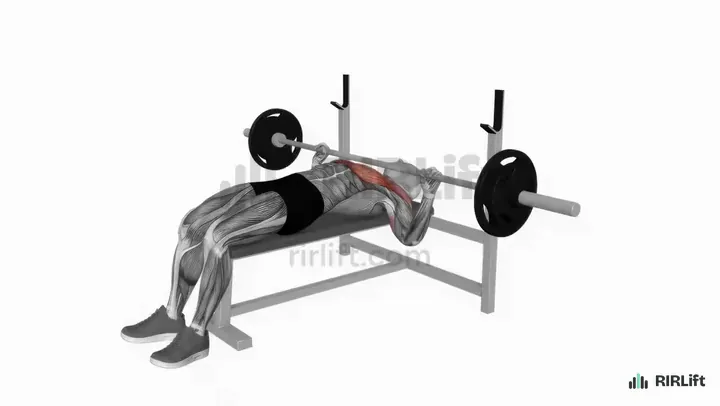
Barbell Bench Press

Chest

The bench press is the upper body's heaviest press and the easiest to measure progress on. In a gym, with a rack and safeties, it is the natural main push of a full-body day.

How to do it

  1. Lie on the bench with your eyes under the bar, feet flat, and shoulder blades squeezed together and down.
  2. Grip the bar a little wider than your shoulders and lift it out to straight arms over your shoulders.
  3. Lower the bar to your lower chest with elbows about 45 degrees from your sides.
  4. Press it back up and slightly toward your face until your arms are straight again.

Cues

  • Shoulder blades pinned
  • Touch the lower chest
  • Feet drive into the floor

Common mistakes

  • Bouncing the bar off your chest: touch lightly, then press.
  • Pressing without a spotter or safeties near failure: set safety arms or keep 2 reps in reserve.

Swap for: Flat Dumbbell Press, Smith Machine Bench Press, Machine Chest Press

Chest and triceps, machine press

Machine Chest Press

Chest

A machine press guides the path for you, so you can push it close to failure with no spotter. It is the press to start on if you are new, and a good second chest exercise after the bench press.

How to do it

  1. Set the seat so the handles line up with the middle of your chest.
  2. Sit with your back flat against the pad and grip the handles.
  3. Press them forward until your arms are straight, without letting your shoulders roll forward off the pad.
  4. Return slowly until your hands are just in front of your chest and you feel a stretch, then press again.

Cues

  • Handles at mid-chest
  • Shoulders stay on the pad
  • Slow return

Common mistakes

  • Seat set too high or low, which moves the work to your shoulders: handles go at chest height.
  • Cutting the return short: let the handles come back to a full stretch each rep.

Swap for: Barbell Bench Press, Machine Incline Press, Push-Up

Shoulders and triceps, standing press

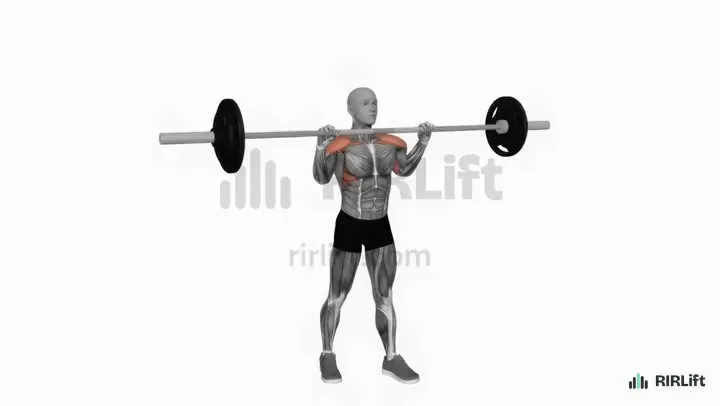
Barbell Overhead Press

Shoulders

Pressing a barbell overhead while standing trains your shoulders, triceps and trunk together, and makes your shoulders noticeably stronger for every other upper-body lift. It is the vertical push of a barbell full-body plan.

How to do it

  1. Set the bar in the rack at upper-chest height and take a grip just outside your shoulders.
  2. Unrack it onto the front of your shoulders, step back, and squeeze your glutes.
  3. Press the bar straight up, moving your head back slightly to let it pass, then push your head forward under it at lockout.
  4. Lower it back to your shoulders under control and repeat.

Cues

  • Glutes tight, ribs down
  • Bar travels in a straight line
  • Head through at the top

Common mistakes

  • Leaning way back to finish the press: squeeze your glutes harder and drop the weight.
  • Pressing the bar out in front of you: keep it close to your face on the way up.

Swap for: Dumbbell Shoulder Press, Machine Shoulder Press, Landmine Press

Pulling: pulldowns, pull-ups and rows

Every full-body day pairs a vertical pull with a row. The cable stack lets you dial in the exact load on both, which is the main thing the gym adds to back training over a pull-up bar at home.

Lats, cable vertical pull

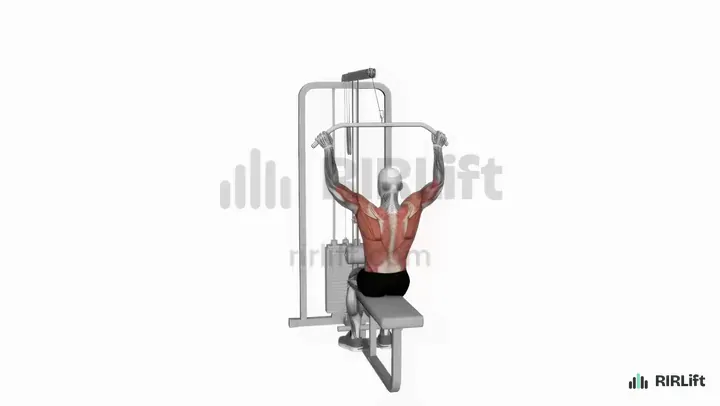
Lat Pulldown

Lats

The pulldown trains the same pattern as a pull-up at any weight you choose, so it fits beginners who cannot do a pull-up yet and experienced lifters who want more back volume than pull-ups alone give.

How to do it

  1. Lock your thighs under the pad and take the bar a little wider than shoulder-width.
  2. Sit tall with straight arms and a slight lean back.
  3. Pull the bar to your upper chest by driving your elbows down toward your hips.
  4. Let the bar rise under control until your arms are straight, then repeat.

Cues

  • Drive elbows to hips
  • Chest up
  • Full stretch overhead

Common mistakes

  • Leaning far back and rowing the bar down: keep the lean small and fixed.
  • Pulling the bar behind your neck: always pull to the front of your chest.

Swap for: Pull-Up, Neutral-Grip Lat Pulldown, Assisted Pull-Up

Lats and biceps, bodyweight vertical pull

Pull-Up

Lats

A strict pull-up moves your whole body weight and builds a wide, strong back. If you can do 5 or more, use it in place of the pulldown; until then, the pulldown and assisted machine build you toward it.

How to do it

  1. Hang from the bar with an overhand grip a little wider than your shoulders, arms straight.
  2. Pull your shoulder blades down to start the movement.
  3. Pull your chest toward the bar until your chin clears it, elbows driving down.
  4. Lower all the way to a straight-arm hang and repeat.

Cues

  • Shoulders away from ears first
  • Chin over the bar
  • Dead hang between reps

Common mistakes

  • Kicking or swinging to get over the bar: cross your ankles and keep the body still.
  • Half reps: every rep starts from straight arms.

Swap for: Assisted Pull-Up, Chin-Up, Lat Pulldown

Build a session with Pull-Up

Upper back and lats, cable row

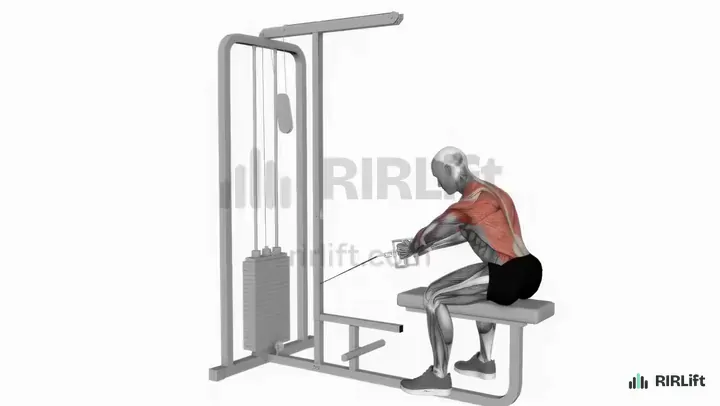
Seated Cable Row

Upper Back, Lats

The seated cable row keeps tension on your back through the whole pull and supports you through your feet, so you can row heavy without fatiguing your lower back. It is the horizontal pull that balances the bench press.

How to do it

  1. Sit at the row station with feet on the platform, knees softly bent, and hold the handle with arms straight.
  2. Sit tall with your chest up and shoulders down.
  3. Pull the handle to your stomach, driving your elbows back past your sides and pinching your shoulder blades.
  4. Let your arms straighten and your shoulder blades slide forward under control, then pull again.

Cues

  • Torso stays upright
  • Elbows past your sides
  • Let the shoulders reach forward

Common mistakes

  • Rocking back and forth to move the stack: if your torso swings, the weight is too heavy.
  • Shrugging the handle up toward your chest: pull toward your belly button.

Swap for: Chest-Supported Row, One-Arm Dumbbell Row, Barbell Row

Upper back, machine row

Chest-Supported Row

Upper Back, Lats

With your chest on a pad, this row removes your lower back from the movement entirely, so it is the row to use after squats and deadlifts have tired it, or when you want to push the upper back close to failure.

How to do it

  1. Set the seat so the handles are at chest height and your chest rests against the pad.
  2. Take the handles with arms straight.
  3. Row them back until your elbows pass your torso, pinching your shoulder blades.
  4. Return to straight arms slowly and repeat.

Cues

  • Chest stays on the pad
  • Elbows back, not up
  • One-second squeeze

Common mistakes

  • Lifting your chest off the pad to finish reps: stop the set there.
  • Short reps that never straighten the arms: get the full stretch every time.

Swap for: Seated Cable Row, Incline Dumbbell Row, Machine Row

Cable core work

Heavy squats, deadlifts and presses already work your trunk hard, so the core needs only two to four extra sets a session. Cables are the gym's best tool for it, because they resist rotation in ways bodyweight floor work cannot.

Obliques, rotational core

Cable Woodchop

Abs

The cable woodchop trains your trunk to turn and to brake turning, the job of the obliques in every throw, swing and twist. A cable keeps tension through the whole arc, which floor exercises cannot.

How to do it

  1. Set a cable handle at shoulder height or above and stand side-on to the machine, feet wider than your hips.
  2. Grab the handle two-handed, arms nearly straight.
  3. Pull the handle diagonally downward across your body to the opposite hip, turning through your torso as your back foot pivots.
  4. Return slowly along the same path. Finish the set, then switch sides.

Cues

  • Arms long, torso turns
  • Pivot the back foot
  • Control the return

Common mistakes

  • Pulling with the arms only: the arms stay straight and the chest rotates.
  • Letting the cable whip you back: slow down the return, which is half the work.

Swap for: Pallof Press, Dumbbell Woodchop, Side Plank

Deep core, anti-rotation

Pallof Press

Abs

The Pallof press asks your trunk to stay still while a cable tries to twist you, which is the core's main job in heavy squats and deadlifts. It is quick to set up and easy to load progressively.

How to do it

  1. Set a cable at chest height and stand side-on to it, holding the handle at your chest with both hands.
  2. Step away until the cable is taut, feet hip-width, knees soft.
  3. Press the handle straight out in front of your chest without letting your torso turn toward the machine.
  4. Hold for two seconds, bring it back to your chest, and repeat. Finish the set, then switch sides.

Cues

  • Square hips and shoulders
  • Hold two seconds out
  • Slow in and out

Common mistakes

  • Standing too close, so the cable barely pulls: step out until you feel it.
  • Letting your hips twist toward the stack: that is the movement you are training to resist.

Swap for: Cable Woodchop, Dead Bug, Side Plank

Put them together: example sessions

Each session below picks from the exercises above for one situation, with the sets, reps, rest and RIR filled in. Open one in the session builder to change a pick, price it from a recent set, and add it to RIRLift.

Session 1

Barbell basics, three days a week

Open in the session builder
  • Workouts3× a week
  • Working sets40 a week
  • Per workout~40 min
  • EquipmentBarbells, Flat Bench, Cable Row, Seated Leg Curl +6

You have a full gym, some lifting experience, and you want strength and size from the big barbell lifts with a short list of exercises.

Three sessions let each muscle be trained three times a week while each day holds only five exercises. The main barbell lift of each day stays at 2 reps in reserve and lower reps, so form holds and you can add weight steadily; the machine and cable work after it goes to 1 in reserve. Squat, hinge, press, pull and core every day gives roughly 9 to 12 hard sets per muscle per week.

Full Body A
ExerciseSets × repsRIRRest
Barbell Back Squat2 warm-up sets first 3 × 5–8 2 3 min
Barbell Bench Press1 warm-up set first 3 × 5–8 2 3 min
Seated Cable Row 3 × 8–12 1 90 s
Seated Leg Curl 2 × 10–15 1 1 min
Pallof PressPer side. 2 s hold. 2 × 10–12 2 45 s

Open Full Body A in the session builder

Full Body B
ExerciseSets × repsRIRRest
Trap Bar Deadlift2 warm-up sets first 3 × 4–6 2 3 min
Barbell Overhead Press1 warm-up set first 3 × 6–10 2 2:30 min
Lat Pulldown 3 × 8–12 1 90 s
Leg Press 2 × 10–15 1 2 min
Cable WoodchopPer side. 2 × 10–12 1 45 s

Open Full Body B in the session builder

Full Body C
ExerciseSets × repsRIRRest
Barbell Back Squat1 warm-up set first 3 × 6–10 2 2:30 min
Machine Chest Press 3 × 8–12 1 90 s
Pull-UpUse the assisted machine if needed. 3 × 5–10 1 2 min
Romanian Deadlift 3 × 8–12 2 2 min
Pallof PressPer side. 2 × 10–12 2 45 s

Open Full Body C in the session builder

How to run it
Train on three non-consecutive days and run A, B, C in order. Warm up the first lift with one or two lighter sets.
How to progress
On the barbell lifts, add 5 pounds once every set reaches the top of its rep range at 2 reps in reserve. On machines and cables, move up one plate in the stack under the same rule.

Session 2

New to the gym, machines first

Open in the session builder
  • Workouts2× a week
  • Working sets25 a week
  • Per workout~30 min
  • EquipmentLeg Press, Chest Press, Lat Pulldown, Seated Leg Curl +2

You are new to the weights floor, the barbell area feels intimidating, and you want two sessions you can do confidently from week one.

Machines set the path, so you can learn how hard a set close to failure feels without learning a barbell technique at the same time. Each session covers legs, chest, back and core in five machine or cable exercises, held at 2 reps in reserve for the first month while you learn to judge effort. Two days a week is enough to make fast progress when you are new.

Session A
ExerciseSets × repsRIRRest
Leg Press1 warm-up set first 3 × 10–15 2 2 min
Machine Chest Press 3 × 10–12 2 90 s
Lat Pulldown 3 × 10–12 2 90 s
Seated Leg Curl 2 × 10–15 2 1 min
Pallof PressPer side. 2 × 10–12 2 45 s

Open Session A in the session builder

Session B
ExerciseSets × repsRIRRest
Leg PressFeet a little higher on the platform. 3 × 12–15 2 2 min
Chest-Supported Row 3 × 10–12 2 90 s
Machine Chest Press 2 × 12–15 2 90 s
Lat Pulldown 2 × 12–15 2 90 s
Cable WoodchopPer side. 2 × 10–12 2 45 s

Open Session B in the session builder

How to run it
Do Session A and Session B once each per week with at least two days between. Write down the seat and pin settings so you can set up quickly next time.
How to progress
When all sets of an exercise reach the top of the rep range, move the pin down one plate. After about six weeks, drop the target to 1 rep in reserve, or move on to the barbell plan.

Session 3

Busy gym, 45 minutes, supersets

Open in the session builder
  • Workouts3× a week
  • Working sets44 a week
  • Per workout~30 min
  • EquipmentLeg Press, Chest Press, Lat Pulldown, Barbells +5

You train at peak hours, you have about 45 minutes, and you would rather grab one station and a nearby cable than wait for a rack.

Pairing a push with a pull at nearby stations halves the rest time without letting either muscle rest less, so a full-body session fits in 45 minutes. The day leans on the leg press, cable stack, and pull-up bar, which free up faster than the squat rack; the deadlift appears once because a trap bar is rarely in demand. Most sets stop at 1 rep in reserve since machines and cables are safe to push hard.

Day A
ExerciseSets × repsRIRRest
Leg Press1 warm-up set first 3 × 10–15 1 2 min
A1 Machine Chest PressThen straight to the pulldown. 3 × 8–12 1 30 s
A2 Lat Pulldown 3 × 8–12 1 90 s
Romanian Deadlift 3 × 8–12 2 2 min
B1 Pallof PressPer side. 2 × 10–12 2 30 s
B2 Cable WoodchopPer side. 2 × 10–12 1 1 min

Open Day A in the session builder

Day B
ExerciseSets × repsRIRRest
Trap Bar Deadlift1 warm-up set first 3 × 5–8 2 2:30 min
A1 Barbell Overhead PressThen straight to the row. 3 × 6–10 2 30 s
A2 Seated Cable Row 3 × 8–12 1 90 s
B1 Pull-Up 2 × 5–10 1 30 s
B2 Seated Leg Curl 2 × 10–15 1 1 min

Open Day B in the session builder

How to run it
Run Day A and Day B, two or three sessions per week, alternating. Do each pair back to back, then rest the listed time.
How to progress
Add a rep per set each week until you hit the top of the range, then increase the load. If the gym is quiet, swap the leg press for the back squat.

Make it fit you

Questions

What is the best gym workout for building a full body?

Three full-body sessions a week built around a squat or leg press, a deadlift variation, a press and a pull, each taken 1 to 2 reps short of failure for 3 sets. The barbell plan on this page follows that template. The best routine is the one you can keep progressing on, so track your weights and reps.

What are the 10 best full-body exercises?

For a gym: barbell back squat, leg press, trap bar deadlift, Romanian deadlift, bench press, overhead press, lat pulldown, pull-up, seated cable row, and the Pallof press for core. Together they cover every major muscle with compound lifts.

What are 5 full-body workouts?

Five exercises that make one full-body workout: a back squat, a trap bar deadlift, a bench press, a lat pulldown and a Pallof press. Do 3 sets of each in that order, with the heavy lifts first, and you have trained everything.

How many exercises should a full-body gym workout have?

Four to six. Fewer than four leaves a muscle group out; more than six usually means the last exercises get done tired and badly. Spread the rest across the other sessions of the week.

Is a full-body workout better than a split at the gym?

For two or three gym days a week, full body is better, because each muscle gets trained more often. Once you train four or more days, an upper/lower split or push/pull/legs becomes easier to organize.