
Smith machine exercises for legs, glutes and pressing, with sessions you can run on one machine
Published October 19, 2026
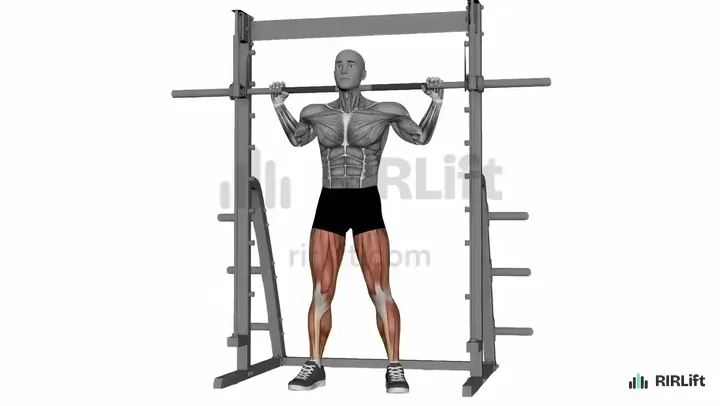
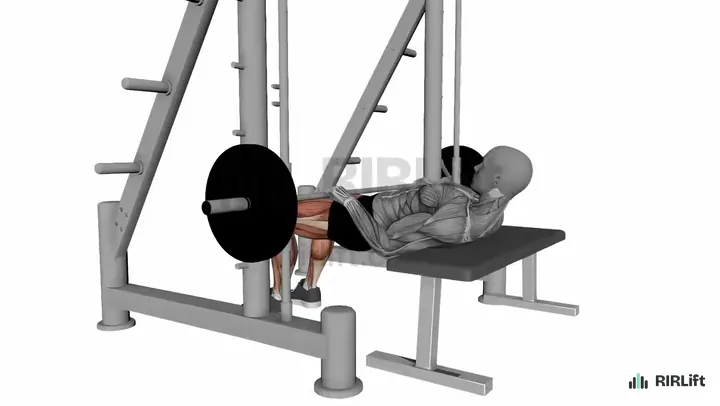
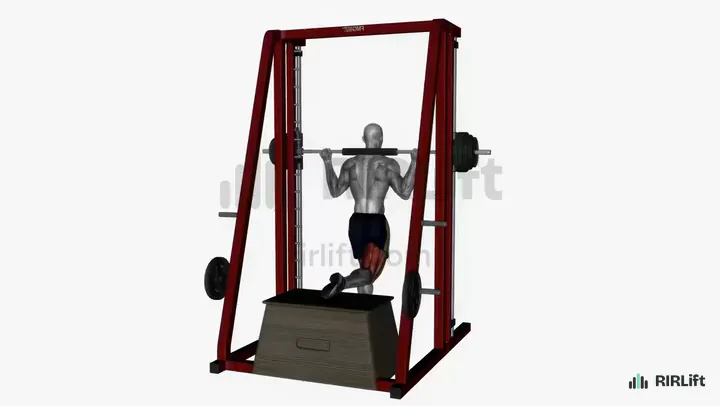
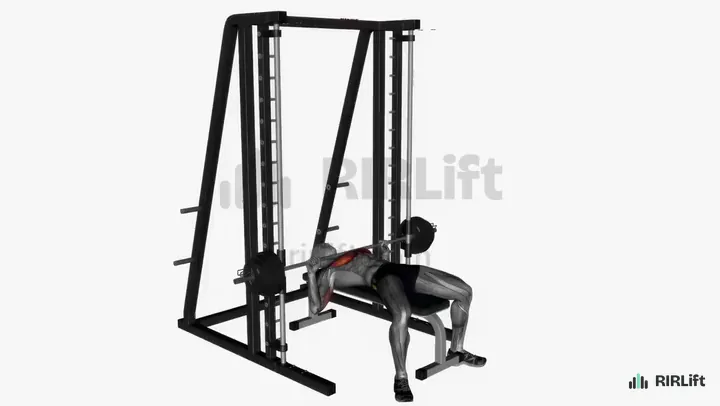
The Smith machine is best for lifts where the fixed bar path is an advantage, not a compromise: the squat with your feet set forward, the Bulgarian split squat, the hip thrust, the standing calf raise, and the flat, incline and seated presses. The rail removes balance and the hooks let you stop anywhere, so these are the lifts you can push close to failure without a spotter. Skip rows, deadlifts and lunges that need your body to move in an arc; they fight the rail.
- Smith Squat Quads, Glutes
- Smith Machine Hip Thrust Glutes
- Smith Machine Bulgarian Split Squat Quads, Glutes
- Smith Machine Bench Press Chest
- Smith Machine Incline Press Chest
- Smith Machine Shoulder Press Shoulders
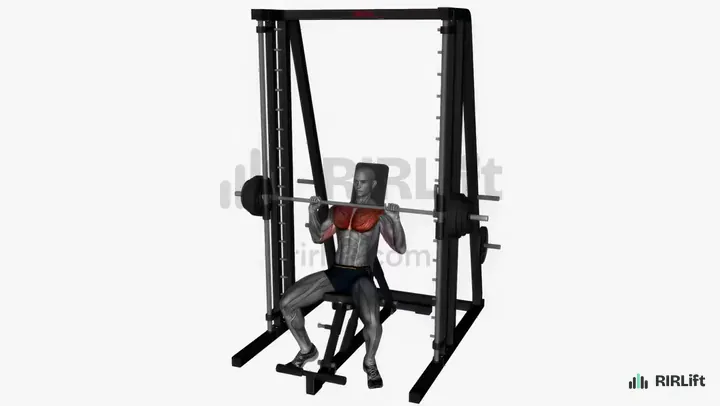
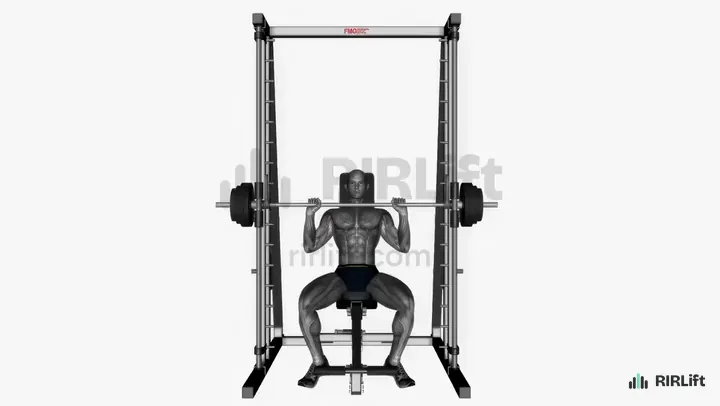
Put them together: example sessions
Each session below picks from the exercises above for one situation, with the sets, reps, rest and RIR filled in. Open one in the session builder to change a pick, price it from a recent set, and add it to RIRLift.
-
Session 1
A small gym where the Smith is the only bar
Your gym, hotel or apartment block has a Smith machine and a bench but no free squat rack, and you want two full-body days from it.
3× a week · 35 sets a week · ~30 min
-
Session 2
Leg day when the racks are full
You train in a busy commercial gym, the squat racks have a queue, and the Smith is open. You want one solid leg session without waiting.
1× a week · 15 sets a week · ~40 min
-
Session 3
Training alone, chasing a bigger chest and shoulders
You lift on your own and stop presses early because nobody can spot you. You want an upper push day you can take close to failure.
2× a week · 20 sets a week · ~30 min
Session 1
A small gym where the Smith is the only bar
- Workouts3× a week
- Working sets35 a week
- Per workout~30 min
- EquipmentSmith Machine, Flat Bench, Incline Bench
Your gym, hotel or apartment block has a Smith machine and a bench but no free squat rack, and you want two full-body days from it.
With no rack, the Smith does the jobs a barbell would: day A squats and flat presses, day B splits the legs and presses at an angle. Every big lift runs 3 sets at 2 reps in reserve because the hooks make that safe, and the hip thrust and calf raise finish at 1 RIR since they cost little to recover from. Pull work is not here: add a pull-up bar or cable row from the pull-up bar page on both days.
| Exercise | Sets × reps | RIR | Rest |
|---|---|---|---|
| Smith Squat2 warm-up sets firstFeet a half step forward. | 3 × 6–10 | 2 | 2:30 min |
| Smith Machine Bench Press1 warm-up set firstBar to lower chest. | 3 × 6–10 | 2 | 2 min |
| Smith Machine Hip ThrustHold the top one second. | 3 × 8–12 | 1 | 90 s |
| Smith Machine Calf RaisePlate under your toes. | 3 × 10–15 | 1 | 1 min |
Open Day A in the session builder
| Exercise | Sets × reps | RIR | Rest |
|---|---|---|---|
| Smith Machine Bulgarian Split Squat1 warm-up set firstPer leg. | 3 × 8–12 | 2 | 90 s |
| Smith Machine Incline Press1 warm-up set firstBench at 30 degrees. | 3 × 8–12 | 2 | 2 min |
| Smith Machine Shoulder PressStop at chin height. | 3 × 8–12 | 2 | 90 s |
| Smith Machine Hip Thrust | 2 × 10–15 | 1 | 90 s |
Open Day B in the session builder
- How to run it
- Alternate A and B, two or three times a week, with a day off between. Reset the bench and safeties for each lift before you load it; it takes a minute and it is what makes training near failure on your own safe.
- How to progress
- When every set of a lift reaches the top of its rep range at the target reps in reserve, add 5 pounds to presses or 10 to the squat and thrust. Smith bars vary in starting weight by machine, so log the plates you add and keep comparing against yourself on the same machine.
Session 2
Leg day when the racks are full
- Workouts1× a week
- Working sets15 a week
- Per workout~40 min
- EquipmentSmith Machine, Flat Bench
You train in a busy commercial gym, the squat racks have a queue, and the Smith is open. You want one solid leg session without waiting.
Everything stays on one machine, so you claim it once and keep it. The squat leads at 2 reps in reserve for 6 to 10 reps, the split squat adds single-leg volume without needing two heavy dumbbells, and the hip thrust and calf raise run at 1 RIR because a missed rep on either is harmless. Four sets on the thrust reflect that this session leans toward glutes; swap a set to the split squat if quads are your priority.
| Exercise | Sets × reps | RIR | Rest |
|---|---|---|---|
| Smith Squat2 warm-up sets firstSafeties just below depth. | 4 × 6–10 | 2 | 2:30 min |
| Smith Machine Bulgarian Split SquatPer leg. Front heel drives. | 3 × 8–12 | 2 | 90 s |
| Smith Machine Hip Thrust1 warm-up set firstPad under the bar. | 4 × 8–12 | 1 | 90 s |
| Smith Machine Calf RaisePause in the stretch. | 4 × 10–15 | 0 | 1 min |
- How to run it
- Run it once or twice a week alongside your upper-body days. Do the lifts in the listed order: the bar height for the squat and split squat is the same, so you only move the hooks for the thrust and the calf raise.
- How to progress
- Add a rep per set until each set hits the top of the range at target RIR, then add load. Once the squat reaches 10 clean reps at 2 RIR with a heavy load, drop the range to 5 to 8 for a block.
Session 3
Training alone, chasing a bigger chest and shoulders
- Workouts2× a week
- Working sets20 a week
- Per workout~30 min
- EquipmentIncline Bench, Smith Machine, Flat Bench
You lift on your own and stop presses early because nobody can spot you. You want an upper push day you can take close to failure.
These are the three presses where the hooks replace a spotter, so they run at 1 rep in reserve with a last set at 0, which you would not risk under a free bar alone. Incline comes first because the upper chest is the part most push days under-train; flat press follows at a heavier rep range, and the shoulder press takes the higher reps once your chest is tired.
| Exercise | Sets × reps | RIR | Rest |
|---|---|---|---|
| Smith Machine Incline Press2 warm-up sets firstLast set to 0 RIR. | 4 × 6–10 | 1 | 2:30 min |
| Smith Machine Bench PressBar to lower chest. | 3 × 8–12 | 1 | 2 min |
| Smith Machine Shoulder PressBar in front of your face. | 3 × 10–15 | 1 | 90 s |
- How to run it
- Do this once or twice a week, on days separate from your pulling work. Set the safety stops two inches above your chest for the bench and incline every time, and rack the bar by turning your wrists the moment a rep slows to a stall.
- How to progress
- Add 5 pounds when all sets reach the top of the range at target RIR. If the 0-RIR last set stops moving for two sessions, keep the load and add one set to that lift for a week before trying again.
Make it fit you
-
Your Smith is angled
Some Smith rails tilt a few degrees. Face the direction that lets the bar travel slightly back toward your hips on squats and slightly toward your head on presses. Note which way you faced, since the same load feels different turned around.
-
Not sure how heavy the bar is
Counterbalanced Smith bars can weigh very little, others weigh about as much as a barbell. Pick one number for the bar on your machine, log it the same way every time, and compare sessions on that machine only.
-
Quads or glutes first
For quads, keep your feet just ahead of the bar and squat deep. For glutes, put your feet further forward on the squat and add a set of hip thrusts before anything else. Either way, the split squat stays.
-
Short on time
Pair a lower lift with a press, for example split squat then incline press, and rest only after the pair. You keep the bench under the bar for both and lose very little.
-
Combining with a pull day
The Smith covers squatting and pushing, not pulling. Put rows, pulldowns or pull-ups on their own day, or add two of them at the end of each Smith session so each week has a pull for every push.
-
Log reps in reserve on every Smith set
With the hooks a twist away, it is tempting to grind every set to failure. Import a session into RIRLift, log the reps and RIR per set, and let the app pick next session's weight from it, so sets you meant to leave 2 reps on stay at 2.
Questions
What exercises are best on a Smith machine?
The squat with your feet slightly forward, the Bulgarian split squat, the hip thrust, the standing calf raise and the flat, incline and seated presses. Each one moves in a straight vertical line, so the rail helps instead of getting in the way.
What are the disadvantages of a Smith machine?
The bar can only move up and down, so your body has to fit the rail instead of the other way round. Lifts that naturally arc, like rows, deadlifts and lunges, feel awkward. The bar's starting weight also varies by machine, so numbers do not carry over between gyms.
Is the Smith machine good for building muscle?
Yes. Muscle grows from hard sets in a sensible rep range, and the Smith lets you take sets closer to failure safely. What it trains less is balancing a free bar, which matters if you plan to compete in barbell lifts.
Can you do a full-body workout on just the Smith machine?
You can cover legs, glutes, chest and shoulders. Back is the gap: the rail does not suit rows. The full-body plan above runs two Smith days and leaves room to add a pull-up or cable row.
Is a Smith squat easier than a barbell squat?
For most people the same load feels lighter because the rail balances the bar for you and the bar may weigh less. Treat it as its own lift with its own numbers, not a stand-in for a barbell max.
Where should the bench go for a Smith bench press?
Far enough along that the bar touches your lower chest, just below the nipple line, when you lower it. If it lands on your upper chest or neck, slide the bench toward your head.
Which lifts should you not do on a Smith machine?
Anything where the bar or your body has to travel in an arc fights the rail. Bent-over rows, deadlifts, walking lunges and upright rows all get forced into a straight vertical line they do not naturally follow, and your lower back or shoulders take the difference. Do your pulling with cables, dumbbells or a pull-up bar, and keep the Smith for the squats, thrusts and presses above.
Related templates
-
Machine exercises for every muscle, with sessions for where you are
Every other machine in the gym, for the pulling and isolation work the Smith does not cover.
-
Smith machine squat: how to set up, where to put your feet, and how to program it
Foot position, depth and programming for the Smith squat in more detail.
-
Barbell exercises: the 18 lifts worth learning, and how to put them together
The free-bar versions of these lifts once you have a rack.
-
Hip thrust: how to do it, what it works, and what to swap it for
Setup and variations for the thrust on a bench, barbell or Smith.
-
Machines vs free weights
When a fixed path helps your training and when it gets in the way.