Full body exercises for beginners: one squat, hinge, push, pull and core

A beginner full body workout needs one exercise for each basic movement: a squat (leg press or goblet squat), a hinge (dumbbell Romanian deadlift), a push (machine chest press or incline push-up), an overhead press (machine or dumbbell shoulder press), a pull (lat pulldown or seated cable row), a leg curl, and one core exercise like the dead bug. That is five to seven exercises, two or three sets each, done two or three times a week. Start on machines where you can, stop every set with 2 to 3 reps still in the tank, and add weight when you hit the top of the rep range.

  1. Leg Press Quads, Glutes
  2. Machine Chest Press Chest
  3. Lat Pulldown Lats
  4. Goblet Squat Quads, Glutes
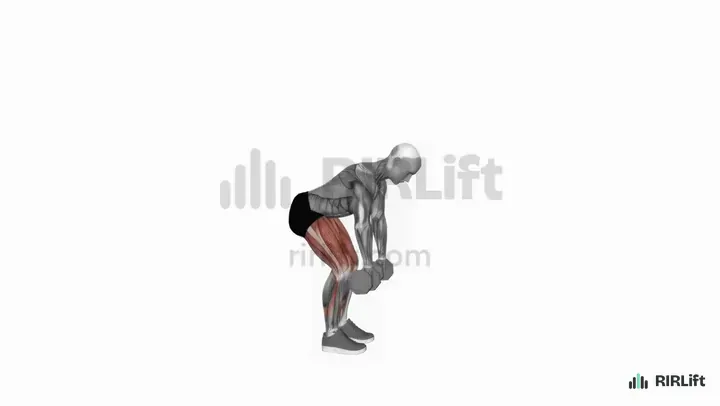
  5. Dumbbell Romanian Deadlift Hamstrings, Glutes
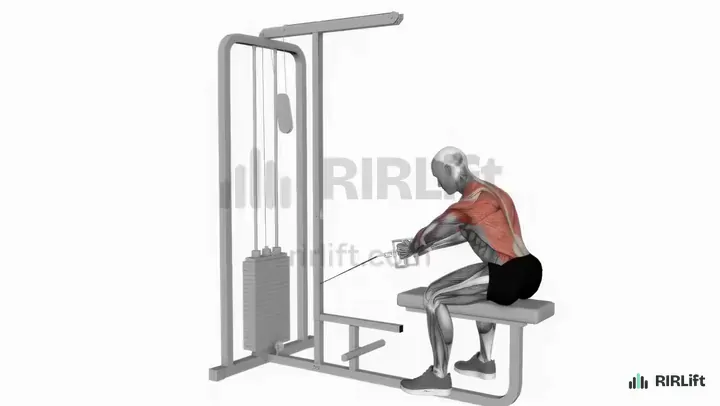
  6. Seated Cable Row Upper Back, Lats
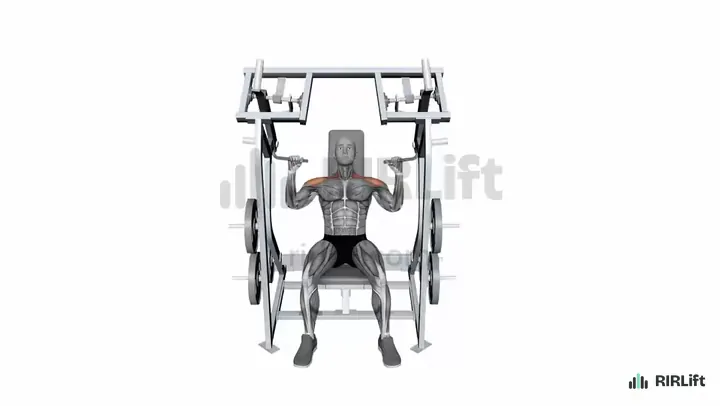
  7. Machine Shoulder Press Shoulders
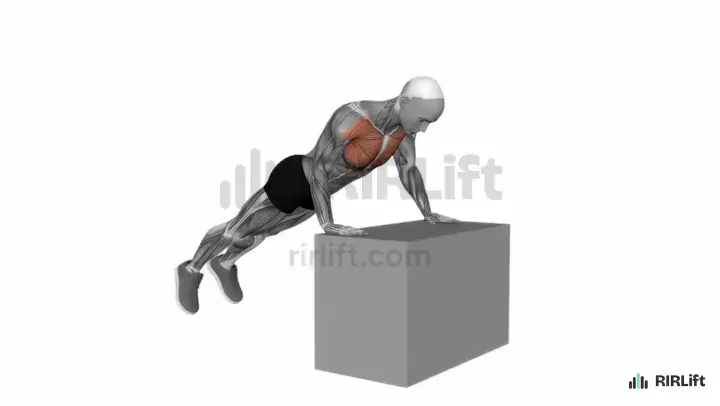
  8. Incline Push-Up Chest
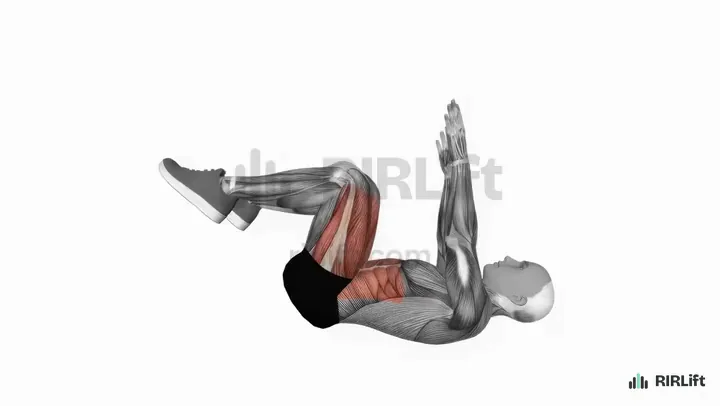
  9. Dead Bug Abs

Squat: legs from the front

Every full body session starts with a squat-type exercise, because your quads and glutes are the biggest muscles you train and they're freshest at the start. Use the leg press while you learn, the goblet squat when you want a free-weight version or train at home, and the step-up once you want each leg to work on its own.

Legs, machine squat pattern

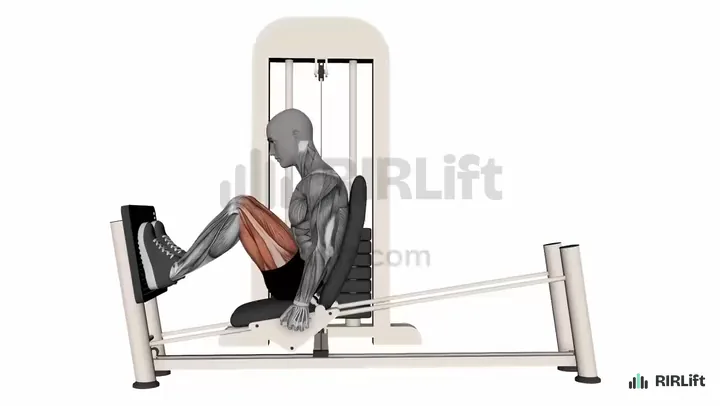
Leg Press

Quads, Glutes

The sled fixes your path and your back rests on a pad, so the only job is bending and straightening your legs. That makes it the easiest way to load your quads and glutes heavily in your first weeks, before you have the balance for a loaded squat.

How to do it

  1. Sit with your back and hips flat against the pad and put your feet in the middle of the platform, about shoulder-width apart.
  2. Push the platform up, then release the safety handles so the weight sits on your legs.
  3. Bend your knees and let the platform come toward you until your thighs are close to your chest, without your lower back lifting off the pad.
  4. Press through your whole foot until your legs are nearly straight, stop just short of locking your knees, and repeat. Lock the safeties back in after the last rep.

Cues

  • Lower back stays glued to the pad
  • Knees point where your toes point
  • Stop just short of a hard lockout

Common mistakes

  • Letting your hips roll up off the seat at the bottom: shorten the range to where your back stays flat.
  • Bouncing out of the bottom: take two seconds on the way down and press without a rebound.

Swap for: Goblet Squat, Hack Squat, 45-Degree Leg Press

Build a session with Leg Press

Legs, free-weight squat

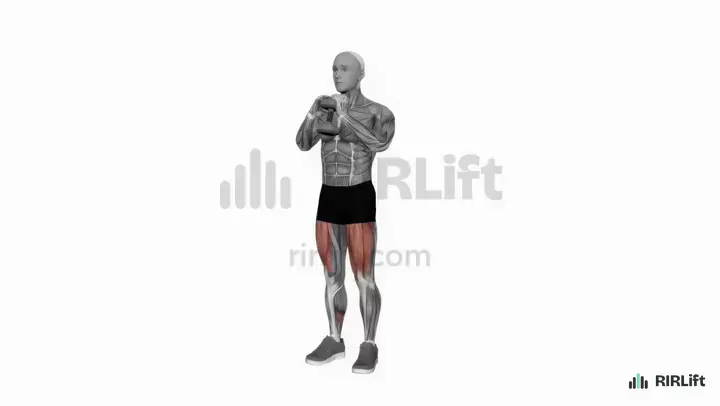
Goblet Squat

Quads, Glutes

Holding one dumbbell at your chest pulls your torso upright and gives you a counterweight to sit back against, so it teaches a real squat with almost nothing to set up. Most beginners squat deeper and steadier with it than with no weight at all.

How to do it

  1. Hold one dumbbell upright against your chest, cupping the top end with both hands, elbows pointing down.
  2. Stand with your feet a little wider than your hips and your toes turned slightly out.
  3. Sit straight down between your heels, letting your knees move forward and out, until your elbows come near the inside of your knees.
  4. Drive through your whole foot to stand tall, and breathe out at the top before the next rep.

Cues

  • Chest proud, dumbbell close
  • Knees follow your toes
  • Sit between your heels, not behind them

Common mistakes

  • Heels lifting at the bottom: widen your stance a little and squat only as deep as your heels stay down.
  • Letting the dumbbell drift away from your chest: keep your elbows tucked and the weight touching your sternum.

Swap for: Leg Press, Dumbbell Front Squat, Heels-Elevated Goblet Squat

Legs, one leg at a time

Step-Up

Quads, Glutes

Each leg has to lift you on its own, which shows any side-to-side difference early and builds the balance you use on stairs and hills. Holding dumbbells at your sides keeps it simple: no bar on your back, nothing to rack.

How to do it

  1. Stand facing a bench or a sturdy box at about knee height, one dumbbell per hand at your sides.
  2. Plant your whole right foot on top.
  3. Press through that foot to stand up on the bench, and bring the left foot up next to it without pushing off the floor with it.
  4. Step the left foot back down under control, then the right. Do all reps on one leg, then switch.

Cues

  • Whole foot on the box
  • The top leg does the lifting
  • Lower slowly, don't drop

Common mistakes

  • Springing off the back foot: keep the trailing toes light, as if the floor were hot.
  • A box so high your hip sinks below your knee: use a lower step until you can stand up without leaning far forward.

Swap for: Dumbbell Reverse Lunge, Bulgarian Split Squat, Kettlebell Step-Up

Build a session with Step-Up

Hinge and leg curl: the back of your legs

Squats mostly train the front of your legs. The Romanian deadlift teaches you to bend at the hips with a flat back and loads your hamstrings and glutes; the seated leg curl trains the hamstrings' other job, bending the knee. One of each per week covers the back of your legs.

Hamstrings and glutes, hip hinge

Dumbbell Romanian Deadlift

Hamstrings, Glutes

Learning to hinge, pushing your hips back with a flat back, is the movement that protects you when you pick anything up from the floor. The dumbbell version starts from standing, so you control how deep you go and never have to pull a heavy weight from a dead stop.

How to do it

  1. Stand tall with feet about hip-width apart, one dumbbell per hand in front of your thighs.
  2. Soften your knees slightly and keep that bend fixed for the whole set.
  3. Push your hips straight back so the dumbbells slide down the front of your legs, until you feel a strong pull in your hamstrings, usually around mid-shin.
  4. Squeeze your glutes and bring your hips forward to stand tall again.

Cues

  • Hips back, not down
  • Dumbbells brush your legs
  • Flat back from neck to tailbone

Common mistakes

  • Turning it into a squat by bending your knees more as you go down: the knees stay soft and still, the hips do the moving.
  • Rounding your back to reach lower: stop the rep where your hamstrings are fully stretched, wherever that is for you.

Swap for: Romanian Deadlift, Kettlebell Deadlift, Single-Leg RDL

Hamstrings, machine curl

Seated Leg Curl

Hamstrings

Your hamstrings bend your knee as well as extend your hip, and the hinge only trains the second job. A seated curl covers the first with a fixed path and a pad that holds your thighs down, so there is little to get wrong.

How to do it

  1. Set the back pad so your knees line up with the machine's pivot, and the lower pad sits just above your heels.
  2. Lower the thigh pad until it holds your legs snugly, and grip the handles.
  3. Curl your heels down and back under the seat as far as they go.
  4. Let the pad rise slowly until your legs are almost straight, then curl again.

Cues

  • Knees in line with the pivot
  • Pull your heels toward your seat
  • Two seconds on the way up

Common mistakes

  • Lifting your hips off the seat to finish the rep: lower the weight and keep your thigh pad tight.
  • Letting the stack slam between reps: stop just before the plates touch.

Swap for: Lying Leg Curl, Band Leg Curl, Stability Ball Leg Curl

Push: chest, shoulders and triceps

You need one press forward and one press overhead. Start on the machine versions, which let you push hard without balancing anything, and move to dumbbells once the machines feel routine. The incline push-up is the home version of the chest press and the best way to work up to a full push-up.

Chest, machine press

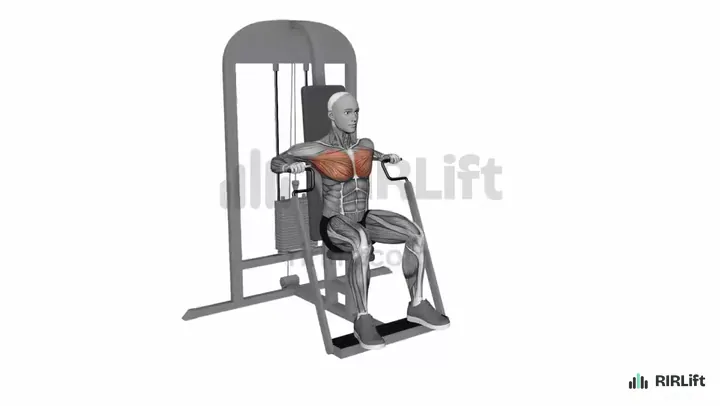
Machine Chest Press

Chest

The machine holds the handles on a fixed track, so you can push hard without balancing anything or needing someone to spot you. It is the quickest way for a new lifter to train chest, front shoulders and triceps close to their limit safely.

How to do it

  1. Set the seat so the handles sit at mid-chest height when you hold them.
  2. Sit with your back flat against the pad, feet planted, and grip the handles.
  3. Press the handles forward until your arms are nearly straight.
  4. Let them come back until a stretch builds across your chest, then press again.

Cues

  • Handles at mid-chest
  • Shoulder blades pinned to the pad
  • Slow return to a stretch

Common mistakes

  • Seat too low, so the handles start near your shoulders: raise the seat until they line up with your chest.
  • Short reps that stop well before the stretch: let the handles come back until your hands are near your chest.

Swap for: Flat Dumbbell Press, Push-Up, Smith Machine Bench Press

Chest, beginner push-up

Incline Push-Up

Chest

Putting your hands on a bench, box or kitchen counter takes part of your body weight off your arms, so you can do real, full-range push-ups from day one. The lower the surface, the harder it gets, which gives you a built-in path to floor push-ups.

How to do it

  1. Put your hands on a sturdy bench, box or counter edge, a little wider than your shoulders.
  2. Walk your feet back until your body is in one straight line from head to heels.
  3. Bend your elbows and lower your chest to the edge, elbows angled about 45 degrees from your body.
  4. Push the surface away until your arms are straight, keeping your hips in line.

Cues

  • Body like a plank
  • Chest touches the edge
  • Elbows at about 45 degrees

Common mistakes

  • Hips sagging toward the floor: squeeze your glutes and brace your stomach as if bracing for a poke.
  • Doing half reps on a low surface: move to a higher surface where full reps are possible.

Swap for: Kneeling Push-Up, Push-Up, Machine Chest Press

Chest, free-weight press

Flat Dumbbell Press

Chest

Once the machine press feels familiar, dumbbells add the job of steadying each arm on its own. They let your hands travel a natural path, so your shoulders find a comfortable angle, and they catch a weaker side before it becomes a habit.

How to do it

  1. Sit on the end of a flat bench with the dumbbells on your thighs, then lie back and bring them to the sides of your chest.
  2. Plant your feet and pull your shoulder blades together into the bench.
  3. Press both dumbbells up until your arms are straight over your chest.
  4. Lower them slowly to the sides of your chest, elbows about 45 degrees from your body, then press again.

Cues

  • Shoulder blades squeezed into the bench
  • Forearms vertical
  • Lower until you feel your chest stretch

Common mistakes

  • Flaring your elbows straight out to the sides: tuck them a little so your upper arms sit at an angle to your torso.
  • Dropping the dumbbells to the floor from a pressed position: bring them back to your chest and sit up with them on your thighs.

Swap for: Machine Chest Press, Incline Dumbbell Press, Dumbbell Floor Press

Shoulders, machine overhead press

Machine Shoulder Press

Shoulders

Pressing overhead while seated against a pad takes your lower back out of it, and the machine track removes the wobble that makes a first dumbbell press feel shaky. Both arms work at once on separate handles, so one side can't hide behind the other.

How to do it

  1. Set the seat so the handles start at about shoulder height.
  2. Sit with your back flat against the pad and grip the handles, palms facing forward or in, whichever the machine gives you.
  3. Press up until your arms are nearly straight overhead.
  4. Lower the handles back to shoulder height under control and press again.

Cues

  • Back stays on the pad
  • Press up, not forward
  • Control the way down

Common mistakes

  • Arching hard off the backrest to finish a rep: lighten the stack and keep your ribs down.
  • Cutting the rep short at the top: finish each press with your arms almost fully extended.

Swap for: Dumbbell Shoulder Press, Landmine Press, Smith Machine Shoulder Press

Shoulders, dumbbell press

Dumbbell Shoulder Press

Shoulders

Seated with back support, the dumbbell press is the one overhead exercise you can do in almost any gym or living room. It trains your front and side shoulders and your triceps, and each arm has to steady its own weight.

How to do it

  1. Sit on a bench set upright, or a sturdy chair, with your back supported.
  2. Bring the dumbbells to your shoulders, palms facing forward or slightly in, elbows below your wrists.
  3. Press both dumbbells up until your arms are straight and the weights are over your shoulders.
  4. Lower them back to shoulder height slowly, then press again.

Cues

  • Wrists stacked over elbows
  • Ribs down, back on the pad
  • Weights finish over your shoulders, not your face

Common mistakes

  • Clanging the dumbbells together at the top: stop with them a few inches apart so the tension stays on.
  • Lowering only to forehead height: bring them all the way to your shoulders for a full rep.

Swap for: Machine Shoulder Press, Neutral-Grip Dumbbell Shoulder Press, Landmine Press

Pull: back and biceps

Pair every push with a pull so your shoulders stay balanced. The lat pulldown pulls from overhead, the seated cable row pulls toward you, and the one-arm dumbbell row does the second job with a single dumbbell. A beginner session needs one of these; two if you have time.

Back, vertical pull

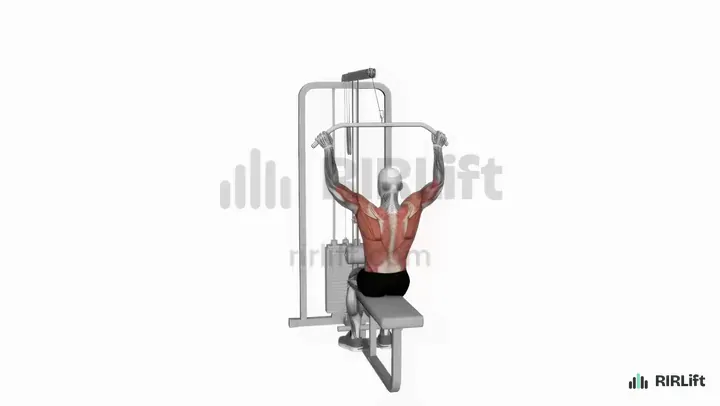
Lat Pulldown

Lats

Most beginners can't do a pull-up yet, and the pulldown trains the same pull with a weight you choose. Your thighs are pinned under a pad, so all the work goes into drawing the bar from overhead down to your chest.

How to do it

  1. Set the thigh pad so it holds your legs down firmly, then grab the bar a little wider than your shoulders.
  2. Sit down with your arms straight overhead and lean back just slightly.
  3. Pull the bar to your upper chest, driving your elbows down toward your back pockets.
  4. Let the bar rise slowly until your arms are straight and you feel a stretch under your armpits.

Cues

  • Elbows down to your pockets
  • Chest up to meet the bar
  • Full stretch at the top

Common mistakes

  • Leaning way back and rowing the bar to your stomach: stay nearly upright so it stays a pulldown.
  • Pulling with your hands and not your elbows: think of your hands as hooks and lead with your elbows.

Swap for: Assisted Pull-Up, Neutral-Grip Lat Pulldown, Band-Assisted Pull-Up

Back, horizontal pull

Seated Cable Row

Upper Back, Lats

The seated row trains your mid-back and lats from the front, the opposite of all the pressing a beginner does. Your chest stays tall and your feet are braced, so it is easy to feel your shoulder blades doing the work.

How to do it

  1. Sit at the cable row with your feet on the footplate and knees slightly bent, holding the close-grip handle.
  2. Sit tall with your arms straight in front of you and your torso upright.
  3. Pull the handle to your lower ribs, pinching your shoulder blades toward each other behind you.
  4. Let your arms straighten and your shoulder blades slide forward, then row again.

Cues

  • Sit tall, don't rock
  • Handle to your lower ribs
  • Finish with shoulder blades pinched

Common mistakes

  • Swinging your torso back and forth to move the weight: stay still from the hips up and lower the stack.
  • Shrugging your shoulders toward your ears: keep them down as you pull.

Swap for: Machine Row, Chest-Supported Row, One-Arm Dumbbell Row

Back, dumbbell row

One-Arm Dumbbell Row

Lats, Upper Back

With your free hand braced on a bench or chair, one dumbbell trains your whole back without straining your lower back. It is the row to use at home and the one that replaces the cable row on a busy gym day.

How to do it

  1. Brace your left palm on a bench or chair seat and step your feet back so your torso tilts forward and your back is flat.
  2. Let one dumbbell hang from your right hand with your arm straight under your shoulder.
  3. Row the dumbbell toward your hip, keeping your elbow close to your side.
  4. Lower it until your arm is straight again. Finish all reps, then switch arms.

Cues

  • Elbow toward your hip
  • Hips and shoulders square to the floor
  • Straight arm at the bottom

Common mistakes

  • Rotating your chest open to heave the dumbbell up: keep both shoulders level and use a lighter weight.
  • Rowing to your armpit with the elbow flared: aim the dumbbell at your hip pocket instead.

Swap for: Seated Cable Row, Kettlebell Row, Chest-Supported Row

Core: one slow exercise to finish

Squats, hinges and presses already make your trunk work hard, so a beginner needs just one direct core exercise as the last exercise of the session. The dead bug trains the bracing you use in every other lift, with no load and no strain on your neck.

Core, anti-extension

Dead Bug

Abs

Lying on your back, you learn to keep your lower back still while your arms and legs move, which is the same bracing you need under a squat or press. It is slow, has no load, and you can feel immediately when you get it wrong.

How to do it

  1. Lie face up, arms pointing at the ceiling and your knees bent at 90 degrees over your hips.
  2. Press your lower back gently into the floor and keep it there.
  3. Slowly reach your right arm back past your head and straighten your left leg toward the floor, stopping before your back lifts.
  4. Bring them back to the start and repeat with the opposite arm and leg. One rep is both sides.

Cues

  • Lower back stays heavy on the floor
  • Move slowly, breathe out as you reach
  • Opposite arm, opposite leg

Common mistakes

  • Lower back arching off the floor as the leg goes out: shorten the reach until your back stays down.
  • Rushing through reps: take two to three seconds to extend each side.

Swap for: Plank, Side Plank, Pallof Press

Build a session with Dead Bug

Put them together: example sessions

Each session below picks from the exercises above for one situation, with the sets, reps, rest and RIR filled in. Open one in the session builder to change a pick, price it from a recent set, and add it to RIRLift.

Session 1

Two gym days a week, machines only

Open in the session builder
  • Workouts2× a week
  • Working sets26 a week
  • Per workout~30 min
  • EquipmentLeg Press, Chest Press, Lat Pulldown, Seated Leg Curl +2

You're new to the gym, can get there twice a week, and want a session you can follow without learning free-weight technique first.

Six machines and one floor exercise, each the simplest tool for its movement, so nothing in the session needs a coach to check your form. Two sets per exercise is enough to grow when you're new, and stopping 3 reps short of failure gives you room to learn what a hard set feels like without grinding ugly reps. You repeat the same session both days so you learn the seat settings and the weights fast. That is 13 working sets in about 40 minutes.

Full Body
ExerciseSets × repsRIRRest
Leg PressFeet mid-platform. Note the seat notch. 2 × 10–15 3 2 min
Machine Chest PressHandles at mid-chest. 2 × 10–15 3 90 s
Lat PulldownPull to the upper chest. 2 × 10–15 3 90 s
Seated Leg Curl 2 × 10–15 3 90 s
Machine Shoulder Press 2 × 10–15 3 90 s
Seated Cable RowSit tall, no rocking. 2 × 10–15 3 90 s
Dead BugPer side. Slow reaches. 1 × 8–12 3 1 min
How to run it
Do the same session twice a week with at least two days between, for example Monday and Thursday. Write down the seat setting on each machine the first time you use it.
How to progress
When you reach the top of the rep range on every set with 3 reps still in reserve, add the smallest weight step on that machine next session. After four weeks, move the target to 2 reps in reserve.

Session 2

Three short home sessions, one pair of dumbbells

Open in the session builder
  • Workouts3× a week
  • Working sets33 a week
  • Per workout~25 min
  • EquipmentDumbbells

You train at home with one pair of moderate dumbbells, a sturdy chair and a bit of floor space, and you'd rather do 25 minutes three times a week than one long session.

Without machines, each movement gets the dumbbell or body-weight version that is easiest to do well: goblet squat, Romanian deadlift, one-arm row, incline push-up on the chair or a counter, and a seated press. Two sets each, three days a week, gives every muscle six hard sets a week. A fixed pair stops feeling heavy sooner, so the rep ranges reach 15 to 20 and the sets stop 2 short of failure instead of 3.

Home Full Body
ExerciseSets × repsRIRRest
Goblet SquatHeels down. Elbows inside the knees. 2 × 10–20 2 90 s
Incline Push-UpHands on a counter or chair seat. 2 × 8–20 2 1 min
One-Arm Dumbbell RowPer arm. Hand on the chair seat. 2 × 10–20 2 1 min
Dumbbell Romanian DeadliftStop at the hamstring stretch. 2 × 10–15 2 90 s
Dumbbell Shoulder PressSeated, back on the chair. 2 × 8–15 2 1 min
Dead BugPer side. 1 × 8–12 2 45 s
How to run it
Do the session three times a week with a day off between, for example Monday, Wednesday and Friday. Press seated on the chair with your back against it.
How to progress
Add a rep per set each session. When every set reaches 20 at 2 reps in reserve, slow the lowering to three seconds; when that gets easy too, move up to the next pair of dumbbells. For push-ups, lower the hand surface one step.

Session 3

Three gym days a week, machines plus dumbbells

Open in the session builder
  • Workouts3× a week
  • Working sets42 a week
  • Per workout~35 min
  • EquipmentDumbbells, Flat Bench, Cable Row, Shoulder Press +3

You've been training a month or two, the machines feel familiar, and you can get to the gym three times a week.

Two alternating sessions let you add the free-weight versions without dropping the machines that got you here. Session A pairs the goblet squat and dumbbell press with the cable row; session B keeps the leg press and pulldown and adds the step-up and dumbbell shoulder press. Three sets on the first two exercises of each day, two on the rest, at 2 reps in reserve, adds up to roughly 9 to 12 hard sets a week for legs, back and chest. Each session is 14 or 15 working sets.

Full Body A
ExerciseSets × repsRIRRest
Goblet SquatPause 1 s at the bottom. 3 × 8–12 2 2 min
Flat Dumbbell Press 3 × 8–12 2 2 min
Seated Cable Row 2 × 10–15 2 90 s
Dumbbell Romanian Deadlift 2 × 8–12 2 2 min
Machine Shoulder Press 2 × 10–15 2 90 s
Dead BugPer side. 2 × 8–12 2 1 min

Open Full Body A in the session builder

Full Body B
ExerciseSets × repsRIRRest
Leg Press 3 × 10–15 2 2 min
Lat Pulldown 3 × 8–12 2 90 s
Dumbbell Shoulder Press 2 × 8–12 2 90 s
Step-UpPer leg. Knee-height bench. 2 × 8–12 2 90 s
One-Arm Dumbbell RowPer arm. 2 × 10–15 2 1 min
Seated Leg Curl 2 × 10–15 2 1 min

Open Full Body B in the session builder

How to run it
Alternate A and B across three days a week, for example A-B-A one week and B-A-B the next, with a day off between sessions.
How to progress
Use double progression: work up to the top of the rep range on every set at 2 reps in reserve, then add weight and drop back to the bottom of the range. Once a lift has stalled for two weeks, take it to 1 rep in reserve on the last set only.

Make it fit you

Questions

What exercises are needed for a full body workout?

One exercise per basic movement: a squat, a hip hinge, a horizontal push, an overhead push, a horizontal or vertical pull, and ideally a leg curl and a core exercise. That's five to seven exercises, and together they train every major muscle in one session.

How many exercises should a beginner do in a full body workout?

Five to seven. Fewer than five leaves a movement out; more than seven means the last exercises get done tired and badly. Two sets of each is enough at first, which keeps a session under 45 minutes.

How many days a week should a beginner do full body workouts?

Two or three, with at least a day off between sessions. Two days already trains each muscle twice a week; three days gets you there faster if you can recover from it.

Should beginners start with machines or free weights?

Machines are the easier start because they guide the path and let you push close to failure safely. Free weights teach balance and work anywhere. A good approach is machines for the first month, then a mix, as in the A/B gym plan above.

How heavy should a beginner lift?

Heavy enough that each set ends with 2 to 3 reps left in the tank inside the rep range. For most people that's lighter than they expect in week one and noticeably heavier by week six, because beginners add weight quickly.

How long until a beginner sees results?

Strength goes up within the first two to three weeks, mostly because you're getting better at the movements. Visible muscle takes longer, usually a couple of months of consistent training with enough protein.

Is cardio or weightlifting better for fat loss?

Fat loss comes from eating a bit less than you burn; both help. Lifting keeps the muscle you have while you lose fat, so the best setup is the plans on this page plus whatever cardio you'll actually keep doing.