
Full body exercises with resistance bands: legs, hinge, push and pull
Published October 19, 2026
The best full body exercises with resistance bands are the band squat, Spanish split squat and reverse lunge for your legs, the deadlift, good morning and hip thrust for your hips and hamstrings, the one-arm chest fly and overhead press for pushing, and the bent-over row, face pull and pull-apart for your back. One exercise from each group gives you a full body session in about 25 minutes. Without a door anchor, stick to the moves you stand on: deadlift, lunge, row, press and curl.
- Band Squat Quads
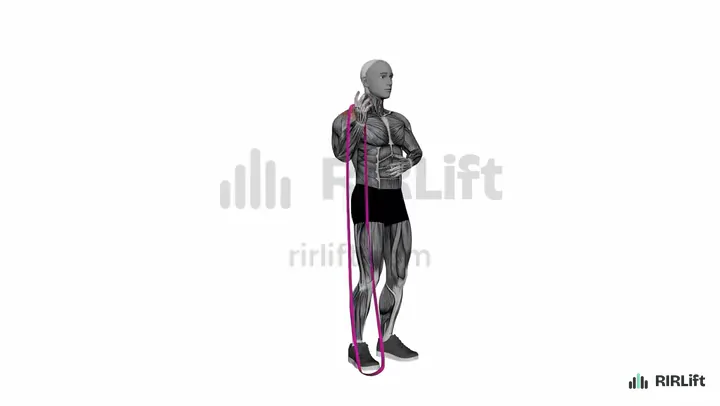
- Band Deadlift Glutes, Hamstrings, Lower Back
- Band Bent-Over Row Lats, Upper Back
- Band Good Morning Hamstrings, Lower Back
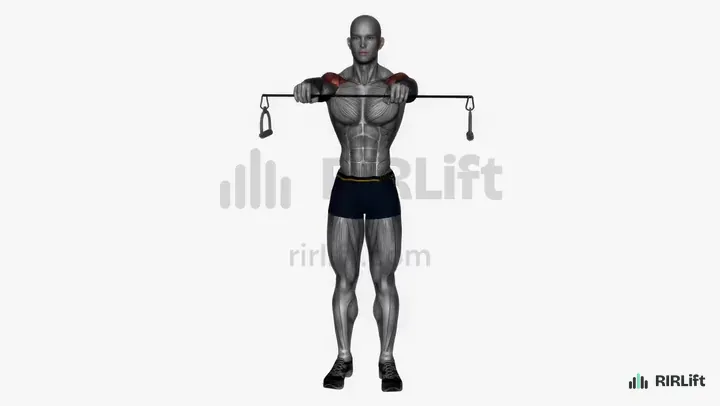
- Band Overhead Press Shoulders
- Band Spanish Split Squat Quads
- Band Pull-Apart Shoulders, Upper Back
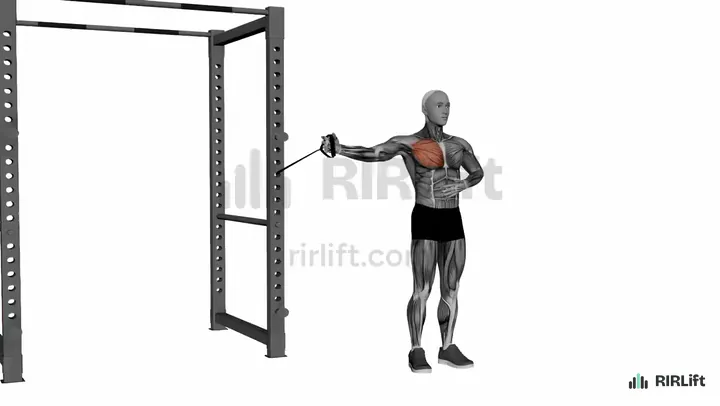
- Single-Arm Band Chest Fly Chest
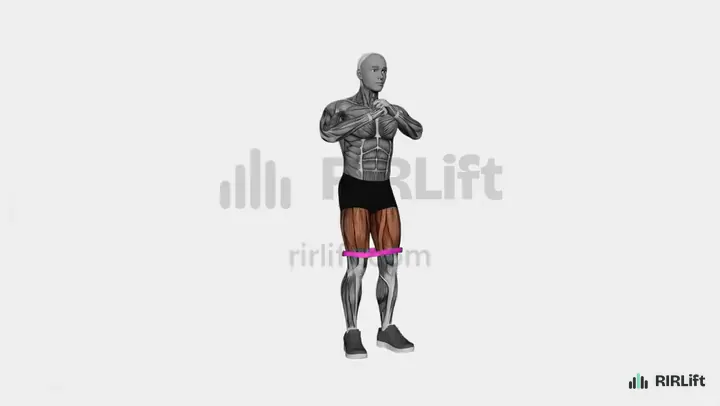
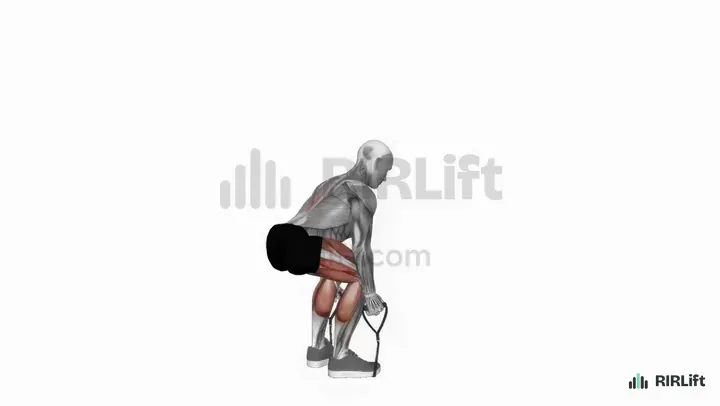
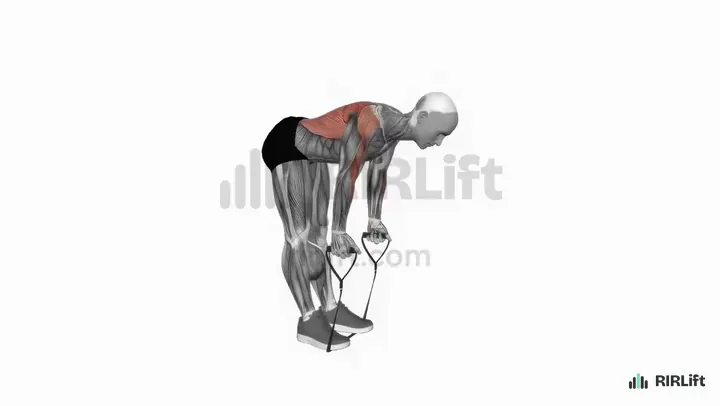
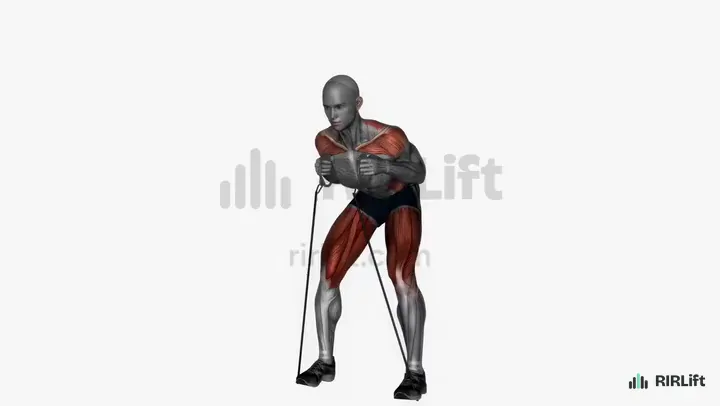
Put them together: example sessions
Each session below picks from the exercises above for one situation, with the sets, reps, rest and RIR filled in. Open one in the session builder to change a pick, price it from a recent set, and add it to RIRLift.
-
Session 1
Bands under your feet only, no anchor
You have handled tube bands or long loops and a floor, but nowhere to anchor them: a hotel room, a small apartment, or a park.
3× a week · 51 sets a week · ~35 min
-
Session 2
Door anchor, two alternating sessions
You train at home with a door anchor and a mix of long bands and mini loops, and can train three or four times a week.
4× a week · 52 sets a week · ~25 min
-
Session 3
Bands plus a pull-up bar
You have a band set and a pull-up bar, and want two longer full-body sessions a week rather than several short ones.
2× a week · 38 sets a week · ~40 min
Session 1
Bands under your feet only, no anchor
- Workouts3× a week
- Working sets51 a week
- Per workout~35 min
- EquipmentResistance Bands
You have handled tube bands or long loops and a floor, but nowhere to anchor them: a hotel room, a small apartment, or a park.
Every exercise here is done standing on the band or pinning it with your body, so no door or post is needed. The hinge, lunge and row cover legs and back, the one-arm press covers shoulders, and the hip thrust and pull-apart fill in glutes and upper back. Bands are light compared with what your legs can handle, so legs run 12 to 25 reps and every set stops 1 rep short of failure. Seventeen working sets in about 30 minutes.
| Exercise | Sets × reps | RIR | Rest |
|---|---|---|---|
| Band DeadliftPause 1 s at the top. | 3 × 12–20 | 1 | 90 s |
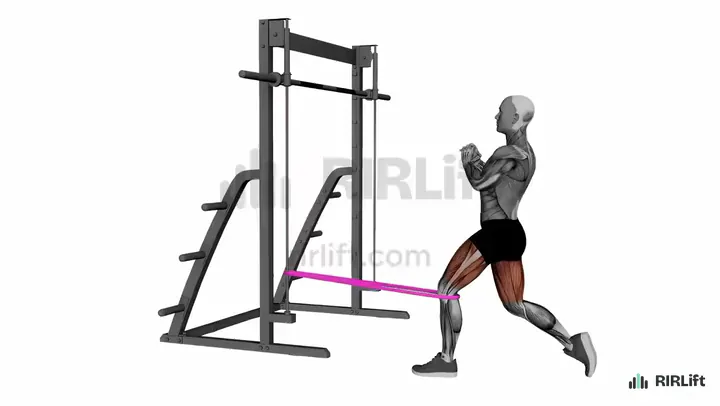
| Band Reverse LungePer leg. | 2 × 10–20 | 1 | 1 min |
| Band Bent-Over Row | 3 × 12–20 | 1 | 1 min |
| Band Overhead PressPer arm. | 2 × 10–20 | 1 | 1 min |
| Band Hip ThrustHold the top 2 s. | 3 × 15–25 | 1 | 1 min |
| Band Pull-Apart | 2 × 15–25 | 1 | 45 s |
| Band Hammer CurlAlternate arms. | 2 × 10–20 | 1 | 45 s |
- How to run it
- Do the session three times a week with a day between. Double up the band or step wider on it when a set gets easy.
- How to progress
- When you reach the top of the rep range at 1 rep in reserve, make the band tighter: stand wider, choke up on the band, or add a second band. Then drop back to the bottom of the range.
Session 2
Door anchor, two alternating sessions
- Workouts4× a week
- Working sets52 a week
- Per workout~25 min
- EquipmentResistance Bands
You train at home with a door anchor and a mix of long bands and mini loops, and can train three or four times a week.
An anchor opens up the moves bands do best: the Spanish split squat, pull-through, chest fly and face pull. Two sessions let each day focus on one leg pattern (split squat and pull-through on A, squat and good morning on B) while pushing and pulling every time. Three sets on the first leg and hinge move, two on the rest, at 1 rep in reserve; each session is 13 working sets, short enough to finish in 25 minutes.
| Exercise | Sets × reps | RIR | Rest |
|---|---|---|---|
| Band Spanish Split SquatPer leg. Shin vertical. | 3 × 10–20 | 1 | 1 min |
| Band Pull-Through | 3 × 12–20 | 1 | 1 min |
| Single-Arm Band Chest FlyPer arm. | 2 × 12–20 | 1 | 45 s |
| Band Face Pull | 3 × 15–25 | 1 | 45 s |
| Band Leg CurlPer leg. | 2 × 12–20 | 1 | 45 s |
Open Bands A in the session builder
| Exercise | Sets × reps | RIR | Rest |
|---|---|---|---|
| Band SquatKnees out into the loop. | 3 × 15–25 | 1 | 1 min |
| Band Good Morning | 3 × 12–20 | 1 | 1 min |
| Single-Arm Band Chest FlyPer arm. | 2 × 12–20 | 1 | 45 s |
| Band Bent-Over Row | 3 × 12–20 | 1 | 1 min |
| Lateral Band WalkSteps each way. | 2 × 10–20 | 1 | 45 s |
Open Bands B in the session builder
- How to run it
- Alternate A and B, three or four days a week. Anchor at knee height for the split squat, low for the pull-through, chest height for the fly and head height for the face pull.
- How to progress
- Step further from the anchor before reaching for a heavier band. When a set hits the top of the range at 1 rep in reserve from the furthest spot, go up a band and restart at the bottom of the range.
Session 3
Bands plus a pull-up bar
- Workouts2× a week
- Working sets38 a week
- Per workout~40 min
- EquipmentPull-Up Bar, Resistance Bands
You have a band set and a pull-up bar, and want two longer full-body sessions a week rather than several short ones.
The bar changes the back work: the assisted pull-up trains your lats vertically, which band rows can't, so it comes first. The deadlift and split squat cover the legs heavily, and the one-arm press and fly cover pushing. With only two sessions a week, each exercise gets three sets so every muscle still lands around six hard sets a week. Pull-ups stop at 2 in reserve so every rep is a clean full hang; the rest at 1.
| Exercise | Sets × reps | RIR | Rest |
|---|---|---|---|
| Band-Assisted Pull-UpThinner band over time. | 3 × 6–12 | 2 | 2 min |
| Band Deadlift | 3 × 12–20 | 1 | 90 s |
| Band Spanish Split SquatPer leg. | 3 × 10–20 | 1 | 1 min |
| A1 Band Overhead PressPer arm. | 3 × 10–20 | 1 | 1 min |
| A2 Single-Arm Band Chest FlyPer arm. | 3 × 12–20 | 1 | 1 min |
| Band Face Pull | 2 × 15–25 | 1 | 45 s |
| Band Hip Thrust | 2 × 15–25 | 1 | 1 min |
- How to run it
- Train twice a week with two or three days between sessions, for example Tuesday and Saturday. Superset the press with the fly to save time.
- How to progress
- Move to a thinner band on the pull-up when you reach 12 reps at 2 in reserve. For the rest, use the stand-wider-then-heavier-band rule from the other plans.
Make it fit you
-
Your bands feel too light for legs
Fold a long loop in half, stand on it with both feet wider apart, or stack two bands on the deadlift and hip thrust. Slow the lowering to three seconds and pause at the top; that alone can turn 25 easy reps into 15 hard ones.
-
Only mini loops
Use the band squat, lateral walk, leg curl and a loop around your thighs for the hip thrust, and pair them with push-ups and pull-aparts using a slightly longer loop. That covers legs and upper back; chest and lats will need body weight.
-
Bands snap back on the return
Count two seconds on every return. Controlling the band on the way back is half the work, and it keeps your joints from being yanked as the set finishes.
-
Shoulders ache when you press
Swap the overhead press for a second round of face pulls and press only as high as is comfortable. One-arm presses with your palm facing in are usually the friendliest version.
-
Short on time
Superset a lower and an upper move, such as the deadlift with the row and the lunge with the press. Rest 60 seconds after each pair and the no-anchor session takes about 20 minutes.
-
Log RIR, not band color
Band colors aren't standard and stretch changes with your stance, so write down reps in reserve on every set instead. If you log in RIRLift, the RIR trend shows you when a band has become too easy, even if the reps look the same.
Questions
Can you build a lot of muscle with resistance bands?
You can build real muscle as long as your sets end close to failure, about 1 to 3 reps short. The limit is your legs and hips, which outgrow most bands; stack bands, slow the reps down, or work one leg at a time to keep those sets hard.
Can you get a full body workout with only resistance bands?
Yes. A squat or lunge, a hinge, a push, and a pull covers every major muscle, and bands do all four. Chest is the weakest link because there's no good band bench press, so pair the fly with push-ups if you can.
How do you use stretch bands for a workout?
Stand on the band, anchor it to a door or post, or loop it around your legs, then move against the stretch. The further you stretch it, the harder it gets, so where you stand matters as much as which band you pick.
What is working out with resistance bands called?
Resistance band training or band training. It's a form of strength training, the same as lifting weights; the band just supplies the resistance instead of a dumbbell.
How many times a week should you do a full body band workout?
Two to four. Three full-body sessions with a day between is a good default; two longer ones work if your week is busy.
How many reps should you do with resistance bands?
Usually 10 to 25, more than with weights, because bands are light at the start of each rep. Pick a band and stance where you finish the set with 1 to 2 reps left.
Related templates
-
Resistance band exercises for every muscle, with the bands you own
The full band exercise library, including arms, shoulders and gym add-ons.
-
Lower body exercises with resistance bands: quads, hamstrings, glutes and hips
More band leg and glute exercises for a lower-body day.
-
Full body exercises at home, with or without equipment
Full body picks for dumbbells, kettlebells and body weight as well as bands.
-
The best workout for home, with little or no equipment
Full home programs that mix bands with other gear.
-
Lift with limited equipment
How to keep progressing when the gear can't get heavier.