Functional exercises: strength for lifting, carrying and turning

Functional exercises train the movements you use outside the gym: the goblet squat and reverse lunge for getting up and down, the trap bar deadlift and kettlebell swing for lifting from the floor, push-ups and one-arm rows for pushing and pulling, the farmer's walk and suitcase carry for carrying, and the Pallof press, woodchop and Turkish get-up for turning and bracing. Train each pattern once or twice a week, 2 or 3 days a week, with real weights: 3 sets of 6 to 12 reps, stopping 1 to 3 reps short of failure.

  1. Goblet Squat Quads, Glutes
  2. Trap Bar Deadlift Quads, Glutes
  3. Kettlebell Swing Glutes, Hamstrings
  4. Reverse Lunge Quads, Glutes
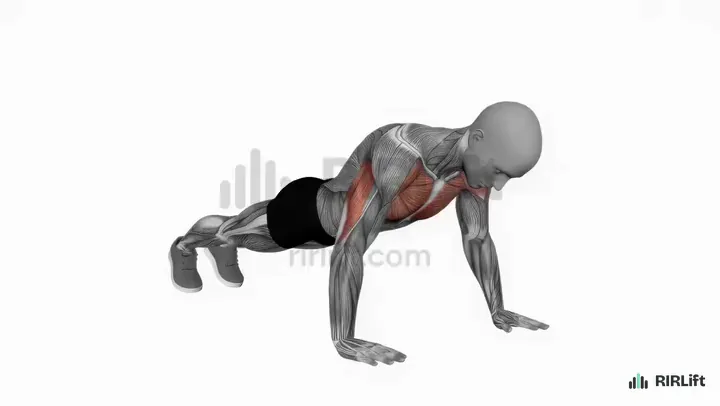
  5. Push-Up Chest
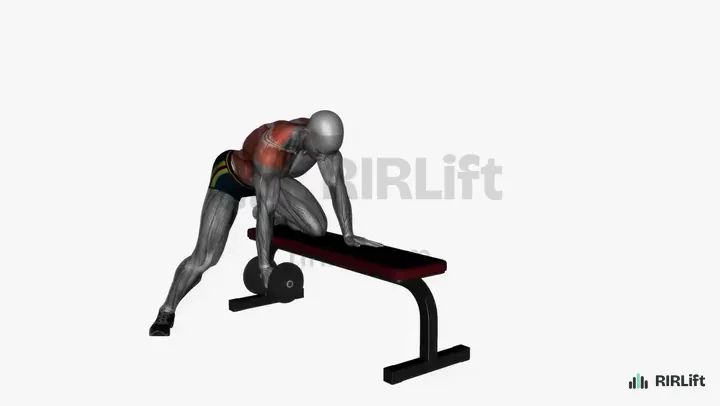
  6. One-Arm Dumbbell Row Lats, Upper Back
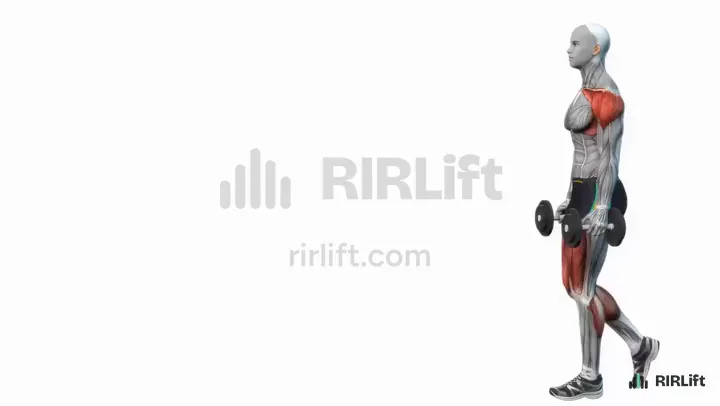
  7. Farmer's Walk Forearms, Traps, Shoulders
  8. Kettlebell Turkish Get-Up Shoulders, Abs
  9. Pallof Press Abs

Squat and lunge: getting up and down

Sitting down and standing up, climbing stairs and stepping to the side all use these patterns. Train both legs together and one at a time, forward and sideways.

Quads and glutes, squat

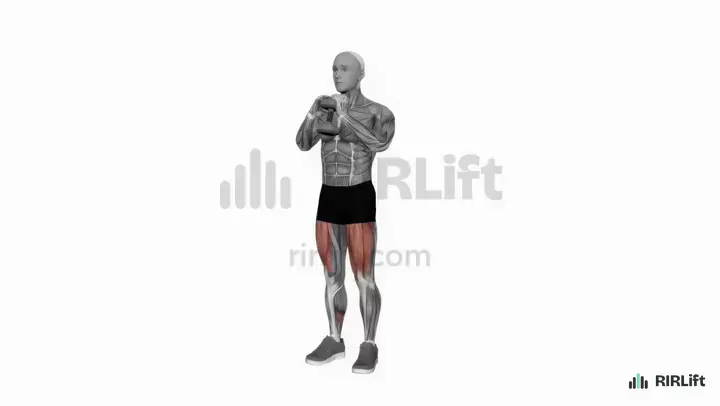
Goblet Squat

Quads, Glutes

Holding the weight at your chest is how you carry most things, and the squat itself is the sit-to-stand you do every day. It is the easiest loaded squat to learn and scale.

How to do it

  1. Hold a dumbbell or kettlebell vertically against your chest.
  2. Sit down between your knees, elbows inside them at the bottom.
  3. Stand up tall.

Cues

  • Elbows nudge the knees out at the bottom.
  • Chest stays up behind the weight.

Common mistakes

  • Letting the weight pull you forward.

Swap for: Bodyweight Squat, Barbell Back Squat

Quads and glutes, single-leg step

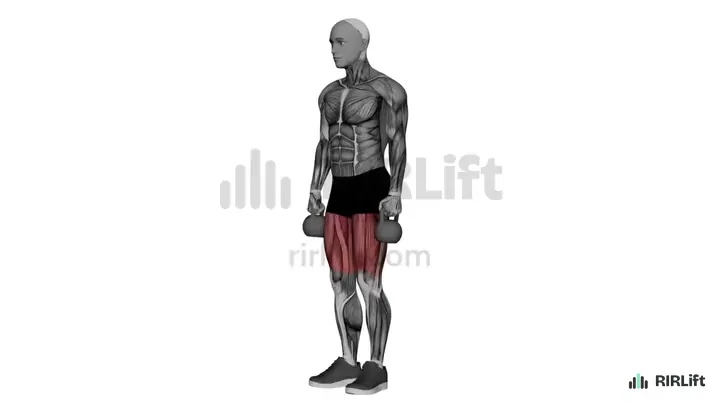
Reverse Lunge

Quads, Glutes

Stepping back and standing up again builds the single-leg strength stairs, kneeling and getting off the floor depend on, and it is easier to control than a forward lunge because your front foot stays planted.

How to do it

  1. Stand tall holding a kettlebell in each hand at your sides.
  2. Step one foot back and lower until the back knee nearly touches the floor.
  3. Keep most of your weight on the front foot.
  4. Push through the front foot to step back up, then alternate or finish one side.

Cues

  • Step long, drop straight down
  • Front foot does the work
  • Tall chest

Common mistakes

  • Short steps that push the front knee far over the toes: step back further.
  • Wobbling side to side: narrow the load or slow down.

Swap for: Bulgarian Split Squat, Dumbbell Reverse Lunge, Step-Up

Quads and adductors, side lunge

Dumbbell Lateral Lunge

Quads, Glutes, Adductors

Most training goes forward and back, while daily life and sport also move sideways. The lateral lunge loads the inner thighs and hips in that direction.

How to do it

  1. Stand with your feet together and a dumbbell hanging at each side.
  2. Take a wide step to the right and sit your hips back over the right foot, left leg straight.
  3. Lower until the right thigh is near level with the floor, dumbbells on either side of the bent knee.
  4. Push hard off the right foot to step back to the start, then step out to the left.

Cues

  • Step wide, sit back
  • Trailing leg stays long
  • Both feet point forward

Common mistakes

  • Stepping too short, which turns the lunge into a squat with no stretch on the trailing leg.
  • Letting the bent knee drift inward past your big toe: keep it in line with the foot.

Swap for: Kettlebell Lateral Lunge, Cossack Squat, Goblet Squat

Hinge: lifting from the floor

Picking up a box, a child or a suitcase is a hip hinge. A heavy deadlift builds the strength; the swing trains the same hinge fast.

Glutes, quads and back, lift from the floor

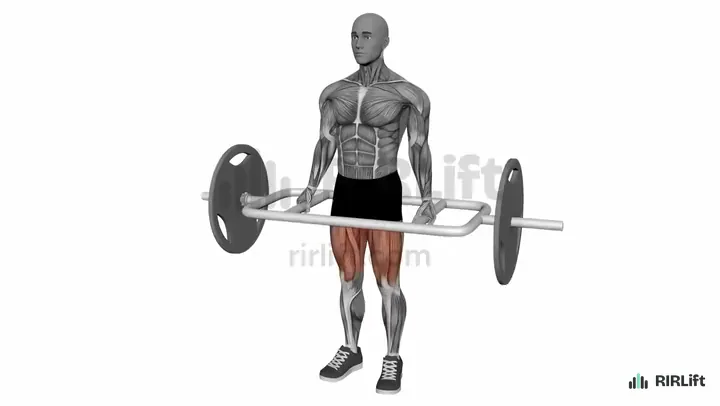
Trap Bar Deadlift

Quads, Glutes

The handles sit at your sides like two heavy bags, so this is the most natural heavy lift from the floor. It builds the strength you use to pick up anything heavy from the floor.

How to do it

  1. Step inside the trap bar with the handles beside your feet.
  2. Push your hips back, bend your knees, and grip the handles.
  3. Flatten your back, take the slack out, and stand up by pushing the floor away.
  4. Lower under control. Each warm-up set adds weight toward your working sets.

Cues

  • Push the floor away
  • Flat back
  • Slack out before you pull

Common mistakes

  • Yanking the bar off the floor: pull the slack out first.
  • Rounding the back as the weight climbs: hold the ramp until the setup is solid.

Swap for: Barbell Deadlift, Romanian Deadlift, Kettlebell Deadlift

Glutes and hamstrings, fast hinge

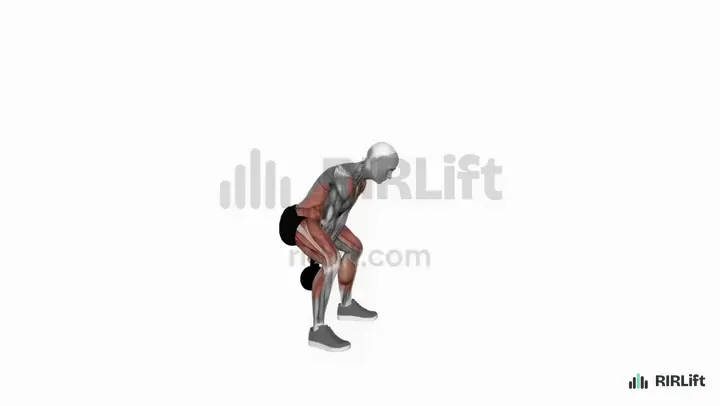
Kettlebell Swing

Glutes, Hamstrings

The swing trains a fast, powerful hip snap and grip endurance at the same time. It is strength and conditioning in one movement.

How to do it

  1. Stand with your feet a little wider than your hips, the bell set about a foot in front of you.
  2. Hinge down, grip the handle with both hands, and hike the bell back between your thighs.
  3. Snap your hips forward to stand tall, letting the bell float up to about shoulder height on straight arms.
  4. Let it fall back between your legs as you hinge again, and go straight into the next rep.

Cues

  • Hips snap, arms just hold on
  • Stand tall at the top
  • Bell passes high between the thighs

Common mistakes

  • Squatting the swing by bending the knees deeply: push your hips back and keep the shins nearly vertical.
  • Lifting the bell with your shoulders: if your arms are working, the hips are not driving it.

Swap for: Dumbbell Romanian Deadlift, Kettlebell Deadlift, Superman

Push and pull

Pushing a door or yourself off the floor and pulling something toward you are covered by one press and one row. The one-arm row also trains the trunk to stay square.

Chest and triceps, push from the floor

Push-Up

Chest

The push-up is a press with the trunk held stiff, the same job your body does when you push yourself up off the ground.

How to do it

  1. Set your hands slightly wider than your shoulders with your body straight from head to heels.
  2. Lower until your chest nearly touches the floor, elbows at about 45 degrees.
  3. Press back up to straight arms.

Cues

  • One straight line
  • Elbows angled back

Common mistakes

  • Flaring the elbows straight out: tuck them toward your ribs.

Swap for: Kneeling Push-Up, Incline Push-Up, Push-Up Plus

Lats and upper back, one-arm pull

One-Arm Dumbbell Row

Lats, Upper Back

Pulling with one arm while the other braces trains the back and the trunk together, like starting a mower or lifting a bag into a car.

How to do it

  1. Put one hand and the same-side knee on a bench, or your hand on a chair seat with both feet on the floor, so your back is flat.
  2. Hold a dumbbell in the other hand with your arm hanging straight.
  3. Pull your elbow back toward your hip until the dumbbell reaches your ribs.
  4. Lower it until your arm is straight again, finish all reps, then switch sides.

Cues

  • Elbow to your hip
  • Back flat as a table
  • Full stretch at the bottom

Common mistakes

  • Twisting your chest open to lift the dumbbell higher: keep both shoulders level.
  • Shrugging the shoulder up toward your ear: pull the elbow back, not the shoulder up.

Swap for: Band Bent-Over Row, Dumbbell Bent-Over Row, Seated Cable Row

Carries

Groceries, luggage and a bag on one shoulder all load the grip, shoulders and trunk while you walk. Carries are the most direct functional exercise there is.

Grip, traps and trunk, two-hand carry

Farmer's Walk

Forearms, Traps, Shoulders

Walking with heavy weights in both hands builds a grip that holds and a posture that stays tall under load. Add weight or distance each week.

How to do it

  1. Pick up two heavy dumbbells with your back flat.
  2. Stand tall with your ribs down and walk with short, quick steps.
  3. Set the weights down with a flat back when the time or distance is up.

Cues

  • Ribs down
  • Crush the handles
  • Quick steps

Common mistakes

  • Letting the shoulders round forward.
  • Walking so slowly the dumbbells start to swing.

Swap for: Dumbbell Suitcase Carry, Dumbbell Single-Arm Overhead Carry

Obliques and hips, one-hand carry

Dumbbell Suitcase Carry

Abs, Quads

Carrying weight in one hand makes the trunk work to keep you from leaning, exactly like a heavy bag on one side.

How to do it

  1. Pick up one heavy dumbbell and stand tall with it at your side.
  2. Walk with short, steady steps without leaning toward or away from it.
  3. Set it down, switch hands and walk back.

Cues

  • Shoulders level
  • Tall walk
  • Grip hard

Common mistakes

  • Leaning away from the weight to balance it.
  • Picking a dumbbell so light that nothing has to work.

Swap for: Farmer's Walk, Dumbbell Single-Arm Overhead Carry

Legs and trunk, push under load

Sled Push

Quads, Glutes

Driving a sled trains the legs and trunk to push a heavy object, with no lowering phase, so it adds work without much soreness.

How to do it

  1. Load the sled and grip the high or low handles with your arms extended.
  2. Lean in until your body forms a straight line from head to back foot.
  3. Drive the sled forward with short, powerful steps, pushing through the balls of your feet.
  4. Keep pushing for the target time, then rest fully.

Cues

  • Low body angle
  • Short, hard steps
  • Keep the arms locked

Common mistakes

  • Standing too upright so the sled stalls: lower the hips and lean in.
  • Long, loping strides: keep steps short and fast.

Swap for: Sled Pull, Air Bike, Barbell Back Squat

Rotation, bracing and getting up from the floor

The trunk mostly resists twisting and occasionally creates it. The Pallof press trains the first, the woodchop the second, and the get-up trains getting off the floor while holding weight overhead.

Core, anti-rotation

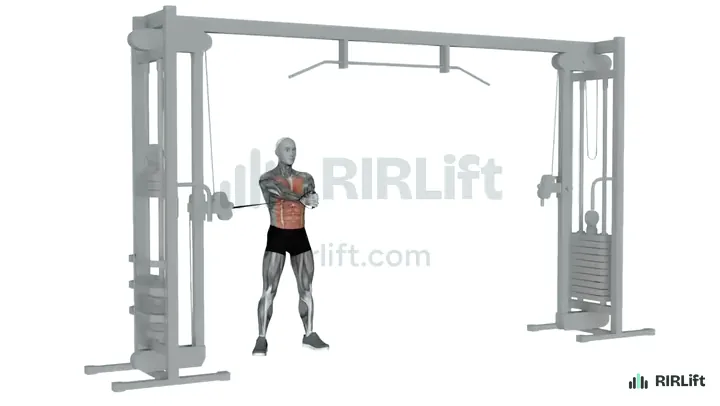
Pallof Press

Abs

Pressing a cable straight out while it pulls you sideways trains the trunk to resist twisting, which is its main job when you lift, carry and push.

How to do it

  1. Set a cable at chest height, stand side-on to it and grip the handle two-handed at your chest.
  2. Step away until the cable pulls, feet hip-width.
  3. Press the handle straight out, hold for two seconds without turning, then bring it back.

Cues

  • Hands on the midline
  • Don't turn
  • Hold it out

Common mistakes

  • Standing too close, so the cable barely pulls.
  • Letting the arms drift toward the stack.

Swap for: Cable Woodchop, Landmine Twist

Obliques and hips, rotation

Cable Woodchop

Abs

The woodchop trains rotation that starts at the hips and moves through the trunk, the pattern behind throwing, swinging and turning to place something on a shelf.

How to do it

  1. Set a cable high, stand side-on and grip the handle two-handed above the near shoulder.
  2. Chop it on a diagonal to the far hip, turning your chest as your back heel lifts and spins.
  3. Let it return along the same line under control. Finish one side, then switch.

Cues

  • Turn the chest
  • Arms long
  • Pivot the back foot

Common mistakes

  • Pulling with the arms rather than turning the trunk.
  • Going so heavy the stack drags you back on the return.

Swap for: Dumbbell Woodchop, Pallof Press

Shoulders and core, floor to standing

Kettlebell Turkish Get-Up

Shoulders, Abs

Getting from lying to standing with a weight held overhead trains shoulder stability, hip mobility and trunk strength in one slow movement.

How to do it

  1. Lie on your back with a kettlebell pressed up in one hand, the same-side knee bent.
  2. Roll onto the opposite elbow, then the hand, keeping the bell locked out above you.
  3. Lift your hips, sweep the straight leg back to a kneel, and stand up.
  4. Reverse each step back down to the floor.

Cues

  • Eyes on the bell
  • Arm locked
  • One step at a time

Common mistakes

  • Rushing the steps and losing the vertical arm.
  • Using a heavy bell before the sequence is smooth.

Swap for: Dumbbell Single-Arm Overhead Carry, Kettlebell Windmill

Put them together: example sessions

Each session below picks from the exercises above for one situation, with the sets, reps, rest and RIR filled in.

Session 1

Everyday strength at the gym, two days

  • Workouts2× a week
  • Working sets27 a week
  • Per workout~40 min
  • EquipmentTrap Bar, Dumbbells, Adjustable Cable, Kettlebells

You want to be stronger for daily life, sport on weekends or a physical job, and you can get to a gym twice a week.

Each day covers a squat or hinge, a push or pull, a carry and a core exercise, about 14 sets. Over two days every pattern gets trained once heavy and once at moderate effort.

Day 1: Lift and carry
ExerciseSets × repsRIRRest
Trap Bar Deadlift2 warm-up sets first 3 × 5–8 2 3 min
Push-Up 3 × 8–15 2 90 s
One-Arm Dumbbell RowPer arm. 3 × 8–12 2 90 s
Farmer's WalkSeconds per walk. 3 × 30–45 2 90 s
Pallof PressPer side. 2 × 10–12 2 1 min
Day 2: Squat and turn
ExerciseSets × repsRIRRest
Goblet Squat1 warm-up set first 3 × 8–12 2 2 min
Reverse LungePer leg. 3 × 8–10 2 90 s
Kettlebell Swing 3 × 12–15 3 90 s
Cable WoodchopPer side. 2 × 10–12 2 1 min
Dumbbell Suitcase CarrySeconds per side. 2 × 30–40 2 75 s
How to run it
Two non-consecutive days, such as Tuesday and Friday. About 50 minutes each.
How to progress
Double progression on the lifts: add weight when every set reaches the top of the range at the target reps in reserve. Add 5 to 10 seconds to carries, then a heavier pair. RIRLift uses the reps in reserve you log to pick the next session's weights.

Session 2

At home in 30 minutes

  • Workouts3× a week
  • Working sets45 a week
  • Per workout~35 min
  • EquipmentDumbbells, Kettlebells

You train at home with a kettlebell or a pair of dumbbells and have 30 minutes, two or three times a week.

Six exercises cover every pattern in one session, about 15 sets. Doing the same session two or three times a week makes progress easy to see.

Home functional
ExerciseSets × repsRIRRest
Goblet Squat 3 × 10–15 2 75 s
One-Arm Dumbbell RowPer arm. 3 × 10–12 2 1 min
Push-Up 3 × 8–15 2 1 min
Kettlebell Swing 3 × 15–20 3 75 s
Kettlebell Turkish Get-UpPer side. 2 × 2–3 3 90 s
Dumbbell Suitcase CarrySeconds per side. 1 × 30–45 2 1 min
How to run it
Two or three days a week with a day off between. Use the heaviest weight you can control for the swing and carry.
How to progress
Add reps until every set reaches the top of the range, then use a heavier bell. For the get-up, add weight only when every rep is slow and controlled.

Session 3

Functional training for athletes and field sports

  • Workouts2× a week
  • Working sets24 a week
  • Per workout~35 min
  • EquipmentKettlebells, Dumbbells, Adjustable Cable, Trap Bar +1

You play a sport and want strength that moves in more than one direction, around two or three practices a week.

Two short sessions of about 12 sets each, built around lateral lunges, swings, sled pushes and rotation. Lower volume than a bodybuilding plan, because practice already adds a lot of running and jumping.

Day 1: Power and sideways
ExerciseSets × repsRIRRest
Kettlebell Swing 4 × 8–10 2 90 s
Dumbbell Lateral LungePer side. 3 × 6–8 2 90 s
One-Arm Dumbbell RowPer arm. 3 × 8–10 2 90 s
Cable WoodchopPer side. 2 × 8–10 2 1 min
Day 2: Strength and drive
ExerciseSets × repsRIRRest
Trap Bar Deadlift2 warm-up sets first 4 × 3–5 2 3 min
Sled PushSeconds per push. 3 × 15–20 2 2 min
Kettlebell Turkish Get-UpPer side. 2 × 2–3 3 90 s
Pallof PressPer side. 3 × 10–12 2 1 min
How to run it
On non-practice days, or a few hours before an easy practice. Never the day before a game.
How to progress
Add load when every set reaches the top of the range at 2 reps in reserve. For sled pushes, add a plate each week until you can't drive at a steady pace, then add time.

Make it fit you

Questions

What is a functional exercise?

An exercise that trains a movement you use in daily life or sport, such as squatting, hinging, lunging, pushing, pulling, carrying or turning, usually with free weights and the whole body working together.

What is a functional workout in the gym?

A session built from those patterns: a squat or deadlift, a push and a pull, a carry and a core exercise. It is regular strength training chosen for movement patterns rather than for single muscles.

What is the difference between HIIT and functional fitness?

HIIT is a way of timing work and rest to raise your heart rate. Functional training is about which movements you train. You can do functional exercises as strength work or as HIIT intervals.

What are the only 5 exercises you'll ever need?

A squat, a deadlift, a push-up or press, a row or pull-up, and a loaded carry come close. Add something for rotation and you have the core of every plan on this page.

Are machines functional?

Machines build strength that carries over, but they guide the movement and remove balance. Use them alongside free-weight lifts and carries rather than instead of them.

How many days a week should I do functional training?

Two or three. Two days covers every pattern; a third adds practice and lets each session stay shorter.