
Functional strength training on Apple Watch: the exercises that count, and sessions to run
Published November 3, 2026
Functional Strength Training is the Apple Watch workout type for loaded whole-body work that is not a classic lift: sled pushes and drags, battle ropes, tire flips and sandbag cleans. Log those in RIRLift on the Watch and the session is saved to Apple Health as Functional Strength Training on its own, no type to pick. Add a lift, even wall balls or a kettlebell swing, and the whole session becomes Traditional Strength Training.
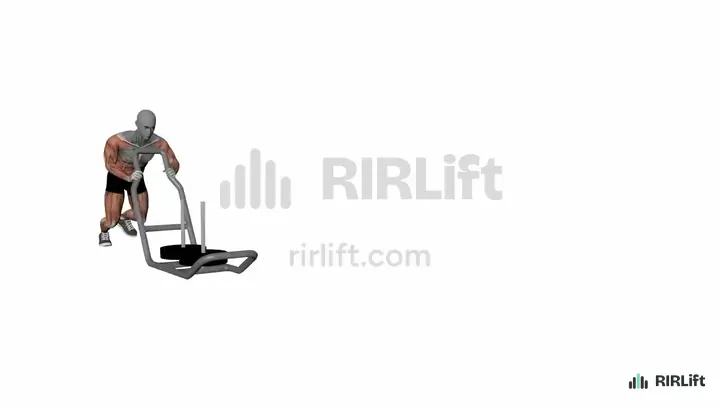
- Sled Push Quads, Glutes
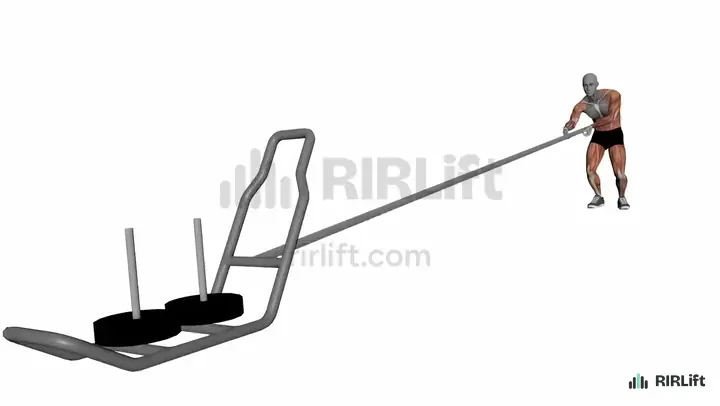
- Sled Rope Pull Upper Back, Lats, Biceps
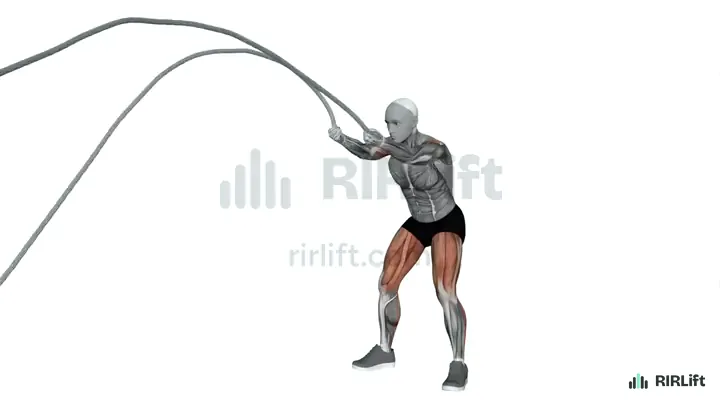
- Battle Rope Slam Shoulders, Lats, Abs
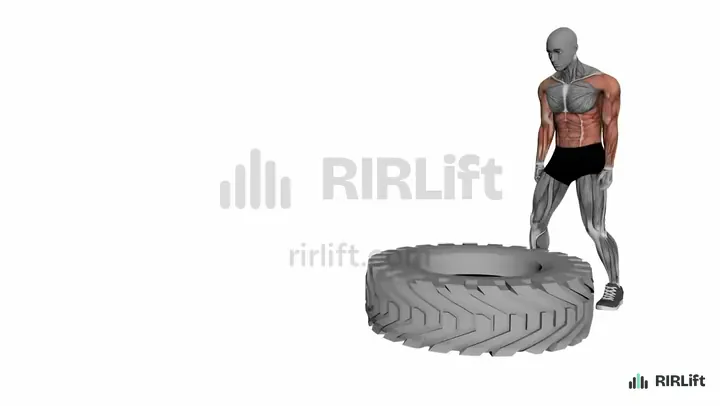
- Tire Flip Glutes, Quads
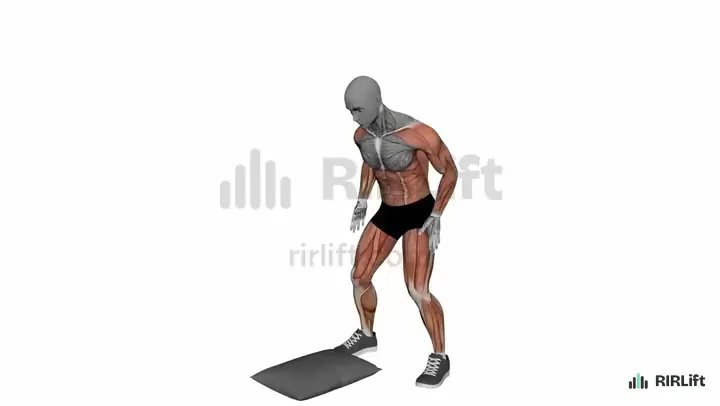
- Sandbag Clean Glutes, Hamstrings, Traps
Put them together: example sessions
Each session below picks from the exercises above for one situation, with the sets, reps, rest and RIR filled in.
-
Session 1
Turf lane at the gym
Your gym has a sled, a rope for it and a pair of battle ropes, and you want a hard session on the day you are not lifting.
1× a week · 18 sets a week · ~30 min
-
Session 2
Tire and sandbag outside
You train in a garage, a yard or a strongman corner with a tire, a sandbag and a rope anchored to a post. No machines, no barbell.
1× a week · 14 sets a week · ~30 min
-
Session 3
Class-style circuit with wall balls
You like a race-style circuit: sled pushes between sets of wall balls and slams, little rest, one round after another.
1× a week · 9 sets a week · ~10 min
Session 1
Turf lane at the gym
- Workouts1× a week
- Working sets18 a week
- Per workout~30 min
- EquipmentSled, Battle Ropes
Your gym has a sled, a rope for it and a pair of battle ropes, and you want a hard session on the day you are not lifting.
Four stations, about 18 hard bouts. Pushing, dragging, pulling and slamming work your legs, back and shoulders without a single heavy lowering phase, so your next lifting day is not affected.
| Exercise | Sets × reps | RIR | Rest |
|---|---|---|---|
| Sled Push | 6 × 20–30 s | 2 | 90 s |
| Sled Rope PullHand over hand. | 4 × 30–45 s | 2 | 90 s |
| Lateral Sled DragSwitch the lead side each set. | 4 × 20–30 s | 2 | 1 min |
| Battle Rope Slam | 4 × 20–30 s | 2 | 40 s |
- How to run it
- Start the routine on the Watch and leave the phone in the bag. After each bout, rate it with the crown: Steady, Tempo, Hard or Max. The rest timer runs on your wrist between bouts.
- How to progress
- Keep the time and add load. When every sled push felt Hard rather than Max, put another 25 lb plate on next week. Rope slams progress by time: once all four sets are 30 seconds at Hard, go to 40. Saved to Apple Health as Functional Strength Training.
Session 2
Tire and sandbag outside
- Workouts1× a week
- Working sets14 a week
- Per workout~30 min
- EquipmentBattle Ropes
You train in a garage, a yard or a strongman corner with a tire, a sandbag and a rope anchored to a post. No machines, no barbell.
Heavy reps on the tire and the bag, then rope waves to finish. Fewer, harder efforts than the sled day, with long rests between them.
| Exercise | Sets × reps | RIR | Rest |
|---|---|---|---|
| Tire Flip | 5 × 3–5 | 2 | 2 min |
| Sandbag CleanAlternate shoulders each rep. | 5 × 4–6 | 2 | 90 s |
| Battle Rope Wave | 4 × 30–45 s | 2 | 45 s |
- How to run it
- Do it once a week. Log tire flips and sandbag cleans as reps with how many you had left; rate the rope waves with an effort level.
- How to progress
- Flip the tire for 3 reps until all five sets reach 5, then move to a bigger tire. Clean a 100 lb bag for 4 to 6 reps; when every set reaches 6, use the next bag up. With only tire, bag and rope work in it, the session is saved as Functional Strength Training.
Session 3
Class-style circuit with wall balls
- Workouts1× a week
- Working sets9 a week
- Per workout~10 min
- EquipmentSled, Medicine Ball
You like a race-style circuit: sled pushes between sets of wall balls and slams, little rest, one round after another.
Sled pushes for the legs, wall balls for a squat and a throw, ball slams for the whole body. Three rounds, straight from one station to the next, 90 seconds after each round.
| Exercise | Sets × reps | RIR | Rest |
|---|---|---|---|
| A1 Sled Push | 3 × 20–30 s | 2 | 90 s |
| A2 Wall Ball | 3 × 15–20 | 2 | 90 s |
| A3 Medicine Ball Slam | 3 × 10–15 | 2 | 90 s |
- How to run it
- Run it as a circuit on the Watch: one set of each, then the next round. Log wall balls and slams as reps with the ball's weight.
- How to progress
- Keep the same ball until every round of wall balls reaches 20, then go up to the next ball and start again at 15. This session is saved as Traditional Strength Training: wall balls and slams are lifts. If you want it to count as Functional, use the sled lane session instead.
Make it fit you
-
Keep it functional
Build the routine from sled, rope, tire and sandbag exercises only. One wall ball, swing or dumbbell set makes the session Traditional Strength Training.
-
Rate every bout
Rate each sled push and rope set on the Watch, from Easy to Max. Add load next week only to the moves you rated below Max.
-
Log the plates you add
Enter the plates on the sled as the added load for each push, so a heavier week shows up in your history next to the same times.
-
Warm up with the rope
Make the first rope set a warm-up set on the Watch. Warm-up sets are not rated and do not count as work.
Questions
What is considered functional strength training on Apple Watch?
Loaded whole-body work that is not a barbell lift and not cardio: sled pushes, sled drags and pulls, battle ropes, tire flips and sandbag cleans. Those are the exercises RIRLift saves as Functional Strength Training.
Why did my functional class save as Traditional Strength Training?
Something in it is logged as a lift: wall balls, ball slams, kettlebell swings, carries or any dumbbell set. One set of a lift makes the whole session Traditional. Build the routine from sleds, ropes, tires and sandbags only to keep it Functional.
Should I use functional strength training for weights?
No. For barbell, dumbbell, kettlebell and machine lifts the type is Traditional Strength Training, and that is what RIRLift saves when you log them.
Do I need to start a workout in Apple's Workout app too?
No. Start the session in RIRLift on the Watch. It records the workout and saves it to Apple Health with the type that matches what you logged, so there is one workout, not two.
Related templates
-
Functional vs traditional strength training, and which one your Apple Watch records
How the two styles differ, with a session for each.
-
Strongman training: the lifts, carries and events
More tire, sandbag and carry work, programmed for strength.
-
HYROX workout: station sessions and the strength training behind them
Sleds, wall balls and runs in race order.
-
Functional exercises: strength for lifting, carrying and turning
Functional moves with dumbbells and kettlebells.
-
What mixed cardio on Apple Watch is, and what goes in it
What happens when you add a rower to the sled.