Strongman training: the lifts, carries and events

Strongman training is heavy barbell work plus events. A typical week has an overhead day built on the overhead press, push press or clean and press, a squat day with back or Zercher squats, a deadlift day with floor and rack pulls, and an event day for carries, sandbag cleans, tire flips and sled pushes. Most sets stay a couple of reps short of failure, with grinders saved for contests, and if your gym has no implements, farmer's walks, Zercher squats and pinch grip work cover most of what the events demand.

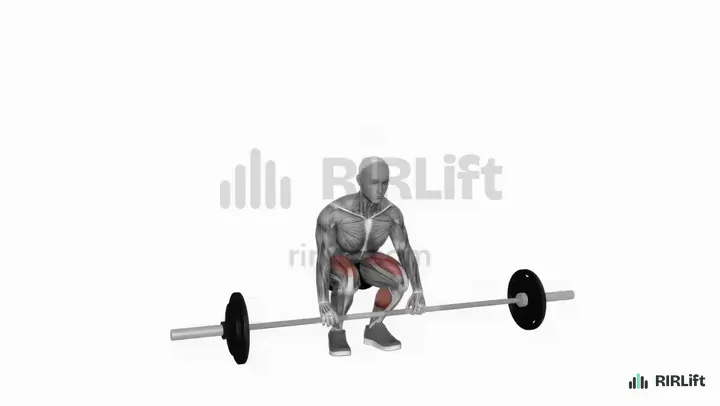
  1. Barbell Deadlift Glutes, Lower Back
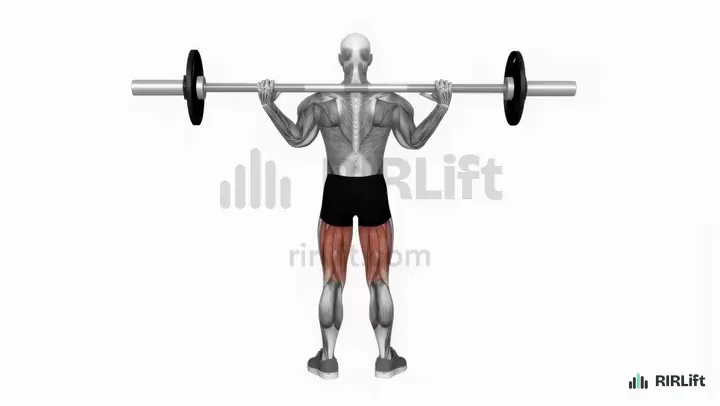
  2. Barbell Back Squat Quads, Glutes, Adductors
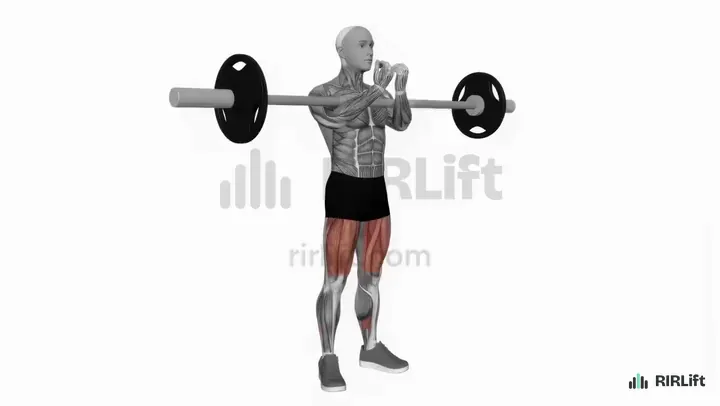
  3. Zercher Squat Quads, Glutes
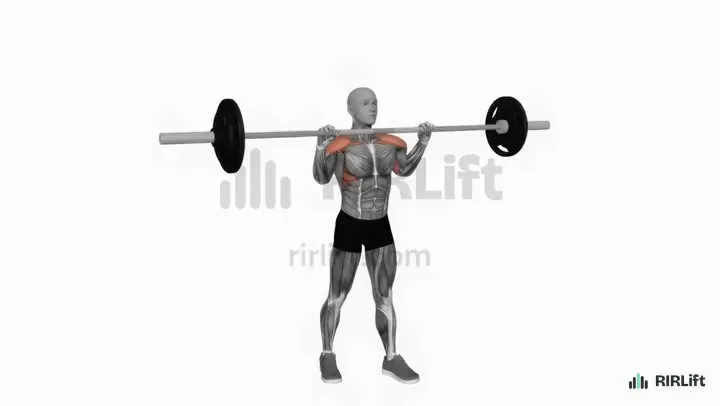
  4. Barbell Overhead Press Shoulders
  5. Barbell Clean and Press Shoulders, Traps, Glutes
  6. Farmer's Walk Forearms, Traps, Shoulders
  7. Sandbag Clean Glutes, Hamstrings, Traps
  8. Tire Flip Glutes, Quads
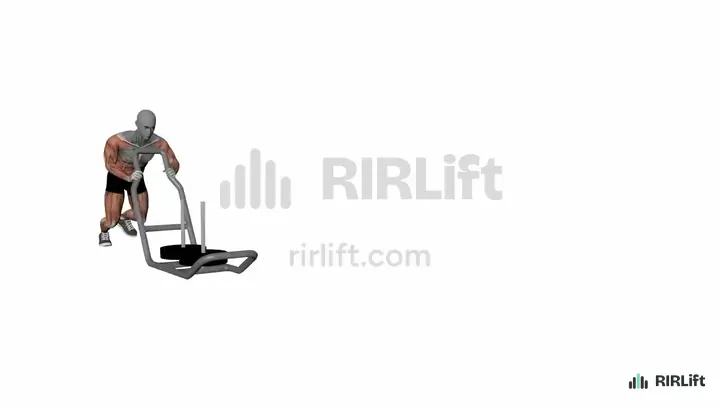
  9. Sled Push Quads, Glutes

Strongman deadlift and pulling strength

The deadlift underpins stones, sandbags and the deadlift events, and pulling from higher pins mirrors the raised start of many contest bars.

The base pull behind every lifting event

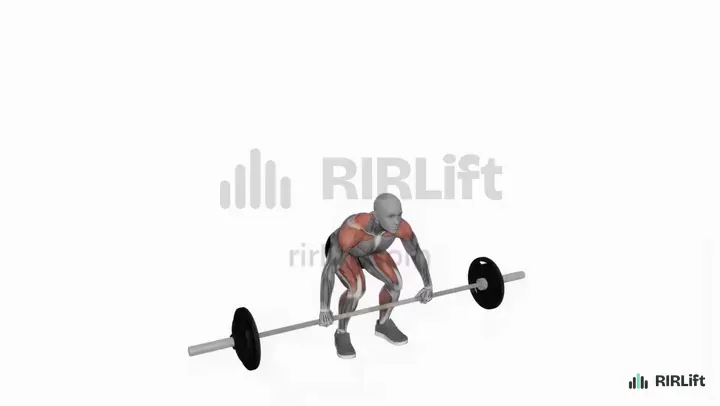
Barbell Deadlift

Glutes, Lower Back

Almost every strongman event is a pull from the floor in disguise: stones, sandbags, tire flips and the deadlift itself. A strong barbell deadlift is the foundation the events are built on.

How to do it

  1. Stand with the bar over the middle of your feet, feet about hip width.
  2. Hinge down and grip the bar just outside your legs, then pull your chest up until your back is flat.
  3. Take a big breath into your belly, brace, and push the floor away until you stand tall.
  4. Lower the bar along your legs down again, keeping the same flat back.

Cues

  • Bar stays over mid-foot
  • Brace before you pull
  • Push the floor away

Common mistakes

  • Letting the bar drift forward off the shins: keep it dragging up your legs.
  • Losing the brace at the bottom between reps: reset your breath on every rep.

Swap for: Trap Bar Deadlift, Rack Pull, Sumo Deadlift

Top-end pulling strength and grip

Rack Pull

Glutes, Lower Back, Traps

Many strongman deadlifts start higher than a barbell pull, on raised bars, axles or car frames. Pulling from knee height overloads the lockout and the grip with more weight than you can take from the floor.

How to do it

  1. Set the bar on safety pins or blocks just below your knees.
  2. Grip it, pull your shoulders back over the bar and set a flat back.
  3. Drive your hips forward to stand fully upright.
  4. Lower under control back to the pins and reset.

Cues

  • Hips through at the top
  • Shoulders over the bar at the start
  • Squeeze the bar hard

Common mistakes

  • Leaning way back to finish: stand straight and squeeze the glutes.
  • Bouncing off the pins: let the bar settle each rep.

Swap for: Barbell Deadlift, Trap Bar Deadlift, Plate Pinch Deadlift

Build a session with Rack Pull

Upper-back strength

Barbell Row

Upper Back, Lats

A strong upper back keeps your spine in place under heavy pulls and holds a log or stone against your chest. Heavy rows build the thickness that does it.

How to do it

  1. Hold the bar with an overhand grip, hinge until your torso is about 45 degrees and let it hang at arm's length.
  2. Brace and pull the bar to your lower ribs.
  3. Pause briefly with your shoulder blades squeezed.
  4. Lower to full arm extension and repeat without changing your torso angle.

Cues

  • Fixed torso angle
  • Bar to the belly
  • Pause at the top

Common mistakes

  • Standing up as the set gets hard: hold the same angle or end the set.
  • Yanking the bar with the hips: use a weight you can row cleanly.

Swap for: Pendlay Row, T-Bar Row, One-Arm Dumbbell Row

Lats and biceps for loading

Chin-Up

Lats

Lats and biceps take a beating holding stones and sandbags close. Chin-ups build both, and a strong biceps helps the arms tolerate heavy lapping and loading.

How to do it

  1. Hang from the bar with your palms facing you, hands shoulder width.
  2. Set the shoulder blades low, then drive your chest toward the bar.
  3. Get your chin over the bar.
  4. Lower to a full hang under control.

Cues

  • Chest to the bar
  • Full hang
  • No swinging

Common mistakes

  • Kipping to finish reps: keep them strict.
  • Stopping halfway down: straighten your arms each rep.

Swap for: Pull-Up, Lat Pulldown, Band-Assisted Pull-Up

Build a session with Chin-Up

Squat strength for yoke and loading

Squats build the legs that walk a yoke and drive a stone onto a platform, and the Zercher squat trains the hug position of every odd object.

Leg strength for yoke and loading

Barbell Back Squat

Quads, Glutes, Adductors

Squat strength carries straight into the yoke walk and the leg drive of stone and sandbag loads. It is the main lower-body lift for building raw leg strength.

How to do it

  1. Set the bar across your upper back, step it out of the rack and set your feet about shoulder width.
  2. Breathe in, brace, and sit down and slightly back.
  3. Go down until your hip crease is below your knee if you can keep a flat back.
  4. Drive up and keep your chest rising with your hips.

Cues

  • Brace hard
  • Knees out
  • Chest and hips rise together

Common mistakes

  • Hips rising first so the squat turns into a good morning: lighten the bar and push the upper back into it.
  • Cutting depth short as weight climbs: keep the same depth every rep.

Swap for: Front Squat, Zercher Squat, Box Squat

Upright squatting for carries and cleans

Front Squat

Quads, Glutes, Adductors

The front squat builds the quads and upper back in an upright position, like catching a log or sandbag on your chest. It also forces a strong brace.

How to do it

  1. Rack the bar on the front delts, elbows high.
  2. Brace and sit straight down between your heels.
  3. Hold your elbows up and your back flat at the bottom.
  4. Stand up driving your elbows toward the ceiling.

Cues

  • Elbows up
  • Sit straight down
  • Brace the whole way

Common mistakes

  • Elbows dropping: the bar rolls forward and the back rounds, so lighten up.
  • Rushing the bottom: stay tight through the turnaround.

Swap for: Goblet Squat, Zercher Squat, Barbell Back Squat

Squatting with a load held in the arms

Zercher Squat

Quads, Glutes

Stones, sandbags and kegs are carried in the crook of the arms against the chest. The Zercher squat loads exactly that position and builds the upper back, biceps and trunk that hold an awkward object.

How to do it

  1. Set the bar in a rack at about the height of your lower ribs.
  2. Hook it in the bend of your elbows, clasp your hands, and stand to lift it out.
  3. Squat down with your chest up until your elbows reach just inside your knees.
  4. Drive back up, keeping the bar tight against your body.

Cues

  • Bar tight to your body
  • Upper back tall
  • Hands clasped

Common mistakes

  • Letting the bar roll down your forearms: keep your hands high and elbows tight.
  • Folding forward at the bottom: squat only as deep as you stay upright.

Swap for: Front Squat, Goblet Squat, Barbell Back Squat

Overhead pressing for log and axle

Strict pressing builds the base, and pressing with leg drive and a clean teaches the full event. Train both through the week.

Strict overhead strength

Barbell Overhead Press

Shoulders

Log, axle and dumbbell pressing are the overhead events, and strict press strength is what drives the bar once the dip and drive run out. Train it for sets of 3 to 6.

How to do it

  1. Hold the bar on your upper chest with hands just outside your shoulders.
  2. Squeeze your glutes and brace your belly.
  3. Press the bar straight up, moving your head back just enough to clear it.
  4. Lock out with the bar over your mid-foot, then lower to your chest.

Cues

  • Glutes tight
  • Bar over the mid-foot at lockout
  • Head through at the top

Common mistakes

  • Leaning back into a standing incline press: brace harder and use less weight.
  • Pressing the bar out in front: keep it close to your face.

Swap for: Seated Barbell Overhead Press, Dumbbell Push Press, Landmine Press

Leg drive overhead

Dumbbell Push Press

Shoulders

Most strongman presses use the legs. The dumbbell push press teaches a quick dip and drive and trains each arm on its own, which carries over to the one-handed circus dumbbell.

How to do it

  1. Rack two dumbbells on your shoulders, elbows a touch forward.
  2. Dip a few inches by bending your knees, keeping your torso straight.
  3. Drive up hard with your legs and press the dumbbells overhead in the same motion.
  4. Lock your arms out, then bring the dumbbells down to the start.

Cues

  • Short, fast dip
  • Legs start it, arms finish it
  • Torso stays vertical

Common mistakes

  • Dipping too deep or leaning forward: keep the dip short and straight down.
  • Pressing before the legs finish: let the leg drive launch the weights.

Swap for: Barbell Clean and Press, Barbell Overhead Press, Single-Arm Dumbbell Shoulder Press

Getting a load from floor to overhead

Barbell Clean and Press

Shoulders, Traps, Glutes

A log or axle has to be cleaned before it can be pressed, and that is where most attempts fail. The barbell clean and press trains both halves in one rep.

How to do it

  1. Set up as for a deadlift with a shoulder-width grip.
  2. Pull the bar up your thighs, extend your hips hard and pull it into a rack on your shoulders.
  3. Reset your feet and brace, then dip and drive the bar overhead.
  4. Lower it to your shoulders, then to your thighs, and back to the floor.

Cues

  • Hips do the clean
  • Keep the bar tight to you
  • Brace again before the press

Common mistakes

  • Reverse-curling the bar up with the arms: let the hip drive do the work.
  • Pressing from a loose rack: take a breath and set before pressing.

Swap for: Dumbbell Push Press, Barbell Overhead Press, Power Clean

Carries and grip for strongman

Carries are where strongman differs most from a regular gym program. Heavy walks and pinch grip build hands that don't open when the rest of you still has more.

Grip and full-body bracing on the move

Farmer's Walk

Forearms, Traps, Shoulders

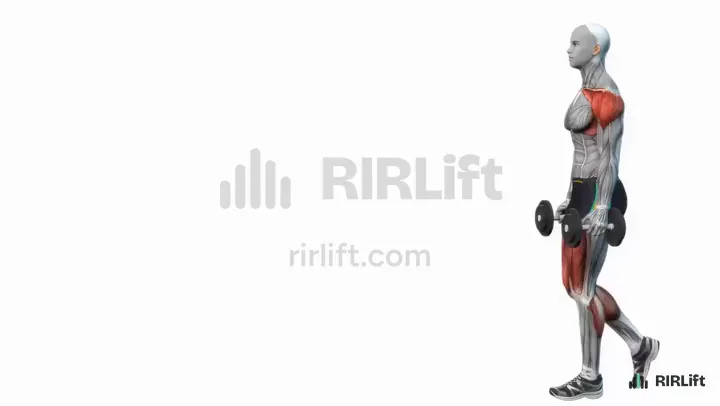
The farmer's walk is a strongman event and the best general carry in the gym. Heavy dumbbells or farmer handles build grip, traps and the ability to walk fast under a load.

How to do it

  1. Set heavy dumbbells or farmer handles at your sides and deadlift them up with a flat back.
  2. Stand tall, brace your belly and grip as hard as you can.
  3. Walk with fast, short steps for the planned distance.
  4. Set the weights down with control by hinging, not by dropping them from your waist.

Cues

  • Short fast steps
  • Crush the handles
  • Tall posture

Common mistakes

  • Long slow strides that rock the weights: quicken the steps.
  • Rounding forward under fatigue: end the run before the posture goes.

Swap for: Dumbbell Suitcase Carry, Trap Bar Shrug, Plate Pinch Deadlift

Open-hand grip

Plate Pinch Deadlift

Forearms

Thick axles and odd implements are held with an open hand rather than a closed fist. Pinching plates smooth side out trains that thumb-to-fingers grip that a regular bar doesn't touch.

How to do it

  1. Stand two pairs of equal plates on the floor, smooth sides out, one pair beside each foot.
  2. Squat down and pinch each pair between your thumb and fingers.
  3. Stand up holding them at your sides, keeping the plates from sliding apart.
  4. Hold for the planned time, then set them down.

Cues

  • Thumb drives into the plates
  • Arm straight
  • Stand tall

Common mistakes

  • Hugging the plates against your leg: keep them hanging free.
  • Cranking the weight up with a curl: lift with the legs and just hold.

Swap for: Farmer's Walk, Dumbbell Suitcase Carry, Rack Pull

Strongman event training

If your gym has a sandbag, tire or sled, use them for one event day a week. Events are skill as much as strength, so keep the reps crisp rather than grinding them.

Lifting an awkward object from the floor

Sandbag Clean

Glutes, Hamstrings, Traps

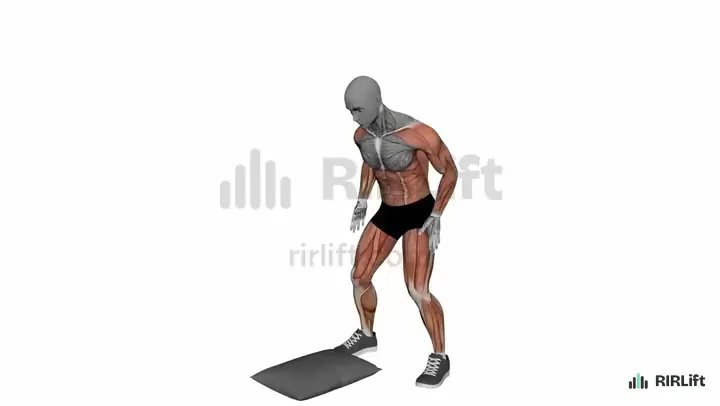
Sandbags shift as you lift them, so you have to wrap, lap and drive them up the way you would a stone. Cleaning one to your shoulder is the most available odd-object drill in a regular gym.

How to do it

  1. Straddle the sandbag, squat down and wrap your arms around it, hands underneath.
  2. Stand partway and pull it onto your thighs in a lap position.
  3. Drive your hips forward hard and pop the bag up onto one shoulder.
  4. Set it back down and repeat, alternating shoulders.

Cues

  • Wrap it tight
  • Lap, then drive
  • Hips launch the bag

Common mistakes

  • Lifting with a rounded back without a lap first: pause on the thighs and reset.
  • Curling it up with the arms: the hips should do the work.

Swap for: Zercher Squat, Power Clean, Kettlebell Swing

Explosive full-body drive

Tire Flip

Glutes, Quads

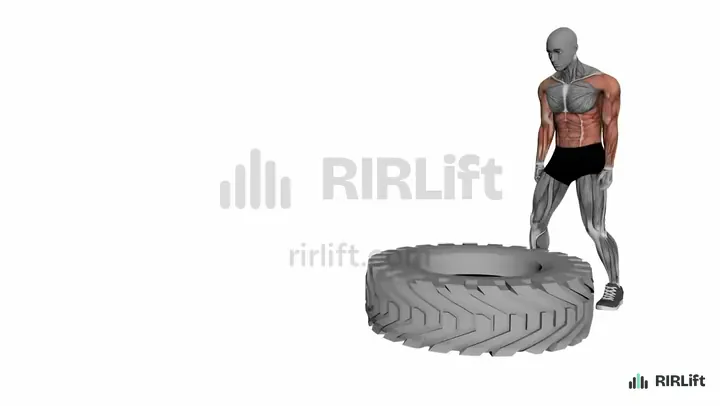
The tire flip is a classic event that combines a deadlift-style lift with an explosive drive forward. It builds power and conditioning at once.

How to do it

  1. Squat down facing the tire, chest against it, and grip the bottom edge with your hands underneath.
  2. Drive forward and up into the tire with your legs and hips.
  3. As it rises, drive a knee into it and switch your hands to push.
  4. Push the tire all the way over and reset for the next flip.

Cues

  • Chest on the tire
  • Drive forward, not up
  • Hands flip to push

Common mistakes

  • Deadlifting the tire straight up with a rounded back: lean into it and drive forward.
  • Curling with your arms under the tire: keep your arms long until it is past your knees.

Swap for: Sled Push, Sandbag Clean, Barbell Deadlift

Build a session with Tire Flip

Conditioning without wear on the joints

Sled Push

Quads, Glutes

Strongman medleys and moving events need a big work capacity, and the sled builds it without the pounding of running. A low push also trains the leg drive of a yoke or frame carry.

How to do it

  1. Grip the sled handles low with your arms extended and your body leaning forward.
  2. Drive one knee forward and push off the balls of your feet.
  3. Take quick, powerful steps keeping your hips low.
  4. Push for the planned distance, rest, and repeat.

Cues

  • Low hips
  • Quick powerful steps
  • Arms locked

Common mistakes

  • Standing tall so the sled stalls: drop your hips and lean in.
  • Long strides: short fast steps keep the sled moving.

Swap for: Tire Flip, Farmer's Walk, Stationary Bike

Build a session with Sled Push

Put them together: example sessions

Each session below picks from the exercises above for one situation, with the sets, reps, rest and RIR filled in. Open one in the session builder to change a pick, price it from a recent set, and add it to RIRLift.

Session 1

Starting strongman in a regular gym

Open in the session builder
  • Workouts3× a week
  • Working sets35 a week
  • Per workout~35 min
  • EquipmentBarbells, Dumbbells, Pull-Up Bar, Sled

You want to start strongman training but your gym only has barbells, dumbbells and maybe a sled.

Event strength is built on squats, deadlifts and presses, so this plan trains those heavy on three days at 2 reps in reserve and puts carries and Zercher squats in the place of events. Each day has 13 to 15 working sets, enough to grow without burying you while you learn to brace.

Deadlift and Carry
ExerciseSets × repsRIRRest
Barbell Deadlift3 warm-up sets first 4 × 3–5 2 3 min
Barbell Row 3 × 6–8 2 2 min
Farmer's WalkWalk 30 meters per set. 4 × 1 1 2 min
Plate Pinch DeadliftHold 20 to 30 seconds. 3 × 1 1 1 min

Open Deadlift and Carry in the session builder

Press
ExerciseSets × repsRIRRest
Barbell Overhead Press2 warm-up sets first 4 × 3–6 2 2:30 min
Dumbbell Push Press 3 × 5–8 2 2 min
Chin-Up 3 × 6–10 1 90 s

Open Press in the session builder

Squat
ExerciseSets × repsRIRRest
Barbell Back Squat3 warm-up sets first 4 × 3–6 2 3 min
Zercher Squat 3 × 5–8 2 2:30 min
Sled Push20 meters per push. 4 × 1 1 90 s

Open Squat in the session builder

How to run it
Train three non-consecutive days a week. Rest a full day between the deadlift and squat days.
How to progress
Add weight to the main lift when every set hits the top of its range at the target reps in reserve. Add farmer's walk weight once you can carry the full distance without stopping.

Session 2

Preparing for a first contest

Open in the session builder
  • Workouts4× a week
  • Working sets47 a week
  • Per workout~35 min
  • EquipmentBarbells, Pull-Up Bar, Dumbbells, Sled

You have a novice contest in two to three months and access to a sandbag, tire and sled for events.

Contest prep needs events practiced weekly, so day four becomes an event day and the rest of the week keeps the base lifts heavy but slightly lower in volume. Main lifts sit at 1 to 2 reps in reserve, events at 2 to 3, because grinding events breaks technique and recovers slowly.

Overhead
ExerciseSets × repsRIRRest
Barbell Clean and Press2 warm-up sets first 5 × 2–3 2 2:30 min
Barbell Overhead Press 3 × 4–6 1 2:30 min
Chin-Up 3 × 6–8 1 90 s

Open Overhead in the session builder

Squat
ExerciseSets × repsRIRRest
Barbell Back Squat3 warm-up sets first 4 × 3–5 1 3 min
Zercher Squat 3 × 5–6 2 2:30 min
Plate Pinch DeadliftHold 30 seconds. 3 × 1 1 1 min

Open Squat in the session builder

Deadlift
ExerciseSets × repsRIRRest
Barbell Deadlift3 warm-up sets first 4 × 2–4 1 3 min
Rack Pull 3 × 3–5 2 2:30 min
Barbell Row 3 × 6–8 1 2 min

Open Deadlift in the session builder

Events
ExerciseSets × repsRIRRest
Sandbag Clean 5 × 3 2 2 min
Tire Flip 4 × 3 2 2 min
Farmer's Walk20 meters at contest weight. 4 × 1 2 2 min
Sled Push25 meters per push. 3 × 1 2 90 s

Open Events in the session builder

How to run it
Train four days, with the event day at the end of the week and a rest day after it.
How to progress
Add load to the main lifts every week or two. Three weeks out, start doing events at contest weight for singles or short runs; in the final week, train only twice and lightly.

Session 3

Strongman-style training for other athletes

Open in the session builder
  • Workouts2× a week
  • Working sets23 a week
  • Per workout~35 min
  • EquipmentBarbells, Dumbbells, Sled, Pull-Up Bar

You play a sport or lift for general strength and want the carries and odd-object work without becoming a full strongman competitor.

Two full-body sessions pull the most useful parts of strongman, carries, Zercher squats, push presses and a sled, into a schedule that sits next to other training. Sets stop at 2 to 3 reps in reserve and each session stays around 12 sets so it adds strength without crowding out your sport.

Strongman A
ExerciseSets × repsRIRRest
Zercher Squat2 warm-up sets first 3 × 5–8 2 2:30 min
Dumbbell Push Press 3 × 5–8 2 2 min
Farmer's WalkWalk 40 meters. 3 × 1 2 2 min
Sled Push20 meters per push. 3 × 1 2 90 s

Open Strongman A in the session builder

Strongman B
ExerciseSets × repsRIRRest
Barbell Deadlift2 warm-up sets first 3 × 4–6 2 2:30 min
Sandbag Clean 3 × 3–5 3 2 min
Chin-Up 3 × 6–10 2 90 s
Plate Pinch DeadliftHold 20 seconds. 2 × 1 2 1 min

Open Strongman B in the session builder

How to run it
Do both sessions each week with two days between them.
How to progress
Add weight to the carries and Zercher squat first. Once the farmer's walk is a heavy 40 meters, add a pinch hold at the end.

Make it fit you

Questions

How do I start strongman training?

Build the base first: deadlift, squat and overhead press, two to four days a week, plus heavy farmer's walks. Add an event day once you have access to a sandbag, tire or sled, and enter a novice contest to learn the events.

What is a typical strongman training schedule?

Four days is common: overhead, squat, deadlift and an event day, with the event day at the end of the week. Three days works by folding the events into the squat and deadlift days.

Can I do strongman training in a commercial gym?

Yes. The commercial gym plan above uses only barbells, dumbbells, plates and a sled. Farmer's walks, Zercher squats, push presses and pinch holds cover most of what the events need.

Is a strongman stronger than a powerlifter?

They are strong in different ways. Powerlifters train the squat, bench and deadlift for a one-rep max; strongman adds overhead pressing, carries and odd objects, often for reps or time.

How do I get a body like a strongman?

Train heavy compound lifts and carries with enough volume and eat enough to grow. Strongman athletes are big because their sport rewards bodyweight, so a sizable calorie surplus is part of it.

How many days a week should I train strongman?

Three to four. More than that is hard to recover from because the events and heavy pulls tax the lower back and grip.