Glute bridge alternatives: what to do instead, from the gym to your living room

The best glute bridge alternative is the barbell hip thrust: the same lift with your upper back on a bench, which adds range and lets you load your glutes even harder. No bar on the floor? A Smith machine hip thrust or cable pull-through does the same job in a gym; with dumbbells, do dumbbell glute bridges or hip thrusts. At home, band hip thrusts or single-leg glute bridges with a kettlebell on your hip work if you take each set within 1 to 3 reps of failure and squeeze hard at the top.

What a glute bridge alternative has to replace

Glutes, loaded from the floor

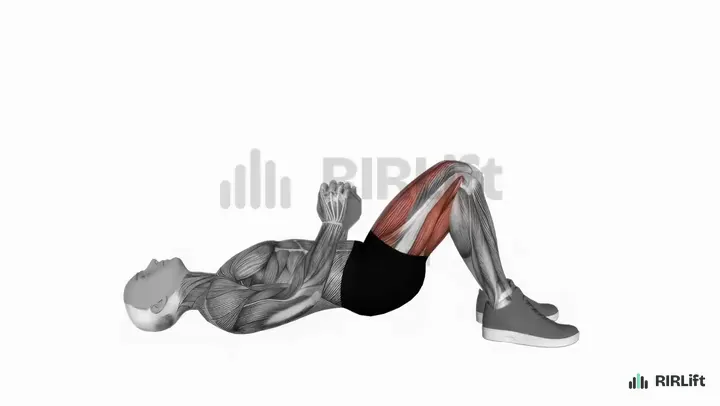
Glute Bridge

Glutes

A padded bar across your hips and your shoulders on the floor: a short, heavy range that trains your glutes hardest at the top. Every swap below keeps that top position loaded.

How to do it

  1. Lie face up, knees bent, with a padded barbell rolled over your hips.
  2. Set your heels about a foot from your glutes and steady the bar with both hands.
  3. Drive your heels down and raise your hips until knees, hips and shoulders line up.
  4. Hold the top briefly, lower until your glutes just touch the floor, and repeat.

Cues

  • Heels drive, toes relax
  • Short range, big squeeze
  • Ribs down

Common mistakes

  • Bouncing the hips off the floor: touch down and pause before the next rep.
  • Pressing up through your lower back: tighten your stomach first, then lift.

The barbell glute bridge trains your glutes, with your hamstrings helping. Your shoulders stay on the floor, so the range is short and the hardest part is the top, when your hips are fully straight. A replacement has to load that same top position, ideally with your back supported so your lower back stays out of it.

Barbell, machines and cables

In a gym, these load the same top position without rolling a bar onto your hips on the floor.

Closest swap, more range

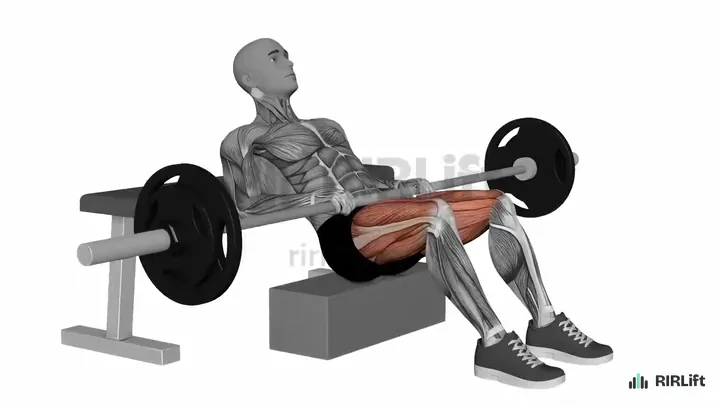
Hip Thrust

Glutes

The same bar on your hips, but your upper back rests on a bench, so your hips start lower and travel further. Expect to use a little less weight than on the bridge at first.

How to do it

  1. Sit on the floor with the edge of a flat bench just under your shoulder blades, and roll a padded barbell into the crease of your hips.
  2. Plant your feet about hip width, a foot or so in front of you, so your shins will be vertical when your hips are up.
  3. Hold the bar with both hands, tuck your chin slightly and brace as if someone is about to poke your stomach.
  4. Push the floor away through your whole foot and lift your hips until your thighs and torso are level, pivoting on the bench.
  5. Hold the top for one second with your glutes squeezed and ribs down, then lower until the plates almost touch the floor.

Cues

  • Ribs down, chin tucked
  • Shins vertical at the top
  • Squeeze for one second, then lower

Common mistakes

  • Arching your lower back to get the hips higher: stop when your thighs are level with your torso and keep your ribs pulled down.
  • Feet too close or too far: if you feel it mostly in your quads move your feet out, if mostly in your hamstrings move them in, until your shins are vertical at lockout.
  • Bouncing out of the bottom with half reps: let the plates nearly touch the floor and start each rep from there.

Machine swap, fixed bar

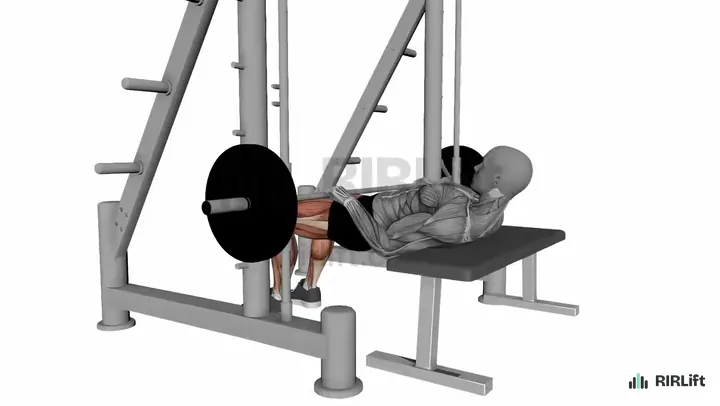
Smith Machine Hip Thrust

Glutes

The bar runs on rails, so there is no rolling a loaded barbell into place on the floor. Set the bench beside the bar and use the same reps as your bridges.

How to do it

  1. Place a flat bench parallel to the bar and lower the bar to roughly hip height when you are seated on the floor.
  2. Sit with your upper back against the bench and the bar across the crease of your hips, with a pad under it.
  3. Plant your feet about hip width apart so your shins are vertical at the top.
  4. Unhook the bar and drive your hips up until your torso and thighs make one straight line.
  5. Hold the top for a second with your chin tucked, then lower until your hips nearly touch the floor.

Cues

  • Shins vertical at the top
  • Ribs down, chin tucked
  • Squeeze, then lower

Common mistakes

  • Arching your lower back to get the bar higher: the extra height comes from your spine, not your hips. Stop at a straight line from knees to shoulders.
  • Feet too far out: the work slides to your hamstrings. Walk your feet in until the top position cramps your glutes, not the backs of your thighs.

Cable swap, nothing on your hips

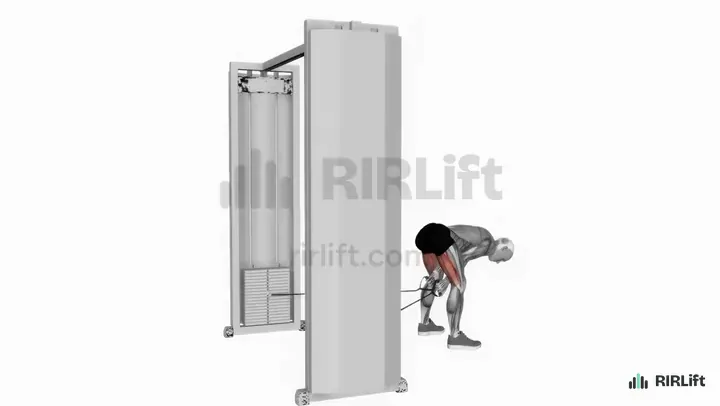
Cable Pull-Through

Glutes, Hamstrings

You hinge back against a low cable and drive your hips through to a full squeeze. Nothing presses on your hip bones, and your glutes also get a stretch at the bottom.

How to do it

  1. Set a rope on the lowest pulley, face away from the stack, and reach between your legs to grab both ends.
  2. Walk forward two or three steps so the weight lifts off the stack, and set your feet a bit wider than your hips.
  3. With a soft bend in your knees, push your hips back toward the machine and let the rope travel back through your legs while your back stays flat.
  4. Stop when you feel a strong stretch in your hamstrings, usually with your torso close to 45 degrees.
  5. Drive your hips forward until you stand straight, squeezing your glutes, with your arms staying long the whole time.

Cues

  • Hips back, not down
  • Arms are just hooks
  • Stand tall, do not lean back

Common mistakes

  • Squatting the weight: if your knees bend a lot and your hips drop, you are using your quads. Keep the shins nearly vertical and reach back with your hips.
  • Pulling with your arms: the rope should rise only because your hips extend. Keep your elbows straight.
  • Leaning back at the top: finish standing straight with your ribs down; arching past vertical shifts the effort to your lower back.

Dumbbells, at home or in the gym

With one dumbbell, bridge or thrust it; once it feels light, move to one leg and add a hinge for the stretch.

Same bridge with a dumbbell

Dumbbell Glute Bridge

Glutes

One dumbbell across your hips replaces the bar, so the lift and range stay identical. It is the easy pick at home, and the dumbbell is the only thing that limits it.

How to do it

  1. Lie on your back on a mat, knees bent, feet flat and hip width apart, heels about a hand's length from your glutes.
  2. Rest one dumbbell sideways across the crease of your hips and hold each end so it cannot roll.
  3. Breathe in, tighten your stomach and tuck your chin so your ribs stay down.
  4. Press the floor away through your heels and lift your hips until your knees, hips and shoulders make one straight line.
  5. Hold the top for one second with your glutes squeezed hard, then lower until your glutes lightly touch the floor and start the next rep from there.

Cues

  • Heels down, toes light
  • Ribs down at the top
  • One-second squeeze every rep

Common mistakes

  • Arching your lower back to lift your hips higher: stop when your knees, hips and shoulders line up, and keep your ribs pulled down.
  • Feeling it mostly in your hamstrings: walk your heels a little closer to your glutes. Feeling it mostly in your quads: move them a little further away.
  • Rushing the reps: a fast bounce off the floor skips the top, which is the part the bridge loads hardest. Pause up there instead.

RIRLift's swap with dumbbells

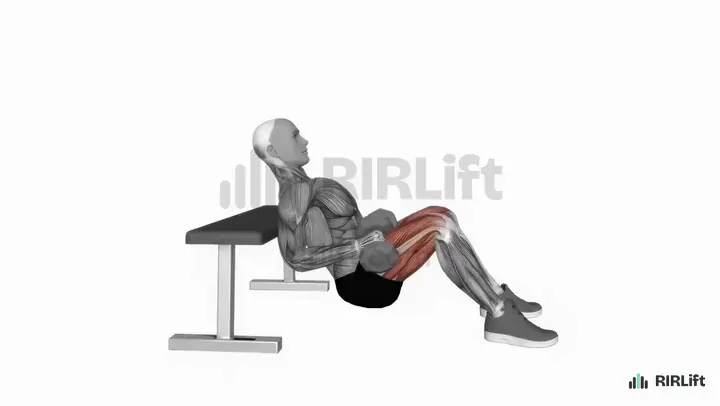
Dumbbell Hip Thrust

Glutes

Your back on a bench and a dumbbell on your hips gives you more range than the bridge with the same light setup. This is what RIRLift puts in the glute bridge's place when you train with dumbbells.

How to do it

  1. Sit down with the edge of a bench just under your shoulder blades and roll a dumbbell into the crease of your hips, a folded towel underneath it.
  2. Plant your feet flat about hip-width apart, close enough that your shins will be vertical when your hips are up, and hold the dumbbell at both ends.
  3. Tuck your chin slightly and press through your whole foot to lift your hips until your torso and thighs form a flat line.
  4. Pause for a second at the top with your glutes squeezed hard and your ribs pulled down, not flared.
  5. Lower your hips until they are a few inches above the floor and start the next rep from there.

Cues

  • Chin tucked, eyes forward
  • Shins vertical at the top
  • Ribs down, glutes squeezed

Common mistakes

  • Arching your lower back to get the last inch: stop when your hips are level with your knees and your ribs stay down; the glutes finish the rep, not your spine.
  • Feet too far away or too close: if you feel it mostly in your hamstrings, walk your feet in; if it lands on your quads, walk them out until your shins are vertical at the top.
  • Letting the dumbbell roll toward your stomach: hold both ends and put a folded towel under it so it stays in the hip crease for the whole set.

Hardest dumbbell swap

Single-Leg Hip Thrust

Glutes

One leg drives your hips and the dumbbell alone, which makes a light weight hard and evens out a weaker side. Use it when two-leg bridges with your heaviest dumbbell feel easy.

How to do it

  1. Set up with your upper back on a bench edge, one foot flat under your knee and the other foot lifted off the floor.
  2. Rest a dumbbell on the hip of the working leg and hold it in place with that hand.
  3. Push the planted heel into the floor and raise your hips until your torso and working thigh are in one line.
  4. Hold the top for a second, lower with control, and finish all reps before you switch legs.

Cues

  • Hips stay level, not tilted
  • Drive through the planted heel
  • Pause at the top

Common mistakes

  • Letting the hip of the lifted leg drop: if the pelvis tilts, use a lighter dumbbell or none.
  • Kicking the free leg up to help: keep it bent and still.

Glutes in a stretch, with dumbbells

Dumbbell Romanian Deadlift

Hamstrings, Glutes

It loads your glutes and hamstrings at the bottom, where they are stretched, the opposite end from the bridge. Pair it with any bridge swap to cover both ends of the hip.

How to do it

  1. Stand with your feet about hip-width apart, one dumbbell per hand resting against the front of your thighs, palms facing you.
  2. Unlock your knees slightly, pull your shoulders down and back, and take a breath into your stomach.
  3. Push your hips straight back and let your chest tip forward, sliding the dumbbells down the front of your legs with your back flat and knees barely changing angle.
  4. Stop when your hamstrings are fully stretched and your hips will not travel back any farther, typically with the dumbbells somewhere between the knee and mid-shin.
  5. Drive your hips forward and squeeze your glutes to stand tall, finishing upright without leaning back.

Cues

  • Hips back, not down
  • Dumbbells skim your legs
  • Stand tall, don't lean back

Common mistakes

  • Bending the knees more as you go down: that turns the hinge into a squat; keep the knee bend you started with and let the hips do the moving.
  • Rounding the back to reach lower: end the rep where your hips stop going back, even if the dumbbells are only at your knees.
  • Letting the dumbbells drift forward: keep them brushing your thighs and shins so the load stays over your feet and off your lower back.

Bands and bodyweight

No weights at all: go to one leg, pause at the top, and keep each set close to failure.

Band swap, at home

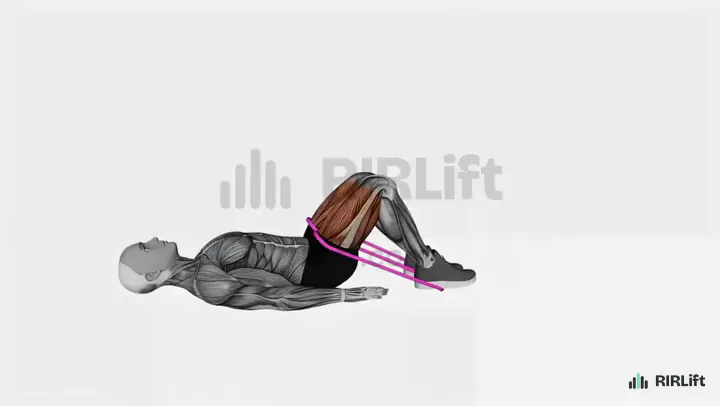
Band Hip Thrust

Glutes

The band adds the most tension at the top, exactly where the glute bridge is hardest. Use higher reps, since a band is lighter than a bar.

How to do it

  1. Lie on your back, knees bent, with a loop band pinned under both heels and pulled up across the tops of your hips.
  2. Plant your feet about hip-width, heels close to your glutes.
  3. Drive through your heels to lift your hips until your body is straight from shoulders to knees.
  4. Hold the top for a second, then lower slowly.

Cues

  • Ribs down at the top
  • Push through the heels
  • Pause at full lockout

Common mistakes

  • Arching your lower back at the top: tuck your pelvis so the glutes finish the rep.
  • Pushing through your toes: move your feet closer so your heels drive.

One-leg bridge with a kettlebell

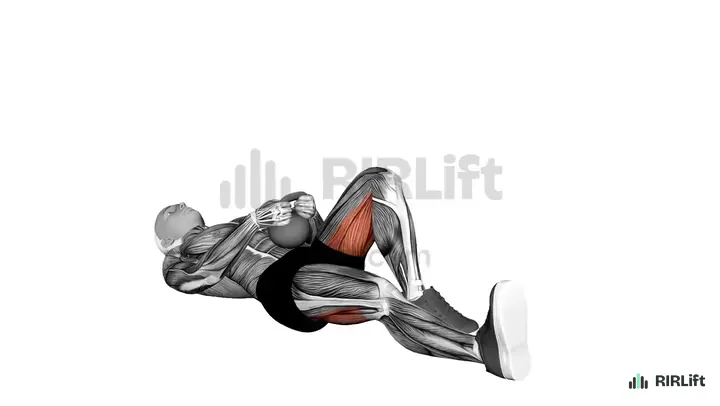
Single-Leg Glute Bridge

Glutes

One foot planted, the other leg lifted and a kettlebell on the working hip puts the whole load through one glute. A light bell is enough; start with no weight if it is too much.

How to do it

  1. Lie face up, both knees bent, feet flat and hip-width apart, heels about a hand's length from your glutes, with a kettlebell resting on the hip of the leg that will work.
  2. Hold the kettlebell in place with both hands, then lift the other foot and straighten that leg in line with the working thigh.
  3. Press your lower back gently toward the floor and push down through the heel of the planted foot.
  4. Lift your hips until your shoulders, hips and working knee form one line, keeping both hip bones at the same height.
  5. Hold the top for a second with the glute squeezed, then lower slowly until your hips just touch the floor, and repeat.

Cues

  • Push the floor away with your heel
  • Hips level, like a tray
  • Ribs down at the top

Common mistakes

  • Letting the free side drop or twist: if the hip on the lifted-leg side sags, shorten the range or hug the free knee in tighter until you can keep it level.
  • Arching the lower back to get higher: stop when your hips line up with your shoulders and knee; any higher comes from your spine, not your glute.
  • Feet too close or too far: too close and your quads take over, too far and your hamstring cramps; move the foot until you feel the glute working most.

Bridge with your heels in straps

TRX Hip Bridge

Glutes

Your heels hang in a suspension trainer, so your hamstrings have to work with your glutes and your hips have to stay steady. It is a harder bodyweight bridge if you have straps on a door or bar.

How to do it

  1. Lower the foot cradles to about knee height then lie face up, heels in the cradles and knees bent about 90 degrees.
  2. Press your heels down into the straps and lift your hips until they line up with your knees and shoulders.
  3. Hold briefly at the top with your glutes squeezed.
  4. Lower your hips under control until they hover above the floor, then lift again.

Cues

  • Pull the heels down and back
  • Ribs down at the top
  • Keep the straps still

Common mistakes

  • Pushing the straps away from you: the bridge turns into a wobble. Think of dragging your heels toward your hips.
  • Resting with your hips on the floor between reps: keep tension on and hover instead.

Best swap with no equipment

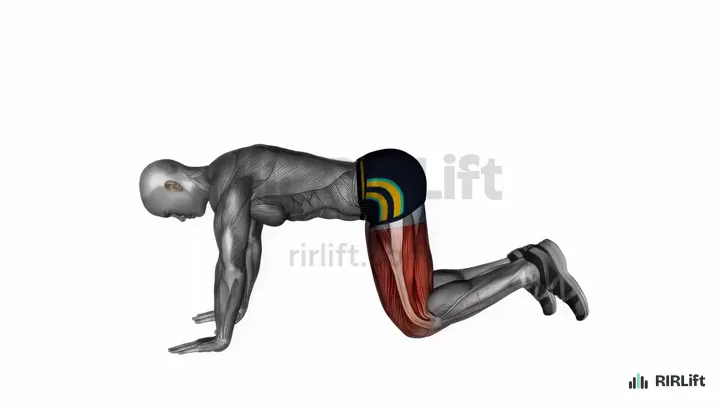
Donkey Kick

Glutes

On all fours, you drive one bent leg up toward the ceiling, a short glute-only motion. With nothing to load, treat it as a high-rep move taken close to failure.

How to do it

  1. Get on hands and knees with wrists under shoulders and knees under hips.
  2. Keep one knee bent at a right angle and lift that foot toward the ceiling.
  3. Stop when the thigh is level with your back and squeeze for a second.
  4. Lower the knee back under the hip without touching the floor.

Cues

  • Foot to the ceiling
  • Flat back
  • Squeeze at the top

Common mistakes

  • Arching the low back to kick higher: the lift should come from the hip.
  • Swinging: if momentum is moving the leg, slow down.

Example sessions without the glute bridge

Session 1

Gym, want more than the bridge gives

Open in the session builder
  • Workouts2× a week
  • Working sets24 a week
  • Per workout~35 min
  • EquipmentBarbells, Flat Bench, Dumbbells, Adjustable Cable

You train in a gym, the bridge has stopped feeling like enough, or setting up a bar on the floor is a fight every session.

The hip thrust takes the bridge's place with more range and load. The dumbbell Romanian deadlift works your glutes in a stretch, the single-leg hip thrust evens out your sides, and the pull-through adds high-rep work with nothing on your hips. 12 working sets.

Glutes
ExerciseSets × repsRIRRest
Hip Thrust1 warm-up set firstPad the bar. 4 × 6–10 2 3 min
Dumbbell Romanian Deadlift 3 × 8–12 2 2 min
Single-Leg Hip ThrustSets are per leg. 2 × 10–12 1 75 s
Cable Pull-Through 3 × 12–15 1 1 min
How to run it
Run it once or twice a week as your glute day, at least two days away from heavy deadlifts.
How to progress
When every set of a lift reaches the top of its range at the RIR shown, add the smallest weight jump next session and start again at the bottom of the range.

Session 2

Home, one or two dumbbells

Open in the session builder
  • Workouts2× a week
  • Working sets24 a week
  • Per workout~30 min
  • EquipmentDumbbells

You train at home with a few dumbbells and a couch or bench, and no barbell.

The dumbbell glute bridge keeps the same lift, run for higher reps since the load is lighter. The single-leg hip thrust makes the same dumbbell harder, the Romanian deadlift covers the stretch, and donkey kicks finish with nothing to load. 12 working sets.

Glutes
ExerciseSets × repsRIRRest
Dumbbell Glute Bridge1 warm-up set firstTowel under the dumbbell. 4 × 12–20 1 90 s
Single-Leg Hip ThrustSets are per leg. 3 × 10–15 1 1 min
Dumbbell Romanian Deadlift 3 × 10–15 1 90 s
Donkey KickSets are per leg. 2 × 15–25 0 45 s
How to run it
Twice a week on non-consecutive days. Use a couch edge if you have no bench.
How to progress
Add reps first. When every set hits the top of its range, use a heavier dumbbell; at your heaviest, add a two-second hold at the top.

Session 3

No weights, a band or straps

Open in the session builder
  • Workouts3× a week
  • Working sets30 a week
  • Per workout~20 min
  • EquipmentResistance Bands, Suspension Trainer

You train at home with your bodyweight, a loop band, and maybe a suspension trainer on a door.

With no weights, the band hip thrust makes the top of each rep hard, the strap bridge brings in your hamstrings, and donkey kicks finish one glute at a time. Sets run long and close to failure. 10 working sets.

Glutes
ExerciseSets × repsRIRRest
Band Hip Thrust 4 × 15–25 1 1 min
TRX Hip Bridge 3 × 10–15 1 1 min
Donkey KickSets are per leg. 3 × 15–25 0 45 s
How to run it
Two or three times a week. Stop each set within a rep of failure, because light work only counts near the end.
How to progress
Add reps until you hit the top of each range, then add a two-second hold at the top, then move to a thicker band.

Make it fit you

Questions

What exercise can replace the glute bridge?

The hip thrust is the closest, with more range. Without a barbell, dumbbell glute bridges, single-leg glute bridges and band hip thrusts load the same top position.

Is the hip thrust better than the glute bridge?

For most lifters, yes, because the bench lets your hips travel further under load. The bridge is quicker to set up and easier to learn, so it still works well as a lighter or home option.

What if my gym doesn't have a hip thrust machine?

Use a barbell and a flat bench, a Smith machine with a bench beside it, or a cable pull-through. All three load your glutes at full hip extension.

Can I do glute bridges at home?

Yes. Do them on the floor with a dumbbell across your hips, a band over them, or on one leg with a kettlebell on the working hip, and take sets close to failure.

What are some variations of the single-leg glute bridge?

Put your shoulders on a couch for a single-leg hip thrust, add a dumbbell on the working hip, or bridge with your heels in suspension straps.