
Single-leg glute bridge: how to do it, what it works, and how to make it harder
Published October 19, 2026
A single-leg glute bridge is a floor bridge done on one foot: lie on your back, lift one leg, and drive through the planted heel until your shoulders, hips and knee line up. Keep your pelvis level the whole way, squeeze at the top for a second, and lower under control. Finish every rep on one side before you switch.
- WorksGlutes
- AlsoHamstrings
- EquipmentDumbbells
- Start with3 × 8–12, 2 in reserve, 2 min rest
How to do the single-leg glute bridge
Taking one foot off the floor doubles the load on the working glute without adding any weight, and your side glute has to hold the pelvis level so it does not drop toward the free leg. It is the easiest way to train each side on its own at home, and it shows you quickly whether one side is weaker.
Steps
- Lie face up, both knees bent, feet flat and hip-width apart, heels about a hand's length from your glutes, arms on the floor by your sides.
- Lift one foot and either hug that knee toward your chest or straighten the leg in line with the other thigh.
- Press your lower back gently toward the floor and push down through the heel of the planted foot.
- Lift your hips until your shoulders, hips and working knee form one line, keeping both hip bones at the same height.
- Hold the top for a second with the glute squeezed, then lower slowly until your hips just touch the floor, and repeat.
Cues
- Push the floor away with your heel
- Hips level, like a tray
- Ribs down at the top
Common mistakes
- Letting the free side drop or twist: if the hip on the lifted-leg side sags, shorten the range or hug the free knee in tighter until you can keep it level.
- Arching the lower back to get higher: stop when your hips line up with your shoulders and knee; any higher comes from your spine, not your glute.
- Feet too close or too far: too close and your quads take over, too far and your hamstring cramps; move the foot until you feel the glute working most.
Swap for: Dumbbell Glute Bridge, Dumbbell Hip Thrust, Single-Leg RDL
Muscles the single-leg glute bridge works
The single-leg glute bridge works the glute max of the planted leg as the main hip extender, with the hamstrings helping. The glute med on the same side works hard to keep your pelvis from tipping toward the free leg, and your abs hold your lower back steady so the movement comes from the hip.
Sets, reps and reps in reserve for the single-leg glute bridge
| Goal | Sets × reps | RIR | Rest |
|---|---|---|---|
| Build muscle | 3 × 10–20 per side | 1–2 | 60–90 s |
| Rest only as long as it takes to do the other side; add a dumbbell on the hip once 20 reps feels easy. | |||
| Strength with load | 3–4 × 8–12 per side | 1–2 | 90 s |
| Rest a kettlebell or dumbbell across the working hip, or move to a bench as a single-leg hip thrust. | |||
| Warm-up or activation | 1–2 × 10 per side | 3 | None |
| Use it before squats or deadlifts to wake up the glutes without tiring them. | |||
Single-leg glute bridge variations
-
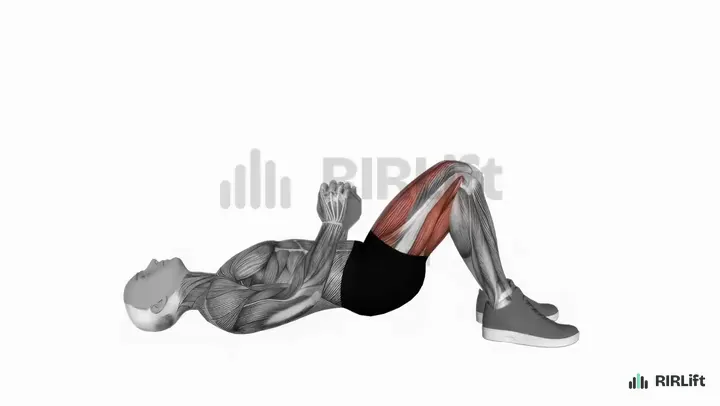
Dumbbell Glute Bridge
Put both feet down and hold a dumbbell on your hips when you want to load the bridge heavier than one leg allows.
Build a session with it -
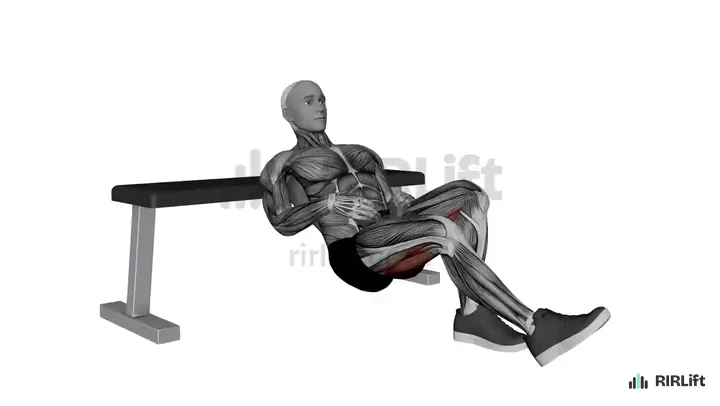
Dumbbell Staggered Hip Thrust
Keep both feet down but shift most of the work to one leg, with your upper back on a bench, when the one-leg version is too hard to keep level.
Build a session with it -
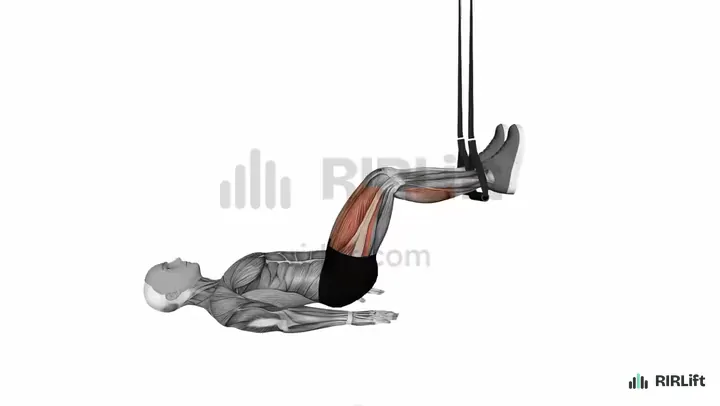
TRX Hip Bridge
Hook your heels into suspension straps when you want the bridge to hit your hamstrings harder and challenge balance.
Build a session with it
Single-leg glute bridge alternatives
Heavier hip extension
-
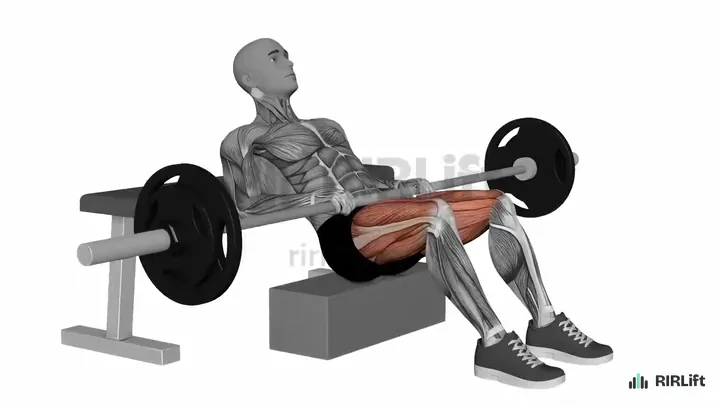
Hip Thrust
Use a barbell hip thrust when you have a gym and want to load the glutes as heavily as possible.
Build a session with it -
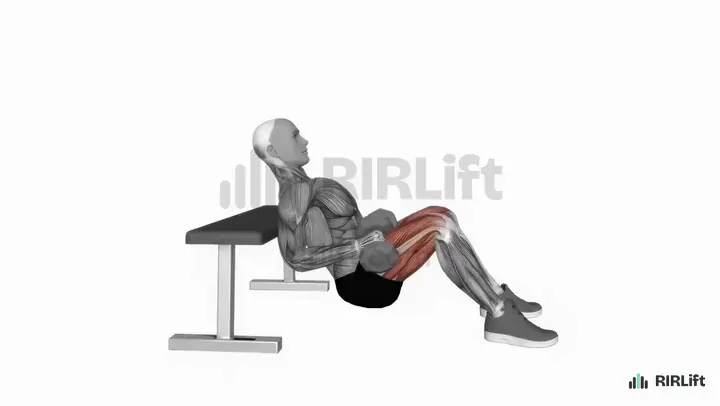
Dumbbell Hip Thrust
Put your upper back on a bench and a dumbbell on your hips for more range and load at home.
Build a session with it
Standing single-leg work
-
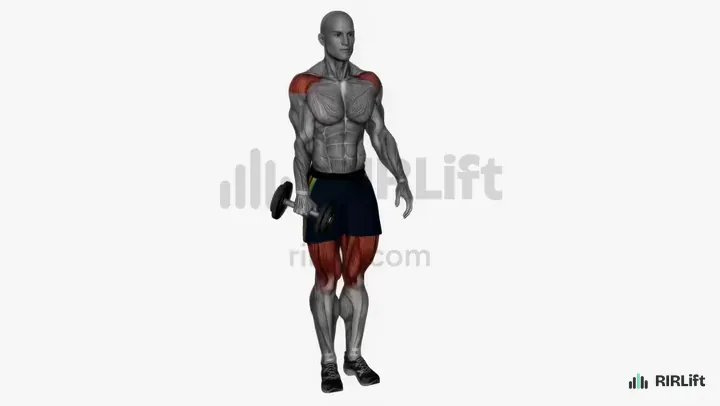
Single-Leg RDL
Hinge on one leg with a dumbbell when you want the same one-side glute and hamstring work standing up.
Build a session with it -
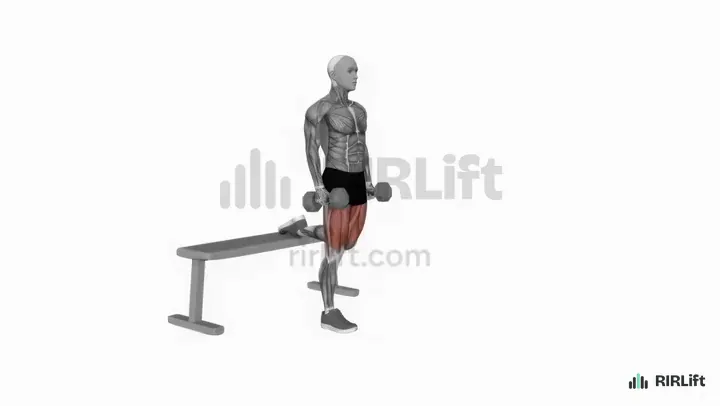
Bulgarian Split Squat
Use a rear-foot-elevated split squat when you want one-leg work that also builds the quads.
Build a session with it
Single-leg vs regular glute bridge
A regular bridge lets both legs share the load, so a stronger side can quietly do more. On one leg, each glute lifts your hips alone and also has to stop your pelvis from rotating, which is why the single-leg version feels much harder at the same bodyweight.
Neither is better on its own. Use the two-leg bridge with a dumbbell or barbell when you want heavy load, and the single-leg version when you have no weight, want to even out the sides, or want hard glute work in high reps.
How to make it harder
Once you can do 20 clean reps per side with a pause at the top, add load or range. Hold a kettlebell or dumbbell on the hip of the working leg, raise your shoulders onto a bench to turn it into a single-leg hip thrust, or put the working foot on a low step so your hips can drop lower. A three-second hold at the top also adds difficulty without any equipment.
Questions
Are single-leg glute bridges effective?
Yes. They put your full bodyweight through one glute, which is enough to build muscle when you take sets close to failure, and they train the side glute that keeps your pelvis level.
Why are single-leg glute bridges so hard?
One glute lifts what two usually share, and it also has to stop your hips from twisting toward the free leg. If you cannot keep your hips level, start with a smaller range or a staggered two-foot bridge.
Which is better, a glute bridge or a single-leg glute bridge?
Neither in general. The two-leg bridge is easier to load heavily; the single-leg bridge needs no weight and works each side alone. Many people use both.
What muscles does the single-leg glute bridge work?
Mainly the glute max of the planted leg, with the hamstrings helping, the glute med holding the pelvis level, and the abs keeping the lower back still.
What can I do instead of a single-leg glute bridge?
A dumbbell hip thrust, a single-leg Romanian deadlift or a Bulgarian split squat all train the glutes one side at a time or with heavier load.
Do glute bridges actually grow your glutes?
They can, as long as the sets are hard. Count reps in reserve and add reps, a pause or weight when a set stops reaching one or two reps from failure.
Where should you feel a single-leg glute bridge?
In the glute of the planted leg. If you feel it mostly in your hamstring, move the foot a little closer; if you feel it in your lower back, stop lower and keep your ribs down.
Related templates
-
Glute bridge: how to do it, make it harder, and what to swap it for
The two-leg barbell bridge for heavier glute loading.
-
Hip thrust: how to do it, what it works, and what to swap it for
The bench version with more range and heavier weights.
-
Glute exercises at home, with or without equipment
More glute moves that need little or no equipment.
-
Single-leg RDL: how to do it without losing balance
A standing one-leg hinge to pair with the bridge.
-
How to use RIR
How to judge reps in reserve on bodyweight sets.