Hamstring exercises at the gym: barbell hinges, curl machines and cables

The best hamstring exercises at the gym are the Romanian deadlift and the seated leg curl, backed up by the stiff-leg deadlift, the lying leg curl and the nordic or glute-ham raise. Your hamstrings do two jobs, straightening the hip and bending the knee, so a gym session needs one hinge and one curl to train the whole muscle. The barbell, curl machines and cable stacks are what a gym gives you over a home setup, so lean on them.

  1. Romanian Deadlift Hamstrings, Glutes
  2. Seated Leg Curl Hamstrings
  3. Stiff-Leg Deadlift Hamstrings, Glutes
  4. Lying Leg Curl Hamstrings
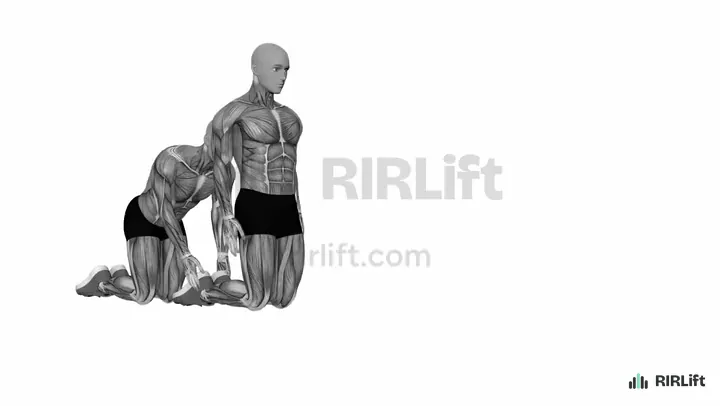
  5. Nordic Hamstring Curl Hamstrings
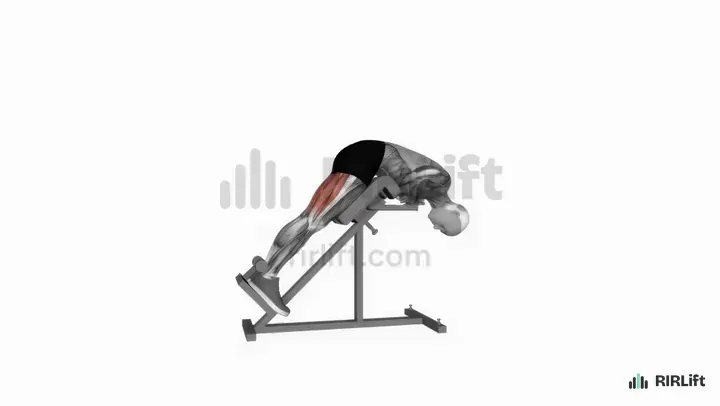
  6. 45-Degree Back Extension Glutes, Hamstrings
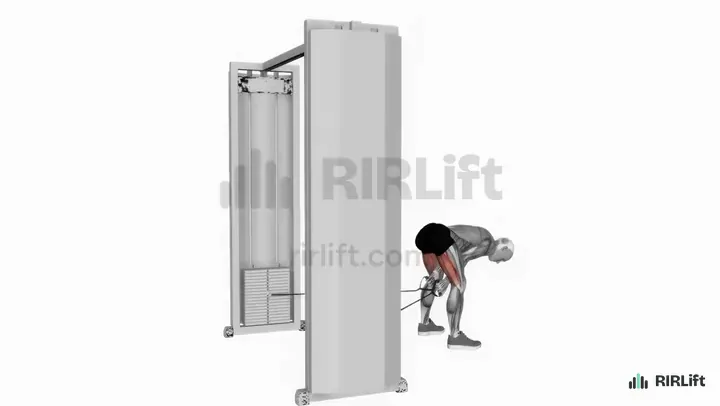
  7. Cable Pull-Through Glutes, Hamstrings
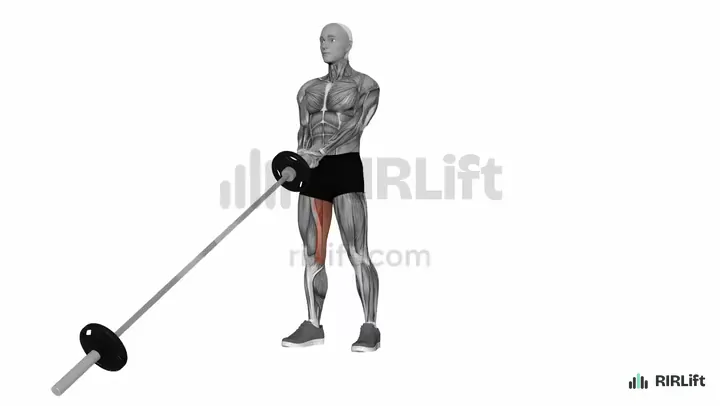
  8. Landmine RDL Hamstrings, Glutes
Hip hinges for hamstrings

Hinges train the hamstrings where they cross the hip, and the barbell lets you load that motion heavier than any other tool. Choose one per session: the Romanian deadlift for most people, the stiff-leg or good morning when you want variety, the landmine or single-leg version when your back needs a lighter day.

Hamstrings and glutes, barbell hinge

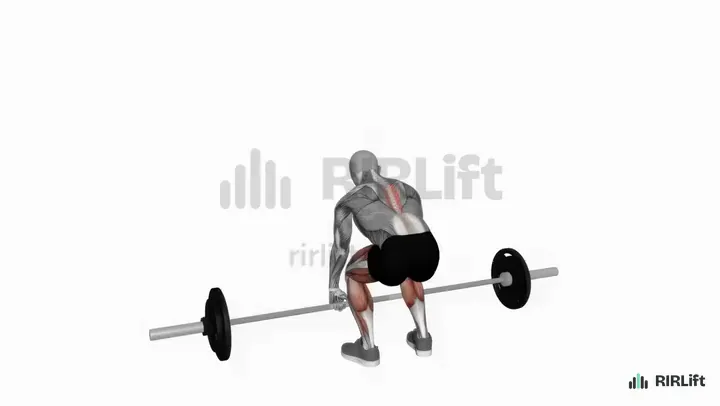
Romanian Deadlift

Hamstrings, Glutes

A barbell lets you load the hip hinge heavier than anything else in the gym, and the Romanian deadlift keeps the hamstrings under tension through a deep stretch on every rep. If you only do one hamstring exercise at the gym, make it this one.

How to do it

  1. Pull the bar from a rack or the floor and stand tall with it against your thighs, hands just outside your legs, overhand grip.
  2. Unlock your knees a little and keep that bend fixed for the whole set.
  3. Push your hips back and let the bar slide down your thighs, then past your knees, with your back flat and shoulders over the bar.
  4. Stop when your hamstrings are fully stretched or your back starts to round, usually around mid-shin, then drive your hips through to stand.

Cues

  • Bar stays on your legs
  • Hips back, knees quiet
  • Stand by squeezing the glutes

Common mistakes

  • Squatting the bar down by bending the knees more as you lower: the knee angle is set at the top and does not change.
  • Chasing the floor with a rounded back: your depth is wherever your back is still flat.

Swap for: Stiff-Leg Deadlift, Dumbbell Romanian Deadlift, Landmine RDL

Hamstrings, straighter-leg barbell hinge

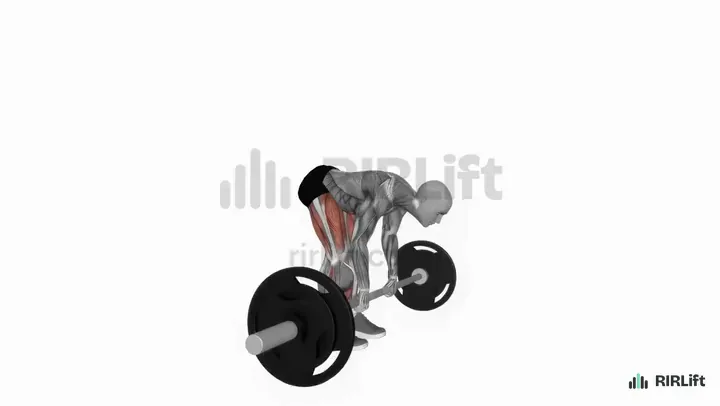
Stiff-Leg Deadlift

Hamstrings, Glutes

With the knees almost straight, the hamstrings take more of the load and the glutes less than in the Romanian deadlift. Use a lighter bar than your RDL and expect a stronger stretch behind the knees.

How to do it

  1. Stand with the bar resting on your thighs, feet hip-width, overhand grip just outside the legs.
  2. Keep your legs nearly straight, with just enough bend that the knees are not locked.
  3. Fold forward from the hips, keeping the bar close and your back flat, until you feel a hard stretch in the back of your legs.
  4. Reverse the motion by pulling your hips forward until you are standing tall again.

Cues

  • Legs long, not locked
  • Bar close to the shins
  • Stop at the stretch

Common mistakes

  • Locking the knees fully: keep a slight bend so the stretch sits in the hamstrings, not the back of the knee joint.
  • Using your RDL weight: start 20 to 30 percent lighter until you know where your range ends.

Swap for: Romanian Deadlift, Good Morning, Single-Leg RDL

Hamstrings and lower back, bar-on-back hinge

Good Morning

Hamstrings, Glutes

With the bar on your upper back, the load sits far from your hips, so a modest weight works the hamstrings and spinal erectors very hard. It is a strong second hinge for lifters who already deadlift and want a different stimulus.

How to do it

  1. Set a barbell in a squat rack at upper-chest height and step under it so it rests across your upper back.
  2. Plant your feet under your hips with soft knees, brace your abs, and keep your elbows pulled down.
  3. Push your hips back and tilt your torso forward until it is close to parallel to the floor or your hamstrings stop you.
  4. Bring the hips through until you stand upright.

Cues

  • Brace before every rep
  • Hips travel back first
  • Chest stays proud

Common mistakes

  • Turning it into a squat by dropping the hips: the hips move back, not down.
  • Loading it like a squat: use roughly a third of your squat to start, and add weight slowly.

Swap for: Romanian Deadlift, Dumbbell Good Morning, 45-Degree Back Extension

Hamstrings and glutes, landmine hinge

Landmine RDL

Hamstrings, Glutes

The landmine pivot guides the bar along an arc, which makes the hinge easier to learn and kinder to a beginner's lower back. It also lives in a corner of the gym that is often free when the racks are full.

How to do it

  1. Load one end of a barbell in a landmine and stand facing it with the sleeve in front of your hips, holding the end with both hands.
  2. Soften your knees and set your back flat.
  3. Hinge at the hips and lower the bar end toward your shins until your hamstrings are stretched.
  4. Push your hips through to stand tall and repeat.

Cues

  • Hold the sleeve close to your body
  • Hinge, then stand
  • Flat back throughout

Common mistakes

  • Standing too far from the bar so it pulls you forward: keep the sleeve close enough to touch your legs on the way down.
  • Rounding at the bottom to touch the plate to the floor: you do not need to touch it.

Swap for: Romanian Deadlift, Single-Leg RDL, Cable Pull-Through

Hamstrings, one-leg hinge

Single-Leg RDL

Hamstrings, Glutes

Hinging on one leg makes a light dumbbell feel heavy, and it trains each hamstring alone so a weaker side cannot hide. It also leaves your lower back fresher than a barbell hinge, so it fits on days when you have already squatted heavy.

How to do it

  1. Hold a dumbbell in the hand opposite your standing leg and stand tall, standing knee softly unlocked.
  2. Tip your torso forward while the free leg lifts straight back behind you, so your body moves like a seesaw.
  3. Go until the standing hamstring is fully stretched, keeping your hips level.
  4. Stand back up by driving the standing hip forward. Finish the set, then switch.

Cues

  • Hips square to the floor
  • Back leg and torso move together
  • Reach the weight to the floor

Common mistakes

  • Opening the hip so the back foot turns out: point the back toes at the floor.
  • Rushing to keep balance: slow down and hold a rack with your free hand if you need to.

Swap for: Romanian Deadlift, Dumbbell B-Stance RDL, Kettlebell Deadlift

Back extension bench and cables

These two hinge without a bar on your back. The 45-degree bench uses your body weight and a plate; the cable pulls you backward so your spine stays unloaded. Both work well after a heavy hinge or as the only hinge on a lighter day.

Hamstrings, glutes and lower back, angled bench

45-Degree Back Extension

Glutes, Hamstrings

The 45-degree bench lets you hinge with your body weight as the load and adds a plate only when you need one. Rounding the upper back slightly and pushing your hips into the pad shifts it toward the glutes and hamstrings rather than the spine.

How to do it

  1. Set the thigh pad so its top edge sits just below your hip crease, and hook your heels under the foot rollers.
  2. Cross your arms over your chest, or hold a plate there for more load.
  3. Lower your torso forward by bending at the hips until you feel the stretch in your hamstrings.
  4. Lift back up until heels, hips and head line up, without leaning back past it.

Cues

  • Pad below the hip crease
  • Rise to a straight line, no further
  • Squeeze the glutes at the top

Common mistakes

  • Setting the pad too high so your hips cannot bend: lower it until your hips clear the edge.
  • Arching back past straight at the top: that loads the lower back and adds nothing for the hamstrings.

Swap for: Glute Ham Raise, Good Morning, Band Reverse Hyperextension

Glutes and hamstrings, cable hinge

Cable Pull-Through

Glutes, Hamstrings

The cable pulls you backward, so you hinge against it without any load on your spine. It teaches the hip hinge better than any barbell lift, and it is a good way to add hamstring and glute work after heavy deadlifts.

How to do it

  1. Attach a rope to the low pulley, face away from the stack, and hold the rope between your legs with both hands.
  2. Walk forward until the cable is tight and set your feet a little wider than your hips.
  3. Let the rope pull your hands back between your thighs as your hips move back, back flat and knees soft.
  4. Snap your hips forward to stand tall, squeezing your glutes, without leaning back.

Cues

  • Hips back, arms are just hooks
  • Stand tall, don't lean
  • Feel the stretch, then drive

Common mistakes

  • Pulling the rope with your arms: they stay straight the whole time.
  • Squatting down instead of hinging: the knees bend only a little.

Swap for: Band Pull-Through, Romanian Deadlift, Kettlebell Swing

Leg curls: machines and cables

Curls train the knee half of the hamstrings, which no hinge fully covers. Use the seated curl as your main one, the lying curl on a second day, and the cable curl when the machines are busy.

Hamstrings, seated knee curl

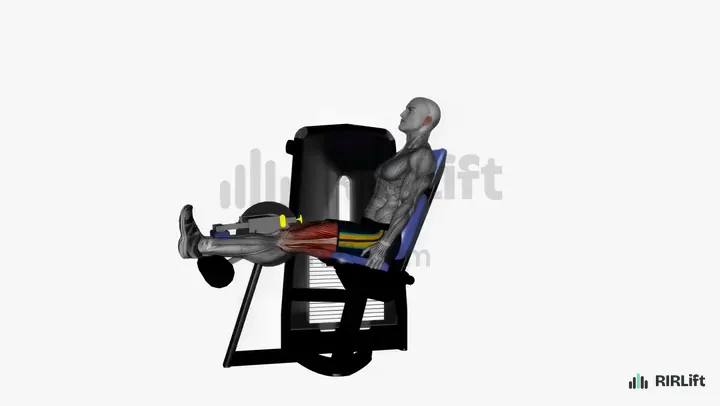
Seated Leg Curl

Hamstrings

Sitting with the hips bent puts the hamstrings on stretch before you even curl, which makes this the best machine for building them. Pair it with any hinge on this page and you have trained both halves of the muscle.

How to do it

  1. Set the back rest so your knees line up with the machine's axle, and the lower pad just above your heels.
  2. Lock the thigh pad down snugly over your legs.
  3. Curl your heels down and under the seat as far as you can.
  4. Pause briefly, then let the pad rise slowly until your legs are nearly straight.

Cues

  • Thigh pad snug
  • Pause at full curl
  • Slow return

Common mistakes

  • Swinging the weight with your torso: sit upright or lean slightly forward and keep still.
  • Stopping short of a full stretch: let your legs come almost straight every rep.

Swap for: Lying Leg Curl, Cable Leg Curl, Nordic Hamstring Curl

Hamstrings, lying knee curl

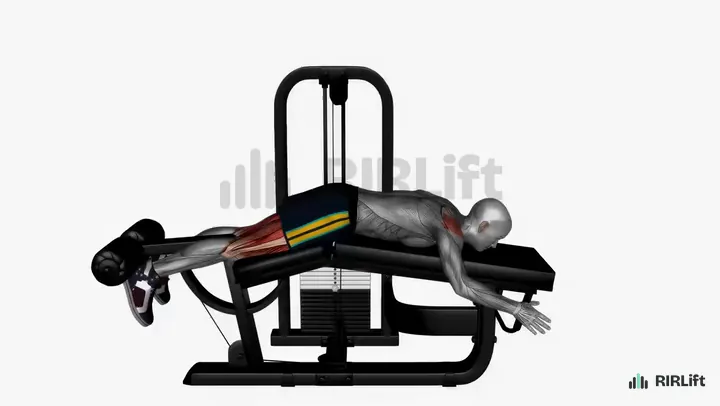
Lying Leg Curl

Hamstrings

Your hips stay straight, so the curl trains the hamstrings at a shorter length than the seated version. Doing both across the week covers the muscle better than more sets of either one.

How to do it

  1. Adjust the roller so it rests on your lower calves, with your knees just past the end of the pad.
  2. Lie chest-down, grip the handles, and press your hips into the bench.
  3. Curl the roller toward your glutes as far as possible.
  4. Lower it over a slow count of three and repeat.

Cues

  • Hips glued down
  • Full curl, slow lowering
  • Toes pulled toward shins

Common mistakes

  • Hips popping up at the top: reduce the weight until they stay flat.
  • Bouncing at the bottom: keep the stack from touching between reps.

Swap for: Seated Leg Curl, Single-Leg Leg Curl, Stability Ball Leg Curl

Hamstrings, standing cable curl

Cable Leg Curl

Hamstrings

An ankle strap on a low cable gives you a one-leg curl anywhere in the gym, with tension that does not drop off at the top. Use it when the curl machines are taken or to finish a session with a few hard sets per side.

How to do it

  1. Strap a cuff to one ankle, clip it to the low pulley, and stand facing the stack holding the frame.
  2. Step back until the cable is tight and keep your thighs side by side.
  3. Curl the strapped heel toward your glutes without moving the thigh forward or back.
  4. Straighten the leg under control and repeat. Switch sides.

Cues

  • Thighs stay level
  • Heel to glutes
  • Control the return

Common mistakes

  • Swinging the knee forward to start the curl: the thigh is fixed and only the lower leg moves.
  • Leaning far forward to get the heel higher: stand tall and use less weight.

Swap for: Seated Leg Curl, Lying Leg Curl, Band Leg Curl

Nordic curls and glute-ham raises

Lowering your own body with the knees as the pivot is the hardest hamstring work there is. The nordic needs only a partner or a pad to anchor your heels; the glute-ham raise on a pulldown seat lets the cable stack help so you can manage real sets.

Hamstrings, body-weight eccentric curl

Nordic Hamstring Curl

Hamstrings

The nordic curl lowers your whole body with the hamstrings as the brake, which loads them very hard at long lengths with no equipment. At the gym, a partner or a padded bar to hook your heels under makes it easy to set up.

How to do it

  1. Kneel on a pad with your ankles held down by a partner or hooked under a fixed bar.
  2. Keep your body straight from knees to head, hips locked out.
  3. Lean forward as slowly as you can, resisting with your hamstrings, until you can no longer hold it.
  4. Catch yourself with your hands, push back up lightly, and repeat.

Cues

  • Hips stay forward
  • Lower as slowly as possible
  • Use your hands only to catch

Common mistakes

  • Bending at the hips to shorten the lever: keep the line from knees to shoulders straight.
  • Dropping the last part of the range: aim to control a little lower each week.

Swap for: Glute Ham Raise, Seated Leg Curl, Stability Ball Leg Curl

Hamstrings, cable-assisted glute-ham raise

Glute Ham Raise

Hamstrings, Glutes

Kneeling backward on a lat pulldown seat with your legs locked under the pads, and holding the bar behind your neck, turns the cable stack into an assist for a glute-ham raise. It works like a nordic curl you can load or unload by moving the pin.

How to do it

  1. Kneel facing away from the pulldown with your calves under the pads.
  2. Grip the bar behind your neck. A heavier stack gives more help.
  3. With your hips straight, lean your body forward as one piece until it is near horizontal.
  4. Curl yourself back up by pulling your heels into the pads.

Cues

  • Hips locked straight
  • Lean as one piece
  • Heavier stack if form breaks

Common mistakes

  • Folding at the hips on the way up: add assistance until you can rise in one straight line.
  • Falling through the bottom: control the lowering just as much as the lift.

Swap for: Nordic Hamstring Curl, 45-Degree Back Extension, Seated Leg Curl

Put them together: example sessions

Each session below picks from the exercises above for one situation, with the sets, reps, rest and RIR filled in. Open one in the session builder to change a pick, price it from a recent set, and add it to RIRLift.

Session 1

Full gym, hamstrings as a main focus

Open in the session builder
  • Workouts2× a week
  • Working sets19 a week
  • Per workout~30 min
  • EquipmentBarbells, Seated Leg Curl, Hyperextension, Lying Leg Curl +1

You train at a full gym, run two lower-body days a week, and want your hamstrings to catch up with your quads.

Each day pairs one barbell hinge with one curl, so both halves of the hamstrings are trained twice a week: the Romanian deadlift and seated curl on day A, the stiff-leg deadlift, lying curl and assisted glute-ham raise on day B. Heavy hinges stop at 2 reps in reserve because form breaks before the muscle gives out; curls go to 1 since a machine keeps you stable. Day A has 10 working sets and day B 10.

Hamstrings A
ExerciseSets × repsRIRRest
Romanian Deadlift2 warm-up sets firstBar on the thighs. Stop when the back stays flat. 4 × 6–10 2 3 min
Seated Leg CurlLast set to 0 RIR. 3 × 8–12 1 90 s
45-Degree Back ExtensionHold a plate if 15 is easy. 3 × 10–15 2 90 s

Open Hamstrings A in the session builder

Hamstrings B
ExerciseSets × repsRIRRest
Stiff-Leg Deadlift1 warm-up set firstLighter than your RDL. 3 × 8–12 2 2:30 min
Lying Leg Curl3 s down. 3 × 10–15 1 75 s
Glute Ham RaisePulldown seat. Body in a straight line. 3 × 6–10 2 2 min

Open Hamstrings B in the session builder

How to run it
Put each routine at the start of a lower-body day, before your squat or leg press, when your back is fresh enough to hinge well.
How to progress
On the hinges, add 5 pounds once all sets hit the top of the range at 2 reps in reserve. On the curls, add reps until 12 to 15, then go up a pin.

Session 2

Lower back already loaded by squats and deadlifts

Open in the session builder
  • Workouts1× a week
  • Working sets10 a week
  • Per workout~25 min
  • EquipmentSeated Leg Curl, Lying Leg Curl, Dumbbells

You squat and deadlift heavy on other days, your lower back is the limiting factor, and you want hamstring growth without another barbell hinge.

These picks keep load off your spine: two curls, the nordic curl for the long-length eccentric, and a single-leg RDL with a light dumbbell as the only hinge. Because nothing here loads your back hard, curls can be pushed to 0 to 1 reps in reserve. The nordic stays at a fixed 3 to 6 reps because the lowering is so demanding. Ten working sets, once a week, on top of what your deadlifts already give.

Hamstrings, No Barbell
ExerciseSets × repsRIRRest
Seated Leg Curl1 warm-up set firstLean forward for more stretch. 3 × 8–12 1 90 s
Nordic Hamstring CurlPartner or padded bar on the heels. 3 × 3–6 1 2 min
Lying Leg CurlLast set to failure. 2 × 12–15 0 1 min
Single-Leg RDLPer leg. Light dumbbell. 2 × 8–12 2 75 s
How to run it
Run it as the hamstring block on your squat day, or as a standalone session two days after deadlifts.
How to progress
Nordics: lower one inch further before you catch yourself every week. Curls and the single-leg RDL: add reps, then load.

Session 3

Crowded gym, racks and curl machines taken

Open in the session builder
  • Workouts1× a week
  • Working sets9 a week
  • Per workout~20 min
  • EquipmentLandmine, Adjustable Cable

Your gym is busy after work, the squat racks and leg curl machines have queues, and you want to get your hamstrings done in one corner.

Everything here happens at a landmine and one cable stack, which are usually free: the landmine RDL for heavy hinging, the cable curl for the knee side, and the pull-through as a back-friendly finisher. The curl and pull-through run as a superset to cut the session to about 25 minutes. The landmine hinge stops at 2 reps in reserve; the cable moves go to 1. Nine working sets.

Hamstrings in 25 Minutes
ExerciseSets × repsRIRRest
Landmine RDL1 warm-up set firstSleeve close to the body. 3 × 8–12 2 2 min
A1 Cable Leg CurlPer leg. Superset with pull-through. 3 × 10–15 1 1 min
A2 Cable Pull-ThroughRope between the legs. 3 × 12–15 1 1 min
How to run it
Load the landmine first, then set up the cable with a rope and an ankle strap within reach.
How to progress
Add a plate to the landmine sleeve when you hit 12 reps on all sets. On the cable, go up one pin when you hit the top of the range.

Make it fit you

Questions

What is the best hamstring exercise at the gym?

The Romanian deadlift. It loads the hamstrings heavily through a long stretch and is easy to progress with a barbell. Pair it with a seated leg curl, since a hinge alone does not fully train the knee side of the muscle.

Are hamstrings difficult to grow?

They often lag because many programs only train them through squats and deadlifts, which mostly target quads, glutes and back. Give them their own hinge and curl, 10 to 16 hard sets a week, and they grow like any other muscle.

What causes tight hamstrings?

Usually sitting a lot and rarely moving the hamstrings through their full length. Loaded stretching, such as Romanian deadlifts and seated curls taken to a full stretch each rep, improves the range most people can use within a few weeks.

What are some good stretches for hamstrings and glutes?

A standing toe-touch with soft knees, a lying hamstring stretch with a strap, and a figure-four glute stretch. Holding each for 30 seconds after training is plenty; the Romanian deadlift itself also stretches the hamstrings under load.

How many hamstring exercises should I do per workout?

Two: one hinge and one curl. Add a third, like nordics or a back extension, only if your hamstrings are a priority and you can still recover for your next session.

Should I do leg curls before or after deadlifts?

After, on most days, because the deadlift needs fresh hamstrings and a fresh back to stay safe. Curl first only on days when the hinge is light and the curls are the priority.

What are the best exercises for building glutes?

Hip thrusts, Romanian deadlifts, back extensions with the hips pushed into the pad, and cable pull-throughs. The hinges on this page train glutes and hamstrings together; for glute-first sessions, see the glute exercises at the gym page.