Incline bench press alternatives: upper chest swaps with or without an incline bench

The best incline bench press alternative is the Smith machine incline press: same angle, same bar, with rails and safety stops. With dumbbells, the incline dumbbell press is the best swap. With only a flat bench, a reverse-grip bench press sends the bar on a more upward line, and with no bench, a landmine chest press or decline push-ups press up toward your head the same way.

What a incline barbell bench press alternative has to replace

The incline bench press trains your upper chest, the front of your shoulders and your triceps, pressing a bar up toward your collarbones. It loads your chest hardest at the bottom, where the bar touches just below them.

A replacement has to keep that upward line; a flat press shifts the work toward the middle of your chest. On any bench, keep the incline around 30 degrees.

How to do the incline barbell bench press

Machines in the gym

When the incline rack is taken, a guided bar or a machine keeps the angle and lets you train hard alone.

Closest swap when the rack is taken

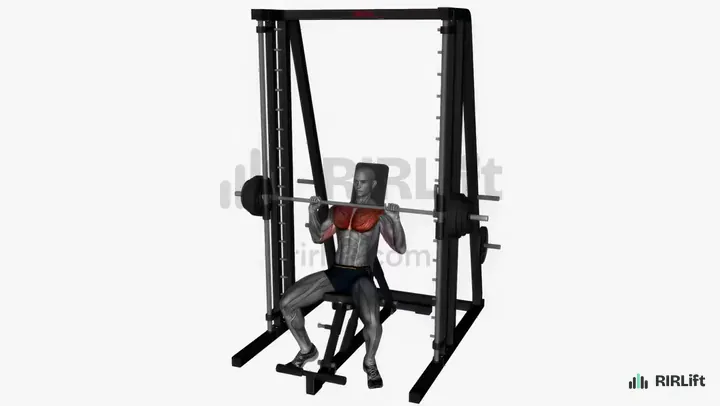
Smith Machine Incline Press

Chest

The same incline barbell press with the bar on rails and safety stops, so you can train it heavy alone. Use the same sets and reps you ran on the free bar.

How to do it

  1. Place an incline bench at about 30 degrees under the Smith bar so the bar lines up with your upper chest.
  2. Grip just outside shoulder width, twist the bar off the hooks and hold it over your chest.
  3. Lower it to your upper chest under control.
  4. Press back up to straight arms, then turn the bar back onto the hooks when the set is done.

Cues

  • Bar meets your upper chest
  • Elbows under the bar
  • Rack it with a wrist turn

Common mistakes

  • Bench too far forward or back, so the bar lands on your neck or belly: check the path with an empty bar first.
  • Skipping the safety stops: set them just below chest height.

Machine swap for upper chest size

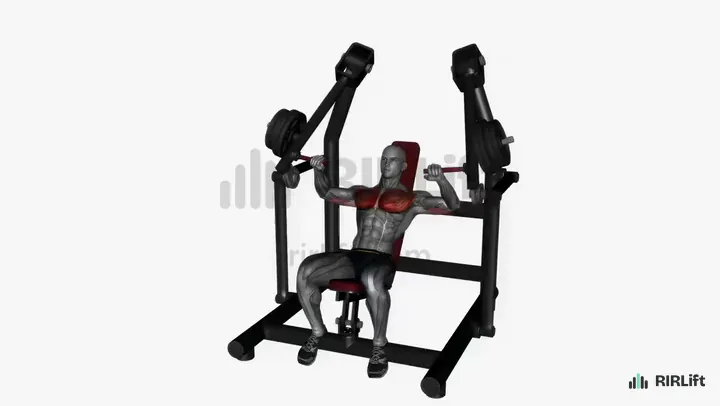
Machine Incline Press

Chest

The incline press machine guides the path, so the set ends when your chest gives out. It is the easiest way to push upper chest sets close to failure.

How to do it

  1. Set the seat so the handles start a bit above the middle of your chest, and sit with your back flat on the pad.
  2. Take the handles with your elbows pointing down and slightly out.
  3. Press up and away until your arms are nearly straight.
  4. Lower the handles slowly back toward your upper chest and repeat.

Cues

  • Press up and away
  • Chest high
  • Elbows under the handles

Common mistakes

  • Arching off the pad: end the set when your back has to help.
  • Letting the stack crash between reps: control every return.

Dumbbells

With an adjustable bench, dumbbells keep the angle exactly. With only a flat bench, use the flat alternating press.

Best swap with dumbbells

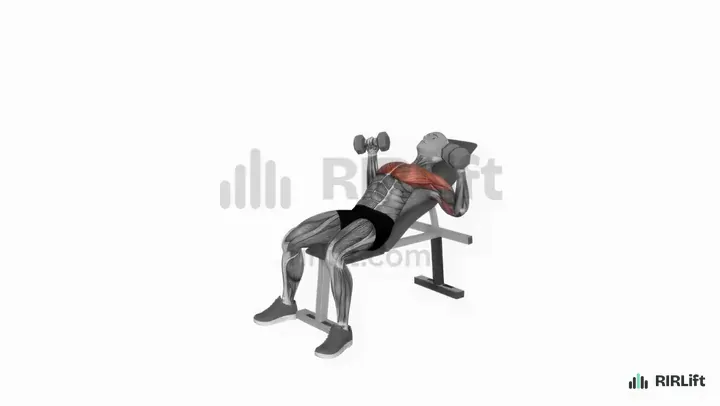
Incline Dumbbell Press

Chest

The same angle with a dumbbell in each hand, so each side presses its own weight and your hands can go a little deeper than a bar allows. Expect less total weight than on the bar.

How to do it

  1. Set the backrest to about 30 degrees and sit with the dumbbells on your thighs.
  2. Lean back and bring the weights to the outside of your shoulders as your back meets the pad.
  3. Squeeze your shoulder blades back and keep your hips on the seat.
  4. Press up and slightly in until your arms are straight over your upper chest.
  5. Lower under control until your elbows are just below the bench line.

Cues

  • Low incline, not a shoulder press
  • Wrists stacked over elbows
  • Reach the stretch, then press

Common mistakes

  • Setting the backrest steeper than you need: the higher it goes, the more your front shoulders take over, so two or three notches up from flat is plenty.
  • Lifting your hips off the seat to finish a rep: that turns it back into a flat press.

Incline dumbbell press for light weights

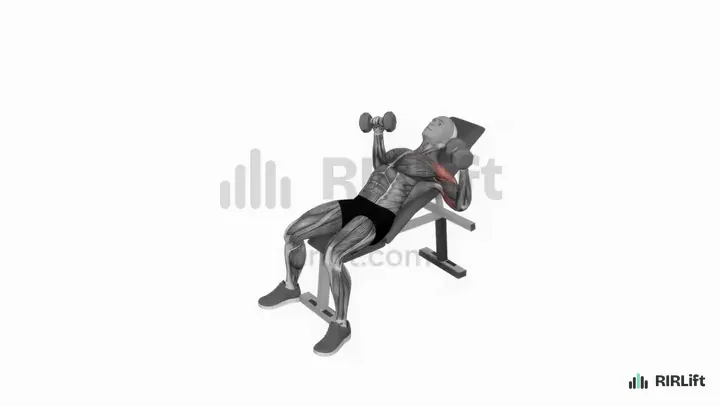
Alternating Incline Dumbbell Press

Chest

You press one dumbbell up while the other comes down, so neither arm rests at the top and your upper chest works the whole set. A lighter pair still feels heavy that way.

How to do it

  1. Set the bench to about 30 degrees and lie back with a dumbbell in each hand at the sides of your chest, palms facing forward.
  2. Press the right dumbbell up until your arm is straight over your upper chest.
  3. As the right one comes back down, start pressing the left one up, so the two pass each other halfway.
  4. Keep the see-saw going at a steady pace until each side has done its reps.

Cues

  • One up, one down
  • Count reps per side
  • Same depth both sides

Common mistakes

  • Pausing with both dumbbells at your chest between reps: keep one arm moving at all times.
  • Rocking your torso toward the pressing arm: keep both shoulder blades on the pad.

Flat dumbbell press that keeps your chest working

Alternating Dumbbell Bench Press

Chest

A flat alternating press that keeps one arm loaded all set, so moderate dumbbells still work your chest hard. Use it when your bench doesn't incline; if it does, the alternating incline press above keeps the angle.

How to do it

  1. Lie on a flat bench and press both dumbbells to straight arms over your chest.
  2. Lower one dumbbell to the side of your chest while the other stays locked out.
  3. Press it back up, then lower the other side.
  4. Keep alternating until both arms have done the set's reps.

Cues

  • Holding arm stays straight
  • Lower slower than you press
  • Hips stay on the bench

Common mistakes

  • Letting the holding arm drift sideways: keep it over your shoulder so it keeps working.
  • Rolling toward the pressing side: brace your stomach and keep both shoulder blades on the bench.

Barbell without an incline bench

A bar but no incline bench: change the grip or press from a corner to keep an upward line.

Upper chest swap on a flat bench

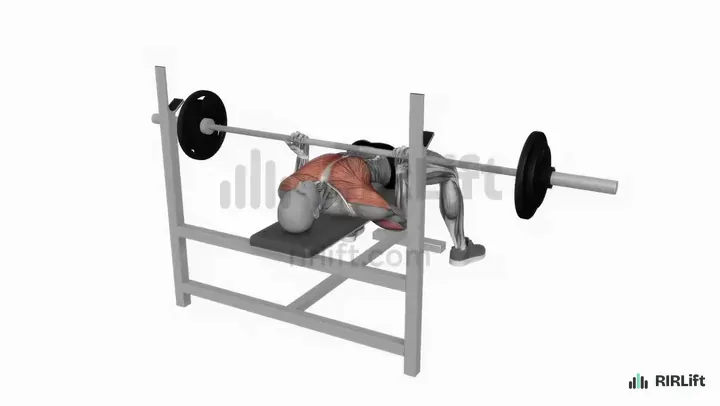
Reverse-Grip Bench Press

Chest

Turning your palms toward you tucks your elbows and sends the bar up toward your face, a line closer to an incline press than a regular flat bench. Use it when you have a bar but no incline bench.

How to do it

  1. Lie back on a flat bench and take an underhand grip a little wider than shoulder width, thumbs wrapped around the bar.
  2. Unrack the bar with straight arms and hold it over your shoulders.
  3. Bring it down to the bottom of your chest with your elbows tucked near your ribs.
  4. Press up and slightly back toward your face until your arms lock out.

Cues

  • Thumbs wrapped, always
  • Elbows brush your ribs
  • Start lighter than your normal bench

Common mistakes

  • Using a thumbless grip: the bar can roll out of an underhand grip, so wrap your thumbs.
  • Loading it like your regular bench in week one: the groove takes a few sessions to learn, so start light and use a spotter.

Upper chest swap with no bench

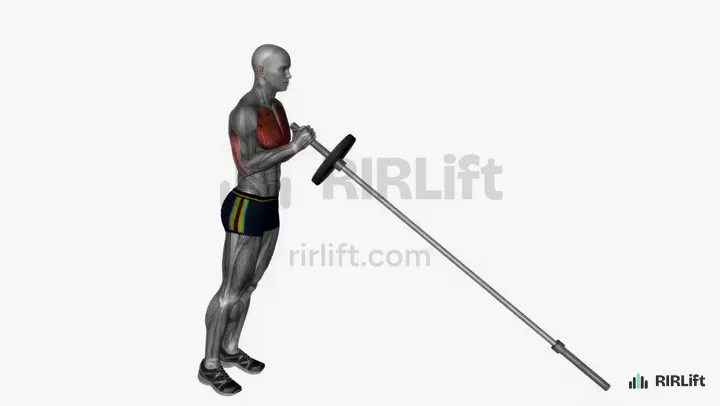
Landmine Chest Press

Chest

Pressing a bar up and forward from a corner puts your arm on roughly the incline press's upward line, standing. It works one arm at a time and is kind to most shoulders.

How to do it

  1. Wedge one end of a bar into a landmine or a padded corner and load the other end.
  2. Stand with your feet about shoulder width and hold the loaded end in one hand at your chest.
  3. Press it up and forward until your arm is straight, letting your shoulder blade reach forward at the top.
  4. Lower it back to your chest under control. Finish the set, then switch hands.

Cues

  • Press up and out
  • Ribs stay down
  • Reach at the top

Common mistakes

  • Leaning back to press: stay tall or slightly forward so your chest does the pushing.
  • Letting the bar crash into your chest: lower it slowly to the same start every rep.

Upper chest flys

These finish your upper chest after a press. On their own they lack the load to replace one.

Cable fly at the same angle

Incline Cable Fly

Chest

Cables on a low incline bench train your upper chest without your triceps. Put it after a press as the finisher.

How to do it

  1. Set an incline bench at about 30 degrees between the towers with both pulleys at middle height.
  2. Grab both handles, sit back with your head and upper back on the pad, and open your arms out to the sides, palms up.
  3. With your elbows slightly bent, raise both handles until they meet above your upper chest.
  4. Open your arms slowly back out until you feel a stretch near the shoulders, then repeat.

Cues

  • Low incline, about 30 degrees
  • Hands meet above your upper chest
  • Back flat on the pad

Common mistakes

  • Setting the bench too steep, which hands the work to your front shoulders: keep the incline low.
  • Arching off the pad to finish the rep: end the set when your back has to help.

Standing upper chest fly

Low-to-High Cable Fly

Chest

From low pulleys your hands sweep up toward your chin, the same target as an incline press, with no bench needed.

How to do it

  1. Set both pulleys at the bottom and hold a handle in each hand, palms facing forward.
  2. Take a step forward into a staggered stance, arms down and slightly behind your hips.
  3. With soft elbows, sweep the handles up and in until they meet at chin height.
  4. Lower back along the same arc until your arms are just behind your body again.

Cues

  • Scoop up toward your chin
  • Ribs down, chest proud
  • Stop at chin height, not overhead

Common mistakes

  • Shrugging the handles up with your traps: keep your shoulders down and let the arc come from your chest.
  • Leaning back to finish the rep: if you need to, the stack is too heavy.

Upper chest dumbbell fly

Incline Dumbbell Fly

Chest

The fly on a low incline trains your upper chest with little triceps help. Use it after a press, not in its place.

How to do it

  1. Set the bench to a low incline and lie back with the dumbbells over your upper chest.
  2. Turn your palms to face each other and soften your elbows.
  3. Lower the weights out and down until your chest is fully stretched.
  4. Bring them back up and in along the same arc, pausing at the top without clanking them.

Cues

  • Low incline, same arc
  • Lead with your elbows
  • Slow the bottom inch

Common mistakes

  • Using your flat-fly weight: the incline is weaker, so start lighter.
  • Arching your lower back high off the pad: keep your hips and ribs down.

Bodyweight

No weights: put your feet up so your arms press up toward your head.

Upper chest swap with no equipment

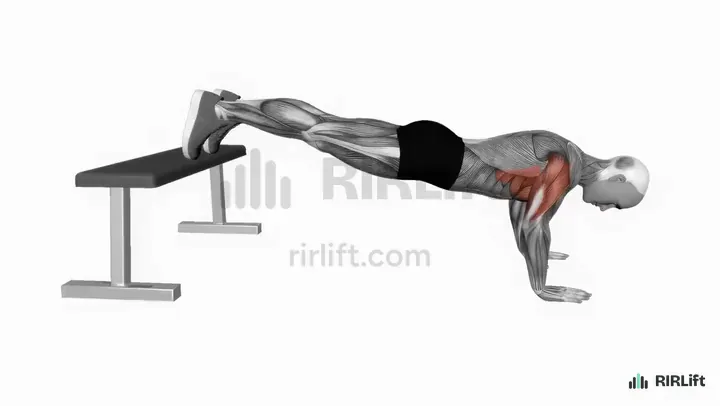
Decline Push-Up

Chest

Feet up on a chair tilts the push-up so your arms press up toward your head, the same line as an incline press. Raise your feet higher to make it harder.

How to do it

  1. Put your feet on a chair or bench and your hands on the floor under your shoulders.
  2. Brace so your body is straight from heels to head.
  3. Lower until your forehead is just above the floor, elbows about 45 degrees from your sides.
  4. Press back to straight arms without letting your hips rise first.

Cues

  • Higher feet, harder rep
  • Forehead toward the floor
  • Press the floor away

Common mistakes

  • Piking your hips to make the press easier: if the straight line goes, use a lower chair.
  • Shoulders riding up to your ears at the bottom: keep them pulled down and back.

Hardest push-up with no equipment

Archer Push-Up

Chest

Shifting most of your weight onto one arm keeps the push-up hard with no gear at all.

How to do it

  1. Set your hands about twice shoulder width apart in a plank, fingers turned slightly out.
  2. Lower toward your right hand, bending the right elbow while the left arm stays straight.
  3. Bring your chest close to your right hand, then press back to the middle.
  4. Repeat to the left and keep alternating, or finish one side first.

Cues

  • Bent arm does the work
  • Straight arm only balances
  • Hips stay square

Common mistakes

  • Bending both arms equally, which makes it a wide push-up: keep the helping arm straight.
  • Twisting your hips toward the floor: hold the plank level as you shift.

Example sessions without the incline barbell bench press

Session 1

Gym, incline rack taken

Open in the session builder
  • Workouts2× a week
  • Working sets20 a week
  • Per workout~30 min
  • EquipmentIncline Bench, Smith Machine, Dumbbells, Cable Crossover

You train in a gym where the incline bench station is always busy, but the Smith machine and dumbbells are free.

The Smith incline press takes the barbell's place at the same reps, the incline dumbbell press adds work for each side, and the incline cable fly finishes the upper chest. 10 working sets.

Chest
ExerciseSets × repsRIRRest
Smith Machine Incline Press2 warm-up sets first 4 × 6–10 2 2:30 min
Incline Dumbbell Press 3 × 8–12 2 2 min
Incline Cable Fly 3 × 12–15 1 1 min
How to run it
Once or twice a week on your chest or push day.
How to progress
When every set reaches the top of its range at the RIR shown, add the smallest weight jump and start again at the bottom of the range.

Session 2

Barbell and a flat bench, no incline

Open in the session builder
  • Workouts2× a week
  • Working sets20 a week
  • Per workout~30 min
  • EquipmentBarbells, Flat Bench, Landmine

You train with a barbell, a flat bench and plates, but your bench doesn't incline.

The reverse-grip bench press keeps heavy barbell pressing on a more upward line, the landmine press works each arm up and forward, and decline push-ups finish with the incline angle. Reps stay low on the barbell because it is the heavy lift. 10 working sets.

Chest
ExerciseSets × repsRIRRest
Reverse-Grip Bench Press2 warm-up sets first 4 × 6–10 2 2:30 min
Landmine Chest PressSets are per arm. 3 × 8–12 2 90 s
Decline Push-Up 3 × 10–15 1 75 s
How to run it
Twice a week, at least two days apart. Use a spotter or safeties on the reverse-grip press.
How to progress
Add 5 pounds to the reverse-grip press when every set reaches 10 reps. On the landmine, add a small plate at 12 reps per arm; on push-ups, raise your feet higher at 15.

Session 3

Home, dumbbells and an adjustable bench

Open in the session builder
  • Workouts2× a week
  • Working sets20 a week
  • Per workout~25 min
  • EquipmentDumbbells, Incline Bench

You train at home with adjustable dumbbells and a bench that inclines.

The alternating incline press keeps your chest working the whole set, the incline fly adds upper chest work without your triceps, and archer push-ups finish one side at a time. Rest is shorter and sets end closer to failure than with a barbell. 10 working sets.

Chest
ExerciseSets × repsRIRRest
Alternating Incline Dumbbell Press1 warm-up set firstReps are per arm. 4 × 8–12 2 90 s
Incline Dumbbell Fly 3 × 12–15 1 1 min
Archer Push-UpSets are per side. 3 × 5–8 1 75 s
How to run it
Twice a week on non-consecutive days. Lower every rep for two to three seconds.
How to progress
Add reps first. When every set reaches the top of its range, move up one dumbbell size and start again at the bottom.

Make it fit you

Questions

What is a good substitute for the incline bench press?

The Smith machine incline press is the closest, then the incline dumbbell press and the incline press machine. All three keep the same angle.

What is an incline bench press alternative without a bench?

Press a landmine bar up and forward from a corner, or do decline push-ups with your feet on a chair. With a flat bench, the reverse-grip bench press keeps a more upward bar path.

What is an incline bench press alternative with dumbbells?

The incline dumbbell press on a bench set to about 30 degrees. If your dumbbells are light, alternate arms, pressing one up as the other comes down.

What is a good incline bench alternative at home?

With dumbbells and an adjustable bench, the incline dumbbell press. With no bench, decline push-ups, raising your feet higher as they get easy.

Is the incline press better than the flat bench press?

Neither is better; they shift the work. The incline puts more on your upper chest and shoulders, the flat bench more on the middle of your chest, so many programs use both.

What are some good alternatives to dumbbell flat bench presses?

The barbell bench press, the machine chest press and dips all train the same muscles. For upper chest, use any incline swap above.