
Incline dumbbell press: how to do it, which angle to use, and how to program it
Published October 19, 2026
Set the bench to 30-45 degrees, kick the dumbbells up off your knees, and lie back with your shoulder blades pulled down into the pad. Lower the dumbbells to the sides of your upper chest with your elbows about 45 degrees from your body, then press up and slightly in until your arms are straight. Keep your hips on the seat so the incline stays an incline.
- WorksChest
- AlsoShoulders, Triceps
- EquipmentDumbbells, Incline Bench
- Start with3 × 8–12, 2 in reserve, 2 min rest
How to do the incline dumbbell press
The incline puts the upper fibers of your chest in line with the press, and the dumbbells let each arm travel its own path and go deeper than a bar allows. It is the go-to upper-chest press when you have dumbbells and an adjustable bench, and it is easier on the shoulders than a heavy incline barbell press for many people.
Steps
- Set an adjustable bench to 30-45 degrees, sit with a dumbbell standing on each thigh, and plant your feet flat on the floor.
- Drive one knee up at a time to pop the dumbbells to your shoulders as you lie back, then pull your shoulder blades down and together into the bench.
- Start with the dumbbells over your upper chest, arms straight, palms facing forward or turned slightly in.
- Lower the dumbbells under control until they sit just outside your upper chest and you feel a stretch across the front of your shoulders, with your elbows angled about 45 degrees from your sides.
- Press up and slightly together until your arms are straight over your collarbones, without clanking the dumbbells at the top.
Cues
- Shoulder blades in your back pockets
- Elbows at 45, not 90
- Butt stays on the seat
Common mistakes
- Lifting your hips or arching hard to move the weight: that flattens the angle and turns it into a flat press, so keep your glutes down and take a lighter pair.
- Flaring the elbows straight out to the sides: tuck them to about 45 degrees so the chest, not the front of the shoulder joint, takes the bottom of the rep.
- Setting the bench too steep: past about 45 degrees the front delts take over, so drop it a notch or two if you mostly feel shoulders.
Swap for: Incline Barbell Bench Press, Machine Incline Press, Smith Machine Incline Press
Muscles the incline dumbbell press works
The incline dumbbell press works the upper (clavicular) part of the chest, the front delts and the triceps. Compared with a flat press, the incline moves more of the work to the upper chest and front shoulders; the steeper the bench, the more the shoulders take. Your rotator cuff and upper back hold the dumbbells steady, which a barbell does for you.
Sets, reps and reps in reserve for the incline dumbbell press
| Goal | Sets × reps | RIR | Rest |
|---|---|---|---|
| Build muscle | 3–4 × 8–12 | 1–2 | 2 min |
| Most upper-chest training lands here; add reps before you add weight. | |||
| Build strength | 4 × 5–8 | 2 | 2–3 min |
| Heavy dumbbells get awkward to set up, so keep the kick-up clean before you go heavier. | |||
| Second chest press of the day | 2–3 × 10–15 | 1 | 90 s |
| After a flat press, lighter dumbbells and higher reps still hit the upper chest hard. | |||
Incline dumbbell press variations
-
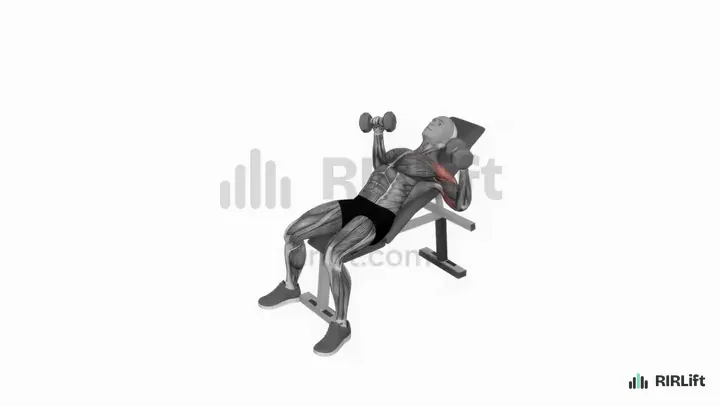
Alternating Incline Dumbbell Press
Press one arm at a time while the other holds at the top when you want each side to work on its own and more time under load.
Build a session with it -
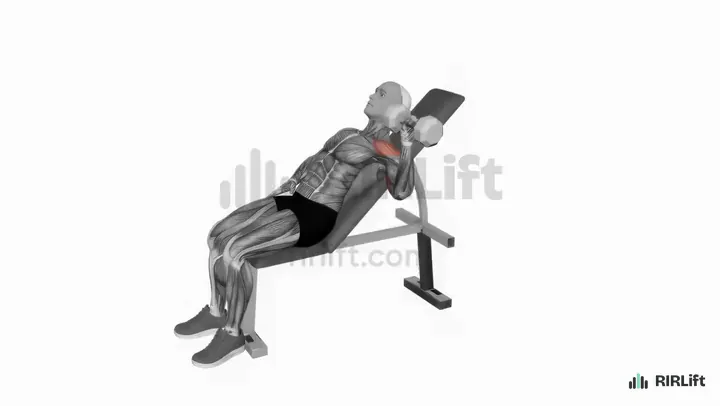
Single-Arm Incline Dumbbell Press
Use one dumbbell when only one weight is available or when one side is clearly weaker; brace hard so you do not roll.
Build a session with it -
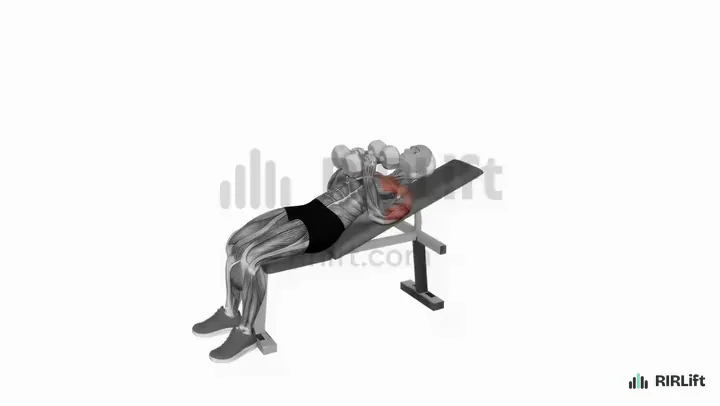
Incline Dumbbell Squeeze Press
Press the dumbbells together the whole rep with palms facing in when you want a shorter, shoulder-friendly press with constant chest tension.
Build a session with it -
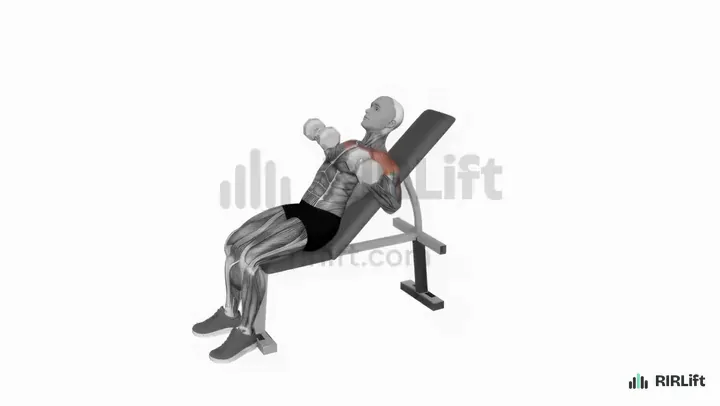
Reverse-Grip Incline Dumbbell Press
Turn your palms toward your face when the regular grip bothers your shoulders and you want the elbows to stay tucked.
Build a session with it
Incline dumbbell press alternatives
Barbell and Smith machine
-
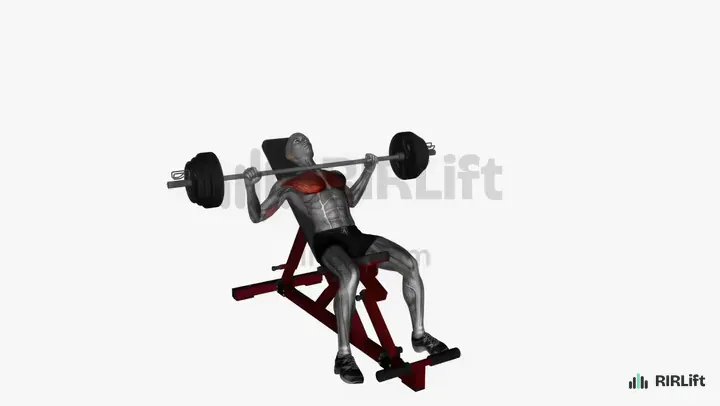
Incline Barbell Bench Press
Use the bar when you want to load the incline heavier than a pair of dumbbells you can kick up.
Build a session with it -
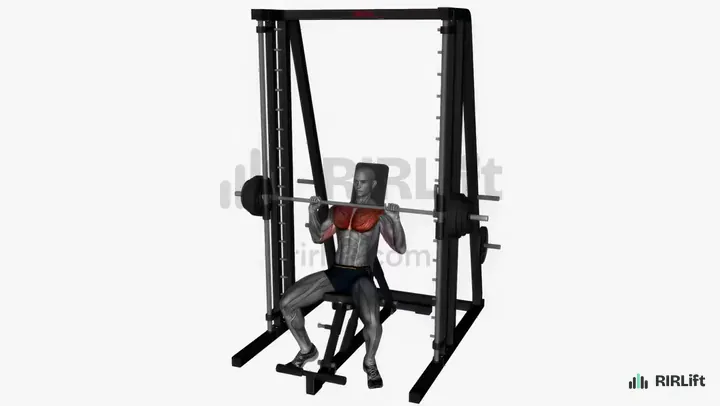
Smith Machine Incline Press
Use the Smith machine when you want to push close to failure on an incline without a spotter.
Build a session with it
Machines and cables
-
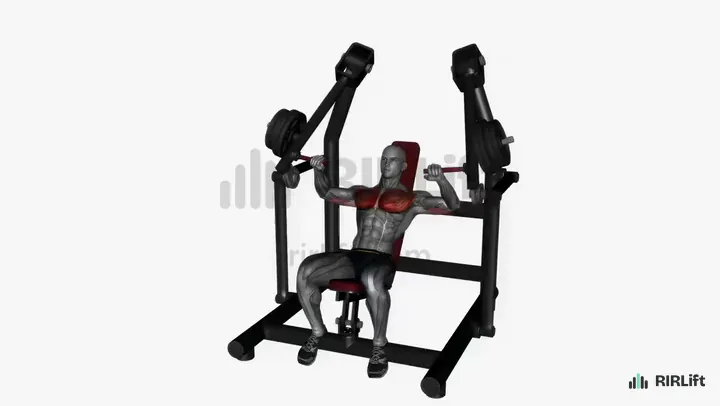
Machine Incline Press
Pick the machine when setup time matters or you want to go to failure on the last set safely.
Build a session with it -
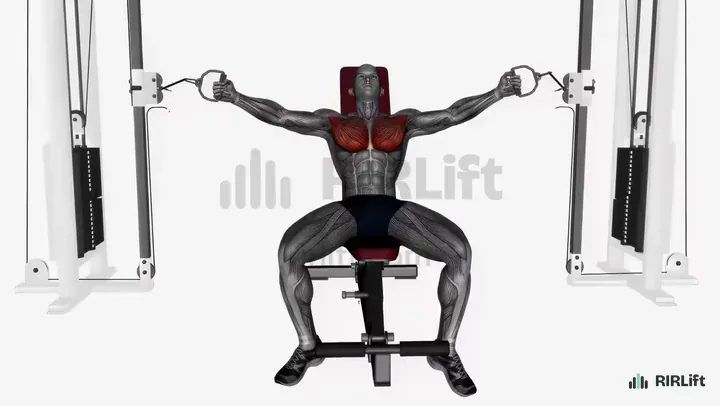
Incline Cable Fly
Add a fly on an incline bench when you want upper-chest work without your triceps limiting the set.
Build a session with it
Flat pressing
-
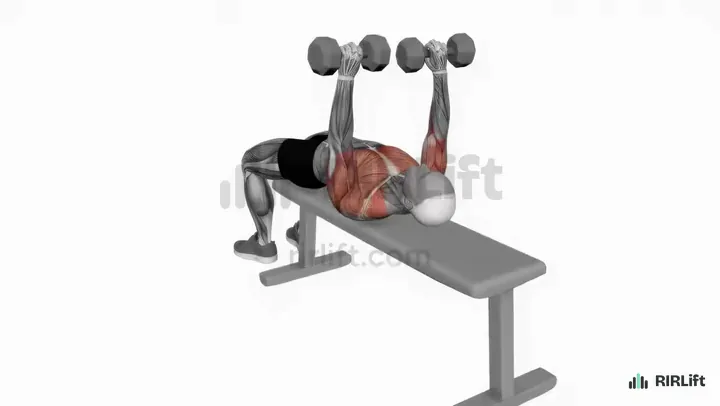
Flat Dumbbell Press
Lower the bench to flat when you want the whole chest and can handle heavier dumbbells.
Build a session with it
What angle should the bench be?
Use 30 to 45 degrees. On most adjustable benches that is the first or second notch above flat. A lower setting keeps more of the chest working; a steeper one moves the press toward your shoulders. If you mostly feel the front of your shoulders, drop the bench a notch before you change anything else.
On a fixed incline bench you cannot adjust, sit so your upper chest, not your neck, sits under the dumbbells at the top.
Incline vs flat dumbbell press
Both train the chest, front delts and triceps. The incline shifts more of the work to the upper chest and shoulders, and you will press a little less weight than on a flat bench. Most chest days use one of each, or rotate them week to week. If upper chest is the goal, do the incline first while you are fresh.
What counts as a good weight?
There is no fixed number, because bodyweight, arm length and training age change it a lot. A better test is the logbook: if you add reps or a few pounds at the same RIR every week or two, your weight is right for you. When you stall at the top of your rep range for several sessions, step up to the next pair.
Questions
How should you do an incline dumbbell press?
Set the bench to 30-45 degrees, pull your shoulder blades down into it, lower the dumbbells to the sides of your upper chest with elbows at about 45 degrees, and press up and slightly in.
Is there a machine for the incline dumbbell press?
Yes. An incline chest press machine follows the same angle with a fixed path, and a Smith machine with an incline bench does the same with a bar.
What muscles does the incline dumbbell press work?
The upper chest, front delts and triceps, with your rotator cuff and upper back keeping the dumbbells steady.
How many sets and reps should I do?
For muscle, 3-4 sets of 8-12 reps with 1-2 reps in reserve. For strength, 4 sets of 5-8 with about 2 in reserve.
Is a 70 lb incline dumbbell press good?
Pressing a pair of 70s for clean reps is strong for most lifters, but your own progress matters more than the number. Track reps and RIR and keep beating last week.
Should the dumbbells touch at the top?
Bring them close but do not bang them. Clanking takes tension off the chest and makes the next rep less controlled.
Incline dumbbell or incline barbell press?
Dumbbells give a deeper stretch and let each arm move freely; the barbell lets you load heavier. Both build the upper chest, so use whichever you can progress on.
Related templates
-
Incline bench press: how to do it, the right angle, and alternatives
The barbell version, for heavier upper-chest pressing.
-
Dumbbell bench press: how to do it and how heavy to go
The flat dumbbell press to pair with the incline.
-
Chest exercises with dumbbells, with or without a bench
More dumbbell chest lifts to build the rest of the session.
-
The best workout for chest, matched to your setup
A full chest session with an incline press in it.
-
How to use RIR
How to judge the reps you leave in reserve on every set.