
Incline bench press: how to do it, the right angle, and alternatives
Published October 17, 2026
The incline bench press is a barbell press on a bench raised to about 30 degrees. It trains your upper chest, front delts and triceps, with more of the work on the upper chest than a flat bench gives it. What makes it work is the angle: keep the bench near 30 degrees and bring the bar down to just below your collarbones, or it turns into a shoulder press.
- WorksChest
- AlsoShoulders, Triceps
- EquipmentBarbells, Incline Bench
- Start with3 × 6–10, 2 in reserve, 2:30 min rest
How to do the incline barbell bench press
The incline press is the heaviest way to load your upper chest, and the bar lets you add weight in small, steady jumps. Run it first on an upper-chest day, or second after the flat bench.
Steps
- Set the bench to around 30 degrees, then lie back so your eyes sit just under the bar in the rack.
- Plant your feet, pull your shoulder blades together and down, and grip the bar a little wider than shoulder width.
- Unrack and move the bar until it sits over your upper chest with your arms straight.
- Take a breath and lower the bar to just below your collarbones, elbows about 45 degrees from your sides.
- Touch lightly and press up and a little back, finishing with the bar over your shoulders.
Cues
- Bar to your upper chest
- Shoulder blades together
- Keep the bench near 30 degrees
Common mistakes
- Setting the bench too steep, which turns the lift into a shoulder press: stay around 30 degrees and lower the bar below your collarbones.
- Lifting your hips off the bench to press more weight: keep them down and take the weight off the bar.
- Bringing the bar down to mid-chest out of flat-bench habit: aim higher, so your forearms stay close to vertical at the bottom.
- Bouncing the bar off your chest: touch, keep your upper back tight, then press.
Swap for: Incline Dumbbell Press, Smith Machine Incline Press, Landmine Chest Press
Muscles the incline barbell bench press works
The incline bench press works the upper (clavicular) part of your chest, the front delts and the triceps. Your upper chest does the most work in the bottom half, with the bar close to your collarbones, and your triceps take over as your arms straighten.
Sets, reps and reps in reserve for the incline barbell bench press
| Goal | Sets × reps | RIR | Rest |
|---|---|---|---|
| Build muscle | 3 × 6–10 | 2 | 2:30 min |
| This is the default the session builder below uses for the incline barbell bench press. | |||
| Strength | 3–5 × 4–6 | 1–2 | 3 min |
| For when the incline press is your main press of the day: add weight once every set reaches 6 reps. | |||
| Second press after the flat bench | 2–3 × 8–12 | 1–2 | 2 min |
| Your triceps are already tired, so drop the weight and use the higher reps to put the work on your upper chest. | |||
| Beginners | 2–3 × 8–10 | 2–3 | 2 min |
| Stay further from failure while you learn where the bar touches, and add weight only when every rep lands in the same spot. | |||
Incline barbell bench press variations
-
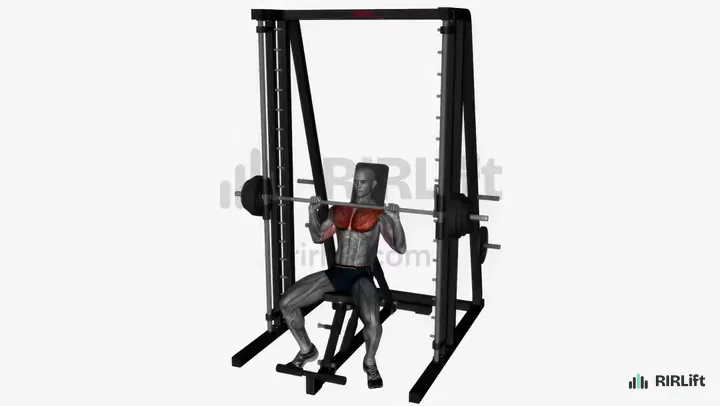
Smith Machine Incline Press
Pick it when you train alone and want to take sets close to failure, since you can rack the bar at any point in the rep.
Build a session with it -
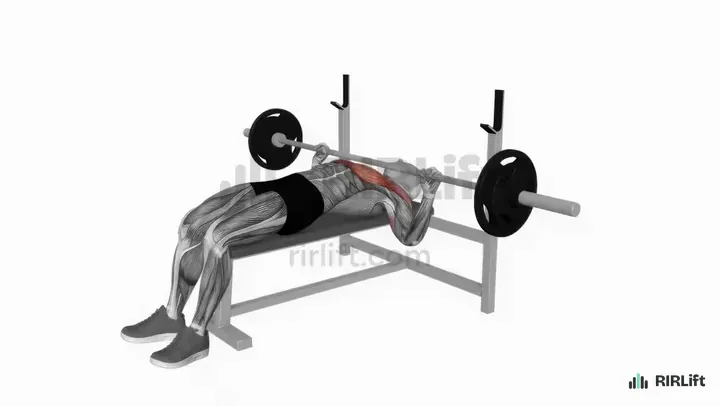
Barbell Bench Press
Pick the flat bench when your goal is the most weight on the bar and the whole chest, with the upper chest getting less of the work.
Build a session with it -
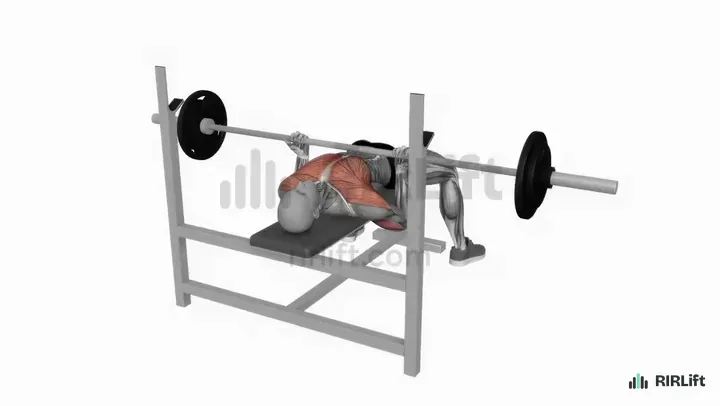
Reverse-Grip Bench Press
Pick it if you only have a flat bench: an underhand grip brings your elbows in and puts more of the press on your upper chest.
Build a session with it
Incline barbell bench press alternatives
Dumbbells
-
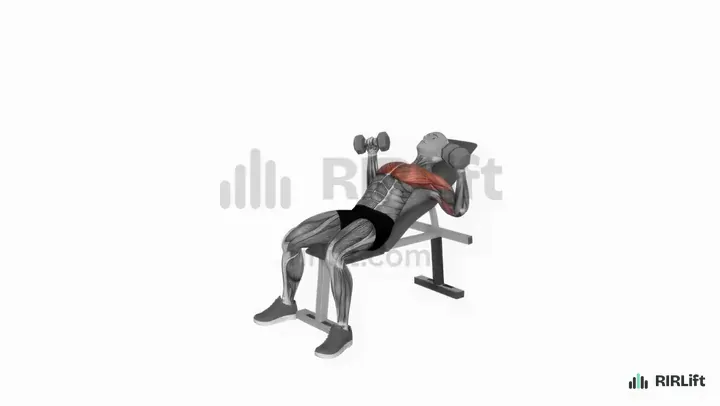
Incline Dumbbell Press
The closest swap: same 30-degree bench, and each hand can travel lower than a bar for a deeper stretch under your collarbones.
Build a session with it -
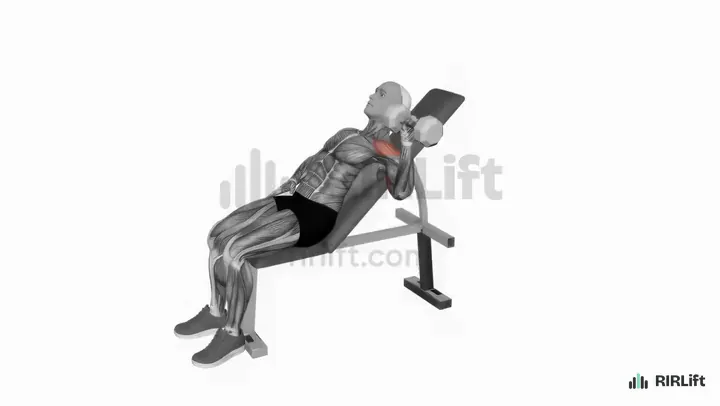
Single-Arm Incline Dumbbell Press
Use it when your heaviest dumbbells are too light for two-handed sets; one arm at a time makes the same weight harder.
Build a session with it -
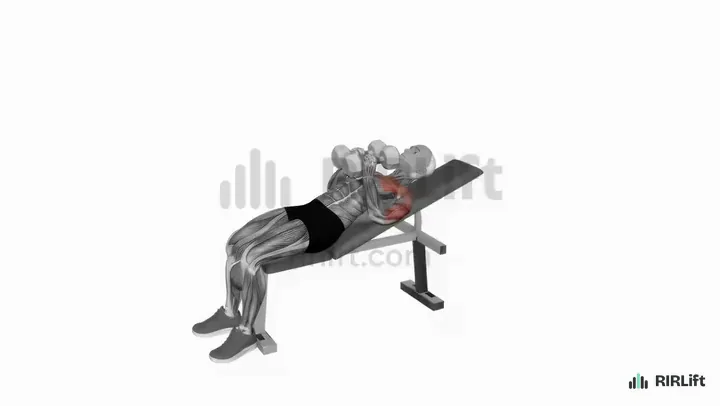
Incline Dumbbell Squeeze Press
Press the dumbbells together the whole rep when your heaviest pair is too light for a regular incline press in 8–12 reps.
Build a session with it
Machines and cables
-
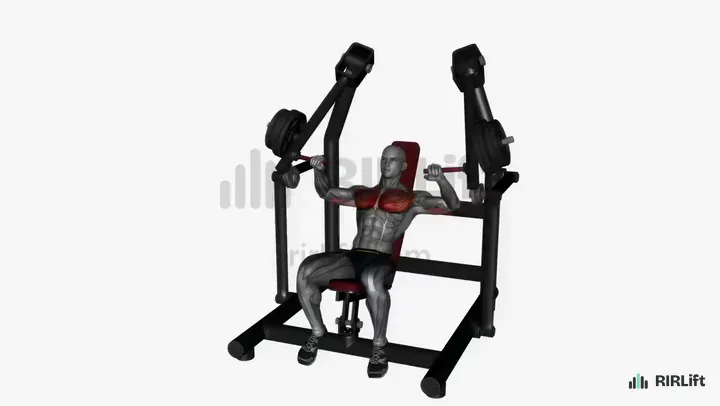
Machine Incline Press
Use it when the barbell incline is taken or you want to push sets to failure with no spotter.
Build a session with it -
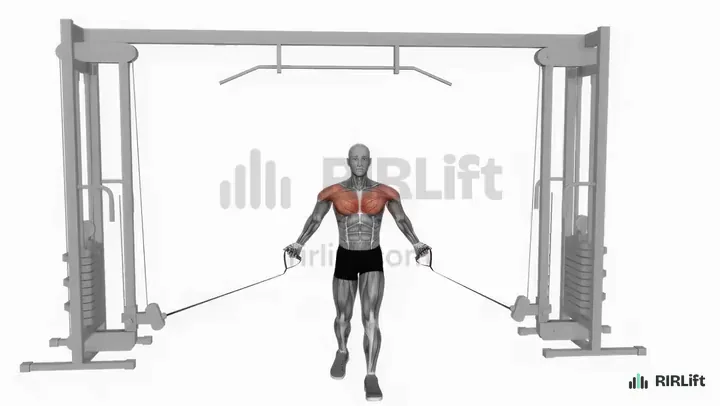
Low-to-High Cable Fly
Add it after a press to load your upper chest with your arms sweeping up and across, with your triceps out of it.
Build a session with it -
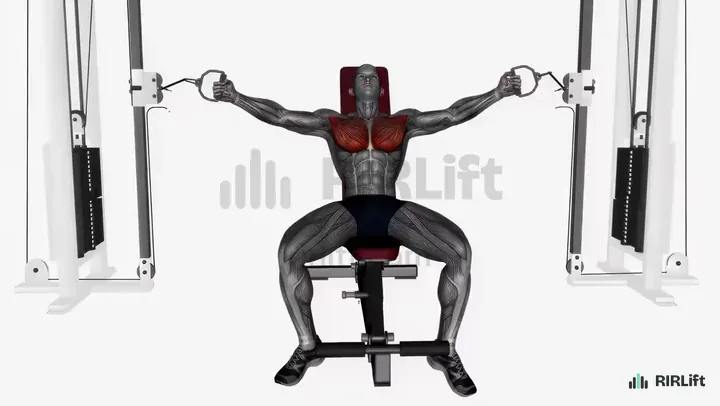
Incline Cable Fly
Set a bench at 30 degrees between two low pulleys for a fly that keeps tension on your upper chest at the bottom.
Build a session with it
No incline bench
-
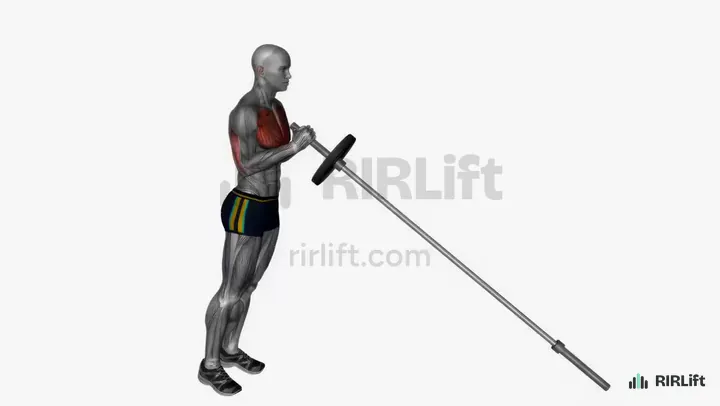
Landmine Chest Press
Press one end of a barbell in a landmine: the bar travels up at an angle much like the incline press, standing or kneeling.
Build a session with it -
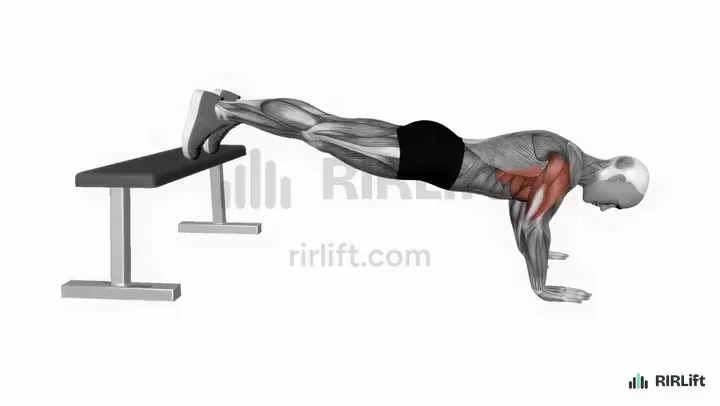
Decline Push-Up
With no gear at all, put your feet on a bench or box so you press up toward your face, and raise your feet higher as it gets easy.
Build a session with it
What angle should the incline bench be?
About 30 degrees, which on most adjustable benches is one or two notches above flat. That is steep enough to move more of the press onto your upper chest and low enough that your front delts don't take over.
At 45 degrees and above, the lift drifts toward an overhead press. If your bench has fixed notches and none sits at 30, pick the lower of the two closest.
Incline vs flat bench press
Both work your chest, front delts and triceps. The flat bench press lets you lift more weight and loads the whole chest; the incline moves more of the work to your upper chest and front delts, so you will lift less on it.
If your upper chest lags, run the incline first in the session while you are fresh. Otherwise do the flat bench first and the incline second with lighter weight and higher reps.
How much should you incline bench?
Expect to lift less than on your flat bench for the same reps. For your first session, start with a weight you could press for about 12 reps and do 8, then let your reps in reserve tell you where to go next time.
Add weight when every set reaches the top of your rep range at your target reps in reserve.
Questions
What muscles does the incline bench press work?
Mainly your upper chest, the clavicular part of the pecs, along with your front delts and triceps. The upper chest does the most in the bottom half of the rep, when the bar is close to your collarbones.
What is the best angle for incline bench press?
Around 30 degrees from flat. Steeper than about 45 degrees shifts the lift toward your shoulders, so if you are between two notches, take the lower one.
Where should the bar touch on incline bench?
Just below your collarbones, on your upper chest. Your forearms should be close to vertical at the bottom; if they are not, move the touch point until they are.
Is incline bench better than flat bench?
Neither is better overall. The flat bench moves more weight and trains the whole chest; the incline puts more of the work on your upper chest. Most lifters do best running both, with the one that matches their weak point first.
What can I do instead of incline bench press?
The incline dumbbell press is the closest swap. With machines, use the incline machine press or the Smith machine incline press; with no incline bench, the landmine chest press or decline push-ups press at a similar angle.
How do I do incline press without an incline bench?
Use a landmine chest press, where the bar travels upward at an angle, or decline push-ups with your feet on a bench or box. On a flat bench, the reverse-grip bench press puts more of the work on your upper chest.
How many sets and reps for incline bench press?
3 sets of 6–10 reps with 2 reps in reserve and about 2:30 min of rest is a solid default for building muscle. Count them toward 10–20 hard sets for your chest per week.
Related templates
-
Chest exercises with dumbbells, with or without a bench
The incline dumbbell press and incline fly if you train your upper chest with dumbbells.
-
Bench press: how to do it, and what to swap it for
The flat press to pair with the incline, and how to split the work between them.
-
The best workout for chest, matched to your setup
Puts the incline press in a full chest session with flat presses and flies.
-
Exercise order
How to decide whether the incline or the flat press goes first.
-
How to use RIR
How to judge 2 reps in reserve on a heavy press without a spotter.