
Bodyweight glute exercises you can do without equipment
Published October 19, 2026
The best bodyweight glute exercises are the single-leg ones: the skater squat, pistol squat, reverse lunge and Cossack squat put your whole body weight on one hip, which is what makes them hard enough to grow the glutes without weights. Add the donkey kick for hip extension and the fire hydrant, clamshell or side leg raise for the side of the hip. Do 3 to 5 exercises, 2 to 4 sets each, two or three times a week, and stop each set 0 to 2 reps short of failure.
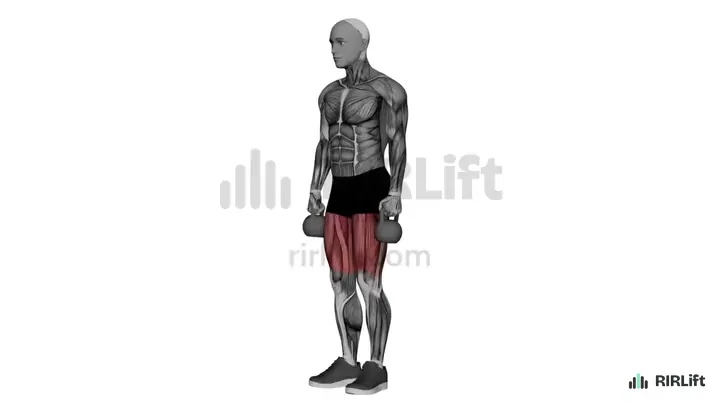
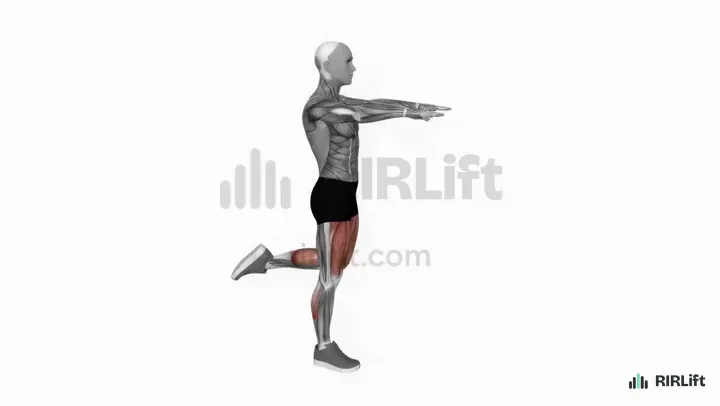
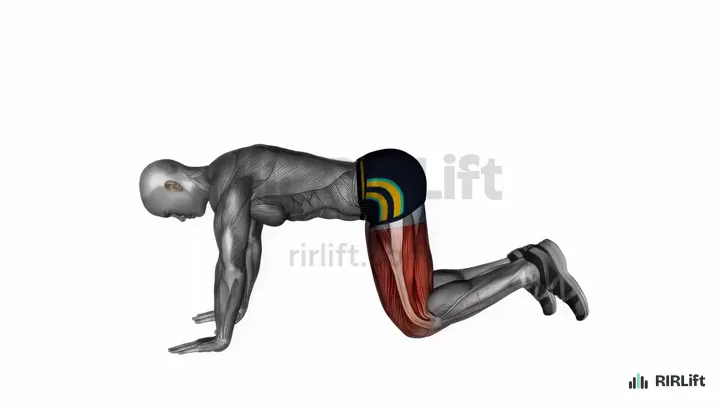
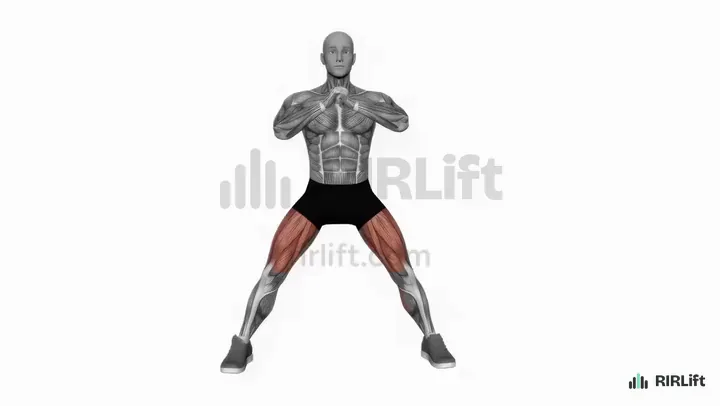
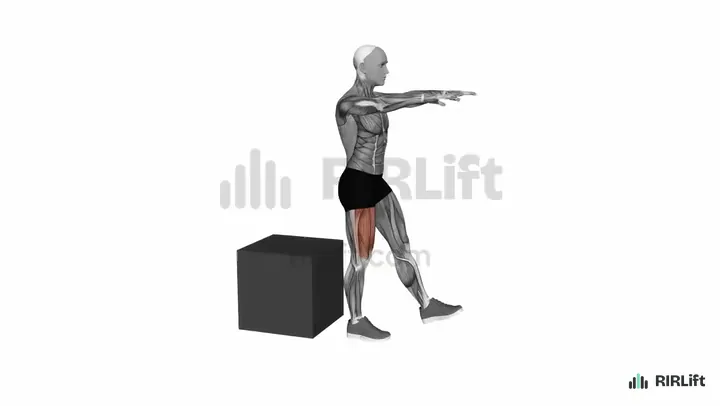
- Reverse Lunge Quads, Glutes
- Skater Squat Quads, Glutes
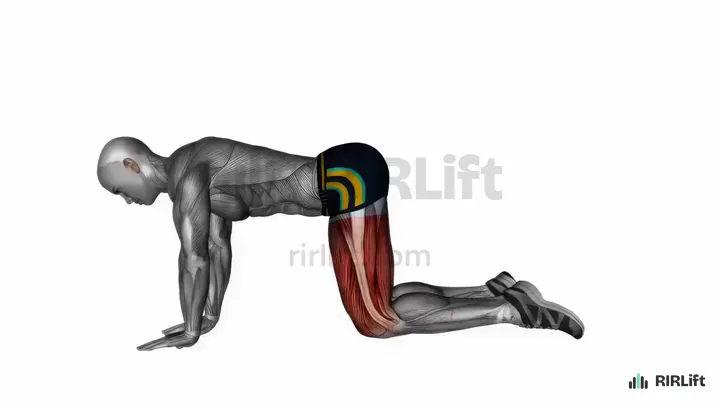
- Donkey Kick Glutes
- Cossack Squat Quads, Adductors
- Fire Hydrant Abductors
- Pistol Squat Quads, Glutes
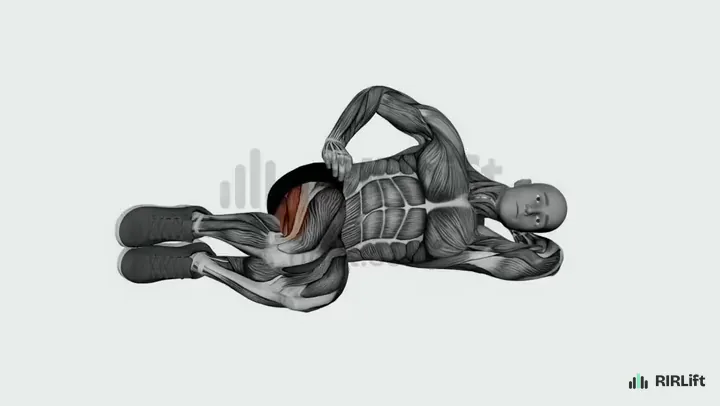
- Clamshell Abductors
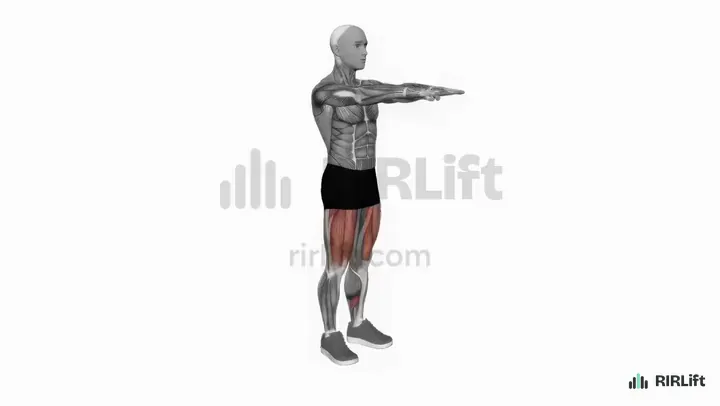
- Bodyweight Squat Quads
Put them together: example sessions
Each session below picks from the exercises above for one situation, with the sets, reps, rest and RIR filled in. Open one in the session builder to change a pick, price it from a recent set, and add it to RIRLift.
-
Session 1
New to training, a patch of floor, 25 minutes
You are starting out and a lunge still feels wobbly. You want a routine you can do in a bedroom without jumping.
3× a week · 39 sets a week · ~30 min
-
Session 2
Air squats are easy, 40 minutes, a chair
You can do 25 squats without trouble and your glutes are not growing. You need exercises that are actually hard without adding weight.
4× a week · 52 sets a week · ~35 min
-
Session 3
Hotel room or thin floors, 15 minutes, no jumping
You travel or live above someone, have a few square feet and want a short glute session with nothing landing on the floor.
3× a week · 33 sets a week · ~20 min
Session 1
New to training, a patch of floor, 25 minutes
- Workouts3× a week
- Working sets39 a week
- Per workout~30 min
- EquipmentBodyweight
You are starting out and a lunge still feels wobbly. You want a routine you can do in a bedroom without jumping.
This plan builds from the two-leg squat to the reverse lunge, the first single-leg step, and fills the rest with floor work that cannot go wrong: donkey kicks for hip extension and clamshells for the side glutes. Sets stop 2 to 3 reps short of failure because new movements need clean reps more than hard ones. Each session has 13 sets.
| Exercise | Sets × reps | RIR | Rest |
|---|---|---|---|
| Bodyweight SquatFull depth, slow down. | 3 × 12–20 | 3 | 1 min |
| Reverse LungePer leg. Hands on hips. | 3 × 8–15 | 2 | 75 s |
| Donkey KickPer leg. One-second squeeze. | 3 × 12–20 | 2 | 45 s |
| ClamshellPer leg. | 2 × 15–25 | 2 | 45 s |
| Wall SitSeconds, not reps. | 2 × 30–45 | 2 | 1 min |
- How to run it
- Do Glutes A on two or three days a week with a day off between sessions. Rest briefly between the floor exercises.
- How to progress
- When every set of the lunge reaches 15 controlled reps per leg, swap it for the skater squat to a towel and move to the stronger-lifter plan.
Session 2
Air squats are easy, 40 minutes, a chair
- Workouts4× a week
- Working sets52 a week
- Per workout~35 min
- EquipmentBodyweight
You can do 25 squats without trouble and your glutes are not growing. You need exercises that are actually hard without adding weight.
The skater and pistol squats load one hip with your whole body weight, so they are the main lifts here, with the Cossack squat adding a deep side lunge. Fire hydrants and donkey kicks finish the side and back of the glutes. Because a heavier dumbbell is not an option, the main lifts are taken to 1 RIR and the isolation sets to 0. Each session has 14 to 15 sets, about 10 of them direct glute work.
| Exercise | Sets × reps | RIR | Rest |
|---|---|---|---|
| Skater SquatPer leg. Back knee to a towel. | 4 × 6–12 | 1 | 2 min |
| Cossack SquatPer side. Pause at the bottom. | 3 × 6–12 | 1 | 90 s |
| A1 Fire HydrantPer leg. | 3 × 15–25 | 0 | 45 s |
| A2 Donkey KickPer leg. | 3 × 15–25 | 0 | 45 s |
Open Day A in the session builder
| Exercise | Sets × reps | RIR | Rest |
|---|---|---|---|
| Pistol SquatPer leg. To a chair. | 4 × 5–10 | 1 | 2 min |
| Skater SquatPer leg. 3 s down. | 3 × 8–15 | 1 | 90 s |
| A1 Donkey KickPer leg. Hold the top. | 3 × 15–25 | 0 | 45 s |
| A2 Fire HydrantPer leg. | 3 × 15–25 | 0 | 45 s |
Open Day B in the session builder
- How to run it
- Alternate Day A and Day B, three or four sessions a week. Do the single-leg lifts fresh at the start.
- How to progress
- Add reps up to the top of each range, then slow the lowering to four seconds, then lower the box for the pistol. When the skater squat reaches 12 reps, hold a backpack.
Session 3
Hotel room or thin floors, 15 minutes, no jumping
- Workouts3× a week
- Working sets33 a week
- Per workout~20 min
- EquipmentBodyweight
You travel or live above someone, have a few square feet and want a short glute session with nothing landing on the floor.
Everything here is slow and silent: reverse lunges for the main work, side leg raises and supermen paired so one rests while the other works, and a wall sit to finish. The pairs cut the session to about 15 minutes. Sets stop 1 to 2 reps short of failure because the session is short and you may repeat it on back-to-back days while travelling. Each session has 11 sets.
| Exercise | Sets × reps | RIR | Rest |
|---|---|---|---|
| Reverse LungePer leg. Step back quietly. | 3 × 10–20 | 1 | 1 min |
| A1 Standing Side Leg RaisePer leg. Hold a wall. | 3 × 15–25 | 1 | 0 s |
| A2 SupermanTwo-second hold. | 3 × 10–15 | 1 | 45 s |
| Wall SitSeconds. | 2 × 30–50 | 1 | 1 min |
- How to run it
- Do Quick Glutes three days a week, or every other day on a trip. Move from one exercise in a pair to the other without resting.
- How to progress
- Add reps each week. When the lunge passes 15 per leg, pause two seconds at the bottom of every rep.
Make it fit you
-
Lunges hurt your knees
Swap the reverse lunge for a skater squat to a higher pad and keep your shin more upright. If both bother you, build the session from donkey kicks, fire hydrants and supermen for a few weeks, taking them to 0 RIR.
-
Moves feel too easy
Don't add reps past 25. Slow the lowering to four seconds, pause at the bottom, or move one step up: squat to reverse lunge, lunge to skater squat, skater squat to pistol.
-
You feel it in your thighs, not your glutes
Lean your chest forward over the front foot in lunges and skater squats and sit your hips further back. Do a set of clamshells first so you know what the glute working feels like.
-
Only 10 minutes
Do one single-leg squat and one isolation move as a pair, three rounds, every set close to failure. Two hard exercises beat six easy ones.
-
You have a backpack
Fill it with books and wear it on the front for lunges, skater squats and Cossack squats. It is the cheapest way to keep progressing once bodyweight reps run past 15.
-
Log the RIR, not just the reps
Note how many reps you had left on each set. In RIRLift you log the RIR next to the reps, which shows you when a move has become too easy and it is time for the harder version.
Questions
Can bodyweight workouts grow glutes?
Yes, if the exercises are hard enough. A muscle grows from sets taken close to failure, and single-leg squats and lunges get there with body weight alone. Two-leg squats and floor kicks done for 50 easy reps do not. Once single-leg moves become easy, you need slower reps, a harder variation or added weight.
Is it possible to build glutes without equipment?
It is, for longer than most people expect. The skater squat and pistol squat load one hip with your whole body weight, which is more than many people use on a weighted two-leg squat. The limit comes when those reach 15 to 20 clean reps; then a backpack or a pair of dumbbells keeps you progressing.
Will 20 squats a day make my bum bigger?
Probably not for long. Twenty air squats are easy for most people after a week, and easy reps do not give the glutes a reason to grow. Fewer, harder sets of a single-leg exercise, two or three times a week with rest in between, do more.
Can you grow glutes with calisthenics?
Yes. Calisthenics for legs means single-leg squats, lunges and their harder versions, and they train the glutes through a long range of motion. Progress them the way you would a pull-up: more reps, slower reps, then a harder variation.
What is the most effective glute exercise without weights?
The skater squat. The back knee travels behind you and the torso leans forward, so the hip bends deeply under your full body weight. If you cannot do one yet, the reverse lunge is the step before it.
What are good leg exercises for the glutes?
The ones that bend the hip deeply with load on it: lunges, split squats, single-leg squats and hip hinges. Among the moves on this page, the reverse lunge, skater squat, pistol and Cossack squat work the glutes and thighs together.
How do I tighten my buttocks in 2 weeks?
In two weeks you can learn the exercises and get stronger at them, and your glutes will feel firmer from training. Visible change in size or shape takes months of consistent hard sets, and how defined they look also depends on body fat.
How many times a week should I train glutes at home?
Two to four times. Bodyweight sessions are lighter on your joints than heavy lifting, so you can train more often, as long as each set stays close to failure and your glutes are not still sore from the last session.
Related templates
-
Glute exercises at home, with or without equipment
Home glute training when you also have dumbbells or bands.
-
Resistance band glute exercises for loop bands and long bands
The cheapest way to add load once bodyweight moves get easy.
-
Glute bridge: how to do it, make it harder, and what to swap it for
The floor bridge in detail, with its harder versions.
-
The best workout for your glutes and butt
Glute programs that use gym equipment as well.
-
Bodyweight exercises: the 18 that build muscle, by muscle group
No-equipment moves for the rest of your body.