Judo workout: gym sessions for grip, pulling and throwing power

A good judo workout is a full-body gym session done two or three times a week next to your mat training: one explosive lift such as the power clean, one heavy leg exercise such as the front squat or Romanian deadlift, a heavy pull such as pull-ups or barbell rows, a grip exercise such as farmer's walks or plate pinches, and a trunk exercise such as the cable woodchop, finished with short air bike intervals in the off-season. The sessions below run 45 to 60 minutes and stop 1 to 3 reps short of failure so you still have hands and legs for randori.

  1. Power Clean Glutes, Hamstrings, Traps
  2. Front Squat Quads, Glutes, Adductors
  3. Romanian Deadlift Hamstrings, Glutes
  4. Pull-Up Lats
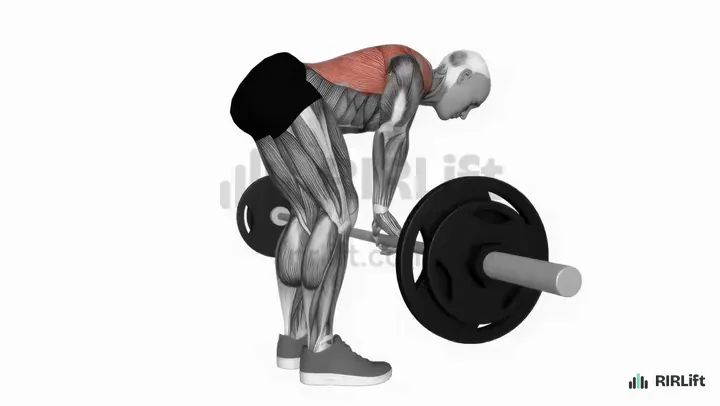
  5. Barbell Row Upper Back, Lats
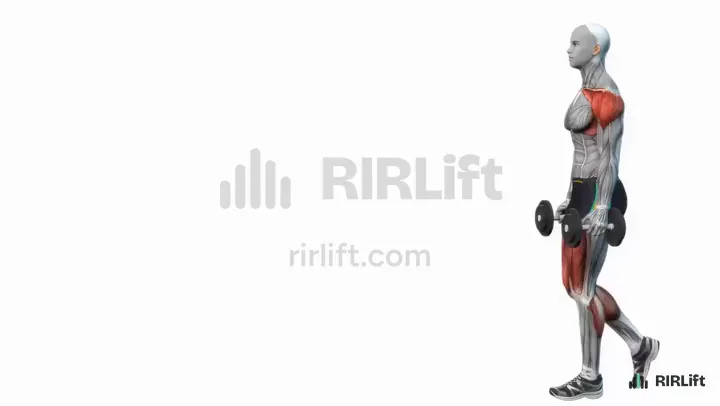
  6. Farmer's Walk Forearms, Traps, Shoulders
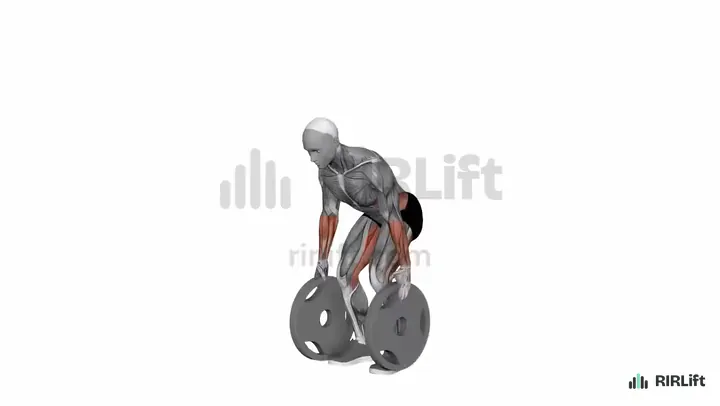
  7. Plate Pinch Deadlift Forearms
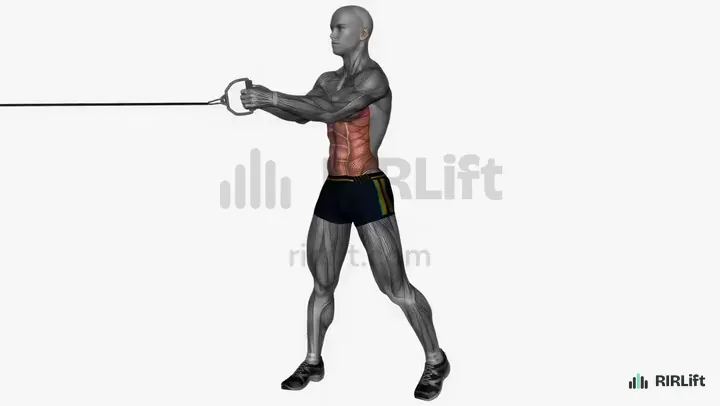
  8. Cable Woodchop Abs

Grip strength for kumikata

Grip fighting decides who gets to throw, and it is usually the first thing to give out in a long match. Judo grips are both crushing and holding, so train one loaded carry for endurance under weight, one pinch for the fingers and thumb, and one hang for holding your bodyweight on the gi or bar.

Loaded grip and trunk

Farmer's Walk

Forearms, Traps, Shoulders

Carrying heavy dumbbells trains your hands to hold on while the rest of your body is under strain, which is what a long grip exchange feels like. It also loads the trunk and upper back, making it a lot of judo value in a single exercise.

How to do it

  1. Stand between two heavy dumbbells, hinge down, and grab them in the middle of the handles.
  2. Stand up tall with your shoulders back and the dumbbells at your sides.
  3. Walk with short, quick steps for the set distance or time without letting the weights swing.
  4. Set them down by hinging at the hips, rest, and repeat.

Cues

  • Crush the handles
  • Tall posture, shoulders down
  • Short, controlled steps

Common mistakes

  • Letting your shoulders round forward: pull them back as if puffing your chest.
  • Dropping the dumbbells at the end by bending your back: lower them with a hip hinge.

Swap for: Dumbbell Suitcase Carry, Plate Pinch Deadlift, Dead Hang

Finger and thumb strength

Plate Pinch Deadlift

Forearms

Pinching weight plates trains the thumb and fingers that hold a lapel or sleeve when your opponent tries to strip the grip. It builds a part of grip that bars and handles barely touch.

How to do it

  1. Place two pairs of smooth weight plates on the floor, flat sides out, one pair beside each foot.
  2. Squat down and pinch each pair with your fingers on one side and thumb on the other.
  3. Rise by pushing through your legs, arms straight and the plates at your sides.
  4. Hold briefly at the top, then lower them to the floor under control.

Cues

  • Thumb squeezes hard
  • Arm stays long
  • Stand up with your legs

Common mistakes

  • Choosing plates so heavy they slip at the start: build the hold before adding weight.
  • Lifting with a rounded back: squat down to the plates as you would for any deadlift.

Swap for: Farmer's Walk, Dead Hang, Wrist Curl

Holding grip on the bar

Dead Hang

Forearms

Simply hanging from a bar builds the endurance to hold your bodyweight on your hands, which is the core of a judo grip that does not let go. Drape a towel or gi over the bar once a straight hang is easy.

How to do it

  1. Grip a pull-up bar with your hands about shoulder-width apart.
  2. Lift your feet so you hang with straight arms and your body still.
  3. Keep your shoulders gently engaged rather than letting them shrug to your ears.
  4. Hold for the target time, then drop down.

Cues

  • Squeeze the bar
  • Stay still
  • Breathe slowly

Common mistakes

  • Swinging to keep moving: cross your ankles and tighten your trunk.
  • Stopping when it burns: aim to add a few seconds every session.

Swap for: Farmer's Walk, Plate Pinch Deadlift, Pull-Up

Build a session with Dead Hang

Pulling strength for kuzushi

Breaking your opponent's balance is a pull, with the sleeve hand pulling out and the lapel hand driving up and in. Vertical and horizontal pulling build the lats, upper back and biceps that hold that position while someone fights it.

Vertical pulling strength

Pull-Up

Lats

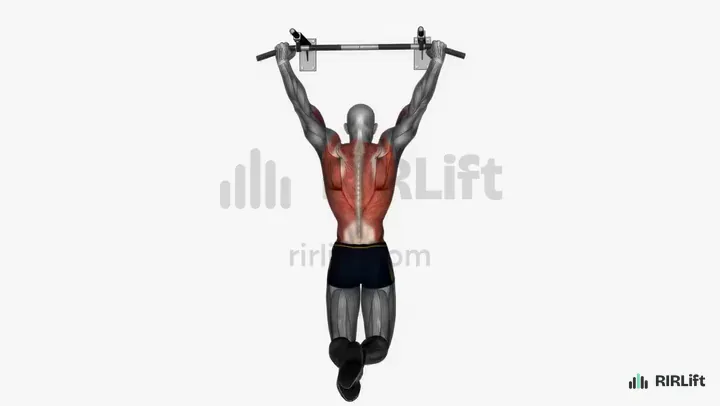
Pull-ups build the lats and upper back that drive the lapel hand and fight for grips above shoulder height. They are also the most direct test of strength for your bodyweight, which matters in a weight-class sport.

How to do it

  1. Hang from a bar with an overhand grip a little wider than your shoulders.
  2. Pull your shoulder blades down and start pulling your elbows toward your ribs.
  3. Continue until your chin is over the bar without kicking your legs.
  4. Lower all the way to straight arms under control before the next rep.

Cues

  • Elbows to your ribs
  • Chest toward the bar
  • Full hang at the bottom

Common mistakes

  • Cutting reps short at the bottom: straighten the arms each time.
  • Kicking or swinging: keep your legs still and add a band if needed.

Swap for: Chin-Up, Neutral-Grip Pull-Up, Lat Pulldown

Build a session with Pull-Up

Horizontal pull for kuzushi

Barbell Row

Upper Back, Lats

The barbell row trains the pull straight back toward you, the same line as the sleeve pull that breaks an opponent forward. Holding the bent-over position also builds the back strength to stay strong in a low stance.

How to do it

  1. Hold the bar with an overhand grip just outside your knees and hinge forward until your torso is roughly 45 degrees or lower.
  2. Brace your trunk and let the bar hang at arm's length.
  3. Row the bar to your lower ribs, driving your elbows back and pinching your shoulder blades.
  4. Lower to straight arms with control and keep your torso still for the next rep.

Cues

  • Elbows drive back
  • Torso stays put
  • Squeeze at the top

Common mistakes

  • Standing up more each rep to move the bar: lighten the load and keep the hinge.
  • Yanking with the lower back: brace before each rep.

Swap for: Pendlay Row, One-Arm Dumbbell Row, Seated Cable Row

Throwing power

A throw needs force produced fast from the legs through the hips, which is exactly what the power clean trains. Medicine ball slams add a fast, full-body effort you can do tired and that mirrors the drive down to the mat at the end of a throw.

Explosive hip extension for throws

Power Clean

Glutes, Hamstrings, Traps

The power clean develops the fast hip drive used to load an opponent onto your hips and lift them off the mat. Done with crisp reps, it builds speed you can use; done to exhaustion, it just builds fatigue, so keep sets short.

How to do it

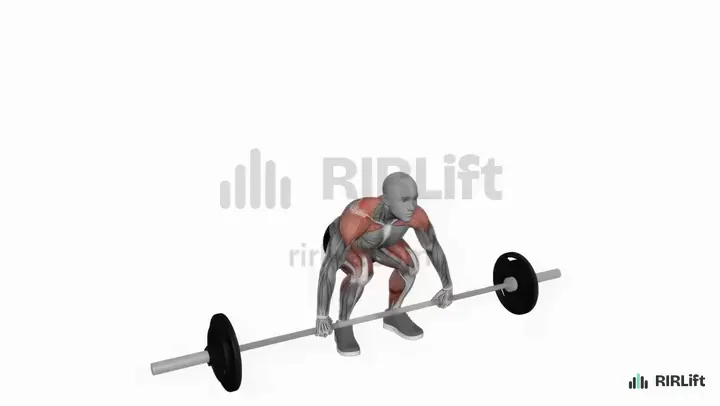
  1. Stand with the bar over your midfoot, grip just outside your knees, and set a flat back.
  2. Drive with your legs to lift the bar past your knees, keeping it close.
  3. As it reaches your thighs, open your hips violently and shrug, rising onto your toes.
  4. Drop into a quarter squat and catch the bar on the front of your shoulders with elbows forward, then stand.

Cues

  • Bar close
  • Hips snap
  • Fast elbows

Common mistakes

  • Pulling with the arms before the hips finish: let the legs and hips launch the bar.
  • Catching in a deep squat with a soft back: keep the catch high and braced.

Swap for: Hang Clean, Kettlebell Swing, Medicine Ball Slam

Fast full-body drive

Medicine Ball Slam

Lats, Abs

Slamming a ball trains a quick, whole-body effort from overhead to the floor that you can repeat under fatigue. It is a good finisher for building power endurance, since it carries over to the last throw attempt of a hard round.

How to do it

  1. Hold a medicine ball with both hands and stand with feet shoulder-width.
  2. Reach the ball overhead, rising onto your toes.
  3. Pull it down hard by folding at the hips and slam it down just ahead of your feet.
  4. Pick it up with a squat and go straight into the next rep.

Cues

  • Full reach up
  • Slam with your whole body
  • Pick up with your legs

Common mistakes

  • Throwing with only your arms: let your trunk and hips pull the ball down.
  • Using a bouncy ball that flies back at your face: use a dead ball.

Swap for: Battle Rope Slam, Medicine Ball Overhead Throw, Kettlebell Swing

Legs and hips for lifting and driving

Hip throws and drives into an opponent load the legs heavily, often in a split or staggered stance. A front squat builds upright leg strength under a load held in front of you, the Romanian deadlift builds the hip hinge for lifting a partner, and the Bulgarian split squat covers the one-leg base of most entries.

Leg strength with an upright trunk

Front Squat

Quads, Glutes, Adductors

Holding the bar in front of you while you squat forces your upper back and trunk to stay strong, which suits a sport where you are always fighting to keep posture with someone pulling on you. It builds the leg strength for lifting and driving throws.

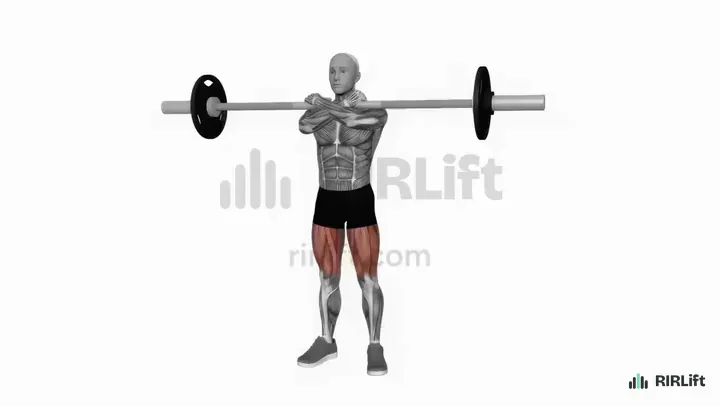
How to do it

  1. Set the bar on the front of your shoulders with your elbows high.
  2. Stand shoulder-width, brace your midsection, and take a breath.
  3. Squat down between your heels, chest up, to just below parallel.
  4. Drive up through the floor and keep your elbows high to the top.

Cues

  • Elbows up
  • Big breath, then down
  • Chest leads up

Common mistakes

  • Losing the elbows and rounding the upper back: lift them as you rise.
  • Cutting depth short as the weight goes up: keep the same depth every rep.

Swap for: Barbell Back Squat, Goblet Squat, Zercher Squat

Hip hinge for lifting partners

Romanian Deadlift

Hamstrings, Glutes

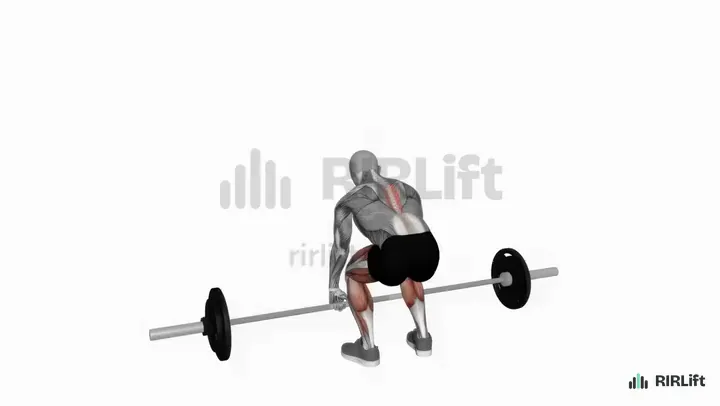
Lifting an opponent off the mat is a hip hinge under load, and the Romanian deadlift builds that pattern with heavy hamstrings and glutes. It also strengthens the back for the bent posture of grip fighting.

How to do it

  1. Hold the bar at hip height, hands outside your legs, knees soft.
  2. Push your hips back while the bar slides close to your thighs and shins, back flat.
  3. Lower until you feel your hamstrings stretch, around mid-shin.
  4. Squeeze your glutes and stand up tall.

Cues

  • Hips back
  • Bar close to your legs
  • Long spine

Common mistakes

  • Rounding to reach lower: depth ends where the hips stop moving back.
  • Bending the knees more as you go down: keep the knee bend small and fixed.

Swap for: Dumbbell Romanian Deadlift, Single-Leg RDL, Good Morning

Single-leg base for entries

Bulgarian Split Squat

Quads, Glutes

Most entries put you on one leg or in a deep split, and the Bulgarian split squat trains that position with load. It also shows and fixes a weaker side.

How to do it

  1. Stand a stride ahead of a bench, holding dumbbells at your sides, and rest the top of your back foot on it.
  2. Sink straight down until the front thigh reaches about parallel and your back knee nears the floor.
  3. Keep your front heel down and your torso slightly forward.
  4. Drive through the front foot to stand. Finish one side, then switch.

Cues

  • Straight down
  • Front heel heavy
  • Back leg just balances

Common mistakes

  • Standing too close to the bench so the front knee pushes far forward: step out a little.
  • Pushing off the back foot: it should only steady you.

Swap for: Dumbbell Split Squat, Barbell Step-Up, Reverse Lunge

Rotation, trunk and pushing

Many throws finish with a hard turn of the hips and shoulders, and defending one needs a trunk that refuses to bend or twist. The woodchop trains rotation under load, the ab wheel trains the front of the trunk, and dips cover the pushing strength used to frame and create space.

Rotational power

Cable Woodchop

Abs

Chopping a cable diagonally past your body trains your hips and shoulders to rotate together against resistance, the same turn that finishes many hip and shoulder throws.

How to do it

  1. Set a cable high and stand side-on, gripping the handle in both hands above your shoulder.
  2. Set your feet wider than your hips with knees soft.
  3. Sweep the handle diagonally to the opposite hip, turning your hips as your back heel lifts and spins.
  4. Return slowly to the start. Do all reps, then switch sides.

Cues

  • Turn the hips with the arms
  • Arms stay fairly straight
  • Slow on the way back

Common mistakes

  • Bending the arms to pull it with your biceps: rotate your trunk instead.
  • Twisting only from the waist: let your feet and hips turn.

Swap for: Dumbbell Woodchop, Pallof Press, Med Ball Rotational Throw

Front trunk strength

Ab Wheel Rollout

Abs

The ab wheel trains the front of the trunk to resist bending, which is what stops you folding when an opponent drives into you. It is also hard enough that a few sets are plenty.

How to do it

  1. Kneel with the wheel under your shoulders and arms straight.
  2. Tuck your pelvis and squeeze your glutes.
  3. Roll the wheel forward slowly as far as you can without your lower back sagging.
  4. Pull it back to the start using your abs, not by sitting your hips back.

Cues

  • Tuck and squeeze
  • Go only as far as you can hold
  • Pull back with your abs

Common mistakes

  • Letting the hips sag at the far end: shorten the range.
  • Rolling out with bent arms: keep them straight.

Swap for: Plank, Dead Bug, Barbell Rollout

Pushing strength for framing

Chest Dip

Chest, Triceps

Dips build the chest, shoulders and triceps used to frame an opponent and push away, and they scale easily with a belt once bodyweight is easy.

How to do it

  1. Support yourself on parallel bars with straight arms.
  2. Lean your chest slightly forward and bend your elbows to lower your body.
  3. Descend until the upper arm is roughly level with the floor.
  4. Press back up until your arms are straight.

Cues

  • Slight forward lean
  • Elbows back, not out
  • Full lockout

Common mistakes

  • Dropping too deep and stretching the shoulders: stop at about parallel.
  • Shrugging at the top: keep your shoulders down.

Swap for: Push-Up, Machine Chest Dip, Barbell Bench Press

Build a session with Chest Dip

Conditioning for match length

Matches are short but brutal, with bursts of effort and little rest. Air bike intervals let you train that without the pounding of running and without taking skill away from the mat.

Match-like conditioning

Air Bike

Quads, Hamstrings, Glutes

An air bike lets you work as hard as you can for short bursts using both arms and legs, which suits the stop-start effort of a judo match without adding running miles to your legs.

How to do it

  1. Set the seat so your knee is slightly bent at the bottom of the pedal stroke.
  2. Start with an easy pace for a minute or two to warm up.
  3. On each work interval, drive the pedals and work the handles hard.
  4. Ease off to a slow spin for the rest period, then repeat.

Cues

  • Arms and legs together
  • Hard means hard
  • Recover by spinning easy

Common mistakes

  • Starting the first interval so hard you fade badly: hold the same power on every interval.
  • Stopping completely in the rest: keep spinning slowly.

Swap for: Rowing Machine, Ski Erg, Stationary Bike

Build a session with Air Bike

Put them together: example sessions

Each session below picks from the exercises above for one situation, with the sets, reps, rest and RIR filled in. Open one in the session builder to change a pick, price it from a recent set, and add it to RIRLift.

Session 1

Off-season, three gym days

Open in the session builder
  • Workouts3× a week
  • Working sets54 a week
  • Per workout~50 min
  • EquipmentBarbells, Pull-Up Bar, Dumbbells, Ab Wheel +4

You are training judo three or four times a week with no competition for a couple of months and want to get stronger.

This is when most strength is built, so each session has a power lift, a heavy leg or hinge lift, a heavy pull, grip and trunk work, about 16 to 18 working sets in all. Main lifts stop at 1 to 2 reps in reserve: hard enough to drive progress, not so hard that your legs and hands are gone for evening randori. Air bike intervals close one session a week, since mat training already provides plenty of conditioning.

Session A
ExerciseSets × repsRIRRest
Power Clean2 warm-up sets first 4 × 3 2 2:30 min
Front Squat2 warm-up sets first 4 × 4–6 2 3 min
Pull-Up 4 × 5–8 1 2 min
Farmer's WalkSeconds of walking. 3 × 30–40 2 90 s
Ab Wheel Rollout 3 × 6–10 2 1 min

Open Session A in the session builder

Session B
ExerciseSets × repsRIRRest
Medicine Ball Slam 4 × 6 3 1 min
Romanian Deadlift 4 × 6–8 2 2:30 min
Barbell Row 4 × 6–8 1 2 min
Chest Dip 3 × 6–10 2 90 s
Plate Pinch DeadliftSeconds of holding. 3 × 20–30 2 1 min

Open Session B in the session builder

Session C
ExerciseSets × repsRIRRest
Power Clean 3 × 2–3 2 2:30 min
Bulgarian Split SquatPer leg. 3 × 6–8 2 2 min
Pull-Up 3 × 6–10 2 2 min
Cable WoodchopPer side. 3 × 8–10 2 1 min
Air BikeSeconds hard, 45 s easy spin. 6 × 15–20 1 45 s

Open Session C in the session builder

How to run it
Rotate sessions A, B and C. Avoid lifting legs heavy on the same day as hard randori; put session A or C on a lighter technique day.
How to progress
Add weight on the main lifts when every set reaches the top of its range at the listed reps in reserve. For carries and hangs, add distance or seconds before adding weight.

Session 2

Competition season, two short sessions

Open in the session builder
  • Workouts2× a week
  • Working sets21 a week
  • Per workout~30 min
  • EquipmentBarbells, Pull-Up Bar, Adjustable Cable, Dumbbells

You have tournaments every few weeks, may be managing your weight, and need to stay strong without carrying fatigue onto the mat.

In season the mat comes first, so this plan uses about 10 to 12 working sets per session and sits at 2 to 3 reps in reserve. That keeps the strength you built while leaving your hands, back and legs fresh for hard randori. Grip work stays in because grip fades fast without it, but it moves to the end and stays short.

Session A
ExerciseSets × repsRIRRest
Power Clean2 warm-up sets first 3 × 2 3 2:30 min
Front Squat 3 × 3–5 2 3 min
Pull-Up 3 × 4–6 2 2 min
Dead HangSeconds. 2 × 30–45 2 1 min

Open Session A in the session builder

Session B
ExerciseSets × repsRIRRest
Romanian Deadlift 3 × 5–6 3 2:30 min
Barbell Row 3 × 5–8 2 2 min
Cable WoodchopPer side. 2 × 8 3 1 min
Farmer's WalkSeconds of walking. 2 × 30 3 90 s

Open Session B in the session builder

How to run it
Do session A early in the week and session B midweek. In tournament week, do only session A, at least four days before you compete, with one set less on each lift.
How to progress
Keep loads steady from week to week. If a lift feels easier than its target, add a little weight the following week; if your grip or legs feel heavy on the mat, cut one set from each lift.

Session 3

Losing grip fights, two days next to class

Open in the session builder
  • Workouts2× a week
  • Working sets28 a week
  • Per workout~35 min
  • EquipmentPull-Up Bar, Barbells, Dumbbells, Ab Wheel

You train judo two or three evenings a week, keep losing the grip battle or getting broken down, and can spare two gym sessions.

If grips are where your matches go wrong, the most useful extra training is more pulling and more grip, with the leg work kept to what keeps you strong. These sessions put a heavy pull and two grip exercises in each day and run the grip work close to failure at 1 rep in reserve, since grip recovers quickly. Legs stay at 2 reps in reserve so classes are not affected.

Pull and grip A
ExerciseSets × repsRIRRest
Pull-Up 4 × 5–10 1 2 min
Front Squat 3 × 5–6 2 2:30 min
Farmer's WalkSeconds of walking. 4 × 30–40 1 90 s
Dead HangSeconds. 3 × 30–60 1 1 min

Open Pull and grip A in the session builder

Pull and grip B
ExerciseSets × repsRIRRest
Barbell Row 4 × 6–10 1 2 min
Bulgarian Split SquatPer leg. 3 × 6–8 2 90 s
Plate Pinch DeadliftSeconds. 4 × 20–30 1 1 min
Ab Wheel Rollout 3 × 8–10 2 1 min

Open Pull and grip B in the session builder

How to run it
Do the two sessions on days without a hard class, or before a technique-only class, with at least a day between them.
How to progress
Add reps on pull-ups and seconds on hangs and pinches first. When your hold times go up by about a third, add weight to the carries and pinches.

Make it fit you

Questions

What is a good judo weightlifting program?

Two or three full-body sessions a week built from one explosive lift, one squat or hinge, one heavy pull, grip work and a trunk exercise, stopping 1 to 3 reps short of failure. Run more volume in the off-season and less in competition season, like the plans on this page.

Is judo good for fitness?

Yes. Judo trains strength, power, grip and conditioning all at once, and randori is very demanding. It does not load the body in a way that keeps building maximal strength, which is why judoka add gym work.

Should judo players lift weights?

Yes, as long as lifting supports mat time rather than competing with it. Two or three sessions of 45 to 60 minutes, with sets stopped before failure, make you stronger without leaving you too tired to train judo.

How do I improve my grip for judo?

Train holding and pinching, not just squeezing: farmer's walks, plate pinches and dead hangs, with a towel or gi over the bar once that is easy. Two or three short grip sessions a week are enough because the mat already trains it.

Can I do a judo workout at home?

You can train strength and conditioning at home with a pull-up bar, a couple of dumbbells, a band and a medicine ball. Judo skill itself, throwing and breakfalls, needs a partner and a mat.