
Leg exercises for bad knees: strength work you can scale to your knees
Published October 29, 2026
Good leg exercises for bad knees let you choose how far the knee bends and how much it carries: box squats and goblet squats to a box, the leg press with a shorter range, low step-ups, reverse lunges instead of forward lunges, wall sits, and leg extensions with a light load. Balance them with hip-dominant lifts where the knee barely moves: Romanian deadlifts, glute bridges and cable pull-throughs. Train legs twice a week, stop 2 to 3 reps short of failure, and increase depth or box height before you add weight.
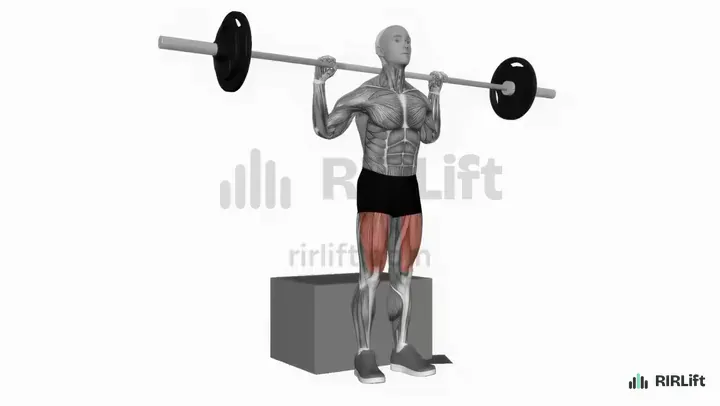
- Box Squat Quads, Glutes, Adductors
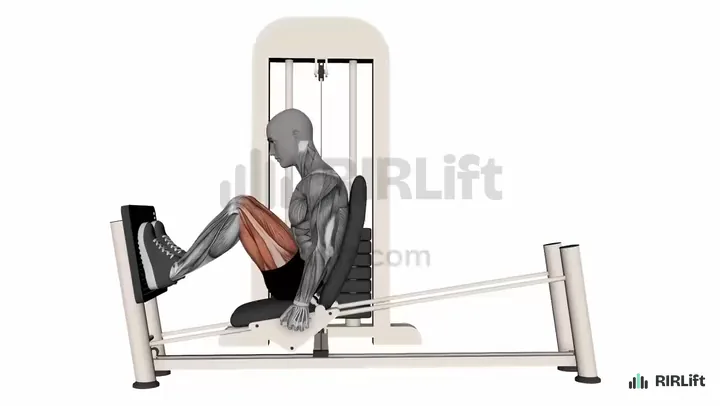
- Leg Press Quads, Glutes
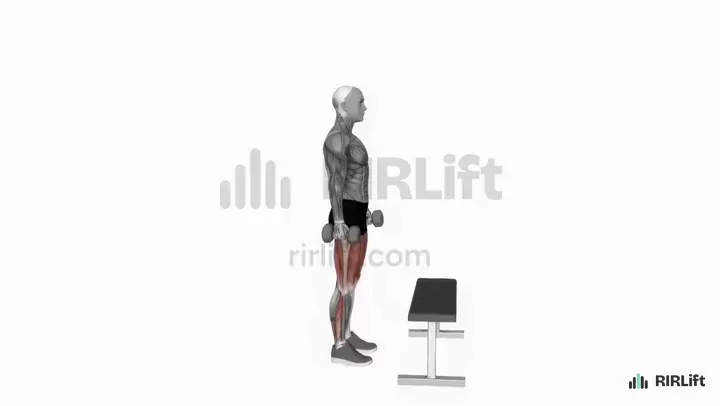
- Step-Up Quads, Glutes
- Reverse Lunge Quads, Glutes
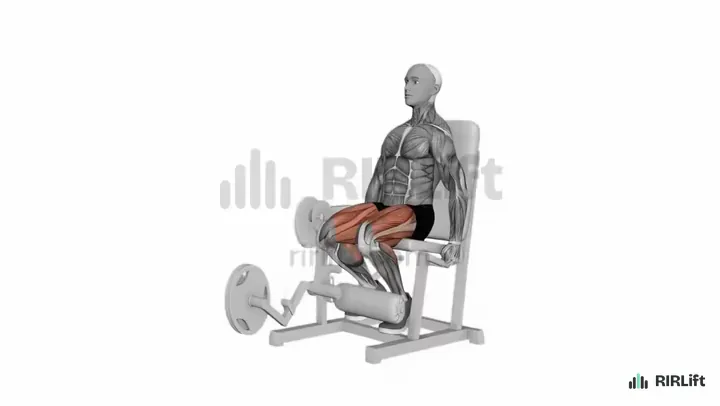
- Leg Extension Quads
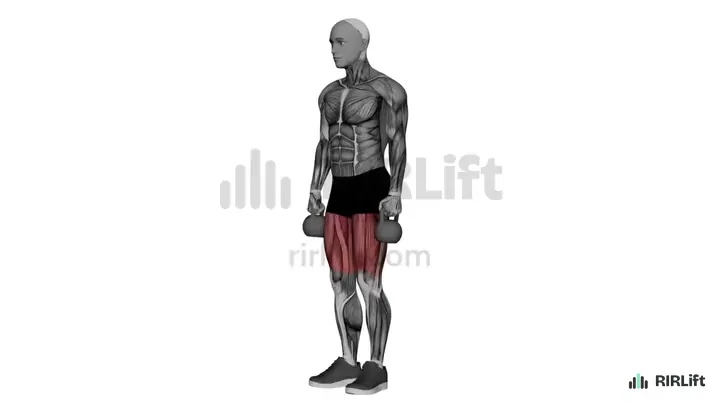
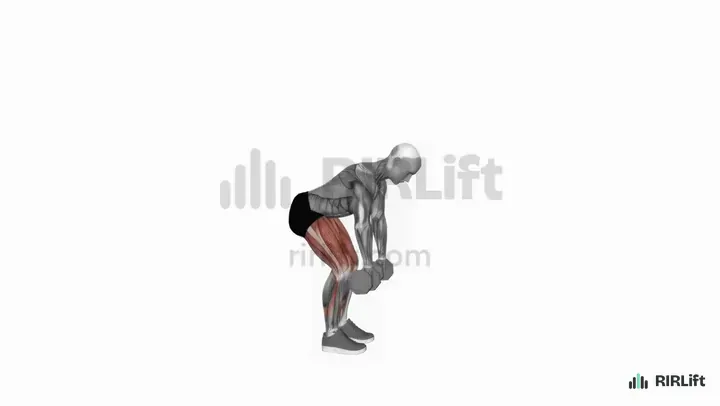
- Dumbbell Romanian Deadlift Hamstrings, Glutes
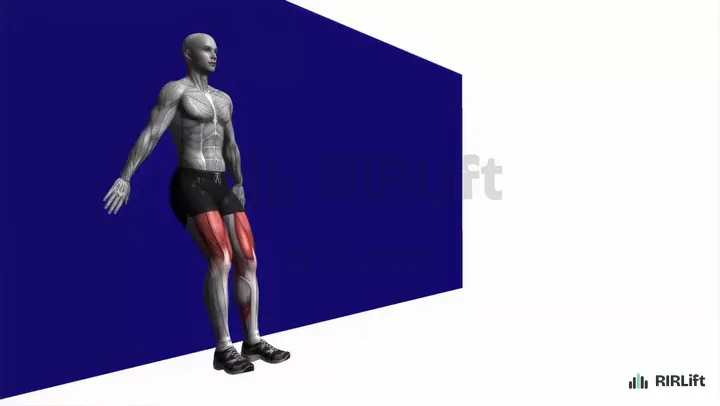
- Wall Sit Quads
Put them together: example sessions
Each session below picks from the exercises above for one situation, with the sets, reps, rest and RIR filled in.
-
Session 1
At home with dumbbells and a sturdy step
You train at home with a few dumbbells, your knees ache on stairs or after long walks, and you want stronger legs without a gym.
2× a week · 22 sets a week · ~25 min
-
Session 2
At the gym, building real leg strength
You have trained before, your knees complain under heavy back squats, and you want to keep building leg muscle with machines and a box.
2× a week · 25 sets a week · ~35 min
-
Session 3
Deep bending hurts, but you can still load
Bending past about halfway hurts, so squats to depth, lunges and stairs are off for now, but straight-leg and partial-range work feels fine.
2× a week · 24 sets a week · ~30 min
Session 1
At home with dumbbells and a sturdy step
- Workouts2× a week
- Working sets22 a week
- Per workout~25 min
- EquipmentDumbbells, Flat Bench
You train at home with a few dumbbells, your knees ache on stairs or after long walks, and you want stronger legs without a gym.
Two sessions with about 11 hard sets each are enough to build leg strength without leaving the knees sore for days. Each session pairs one knee-bending lift with hip-dominant work so the knee gets a break within the session.
| Exercise | Sets × reps | RIR | Rest |
|---|---|---|---|
| Goblet Squat1 warm-up set firstSit to a chair or box. | 3 × 8–12 | 3 | 90 s |
| Dumbbell Romanian Deadlift | 3 × 8–12 | 2 | 90 s |
| Dumbbell Glute Bridge | 3 × 10–15 | 2 | 1 min |
| Wall SitSeconds per hold. | 2 × 20–45 | 2 | 1 min |
| Exercise | Sets × reps | RIR | Rest |
|---|---|---|---|
| Step-Up1 warm-up set firstPer leg. Start with a low step. | 3 × 8–12 | 3 | 90 s |
| Reverse LungePer leg. | 2 × 8–10 | 3 | 90 s |
| Dumbbell Romanian Deadlift | 3 × 8–12 | 2 | 90 s |
| Dumbbell Glute Bridge | 3 × 12–15 | 2 | 1 min |
- How to run it
- Two sessions a week with two or three days between them, for example Tuesday and Friday. Walk or cycle on other days if you like; it does not interfere.
- How to progress
- Move in this order: first add reps to the top of the range, then make the range bigger (a lower box or a higher step), and only then add weight. Keep every set at 2 to 3 reps in reserve. If a knee is still sore the next morning, go back one step.
Session 2
At the gym, building real leg strength
- Workouts2× a week
- Working sets25 a week
- Per workout~35 min
- EquipmentBarbells, Dumbbells, Leg Extension, Seated Leg Curl +2
You have trained before, your knees complain under heavy back squats, and you want to keep building leg muscle with machines and a box.
Moving most of the leg work to machines and a box squat keeps the weekly volume, about 12 to 14 hard sets per leg day, while each lift has a depth you set. Quads, hamstrings and glutes each get direct work twice a week.
| Exercise | Sets × reps | RIR | Rest |
|---|---|---|---|
| Box Squat2 warm-up sets firstBox at a height you can control. | 4 × 5–8 | 2 | 2:30 min |
| Dumbbell Romanian Deadlift | 3 × 8–10 | 2 | 2 min |
| Leg Extension | 3 × 12–15 | 1 | 75 s |
| Seated Leg Curl | 3 × 10–15 | 1 | 75 s |
| Exercise | Sets × reps | RIR | Rest |
|---|---|---|---|
| Leg Press2 warm-up sets firstFeet high on the platform. | 4 × 8–12 | 2 | 2 min |
| Reverse LungePer leg. | 3 × 8–10 | 2 | 90 s |
| Cable Pull-Through | 3 × 10–15 | 2 | 75 s |
| Leg Extension | 2 × 15–20 | 1 | 1 min |
- How to run it
- Two leg days a week, at least 72 hours apart. Do the box squat or leg press first while you are fresh, and keep a 5 to 10 minute bike warm-up before each session.
- How to progress
- Once every set of a lift hits the top of its rep range with the planned reps still in reserve, and the knee feels the same the next morning, add the smallest weight jump the machine or dumbbells allow. Lower the box squat by one plate height once 8 reps at 2 in reserve feels smooth, and keep the weight the same that week.
Session 3
Deep bending hurts, but you can still load
- Workouts2× a week
- Working sets24 a week
- Per workout~30 min
- EquipmentDumbbells, Leg Press, Seated Leg Curl, Adjustable Cable +2
Bending past about halfway hurts, so squats to depth, lunges and stairs are off for now, but straight-leg and partial-range work feels fine.
The hips take much of the load here, with 7 hip-dominant sets in Session A and 4 in Session B, and the quads are trained in the range that feels fine: a short leg press, a high box, a shallow wall sit and the top half of the leg extension. That adds up to 12 hard sets per session.
| Exercise | Sets × reps | RIR | Rest |
|---|---|---|---|
| Dumbbell Romanian Deadlift1 warm-up set first | 4 × 8–10 | 2 | 2 min |
| Leg PressShort range; stop where it feels fine. | 3 × 10–15 | 3 | 90 s |
| Dumbbell Glute Bridge | 3 × 12–15 | 2 | 1 min |
| Seated Leg Curl | 2 × 12–15 | 2 | 1 min |
| Exercise | Sets × reps | RIR | Rest |
|---|---|---|---|
| Cable Pull-Through | 4 × 10–15 | 2 | 90 s |
| Box Squat1 warm-up set firstHigh box. | 3 × 8–10 | 3 | 2 min |
| Wall SitSeconds per hold, shallow angle. | 3 × 20–40 | 2 | 1 min |
| Leg ExtensionShort range from the top. | 2 × 12–15 | 2 | 1 min |
- How to run it
- Two sessions a week. Before each one, test the range with an empty leg press or a bodyweight box squat and set the depth there for the day.
- How to progress
- Add reps first and range second. Every two weeks, try one step deeper on the box or the leg press with the same weight. Add load to the hinge and bridge as normal, since they barely bend the knee.
Make it fit you
-
Soreness the next day
A dull ache that is gone by the next morning is normal after leg work. If the knee is still sore 24 hours later or swollen, cut the depth back one step for that lift and keep the rest of the session.
-
Pain at the start of the leg extension
Set the machine's start pin so the rep begins with the knee already partly straight, and lift through only the top part. Many people with sore kneecaps find this range fine.
-
Stairs bother you
Start step-ups on a 4 to 6 inch step and lower slowly through the front leg. Raise the step an inch at a time once 12 reps feel easy on both legs.
-
One knee is worse
Do the single-leg work on the better side first and match the reps on the weaker side, not the other way around. Pick the box height and leg press depth for the worse knee.
-
Logging effort, not just weight
With sore knees, the same weight can feel very different from one week to the next. Log the reps you had left, and RIRLift sets the next session's weight from that number, so a bad knee day pulls the next target back instead of forcing it.
Questions
What leg exercises can I do with bad knees?
Box squats, the leg press with a shorter range, low step-ups, reverse lunges, wall sits and leg extensions for the front of the thigh, plus Romanian deadlifts, glute bridges and leg curls for the back. Choose a depth that feels fine and build from there.
What leg exercises should I avoid with bad knees?
Usually nothing forever, but early on skip jumping, deep squats loaded heavily, and forward lunges that end with a hard braking step. Bring deeper ranges back gradually once the scaled versions feel easy.
Is walking a good quad exercise?
Walking is good general activity, but it is too easy to build much quad strength. Wall sits, step-ups and the leg press load the quads much harder for the same time.
Should I squat with bad knees?
Most people can, to a depth that feels fine. Squat to a box set at that height, keep 2 to 3 reps in reserve, and lower the box gradually as the depth stays comfortable.
How often should I train legs with bad knees?
Twice a week, with at least two days between sessions. That gives enough practice to get stronger and enough rest for the knee to settle between sessions.
Are leg extensions bad for your knees?
No, when loaded sensibly. Start light, use a range that feels fine, and add weight slowly. They are one of the easiest ways to strengthen the quads when squats are limited.
Related templates
-
Glute exercises for bad knees: hip-first moves that keep the knee still
Hip-first glute training when the knee needs a lighter week.
-
Low impact leg exercises: strong legs without jumping
Leg work with no jumping or running at all.
-
Leg extension: how to set the machine, do it and swap it
Setup and range tips for the main quad machine.
-
Knees warm up exercises: from no load to full bend in seven minutes
A short warm-up to do before any of these sessions.
-
How to use reps in reserve (RIR)
How to judge 2 to 3 reps in reserve on every set.