Low impact leg exercises: strong legs without jumping

The best low impact leg exercises are goblet squats, reverse lunges, step-ups, lateral lunges and wall sits for the quads, hip thrusts, single-leg glute bridges, Romanian deadlifts and kettlebell swings for the glutes and hamstrings, the leg press and lying leg curl in the gym, and clamshells and single-leg calf raises for the smaller muscles. Do 2 or 3 sets of 8 to 15 reps of four or five of them, two or three times a week, stopping 1 to 3 reps short of failure. Add weight slowly, and keep the knee bend to a depth that feels fine.

  1. Goblet Squat Quads, Glutes
  2. Reverse Lunge Quads, Glutes
  3. Step-Up Quads, Glutes
  4. Wall Sit Quads
  5. Hip Thrust Glutes
  6. Dumbbell Romanian Deadlift Hamstrings, Glutes
  7. Leg Press Quads, Glutes

Squats, lunges and holds

These train the front of the thighs, the muscles that control your knee on stairs and when you sit down. Move slowly, keep your whole foot on the floor, and choose a depth you can control.

Quads and glutes, squat

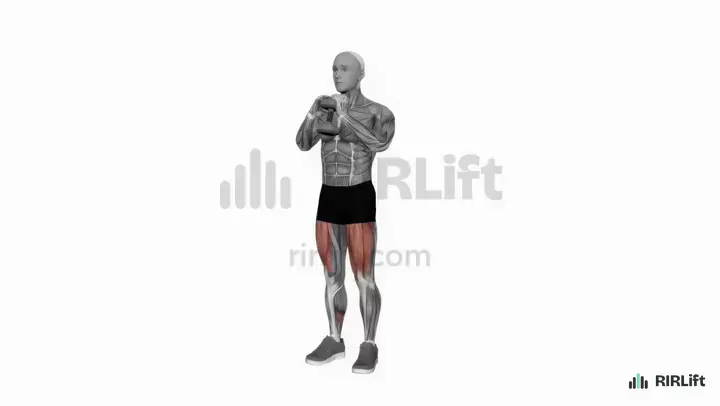
Goblet Squat

Quads, Glutes

Holding a weight at your chest keeps your torso upright and your balance centered, so the goblet squat is the easiest squat to do well. Squatting to a box or chair sets a depth your knees are happy with.

How to do it

  1. Hold a dumbbell or kettlebell vertically against your chest.
  2. Sit down between your knees, elbows inside them at the bottom.
  3. Stand up tall.

Cues

  • Elbows nudge the knees out at the bottom.
  • Chest stays up behind the weight.

Common mistakes

  • Letting the weight pull you forward.

Swap for: Bodyweight Squat, Barbell Back Squat

Quads and glutes, backward lunge

Reverse Lunge

Quads, Glutes

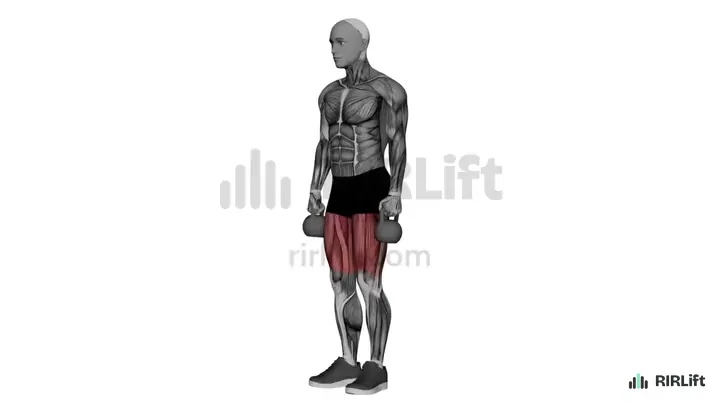
Stepping back instead of forward keeps your shin more upright and the front knee easier to control, which is why it shows up on almost every knee-friendly list.

How to do it

  1. Stand tall holding a kettlebell in each hand at your sides.
  2. Step one foot back and lower until the back knee nearly touches the floor.
  3. Keep most of your weight on the front foot.
  4. Push through the front foot to step back up, then alternate or finish one side.

Cues

  • Step long, drop straight down
  • Front foot does the work
  • Tall chest

Common mistakes

  • Short steps that push the front knee far over the toes: step back further.
  • Wobbling side to side: narrow the load or slow down.

Swap for: Bulgarian Split Squat, Dumbbell Reverse Lunge, Step-Up

Quads and glutes, single-leg step

Step-Up

Quads, Glutes

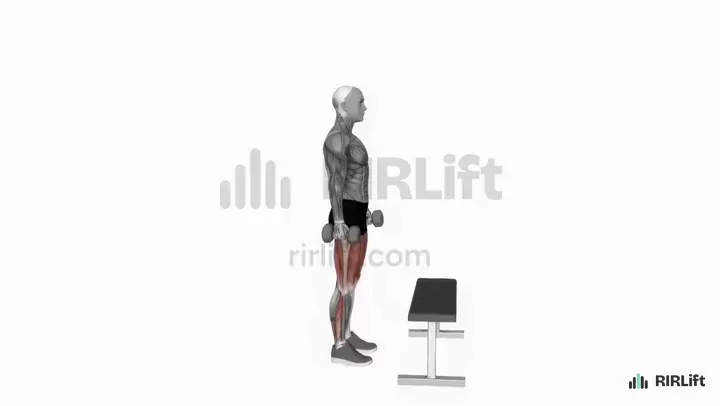
A step-up is climbing stairs made into a strength exercise. Start with a low step, drive through the whole top foot, and raise the height or add dumbbells as it gets easy.

How to do it

  1. Stand facing the bench with two dumbbells.
  2. Place one whole foot on the bench.
  3. Lean forward a little and push through the top foot to stand up on the bench.
  4. Bring the other foot up only to touch, then lower it back to the floor.
  5. Finish all reps on one leg before switching.

Cues

  • Whole foot on the bench
  • Push through the top heel
  • Lower slowly, do not drop

Common mistakes

  • Pushing off the floor with the back foot: that halves the work. Keep the trailing foot light.
  • Using a bench so high that your knee is far above your hip: you will rock instead of step.

Swap for: Barbell Step-Up

Quads, glutes and inner thighs, side lunge

Dumbbell Lateral Lunge

Quads, Glutes, Adductors

Stepping out to the side trains the inner thighs and hips in a direction the other moves miss, with the bent knee moving slowly and under control.

How to do it

  1. Stand with your feet together and a dumbbell hanging at each side.
  2. Take a wide step to the right and sit your hips back over the right foot, left leg straight.
  3. Lower until the right thigh is near level with the floor, dumbbells on either side of the bent knee.
  4. Push hard off the right foot to step back to the start, then step out to the left.

Cues

  • Step wide, sit back
  • Trailing leg stays long
  • Both feet point forward

Common mistakes

  • Stepping too short, which turns the lunge into a squat with no stretch on the trailing leg.
  • Letting the bent knee drift inward past your big toe: keep it in line with the foot.

Swap for: Kettlebell Lateral Lunge, Cossack Squat, Goblet Squat

Quads, isometric squat

Wall Sit

Quads

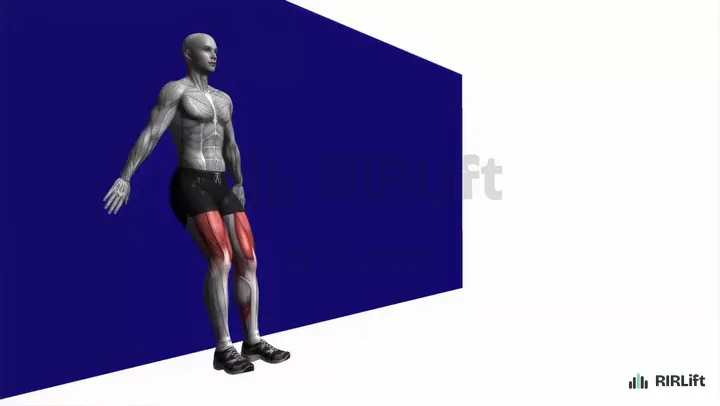
Holding a squat against a wall loads the thighs hard with zero movement at the knee. Choose a depth that feels fine and hold for 20 to 60 seconds.

How to do it

  1. Lean your back on a wall with your feet roughly two feet out from it.
  2. Slide down until your thighs are close to parallel with the floor.
  3. Keep your knees over your ankles and press your back into the wall.
  4. Hold the position for the target time, then slide back up.

Cues

  • Thighs level
  • Press the heels
  • Back flat on the wall

Common mistakes

  • Feet too close: the knees end up past the toes.
  • Resting hands on the thighs: keep them off your legs.

Swap for: Bodyweight Squat, Cossack Squat

Glutes and hamstrings

Hinging and bridging work the back of the legs with very little bending at the knee, so they are the place to push hardest when your knees are the weak link.

Glutes, loaded hip extension

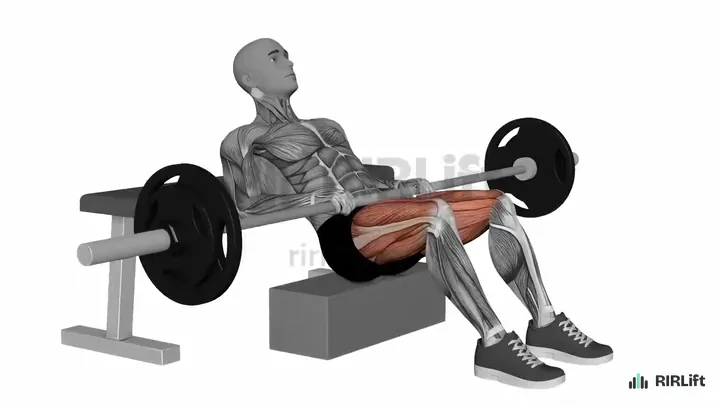
Hip Thrust

Glutes

With your upper back on a bench and a barbell across your hips, the hip thrust loads the glutes heavily while the knee stays still at about a right angle. It builds strong hips with the knee barely moving.

How to do it

  1. Sit with your shoulder blades against the long side of a flat bench and roll a padded bar over your hips.
  2. Plant your feet flat about hip width apart, close enough that your shins are vertical at the top.
  3. Drive through your heels and lift your hips until your torso and thighs form a straight line.
  4. Hold the top for a second with your chin tucked, then lower your hips most of the way down and repeat.

Cues

  • Chin tucked, ribs down
  • Shins vertical at the top
  • One-second squeeze

Common mistakes

  • Arching your lower back to get higher: stop when your hips are level with your knees and squeeze your glutes there.
  • Feet too far out, which turns it into a hamstring exercise: bring them in until your shins are vertical at lockout.

Swap for: Dumbbell Glute Bridge, Single-Leg Glute Bridge, Smith Machine Hip Thrust

Glutes and hamstrings, one-leg bridge

Single-Leg Glute Bridge

Glutes

Bridging on one leg doubles the work for each glute with no equipment. It is the home version of the hip thrust and shows up any side-to-side difference.

How to do it

  1. On your back, plant one foot flat and the other leg lifted; rest a light kettlebell on the working hip if you have one.
  2. Press the planted heel down and raise your hips until your body is straight from knee to shoulder.
  3. Lower slowly and finish the set before switching.

Cues

  • Push through the heel
  • Hips level
  • Pause at the top

Common mistakes

  • Letting one hip drop: lower the height until both stay level.

Swap for: Donkey Kick, Dumbbell Glute Bridge, Clamshell

Hamstrings and glutes, hip hinge

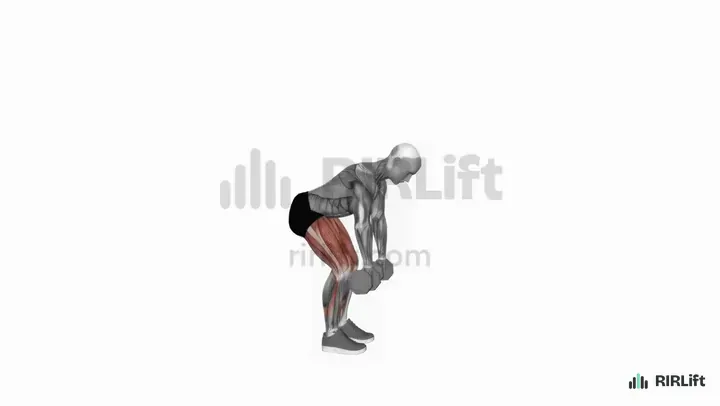
Dumbbell Romanian Deadlift

Hamstrings, Glutes

The Romanian deadlift loads the hamstrings and glutes through a long stretch while your knees stay softly bent and nearly still. It is the main back-of-leg lift in any knee-friendly plan.

How to do it

  1. Stand hip-width apart with a dumbbell in each hand resting against the front of your thighs, palms facing you.
  2. Push your hips straight back and let your torso fold forward, knees softly bent, the dumbbells brushing your legs.
  3. Lower until the dumbbells pass your knees and you feel a strong stretch in your hamstrings, with your back still flat.
  4. Drive your hips forward to stand back up, squeezing your glutes at the top, and repeat.

Cues

  • Hips back, not down
  • Dumbbells slide down your legs
  • Flat back, chin tucked

Common mistakes

  • Bending the knees into a squat so the dumbbells go lower: the depth comes from the hips, and most people stop just past the knees.
  • Rounding the lower back at the bottom: end the rep where your back stays flat, and lighten the load if that is high.

Swap for: Single-Leg RDL, Dumbbell Good Morning, Kettlebell Deadlift

Glutes and hamstrings, fast hip hinge

Kettlebell Swing

Glutes, Hamstrings

A swing is powered by a quick hip snap, not a squat, so it builds strong, fast hips and raises your heart rate with no landing. Learn the hinge with a light bell first.

How to do it

  1. Stand with your feet a little wider than your hips, the bell set about a foot in front of you.
  2. Hinge down, grip the handle with both hands, and hike the bell back between your thighs.
  3. Snap your hips forward to stand tall, letting the bell float up to about shoulder height on straight arms.
  4. Let it fall back between your legs as you hinge again, and go straight into the next rep.

Cues

  • Hips snap, arms just hold on
  • Stand tall at the top
  • Bell passes high between the thighs

Common mistakes

  • Squatting the swing by bending the knees deeply: push your hips back and keep the shins nearly vertical.
  • Lifting the bell with your shoulders: if your arms are working, the hips are not driving it.

Swap for: Dumbbell Romanian Deadlift, Kettlebell Deadlift, Superman

Leg machines

A machine fixes the path and lets you choose the range, which makes it easy to load your legs heavily while staying in a range that feels fine.

Quads and glutes, machine press

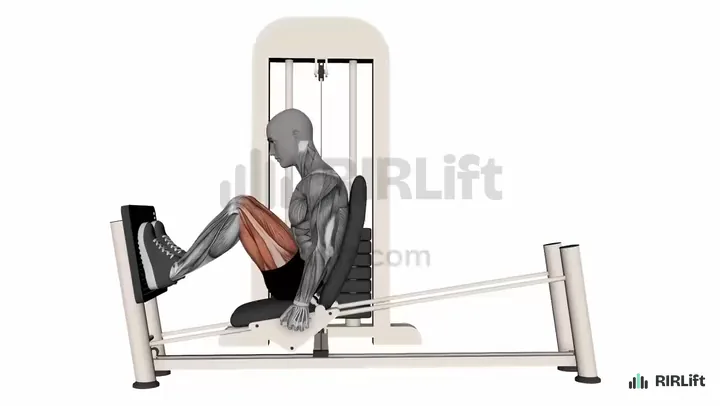
Leg Press

Quads, Glutes

The leg press lets you push heavy weight with your back supported and choose exactly how deep the knees bend, which makes it a good quad builder when deep squats bother your knees.

How to do it

  1. Sit in the machine with your whole back against the pad and your feet hip-width on the platform.
  2. Release the safety handles and bend your knees, bringing the platform toward you under control.
  3. Lower until your knees are bent to about 90 degrees or a little deeper, without your lower back curling off the pad.
  4. Press the platform away until your legs are nearly straight, and repeat.

Cues

  • Lower back stays on the pad
  • Whole foot pushes
  • Stop just short of locking out

Common mistakes

  • Going so deep that your hips roll up off the seat: stop where your back stays flat.
  • Snapping the knees straight at the top: keep a soft bend.

Swap for: 45-Degree Leg Press, Hack Squat, Barbell Back Squat

Hamstrings, knee flexion

Lying Leg Curl

Hamstrings

The lying curl trains the hamstrings directly at the knee while your spine stays unloaded on the pad.

How to do it

  1. Set the machine so your knees line up with the pivot point when you lie face down, and move the ankle pad to sit on your lower calves, just above your heels.
  2. Lie flat with your kneecaps hanging just past the end of the bench, hold the handles and press your hips into the pad.
  3. Bend your knees and pull the pad up in a smooth arc until your heels are as close to your glutes as the machine allows.
  4. Pause for a moment at the top without letting your hips lift off the bench.
  5. Lower the pad over about two seconds until your legs are almost straight, and start the next rep before the stack touches down.

Cues

  • Hips glued to the pad
  • Heels to glutes
  • Slow on the way down

Common mistakes

  • Lifting your hips as the weight gets heavy: your lower back takes over and the hamstrings do less. Drop the load until your hips stay down on every rep.
  • Stopping short at the bottom: that cuts out the part of the rep where your hamstrings are longest. Let your legs come back to almost straight before you curl again.
  • Swinging the pad up: a kick from the bottom hands the hardest part of the rep to momentum. Count two seconds down and start each rep from a dead stop.

Swap for: Seated Leg Curl, Stability Ball Leg Curl, Dumbbell Romanian Deadlift

Outer hips and calves

Small muscles on the side of the hip and in the lower leg that the bigger lifts barely load. They take five minutes at the end of a session.

Outer hips, side-lying rotation

Clamshell

Abductors

The clamshell trains the small glute muscles on the side of the hip, the ones that turn your knee outward. Slow reps with a pause at the top.

How to do it

  1. Lie on one hip with knees bent, stacked, heels touching.
  2. Pillow your head on the lower arm; keep the hips stacked.
  3. Keep your feet touching and lift the top knee as high as you can.
  4. Lower the knee slowly back to the other one.

Cues

  • Feet together
  • Hips stacked
  • Pause up top

Common mistakes

  • Rolling the top hip back: only the knee should move.
  • Rushing the reps: a two-second lowering makes a light move useful.

Swap for: Fire Hydrant, Standing Side Leg Raise

Calves, one-leg raise

Single-Leg Calf Raise

Calves

Your calves push you off with every step you walk and climb. Doing one leg at a time off a step makes body weight enough.

How to do it

  1. Stand on one foot with the other lifted just off the floor, arms by your sides; hold a dumbbell in each hand once body weight is easy.
  2. Rise onto the ball of your foot as high as you can and hold for a second.
  3. Lower your heel to the floor over two seconds.
  4. Finish all reps on one leg, then switch; sets are per leg.

Cues

  • Rise as high as you can
  • Pause at the top
  • Two seconds down

Common mistakes

  • Bouncing through the reps: pause for a beat at the top of each one.
  • Rolling onto the outside of the foot: keep your weight over the big toe.

Swap for: Dumbbell Standing Calf Raise, Kettlebell Calf Raise, Standing Calf Raise

Put them together: example sessions

Each session below picks from the exercises above for one situation, with the sets, reps, rest and RIR filled in.

Session 1

At home with no weights

  • Workouts2× a week
  • Working sets30 a week
  • Per workout~35 min
  • EquipmentDumbbells

You train at home with nothing but a wall, a step and the floor, and you want a leg routine that has no jumping at all.

Five moves at 3 sets, 15 working sets, covers the front, back and sides of the legs. Twice a week gives each area about 6 hard sets weekly, enough to build strength from a modest starting point, in about 25 minutes per session.

Home legs
ExerciseSets × repsRIRRest
Reverse LungePer leg. No weight to start. 3 × 8–12 2 75 s
Single-Leg Glute BridgePer leg. 3 × 8–15 2 1 min
Wall SitSeconds per hold. 3 × 30–60 2 1 min
ClamshellPer side. 3 × 12–20 2 45 s
Single-Leg Calf RaisePer leg. 3 × 10–15 2 45 s
How to run it
Do it on two days that are at least two days apart, for example Monday and Thursday. Rest about a minute between sets. A brisk walk on other days goes well with it.
How to progress
Add reps until you reach the top of each range with 2 reps left, then make it harder: slow the lowering on lunges to three seconds, hold a backpack, or add 10 seconds to the wall sit.

Session 2

Gym with machines, two leg days

  • Workouts2× a week
  • Working sets24 a week
  • Per workout~35 min
  • EquipmentLeg Press, Dumbbells, Flat Bench, Lying Leg Curl +1

You lift in a gym and want heavy leg training without jumps, sprints or deep barbell squats.

Two sessions split the work: a quad day led by the leg press and a hip day led by the hip thrust. Each has 12 working sets, 24 a week for the legs, which is plenty for most lifters to keep growing.

Day A: Quads
ExerciseSets × repsRIRRest
Leg Press2 warm-up sets first 3 × 8–12 2 2:30 min
Step-UpPer leg. 3 × 8–12 2 90 s
Lying Leg Curl 3 × 10–15 1 75 s
Single-Leg Calf RaisePer leg. 3 × 10–15 1 1 min
Day B: Hips
ExerciseSets × repsRIRRest
Hip Thrust2 warm-up sets first 3 × 8–12 2 2:30 min
Dumbbell Romanian Deadlift 3 × 8–12 2 2 min
Goblet SquatTo a box if needed. 3 × 10–12 2 90 s
Dumbbell Lateral LungePer side. 3 × 8–10 2 75 s
How to run it
Do Day A on Monday and Day B on Thursday, or pair them with upper-body days. Warm up with 5 minutes on the bike and one or two light sets of the first lift.
How to progress
Double progression: when all sets reach the top of the rep range with the target reps in reserve, add 5 to 10 pounds on machines and the hip thrust, or step up one dumbbell size, and start again at the bottom of the range.

Session 3

Sore knees: hips first

  • Workouts2× a week
  • Working sets28 a week
  • Per workout~35 min
  • EquipmentDumbbells, Kettlebells, Flat Bench

Squatting deep or lunging bothers your knees, and you want to keep your legs strong while that settles.

This session leans on hinges and bridges, where the knee barely moves, and keeps knee-bending work to a low step and a wall sit at whatever depth is comfortable. Fourteen working sets, twice a week, keep the whole leg trained.

Hips first
ExerciseSets × repsRIRRest
Dumbbell Romanian Deadlift1 warm-up set first 3 × 8–12 2 2 min
Kettlebell Swing 3 × 12–15 3 90 s
Step-UpPer leg. Low step. 3 × 8–10 3 75 s
Wall SitSeconds per hold. Comfortable depth. 3 × 20–40 3 1 min
ClamshellPer side. 2 × 12–20 2 45 s
How to run it
Do it on two non-consecutive days. Use a step 6 to 8 inches high for step-ups, and only go deeper in the wall sit when the current depth is comfortable. Cycling on other days fits well.
How to progress
Grow the hinge first: add weight to the Romanian deadlift and swings when you reach the top of the range with 2 reps left. Raise the step height by an inch or add 10 seconds to the wall sit only when both feel easy.

Make it fit you

Questions

How do you work out legs with a bad knee?

Lean on hip-dominant moves like Romanian deadlifts, hip thrusts and glute bridges, where the knee barely bends, and keep squats and lunges to a depth that does not hurt. The leg press and wall sit let you control that depth exactly.

How do older people regain leg strength?

With the same training as anyone else, scaled: chair squats, step-ups onto a low step, glute bridges and calf raises, two or three times a week, adding reps and then weight as they get easier. The progress comes from repeating it week after week.

What leg exercises are easiest on the knees?

Glute bridges, hip thrusts, Romanian deadlifts, clamshells and leg curls put the least load on the front of the knee. Wall sits and the leg press are next, because you choose the depth.

Are squats low impact?

Yes. Squats move slowly with your feet on the floor, so there is no impact. Jump squats are the high impact version. If regular squats bother your knees, it is usually the depth or the load, not the impact.

How can I do cardio if my legs hurt?

Use the ski erg, battle ropes or an arm bike to train your heart and lungs with your upper body, or a stationary bike at low resistance if pedaling is comfortable.