
Glute exercises for bad knees: hip-first moves that keep the knee still
Published October 29, 2026
The best glute exercises for bad knees are hip-dominant: the knee stays at one angle while the hips do the moving. Use hip thrusts, barbell and single-leg glute bridges, Romanian and B-stance deadlifts, 45-degree back extensions and cable pull-throughs for the heavy work, then cable kickbacks, clamshells, standing side leg raises and the abduction machine for the sides and top of the glutes. Two sessions a week of 10 to 14 hard sets, 1 to 3 reps short of failure, builds the glutes with little load on the knee joint.
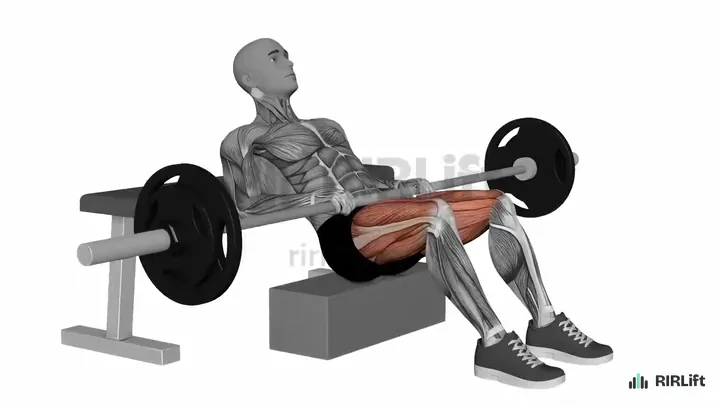
- Hip Thrust Glutes
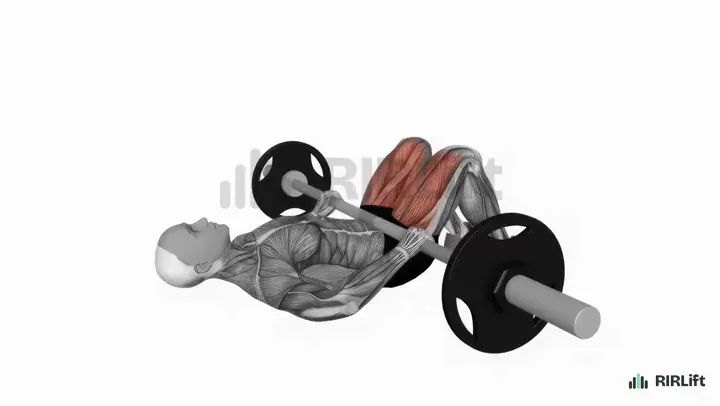
- Glute Bridge Glutes
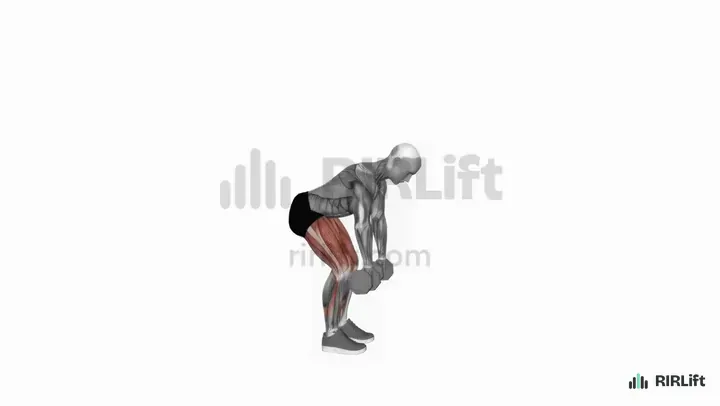
- Dumbbell Romanian Deadlift Hamstrings, Glutes
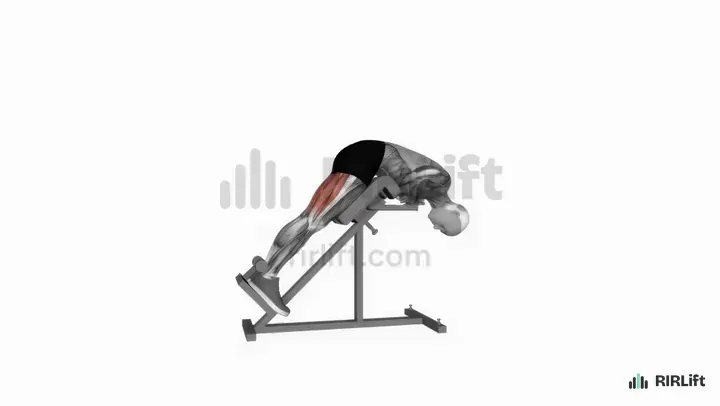
- 45-Degree Back Extension Glutes, Hamstrings
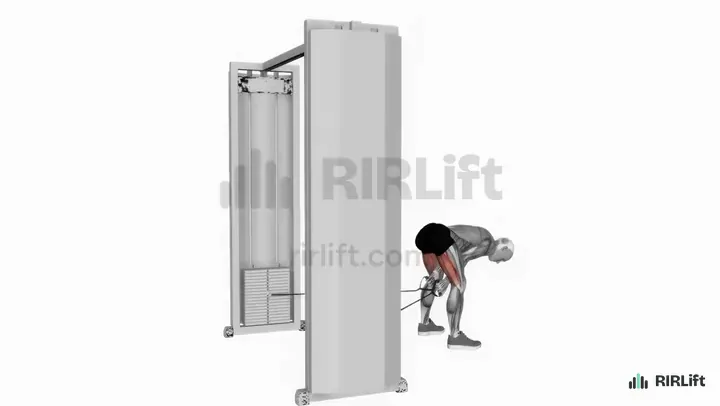
- Cable Pull-Through Glutes, Hamstrings
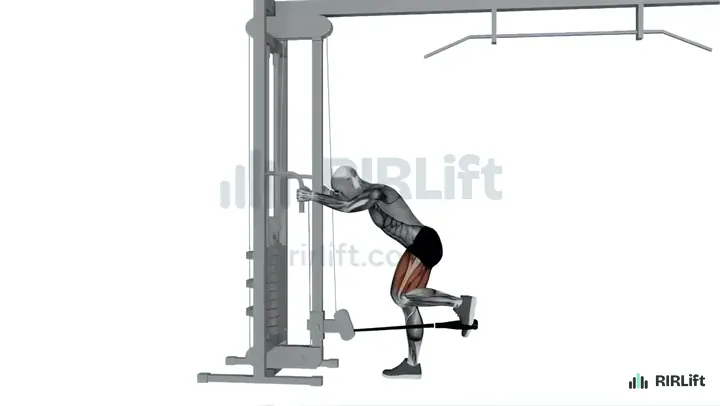
- Cable Glute Kickback Glutes
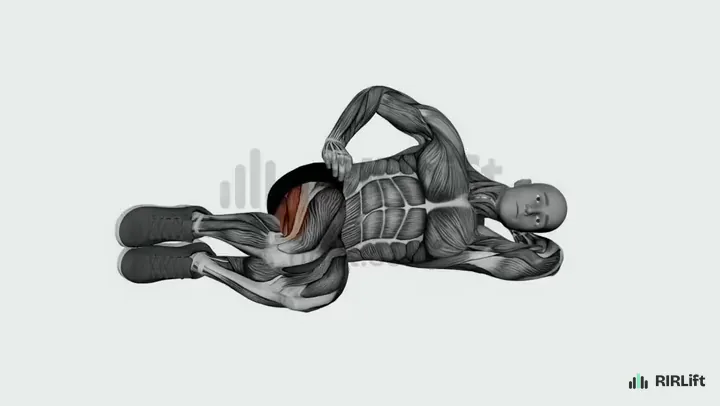
- Clamshell Abductors
Put them together: example sessions
Each session below picks from the exercises above for one situation, with the sets, reps, rest and RIR filled in.
-
Session 1
At home with a few dumbbells
You train at home, squats and lunges make your knees ache, and you want a glute routine that works around them.
2× a week · 22 sets a week · ~30 min
-
Session 2
Gym training for bigger glutes
You train at a gym, you want bigger glutes, and heavy squats or lunges leave your knees sore.
2× a week · 26 sets a week · ~35 min
-
Session 3
Getting down to the floor is hard
Your knees are stiff enough that kneeling or getting down to a mat and back up is a chore, and you want glute work you can do standing or seated.
2× a week · 20 sets a week · ~25 min
Session 1
At home with a few dumbbells
- Workouts2× a week
- Working sets22 a week
- Per workout~30 min
- EquipmentDumbbells
You train at home, squats and lunges make your knees ache, and you want a glute routine that works around them.
Each session has two hip-dominant lifts and two lighter moves, about 11 hard sets, which twice a week is enough to grow the glutes. Single-leg versions make up for not having heavy weights at home.
| Exercise | Sets × reps | RIR | Rest |
|---|---|---|---|
| Dumbbell Romanian Deadlift1 warm-up set first | 3 × 8–12 | 2 | 90 s |
| Single-Leg Glute BridgePer leg. | 3 × 10–15 | 1 | 1 min |
| Standing Side Leg RaisePer leg. | 3 × 12–20 | 1 | 1 min |
| ClamshellPer leg. | 2 × 15–20 | 1 | 1 min |
| Exercise | Sets × reps | RIR | Rest |
|---|---|---|---|
| Dumbbell B-Stance RDL1 warm-up set firstPer leg. | 3 × 8–12 | 2 | 90 s |
| Single-Leg Glute BridgePer leg. Pause 2 s at the top. | 3 × 10–15 | 1 | 1 min |
| ClamshellPer leg. | 3 × 15–20 | 1 | 1 min |
| Standing Side Leg RaisePer leg. | 2 × 12–20 | 1 | 1 min |
- How to run it
- Train on two days with a gap of two or three days between, for example Tuesday and Friday. They take about 25 minutes and need only dumbbells and a mat.
- How to progress
- Add reps until every set hits the top of the range at 1 to 2 reps in reserve, then add weight: a heavier dumbbell on the RDLs, or one resting on your hip for the single-leg bridge. Add a 2-second pause at the top before adding weight on the bridges.
Session 2
Gym training for bigger glutes
- Workouts2× a week
- Working sets26 a week
- Per workout~35 min
- EquipmentBarbells, Flat Bench, Dumbbells, Adjustable Cable +2
You train at a gym, you want bigger glutes, and heavy squats or lunges leave your knees sore.
Hip thrusts and hinges take the place of squats as the heavy lifts, with about 13 hard sets per session. Each glute gets one heavy lift, one long-stretch hinge and direct isolation twice a week.
| Exercise | Sets × reps | RIR | Rest |
|---|---|---|---|
| Hip Thrust2 warm-up sets first | 4 × 6–10 | 2 | 2:30 min |
| Dumbbell Romanian Deadlift | 3 × 8–12 | 2 | 2 min |
| Cable Glute KickbackPer leg. | 3 × 12–15 | 1 | 1 min |
| Hip Abduction Machine | 3 × 12–20 | 1 | 1 min |
| Exercise | Sets × reps | RIR | Rest |
|---|---|---|---|
| Glute Bridge2 warm-up sets first | 4 × 8–12 | 2 | 2 min |
| 45-Degree Back Extension | 3 × 10–15 | 2 | 90 s |
| Cable Pull-Through | 3 × 12–15 | 1 | 75 s |
| Hip Abduction Machine | 3 × 15–20 | 1 | 1 min |
- How to run it
- Two glute days a week, at least 72 hours apart. Warm up with two light hip thrust sets before the first working set.
- How to progress
- Double progression: once every set reaches the top of the range at the target reps in reserve, add the smallest weight step, 5 to 10 lb on the thrust. Hip thrusts can usually climb for months, so keep logging and adding.
Session 3
Getting down to the floor is hard
- Workouts2× a week
- Working sets20 a week
- Per workout~25 min
- EquipmentAdjustable Cable, Hip Abductor, Hyperextension, Dumbbells
Your knees are stiff enough that kneeling or getting down to a mat and back up is a chore, and you want glute work you can do standing or seated.
Everything here is standing, seated or on a bench, and the knee stays at one angle in all of it. About 10 sets per session, with moderate effort, is enough to get stronger when you are new or returning.
| Exercise | Sets × reps | RIR | Rest |
|---|---|---|---|
| Cable Pull-Through | 3 × 10–15 | 3 | 90 s |
| Hip Abduction Machine | 3 × 12–15 | 2 | 75 s |
| Cable Glute KickbackPer leg. | 2 × 10–15 | 2 | 1 min |
| Standing Side Leg RaisePer leg. | 2 × 10–15 | 2 | 1 min |
| Exercise | Sets × reps | RIR | Rest |
|---|---|---|---|
| 45-Degree Back Extension | 3 × 8–12 | 3 | 90 s |
| Dumbbell Romanian Deadlift1 warm-up set first | 3 × 8–12 | 3 | 90 s |
| Hip Abduction Machine | 2 × 12–15 | 2 | 1 min |
| Cable Glute KickbackPer leg. | 2 × 10–15 | 2 | 1 min |
- How to run it
- Two sessions a week at the gym, for example Monday and Thursday. Hold the machine frame or a rack for balance on the standing moves.
- How to progress
- Keep every set at 2 to 3 reps in reserve for the first four weeks while you learn the movements. After that, add weight whenever all sets reach the top of the range, one plate on the machines at a time.
Make it fit you
-
Feeling the hip thrust in your quads
Walk your feet further from the bench until your shins are vertical at the top. Feet tucked close to the hips turns the thrust into a knee-extension exercise.
-
Kneeling bothers your knees
Skip anything on hands and knees, like fire hydrants and donkey kicks. Standing kickbacks and side leg raises train the same muscles without pressure on the kneecap.
-
Lower back gets tired before the glutes
Put the bridges first and the RDLs second, and cut the hinge to two sets. On back extensions, stop when your body forms a straight line instead of arching past it.
-
Keeping some leg work
Glute work does not fully replace quad training. When your knees allow, add two sets of leg extensions or a high box squat on one of the days, at 2 to 3 reps in reserve.
-
Logging the sessions
Record how many reps you had left at the end of every glute set. RIRLift sets the next session's weight from those reps in reserve, so the hip thrust keeps climbing while the knee-sensitive lifts stay where you put them.
Questions
How do you work out your glutes without using your knees?
Use hip-dominant exercises where the knee stays at one angle: hip thrusts, glute bridges, Romanian deadlifts, back extensions, cable pull-throughs and cable kickbacks. Add clamshells and abduction for the sides.
What is the most common mistake with bad knees?
Stopping lower-body training altogether. Weak legs and glutes make stairs and getting up from a chair harder. Choose exercises you can do without pain and keep training them.
Are squats bad for knees?
Not for most people, but heavy, deep squats can aggravate sore knees. If they do, move your heavy lower-body work to hip thrusts and hinges, and bring squats back later to a box at a depth that feels fine.
What glute workouts can I do with an injured knee?
Seated abduction, standing kickbacks and side leg raises, back extensions and clamshells keep the injured knee almost still.
Are glute bridges good for bad knees?
Yes. The knee stays bent at one angle while the glutes do the lifting, so you can load them progressively with almost no stress through the front of the knee.
How many times a week should I train glutes with bad knees?
Twice a week, about 10 to 14 hard sets per session. That builds muscle and leaves enough recovery between sessions.
Related templates
-
Leg exercises for bad knees: strength work you can scale to your knees
Quad and full-leg training with a depth you control.
-
Hip thrust: how to do it, what it works, and what to swap it for
Setup and foot position for the main glute lift on this page.
-
Glute exercises at the gym: barbells, machines and cables
The full glute menu for when knees allow squats and lunges again.
-
Exercises for side glutes: glute medius work for the gym and home
More abduction work for the upper outer glutes.
-
RDL vs deadlift
Why the Romanian deadlift keeps the knee so still.