
Leg exercises for beginners: machines first, then free weights
Published October 19, 2026
The best leg exercises for beginners are the leg press, leg extension, seated leg curl and leg press calf raise on machines, then the goblet squat, dumbbell Romanian deadlift and glute bridge once you are ready for free weights. Machines are the easiest start because they set your path and your balance for you. Your first leg day only needs four exercises: a press or squat, a leg curl, a leg extension or bridge, and a calf raise, each for 2 to 3 sets that end with 2 to 3 reps still in the tank.
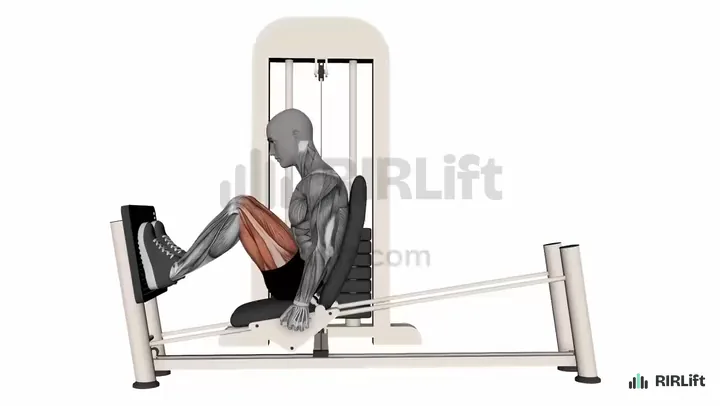
- Leg Press Quads, Glutes
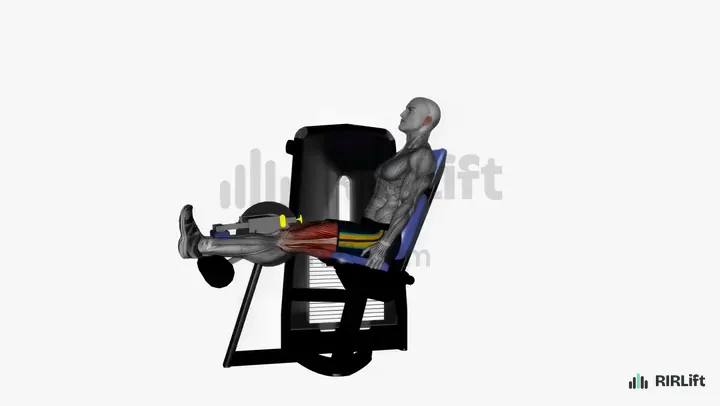
- Seated Leg Curl Hamstrings
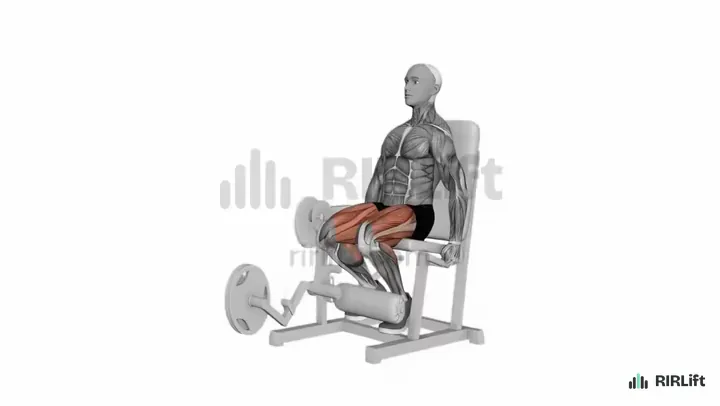
- Leg Extension Quads
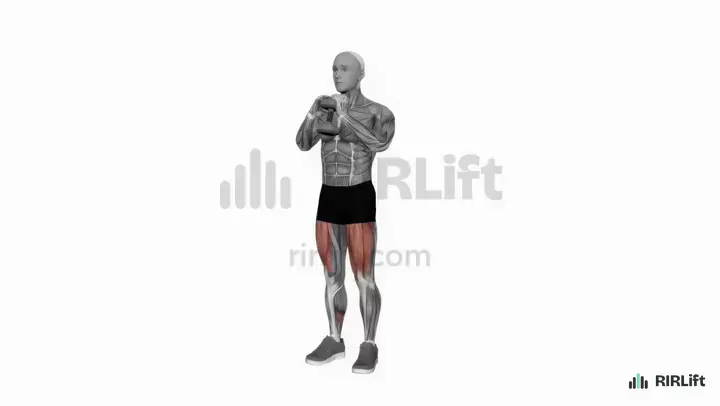
- Goblet Squat Quads, Glutes
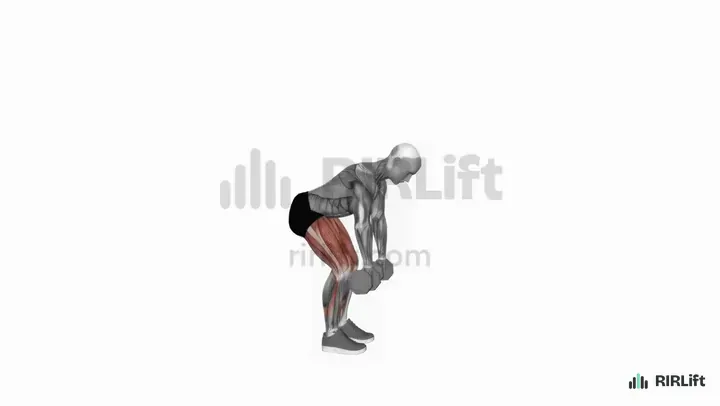
- Dumbbell Romanian Deadlift Hamstrings, Glutes
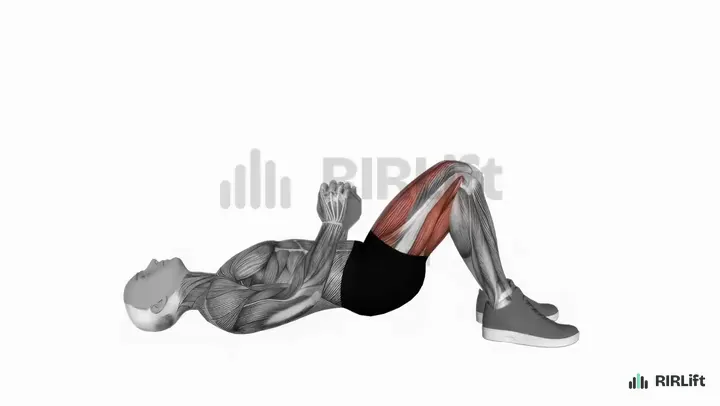
- Dumbbell Glute Bridge Glutes
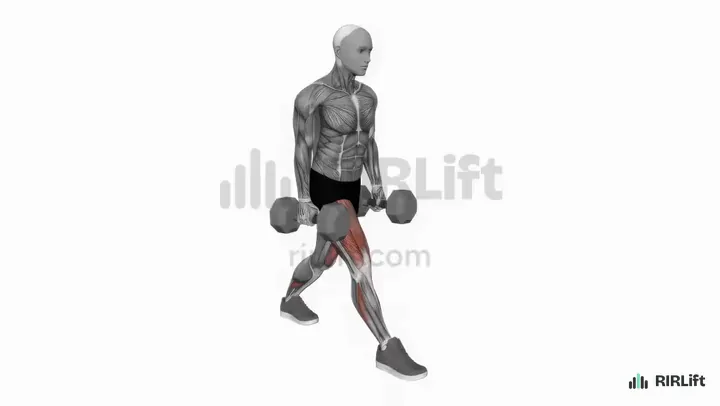
- Dumbbell Split Squat Quads, Glutes
Put them together: example sessions
Each session below picks from the exercises above for one situation, with the sets, reps, rest and RIR filled in. Open one in the session builder to change a pick, price it from a recent set, and add it to RIRLift.
-
Session 1
Your first month in a gym, machines only
You are new to the gym and want a leg day you can do on day one without learning a barbell.
2× a week · 20 sets a week · ~25 min
-
Session 2
Starting at home with one or two dumbbells
You are starting out at home with one or two medium dumbbells and no machines.
2× a week · 22 sets a week · ~25 min
-
Session 3
Months two and three: adding free weights at the gym
You have done a month of machine leg days, the weights are going up, and you want to start squatting and hinging with dumbbells.
2× a week · 20 sets a week · ~25 min
Session 1
Your first month in a gym, machines only
- Workouts2× a week
- Working sets20 a week
- Per workout~25 min
- EquipmentLeg Press, Seated Leg Curl, Leg Extension
You are new to the gym and want a leg day you can do on day one without learning a barbell.
Four machines cover your thighs, hamstrings and calves, and they let you learn effort before technique. Every set stops 2 to 3 reps short of failure, because a beginner's legs grow from almost any hard work and the first weeks are about learning what a hard set feels like. Ten sets in one routine keeps each session short enough that you leave wanting more, and doing it twice a week gives you more practice than one long day.
| Exercise | Sets × reps | RIR | Rest |
|---|---|---|---|
| Leg Press1 warm-up set firstKnees to a right angle. Back flat. | 3 × 10–15 | 3 | 2 min |
| Seated Leg CurlThigh pad snug. | 3 × 10–15 | 2 | 90 s |
| Leg ExtensionPause at the top. | 2 × 10–15 | 2 | 90 s |
| Leg Press Calf RaisePause in the stretch. | 2 × 10–15 | 2 | 1 min |
- How to run it
- Do the routine twice a week, with two or three days between. Warm up with five minutes on a bike or walking, then one light set on the leg press.
- How to progress
- When you reach the top of the rep range on every set and still have 2 to 3 reps left, add the next weight on the stack. After four weeks, move to the months two and three plan.
Session 2
Starting at home with one or two dumbbells
- Workouts2× a week
- Working sets22 a week
- Per workout~25 min
- EquipmentDumbbells
You are starting out at home with one or two medium dumbbells and no machines.
Without machines, the squat, hinge and bridge come straight from the free-weight list, and the split squat adds a single-leg move because a light dumbbell is already hard on one leg. The squat and hinge stop at 2 to 3 reps in reserve while you learn them, and the bridge goes to 1, since it is very hard to do wrong. It is one routine of 11 sets, twice a week, short enough to fit before work.
| Exercise | Sets × reps | RIR | Rest |
|---|---|---|---|
| Goblet SquatDumbbell on the chest. Heels down. | 3 × 8–15 | 2 | 90 s |
| Dumbbell Romanian DeadliftStop at the stretch. Flat back. | 3 × 10–15 | 3 | 90 s |
| Dumbbell Glute BridgeSqueeze 1 s at the top. | 3 × 12–20 | 1 | 1 min |
| Dumbbell Split SquatPer leg. Hand on a wall if needed. | 2 × 8–12 | 2 | 1 min |
- How to run it
- Do the routine twice a week with two days between. For the Romanian deadlift with a single dumbbell, hold it by both ends in front of your thighs. Do the split squat next to a wall so you can touch it for balance.
- How to progress
- Add reps until you reach the top of every range at the target reps in reserve. Then slow the lowering to three seconds before you look for a heavier dumbbell.
Session 3
Months two and three: adding free weights at the gym
- Workouts2× a week
- Working sets20 a week
- Per workout~25 min
- EquipmentLeg Press, Dumbbells, Leg Extension, Seated Leg Curl +1
You have done a month of machine leg days, the weights are going up, and you want to start squatting and hinging with dumbbells.
Two routines let you keep the machines you know while adding one free-weight lift to each day: the Romanian deadlift on day A, and the goblet squat and step-up on day B. The new lifts sit at 2 reps in reserve so you learn them with control, and the machines move to 1 to 2 reps now that you know how a hard set feels. Day A is 10 sets and day B is 10, twice a week each if you can, or once each to start.
| Exercise | Sets × reps | RIR | Rest |
|---|---|---|---|
| Leg Press1 warm-up set firstA bit deeper if the back stays flat. | 3 × 8–12 | 2 | 2 min |
| Dumbbell Romanian DeadliftNew lift. Light and slow. | 3 × 8–12 | 2 | 2 min |
| Leg ExtensionTwo seconds down. | 2 × 10–15 | 1 | 75 s |
| Leg Press Calf RaiseFull range. | 2 × 10–15 | 1 | 1 min |
Open Day A in the session builder
| Exercise | Sets × reps | RIR | Rest |
|---|---|---|---|
| Goblet Squat1 warm-up set firstNew lift. Elbows inside the knees. | 3 × 8–12 | 2 | 2 min |
| Seated Leg CurlSlow return. | 3 × 10–15 | 1 | 90 s |
| Step-UpPer leg. Mid-shin step. | 2 × 8–12 | 2 | 90 s |
| Dumbbell Glute BridgePause at the top. | 2 × 12–20 | 1 | 1 min |
Open Day B in the session builder
- How to run it
- Alternate Day A and Day B, two or three times a week in total, with a rest day between. Keep the light warm-up set before the first lift of each day.
- How to progress
- Double progression: reach the top of the rep range on every set at the target reps in reserve, then add the smallest weight step. After about three months, try the barbell versions of the squat and Romanian deadlift.
Make it fit you
-
Sore for days after the first session
That is normal in week one and fades by the third session. Do the next leg day anyway at the same weights, or cut each exercise to two sets for one week. Soreness is not a sign the workout worked better.
-
The gym is busy and the leg press is taken
Swap it for the goblet squat with a dumbbell from the rack, at the same sets and reps. Do the curl and extension first and come back to the press if it frees up.
-
Knees feel uneasy on squats
Use the leg press with your feet a little higher on the platform and stop at a depth that feels fine. Do glute bridges and Romanian deadlifts, which barely bend the knee, and leave the split squat out for a few weeks.
-
Only 20 minutes
Do the first two exercises of whichever routine you are on, three sets each, and skip the rest. Two hard exercises done twice a week still build your legs.
-
Not sure how many reps you had left
Once a week, take the last set of one machine exercise all the way to failure and count how many more reps you got than you guessed. Beginners usually have more left than they think, and this test fixes the guess fast.
-
Log every set's reps in reserve
Write down your reps in reserve along with weight and reps. If you log in RIRLift, the app uses that number to suggest your next weight, which takes the guesswork out of when to move up the stack in your first months.
Questions
What are good exercises for my first leg day?
The leg press, seated leg curl, leg extension and leg press calf raise. All four are machines, so you learn effort before technique, and together they cover your thighs, hamstrings and calves. Do 2 to 3 sets of 10 to 15 reps each, stopping when you have 2 to 3 reps left.
Are 4 exercises enough for leg day?
Yes, for a beginner four is plenty: a press or squat, a leg curl, an extension or bridge, and a calf raise. That is 10 to 12 hard sets, which is enough to build muscle in your first months. Adding more exercises mostly adds time and soreness.
What are the best 3 leg exercises for beginners?
The leg press for your quads and glutes, the leg curl for your hamstrings, and the dumbbell Romanian deadlift to learn the hip hinge. At home, swap the press for the goblet squat and the curl for the glute bridge.
How do beginners build strength in their legs?
Train legs twice a week, use the same few exercises for at least two months, and add a little weight whenever you reach the top of the rep range with 2 to 3 reps still left. Strength in the first months comes from repeating the same lifts, not from changing them.
How heavy should a beginner go on leg exercises?
Pick a weight you can lift for the bottom of the rep range with 2 to 3 reps left, with clean form. If you finish the top of the range and could still do several more, go up next time. Most beginners start too light on the leg press and too heavy on squats.
Should beginners squat with a barbell?
Not on day one. Learn the goblet squat first, where the dumbbell helps you stay upright, and use the leg press for heavy work. After two to three months of steady progress, the barbell squat is a good next step.
How long should a beginner leg workout take?
About 30 to 40 minutes for the plans here, including a short warm-up. Ten or eleven hard sets with one to two minutes of rest fits easily, and that is enough for the first months.
Related templates
-
Machine leg exercises for quads, hamstrings, glutes and calves
Every leg machine in the gym, for when you want more than the four in the first-month plan.
-
Leg exercises for women: squats, hinges, lunges and glute work
Leg and glute plans for home and gym once your first months are done.
-
The best workout for beginners
Full-body beginner programs that include these leg days.
-
Goblet squat: how to do it, what it works and what to swap in
Step-by-step form for the first free-weight squat on this page.
-
Newbie gains
Why your first months are the fastest and how to make the most of them.