Lower ab exercises for women: floor, bar and gym picks

The best lower ab exercises for women are the reverse crunch, the dead bug and the alternating leg raise on the floor, the captain's chair or hanging knee raise once you have a station or a bar, and the long-lever plank and ab wheel rollout for holding your pelvis still under load. There is no separate lower ab muscle: the rectus abdominis runs from your ribs to your pelvis, and exercises that curl your pelvis toward your ribs, instead of your ribs toward your pelvis, load its lower fibers hardest. Two or three of these, 2 to 4 sets each and 1 to 2 reps short of failure, twice a week, is enough.

  1. Reverse Crunch Abs
  2. Dead Bug Abs
  3. Alternating Leg Raise Abs
  4. Lying Knee Raise Abs
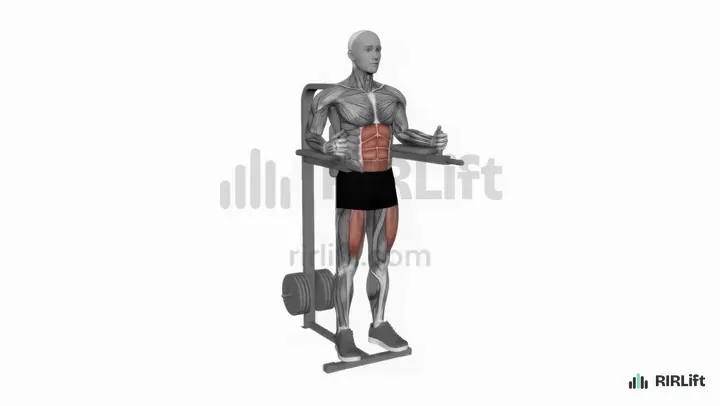
  5. Captain's Chair Knee Raise Abs
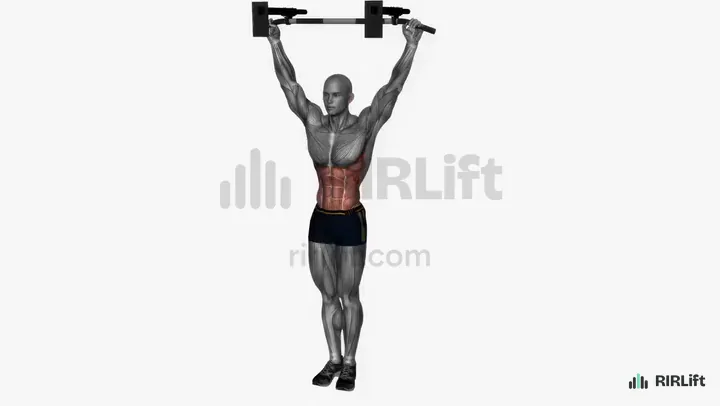
  6. Hanging Knee Raise Abs
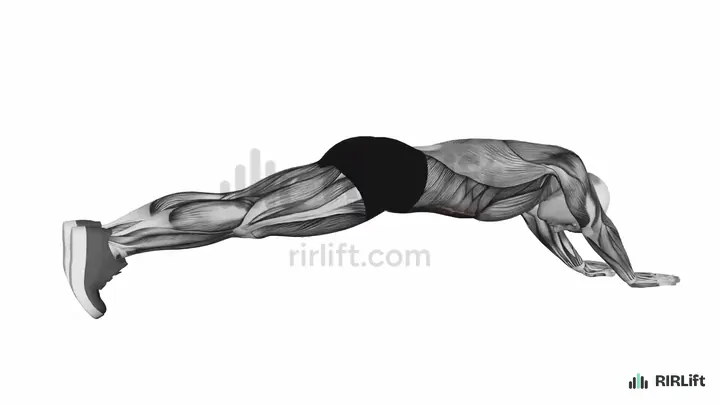
  7. Long Lever Plank Abs
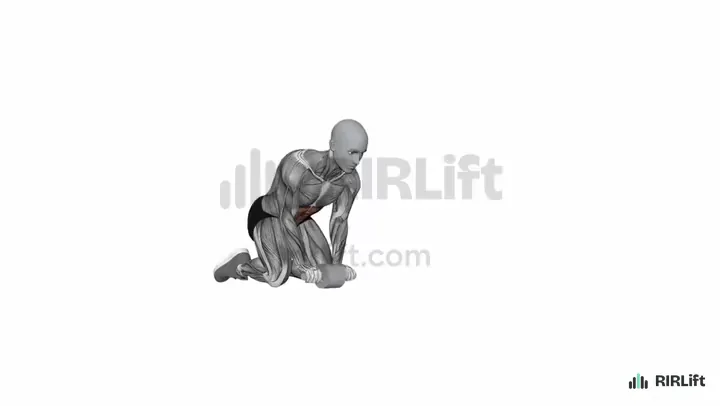
  8. Ab Wheel Rollout Abs

Lower ab exercises on the floor, no equipment

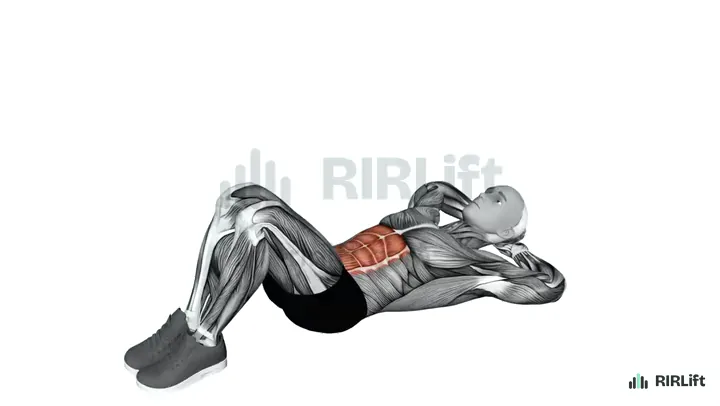
Every floor exercise here starts the same way: flatten your lower back into the floor by tilting your pelvis back, then move your legs without letting that arch return. The reverse crunch and lying knee raise curl your hips up toward your ribs; the dead bug and alternating leg raise make you hold the pelvis still while the legs move. Start with the reverse crunch and the dead bug, and add the jackknife once you can do 15 clean reverse crunches.

Floor, pelvis curls toward ribs

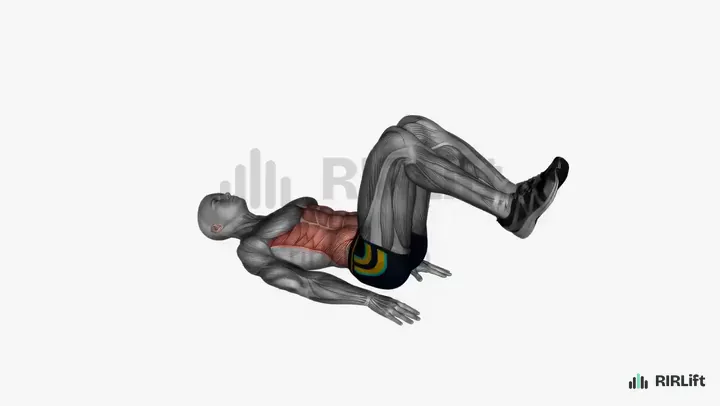
Reverse Crunch

Abs

This is the most direct lower ab exercise you can do with nothing but a floor: your shoulders stay down and your hips do the moving, so the bottom of your six-pack does most of the work. It is easy to scale by how far you let your knees travel.

How to do it

  1. Lie face up, arms along your sides, palms down, and lift your knees so your thighs point at the ceiling and your shins are level.
  2. Press your lower back into the floor and breathe out.
  3. Curl your hips up so your knees travel toward your chest, lifting your tailbone a few inches.
  4. Lower your hips one vertebra at a time until your tailbone touches down, keeping your knees above your hips, then repeat.

Cues

  • Tailbone peels off the floor
  • Knees go up, not toward your face
  • Slow on the way down

Common mistakes

  • Swinging your legs to throw your hips up: start every rep from a dead stop with the knees still.
  • Pushing hard through your hands: keep the palms light so your abs, not your arms, lift your hips.

Swap for: Lying Knee Raise, Jackknife, Captain's Chair Knee Raise

Floor, pelvis held still while limbs move

Dead Bug

Abs

The dead bug teaches the one skill every other exercise on this page needs: keeping your lower back flat while your legs move away from you. It is gentle enough to do daily and still hard if you move slowly and reach far.

How to do it

  1. Lie face up with your arms pointing at the ceiling and your knees bent to 90 degrees above your hips.
  2. Flatten your lower back into the floor and keep it there for the whole set.
  3. Reach your right arm overhead and straighten your left leg toward the floor at the same time, stopping just above it.
  4. Bring both back to the start and switch to the opposite pair. One rep per side counts as one rep.

Cues

  • Exhale as you reach
  • Lower back glued down
  • Move slower than feels necessary

Common mistakes

  • Letting your back arch as the leg straightens: stop the leg higher until the back stays flat.
  • Rushing the reps: take two to three seconds to reach and return.

Swap for: Alternating Leg Raise, Long Lever Plank, Plate Hollow Hold

Build a session with Dead Bug

Floor, one straight leg at a time

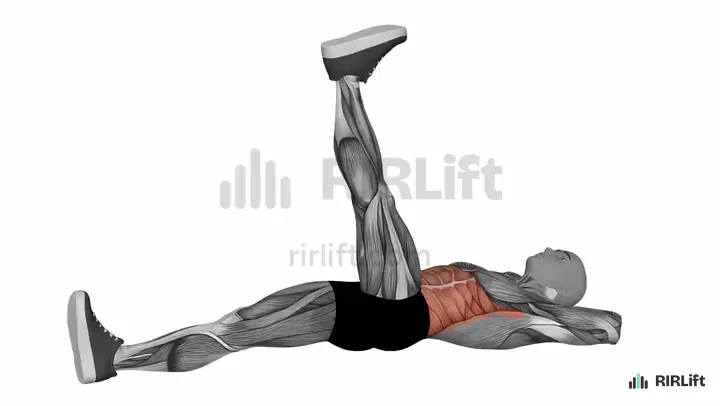
Alternating Leg Raise

Abs

Lifting one straight leg at a time gives your abs a long lever to resist without the jump in difficulty of raising both legs together. It sits between the dead bug and a full lying leg raise, which makes it a good second exercise for floor sessions.

How to do it

  1. Lie face up, legs straight, hands behind your head or flat beside your hips.
  2. Press your lower back into the floor and lift both heels a few inches.
  3. Raise one straight leg until it points at the ceiling while the other stays hovering.
  4. Lower it back to a hover as the other leg rises, and keep switching without letting either heel rest on the floor.

Cues

  • Knees straight, toes soft
  • Back stays flat as the low leg drops
  • Hover, never rest

Common mistakes

  • Letting the lower back lift when the leg is low: keep the hovering leg a little higher.
  • Pulling on your head with your hands: rest them lightly or put them by your hips.

Swap for: Dead Bug, Lying Knee Raise, Hanging Knee Raise

Floor or bench, both knees to chest

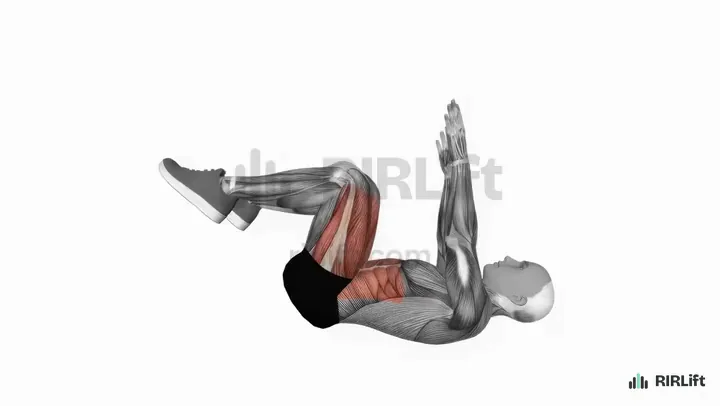
Lying Knee Raise

Abs

Pulling both knees in from straight legs adds range to the reverse crunch: your hips start low and travel all the way in. It is the bridge between floor work and hanging raises, and you can do it flat on the floor or on a bench holding the edge behind your head.

How to do it

  1. Lie face up on the floor or a flat bench, legs straight, and your hands holding the floor beside your hips or the bench behind your head.
  2. Lift your heels a few inches and flatten your lower back.
  3. Bend your knees and pull them toward your chest, letting your hips curl up at the end.
  4. Straighten your legs back out to a hover over two seconds and repeat.

Cues

  • Hips curl at the top
  • Long legs on the way out
  • Heels never touch down

Common mistakes

  • Stopping when the thighs reach vertical: finish each rep by lifting the hips slightly.
  • Dropping the legs fast: control the return, which is half the work.

Swap for: Reverse Crunch, Captain's Chair Knee Raise, Jackknife

Floor, top and bottom meet in the middle

Jackknife

Abs

Lifting your torso and legs at once loads the whole rectus abdominis from both ends, and it is the hardest floor option here. Save it for when reverse crunches and knee raises no longer get close to failure in 20 reps.

How to do it

  1. Lie flat, legs long and arms extended past your head on the floor.
  2. Brace your abs and lift your arms, shoulders and straight legs off the floor together.
  3. Reach your hands toward your shins or feet so your body folds into a V at the top.
  4. Lower both ends back down slowly and touch the floor lightly before the next rep.

Cues

  • Lift both ends at the same moment
  • Reach for your feet
  • Lower slower than you lift

Common mistakes

  • Throwing the arms to build momentum: start each rep with the arms still.
  • Bending the knees a lot to make it easier: a slight bend is fine, a tuck turns it into another exercise.

Swap for: Lying Knee Raise, Reverse Crunch, Hanging Leg Raise

Build a session with Jackknife

Lower ab exercises with a bar or gym station

Hanging or propping your body on a captain's chair lets your legs drop all the way below your hips, so your abs work through a longer range than on the floor. The captain's chair is the easiest of these because your forearms carry your weight and your grip never gives out first. The standing cable hip flexion is the one to use when you want to load a single side and add weight in small steps.

Gym station, forearms supported

Captain's Chair Knee Raise

Abs

With your forearms on the pads and your back against the pad, you can do knee raises with your legs hanging free without a strong grip. It is the best first gym exercise for the lower abs and one of the easiest to progress by reps.

How to do it

  1. Step onto the platform, set your forearms on the pads, grip the handles and press your back into the back pad.
  2. Step off so your legs hang straight below you.
  3. Raise your knees toward your chest and curl your hips forward off the back pad at the top.
  4. Lower your legs until they hang straight again without swinging, then repeat.

Cues

  • Shoulders down, away from your ears
  • Curl the hips at the top
  • Dead stop at the bottom

Common mistakes

  • Lifting the knees only to hip height: the last few inches, where the hips curl, are the part that trains the lower abs.
  • Swinging into the next rep: pause with straight legs before every lift.

Swap for: Hanging Knee Raise, Lying Knee Raise, Standing Cable Hip Flexion

Pull-up bar, knees to chest

Hanging Knee Raise

Abs

If you have a pull-up bar at home or at the gym, this gives you the same long range as the captain's chair. It also trains your grip, which is a bonus until your grip becomes what ends the set.

How to do it

  1. Grab the bar about shoulder width apart and hang with both feet clear of the ground.
  2. Pull your shoulders down slightly so you hang actively instead of loosely.
  3. Raise your knees toward your chest and tilt your hips up at the top.
  4. Lower your legs until they are straight and still, then lift again.

Cues

  • Knees up, pelvis curls under
  • Stop the swing before every rep
  • Breathe out at the top

Common mistakes

  • Kicking to start the rep: lift from a still hang so your abs start the movement.
  • Letting go of the shoulders and hanging limp: keep the shoulder blades pulled down a little.

Swap for: Captain's Chair Knee Raise, Hanging Leg Raise, Lying Knee Raise

Pull-up bar, straight-ish legs

Hanging Leg Raise

Abs

Straightening your legs turns the knee raise into one of the hardest lower ab exercises there is, because the lever is twice as long. Move to it once you can do 15 controlled hanging knee raises.

How to do it

  1. Grab the bar and hang with your feet together, clear of the floor.
  2. Keep your knees straight or slightly bent and set your shoulders down.
  3. Lift your legs forward until they are at least level with your hips, curling your pelvis up at the top.
  4. Lower them slowly until they hang straight and still, then repeat.

Cues

  • Lift with the abs, not a swing
  • Pelvis tilts up at the top
  • Two seconds down

Common mistakes

  • Raising the legs only with your hip flexors and an arched back: if your pelvis never tilts, bend the knees more.
  • Rebounding off the bottom: let the legs settle before the next rep.

Swap for: Hanging Knee Raise, Jackknife, Captain's Chair Knee Raise

Cable, one leg at a time

Standing Cable Hip Flexion

Abs

With an ankle cuff on a low cable, you can drive one knee up against a load you change in small steps, and keep your trunk upright the whole time. It suits gym days where you want lower ab and hip flexor work without lying down between leg exercises.

How to do it

  1. Attach an ankle cuff to a low cable pulley and fasten it around one ankle, then face away from the machine.
  2. Hold the frame or a post for balance and stand tall with your weight on the free leg.
  3. Drive the cuffed knee up and forward until your thigh is about level with your hip, keeping your torso upright.
  4. Lower the leg slowly until your foot is back under your hip. Do all reps, then switch legs.

Cues

  • Ribs down as the knee comes up
  • Stand tall, do not lean back
  • Control the cable on the way down

Common mistakes

  • Leaning your torso back to lift the knee higher: lower the weight until you can stay upright.
  • Letting the stack slam between reps: keep tension on the cable for the whole set.

Swap for: Captain's Chair Knee Raise, Hanging Knee Raise, Reverse Crunch

Holds and rollouts that keep your pelvis tucked

These train the lower abs by refusing movement: your legs or arms reach far from your hips and your abs keep your lower back from arching. They pair well with one of the curling exercises above, because they are hardest in the position the crunches never reach. Pick one per session and stop each set when your lower back starts to sag, not when your arms tire.

Hold, elbows reach past the head

Long Lever Plank

Abs

Moving your elbows forward past your face turns a regular plank into a much harder one for the abs, without making it longer. A 20 to 30 second set does more than a two minute standard plank, so it fits into short sessions.

How to do it

  1. Set up in a forearm plank, then walk your elbows forward a few inches so they sit in front of your head.
  2. Tuck your pelvis slightly and squeeze your glutes so your lower back stays flat.
  3. Brace your abs and hold with your body in a straight line from head to heels.
  4. Stop the set as soon as your hips start to sag, rest, and repeat.

Cues

  • Tailbone tucked, glutes tight
  • Elbows ahead of your eyes
  • Short, hard holds

Common mistakes

  • Piking your hips high to make it easier: keep the line straight and shorten the hold instead.
  • Holding past the point your back arches: end the set there.

Swap for: Plate Hollow Hold, Dead Bug, Stability Ball Body Saw

Hold, weight plate overhead

Plate Hollow Hold

Abs

The hollow hold puts your whole body on a long lever with only your lower back on the floor, and holding a plate past your head adds load you can increase in small steps. Use it on gym days or at home if you own a plate.

How to do it

  1. Lie face up holding a light weight plate with both hands and press your lower back into the floor.
  2. Lift your shoulders and straight legs off the floor and reach the plate past your head.
  3. Hold with your heels a few inches off the floor and your lower back flat.
  4. Lower your legs and arms to rest before your back starts to arch, then repeat.

Cues

  • Lower back stays on the floor
  • Legs low only if the back allows
  • Breathe in short, shallow breaths

Common mistakes

  • Holding a plate too heavy for your back to stay flat: start with no plate and raise the legs higher.
  • Tucking the chin hard to your chest: look at your toes and keep the neck long.

Swap for: Long Lever Plank, Dead Bug, Jackknife

Rollout, arms reach overhead

Ab Wheel Rollout

Abs

Rolling out from your knees stretches your abs while they work to keep your lower back from sagging, which is about as hard as anti-extension work gets. A cheap wheel is enough, and you progress just by rolling a little farther.

How to do it

  1. Kneel with the wheel on the floor under your shoulders and your arms straight.
  2. Tuck your pelvis so your lower back rounds slightly and squeeze your glutes.
  3. Roll the wheel forward as far as you can while your hips and back stay in line.
  4. Pull the wheel back under your shoulders by pressing it toward the floor and curling your pelvis, then repeat.

Cues

  • Hips move with the shoulders
  • Stop before the back dips
  • Pull back with the abs

Common mistakes

  • Rolling farther than you can hold: stop a few inches before your lower back arches.
  • Sticking your hips back to return: bring the wheel in while your hips stay forward.

Swap for: Stability Ball Body Saw, Long Lever Plank, Plate Hollow Hold

Forearm plank on a ball, rocking forward and back

Stability Ball Body Saw

Abs

Resting your forearms on a stability ball makes a plank unstable, and rocking your body forward and back stretches the abs the way a rollout does but with a much gentler start. It is a good stepping stone to the ab wheel if you already own a ball.

How to do it

  1. Set your forearms on a stability ball and walk your feet back into a plank with your body in a straight line.
  2. Tuck your pelvis slightly and brace your abs.
  3. Roll the ball forward slightly by sliding your body forward through your toes, so your elbows move ahead of your shoulders.
  4. Pull back to the start without letting your hips drop, and repeat.

Cues

  • Small saw, big brace
  • Ribs and hips stay locked together
  • Feet wider for more balance

Common mistakes

  • Sawing so far your lower back sags: shorten the movement.
  • Lifting your hips to escape the stretch: keep a straight line from head to heels.

Swap for: Ab Wheel Rollout, Long Lever Plank, Dead Bug

Put them together: example sessions

Each session below picks from the exercises above for one situation, with the sets, reps, rest and RIR filled in. Open one in the session builder to change a pick, price it from a recent set, and add it to RIRLift.

Session 1

At home, a mat and nothing else

Open in the session builder
  • Workouts3× a week
  • Working sets30 a week
  • Per workout~20 min
  • EquipmentBodyweight

You train at home or in a small space with no equipment, and you want a short session you can add two or three times a week.

With only a floor, the reverse crunch and lying knee raise do the curling, and the dead bug and long-lever plank build the control that keeps your lower back down as the legs get farther away. Bodyweight never gets heavier, so the curling exercises run high reps to 1 rep in reserve, while the dead bug and plank stop 2 reps or seconds early because form slips first on those. Each session is 10 working sets and about 12 minutes.

Lower Abs A
ExerciseSets × repsRIRRest
Reverse CrunchTailbone up, 2 s down. 3 × 10–20 1 1 min
Dead BugReps per side. Back stays flat. 3 × 8–12 2 45 s
Long Lever PlankSeconds. Elbows ahead of your head. 2 × 15–30 2 1 min
Alternating Leg RaiseReps per leg. Heels hover. 2 × 10–20 1 45 s

Open Lower Abs A in the session builder

Lower Abs B
ExerciseSets × repsRIRRest
Lying Knee RaiseHips curl up at the top. 3 × 10–20 1 1 min
Dead BugReps per side. 3 s per reach. 2 × 8–12 2 45 s
Reverse CrunchPause 1 s with hips up. 3 × 10–20 1 1 min
Long Lever PlankSeconds. Glutes tight. 2 × 15–30 2 1 min

Open Lower Abs B in the session builder

How to run it
Do Lower Abs A and B on alternating days, two or three sessions a week. They can follow a leg, glute or upper body workout or stand alone. The plank and hollow hold numbers are seconds, not reps.
How to progress
Add reps until every set reaches the top of its range at the target reps in reserve, then slow the lowering to three seconds. When 20 slow reverse crunches are easy, swap them for the jackknife; when the dead bug is easy, swap in the alternating leg raise.

Session 2

At the gym, finishing a leg or glute day

Open in the session builder
  • Workouts2× a week
  • Working sets16 a week
  • Per workout~15 min
  • EquipmentDip Bar, Ab Wheel, Adjustable Cable

You already train legs and glutes at the gym and want the lower abs done in 10 minutes at the end of those sessions, with equipment you can load.

After squats or hip thrusts you want abs work that is hard but does not need much setup, so this puts the captain's chair first for range, the ab wheel second for the stretched position, and the cable hip flexion last because you can add weight to it in small steps. The knee raise and cable go to 1 rep in reserve; the rollout stays at 2 because its last reps are where the lower back gives way. It is 8 working sets.

Lower Abs Finisher
ExerciseSets × repsRIRRest
Captain's Chair Knee RaiseCurl hips off the back pad. 3 × 8–15 1 75 s
Ab Wheel RolloutFrom the knees. Stop before the back dips. 3 × 6–12 2 75 s
Standing Cable Hip FlexionPer leg. Stand tall. 2 × 10–15 1 45 s
How to run it
Do this at the end of each leg or glute session, twice a week. If the captain's chair is taken, hang from any bar and do knee raises instead.
How to progress
Add reps on the knee raise until 15 is easy, then hold a light dumbbell between your feet. Add a pound or a plate to the cable once all sets hit 15. Roll the wheel an inch farther each week while your back stays flat.

Session 3

Pull-up bar at home, floor work already easy

Open in the session builder
  • Workouts2× a week
  • Working sets18 a week
  • Per workout~15 min
  • EquipmentPull-Up Bar, Barbells

You have a doorway or wall-mounted pull-up bar and floor exercises no longer challenge you, so you want harder lower ab work without a gym.

Once reverse crunches stop getting close to failure, the next steps are longer levers: the hanging knee raise, then the hanging leg raise, plus the jackknife on the floor. Hanging work goes first while your grip is fresh, and the hollow hold finishes the session because it needs only a few seconds of hard effort. Sets stop 1 rep short except the leg raise at 2, since it is the newest skill. Each session is 9 working sets.

Hang A
ExerciseSets × repsRIRRest
Hanging Knee RaiseStill hang before each rep. 3 × 8–15 1 90 s
JackknifeLower over 2 s. 3 × 8–15 1 1 min
Plate Hollow HoldSeconds. Low back pinned down. 3 × 15–30 2 1 min

Open Hang A in the session builder

Hang B
ExerciseSets × repsRIRRest
Hanging Leg RaiseKnees soft. Pelvis tilts up. 3 × 5–10 2 90 s
Lying Knee Raise3 s on the way out. 3 × 12–20 1 1 min
Long Lever PlankSeconds. Elbows far forward. 3 × 20–40 1 1 min

Open Hang B in the session builder

How to run it
Do Hang A and Hang B once each per week, at least two days apart. If you do not own a plate, do the hollow hold with your arms reaching overhead empty.
How to progress
When you get 12 hanging knee raises on every set, move one set at a time over to the hanging leg raise. On the jackknife, add a two-second pause at the top before adding reps.

Make it fit you

Questions

What works out your lower abs?

Exercises where your pelvis curls up toward your ribs, like the reverse crunch, lying knee raise and hanging knee raise, plus holds that stop your lower back from arching while your legs or arms are far away, like the dead bug, long-lever plank and ab wheel rollout.

Can you target the lower abs separately?

Partly. The rectus abdominis is one muscle, so every crunch trains all of it, but exercises that move the pelvis instead of the ribs load the lower part more. You cannot train it on its own, and you do not need to.

What muscles do leg lifts work?

Leg lifts work your hip flexors, which actually raise the legs, and your abs, which hold your pelvis still and curl it up at the top. The more your tailbone lifts at the end of each rep, the more of the work goes to your abs.

Are lower ab exercises different for women?

No. Women and men train the same muscle the same way. What changes is the situation, such as training at home, adding abs after glute and leg days, or starting with floor work before hanging exercises, and that is what the three plans here are built around.

What ab exercises can you do on all fours?

The bear crawl hold and plank shoulder taps start from your hands and knees, and the plank and long-lever plank are their harder versions from the toes. From all fours, lift your knees an inch and hold with your back flat to start.

How often should I train my lower abs?

Two or three times a week is enough. Do 6 to 10 hard sets per session, close to failure, and progress by adding reps or moving to a harder exercise rather than adding more days.

How long until I see lower abs?

Seeing the lower abs depends mostly on how much body fat sits over them, which changes with your overall training and eating over months. Training builds the muscle so it shows once that fat comes down.